Posts Tagged ‘Ambient’

Panurus Productions – 26th July 2019

Christopher Nosnibor

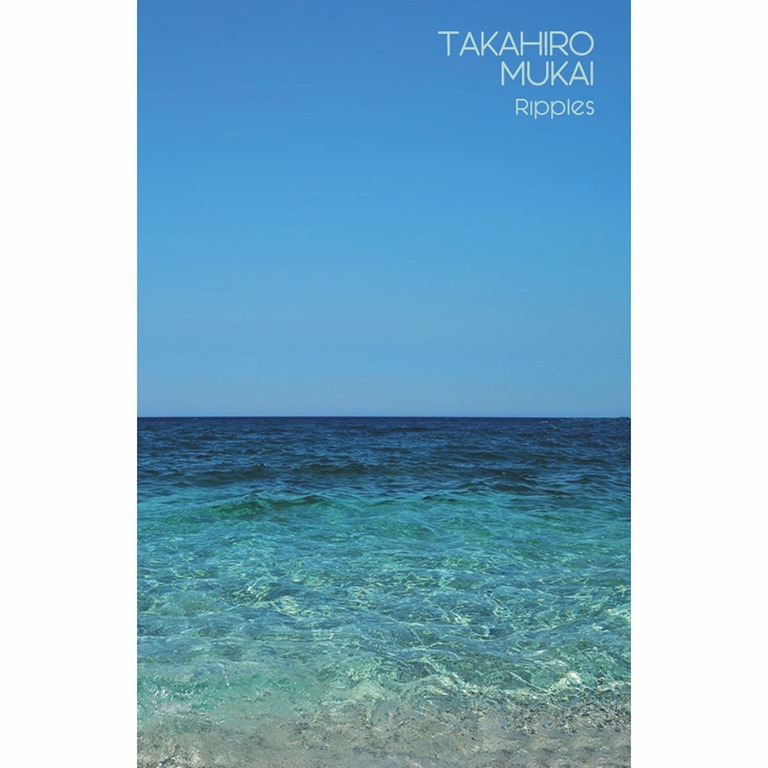
‘Prolific’ is the word. There are a number of artists, with a significant pocket being Japanese noisemakers like Merzbow and Kenji Siratori As Paraponera Clavata, released in March, marked his 41st release since his 2014 debut, it would be fair to place Osaka’s Takahiro Mukai in the ‘prolific’ bracket.

And while Ripples isn’t explicitly a ‘noise’ work, it does find Mukai drilling the listeners senses with some pretty shrill shards of treble atop whupping phased synths. The cover art may depict a perfect tropical ocean, clear and a glorious turquoise / blue washing softly over white sand, but delicate and gentle it isn’t, and Mukai’s approach to minimalism doesn’t equate to quiet or tranquil – simply that less is more.

The first of the album’s four tracks, ‘#437’ is reminiscent of Whitehouse around the time of Birthdeath Experience or Total Sex – only with better production and without the vocals. ‘#436’ follows, and draws abrasion from smooth surfaces. In the distance, a sound like a siren, while an oscillating synth bubbles along, its volume increasing as it moves to the foreground. More phasing pulsations bring a rhythm that stop and starts inconsistently to disorientating effect. The effect is the real achievement here: the compositions on Ripples work in such a way that the component sounds rub against one another to draw the listener’s attention to that peculiar tension that exists in the space in between.

Completely disrupting my sense of order with the non-sequential ‘#439’, Mukai stretches elongated, undulating drones out over some ten and a half minutes to create a deep disquiet, but it’s on the closer, ‘#438’ where Mukai steps up on the noise. Low in the mix, electronic fizzes like shooting stars whistle through the dense droning atmosphere. Over the course of almost nine minutes, the volume and intensity increase, revealing new textures and tones. Stuttering rhythms emerge like desperate messages in Morse code where every sound is a dot. Scrapes and squalls bore into the cranium in the upper frequencies, while a thunderous wind billows through the mid-range, expanding from a rumble to a roar like an approaching helicopter, or an avalanche.

Sitting in my office at home, writing on the hottest day of the year so far, and what may yet prove to be the hottest in the UK on record, the thought of an avalanche carries a rare appeal. But then, whether it be a literal avalanche or merely an avalanche of sound, Ripples fulfils that desire to be submerged and separated from one’s immediate environment.

Takahiro Mukai – Ripples

Editions Mego – EMEGO264 – 5th July 2019

Australian avant-gardist Oren Ambarchi has enjoyed a varied career spanning over three decades, and includes among his associations Sunn O))), Merzbow, and Burial Chamber Orchestra. To describe his output as ‘prodigious’ would be an understatement.

According to the press release, ‘Simian Angel finds Oren Ambarchi renewing his focus on his singular approach to the electric guitar, returning in part to the spacious canvases of classic releases like Grapes from the Estate while also following his muse down previously unexplored byways’.

It continues: ‘Reflecting Ambarchi’s profound love of Brazilian music – an aspect of his omnivorous musical appetite not immediately apparent in his own work until now – Simian Angel features the remarkable percussive talents of the legendary Cyro Baptista, a key part of the Downtown scene who has collaborated with everyone from John Zorn and Derek Bailey to Robert Palmer and Herbie Hancock’. Some of this has meaning: a lot of it doesn’t. I don’t know everything, and nor have the time or inclination to research. Jobbing reviewers crib from press blurbs and make like they know stuff. The majority are lying.

Neither Brazilian music nor guitar are overtly apparent on the two long-form tracks which make up Simian Angel: the sixteen-minute ‘Palm Sugar Candy’ consists of supple, trilling organ notes drifting across clopping, loping, irregular wood-based percussion which fades out to nothing leaving only soft, whisping tones which weave in and out of one another.

The title track is vague, piano notes rising into a rarefied air. It builds gradually into flurries of notes which flutter like snow in a breeze, skittering unpredictably. Baptista’s contribution is remarkable in its subtlety: a sedated heartbeat pulse which occasionally stutters and stammers. Around the mid-point of this twenty-minute mod-inspiring epic, the piano halts unexpectedly and an upward gliding drone alters the previously straightforward trajectory of the composition. Simmering down into twittering gentleness, subtly twisted with the slightest hints of dissonance and eventually transitioning into some mellowed-out semi-ambient reinterpretation of minimalist jazz – which isn’t nearly as bad as it sounds. Instead, the slowly insistent beats force something approximating a solid frame on which all the other abstraction hangs – and it works.

AA

Oren Ambarchi – Simian Angel

Canadian composer Scott Morgan shares a video for the track ‘Equivalent 6’, taken from his 12th long-player as Loscil, Equivalents.

The album takes its title from an influential series of early 20th century photographs by Alfred Stieglitz, abstracting clouds into miasmic, painterly canvases of smoke and shadowplay. It’s a deeply fitting analog for Morgan’s own musical process across the past two decades, fraying forms and tones into widescreen mirages of opaque texture and negative space. The name Equivalents referred to Stieglitz’s notion of the photographs as being equivalent to his “philosophical or emotional states of mind;” the same could be said of these eight weighty, shivering chiaroscuros of sound. Each piece unfolds and evolves enigmatically, adrift in low oxygen atmospheres, shifting dramatically from pockets of density to dissipated streaks of moonlit vapour.

The entirety of the record was created specifically for the album with the exception of ‘Equivalent 7’, which began as a dance score for frequent collaborator Vanessa Goodman. The album version of this track was reworked with Vancouver musician Amir Abbey aka Secret Pyramid.

Watch the video here:

Sound in Silence Records – 29th May 2019

Christopher Nosnibor

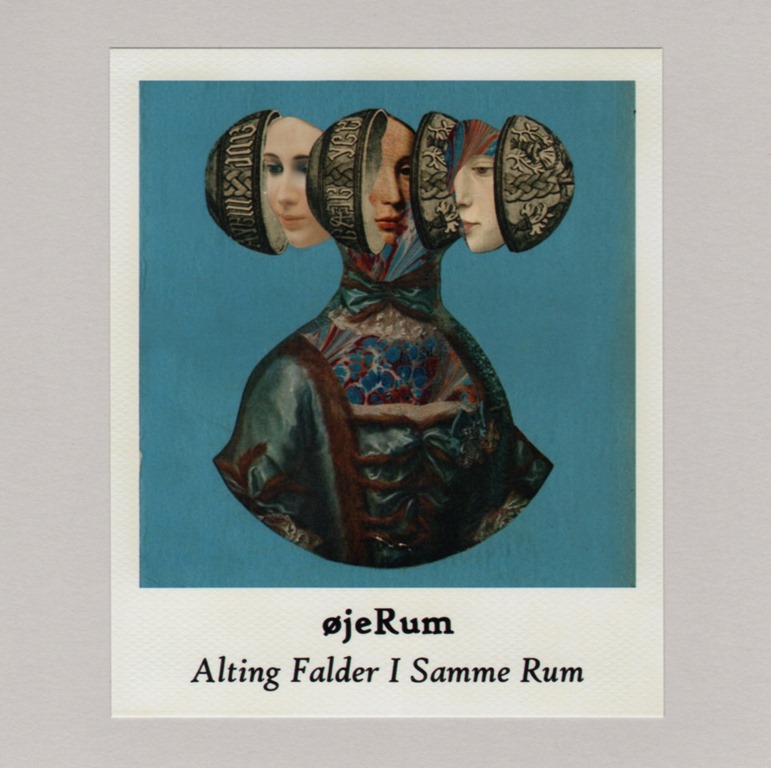
What do we know? The press blurb says that ‘øjeRum is the ambient solo project of musician and collage artist Paw Grabowski, with previous releases on labels such as Fluid Audio, Eilean Rec., Shimmering Moods Records, Champion Version, Unknown Tone Records and many others,’ and his work is ‘recommended for fans of William Basinski, Brian Eno, Harold Budd and Tim Hecker’.

I have no idea what Alting Falder I Samme Rum translates as, but it contains six tracks numbered I – VI which are built on rippling, pulsating, almost subliminal rhythms. This is the kind of soft, fluid electronica that for me conjures images of deep-sea jellyfish, the likes of which pulse with luminescence as they surge smooth , silent, and with barely a hint of resistance through the dense waters drifting with plankton and minuscule creatures which hang, mote-like, in suspension. What is their purpose? On what do these near-microscopic organisms feed? It will never cease to bewilder me that we know less about both the deepest parts of the ocean, and the human mind, than we do about near space and even further afield.

Alting Falder I Samme Rum exists between space and the interior of the mind, and as such is an exploration into the unknown. It hovers and hums and slowly ebbs and flows. It feels otherworldly, far beyond this world. And I am transported.

AA

øjeRum – Alting Falder I Samme Rum

Gizeh Records – 26th July 2019

Christopher Nosnibor

‘File under: Avant-Garde, Drone, Dark-Ambient’, says the press release. And yes, the nine pieces on Göldi fell, an album limited to 175 hand-printed copies on CD are indeed darkly ambient drone-fests, rich in atmosphere and the rumbles of distant thunder. I spend many long hours listening to music of this ilk, and while I do enjoy it, I sometimes struggle for new descriptors, and often find myself gradually drifting in a way that means I have no significant emotional response to detail. And yet this is most definitely not ‘background’ audio: it’s mood-influencing, and the creeping fear chords and unexpected interjections and the trembling sawing scrapes contrive to jangle the nerves and leave the listener on edge. Yes, I’m glancing over my shoulder, pausing my typing to listen to determine if the sound I just heard came from the speakers of an intruder on the stairs, someone in the back yard.

The strings drone and drag into scraping metallic contrails that melt into undifferentiated sonic melanges, and this is an album that creeps and crawls, spreading dark energy like dry ice around the ankles as it plunders the gut-twisting fear-chords and unsettles from beginning to end.

At times mellow, delicate, and at others uncomfortable, scraping sinuous and dissonant, this is a deep and contemplative work that elicits reflection from the listener. At this particular moment, I’m reflecting on time – specifically, time when I had time to stop, to think, to spend afternoons simply listening to music and / or reading a book. It feels like a long time ago. What happened?

For all the darkness, I can’t help but be amused by the press write that states ‘Several Wives lie in the darkened corner of a room. Paintings torn, forgotten against the wall. Dead rhythms seep through the floor. Everything is tired. Everything is jaded.’

It’s funny because of the band name. it works in that it conjures a most visual and vaguely surreal image that’s entirely incongruous with the music itself. Plus, as anyone who’s married will likely tell you, one wife is more than enough, and the prospect of several is even more terrifying than the shrieking, wailing cat, string crescendo that howls and mewls the challenging finale of ‘The Blinding of Delilah’. There’s also an element of if not outright humour, them flippancy about some of the titles: ‘that dream you had’, ‘that other dream you had’, and ‘Her on the phone’ are casual-sounding and contrast with the weighty, atmospheric drones that creep and crawl around among the looming shadows of their own casting.

Göldi fell is a difficult album, but for all of the right reasons. None of it feels easy or comfortable. And nor should we want it to. It’s healthy to be unsettled, unnerved from time to time, to be dragged out of that tiredness, that jadedness.

AA

GZH91-Several-Wives-Goldi-fell-Sleeve_1024x1024

James Wells

And after weeks of torrential rain, temperatures so far below the seasonal average if feel more like a different season, we suddenly find ourselves not experiencing just warmer weather, but day one of a burning heatwave set to last for… two days.

Imbeciles may scoff about so-called ‘global warming’ because they fail to grasp the fact that in some places, like Britain, the melting of the ice caps doesn’t mean we can grow bananas, grapes and coffee beans in our window boxes, and that instead, tropical storms are going to batter us while the coastline shrinks beneath rising sea levels.

So, what do we know? Thanks to the press blurbage, we know that ‘HIN is the new ambient/electronic project of Jerome Alexander, best known as Message To Bears, along with his school friend Justin Lee Radford, also known as The Kids And The Cosmos’. We also know that the ‘Warmer Weather EP’ is HIN’s debut release.

The five songs on offer here are mellow to the max. The beats are so laid back they’re practically soporific, all the tones so soft-focus as to be tantamount to dissipating vapours in a clear blue sky on a hot summer’s day. Yes, this is definitely a hot summer’s day soundtrack. But it’s also completely smoothed out, depersonalised, chilled to the point of total blandness, the Mr Whippy of ice cream. What is there to say? Can I have sprinkles and a flake with that soft vanilla?

AA

HIN

16th June 2019

Of course I was always going to be sold on an album with a title like Southern Phlegm. I mean, what’s not to like? Kadaitcha’s third release straddles ambient, drone, industrial, and power electronics to deliver four tracks driven by throbbing pulsating grooves welded to repetitive, cyclical guitar lines, and rent with the gnarliest, nastiest treble-shredded distorted vocals.

The first, ‘Phagocide’ pumps away for over nine minutes. The guitar and synths form a messy sonic fusion, a thick mass of distortion while wibbling space-rock blasts of analogue send blurred neon arcs through the heavily-grained backdrop like shooting stars. ‘Sewerbound’ is appropriately titled as it plunges deeper into impenetrable murk. It’s dominated by clattering percussion, the edges distorted and decayed, while screeding noise howls a vortex of sonic agony. Frequencies collide to create an endless flux of aural incompatibility. Everything is distorted, dirty, there’s malice in every note. The lyrics are impossible to decipher from amidst the sonic blitzkrieg, but there’s nothing about the delivery that suggests there’s any comfort or kindness on offer here.

Slow, brooding ambience builds an unsettling atmosphere during the opening minutes of ‘Datura’, before the overloading guitar crashes in. It’s got the low-end distortion of Sunn O))), but grinds away at a repetitive motif with the bludgeoning brutality of Swans. It’s a full-on kick to the diaphragm.

Closing off, ‘Vulpine Sacrifice’ arrives almost by stealth, a snaking bassline strolls in slow and slow, a stop/start stammer gives it an almost hesitant feel. Circuits fizz, crackle and hiss all over the place, before the final two or three minutes find the conglomeration of elongated hums coalesce to create something approximating ‘music’, akin to a swelling organ drone. But you couldn’t exactly call this brief moment of musicality that draws out to the fade the light at the end of the tunnel: it’s low, slow, and ominous and seems, if anything, to point toward another darkened door which opens onto stairs leading to an eternal abyss.

AA

Kadaitcha – Southern Phlegm

Focused Silence – FOCUSED0065 – 7th June 2019

Christopher Nosnibor

Shrill. Treble. Not so much chiming as trilling, a sound between a rapid ringing bell and an alarm that drills into the cranium introduces ‘Colophon’, both the album and the title track on this release by ifitisn’t, a duo comprising Robinson & Kalnars – who both have musical pedigree. It’s the jangle of shattered glass and continues for what feels like an eternity, even though it’s only five minutes or so, before dissipating, dispersing into fragments amidst soft clouds of sound punctuated by near-subliminal bumps and scrapes.

According to the press release, ‘ifitisn’t is about the interruptive noise that exists between transmission and the intended reception of the message, the fragments of concrete experience that interrupt hegemony. it is the mapping of emotional and political territories. ifitisn’t is cartographer and rhetoricican’.

They probably realise that absolutely none of this ‘mapping of emotional and political territories’ actually translates through the work itself: the transmission conveys none of the intended reception. They’re probably more than aware that art’s capacity to ‘interrupt hegemony’ is limited at beast, especially in the current climate, especially when that art is obscure and inscrutable. The disparity between the medium and the message are immeasurable, and all that we have to process is ‘interruptive noise’. It’s quite conceivable that that’s the entire point. The fact they’ve gone ahead and done it anyway is what matters. Artistic statements count for less than pissing in the wind, but its through persistence and perseverance and a steadfast refusal to bow or quit that art will ultimately rise above its societal and cultural backdrop. And it’s art, in all of its myriad forms across all media, which makes life worth living.

I’m by no means saying that with Colophon, ifitisn’t are going to have any impact on my life praxis, or make any waves even within artistic circles. But that doesn’t matter.

Random sounds abound on the second piece, the eleven-minute ‘Denity’, which finds whistling digital feedback, dd snorts, disembodied voices and sounds of unidentifiable origin rifting in and out and intersecting with irregular chanking chimes and glooping ripples of analogue waves frothing impatiently. Nine minutes in, some gallic-sounding vibes enter the mix: it sounds at first like an accordion or concertina of some kind, but could equally be a melodica, but it’s soon washed away on a tide of fuzzy extraneous sound whatever it is.

And whatever it is, it’s worth hearing at least once.

AA

FOCUSED0065_front

Canadian composer Scott Morgan’s 12th long-player as Loscil takes its title from an influential series of early 20th century photographs by Alfred Stieglitz, abstracting clouds into miasmic, painterly canvases of smoke and shadowplay. It’s a deeply fitting analog for Morgan’s own musical process across the past two decades, fraying forms and tones into widescreen mirages of opaque texture and negative space. The name Equivalents referred to Stieglitz’s notion of the photographs as being equivalent to his “philosophical or emotional states of mind;” the same could be said of these eight weighty, shivering chiaroscuros of sound. Each piece unfolds and evolves enigmatically, adrift in low oxygen atmospheres, shifting dramatically from pockets of density to dissipated streaks of moonlit vapour.

The entirety of the record was created specifically for the album with the exception of ‘Equivalent 7,; which began as a dance score for frequent collaborator Vanessa Goodman. The album version of this track was reworked with Vancouver musician Amir Abbey aka Secret Pyramid.

Listen to ‘Equivalent 7’ here:

Panurus Productions – 21st June 2019

Inspector Fogg is Newcastle filmmaker Wayne Lancaster, and his eponymous album threatens ‘ten tracks of warm synth-based stuff.’ For some reason, this makes me think about pissing down my own leg.

The slow, soft wash of sound that marks the album’s arrival in the form of ‘Fuyu’ isn’t nearly as embarrassing or as uncomfortable, the drones swelling and rising in and out of step to forge fluidly fluctuating rhythmic ebbs and flows. Although very much of the album is ambient to the point that structures are lost in the drift, each composition has a distinct identity and mood.

‘The View Across the River’ begins as a delicate strum before yielding to polyrthymic bleepery, while ‘Strange Tales’ is dark and vaguely sinister. If ‘ominous’ sounds like a similar descriptor, it’s different enough to mark the subtle shift in atmosphere as ‘A Year From Now’ casts reflective shadows between held breaths.

There’s more substance to ‘Lamb to the Slaughter’, an insistent beat and pulsating synth behind a rolling piano creating a groove that evokes an action sequence in a film. But its erratic stops and starts are jarring, and it’s almost an act of self-sabotage as the one piece that seems to be going somewhere is simply gone in just over two minutes.

The pieces become shorter and seemingly less evolved towards the end of the album, with ‘Oil on the Road’ and ‘Case Closed’ being sketches of around a minute each. The former is driven by a grimy, buzzing synth bass overlaid with 80s-sounding electronic keys that threatens to go all Harold Faltermeyer before an abrupt ending, while the latter is a piano-based outline that has infinite scope for expansion.

Assuming this gradual diminishment of development is all part of a plan of sorts, the logical analysis would be to attempt to unravel its purpose or meaning. But this is art, and art so often defies logic. And while the snippety pieces are vaguely frustrating, the album as a whole is satisfying in its balance of variety and cohesion, and its infinitely preferable to pissing down your own leg.

AA

Inspector Fogg