Posts Tagged ‘Ambient’

1st May 2020

Christopher Nosnibor

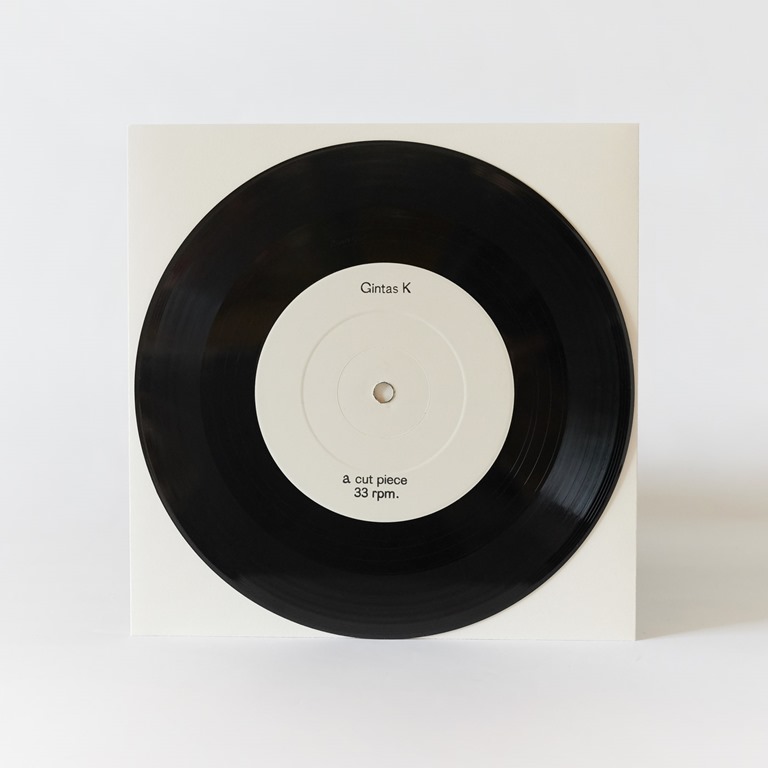
For some years now, I’ve followed Gintas K’s career with interest, for the simple fact that his work is, well, interesting, not to mention varied. This latest release is quite different from anything previous: a 7” single containing the audio, this is ostensibly a multimedia work, which finds the record packaged with a magazine, and was produced in collaboration with Visvaldas Morkevičius as an independent publishing project.

Morkevičius is a Lithuanian photographer, and the print aspect of the release comprises a series of photographs, which are the result of the artist’s visual anthropology research. K’s contribution is that of a soundtrack, as the accompanying blurb explains: ‘7” vinyl performance was made by Gintas K during the process of Visvaldas Morkevicius photographing and was added to Portraitzine as to fulfill the atmosphere in which photographs was made.’

It may be that the audio works better with the visuals, in that it fills out the understanding of both the listener and the watcher, but as a standalone work, Gintas’ two untitled works function successfully in their own right.

The sounds on side A – ‘Cut Piece’ are spare, strange, squelchy, bloopy, gloopy, fractal, disjointed, whistling, bleepy, hyperdigital. There are immense spaces between the sounds, meaning that when thumps, thuds and bangs arrive, they do with maximum impact: more than one I found myself physically jolting n my seat, having been lulled by a digital babble and spells of near-silence.

Side B, featuring the shorter ‘Uncut piece’ is mega-minimal: drips and blips punctuate three-and-a-half minutes of not a lot. And yet that not-a-lot is important: it focuses the attention, and reattenuates the listener’s attention on sound and the spaces in between. It slips and fades to nothing.

I find myself staring into space, barely aware that the ‘music’ has ended. If the ‘music’ ever really began. It’s hard to feel any real emotional or psychological connection with these snippets. But that is not their function. And ultimately, it works, and that’s the objective here.

AA

cover

Cruel Nature – CN133

Christopher Nosnibor

It’s not often demo tapes get a ‘proper’ release. Then again, it’s not often you actually get demo tapes these days: cassettes may be making something of a comeback on the underground, but you’re more likely to get a demo recorded on mobiles with the tracks assembled using some smart software than on a four track. I remember my old Fostex X-18 seeming incredibly compact back in ’92. Less true of the X55, but with its double-speed spooling and advanced mixing capability, it was more like having a proper studio on your desk. How times have changed.

But when it comes to black metal, low-grade production is integral to the aesthetic. It’s supposed to be impenetrably murky, the songs emerging from a booming condenser mic recording overloaded with volume, crackle, and hiss.

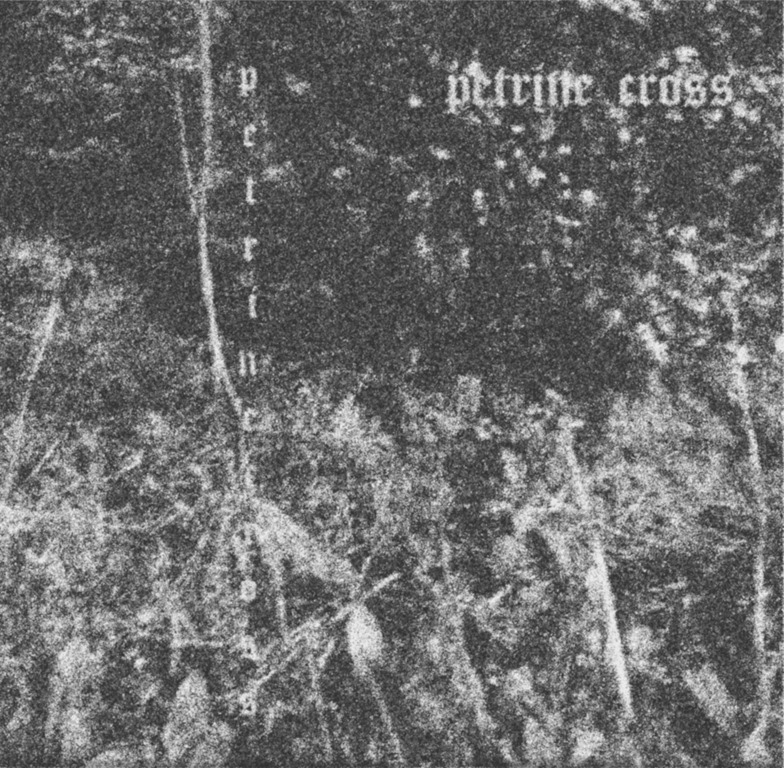
I was fortunate to catch Petrine Cross virtually live at a Heinous Whining streaming event the other week, and it was devastating: I was blown away by the dark intensity of the performance, and this release confirm this was no one-off or a case of me being carried away with too many cans in my atempt to recreate the gig experience at home.

A solo project for Esmé Louise Newman of emotionally-charged black metal duo Penance Stare (and her resumé is pretty impressive too), Petrine Cross is pitched as ‘Thought-provoking raw ambient black metal, inspired through solitude and literature, that hits hard in all its oppressive glory.’

‘Charred Skirts and Deathmask’ could be read one of a number of was, but it begins with a soft-edged undulating drone, which continues throughout its eight-plus-minute duration beneath a crushing deluge of punishing guitar noise. There are no discernible chords, no clear structure, just a full-on deluge of sludge. There are some vocals in there somewhere, too, I think. I don’t need the details, and that’s perhaps as well, as they’re obfuscated by a dense wall of undifferentiated sound that’s all in the mid and lower ranges.

I’m listening by candlelight and screen glare, and it seems appropriate as the snarling blast of ‘I Beneath a Rougher Sea’ tears from the speakers, a muffled, murky blast of a cyclical chord sequence, overloading with distortion. It takes some time for any form to emerge from the searing sonic wall, and when it does, it’s vague, melting in its blisteringly intense grind.

The recordings may be primitive, but I’m not sure they would necessarily benefit from a more luxurious, layered studio treatment. The context is key: this is black metal – albeit in a stripped-back, ambient form – and doesn’t require polish. These recordings are cavernously dark and dredge the depths of the soul. Search deep.

AA

cover

Room40 RM401 – 1st May 2020

Christopher Nosnibor

One aspect of postmodernism that can be both intriguing and frustrating is its tendency to contradiction. Moreover, the way in which postmodern criticism centres in on the contradictions of postmodern art, culture, and society, and extrapolates how postmodern art revels in the contradictions inherent in postmodern culture without in any way seeking to resolve them. Postmodernity seems to suggest that questions are enough, without need for answers. But are they?

Living in England, I’ve witnessed post-postmodernity taken to the most meta of levels in recent days having witnessed Prime Minister Boris Johnson attempting to detail the new guidelines for managing the COVID-19 pandemic on our small island, and am, along with the rest of the nation reeling at the advice that if I can’t work from home I should go to work, but I shouldn’t go to work if possible, and if I do have to go to work, to avoid public transport, and if I am working from home, it’s ok to go out as much as I like for exercise but only if essential, and I can meet people from other households, but only one person and it must be outdoors, and while maintain a 2-metre distance, which is the same as the distance as from people in public anyway.

Where am I going with this? Apart from more questions, more rhetoric?

Less is more. But sometimes, it’s also less. Lawrence English’s latest offering consists of two longform tracks, of around twenty minutes a piece, corresponding with a side of vinyl or cassette, although at present, Lassitude is only being released as a download. And not a lot happens.

‘Saccade (For Elaine Radigue)’begins with a trilling, rapid-oscillating drone that hangs in he mid-range. It doesn’t do anything, and doesn’t go anywhere, but gradually blurs. No, the sound remains static: the perception of it blurs. At least for a time, after which the notes slow and melt together.

There’s less texture and less shift to ‘Lassitude’, which sustains an even hum for the majority of its twenty-minute duration. It has no direction, and no substantial content, but that isn’t the purpose. There are tonal shifts, gradual gradients down, but they’re slowly incremental, almost subliminal. And ultimately, to what end?

Perhaps there is no end: perhaps this is the end. Perhaps the end has been coming, slowly, all this time, and our lives to now have been a waiting for the end. Perhaps not. What do we know?

AA

St. Petersburg

3rd May 2020

Christopher Nosnibor

Ashley Sagar is a man with his finger in manifold musical pies, spanning the semi-ambient droning improv of Orlando Ferguson to the thumping Krautrock grooves of The Wharf Street Galaxy Band. It’s Sagar’s willingness to experiment, and to try anything once that’s a significant factor in his interest as a musician. What’s important for anyone engaging in experimentalism is the acceptance that degrees of success and failure may vary along the way, and it’s with no embarrassment that I recall sharing a stage with him and Namke Communications’ John Tuffen for a hastily-assembled improv set built around a sort of sequence and structure that was actually ok, but not what any of us had really anticipated.

Anyway, under lockdown and unable to play his distinctive wandering basslines live with any of the eighteen or so bands he performs with, Sagar has delivered his second solo album of the year, in the form of the soft ambient work that is Beyond Life, which comprises a single track with a twenty-six minute running time.

It begins with slowly rhythmic vibraphone tones that reverberate softly into a warm atmosphere. Immediately I begin to question this: is it a vibraphone? I’m not strong when it comes to mallet percussion instruments, or synthesised emulations thereof. Equally, I can’t trust that my perception of a ‘warm atmosphere’ isn’t coloured strongly by the unseasonably warm and sunny weather paired with the unusual quietness outside on such a balmy evening, where I’d ordinarily likely be at a gig and the street and back gardens would be chocka with people between pubs and stoking early bank holiday barbecues.

As my thoughts drift, so does the music, and although it doesn’t grab my full focus, is does very much permeate my reflections as I go inside myself, recalling a life before all of this, a life when life was actually life, when, however much going out and being among people may have been a cause of anxiety, it was an option, and live shows provided the opportunity to be among likeminded individuals coming together to escape into sonic domains.

And so here we are, all isolated together, supposedly, in a state beyond life. Sagar provides a subtly-structured soundscape to ease these contemplations along, quietly shifting from one tone and texture to another, from light and airy to low and sombre, piano notes ringing out into the emptiness.

The streets are empty. The pubs, hotels, gyms, shops are empty. The sky is empty. The world is empty. We are all empty. And Beyond Life is beautiful.

AA

a1792484157_10

This is it Forever – 14th February 2020

Christopher Nosnibor

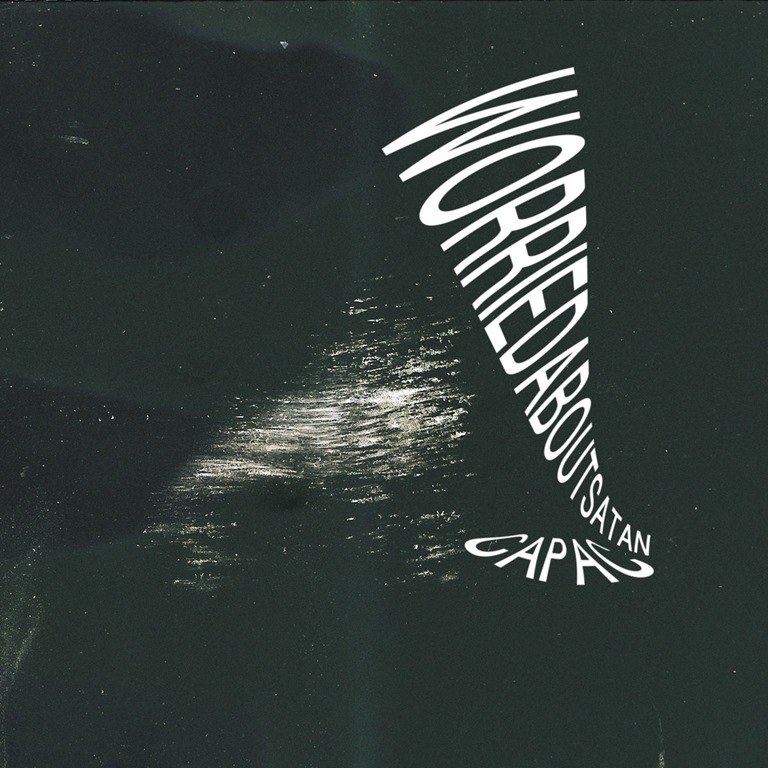
Since whittling down to just Gavin Miller, worriedaboutsatan’s outut has positively exploded, with the latest offering, which Miller describes as ‘quite an experimental little thing’ sees him share a tape – a side each – with Capac.

‘Orion’ is indeed quite experimental, and marks something of a departure for Miller, transitioning through a sequence of passages that rupture forth unexpectedly. At its heart, the piece is appropriately spacey, with squelchy quirts of analogue phase illuminating the smooth, slow-moving expanse of soft drones. It’s dense and atmospheric, and distant rumbles of thunder register like planets colliding way off in other solar systems before heraldic horns and full galactic marching band parades it way through. Gunned down in a blitzkrieg of lasers and noise, leaving an expanse of desolation, a near-emptiness.

Capac’s ‘A Well-Turned Suite’ is altogether darker, an eerie discord creating an ominous atmosphere. The four-piece describe themselves as creators of ‘sonic explorations of the murkier spaces in and between “new music”, and there’s certainly an exploratory quality to this fourteen-minute aural ambulation. At first there is calm, sustained notes that hover and hum for an age, stretching time itself. Gradually, cracks and fissures begin to appear in the smooth surface, and wheezing organ notes begin to twist and disconnect, and over time, the tension rises as atonality takes over. Muffled beats stutter and thump anxiously, and the sloe fade leaves only the whisper of the breeze.

It’s an intriguing release, and the two pieces are unusual and more than contrasting enough to sustain the interest for the duration.

AA

WAS and Capac

Monotreme Records

Christopher Nosnibor

I met my wife as she now is online back in 2000, before it was the done thing. Online dating didn’t exist, and we got chatting in Holechat, the band’s official online chatroom. We were both there because we had an appreciation of Hole, oddly enough. But Celebrity Skin has always been a point of division, in that it was my point of departure, with single ‘Malibu’ being a significant factor. To my ears, it was, and remains, the sound of selling out, and while pop is by no means is dirty word for me, it represented a slide into lazy, poppy commercial rock. From the band that brought us the snarling, spitting mess of noise that was ‘Teenage Whore’, this was the work of a band who’d completely lost their bite.

This is the personal context for my engagement with Stumbleine’s cover of ‘Malibu’, released as the second taster of the forthcoming album ‘Sink Into The Ether’, which promises ‘a deep submergence within a celestial upper region somewhere beyond the clouds’, and on this outing, ‘a lush ambient electro cover of Hole’s ‘Malibu’ featuring Elizabeth Heaton of Midas Fall on vocals’.

According to Stumbleine, ‘Hole’s ‘Malibu’ is the perfect balance of bittersweetness, a golden soundscape of serene melancholy. Tracks which illustrate that symmetry between light and dark are timeless to me, they mirror life with piercing clarity.’

That’s clearly a different perspective on the song from the one I have, and clearly informs this breathy, slow-unfurling drifter of a tune that bears negligible commonality with the original bar the lyrics. It’s slowed to a dripping mellowness that’s pleasant on the ear, but so prised apart and washed-out it’s bereft of chorus, hooks, or any other memorable moments. And in context, it’s nicely done, but it’s perhaps less of a cover than a reworking that’s 99% Stumbleine and 1% Hole. In this instance, that’s not such a bad thing.

24th February 2020

Christopher Nosnibor

Kemper Norton’s kept a steady trickle of releases coming for some time now, and while the last couple – Hungan (2017) and Brunton Calciner (2019) – had bypassed me until now, the consistency of previous works, from Cam (2013), Loor (2014), and Toll (2016) was more than enough to ensure my immediate interest on the arrival of Oxland Cylinder. His music always has an intrinsic sense of place, however elliptical, and if on the face of it Oxland Cylinder appears to break this trend, the accompanying text is informative:

‘In the late nineteenth century and early twentieth century the majority of the world’s arsenic was created in Cornwall and Devon. The “Oxland Cylinder” was one of the methods used and was a revolving iron tube used to process and vapourise arsenic pyrites. None of these devices remain intact.’

Immediately, we’re transported to England’s south coast over a century ago, and not only to a bygone era but a practise essentially lost to history. And in this context, Oxland Cylinder takes on layers of meaning and caries a certain historical weight.

If the first piece, ‘halan 5’, which introduces the album with discontiguous electronic scrapes and buzzes, and a swell of bleeps and bloops, an analogue bubblebath that slowly eddies and swells, feels like so many other post-Tangerine Dream ambient electronic drifts, it’s also an evocation of a process akin to alchemy, only instead of turning lead into gold, it turns minerals into alloys, including lead.

Oxland Cylinder forges temporal spaces through the medium of sound, slow-spun ambience that conjures a certain mental blankness into which the listener is free to project their own sense of alternating coastal countryside and industrial production. Some will likely visualise Poldark, although the ruins that remain today tell little of the intense labour, heavy mining and vast engines involved in the extraction of ores and pyrites and their conversion to various alloys as lined the south coast at this time.

‘Dark as a Dungeon’ finds the first occurrence of vocals: it’s a sparse shanty with ringing electronics building a glistening, metallic backdrop to the lilting vocal melody. Singing about mining against funeral echo-laden rings feels like a sad thing.

Oxland Cylinder is as rich in evocative depth and subtlety as the south coast is in social and industrial history, and an absorbing album irrespective of context or intent.

AA

Kemper Norton – Oxland Cylinder

Sound In Silence – 9th January 2020

Christopher Nosnibor

Fifteen years on from initiating worriedaboutsatan, Gavin Miller resumes work under the moniker as a solo performer once more. During that time, there have been lengthy breaks, solo releases and side projects, and five albums along the way, all of which featured Thomas Ragsdale. As a duo, it was always apparent that each of them brought something very different to the table, and on paper, the differences probably just shouldn’t work, with Ragsdale’s more beat-centric style seemingly at odds with Miller’s introspective post-rock / ambient stylings. But work it did, and incredibly well. The sound evolved over time, too, from the stuttering microbeats that characterised Arrivals to the up-front booming dance grooves particularly prominent in their later live sets, worriedaboutsatan developed, but remained distinctive.

So what impact Ragsdale’s departure to focus on his solo endeavours?

Pleasingly, Crystalline still has that je ne sais quoi that’s uniquely worriedaboutsatan, despite the contrasts being less pronounced, as Miller pursues the more ambient direction that defined Revenant and Blank Tape. The eight pieces coalesce as a whole to create an album that’s mellow and subtle, with reverby guitar notes chiming out into soft washes of ambient synth. It is predominantly background in its positioning: Crystalline isn’t an album where anything leaps out and grabs the attention, there are no peaks or troughs, and the whole thing more or les drifts by on a certain level that registers low on the concentration meter. That’s not a criticism, but a personal observation on its function as a musical work: it supplements the mood and occupies a space in an understated fashion, and is something that can be played while you’re working or reading. By the same token, that doesn’t make it ‘forgettable’ or mean it isn’t worthy of attentive listening: Miller has constructed some magnificently layered compositions, and while the overall sensation emanates from broad washes of sound that could be described as impressionistic, there is considerable detail beneath the surface.

The forms are vague and vaporous, the individual instruments indistinct, but this changes on penultimate track, ‘Secretly’, where the guitar becomes clearer and more ‘guitary’, and judders as the echoes take over the notes, creating a doubling effect as the picked strings stop and stutter against a heartbeat pulse of a beat.

The album closes with the mournful drones of ‘Switching Off’: sparse, spaced out, blank in their connotations before a swell of overloaded feedback begins to rise in the loudest, most abrasive moment on the album, before it’s suddenly cut dead. Thank you, and good night.

The suddenness of this ending is unexpected, and breaks the suspension of time that the preceding half hour of amorphous sound punctuated by barely-there beats has created. It’s a jolt, and you’re back in the room.

AA

worriedaboutsatan – Crystalline

Christopher Nosnibor

Two Acorns – 2A16 – DL release date: Out Now / CD release date: 6th March 2019

Celer’s Future Predictions is a vast and ambitious work: spanning four discs, it’s an ambient exploration on a truly grand scale. Each disc contains a single longform track, each running at around half an hour, with the shortest, ‘No Sleep in Medan’ clocking in at 27’30”, and the longest, ‘Nothing Will Change’ 42’36”.

According to the write-up, the compositions are made with ‘tape loops, from digital and acoustic instruments, field recordings and foley sounds’, and ‘with a focus on introspection and imagination, each piece begins with all layers playing, with minimal additional long-term structural development in order to maintain a state’. There’s a conceptual lineage here, if not an auditory one: Future Predictions is the follow-up to 2018’s Memory Repetitions which was based on memory and the interpretation of it over time. Future Predictions, we learn, ‘is instead based on the idea of future situations, and should be seen as a meditation on future events’.

While the various elements of tape loops and various instruments are indistinguishable, combining in their simultaneity to create soft, supple sonic washes, hovering drones interweaving interminably, the overall effect is incredibly immersive.

The first of the four, ‘Merita’ is light, drifting like mist over dewy expanses of grassland at sunrise, and while I initially find myself waiting for some progression, expecting some transitional shift, after a time the stasis becomes the end in itself.

‘No Sleep’ inches into darker territory, with deeper, rumbling low notes but after a few minutes this sense of difference dissipates in the drift of elongated notes that have no clear definition, no forward trajectory, no overt sense of movement, but instead hover and hang in the air for all time. ‘Quaraous’ brings new layers, new tones, new, shades, a shimmering light and swell of organ to the proceedings, and for aa time it again feels different, but again, that difference fades over the course of half an hour of sameness.

The effects of Future Predictions are cumulative. It’s true that on a purely practical level, few, if any, are likely to listen to all four discs or digital files in succession, although it’s in this context of continuous play that it works best. Admittedly, this is not music to listen to, but to allow to drift by. You don’t listen: you feel it and on a subconscious level as you drift, and you let life happen and continue as normal. I read and replied to texts and emails, while the sound swelled and hummed in eternal undulations. They didn’t transport me anywhere, they didn’t ‘do’ anything. And yet, inducing a certain sense of sedation, of slowness, of tranquillity, they achieved everything.

AA

Celer

OUS – OUS027 – 7th February 2020

Christopher Nosnibor

The accompanying text reports that Bit-Tuner’s seventh album, EXO ‘marks a milestone in his work’ and tells of how this ‘widescreen and beatless opus focusses on musical storytelling and atmospheric depth’.

EXO is unquestionably cinematic, with synth washes that are simultaneously soft and cloud-like, but achieve a density by their layering, and they conjure a breadth of sound, too, that evokes vast vistas that stretch from horizon to horizon. This isn’t ambient in the conventional sense, and while ‘beatless’ is a largely accurate description, it’s by no means formless, without rhythm, or without a certain sense of sensory attack. There’s a deceptive amount going on across the album’s eight pieces, and EXO is an album that doesn’t simply require attention, but demands it. This is not all wimpy, wispy sonic contrails that hang in the air: EXO has a certain solidity, depth, force that renders it anything but background. You can’t settle down and chill out to this, and while the musical storytelling may not be immediately apparent, the atmospheric depth is all-encompassing.

The prefatory single ‘Passage’ very much sets the tone, and on revisiting the piece here, it’s apparent just how much the mewling top-line, that semi-resembles a lost, plaintive seagull lost in the sweeping swathes provides a contrast and focus: this is an ambient work with intense focus, and, despite the absence of beats, a strong focus on rhythm. Then, ‘Valve’ pulses and throbs and crackles with distortion and decay around the edges and while it’s expansive, it’s also probing inwards toward the depths of the listener’s psyche. This isn’t music you can just leave running in the background: it continually grabs you and draws you in, demanding attention. And at times, it’s downright difficult and edgy.

‘Disbander’ pulses and grinds, low-end hums undulate and swoop into subsonics while mid-range interference collides against thumps and crackles and upper-frequency skitters and flits. There’s a lot going on, and while it’s anything but dark, it is incredibly tense: if you equate ambient with gentle, soft, and soothing, think again. ‘Ghost Light’ hits something of a Tangerine Dream stride, and electronic blips approximating beats coalesce to create a rhythmic structure that pulsates and throbs.

So is this ambient? It certainly doesn’t conform to the notion that it’s unobtrusive, or in an way calming, or soothing, and any contemplation encouraged here is rent with challenges. How does it make you feel? Ambience is so often geared toward the cerebral, but there’s a physicality to EXO, however subtle and subliminal: there are textures that make your skin crawl, tonalities than make you twitch, tense, and tingle.

AA

OUS027_front