Posts Tagged ‘Ambient’

Cruel Nature Records – 28th November 2025

Christopher Nosnibor

November always feels like plunging into an abyss. It’s the month when , after the clocks change on the last weekend of October, the darkness encroaches at an exponential pace, while, simultaneously, the weather deteriorates and temperatures suddenly drop. I struggle with November, and I’m by no means alone in this – but the darkness and muffling cold brings with it a blanket of isolation, too.

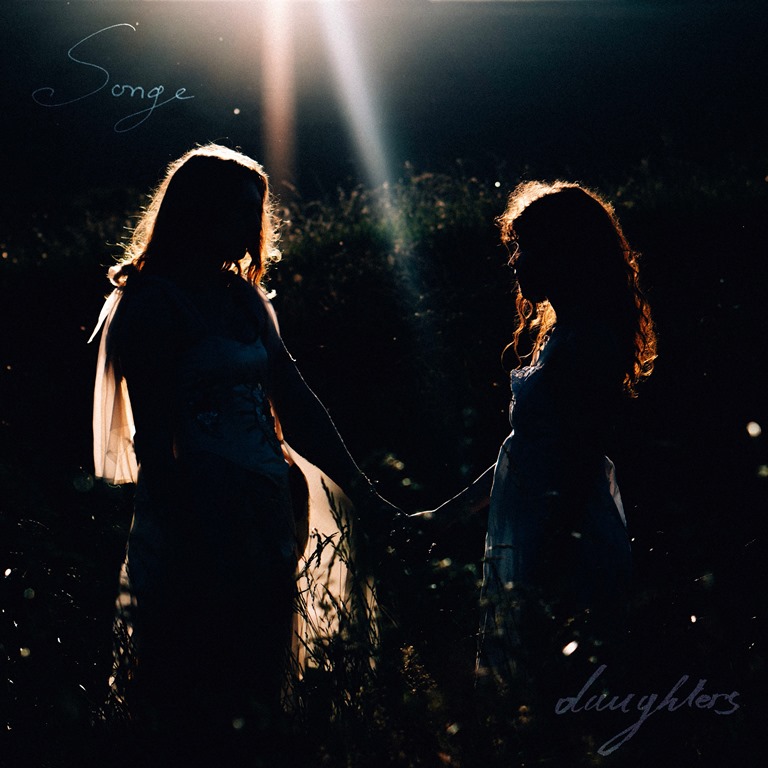
Listening to the debut album proper by Songe in this context makes for a heavy experience. And it’s the context that counts here, because in reality, Daughters is largely calm and spacious rather than dark and oppressive.

The Anglo-French duo consisting of Gaëlle Croguennec and Phoebe Bentham formed in 2023 ‘upon stumbling on a lonely church piano’, and, we learn that ‘Songe explores what it means to live in a postmodern world that feels rooted in destruction’.

This resonates. Right now, it feels as if the world is on a collision course. The so-called ‘great pause’ of the pandemic seems more, in hindsight, as if it was a time during which tensions built and nations pent up rage ready to unleash the moment the opportunity arose. Some of this a matter of perception and distortion, but the bare fact is that the last COVID restrictions were lifted here in the UK on 21 February 2022, and Russia invaded Ukraine three days later. The pandemic, for many, felt apocalyptic. It wasn’t simply the deaths, the fear, but the impact of the restrictions, which didn’t suddenly dissipate the moment those restrictions lifted. The end of restrictions felt like a deep-sea diver coming up for air, the aftereffects akin to the case of the bends. While we were recovering our breath and dealing with the cramps, Russia invaded Ukraine, and from thereon in it’s felt like an endless succession of disasters, storms, and then – then – the annihilation of Gaza.

Musically, Daughters – on which the duo deliver a set of ‘vibrant and experimental soundscapes using a variety of e-pianos, pedals and theremin, pairing a traditional playing style with bit-crushed granular delays to create a soaring top line met with ethereal vocals’ – is by no means dark, bleak, or depressing. In fact, quite the opposite is true. It’s a delightful set of compositions.

But sometimes, the more graceful, delicate, uplifting the music, the harder it hits. And on Daughters, Songe reach some dark and hard-to-reach places. From the most innocuous beginnings, the epic, nine-minute ‘Warmer, Hotter’ swells to a surge of discordant churn beneath soaring, ethereal vocals. The piano-led ‘Ashes’ borders on neoclassical in its delivery, and is rich in brooding atmosphere. ‘Heol’ begins with distorted, discordant harmonics, with frequencies which torment the inner ear. Gradually, through a foment of frothing frequences and fizzing tones, bubbling undercurrents rise. Haunting vocals rise through the mist, the haze, the dense and indefinable drift. It’s ethereal, spiritual, bewildering in terms of meaning.

Waves crash and splash before soft, rippling piano takes the lead on penultimate track, ‘Eveil’. It’s graceful, majestic, emotive – but not in a way which directly or obviously speaks of the album’s subject or context. The vocals are magnificent, but the words impenetrable. It works because of this, rather than in spite of it. It’s slow, subtle, powerful.

It’s not until the final composition, ‘Wraith’, that we feel the emotive power of a droning organ, paired with saddest of strings, that we really feel the depth and emotion al resonance of Daughters. As it fades in a brief reverberation, I find myself feeling sad. No, not sad: bereft. This is an album that takes time to take effect, to soak in. It deserves time to reflect.that time.

AA

AA

cover

Aumeta Records – 7th November 2025

Christopher Nosnibor

The ever-accelerating pace of life, and the endless noise of not just the Internet, but absolutely everything, seems to have given rise to an increasing popularity in the sphere of ambient works. It can’t simply be my perception: post-pandemic, everything has got louder, busier, there’s more traffic, the driving is worse and more aggressive, there are people everywhere at all times of day, and even country paths and lanes are chocca with cyclists, runners, and dog walkers even at 2pm on a Wednesday afternoon. Never mind the fact that the entire world is at war, is flooded, is burning, rioting… fuck! Just make it all stop!

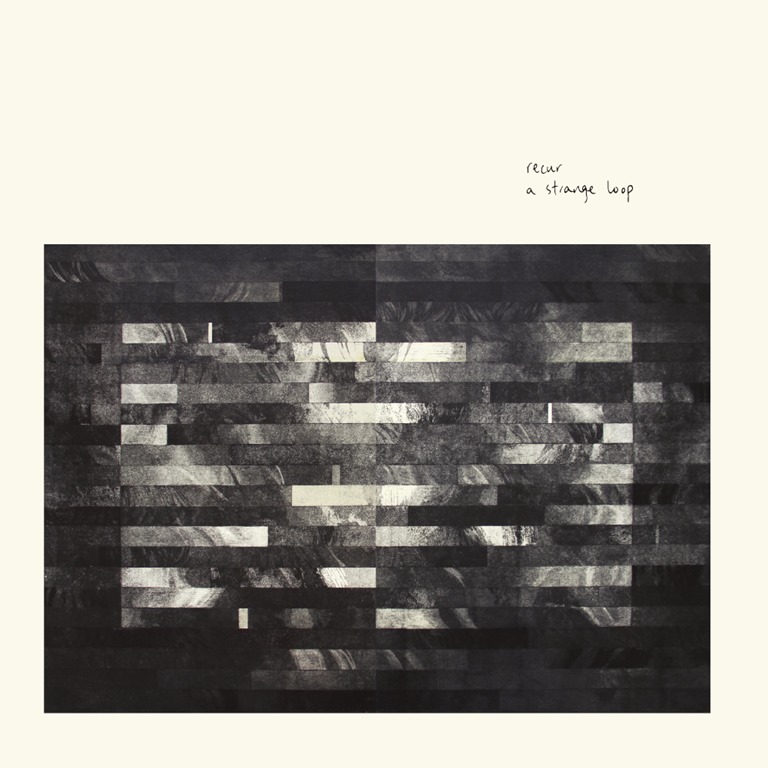
A Strange Loop may be Recur’s debut album, but the project’s lead, Tim Harrison, is by no means new to this, being a BIFA-winning composer, and for this excursion into analogue explorations, he’s joined by Richard Jones, the Ligeti Quartet, Jack Wyllie and the album was created using unique instruments crafted by Chase Coley. It’s not really ambient, not by a long way, and at times it’s quite dramatic, but it is immersive, in a way which leads the listener away from the turbulence of the everyday and into calmer waters, a sheltered cove where the tides are diminished, and there is respite, time and space to simply breathe slowly and regroup at distance from the noise, the constant disruption, the endless agitation and consternation. We simply don’t get anywhere hear enough time to breathe. When was the last time you properly relaxed your shoulders, filled your lungs to full inflation, and exhaled, slowly? When was the last time you truly felt ok?

The eight here pieces are slow, hazy-edged, abstract, immersive. Calming. ‘Oscillate’ delivers on its title, the volume surging and sliding unpredictably, creating a trick of the ear at times, with smooth, silken saxophone drifting in and out through delicate piano and washes of sound without any definite sound source. ‘Id Etude’ veers toward a chamber orchestra feel with picked strings and gliding notes.

It’s simultaneously focused and free: you very swiftly appreciate that this is a work where each composition is complex, detailed, the instrumentation varied, and the interplay between the instruments is both integral and remarkable. There are no fewer than thirteen players credited here, including four marimbas, two violins, two vibraphones, viola, cello, piano, and a host of more obscure instruments.

‘Nocturne’ brings the percussion to the fore to forge a hypnotic, beat-driven sway, before ‘Hieroglyph’ brings slow chimes, clumping trudging beats, and unsettling scrapes which evoke a mysterious, ominous sensation. This is Recur at their best: for all of the people playing here, they manage to create sparse, minimal, ominous, sombre works, pieces which are delicate, elegant, soft, supple, pieces which evolve, which shift gradually between places and moods, which make you feel… That’s it, really: they make you feel. From tension to emotion, from ease to unease, the scraping strings and swelling … ‘Iridescent’ is exemplary. It’s gentle. It surges and swells, there are moments of near-silence… and these moments are uplifting in a strange way, perhaps because moments of near-silence are so rare in all the babble.

Recur are unafraid of the silence, and, indeed, embrace it. We all need to embrace the silence.

AA

Recur – A Strange Loop  album cover 1000px

Christopher Nosnibor

Bite the Boxer is unquestionably an unusual and intriguing name for a musical project: my mind immediately leaps to the infamous ‘bite fight’ between Mike Tyson and Evander Holyfield in 1997, where Tyson lost through disqualification after biting off a chunk of Holyfield’s ear in one of sport’s most shocking moments.

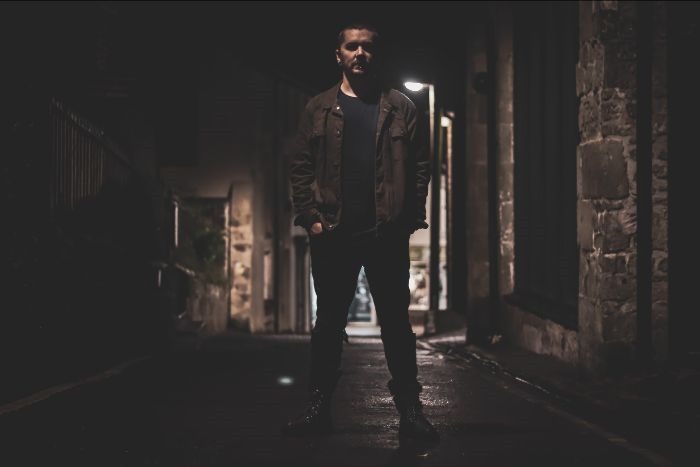
In combining an eclectic range of elements spanning industrial, alt-pop, trip-hop, and ambient lo-fi, there’s nothing about Matt Park’s music which indicates any connection to this moment in sporting history. The same is true of his objective to create music imbued with ‘he feeling of impending doom but with just a glimmer of hope’, which is inspired by ‘horror video games and dystopian, post-apocalyptic films’.

‘Venom Test’ is haunting – at first ambient, before bursting with an expansive, cinematic feel, then plunging into darker territory. Even without the aid of a beautifully-shot and remarkably stylish video, the rack leads the listener through an evocative sequence of sonic transitions. Although never harsh, the distant drums are weighty, powerful, and the overall experience feels like a juxtaposition of must and decay with rays of shining hope breaking through cloud. The listener feels as if they’re being pulled in opposite directions, the suspenseful end offering no conclusion, but instead, leaving a sense of emotional quandary, an uncertainty. ‘Venom Test’ creates a tension, and provides no closure or conclusion, only a sense of a door being left ajar. It’s a deftly woven piece, and one which feels very much like it belongs to a much larger project – which it does, being a taster (which doesn’t remotely have the flavour of bloodied ear, to the best of my knowledge) for the forthcoming album, Haunted Remains Pt.2. As a choice of single, it’s a good one, leaving us in suspense to hear it in the context it was intended.

AA

AA

92e42d4c-6d54-911b-d615-4a752d4ebad6

Coup Sur Coup – 17th October 2025

Christopher Nosnibor

Few drummers receive much recognition, unless they’re the backbone of bands who are household names (people know Ringo Starr, Keith Moon, Dave Grohl, Mike Joyce, Lars Ulrich), or have otherwise featured prominently in a specific musical milieu (Martin Atkins and Paul Ferguson come to mind). Their contributions are overlooked and underappreciated, and in the main, there’s a tendency to only notice exceptional drummers, or poor ones. It’s not the job of a drummer to grab attention, but to hold everything together at the back. Consequently, you might be forgiven for being unfamiliar with William Covert, whose career is defined more than 15 years of drumming in math rock, post-rock, and post-hardcore bands (Space Blood, Droughts, and Rust Ring).

As the narrative goes, ‘Covert began experimenting with live-looped synths alongside acoustic and electronic drums. This experimentation birthed two full-length solo albums characterized by post-rock and krautrock-inspired synth loops and melodies, all performed solo with loop pedals and sequencers.’ Dream Vessel was born out of a desire to pursue a different approach and a different direction, and indeed, the first part of this latest offering was a collaborative, group effort, with Nate Schenck on bass and Jack McKevitt on guitar, while we learn that ‘the other half was performed entirely solo, diving deep into cinematic ambient soundscapes, dreamy Frippertronic-influenced guitars, modular synth, and free-jazz drumming filtered through a post-industrial lens.’ Nothing if not varied, then.

The album’s five tracks span thirty-eight minutes, and it’s very much an exploratory experience. ‘Brotherhood of Sleep’ eases the listener in gently, with a slow, strolling bass and reverby guitars. It’s an expansive and spacious instrumental work, rich in texture and atmosphere – a shade proggy, a little bit jazzy, unfurling at a sedate pace. ‘Trancers’ fades in, and offers similar vibes, but it’s both more spacious, and more groove-led. The guitars bend and echo that bit further, and as the track progresses, so the pace and urgency build, along with the density of the guitars, which warp and stretch more with every bar. It may not hit the extremity of My Bloody Valentine’s Loveless, but the guitars do sound as if they’re melting by the midpoint, before the track locks into a muscular, driving groove that’s a world away from where it began. There’s an appeal that’s not easy to pin down when it comes to compositions which begin in one place and end up entirely in another, while it’s not entirely clear how they’ve transported the listener from A to B. The experience isn’t completely unlike making an absent-minded walk somewhere, when you haven’t been paying attention, and arrive with minimal recollection of the journey- although the difference is that the walk is usually via a familiar route that requires little to no concentration or engagement, whereas a song that swerves and switches involves an element of brain-scrambling along the way.

‘Dream Void’ is a centrepiece in every way: The third track, right in the middle, it’s over nine minutes in duration and a towering monolith of abstract drone. It’s immense, cinematic, widescreen, gentle. Around the mid-point, the drums arrive, and they’re busy, but backed off in the mix, and we’re led down a path to a place where frenetic percussion contrasts with chords which hover and hum for an eternity. Slow-picked guitar brings further texture to the mellow but brooding post-rock soundscape of ‘C-Beams’, which pushes toward nine minutes, as the album ventures into evermore experimental territory. As present as the drums are, they don’t provide rhythm, but bursts of percussion, swells of cymbal and wild batteries of rolling, roiling whomps.

The more concise, feedback-strewn ‘Throttle’ marks a change in aspect, a roar of noise, a wail of feedback, and positively wild, before ‘Come True’ closes the set with some Kraftwerkian bubbling synth and undulating bass, paired with a rolling beat. It’s all nicely done. And this is true of the album as a whole.

Dream Vessel is gentle, overall, but not without edge, or variety, and certainly not without dynamic. Here, ‘interesting’ and ‘unusual’ are not dismissive shrugs with a hint of condescension: Dream Vessel brings together a host of ideas and traverses a succession of soundscapes , never staying still for a second.

AA

a0283722598_10

Cruel Nature Records – 22nd September 2025

Christopher Nosnibor

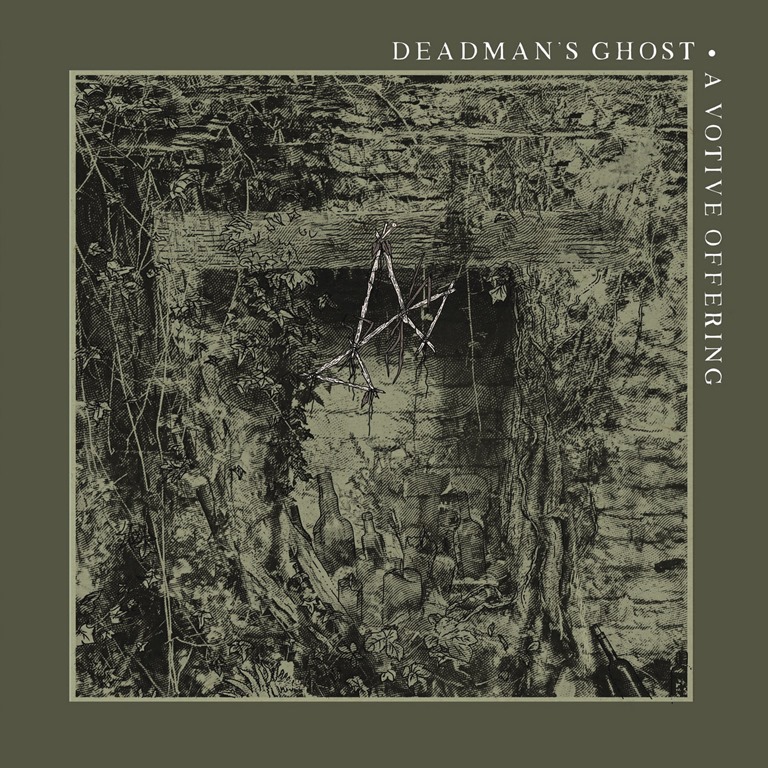
Love a few drones, me. Aural ones, not the buzzy buggers that tossers fly about for fun, or the nasty ones that undertake military operations and shoot the shit out of people and places. But places… places are important, the way they are so closely connected to memory, the way they evoke recollections of experiences… memory fades over time, but placers can so often provide triggers. The blurb for A Votive Offering register a deeper meaningfulness on account of the way the significance of place bears weight. I find myself; yearning for places I half-remember from childhood. My memory is a databank of random shots, from standing stone circles in Scotland and in the south, to a metal sign with a bullet hole in it, somewhere isolated on Dartmoor.

And so we arrive as A Votive Offering, and I shall quote in full from the Cruel Nature site here:

4 years since 2021’s Tethered Tales, the latest album by Deadman’s Ghost for Cruel Nature, uses drones, dark folk sounds, old samples and electronic beats to coalesce around a central theme. Each track in this collection evokes an obscure place in the Irish countryside with connections to folklore. Tucked away amidst today’s regimented rural landscape, small pockets of wilderness survive; vestiges of another era hidden behind roadside hedges and across farmer’s fields. These include the ruined cottage of a clairvoyant healer; a pair of standing stones believed to be oracles; a well which cures madness; and a cave where offerings were once left for ancient spirits. The songs presented here are paeans to these liminal spaces, and are infused with recordings taken there.

The first of the album’s seven compositions, ‘Chtonic Currents’ combines hovering hums, sonorous drones, gongs, bells, chimes, and special abstraction which occasionally builds to immense levels. ‘The Speaking Stones’ is ominous, heavy, and brings ominous waves of noise which wash over resonant, droning vocals.

There are samples on ‘The Man Who Felled the Fairythorn’, and one can’t help but contemplate the sad situation of Sycamore Gap. Or perhaps that is just me. The surprise here is that things suddenly take a turn for the heavy with throbbing industrial grooves cutting in.

A Votive Offering is dark. While twitters and chimes abound, dark surging, sonorous drones dominate, and weigh heavy over the sci-fi intimations tracks like ‘Biddy Early’s Potion’, where hints of Westworld twang, and hang ominously.

Gulls craw and waves splash on ‘Lunnaigh Dunes’, and a certain sadness pervades, inexplicably, dragging at the guts and lying heavy. Life was simpler once, and no so long ago. Nostalgia now is not what it was. And suddenly a drone grinds dark. The dynamic of A Votive Offering is one of continued motion, which keeps it interesting, but it’s also haunting.

A Votive Offering as a whole is haunting, but also strange, abstract, otherworldly. Ultimately, it’s… different, and an album get lost in.

AA

a1815982890_10

Mortality Tables – 25th September 2025

Bryan Alka’s brief post on Facebook sharing the news of his new release, is revelatory: ‘Today we release my 5th full length on Mortality Tables. After a series of breakdowns… The Magnitude Weighs Heavy.’

The Magnitude Weighs Heavy is the third and final instalment of a of dark and brooding albums, the first two parts of which – The Colour Of Terrible Crystal and Regarding The Auguries – were released by Vince Clarke’s VeryRecords. Alka, and particularly Bryan Michael, has no small back story: ‘a Philadelphia-area artist who has collaborated with Vince Clarke (Depeche Mode / Erasure / Yazoo), Roger O’Donnell (The Cure), Christian Savill (Slowdive / Monster Movie) and Michael Textbeak (Cleopatra Records). alka was formed around 2000 as a return to his bedroom producing days, and as a cleansing of his disappointing experience within the Philadelphia indie rock scene.’

This thirteen-track album is epic, grand, expansive. It’s also an exercise is taut electropop with a decidedly early 80s bent. Because what goes around comes around, the whipcrack snare and noodly electronic drift which defines many of the tracks, despite being pure 1989, have a contemporary feel, too.

‘Soliloquiy’ drifts into dreamy electro shoegaze, mellow and atmospheric, rippling, and soaked with a certain sadness, however sturdy the beats remain. Elsewhere, as on ‘Creeps; its clearly an attempt to lock things down with pinging robotic beats

This feels like quite departure for Mortality Tables, given their learning toward abstraction an ambience, but they’ve always leaned toward the different, and this is a work which is unashamedly different. ‘Unravel’ is exemplary here: it’s got groove, and is ostensibly a bopping dance cut, and a far cry from the implications of the album title. But everyone deals with trauma, grief, and distress differently, and we all articulate our internal strifes by different means. ‘enchanté’ locks into a hypnotic groove, the likes of which I haven’t been so immersed in since I discovered The Dancing Wu Li Masters by 25 Men back in 2008.

For all that, there are large, ambient expanses, passages of stuttering electro which draw together elements of industrial alongside the layered dance beats. The ten-minute ‘an attempt to conjure quiet’ feels like it’s quite willing to delve deeper into noise, the very opposite of the quiet it claims to seek, and the duration of this album feels like a teetering on edge. I’m reminded of how my late wife would hassle an and harangue over details, over chores, and the tense, jittery tone which leads n this album at times tales me there. But if the dark mutter of ‘thee individual visions ov jhonn’ is dark with resonating melancholia, The Magnitude Weighs Heavy brings things back to the light. ‘Whatever Will Become’ is a hybrid of pop and bubbling electronica, busy but mesmerising in its concentric circles of sound, its abrupt ending jolting the listener back to the moment.

The magnitude may weigh heavy, but this album has a remarkable lightness, delivered with a deftness of touch.

AA

a2561728450_10

Dependent Records – 3rd October 2025

Christopher Nosnibor

I’ve always favoured words over numbers – meaning, maths was never my strong point, and my qualifications strongly favour the arts. But it doesn’t take a maths genius to deduce that there are some serious numerical gymnastics taking place when conjuring the equation for this release. That Octagram extends the love of the number 8 which is clear from the band’s name to a concept, whereby the album features 8 songs with a playing-time of 8 minutes is logical, but when they try to spin it that ‘when the 8 just turns by a little in the context of the German electro industrial project’s sixth album, it becomes the symbol for infinity’, I’m lost. How does infinity fit in, and how does it all sit with being their sixth album, something which really screws up the whole thematic.

The tracks aren’t all exactly eight minutes in duration, but in the eight-minute span, ranging from 8:11 to 8:58, so it doesn’t feel as if the limitations / constraints of the project are so rigid as to inhibit the creative freedom necessary to explore and interrogate the themes flexibly.

We’ve already aired single cuts ‘New Eden’ and ‘Oathbreaker’ here at Aural Aggravation, and it’s fair to say they’re representative of this expansive, ambitious effort. It’s electronic industrial, with expansive, ambient trance elements woven in, as well as sampled snippets of dialogue. It’s perhaps worth noting that the vocal samples consist mainly of recitations quoting the last words of persons that were about to receive the death sentence. It’s all there on the sweeping, cinematic, dark electronic dance opener, ‘The Unborn’. In terms of texture and production, it’s absolutely meticulous, but a bit predictable and of a form. Three minutes or so in, the tone and tempo changes, the atmosphere darkens and the beats get harder, and the gritty, distorted vocals finally arrive and while it’s still quintessential technoindustrial / dark electro, the switch makes the song work in terms of structure and dynamics. And this seems to the strength to which FÏX8:SËD8 play to on Octagram, blending the trancey ambient dance elements with the driving hard-edged aspects of the genre.

Skinny Puppy are an obvious touchstone, to which they themselves draw attention, they seem to have assimilated the entirety of the Wax Trax! catalogue, while pulling from all aspects of cybergoth, and even Tubular Bells to forge a hypnotic hybrid of techno, electronica, dance, and industrial, taking a number of cues from Ministry’s Twitch. It’s true that I often return to the same sources: Wax Trax!, KMFDM, Skinny Puppy, 80s Ministry… but I feel I should stress that this isn’t entirely a reflection of my limited sphere of reference, but the two inches of ivory on which so much of the electronic industrial scene carves its tales of angst. The use of samples does feel rather cliché, the way the beats build behind fuzzy synths which ebb and slow, the minor-key one-finger synth riffs… And that’s fine: you know what you’re going to get. But at least with Octagram, FÏX8:SËD8 push that envelope a bit.

If ‘New Eden’ represents the more accessible side of all this, ‘Blisters’ goes in hard. ‘Tyrants’, too, brings a heavy Industrial throb with a dominant percussion, led by a powerful bin-lid smash of a snare sound. With the distorted vocals low in the mix, it’s tense, it’s intense, it’s claustrophobic. Taking its title from one of my favourite phrases from Milton, ‘Darkness Visible’ brings an interlude of cinematic serenity, at least initially, before locking into another dark pulsing groove. The darkness has rarely been more visible.

‘An Unquiet Mind’ makes for a slow-simmering, brooding finale, cinematic, atmospheric, expansive, as synth layers and beats build, rising from a montage of samples to stretch out an almost post-apocalyptic landscape. It feels like the end… and it is.

The best electronic industrial has an intensely inward focus, and makes you feel tense, restricted, somehow, and as much as it draws on obvious influences, with its taut, claustrophobic feel and dense production, Octagram sits – shuffling, twitching, crackling with anxiety – with the best electronic industrial.

AA

a1712199305_10

Room40 – 19th September 2025

Christopher Nosnibor

There are many labels putting interesting and unusual, innovative releases into the world. The majority of them are small, and supremely niche, but survive by virtue of knowing their audience – and I say audience rather than market, because while they obviously need to balance financially, often on the minutest of margins, they exist for the purpose of disseminating art rather than the production of profit. The underground operates on a very, very different model, and with very different objectives, from the mainstream.

One label which is consistent in its output is Lawrence English’s Room40. The interview I conducted with Lawrence some years ago has vanished from the Internet now, as happens when websites cease to operate and their owners stop paying for their hosting, but it will always stand as one of my favourites. This is relevant, because we touched on the subjects of William Burroughs, cut-ups, and sonic collage, and lo, English, in his appraisal of Steelwound, recounts how ‘In the early 00s, Ben had been working on cut-up electronics, spilling over with floating rhythms, humming string samples and piano splices. It was a sound realised in part through the subversion of fruity loops and also owes a debt to Ableton Live which arrived in late 2001. His works to that point, gently saturated and bristling with a fizzy distortion at times, hinted at another sound world which would become his focused in the summer of 2002 and into 2003.’

A further note on Frost’s process is also informative by way of a preface, and comes again courtesy of Lawrence, who writes, ‘Working with a Fender Twin, often with the reverb dialled in at maximum, he found a language of shimmer and saturation, of compression and collision, that set the stage for a prolonged interest in how sound performs and is perceived at volume. It also is the first time that many of the tonal and melodic inflections that have come to be recognised as his compositional language are on display.’

This is the twentieth anniversary edition of an album that likely very few people have even heard of, let alone heard, and the chances are, it will remain that way despite this reissue. That isn’t because it’s not good, but because it’s ultra-niche and on a small label. But, in those certain small circles, it will likely receive attention, and deservedly so.

As is often the case, any technical and theoretical background is lost in the listening. The album’s first piece, ‘Swarm’, is an ambient work which may well weave a certain tension, but its trickling drone reveals nothing of the aforementioned context. The same is true of the epic ‘I Lay My Ear to Furious Latin’, which in itself is anything but furious, an floats, drifts and wisps abstractly over the duration of nine minutes, before the mellifluous ten-and-a-half-minute ‘You, Me and the End of Everything’ stretches out into post-rock territory, and in doing so extends its emotional pull, also. It’s slow and ponderous, spacious, and expansive, and strains of feedback scrape and push at the delicate, soft-focus edges, before the first vocals of the album arrive, haunted, detached, and deeply moving in unexpected ways. Sometimes, the human voice affects us more profoundly when any words aren’t discernible. We hear the emotion poured into them, and we feed on what we take implicitly. Sound and enunciation, delivery, can convey emotion and meaning which is beyond words, and that is very much the case here.

The title track, emerging from the rumble of thunder and heavy rain amidst a blustery backdrop scrapes and drones, trills and whines, a representation of an industrial soundscape that veers between the graceful and the brutal, the harsh, as feedback assails the ears frequently – but there are points at which it dissipates, and submits to drifting mellowness, even then the feedback continues. ‘Last Exit to Brooklyn’, taking its title from Hubert Selby Jr’s classic, if gritty, novel is soft but with harsher edges.

It’s hard to comment on the initial resonance or impact of Steelwound twenty years ago. There likely wasn’t much. But as the whistles and wails of the title track dissipate in a gentle breeze, it does grow dark. Not SO dark, but darker that it was. This is an album of texture and detail, moving, but also captivating, a spell of gripping stillness, a pause to reflect. As the scraping, sonorous trails of ‘And I watch You Breathe’, it’s worth stepping back, taking a moment, and breathing. Just… breathing.

AA

RM403_20 front

Mortality Tables – 1st August 2025

Christopher Nosnibor

The latest instalment of the ambitious and wide-ranging Impermanence Project curated by Mortality Tables is a document, as the artist explains, simply and succinctly: ‘This is the sound of my footsteps. I walk through some woods every lunchtime when I’m at work. I try to take a different route every day. The recording starts and ends at the office door. There are two gates which separate a lake – one of several – from the woods.’

This simple premise of recording a walk – a few seconds short of seventeen minutes in duration speaks on a number of levels: the first, in context of the project’s premise, is also the context of the walk itself – the lunch break at work. A brief window in which to seek separation from the work and the workplace. Too few workers really use this time as their own, with many scoffing a sandwich as their desk, or nipping to a canteen or a supermarket for a prepackaged meal deal, instead of something more beneficial to both physical and mental health. I must stress that I’m not judging, and it’s not easy, but as a walker myself, when I was office-based, I would make a point of getting out on a lunch-break, and now home-based, divide my day with a walk. This time out from work is but brief, but affords an opportunity to decompress, to recalibrate.

The fact the artist reports trying to take a different route every day is interesting. Treading new ground, or even walking a known route in the opposite direction, or otherwise questing for variety keeps things fresh, and opens one’s eyes to new sights. These things are often in the detail, but also change with the seasons, noting the changes in the colour of the leaves, a toadstool, hearing birdsong. The world is ever changing, and while work can all too often manifest as a groundhog day of ‘same shit, different day’ which often feels like ‘same shit, same day again – and what day even is it?’ the outdoors paints a different picture. Even when the realisation hits that it only seemed as though Spring was beginning to break mere weeks ago and now summer has past and the air smells of Autumn, and that nagging sense of another year having evaporated and life slipping past settled awkwardly in the gut – a soft but palpable blow which serves as a reminder of how short life is, the outward signs of the passage of time are evidence of being alive.

Listening to 17 Minutes, we get to accompany Xqui on their walk in real-time. They keep a decent pace, too, and as one tunes the attention, changes in echo, background sounds, the metallic scrape of a gate hinges, the different terrains underfoot, all become significant. There is traffic. There are few people, at least speaking along the way. I abhor having to listen to people’s conversations as I walk. And yet I find I’ve been unable to listen to music while walking since lockdown, and simply have to hear everything.

Although documenting a walk through woods, the backdrop to 17 Minutes sounds somewhat urban, or at least overtly inhabited, a setting where human presence dominates nature. A couple of minutes from the end, a gate swings and clangs shut. Although we’re not yet back at the office door, it feels significant. I even feel myself slump a little inside, feeling that passing through this gate – which in the opposite direction represents the opening up of a path to freedom – signifies the end of this escape. And with this, comes the hard appreciation of the fact that nothing last forever, especially not a lunch break.

AA

a1847342772_10

Dragon’s Eye Recordings  – 22nd August 2025

Christopher Nosnibor

A year on from my review of Yorkshire Modular Society’s Fiery Angels Fell, I find myself presented with another release of theirs on LA label Dragon’s Eye Recordings, and I can’t help but contemplate the circuitous routes by which music travels, since the release landed in my inbox courtesy of a PR based in Berlin – while no-one in my sphere of acquaintance, which includes a broad swathe of electronic artists around York and, indeed Yorkshire as it spreads in all directions – appears to have even the first inkling of the existence of YMS, despite their connection to Todmorden. But then, I often observe that what holds a lot of acts back is confinement to being ‘local’, and it’s a lack of vision, or ambition – or, occasionally, practical matters – which prevent them from reaching the national, or international, audience they deserve.

Yorkshire Modular Society clearly have an audience, and it’s not going to be found at pub gigs in their native county. This is true of most experimental artists: there’s no shortage of interest in niche work globally, but it’s thinly spread. There are places, predominantly across mainland Europe, and like Café Oto, which cater to such tastes, but they’re few and far between, which explains why most such projects tend to be more orientated towards the recording and release of their output, their audience growing nebulously, more often than not by association and word of mouth.

This release – which is the first collaborative album from Yorkshire Modular Society with Peter Digby Lee – could only ever really be a download. With ‘a suite of four ambient compositions shaped by intuition, ritual, and shared resonance’, it’s over two hours in duration, giving recent Swans a run in terms of epic.

The story goers that ‘The artists first crossed paths not through conversation, but through shared vibration — at the resonance Drone Bath in Todmorden. A quiet alignment. Some time later, Peter sent over a treasure trove of sound: samples he had recorded and collected over many years — textures, fragments, and moments suspended in time. From this archive, Dominick Schofield (Yorkshire Modular Society) began to listen, to loop, to stretch, to shape… What followed was a process of intuitive composition—letting the materials speak, revealing what had been buried in the dust and hum. This album is the result: four pieces, each unfolding from the source material with care and curiosity, a shared language spoken in tone, breath, and resonance.’

The title track is soft, gentle, sweeping, lilting, serene, floating in on picked strings, trilling woodwind and it all floats on a breeze of mellifluousness, cloud-like, its forms ever-shifting, impossible to solidify. With hints of Japanese influence and slow-swelling post-rock, it’s ambient, but also busy, layered, textured, thick, even, the musical equivalent of high humidity. It moves, endlessly, but the breezy feel is countered by a density which leaves the listener panting for air. The sound warps and wefts in such a way as to be a little uncomfortable around the region of the lower stomach after a time, like being on a boat which rocks slowly from side to side. ‘Beneath the Hanging Sky’ lays for almost thirty-six minutes, and it’s far from soothing, and as a consequence, I find myself feeling quite keyed up by the arrival of ‘Glass Lung’, another soundscape which stretches out for a full half-hour. This is more conventionally ambient, softer, more abstract, but follows a similar pattern of a slow rise and fall, an ebb and flow. Here, the application is emollient, sedative. I find myself yawning, not out of boredom, but from relaxation, something I don’t do often enough. And so it is that this slow-drifting sonic expanse takes things down a couple of notches. You may find yourself zoning out, your eyes drooping… and it’s to the good. Stimulation is very clearly not the objective here.

Third track, ‘Echo for the Unseen’, is the album’s shortest by some way, at a mere twenty-two minutes in length. It’s also darker, dense, more intense than anything which has preceded it, and as ambient as it ss, the eternal drones are reminiscent of recent both latter day Swans, and Sunn O)). The epic drone swells and surges, but mostly simmers, the droning growing more sonorous as it rolls and yawns wider as the track progress. There are harsher top-end tones drilling away in the mix as the track progresses. It makes for a long and weighty twenty-two minutes, and we feel as if we’re crawling our way to the closer, ‘Spiral of Breath’, which arrives on a heavy swirling drone that’s darkly atmospheric and big on the low-end. Instead of offering levity, ‘Spiral of Breath’ is the densest, darkest piece of the four, as well as the longest. With no lulls, no calm spells, no respite, it’s the most challenging track of the release. It’s suffocating. There is no respite. There is, however, endless depth, and eternal, purgatorial anguish.

AA

a1425387917_10