Posts Tagged ‘Ambient’

Panurus Productions – 4th December 2020

Christopher Nosnibor

Although August is the peak of the British summer, its end often seems to mark a sharp shift into Autumn; less a transition than a rapid cut. It’s a trick of the mind and a distortion of memory, of course, but summers always seemed longer and hotter in childhood; the realisation that what once felt like an infinite expanse of time which was free to fill or squander at will is, in fact, but a heartbeat in a life is a source of deep anguish. There is never enough time. No-one ever lay on their death-bed lamenting that they wished they’d spent more time watching repeats of Bargain Hunt or Homes Under the Hammer or whatever, no-one complains that they read to many books or spent too much time living their life, do they? The torment of a constant awareness of the passage of time is self-sabotaging, as the paralysis of panic grips hard. And pitched as ‘a screaming elegy for lost moments and isolation’, this is precisely what Centuries of August, which takes its title from a line from a poem by the solitary and reclusive Emily Dickinson, articulates.

If everything seems to be dominated by themes of isolation and derangement in 2020, then perhaps that’s because the magnitude of the events – or non-events – we’re living though exit on a scale that is truly all-consuming. Even the most introverted and reclusive are finding the isolation difficult to deal with: there’s a world of difference from choosing not to go out and see people, and not having the choice, especially as for many, music events provide a safe space where it’s possible to feel included and among people without the need for the kind of forced interaction that’s part and parcel of the workplace, and where it’s possible to experience a sense of community and collectivism without conforming to the less comfortable social conventions.

2020 has revealed new shades of darkness, and Centuries of August expresses anxiety, panic, rage, fear, isolation, in every one of those shades – as long as it’s black.

It’s a low, ominous synth drone that brings fear chords like creeping mist in a graveyard that marks the stealthy arrival of ‘Ripe for Solitude, Exhausted by Life’ – before all hues of murky black metal hell break loose. It’s a thunderous tempest of the darkest, densest noise, pounding hard and fast, before eventually dissipating once more into to quiet clouds of synth.

‘The Breezes Bought by Dejected Lutes’ is by no means the Elizabethan romantic piece the title suggests, but a savage blast of bleak and brutal mid-range sludge. There are drums, guitars, and vocals in the mix somewhere, but everything is a grimy blur and it’s impossible to identify anything distinctly.

Quavering dark ambience cast shadowy shades of gloom over the opening moments of ‘This Lamentable Autumn’; a picked lead guitar line adds a rich, brooding atmosphere, and then there’s everything else, coughed up from the very bowels of hell, a swirling sonic fog that goes beyond pea soup to the consistency of treacle, and wading through the barren soundscape for sic and a half minutes almost precisely recreates the experience of the last eight months in sound, before eight-minute closer ‘Under the Lowering Sky’ bulldozes in with cranium-crushing density.

That Centuries of August takes the lo-fi production values of the genre to its more extreme limits is integral to its appeal: the fact it’s so murky as to border on the frustrating is a source of power here, accentuating the oppressive density of the compositions to a level of intensity that hurts. But it’s the kind of pain that’s the perfect mirror, reflecting the conflicting nature of time, amplified by the anguish of living in the now.

AA

cover

Constellation Records -5th November 2020

Christopher Nosnibor

If the title sounds pretentious – and let’s face it, it does – if any act can carry it off without looking daft, it’s probably Montréal’s premier avant-rock band Fly Pan Am, who are well-suited to a release in this series via Constellation.

The ‘Corona Borealis Longplay Singles Series’ is a set of sixteen single releases, each of extensive duration and with an audiovisual element. ‘Mirror Cracks Seeking Interiority’ is eleven minutes of squirming, scraping, laser-blitzing ambience pinned to a subtle but insistent mid-tempo bass beat. It’s difficult to pigeonhole, but then, pigeonholing is just lazy journalism, and what matter is that ‘Mirror Cracks Seeking Interiority’ leads the listener on a remarkable journey, a succession of transitions, some unexpected others which naturally flow into one another.

The liner notes outline the track’s evolution, recounting how ‘during lockdown the band has been trading files at a distance, including experiments with remixes of their Frontera live soundtrack recordings. ‘Mirror Cracks Seeking Interiority’ is the first fruit of these efforts and a first for Fly Pan AM in terms of process: each chronological section of the track is a solo work by each individual member, remixed in isolation, then stitched together in mostly linear fashion.’

The track’s success lies as much in its seamless assembly as its slow-spinning atmosphere: as much as there are distinct passages, ‘Mirror Cracks Seeking Interiority’ in no way feel cobbled together or patchworked. And, on the basis of the band’s comments, it seems that there’s more in the pipeline, and on the evidence here, it’s going to be good.

The accompanying experimental film by Charline Dally is quite a trip, too.

AA

a0417275120_10

17th August 2020 – Submarine Broadcasting Co

Christopher Nosnibor

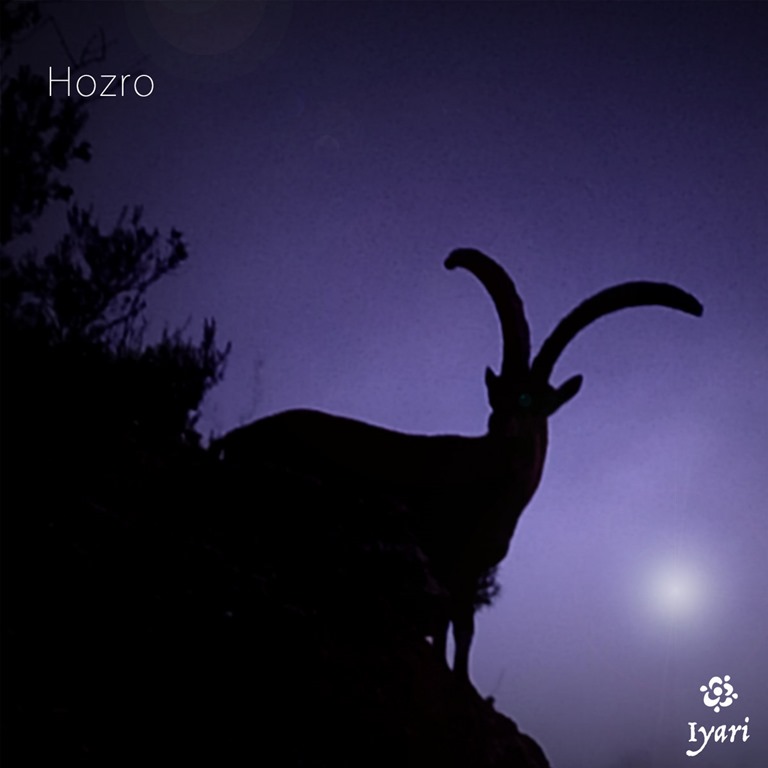
According to the blurbage (I can’t claim to spend all that much time on research when my primary objective is to report a critical and sometimes emotional response to a release, and band and PR invest a lot of time in their explications, so why not?) ‘Hozro’, is a native American Dineh word that means living being conscious about the beauty, the magic and the mystery of the universe to which we belong.

I’ve been struggling to find much hozro myself in recent months, confined to a diminished space, rarely seeing or speaking to anyone outside my immediate household and inundated with reports of the shitshow that is western governments, so ,maybe I need this album right now.

Iyari describes it as post-rock, but threatens elements of folk and traditional music, avant garde and electronica, as performed by him and a while slew of guest musician, who all contribute

‘Eloher’, the first composition, is but an introduction, a path that leads the listener toward the body of sound that lies ahead, and it’s a wide-ranging and eclectic set, of which the title rack is representative. There’s a certain restraint in the echo-soaked lead guitar line that rings out over a low-key but insistent sting-damped strum.

Is it just me that instantly connects reverb and atmosphere? Is it the musical equivalent of an autosuggestive word association? Maybe, but Hozro brings all the atmosphere with its sparse arrangements.

There’s a magnificently moving vocal on ‘The Great Spirit’, and while it soars and quavers most movingly, there are undercurrents that intimate ancient folk traditions, and one suspects its this that taps into a deeper level of the psyche than the surface of the singing or the tune itself. ‘Islay’ may or may not be a musical homage to the Scottish island which is home to distillers of the finest single malts going, because Hozro is a pancultural melting-pot, and moreover, one which actually infuses the elements effortlessly. ‘Land of the Silver Shadows’ stands out, not by virtue of its difference, but the fact it encapsulates every magnificently understated aspect of the album within a softly-ripping six minutes.

Iyari clearly grasps the idea that less is more, and in bringing the volume and the detail and the level of demand on the listener down, Hozro brings more – much more, making it one to explore.

AA

a3729313554_10

Cruel Nature Records – 28th August 2020

Christopher Nosnibor

It would be a flippant cliché to describe this offering by the insanely prolific Whirling Hall of Knives (this is their fourth release of 2020 and their thirteen full-length album) as an album of two halves, split as it is across two sides of the cassette release – but it would also be a valid assessment of its musical contents, also. For while it is consistently atmospheric and droney throughout, the six tracks, which bleed into one another to create the sensation of two longform tracks (the digital version is even mastered as such) consisting of a number of passages, they each bear a distinct character, if not necessarily form.

With such a daunting back catalogue, it’s difficult to know where to begin both on terms of exploration and comparison, but it’s probably fair to say that being neither as harsh as some efforts, or as ominously oppressive as others, Sabre is representative while siting at the more accessible end of their output spectrum.

These compositions are loose, transitional, and while they do lead the listener on a sonic journey of sorts, it’s meandering and non-linear in its trajectory.

The clattering rhythm that marches in the opening bars of the first track, ‘Laid to Rust’, immediately reminds me of the intro to ‘Breathe’ by Ministry, although perhaps a shade dubbier. But the percussion soon fades out and leaves, not grating metal guitars, but tapering whistles of feedback and drones like damaged woodwind. But this is very much a percussive album, at times verging on experimental dance music… and so in fades ‘Those Tracers’, the lead single, accompanied by a video we’re immensely proud to premiere here at AA. This is very much a work of abstract freeform dance music that bumps along in a vortex bubble.

Side A closes off with the altogether more attacking ‘Gutterpressed’, a gritty industrial grating through which bleak winds howl desolately.

Side B’s three cuts are lower, slower, dronier. Before sliding into a sepulchural reverence, ‘Olde Slice (Edit) is ominous and sparse. When the beats do emerge on ‘Ring Dialog’, they’re swampy and backed off, some indistinguishable robotix vocals echoing into a murky mass. The final track, ‘Barkd’ drift and hovers for so long, but suddenly, from amidst distant chords that reverberate hints of the sparsest, most minimal desert rock , percussion rises and drives away at a heavy beat and pulsating industrial bass throb to conjure an intense and oppressive atmosphere as the album inches toward its finale.

Sabre isn’t easy to categorise, and at times, it’s not that easy to listen to, either. But that’s what makes it.

Preorder Sabre here.

AA

art_whok_sabre_tape_outer copy

24th July 2020

This Valley Of Old Mountains is a collaboration between Taylor Deupree and Federico Durand, which the press release informs us, ‘quietly creates the folklore of an imaginary land. From a hemisphere apart, share simple sounds with complex stories. Their music balances an edge between translucency and exploration, focusing on obscurity, repetition and a shared

fascination of the mountains between them’.

The album’s thirteen tracks are sparse and lilting, and oftentimes intimate a certain oriental influence as the notes – picked and struck – ring out into a confined-sounding space. For the remainder, they simply hover and hum, an easy, effortless wash of sound. You don’t you just sit as the glitches play out, twisting your psyche fleetingly, and wonder where it’s actually going as you venture into your own head.

Not a lot happens here, but then again, this isn’t about events, and more about atmosphere. Listening to This Valley of Old Mountains, there are moments where I can’t tell if I’m listening to the album or just the throb of the extractor fan in the bathroom next to my office. In a way, it doesn’t really matter either way.

‘Honii’ brings trilling twitters of birdsong to join the slow, echoing chimes of dulcimer and similar, while ‘Wintir’ is minimal, atmospheric, and exemplary of sparsely-arranged warps and wefts. ‘Polei’ is a slow, soporific tinkling piece, and fits with most of This Valley of Old Mountains’ mellow mellifluousness.

This Valley of Old Mountains is background, is barely-present, is vague in structure. It’s a perfectly ambient work of ambience, and works perfectly.

AA

a3671003152_10

Gizeh Records – August 28th 2020 – GZH98

Christopher Nosnibor

Three years on from Noplace, the unassuming supergroup known only by their actual names, comprising Aidan Baker (Nadja / Hypnodrone Ensemble), Simon Goff (Jóhann Johannsson / Hildur Gudnadottir) and Thor Harris (Swans, Shearwater, Thor & Friends) reconvene for a second instalment of improvisational work created in just a single day. On this occasion, they took advantage of a day off while on tour to record at Voxton Studios in Berlin

The Bit is an edited rendition of that session.

According to the press release, ‘The Bit finds the trio painting with a lighter touch than on its predecessor. Thor Harris’ motorik beats still underpin the music but the atmospherics take a more prominent role and there is a pure and cohesive path to be found throughout the record. Much like on Noplace, Baker’s guitar and Goff’s violin weave together beautifully, forming a deep bed of melody, ambience and reverb.’

There’s an equine theme to many of the titles, specifically ‘The Bit’, ‘Canter’ and ‘Gait’, but the loping drums and slow-moving ambient drone that defines the sound isn’t particularly evocative of the theme.

Of the six real-time compositions, the first five are quite succinct, around the three or four-minute mark, with only ‘Gait’ – a sparse, minimal piece that slowly throbs and pulsates while feathery notes drift down gently in a wide space – drawing out past seven minutes.

‘Springenden’ is a beautifully detailed piece, ostensibly a modern classical work consisting of rippling piano, quavering strings and a soft background wash of synth, which prefaces the twenty-two-minute finale, ‘Wild At Heart’. It’s essentially an expansive ambient work, which whispers, wisps and turns with an understated grace, twisting and turning as a slow beat booms into the rarefied atmosphere. It’s an expansive, exploratory piece that’s murky, ominous, and suspenseful. And the thing about suspense is that you never know what’s around the corner. There is no revelation in the rumbling low tones and wailing, dawning drones that emerge and taper down during this longform piece which descends to distortion and dissonance as the sound thickens and grows grainier. It’s a gradual dilapidation and makes for an intriguing and subtle listening experience.

AA

a2947139286_10

gk rec.

Christopher Nosnibor

This makes for quite a refreshing change: it feels like about two-thirds of my reviews in recent months have been marked by a compulsion to comment on artists going into creative overdrive during lockdown and whacking out releases of new material because they’re not currently touring or working their day-jobs. But for Lithuanian electronic experimentalist Gintas Kraptavičius, it’s business as usual, with a steady flow of output over recent years, and with Amnesia being his second release of 2020.

One of the things I personally admire about Gintas as an artist is how broadly he explores the field of electronic music, with works ranging from minimal ambience to deep dives into microtonal territory, and a whole lot in between. Amnesia conforms to no genre or form, and instead spreads its myriad suggestions from across a host of conceptual spaces to create something wonderfully vague, and also vaguely wonderful.

The release comes with no information whatsoever about its concept or purpose or recording, beyond the fact that it uses drum samples by Travis D. Johnson. Those samples aren’t neatly assembled to form looped rhythm tracks and solid structural foundations for a work with an overt linear trajectory or other sense of solid form.

Amnesia contains a single track which spans a massive forty-four minutes, and begins with crackling, interweaving synths waves which crackle and fizz with distortion, while thumping clatters that sound more like shuffling, clumping footfalls than drums crash sporadically and arrhythmically.

There are some crescendos or swirling noise and shrill, trilling feedback notes that whistle and screech over churning blasts of bilious noise, violent sonic storms. There are segments of laser bleeps and skittering short, sharp toppy notes fire into a swirling morass of mid-range extranea.

A delicate piano tinkles in a nuclear storm and a stammering clanking rattles and clangs behind and alongside. This is a dominant feature of Amnesia: there is always a background and a foreground and a significant degree of contrast between the two, which is both textural and tonal. Harsh top and midrange are laced against softer, more gloopy lower spectrum sounds.

Time slips, drips, dribbles and cascades through a shifting sonic multiverse that’s often uncomfortable, at times undemanding, as the track transitions between ambience and abrasion, and towards the end it takes a turn towards synapse-collapsing early 80s power electronics.

What do you do with this? Where do you take it? What is it all about? There is no clear message, no distinct or decisive form, resulting in a longform composition that meanders and swerves in all directions but ultimately leads nowhere and articulates little – and that’s more than ok: Amnesia is not about sequence and making a bar, but about capturing a sense of vagueness and a certain lack of purpose, of point, and it does so magnificently.

AA

a2114610098_10

Front and Follow – 31st July 2020

Christopher Nosnibor

Rejection hurts. Always. Some of us can ride it out, brazen it off, better than others, but always, it stings. Artists in any media tend to be sensitive types, and so the sting is all the harder.

The basis for this series is lovely: it’s relevant, relatable, but also worthy because of its wider context: ‘not an isolation project – it’s a rejection project’. Rejection is isolating in itself, but more specifically, this is a collection of rejections released from isolations.

As the accompanying blurb recounts, ‘Isolation and Rejection was born out of thinking about what happened to all the tracks that didn’t make it onto those fancy compilations, and is now turning into an ongoing project to collect, collate and promote rejected sounds.

With over 100 artists signed up, we are going to release five volumes over the next few months. Each volume will showcase those lost gems, discarded and abandoned but now lovingly embraced and put front and centre for your enjoyment. We’ll also be sharing the stories behind the rejection – funny, weird and sometimes a little heart breaking.’

The beauty of this collection lies not only in the music itself, but its eclecticism. The tracks range from fragmentary snippets to eleven-minute explorations, from bubbling electronica to billowing abstraction. With twenty-four tracks, it is a monumental and truly epic set, and not necessarily one to take in in a single sitting.

Lose a Leg provide the first piece, with a delicate piano snippet of a composition called ‘Thinking About It’. It’s barely a minute and a half, so there isn’t much time to think.

There’s a strong leaning towards mellifluent ambient works, abstract, cloud-like sonic drifts of intangibility, but this being a Front and Follow-curated release, it’s got well-considered range: Time Attendant’s ‘Binocular Visions’ introduces Kraftwerkian robotic electronica into the mix, with a motoric sequenced rhythm underpinning its throbbing electronic structures. Then again, there’s a lot of bleepy electronica centred around cyclical grooves and heavily repetitive beats, as exemplified by Caper One & Vandal Deca’s contribution.

Some pieces straddle both: Audio Obscura’s ‘Castles on Earth’ is big, bold dubby, beaty and ambient all at once, an echoic bath that swells around a dense, booming bass, and elsewhere, Crisp Packet Jacket bring woozy pulsations with ‘Dreadful Own Brand’. No Later’s‘The Revenant Sea’ is spectral and haunting, and in many ways encapsulates the spirit of the release in its hybridity, while ‘Music forBroken Piano’s recalls early Pram in its dissonance and discord.

Sairie’s lilting folk cover of ‘House of the Rising Sun’ stands out by virtue not only of its difference, but its beautiful vocal melodies, which later over a sparse et lush acoustic guitar. Why was it rejected? Did they submit to a death metal or power electronics compilations? But we know that rejection is often more about curatorial taste than quality of submission, and it’s quite apparent with this collection because there simply isn’t a weak track to be found.

It is a colossal collection, and likely not one to play in a single sitting, especially with so much going on. This makes it, along with the first edition, a collection of outstanding quality.

Room40 – DRM475 – 24th July 2020

Christopher Nosnibor

In one of a brace of releases on Lawrence English’s Room 40 label in July, Australian minimalist Todd Anderson-Kunert presents a selection of Moog synthesiser compositions, which we learn are ‘exercises in intimacy, restraint and unerring patience. Past Walls And Windows plays with how sound emerges and decays. It is an edition that celebrates the ephemeral nature of the medium and the way sound’s immateriality invites a constant sensing and seeking on behalf of those that encounter it’.

These are indeed minimal works, so sparse at times as to be barely audible, and they’re a long way from presenting any sounds conventionally associated with the vintage Moog. Instead of jangly, trilling tones, Anderson-Kunert teases hovering single notes that evoke a sombre, even funeral atmosphere for the most part. There are flittering oscillaations and low, diminishing drones, and they make up much of the fabric of this set, comprising six pieces, most of which sit over the five-minute mark.

It’s quiet and delicate: ‘Better Left’ begins with distant grumbles of thunder, before low ominous notes drone in and halt abruptly, while ‘An Echo’ brings slow pulsations and haunting drones like a trilling church organ ringing out dolorous notes in a sepulchral setting. It’s gloomy, and it’s ambient in the background sense, yet it has the capacity to send the listener inside themselves on a contemplative course.

It’s no criticism to remark that there isn’t a lot to say: this is an album that requires not commentary, but peace, and time: to be listened to without interruption or distraction, and ideally in semi-darkness. It isn’t an album that really raises questions, and it doesn’t offer answers: it simply is. An as a sonic vehicle for contemplation and tranquillity, it’s ideal.

DRM475_art

Gizeh Records – 3rd July 2020

Christopher Nosnibor

Presumably, Black Rain (I) is the first in a series, and contains three extended pieces – each of around a quarter of an hour – which were written and recorded by Richard Knox during the early months of 2020. Focusing on a more ambient and cinematic approach, Black Rain offers another texture to the A-Sun Amissa palette.

The blurb explains its relatively swift assembly, whereby ‘the record was written over a three month period where Knox had a self-imposed deadline of completing one piece of music per month to then be released digitally with immediate effect at the beginning of the following month. A deliberate move to be more impulsive and instinctive during the writing process and, for him, a new way of looking at releasing a record.’

For all that, nothing about the music here feels remotely rushed. The mood, meanwhile, is in some senses difficult to gauge: it’s not overtly melancholy, but there’s a wistful air to the delicately-arranged compositions.

The first of the three compositions, ‘The Sea’s Collapse’, isn’t a heavy, dramatic piece, but a deep, slow-turning ambient work that possesses a sense of grandeur in its gradual pulls back and forth, tapering down to a muted piano and the softest of washing drones that form a barely-present aural mist. It takes an eerier turn in the dying minutes, a combination of scrapes and extraneous wind-like howls whistling in the distance

The rhythmically-paced piano gives ‘Out Past the Dark’ a clearer sense of structure, as the trailing ambient notes hover in the background. While shifting and evolving over the course of the track, the cyclical chord motifs that surface and subsequently fade create a sense of movement.

‘Pulling Feathers from a Swan Song’ is sparser, and also darker in tone than the others. Long, brooding notes emerge from a slow-swirling murk, and while it’s graceful in its epically-proportioned brooding, there’s a sense of finality in the air that passes between the notes. And yet that finality does not intimate gloom or despair, but sad, weary acceptance of passing.

AA

a3372551981_10