Posts Tagged ‘Album Review’

Human Worth – 26th February 2021

Christopher Nosnibor

From the first twisted, dingy powerchords that herald the arrival of Fraught in Waves with the punishing – and appropriately-titled ‘Breakage’ – it’s abundantly clear that Gaffa Bandana’s debut album is going to be an absolute fucking beast. The rest of the album only verifies this as fact: Fraught in Waves is indeed an absolute fucking beast. It may only contain six tracks and have a total running time of half an hour, but the sheer intensity is ear-bleeding, eye-popping, and gut-tearing. Yes, this is a truly physical experience, one that’s exhausting and exhilarating in equal measure.

Gaffa Bandana is Gill Dread (Bruxa Maria) and Jennie Howell (So3ek, Sleeping Creatures, Gorse, Dooman Empire), and Fraught in Waves was first released as a digital-only effort back in September of last year.

While they’re pitched as a punk duo, the pair’s noise is a full-throttle hybrid of hardcore and sludgy noise, the guitars coming on like Fudge Tunnel covering Tad. The clattering drums also call to mind the heavy noise scene of the 90s: if obscure namechecks like Oil Seed Rape and other band on the Jackass label spark a light of recognition, then we’re speaking the same language. And the vocals are just terrifying: deranged, demonic, they’re at a pitch that’s rare in the fields of either punk, metal, or doom – it’s a cracked, guttural howl, bordering on a shrieking agony.

The contrasts are a major factor in its impact: the riffs are stop / start, and for all the density, there’s a lot of space where metallic clanging chords simply hang in the air before everything piles back in, hard, and deliberate.

There are hints of The Jesus Lizard about the churning ruckus of ‘Charm Offensive’ with its choppy guitar buzz and the hollering vocals low in the mix – but if you’re looking for more contemporary touchstones, Blacklisters and (early) Hawk Eyes are fair comparisons: jolting, metallic, uncomfortable and unforgiving, everything lurches one way and then the other, from stuttering stalls to incendiary riffage that absolutely burns, there is absolutely no room to breathe, not an inch to unwind in. This shit it tense, the kind of tension you feel in your chest and your stomach, and the seven-minute behemoth that stands as the album’s centrepiece, ‘Paralysis of Will’ is all the anguish, all the torture.

Every track feels more tempestuous than the last. ‘Evil Whispers’ has its moments of stuttering Shellac-like mathy judders as it stammeringly halts and resumes, but ultimately, it’s the relentless, balls-out, stomach-churning riffing that defines the sound. There isn’t a clean note to be found in this furious mess of noise. It’s rare for an album to grab you by the throat quite so brutally, and to maintain its choking grip without a moment’s respite, but Fraught in Waves is full-throttle from beginning to end. It is harsh, it is relentless, and at times borders on the psychotic. It’s pure catharsis, and it’s perfect.
cover

Thrill Jockey – 29th January 2021

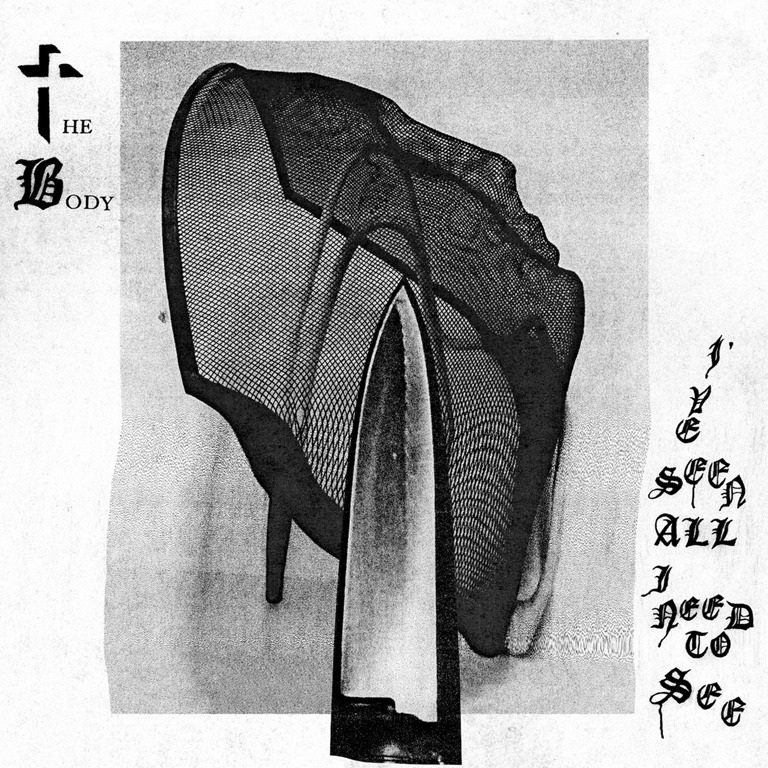
The sheer quantity of The Body’s output – often produced collaboratively – is little short of astounding, and since coming together some 20 years ago the duo comprising Lee Buford and Chip King have forged a reputation as masters of noise, and, as their biography attests, they’ve ‘consistently challenged assumptions and defied categorisation, redefining what it means to be a heavy band’.

There is no question that I’ve Seen All I Need To See is heavy: listening to it from beginning to end truly hurts.

It opens with crushing slabs of overloading distortion backing a monotone spoken-word piece. The juxtaposition of the blank, the bland, and the speaker-breaking blasts of bass-orientated menace is difficult to process, and that’s before the screaming demon-howl vocal begins howling its hellish anguish into the dense, murky mix of thunderous drums and bowel-churning low-end. ‘Lament’ is six minutes of pure heavyweight abrasion that tears at the guts and the soul. Every cymbal crash is an explosion, the decay distorted by deep bass detonations as it trudges doomily onwards – or down. Down. Down.

Everything simply splinters and overloads on the punishing single release, ‘Tied Up and Locked In’, which is a whole next level of heavy shit, a churning mess of overloading noise that’s utterly brain-pulping.

If the prospect of a slower song, which arrives as the album’s third track, Eschatological Imperative’, suggests some kind of respite, you’re going to be disappointed: slower, yes, but it’s a dirgy wall of noise that’s nothing short of overloading in every sense. It’s horrible, painful, but utterly perfect in fulfilling its purpose: there is no respite here, only pain, and pain articulated through brutal sound. ‘Pain of Knowing’ is so dense and dark, you could almost cry in the hope of a return to ignorance. A low, griding bass feedback noter hangs for eternity and rings a resonating pain, and the reminder that knowledge isn’t power, it’s pain.

The pain continues with the percussion-dominated slow throb of ‘The City is Shelled’, which crawls, bloodied, into the kind of territory occupied by Swans circa 1984, with crushingly slow beats and a buzzing bass that practically swallows everything. It’s a trajectory continued by on ‘They Are Coming’, a stop/start piece that’s utterly obliterative. The stops leave you hanging: the starts make your stomach lurch. There isn’t a moment’s respite or implicit kindness here. Hearing the bass drum downtune into a morass of distorted extranea and broken bass on ‘The handle The Blade’ is a most physical experience, and one that’s only heighted by the final track, ‘The Path of Failure’ which is utterly crushing. It’s megalithically, slow, and heavy, but also dark and punishing, and when noise does erupt on ‘The Path of Failure’ it does wo with a slow, brutal violence

I’ve Seen All I Need To See is a distillation of pain, and the production and mastering takes that to the max, to the point that I repeatedly found myself checking my connections and cables and even my speakers. In short, I’ve Seen All I Need To See is as brutal as anything you’ll hear, a work of total sonic overload.

AA

a0754428179_10

Editions Mego/Cave12  – 8th January 2021

Christopher Nosnibor

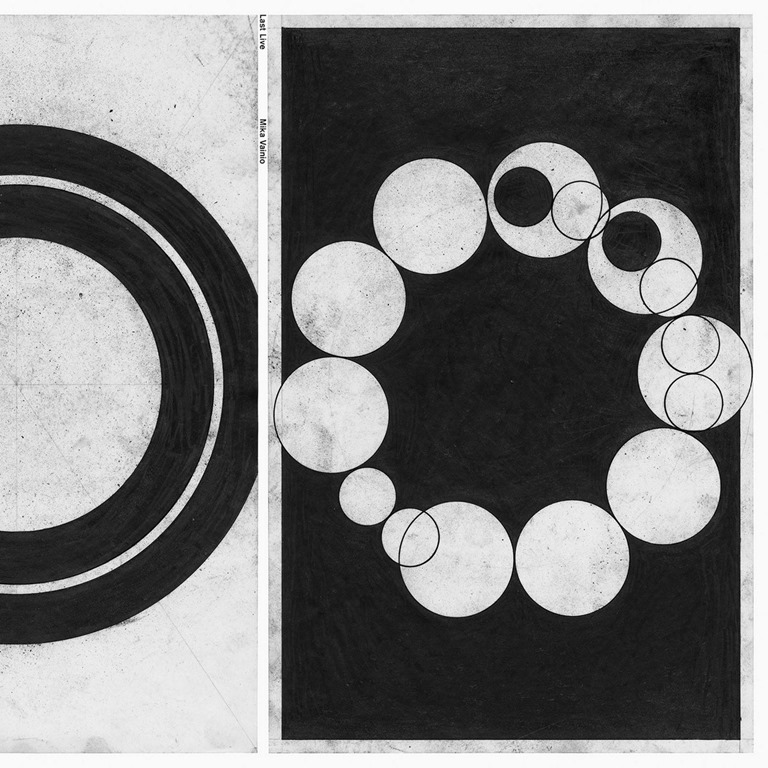
There’s a heavy air of finality about this release, encapsulated simply and plainly and unemotively in the title. Mika Vainio, best known as one half of Pan Sonic, produced a quite remarkable body of work under various guises and through numerous noteworthy collaborations, before his death, age 53, in April 2017. Last Live is a document of his final live performance, recorded on 2 February 2017 at Cave12, in Geneva. This is by no means a cash-in release or some poor-taste milking of the vaults.

As the liner notes recount, ‘we needed time to listen to this archive again, which we did in situ in June 2020 with Cindy Van Acker. After this listening, we felt invested in having to make this archive public.’ And instead of just banging it out, Editions Mego invested in making it fit the format, with Carl Michael von Hausswolff to do the mixing, and the recording was organized in 4 movements, with Stephen O’Malley involved in the pre-edit process and the legendary. Denis Blackham doing the mastering. This was, of course, necessary, in order to fit the double-LP format, and each segment spans between ten and nineteen minutes to cover the full hour-long set, which begins as a low, oscillating hum.

The drone goes on through the duration of ‘Movement 1’: indeed, it’s almost torturous after a mere five minutes, and we’re reminded early on that Vainio’s reputation was not based on his commercial appeal. Eventually, the hum halts and is replaced by a low-level throbbing, and a softer tone, before plunging into a drone of ow-level murk that one feels more than hears.

There are breaks in the ever-shifting sonic blanket pitched forth by Vainio, and the near-silent spells don’t correspond with the lulls between tracks as you might expect – but then, on the CD, the tracks beleed together anyway, giving a true sense of the set as a continuous piece, and a performance that explores tonality and texture, as well as frequency and dynamics.

There’s no question that this performance was loud: circuits creak, wail, and scream in a bulldozering barrage of grinding earthworking sound, a nuclear wind in the middle of a construction site drilling through the mantle to the earth’s core. But Vainio also ventures effortlessly into quieter, more tranquil bywaters, as well as bringing it down into semi-ambient territory.

At times, it hurts. The density is just bewildering, and twelve minutes into ‘Movement 2’ when everything starts to overload, it’s tempting just to lie down and stare at the ceiling muttering ‘holy fuck.’ When the sound really starts to crescendo, it’s a brutal, speaker shredding wall of noise, and it’s dark, and utterly obliterative. It’s also absolutely fucking punishing. So much so, any kind of analysis or critique feels almost futile.

Even without the context of death and finality, while penning this review in a place where there has been next to no live music in ten months, listening to Last Live is an intense and moving experience. It serves as a reminder of just how physical and how transportative live music can be, how songs may be important but sometimes, all you need is a sea of sound which will carry you away. There is no destination here, just an immense flow of sonic waves. And this is all you need.

It may well have been an unintentional sign-off, but as a last, and lasting, live statement turning the light off on an illustrious career, this is an appropriate curtain close.

12th February 2021

You sometimes feel like the world spins faster for some than others. That’s certainly the case for Weekend Recovery: it doesn’t feel so long ago since the emerging alt-rock act from Kent were turning up at a basement bar in Leeds to play their Paramore-influenced radio-friendly rock with fingers crossed the local support would bring some punters. They’ve toured nonstop since their inception in 2017, and it’s worked well for them in terms of amassing a fervent fanbase, and relocation to Leeds, if anything, has helped set them apart from the sameness of the scene of female-fronted alternative rock bands in and around the capital right now.

So fast forward not that very long, but add a debut album, even more extensive touring including some high-profile festival slots, as well as a change of lineup, into the busy timeline, and Weekend Recovery 2021 slams in hard with a new album. With ten tracks clocking in at twenty-nine minutes, you get the idea: this is concise, punchy, and with no fat left untrimmed. Weekend Recovery have always penned focussed songs, but they’ve really nailed it right here.

‘Radiator’ opens it up – and bleeds – with a nagging guitar motif, before the band plunge into megalithic hard rock territory, coming on more like Black Moth or Cold In Berlin than their usual selves. And it’s good: where there was a simmering tension to their songs, which cut jagged and raw on Get What You Came For, you feel like False Company is the album they always wanted to make but couldn’t, for various reasons. That, or it’s the album that shows what life experience can do: while they certainly weren’t afraid to crank it up and let rip previously, False Company is harder, heavier, and altogether darker.

That isn’t to say they’ve lost their pop edge one iota, and there’s a keen ear for melody on display throughout. And it may well be down to the melody, but ‘Can’t Let Go’ sounds like a glam/metal reworking of ‘These Boots Were Made for Walking’. It’s fitting, as it’s a proper stomper, and whereas the energy on previous releases stemmed from a combination of froth and bounce alongside the fizzing guitars and turns of pace, on False Company it’s more centres – the sound is denser and more-up front somehow.

Single cut ‘Going Nowhere’ – a reflection on stasis that’s specifically about relationships but could equally be a metaphor for the last 12 months – stands out as a furious post-punk pop banger with the spiky angst of Siouxsie and Skeletal Family, not to mention hints of X-Ray Spex melted into a song with massive accessible appeal. ‘It Doesn’t Seem Right’ is the ferociously fiery alt-rock corker they’ve always threatened.

‘Surprise’ is the quintessential album slowie, and sounds suspiciously like a power ballad to my ears. Single cut ‘There’s a Sense’ provides a dash of levity, an airy pop tune that harks back to ‘Why Don’t You Love Me?’ from the previous album and it does feel a shade throwaway in context, a tune dispensed at pace to grab the ear. Likewise, ‘You Know Why’: on its own sounds a bit like a hook with not so much meat, the ‘na-na-na’ refrain sounding like it’s leaning on My Chemical Romance just a bit too hard to be cool, but in context of the album its bubblegum buoyance feels more tempered, and in fairness, it’s a full-tilt punk blast with hints of X-Ray Spex.

Elsewhere, ‘Yeah?!’ has large elements of Nymphs in the mix, capturing that blend of grunge and classic rock and spinning it with a strong hook, and finally, in its juxtaposition of guitar lines and vocal melody, plus aaaaallll the dynamics, closer ‘Zealot’ feels like their most evolved and sophisticated song to date.

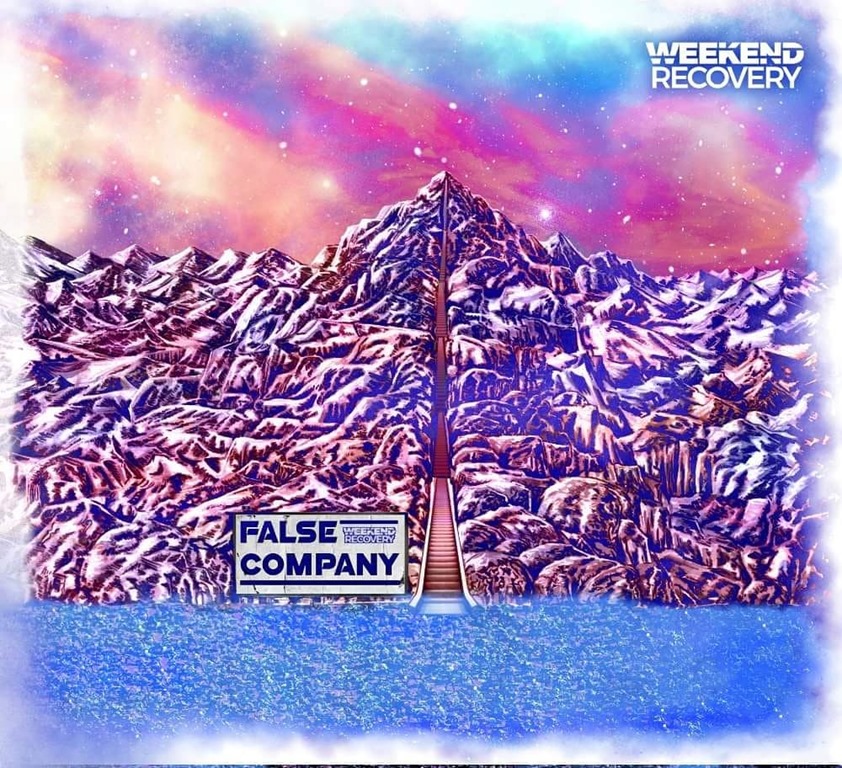
In terms of the ‘difficult second album’, the machinations behind the scenes – not to mention timing – may have made its coming together a major challenge, and the cover art speaks volumes – it was a mountain to climb, an endless staircase to where? But none of this is evident from the finished product: instead, False Company is darker, harder, stronger, denser, more assured-sounding and more evolved, and every aspect is a step up from its predecessor: Weekend Recovery have really upped their game and expanded their range, delivering an album that really is something special.

AA

139669184_484273482976162_2931459315862235505_n

When an album contains just three tracks, you know before you even hear a note that it’s going to be possessed of epic qualities. Similarly, when a band’s pitch includes ‘RIYL bands like Swans, MONO, lots of layered drums and percussion, ambient soundscapes, and wall of sound guitar and big strings’, (and I think it’s pretty much public knowledge by now that I do), then the same applies, and so needless to say I was all over this in an instant.

The first track, ‘The Gift’, is a twenty-minute behemoth, a sweeping exploration that builds from tense strings of the kind that would likely be at home on a Netflix period drama into something altogether more awe-inspiring, as the drums rumble like distant thunder at a gathering pace and intensity. Over its immense span, it leads the listener on a journey through an array of soundscapes, and there’s not only considerable atmosphere being conjured here, but the music also has a very visual aspect. You feel as if you’re being transported through different scenes, and at times, are creeping cautiously and peering around corners, while at others, staring out from a high plateau overlooking immense vistas that stretch further than the eye can see.

This is very much latterday Swans providing the inspiration here, with the expansive instrumental passages and near-ambient stretches that came to define releases from The Seer to The Glowing Man via To Be Kind, each of which stretched over a full two hours apiece. However, solarminds’ compositional approach and overall sound is quite different, leaning very much toward more conventional post-rock tropes (but without the contrivances of, say, Sigur Rós) and while there are some immense percussion-driven crescendos, with the strong-centric instrumentation, they don’t hit the explosive peaks of, say, Explosions in the Sky or Her Name is Calla. None of these are bad things, and while the sheer scale of their music does definitely sit within the domain occupied by MONO.

‘The Visit’ begins with an amorphous mass of dank, dark ambience, and is thirteen minutes of elongated, undulating drones that twist, turn, scrape and screed against a tumultuous barrage of percussion.

Closer ‘The Lie’ marks a significant departure, as the sound of heavy rain and extraneous noise gives way to a near -acappela vocal, an acoustic guitar, muffled and distant, providing the sparsest of accompaniment. It’s here they’re most reminiscent of Her Name is Calla at their most minimal, stripped-back, and folky, and it’s a delicate, tender experience that grows in emotional intensity and pulls at the gut with its starkness, its rawness.

Dissolving in a rumble of thunder, it’s a fitting conclusion to an album that, beneath some smooth surfaces, presents some quite troubled currents in the depths.

AA

sddefault

18th December 2020

Christopher Nosnibor

If you’re drawing comparisons to PJ Harvey, Anna Calvi, Tori Amos, and Kate Bush, you’re probably doing something right, even if it may be through lazy journalism. Despite female artists and female-fronted bands having made massive headway in recent years – and seriously, not before time – and frankly, it shouldn’t erven be a talking point or even a subject of reference – the pool of major-league female artists who aren’t pop or r’n’b is quite limited. Consequently, comparisons are often drawn almost out of desperation due to the lack of choice. This is unfair on both sides, and incredibly reductive. But then, comparisons are problematic anyway, and are perhaps indicative of another issue in the music industry: labels, radio stations, media outlets, even fans – most of the time, they’re not really looking for the next big thing, but the new replica of the last big thing.

It’s far easier to market ‘the new PJ Harvey’ than ‘something like nothing you’ve ever heard before.’ Amazon and most streaming sites operate on ‘recommendations’: if you like x, you’ll probably like y’. It’s likely true, but this only leads to a narrowing: where is the encouragement of broadening horizons? Strong female voices are being pigeonholed – and I don’t mean just strong in vocal terms, although Kristina Stazaker is strong on both fronts when it comes to voice, with songs that are imbued with deep emotional resonance delivered with the kind of passion that comes from the very core.

On Follow Me, Stazaker showcases a selection of songs which are stripped back and direct. Primarily centred around acoustic guitar and vocals – often layered up with backing vocals and harmonies – the style is angry folk, but the voice uniquely Stazaker’s. Follow Me is simple but effective: that is to say, it’s imperious, free of fancy production, and is absolutely about the songs. It’s fitting for an album so lyrically concerned with nature, and the lyrical preoccupations are reflected in the honest, earthy instrumentation.

‘Don’t let those bastards beat you down’ Stazaker sings with a strong hint of venom on ‘Everyday’. It’s not an oblique reference to The Handmaid’s Tale, but it should be a feminist / working class anthem in the offing.

The album’s longest song, ‘Goddess’, is a multi-layered emotional dredger that functions on multiple levels. ‘Hail Hail Rain and Sail’ is a lively, even fiery folk tune with just vocals and energetically-strummed acoustic guitar. The format is simple, but the effect is powerful, and Follow Me succeeds because of its confidence: Stazaker demonstrates perfectly that less is more when done right, and with so many strong songs, Follow Me is all the force.

AA

Image 3

1st February 2021

Christopher Nosnibor

Mercy is a four-piece alternative rock act propelled by vocalist and guitarist Mercedes Diett-Krendel, and the debut album by Mercy is a short but punchy guitar-driven exorcism of sorts. Most of the best music comes from a dark place, and has a personal element, and Mercedes has dredged deep into her experience to purge it all here. The self-invited comparisons to Veruca Salt, Hole, and No Doubt are all entirely fitting, in that Forever is very much centred around a strong female front person.

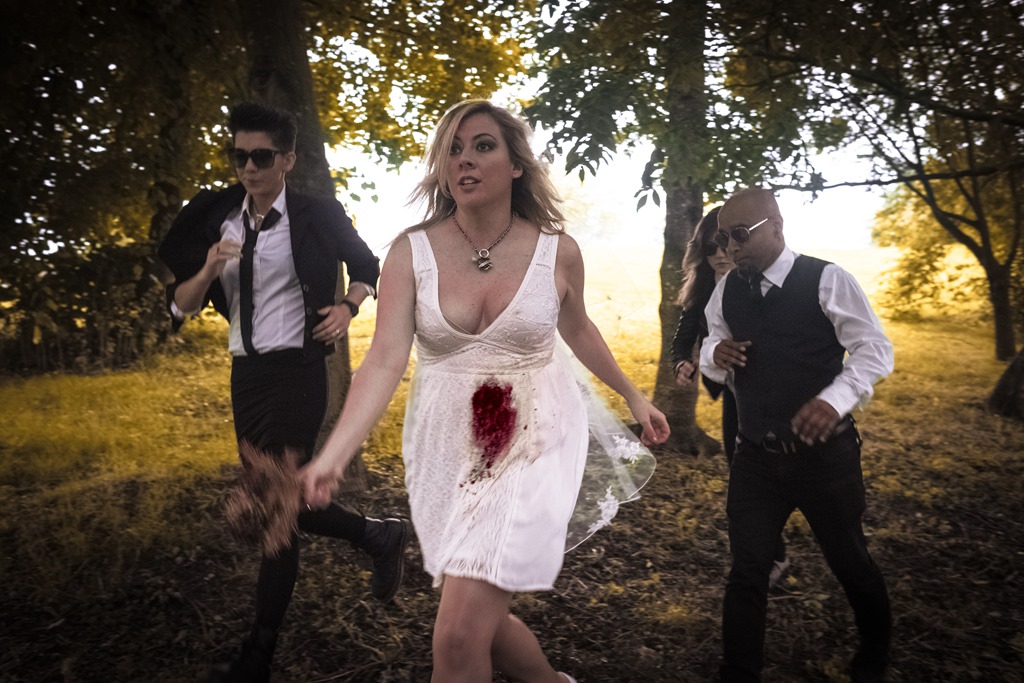
It begins with a rendition of the wedding march played on a heavily echoed, overdriven electric guitar… nice day for a white wedding? Nice day to start again, more like. Forever is an album brimming with ire, anguish, and angst, the soundtrack to a wedding massacre that finds the artist picking the scabs of all the shit, all the trauma… in short, it’s a summary of Mercy’s worst relationships bottled up into an epic explosion of revenge, ending in a bloody mess.

The promo shots suggest that this is more than just a theme or concept, but something far, far more intense and deeply personal, and this gives the album its ragged, sore edge.

The songs are melodic, but have edge – a grungy, 90s alt-rock edge, and it’s pretty full-throttle. The mid-album acoustic slowie,‘Gabriel’ really slows the pace, and marks an essential shift in an album that really works that classic quiet/loud dynamic, and it kicks in for a properly anthemic climax. ‘Damage’ kicks ass with an almost gypsy, folksy edge to its grunge attack, while the stomping title track is brimming with emotion. And you feel that emotion, while being buoyed along by some strong melodies.

It’s concise, and it’s fiery, and the success of Forever is in balancing the fury and the tune.

Mercy Band / Photo © Daniel D. Moses www.danielmoses.com

Cruel Nature Recordings – 29th January 2021

Christopher Nosnibor

The description sets the scene and the expectation perfectly: ‘True Archweigian Improve-Free-Grind-Noise-Experimental-Avant-Jazzcore. John Coltrane quadruple booked on the same stage as Extreme Noise Terror, Swans and The Incapacitants.

It sounds horrible and utterly brain-frying, and it is. ‘Deep Pan Magna Carta’ launches the album – a whopping sixteen-track sprawl that reveals something of a fixation with wolves and goats – with a barrage of crashing, chaotic percussion, gut-churning bass, wild horns and tortured vocals that spew larva from the very bowels of hell. And they’re clearly intent on dragging you there with them, into the pit of pain, because there is absolutely no fucking let-up. This is everything all at once – and while it’s relentlessly and uncompromisingly nasty, it certainly doesn’t confide itself to any one style – and as for genre, it’s a crazed hybrid mash-up, seemingly intended to inflict maximum pain – and if this is indeed the objective, they succeed.

Most of the tracks are around the minute mark – but actually feel much longer, as they drag and dredge their way through the deepest sludge. Believe it or not, that’s not a complaint or criticism, so much as an observation on how it feels to be brutally battered from all sides at once. There is, undoubtedly, an element of endurance required here.

As the band’s name and whacky, irreverent and possibly irrelevant (it’s impossible to tell without being able to decipher the lyrics) song titles suggest, we should probably only take this so seriously. But then, as the best comedians will tell you, comedy is serious business, and so it would seem is slugging out the harshest, brutal mess of noise.

Before long, they’re in full-tilt frenzied grindcore territory: ‘Wolf Goat’ is nine seconds of snarking and blastb(l)eats, followed immediately by the thirty-six second ‘Goat Wolf’, another blast of carnage that thunders at a thousand miles an hour. There’s some black metal nastiness in the mix when the snarling vocals deliver a snarling acappella intro to ‘hash, Weed, Pills, Saurkraut’. ‘Red sausage’ is about the only phrase I can pull out of the frenetic thrash that follows.

‘Natural Born Testicle’ takes a different turn: a howling blizzard of shrieking electronics and clean shouting, it’s a wild swing into power electronics, and is more reminiscent of Whitehouse than anything else.

It’s the manic horn action that really makes Blood & Stomach Pills the experience that it is. It’s chaotic, discordant, and above all, incongruous – but then again, it calls to mind the jazz-coloured noise of GOD, as well as recent work by Sly and the Family Drone – but this is probably the grindiest permutation of such crazed free jazz I’ve encountered yet.

a0861470396_10

Gizeh Records – GZH101 – 22nd January 2021

Christopher Nosnibor

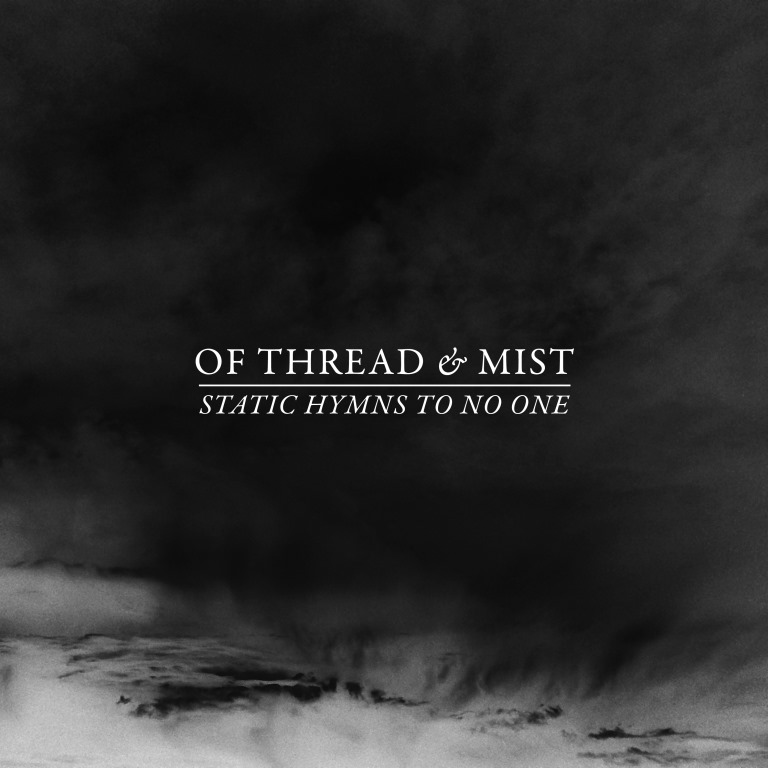
Gizeh label founder Richard Knox already has a quite remarkable resume of musical projects, often running simultaneously or overlapping. With Shield Patterns currently quiet and A-Sun Amissa standing as his primary collective vehicle, Knox’s contributions to collaborative works over recent years have been numerous, but to fill a gap – or more likely scratch another itch – he’s stepped into the (half) light with a new solo project, Of Thread & Mist. A fair summary is that the project sounds exactly as the name suggests, and one might say representative of the Gizeh ‘house’ style’ – evocative, haunting, juxtapositional, but also evasive, intangible, ephemeral.

Static Hymns contains two longform tracks: the first, ‘Grace and Truth Perish’ has a running time of eighteen and a half minutes, while ‘A Face Full of Drunken Ticks’ is a colossally sprawling thirty-two-minute epic.

The formulation of the album centres around music ‘composed by Knox then deconstructed and manipulated via hand-made tape loops, beaten-up 4-Tracks and modified cassette players’. There’s very much a sense of artistry around the manipulation of the material, an almost avant-garde collaging, repurposing, reconfiguration, destroying – or at least disfiguring – in order to build anew.

There is something old, faded, slightly damaged about the warped, wavering tape drones that seep tentatively from the speakers to begin with, creating a sense of unease, a certain degree of disorientation, a feeling that something isn’t quite right about the way the different layers of sound rub against one another without quite connecting. It’s a slow, trickling turn as gradients of sweeping waves of sound, broad in spectra and subtly textured like pale watercolours spreading into one another, and the edges blur into indistinction.

This type of cinematic, atmospheric ambient drone is very much Knox’s signature, and he’s long demonstrated a knack for slowly shifting from light to shade and back through almost granular gradation, but where Static Hymns stands out is its almost collage-like approach in places. The different elements overlap, and not always comfortably – and this is very much in their favour in the way in which they challenge the recipient: this is no simple drone-over-and-out, but an album that proffers a sensory challenge, and as such, demands more attention than so many exercises in background drift that occupy the ambient sphere.

Toward the end, the sound again begins to waver, waxing and waning, tapering and yawning, stretching and fading in and out unpredictably, as if slowly degenerating, degrading. There are a number of abrupt false endings as the sound fragments into evermore brief flickers. It stutters, it yawns, and finally, it is done – gone, ended.

But when the sound ends, the reflection begins. Static Hymns is an album that invites reflection in the silence which follows the final notes.

AA

GZH101_Digital_Sleeve

26th December 2020 – Lake Label

Christopher Nosnibor

There was a time when the phrase ‘concept album’ was something of a joke, a term indicative of some self-absorbed, self-important muso cack, all too often of a prog rock persuasion, with connotations of the pompous and grandiose, not to mention the overlong and immensely indulgent. Times have changed, things have moved on, and it’s no longer deemed pretentious to talk about art, at least in many circles, when it comes to the making of music. Outside the mainstream, at least, the movement against intellectualism and the war against intelligence has slowed.

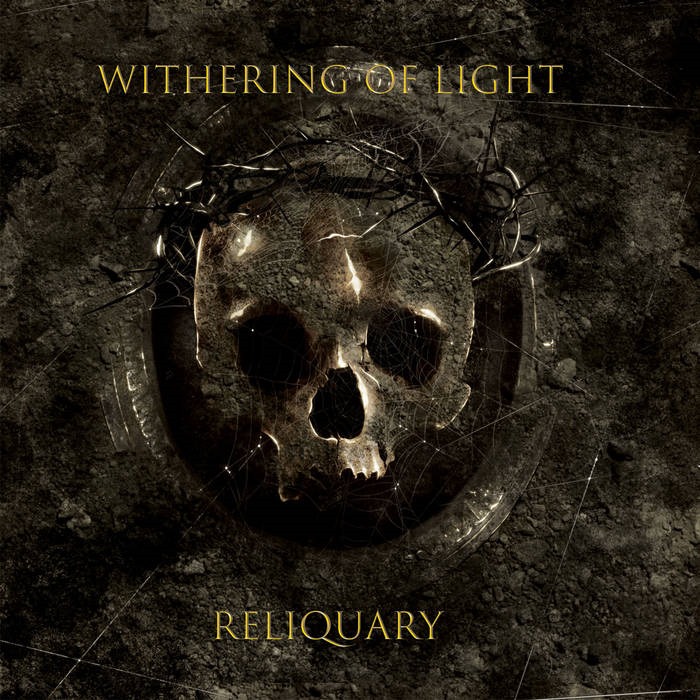
It stands to reason that there would be a concept behind a sprawling forty-three-minute exploration of moody murkiness that is the latest (burnt) offering from Todd Janeczek via his dark ambient vehicle, the evocatively-named Withering of Light. As Janeczek explains, “The concept behind this album became how each of the words that are the titles took me out of the mundane everyday and put my mind in somewhat of a different state… For instance, ‘Reliquary’ is a vessel that contains a sacred or holy relic of some kind. We as humans fetishize objects, moments, memories. Even your mind can become a reliquary harboring the sacred, profane and otherwise. Each of these words I found carried some kind of weight, a spectral resonance (hence that title) and the sounds here are the aural embodiment of these.”

The dark ambient medium has always operated within the realm of the evocative, and while the pieces are born out of the artist’s internal thought processes and reflections, most of how one responds to such works is dictated by one’s own mindset, headstate, and experience. The question is therefore less ‘what is this album saying?’ than ‘what does this album say to me?’

I’ve been stuck at home for a long time with only my immediate family – wife, nine-year-old child, demented housecat – and a lot of music for company. As such, I’m not particularly attenuated to the nuances of the meaning of the song titles, and am more situated to feel the physicality of the rumbles and tensions of the dark undercurrents that course through the six compositions what comprise Reliquary. For the most part, it ushers a sense of discomfort and a sepulchral gloom that corresponds with my innate desire to hibernate. The atmosphere is dark and heavy and it hangs, lingering in the thick air. And yet… what does it say? Your back bows, and you want to move away. You want peace. But just as this has no words, you have no words.

‘Hive’ sees the arrival of percussion in the form of slow crashing cymbals and as such stands out from the thick sonic fog of the rest of the album. Apart from this, nothing happens, there is no punctuation and no other shift that adds to the appeal or otherwise draws the listener in.

‘Reliquary’ offers little more than dank darkness and dripping, a condensation of gloom that clings to every surface in the mind. It offers little enticement beyond the opportunity to sit in darkness and stare at the wall. And sometimes, that’s the soundtrack we need and the wall is ok with me.

AA

a2313458423_16