Posts Tagged ‘Album Review’

Hallow Ground – HG2101 – 12th March 2021

Christopher Nosnibor

Norman Westberg, of Swans legend, has a long association with the cranking out of heavy noise. For over three decades, his style was a defining feature of one of the most singular bands, and a rare entity, namely a guitarist who was more than happy to bludgeon away at the same two or three chords for anything up to a quarter of an hour. I would even venture so far as to say that Westberg is a truly unique guitarist, and his appreciation and understanding of space is unparalleled – a player who isn’t only comfortable, but whose signature is a seemingly infinite pause between chords.

In more recent years, Westberg’s output has shifted towards a less abrasive angle, with a succession of solo releases from 2016 onwards exploring overtly ambient territory, through MRI¸ The All Most Quiet, (both 2016) and After Vacation (2019).

First Man in the Moon sees Westberg connect with double bass player Jacek Mazurkiewicz, who supported Swans on tour in Europe in 2014 under the moniker of his solo project 3FoNIA,.The result of their collaboration, recorded during some downtime ahead of Michael Gira’s two Warsaw shows toward the end of 2019, is five improvised tracks of richly resonant evocation. The pitch promises a work ‘beyond the boundaries of atmospheric drone, abstract jazz and experimental music [which] blurs the lines between the acoustic and the electronic.’

It’s all a blur: supple washes of sound painted in broad strokes provide the cloud-like ambient backdrop to clatters and creaks, and the occasional bleep and whirr. It’s very much about the contrast: Mazurkiewicz’s playing is versatile, with his double bass work ranging from deep, brooding sounds that are very much of the instrument, to sonorous booms, to the sound of a tree groaning and about to topple.

How deep do you delve into a work so overly ambient and abstract? At what point does dissection become futile? First Man in the Moon is an album that warrants space, and reflection, to breathe and to simply run its course – an album to bask in, rather than to pick apart. It creates a supple, evolving atmosphere of soft drone and a soporific soundscape in which to cut loose.

A hesitant bass emerges from the misty contrails of ‘That was Then’, and it’s ‘Falsely Accused’ is a slow, tidal throb that ebbs and flows… and not a lot else. First Man in the Moon is an album that drifts on, remaining in the background: it does not demand attention of focus. Attention and focus bring different rewards, but there is a lot to be said for simply sitting back, dimming the lights and sipping a whisky while the sounds of this subtle, nuanced work immerse you.

As collaborations go, Westberg and Mazurkiewicz make for a magnificent pairing, creating an album that shows a touching musical intuition: everything about First Man in the Moon simply flows, effortlessly, naturally, and creates a space in space – that is to say, a mental space in which to empty oneself. It’s rare, and it’s special.

AA

HG2101_front

Panurus Productions – 2nd April 2021

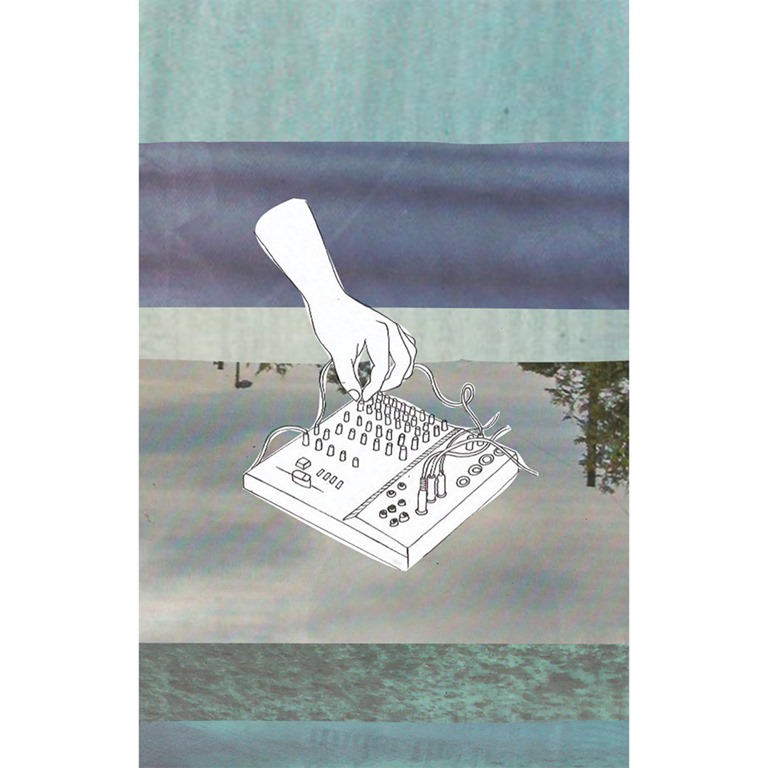
Sometimes, an understanding of process helps in shaping the appreciation of a musical work. Sometimes, it doesn’t. When presented with Only Then by Left Hand Cuts Off The Right, I can’t decide either way. The album contains two longform tracks – the twenty-five minute ‘2 – 6 – 17’ and the thirty-five minute ’23 – 6 -19’. Both were recorded live, and showcase a blend of improvisation and composition. The track titles do, unsurprisingly, mark the dates of the performances, both f which took place at the legendary Café Oto in 2017 and 2019.

On the former piece, a scraping drone hovers somewhere in the distance, relentless, nagging, always in the background but always within the reals of awareness: you simply cannot tune it out. Atop of this, there are crackles, scrapes, flickers, scratches and microcosmic, microtonal glitches, and gently tinkling picked notes casting sparse scales and oriental motifs, with the zither providing a unique, and, to western ears, exotic flavour. Over time, the details dissolve and blur into a metallic scrape that gnaws at the senses as allow, slow, undulation persists long after any trace of melody had dissipated, swallowed by currents of dissonant sound.

Slow-hammered xylophone notes emerge and steer toward the end of the first piece, and then stop: cue a cascade of applause which reminds us that this isn’t a studio work and that this happened. Not just that live performances used to be a thing, but, quite simply, that the audio contained here is not a studio-controlled contrivance, but an event that happened in real-time. Something about that realisation is strangely affecting.

Coughs and splutters and a general clamour of voices preface the fall to silence and the first echoing sounds on side two. Audience behaviour is so telling: the respect (or lack of) given to a artists whose performances are on the quiet aside can make or decimate the enjoyment for may of those present. Here, Left Hand Cuts Off The Right command over half an hour of hush. From clattering drips and clangs, the track builds from sparse sound echoing into emptiness, slow-dropping notes decaying into a soft ambience.

As to the technique and the technical aspects, the press release informs that ‘both sets were created with zither, melodica, synthesizer, bent electronics, field recordings, mbira, tape loops, percussion and effects. Side A comprises of 6 improvised sections each with specific performance, composition and sonic parameters. Side B is centred on 2 pre-recorded compositions which are mixed and performed live and interspersed with improvised sections for set sound sources.’

It’s actually quite difficult to unravel precisely what this means, beyond the fact that often the composing, improvising and performing processes overlap – informing one another as new works are created. And while the live performance of prerecorded pieces interspersed with improvisation and improvisation within predetermined parameters are clearly different disciplines, ultimately both methods combine a certain element of random with planning. Moreover, while delivered as works in the ,ids of an eternal evolution due to the nature of their form, these pieces as performed and as recorded are not works in progress, but works in their own right.

Only Then captures a moment – one I suspect many of us wish we could return to right now.

AA

a1540115934_10

Opa Loka Records – 5th March 2021

Christopher Nosnibor

Breath Mule is the third album for Dutch multi media artist Richard van Kruysdijk under the moniker Cut Worms, and after a gap of over three years, completes a trilogy along with Lumbar Fist (2016) and Cable Mounds (2017).

As the accompanying blurb outlines, ‘Cut Worms’ sound palette is firmly rooted in the lower frequencies’, detailing how ‘As the droney, cinematic tracks evolve, their slowly unravelling, gritty sounds evoke the audio equivalent of brutalist architecture: Concrete walls of sound that are as majestic as they are elementary, yet intrinsically detailed when examined with a magnifying glass.’

The majority of the tracks are long, and not a lot really happens, meaning that there is time given for each composition to breathe and explore the tones and textures in full detail. The low-booming opener, ‘Slug Sirup’ sounds like a ship’s horn sounding out over the miles through a dense and played back at half speed. First distant, it grows in volume, but little else happens for a very long time. And then, somehow, more than nine minutes has evaporated, and drifted into the slow-booming drone of ‘Come Lightly’. There isn’t much light about it: it’s dank and ominous.

There are crackling creaks enveloped in the dense, crawling fog of ‘Cinder Locks’. The sound is thick, heavy, immersive, and yes, it is ominous but at the same time, I find a certain comfort in such vast expanses of thunderous ambience. The more condensed the sound, the more it billows like smoke, the more impenetrable and more solid it becomes, the more it feels somehow like something that’s a source of a certain warmth and security. The same is true of the throbbing ‘Denmark Spiral’, but the thin, trilling wisps of Girly Totem’, while more overtly and quintessentially ‘ambient’ are somehow more difficult to settle in with – particularly in context.

The darkness really comes to the fore on the final track, the eleven-and-a-half-minute ‘Slashed Hostage’. The title provides a fair indication of its weight, and it begins with a low, slow, oscillating throbbing hum, one of those drones that nags at the senses like a far-off helicopter that you scan the sky for but can’t see. Again, it’s a slow-builder: the sound expands, louder, denser, but no different, and this is where it really starts to get into your head and burrow into your skull. It’s along this journey that the slow-moving drone expands to a different level of immersion, and when the swell tapers down, hushed vocals echo menacingly, too low in the mix to decipher the actual words, a poem by the enigmatic Italian composer Giacinto Scelsi (1905-1988), who wrote surrealist works in French. Because. That said, Scelsi is an interesting choice, as a composer who, according to his Wikipedia entry, ‘composed music based around only one pitch, altered in all manners through microtonal oscillations, harmonic allusions, and changes in timbre and dynamics, as paradigmatically exemplified in his Quattro pezzi su una nota sola (‘Four Pieces on a single note’, 1959)’.

On Breath Mule, Cut Worms offers more than a single note, but then again, there are no notes: only thick, swirling billows of sound and layers of drone on drone. It grips you, immerses you, hold you… and it’s not unpleasant, as long as you don’t struggle.

AA

CW-M013-digipack-3P_1CD-6-x-8mm-z-kieszonka V7

Chapter 22 Records – 31st March 2021

No question that these are tough times for bands and the grass roots music industry generally. It’s the smaller bands who depend on flogging T-shorts and a handful of CDs at shows who are among the worst affected: they’re not earning royalties from endless radio play, their songs aren’t being used on TV commercials or in film soundtracks, and they sure as hell aren’t covering the rent with Spotify streams.

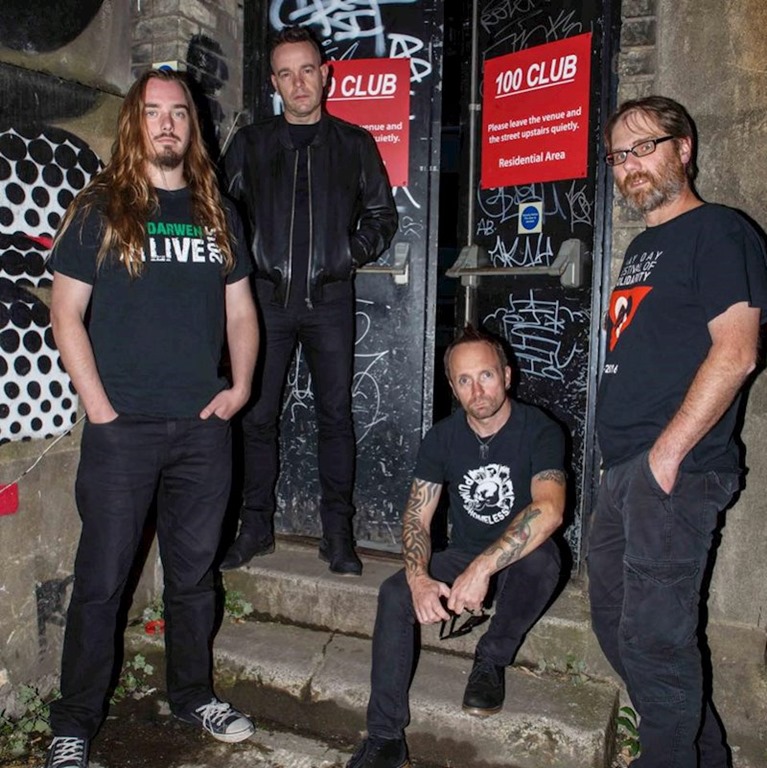
It must be particular difficult when you’re self-styled purveyors of Revolutionary Punk Roots Rock‘n’Roll whose entire ethos is to never rehearse, but instead achieve tightness through relentless gigging. What’s more, they had just reached a new peak – and a still wider audience – with a tour supporting New Model Army before the proverbial rug got pulled from under their feet. Still, newly-signed to Chapter 22, this, their fourth album, should do their profile no end of good.

Despite what their tag connotes, this – thankfully – is no bog-standard festival-friendly folk-punk knees-up roustabout as favoured by beer-sloshing bozos just looking to whoop it up. There’s substance to Headsticks’ melee which is more anti-folk than folk, while at the same time fuelled by the fury of genuine protest music: as you’d expect from a band who’ve had Crass’ Steve Ignorant guest on a song a few years ago, and with songs like the rabble-rousing ‘Red is the Colour’, they’re left-leaning and unashamedly political. Lately, it seems everything has become political in some way or another, and even fundamental issues like being opposed to racism, or day-to-day issues like wearing a mask in shops and adhering to social distancing guidelines have become politicised, because we live in an insane world. And for that reason, what you might consider to be the more traditional politics espoused by Headsticks is welcome and refreshing. It may sound naïve, but I do genuinely yearn for the simpler times when artists, workers, and all and the oppressed people in society stood together in wanting to smash a scumbag Tory government, instead of the endless shouting that is social media. But if unity is to be regained, music is something that gives us hope. There’s nothing like standing in a room with several hundred people and standing together not just physically, but in solidarity.

Lead single ‘Peace & Quiet’ is representative: you can practically feel the fists pumping in this frenetic punky blast. Across the album’s twelve fast and furious tracks, it’s the Dead Kennedys that often come to mind, largely on account of the ultra-hyped energy, the fact that they sound like a 33 played at 45 for the most part.

Propelled by a piston-pumping drum beat, the high-octane blues blast of ‘Miles and Miles’ is reminiscent of The Screaming Blue Messiahs, while the stripped back, slower ‘Tyger Tyger’ pitches a more emotive experience, laced with strings and contemplation, and ‘Speak Put’ goes full Fugazi, with lyrics adapted from Martin Niemöller’s poem ‘First they came …’ – and it’s powerful.

While kicking against injustice and hypocrisy, Headsticks avoid being overtly preachy, and instead stick to keeping it simple and keeping it lively. It’s a solid approach, and the energy is infectious.

AA

Promo Image

Dret Skivor – 5th March 2021

Christopher Nosnibor

Recently-launched Swedish label Dret Skivor has a fairly broad remit in its commitment to being ‘Locally focussed but stretching out to droneheads, noiseheads, ambientheads and weirdoheads across Scandinavia’. Stylistically, it’s pretty much a case of anything goes as long as it’s not remotely mainstream – but that certainly doesn’t mean that anything that’s vaguely accessible is off-limits, and Fern’s Inhibitory Shortcomings, described as ‘is a minimalistic digital multi-tracked adventure’ isn’t unpleasant or overtly challenging to any ear that’s accustomed to alternative electronica.

This set has something of a 90s vibe initially, a woozy wash of electronics, cracking static, and sampled dialogue and horns dominating the eclectic cut-up that is ‘in´ros50’. As such, while inspired granular looping, FM and different sampling techniques. AS such, while inspired by ‘the avant-garde music produced by the San Francisco Tape Center (among others) during the 1960’s’, William Burroughs’s tape experiments, as filtered through the prism of albums like Spare Ass Annie and Other Tales, produced with The Disposable Heroes of Hiphoprisy, also very much seem to inform the sonic collage pieces on offer here.

‘digi´al_r3alm pt1’ and counterpart ‘digi´al_r3alm pt2’ combine clacking, clattering tonal-based percussion with obscure oscillations and a static crackle like a downpour of rain: the latter drags down into gloomy, eerie atmospherics with a hesitant bass throb underpinning insectoid skitterings and dank sloshing washes that slop back and forth listelessly.

It’s a solid drum-based percussion that dominates the beginning of ‘dr3´_0032’ before the tape starts spooling backwards and everything gets sucked back towards it source.

None of the pieces are particularly long – only ‘digi´al_r3alm pt2’ exceeds four minutes – but each is rich in atmosphere and texture, packing in a dense array of sounds that collide against one another, bouncing off the wall of dark subterranean caverns of the mind to conjure some unsettling images. Flittering tweets and scraping squeaks abound, as do dripping sonic droplets that splash into spacious reverberations.

Closer ‘ou´ros51’ perhaps feel the most dislocated and dissonant of all of the compositions, a slow, decaying loop of an analgesic trip-hop beat and blooping laser sounds drags on repetitively, gradually slowing the senses to a slightly disorientated fog of drowsiness.

AA

a1991081555_10

29th January 2021

Christopher Nosnibor

This is one hell of a broiling blender mix of shit all going off at once: there’s a 90s noise rock vibe with a heavy psychedelic twist – like Fudge Tunnel covering Gallon Drunk in duet with Terminal Cheesecake. If that means nothing or otherwise doesn’t float your boat, you may want to step off the moving pavement now. Call me perverse, but a large part of the appeal is just how messy and unpretty this is, the guitars so thick and dirty.

After the sludgy sprawl of ‘Designer Smile’, ‘Panic Laps’ shudders in on a dense bass and manages to bring a lumbering Sabbath-esque fiff in the style of Melvins while at the same time bringing a jarring, mathy aspect.

Despite being Australian, their irreverent style of noise has a very British feel to it, and while pretty much every aspect of every track can be referenced back to something without too much effort, it’s about how it all hangs together – and thanks to a dominant rhythm section that delivers nothing fancy, instead keeping everything straightforward and geared toward the bottom end – it hangs together nicely, despite the songs often veering off in different directions, with a chiming picked post-punk guitar part here and a soaring solo there.

‘Cut the Slack’ is slower and built around a sedated reinterperetation of the kind of cyclical riff that featured so heavily on Nirvana’s Bleach – only more psychey. It’s a dense, heavy buzz of a racket, and it doesn’t stop driving forward, hard and loud for so much as a second as the band power through seven tracks before the closer, ‘Don’t Laugh’, a six-minute throbber.

Their third album and their first album in some four years has – deservedly – been getting some attention already, and could be the one that sees them break out of Australia, albeit not physically for the foreseeable.

AA

a2658419416_10

Cruel Nature Records – 5th March 2021

Christopher Nosnibor

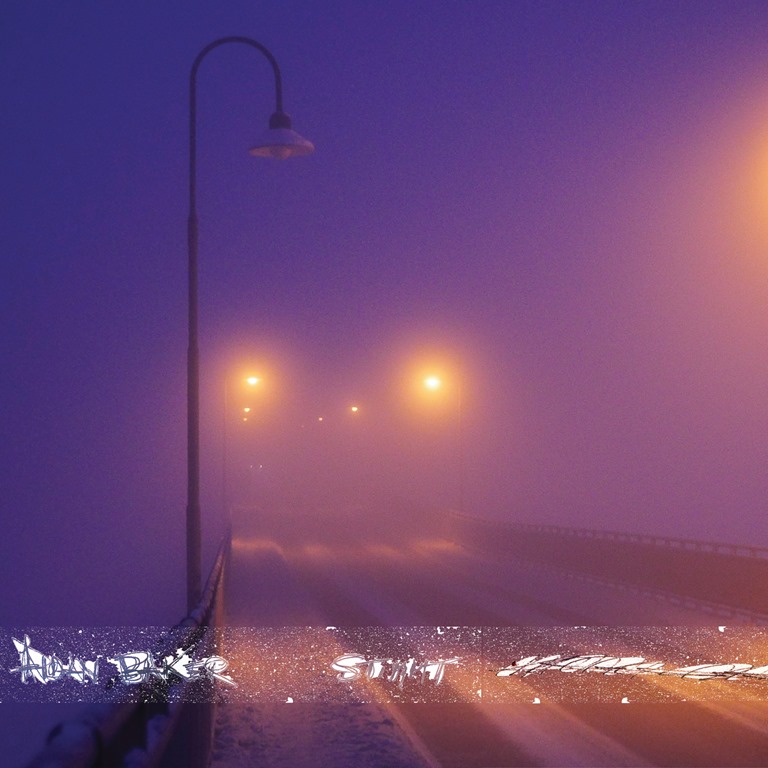
Aiden Baker’s releases have become a regular feature here at Aural Aggravation. His prodigious output, not only as a solo artist, but through innumerable collaborations, often released through Gizeh Records, have given us no shortage of material to contemplate and ruminate over. It’s often hard to keep up with his output,

Stimmt was first released digitally back in 2015 on Broken Spine Productions, and has been was remixed and remastered for its first physical format outing via Cruel Nature in a limited edition of 60 cassettes (as well as digitally again).

Baker is to guitar what John Cage and Reinhold Friedl were / are to piano, with the ‘prepared’ guitar being a prominent feature of his musical arsenal, along with an array of other ‘alternative’ methods of playing, across a genre span that incorporates elements of rock, electronic, classical, and jazz, within his broadly ambient / experimental works

Stimmt sits at the more overtly ‘rock’ end of Baker’s stylistic spectrum, launching with the heavy riffology of ‘Dance of the Entartet’ that’s got a prog vibe but comes on with a heavily repetitious throb that owes more to Swans than Pink Floyd or Yes. The percussion crashes away hard but it’s almost buried in the overloading guitar assault that’s cranked up to the max and is straining to feed back constantly throughout, before it wanders off into ‘Atemlos’, where it’s the strolling bass that dominates as the guitars retreat to the background and sampled dialogue echoes through the slightly jazz-flavoured ripples. It’s here that things begin to feel less linear, more meandering, and the chiming post-rock sections feel less like an integral part of a journey and more like detours – pleasant, appropriate detours, but detours nevertheless – and it culminates in a climactic violin-soaked crescendo.

Veering between hazy shoegazey ambience that borders on abstraction, and mellifluous post-rock drifts, Stimmt is varied, and, oftentimes, rich in atmosphere. ‘Mir’ is very much a soporific slow-turner that casts a nod to Slowdive, but with everything slowed and sedated, wafting to an inconclusive finish.

The lumbering ‘Staerken’ stands out as another heavy-duty riffcentric behemoth: it’s low, it’s heavy, and finds Baker exploring the range of distortion effects on his pedal board, stepping from doom sludge to bolstering shred and back, and there’s a deep, crunchy bass that grinds away hard, boring at the bowels and hangs, resonating at the end.

After the full-on overloading ballast of ‘Quer’ that really does go all out on the abrasion, with squalling guitar paired with a nagging bass loop that’s reminiscent of The God Machine (the track as a while, calls to mind ‘Ego’ from their debut Songs From the Second Story), closer ‘Resolut’ is eight minutes of semi-ambient prog.

It’s a lot to digest, and it’s certainly not an easy pigeonhole, but it’s an intriguing album that stands out as being quite different both musically, and in the context of Baker’s output. Unusual but good, and offering much to explore.

AA

cover

Music For Nations – 22nd January 2021

Christopher Nosnibor

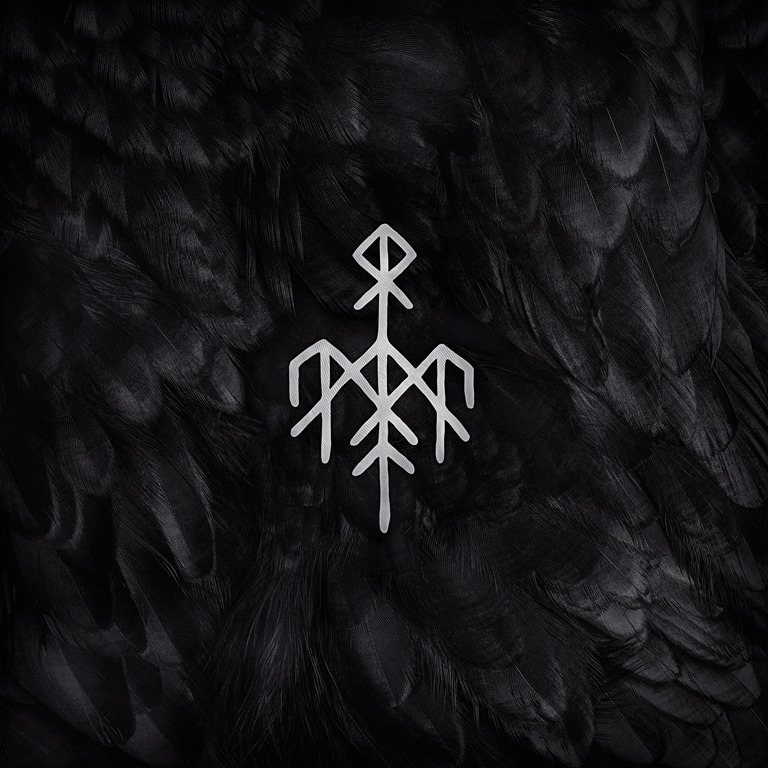
Wardruna were recently the focus of a rather unexpected article on ‘the rise of dark Nordic folk’ in The Guardian. It was largely positive, about how a largely obscure underground scene was reaching a wider audience, and emphasised the elementary influences of the distinctly non-metal genre. It was a feature that also doubled as a plug for new album Kvitravn, which, we’re told, is a continuation of the Runaljod trilogy in musical terms, but at the same time marks ‘a distinct evolution in Wardruna’s unique sound’.

And it is indeed a unique sound, and the album begins with haunting acapella vocals and rumbling atmospherics before picked strings and pounding martial drums fill the air with bold patterns. The sense of scale and depth that characterises the album as a whole is brought to the fore from the very start. More than this, it’s a sense of something primeval and non-linguistic that pervades Kvitravn. Like many listeners, I have no comprehension of the words, which are sung in elongated vowelly drones, the voices coming together not so much in harmony but in throng. And there is something immensely powerful about that. I suppose that the voice as an instrument taps into some deeper consciousness and resonates on a level that’s more genetic or spiritual than gnostic.

Tense and mournful violins provide the main accompaniment to the lugubrious vocals on the six-minute title track. It’s the roar of the sea that brings the arrival of the funereal shanty that is ‘Skugge’. The thumping motoric ‘Fylgjutal’ with its brooding bassline and repetitive guttural vocal growling is incredibly Germanic, and referencing Rammstein doesn’t seem entirely inappropriate here in terms of connecting to anyone unfamiliar with Wardruna: the drums pummel and it’s intense in a relentless way, battering away for the majority of its expansive seven and a half minutes before taking a more poet-rock turn to the close. It all drives forward toward the ten-minute ‘Andvevarljod’ or ‘Song of the Spirit-weavers’ which is epic in every sense and encapsulates the album within a single, immense track.

The instrumentation is, by and large, spartan, and if the string arrangements connote more traditional folk, then ethereal droning backdrops and tribal drumming hark back to something more traditional still – that is to say, that what we commonly associate with ‘traditional’ is often fairly modern, and that all too often our sense of history and skewed and myopic.

Kvitravn evokes images of forests, of caves, of barren mountain tops and vast expanses of moorland, and wide open spaces without people… the occasional wolf or bear, maybe, but a preindustrial world, of wildness and wilderness. And while it does have a certain ‘soundtrack’ feel to it, nothing feel forced or artificial. Kvitravn doesn’t feel like an ersatz replica of Nordic dark ages, but as if it was actually created there and has leaked forward through time to the present, untouched. As such, it’s a moving experience.

AA

150037

5th March 2021

Christopher Nosnibor

Inspired by a passage in the novel White Teeth by Zadie Smith, NYC’s Charlie Nieland describes the lead single, ‘Land of Accidents’ from his new album as ‘a dark anthem to not-belonging’. Divisions certainly presents an eclectic mix that doesn’t really belong anywhere, and perhaps encapsulates that sentiment of unbelonging most perfectly within its very fabric. Traversing between a host of styles spanning post-rock, neo-prog, folk, indie, and further afield, if any one genre has an overarching influence, it’s 70s prog.

A stuttering, jittering rapidfire drum machine snare jolts like an electric current through the easy strumming clean guitar that leads the instrumentation on ‘Always on Fire’, the first song on the album. He’s gone all out for the grand curtain opener with this expansive, emotive, cinematic effort that lures the listener into a spiralling, psychedelic experience, and it’s effective – there’s a lot going on and a lot to explore. The same is true of the album as a whole, as it reveals more with every track.

A swell of sweeping strings add layers to the rolling drums and mid-pace melancholy of ‘The Falling Man,’ which contrasts with the uptempo punk-tinged indie drive of ‘I Refuse’ which comes on a like a blend of The Wedding Present, The Fall, and Mission of Burmah.

Aforementioned single cut ‘Land of Accidents’ packs it all in, and has the twists and turns and explosive dynamics of Oceansize at their best and builds into a muscular wall of sound, with dense waves of guitar dominating. ‘Tightrope’ is pure REM, only it’s probably a better take on REM than many of the band’s own later years work, and spins into a soaring shoegaze climax that is nothing short of absolute gold. It’s one of those songs you could easily play on repeat for hours – but then that would be to underexpose the broody magnificence of ‘Skin’ which immediately follows. ‘Some Things You Keep to Yourself’ has hints of Mansun but also later Depeche Mode about it with its dark brooding and also its soulful feel, not least of all the backing vocals. Things continue to get darker and starker on the synth-led closer ‘Pawns’ that goes all weirdy as it stretches and twists out of shape.

Neiland sustains the interest and the variety throughout, and there’s no let-up in quality either: there’s not a throwaway or duff song on Divisions, and with thirteen tracks, that’s no small achievement. That Divisions is almost impossible to pigeonhole is no issue: after all there are only two kinds of music – good and bad. And this is most definitely good.

AA

Charlie Nieland - Divisions (LP cover)

Cruel Nature Recordings – 5th March 2021

Christopher Nosnibor

Live performances of experimental electronic work, particularly when involving an element of improvisation, can be somewhat hit and miss, and what’s more, sometimes, much of the wonder and appreciation is derived from witnessing the performance itself, as much as the sound.

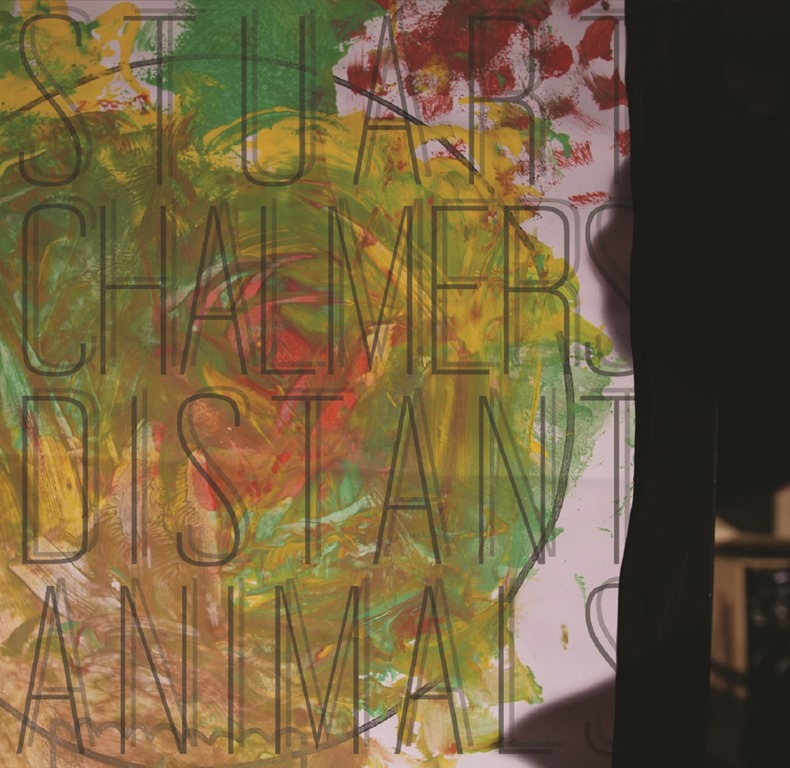
This album was recorded live at Cave 12 in Geneva in 2019, when Stuart Chalmers and Distant Animals shared a stage is a document of a moment in time, and is one that explores differences and similarities. Each act occupies one side of the limited-edition cassette (of which there are just 45 copies) and naturally, a track each on the digital version, and each track contains a full performance from each artist.

Chalmers’ set is a sparse, minimalist affair. Clanking chiming notes – partially atonal, and entirely arrhythmic plink, plonk, clatter and clink every which way. It is detuned strings? Is it a glockenspiel, xylophone, or similar? Whatever the sonic source, it increases in speed and urgency, but not in musicality, and a flat chord shreds and mangles as though strumming a washboard with relentless frustration. While the performance is brimming with energy, there’s a purposeful tonal flatness to this.

At times a clattering clang, a monotonous chang of deadened notes, and a tension-building thrum that grates away relentlessly, Chalmers’ set is never comfortable, never easy, never really breaking into the realms of melodic. The relentless scrapes and scuffles scratch away for twenty-three troublesome minutes. It’s rhythmic and does build in a certain way, but it’s slow progress that’s uncomfortable. One suspects that this uneasy sensation would only be heightened during the actual performance.

Distant Animals’ set is more overtly ambient, a twenty-minute piece that centres around twisting dronescapes and elongated crawls. The layers ripple and rub against one another to create not a dissonance as such, but a vibration of frequencies.. but suddenly, around the mi-section, the storm breaks and dissipates… there is a calm. Soothing synth waves of something that borders on electroprog crossed with chilled-out electroambient. Its trajectory is very different from Chalmers’ – instead of a single, linear trajectory that works its way to a specific end point, they navigate a series of passages and movements that segue into one another to form a meandering journey, which eventually tapers to a fade that leaves you wondering if it was all a dream, and wishing you had been there.

AA

COVER1