Posts Tagged ‘Album Review’

Human Worth – 3rd December 2021

Christopher Nosnibor

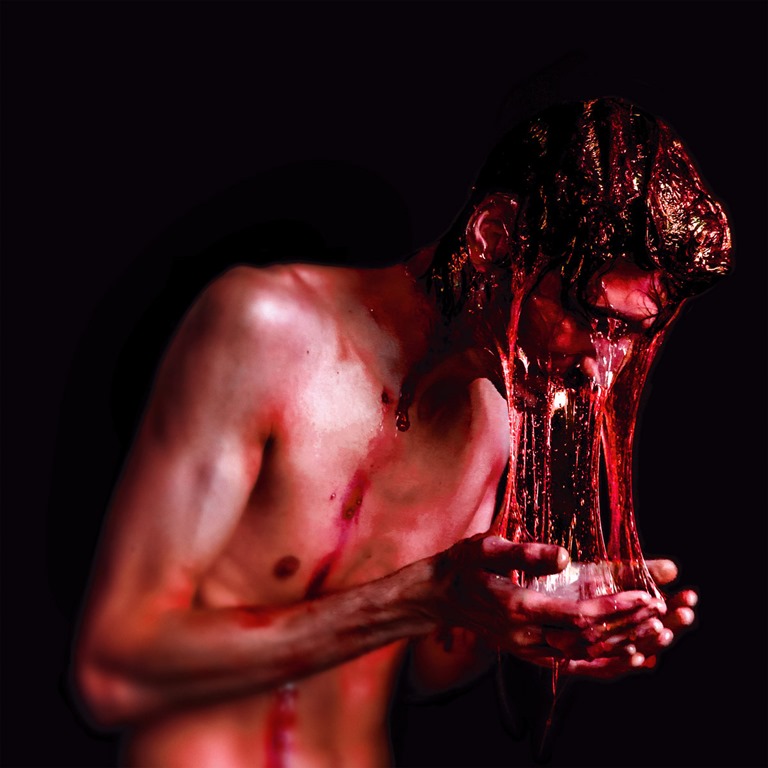
Shit happens, and lost in a tsunami of shit that is life with Christmas on top, the landing of Human Worth’s vinyl release of How Is This Going To Make It Any Better?, the third album from Northampton’s 72% originally released digitally and on cassette in 2019 was something I was aware of, but never got around to exploring. My loss.

It’s straight in with the clattering percussion that feels almost counterrhythmic, over which guitars skew in at obtuse angles, clanging and scratching – and then everything goes haywire and in less than a minute it’s a full-throttle assault: ‘I Have No Idea What You Want Me to Do’ brings the ugly sonic churn of Swans’ debut album, Filth, a record that still lands a kick to the stomach and leaves you feeling like you’re on the brink of spilling your guts to this day.

Some of it’s about discord; some of it’s about the relentlessly lurching rhythms, the stop/start churning bass and droning feedback and slabs of dissonance crashing out of the guitars, and some of it’s about the sheer abrasive force, meaning that as much as it’s in the realm of nascent Swans, it’s equally in the domain of Daughters and KEN Mode. ‘Mate, No-One Will Ever Love You’ sounds like it could be a title by The Streets or Sleaford Mods, or maybe some ‘witty’ middling indie band who think they’re incisive, so the fact it’s a blast of face-melting turbulence only makes it more audacious.

While it’s not exactly easy to make out the lyrics – by which I mean it’s pretty much impossible – the titles reveal the various themes that run through the album, and with ‘It’s Only a Problem if it’s a Problem for Me’ connotes the same kind of gregarious self-centred twattery as the abundant misuse of prefacing a statement with ‘mate’; you know the sort: cockends who call you mate are the last person you’d have as a mate, and they invariably think the world revolves around them.

‘Don’t Look For it, it’s Not There’ marks a shift towards a more post-rock style before lurching on a turn into thinking, lumbering sludge metal, while ‘Holy Shit’ is an appropriate response to the song of that title: it’s a messy morass of squalling free noise that’s not jazz, math, or experimental, but some kind of hybrid of all three, and it hurts. ‘Failure is Absolutely Possible’, however, is an entirely different proposition; mathy, proggy, post-metal, it beings the noise pinned to quiet/loud dynamics and some rather more technical drumming and for all its up-front, balls-out riff-driven thunder, there’s a lot of detail as well as a lot of noise. ‘Hurry, There’s No Time to Explain’ is urgent, powerful, hefty, and again it’s a collision of math and metal, and ultimately noise against noise with the force of a juggernaut racing down a mountain with the brakes cut. Closer ‘Brutish Giant’ is a full-on raging grunger which again invites favourable comparisons to Daughters’ last album, and leaves you drained, but uplifted.

With just 150 red vinyl copies, this is one of those releases that looks destined to be a future collectible, in addition to being a nice item. And, meanwhile, ‘10% all proceeds (+ Bandcamp’s 10% cut on the fee waiver days) donated to charity CALM – a leading movement against suicide, who are currently supporting more people than ever through this challenging time.’

There is comfort to be found in abrasion and noise, and Human Worth continue to put their proceeds where their sentiments lie, and we sincerely applaud their work, especially as there simply isn’t a duff release in their entire catalogue.

AA
a4045036575_10

Dret Skivor – 4th February 2022

Christopher Nosnibor

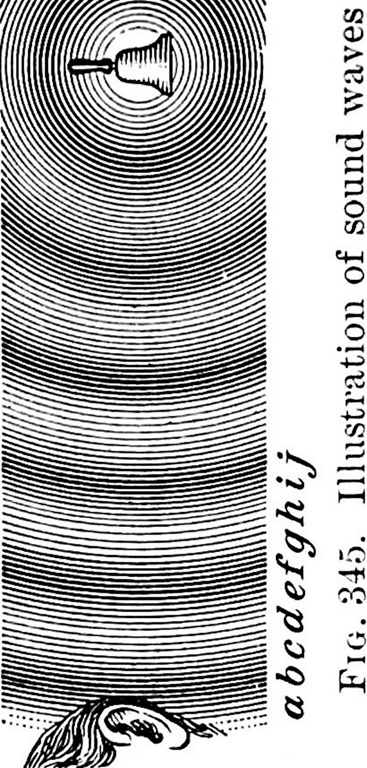
Either delayed or having skipped January, Dret Skivor’s latest monthly instalment marks quite a shift from December’s spoken word / harsh noise assault. Fern’s Illustration of Sound Waves belongs to the field of sonic microanalysis: specifically, as we learn from the minimal notes which accompany the release ‘The source of inspiration and foundation for the entire compilation have been the possibilities and limitations of the buchla 208c’. The ‘legendary Music Easel instrument’ is a modular device, and a fucking expensive piece of kit to boot. And yet it, like any other instrument, device, or programme, has its limitations.

Tonal range isn’t one of them, and nor is its capacity to create eerie electronic soundscapes, and there are plenty of both on Illustration of Sound Waves. I would perhaps be interested to hear of Fern’s frustrations, and also his motivation for this intensely-focused exploration of the buchla 208c. Many such releases offer extensive explanations of the process – sometimes to the point of excess,

‘Closed Geometry (Circle)’ bleeps and blips, while ‘Action & Reaction’ paints a haunting scene, based around sharp needles of feedback and warping, curved drones. ‘Blame the Wires’ is a classic modular synth noodle, a cyclical, repetitive motif looping hypnotically over a subdued echo of a beat, pulsing gently in the background. ‘Apparatus A’ sinks deep into the depths of swampy murk. The beats are subdued and muffled, and the entire EQ is pitched into lower and mid-ranges. There’s a slow, growling oscillation somewhere deep in the mix, and it’s a grating, Suicide-like drone that sneers and snarls on the heavyweight ‘Way of the Waves’; waves that pulse and grind and groan and thicken and envelop.

There feels like there’s a distinct and definite trajectory to the album, as the sound grows darker and denser as it progresses: this changes with the pairing of the final two pieces, which mark a rapid return to bubbling, bleeping circuitry and sound, in many ways, like an escalating meltdown of circuitry. This feels like a fitting finale to the album, as well as an apt conclusion as we melt into the waves, drowning slowly in a sea of static.

AA

a0490863369_10

Cruel Nature Records – 3rd December 2021

Christopher Nosnibor

Still moving. We are still moving, despite the fact that the last couple of years have, at times, been characterised by a stifling, crushing inertia. Life on hold. It’s impossible to plan anything, from meeting friends to attending gigs, or going on holiday. Anything and everything could be subject to cancellation or postponement at the last minute. What do you do? Mostly, sit tight, and wait. But in waiting, although the sensation is of time standing still, it isn’t. You’re standing still, half the world is standing still, but the world is still moving; life is still moving.

Still Moving was, in fact, recorded back in 2017; between Slump (2016) and Vent (2018), meaning its original context has no relation to the current situation. And yet, perhaps it does, in some way, with many artists dredging up items from the vaults to create the appearance of movement during a spell of stasis.

Combining elements of ambient, post-rock, and much, much more, Still Moving is a difficult album to pin down stylistically. Sonically, it’s showcases considerable range: from the soft, piano-led ‘Wide Open’, is drifts directly into the altogether more between-space ‘Wherever’, which brings both shades of darkness and light within a single composition, mirrored later in the album by ‘Whenever’, which envelops the lingering piano with mist-like sonic wraiths that swirl in all directions, like will-o-the-wisps flittering, detached and shifting between planes. There are so many layers, so many textures, and so much of it’s mellow, evocative, dreamy, and none more so than ‘Think Through’ where a lonely piano echoes out into a drifting wilderness like a sunrise over a desert.

Darker rumblings underpin the delicate notes of ‘Well Within’, where subtle beats flicker in and out, and each composition brings something new, yet also something familiar. Trilling woodwind drifts in and out as echoes knock against tapering drones and soft-focus synth sounds.

‘Present’ starts dark, but then is swiftly rent by beams of light as grumbling ambience of found sound yields to the most mellow of post-rock moods, with a lot of reverse tape sounds adding to the vaguely unheimlich atmosphere; it’s not weird or creepy, just not comfortably familiar in its subtle otherness.

The title track draws the album to a close, but somehow leaves a sense of inconclusion as the notes hover and hang in the air. Distant waves wash to shore and barely perceptible beats emerge fleetingly, and then immediately fade. Is this it? Where do we go from here? There’s a hint of sadness, but also a sense of stepping forward, hesitantly, towards the new dawn. Breathe. Take in the air and the daylight. We’re still moving.

AA

a0166165718_10

Chapter 22 Records – CD December 18th / Vinyl in April 2023

Christopher Nosnibor

It seems hard to credit now, but back in the 80s and early 90s, the BBC’s national radio was a remarkable platform for breaking new music. John Peel will forever be legendary for the countless bands he gave exposure – obscure acts starting out and the likes of which would be unlikely to trouble the top 40… but then again, so many off them went on to do so. But there wasn’t only Peel – Janice Long and David ‘Kid’ Jensen played so many up-and-coming and under-the-radar acts, and they, too, would feature artists by having them record sessions at the Maida Vale studios.

The mid-80s was something of a pivotal period in terms of the evolution of alternative music, particularly here in the UK. In the slipstream of the post-punk acts that would come to be considered the progenitors of ‘goth’ – Bauhaus, Siouxsie and the Banshees, The Sisters of Mercy in particular – followed a wave of bands who developed the style, but with poppier, more indie leanings. Although The Sisters’ ascent meant they developed away from being a ‘Leeds’ band, their presence and rise from the city made Leeds the epicentre of the second generation of goth – or perhaps post-goth indie – with the likes of The March Violets, Salvation, Groovin’ with Lucy, and The Rose of Avalanche all emerging from Leeds around this time.

By the release of their debut album, First and Last and Always in 1985, The Sisters of Mercy had moved a long way from the sound of their first few EPs, a move that coincided with their signing to a major label and Wayne Hussey replacing Ben Gunn. The Sisters were dead by the summer of that year, but rising from the ashes, The Mission’s first singles and debut album, God’s Own Medicine in 1986 added impetus to the rising wave of janglier, more accessible indie-goth.

Both John Peel and The Mission would play a part in the rapid ascendence of The Rose of Avalanche, with the former offering them a session simply on the basis of a track on a compilation album, and the latter inviting them to open for them on tour. That kind of exposure to such a potential fanbase is hard to come by any means, and by 1987 they had Sounds spurting praise all over them. Yet for all this, they failed to break the mainstream or to trouble the charts, and chugged on till the early 90s before calling it a day (although they recently opened a new chapter with some live dates. Never say never, eh?).

The recent release of The Sisters of Mercy’s BBC sessions has caused considerable excitement in the community, being their first official release since their 1992 compilation A Slight Case of Overbombing. The sessions had been in circulation as bootlegs for decades, under various titles and with varying quality. The fact the release left a side of vinyl blank while leaving the audio of the band’s Whistle Test performance – arguably on of their finest – in the vaults has caused considerable consternation particularly considering the 3-sided vinyl cost over £40 on release on Record Store day, while the cut-price CD is flimsily-packaged and feels ‘budget’ in every way.

Exhuming The Rose of Avalanche’s BBC sessions after a 25-year hiatus from releasing material may not send quite the same ripples, but isn’t only a significant event for fans, but a substantial document of the time.

It may have been early cut ‘L.A Rain’ that grabbed JP’s attention, but it’s not featured in their first Peel Session, which features three original cuts plus a cover of The Spencer Davis Group’s ‘Gimme Some Lovin’’ delivered with guts and monster guitar solo work, al driven by a stonking bass.

The band clearly evolved fast, and gained in confidence and competence. It’s the swagger that really makes the impression on ‘Rise of the Groove’ that spearheads the second session, which also features a strong take of one of their most successful singles, ‘Velveteen’. Rougher and rawer than the official version, ‘Never Another Sunset’ packs some heft without the tidal wave of reverb, and ‘Too Many Castles in the Sky’ is all about the up-front rock action.

Because of the nature of the BBC sessions, these recordings are necessarily quick, underproduced, but the positive flip is that they capture thee band in the moment. And it’s a good moment, bursting with energy.

The album wraps with the songs that started it all, an eight-minute sprawling drawling take on ‘L.A. Rain’ that’s pure Velvet Underground.

There are so many good songs on here: now is the time The Rose of Avalanche should be reassessed, and appreciated in a different light.

Artwork - The Rose Of Avalanche

28th January 2022

Christopher Nosnibor

So I’ve been bigging up OMNIBAEL from the outset – not because I’m acquainted – that cuts no ice with me as a critic, and if I don’t dig the music, I’m not going to back it for anything – but because I really rate what they’re doing. And what they’re doing is… well, they’re not entirely sure. OMNIBAEL are on a voyage of discovery, and they’re inviting you – and me – and all of us – along for the ride. They have no idea where it’s headed or where it will end, and that’s a large part of the appeal. So much supposedly ‘experimental’ music is scripted and scored. Rain Soaks the Earth Where They Lie is an experiment within a long-term experiment.

Each release to date has been a document of an evolution, and their debut album roper is no exception. Twittering feedback gives way to ripping riffage that’s distorted to fuck on opener ‘Mind is a Mess’ that’s the gnarliest of black metal melted into the darkest pits of burning torture, a missive from a purgatorial inferno.

I may have written on this album elsewhere, including some abstract liner notes that capture its essence, but I haven’t previously reflected in detail on the listening experience. It’s not pleasant, but it is intense, and it is, in the same way as it is with listening to Uniform, or The Body, a full-on body slam. It’s not easy, it’s not comfortable, and it’s a physical experience – one that’s like taking a kicking from a gang. Drums hammer in like boots reining in on the ribcage, and there’s absolutely no fucking mercy across the album’s nine tracks.

The churning murk of the eight-plus minute ‘Last Days’ is pure Throbbing Gristle, and this is dark, gnarly, nasty. ‘The Repetition’ starts with a mess of overlayed tape loops that’s very much reminiscent of the Burroughs / Gysin tape loops that so influenced Cabaret Voltaire in the early days, and after a moment of crackling electronica that strays into Whitehouse / Merzbow territory, it plunges deep into torturous melting industrial metal, a dingy mess so dark and so charred as to be corrosive to the organs. It ccu88ulminates in punishing screeds of howling feedback atop thunderous percussion that hammers like thunder. There are some deeply fucked-up vocals low-down in the mix, too.

It’s not pleasant, and listening to this breeds tension upon tension, you feel your muscles tense and your head grow tight at the temples and the back of the cranium. If the dank and gloomy ethereal ambience of ‘Rung Keep’ evokes swimming underwater, it equally feels like the soundtrack to drowning slowly, and there really are no breaks on this album: despite its sonic and textural variety, it’s heavy all the way. ‘Sound of the WW2 Story’ may be a brief interlude with some soft ambience akin to the swafting of a jellyfish, but it’s still dense, tense, and oppressive, and offers but two minutes breathing before the thundering punishment of ‘Flowering backwards’, which callas to mind Swans circa 1986 and early Godflesh in dub form. The volume, the power, the force, all combine to create something utterly cruising.

Listening to Rain Soaks the Earth Where They Lie is hard. It’s a brutal nihilism I’ve been craving and welcome unreservedly; it articulates the fact that life is pain. But the pain is without letup. Rain Soaks the Earth Where They Lie is uncomfortable, painful, and very, very necessary.

Om

Dedstrange Records – 4th February 2022

Christopher Nosnibor

A Place To Bury Strangers have been pigeonholed variously in the brackets of noise-rock, shoegaze, indie, space-rock, and psychedelic rock. All of these are fair and accurate, but fail to represent the band’s expansions of these genres, and the fact that for all the noise, there is nuance. Listening to their catalogue of ear-bleeding sonic squalls reveals far more depth and range than this reductive characterisation implies.

The last few albums have tracked quite a journey, and See Through You resumes the trajectory of Worship and Transfixiation, whereby the production became evermore wayward and unconventional ahead of the rather safer-sounding pop-orientated Pinned (these things are relative, and it was hardly R1 mainstream pop). With each release, they’ve stepped further and further away from the accepted conventions of production and mixing, not only going evermore lo-fi, but also shunning by stages the conventions of balance, of tone. The vocals are way down, the drums are way up, and the EQ is utterly fucked as everything wallows in a murky midrange. It’s not an easy listen, and the song structures are far from obvious or clear either

So while recent single release ‘I’m Hurt’ leans heavily on The Jesus And Mary Chain’s ‘The Living End’ (and it’s by no means the first time they’ve taken cues from JAMC), the reverb echoes into a cavern of murk, as if a mudslide has slipped into said cavern. The chaotic crescendo that explodes by way of a finale still splinters the eardrums, but it’s not in the kind of blistering wall of treble that defined their sound up to Worship.

This evolution was necessary: they’d taken the limits of blistering psychedelic shoegaze wall of noise to – and beyond – its limits, with Worship standing as something of an apogee. But this was the album that also saw them recognise their limits while pushing beyond them. They have returned to more overtly structured songs for this outing in comparison to Transfixiation, while testing boundaries once more after the comparative retreat of Pinned. In short, it’s A Place to Bury Strangers at their best. That’s to say, it’s a squalling, blistering racket and it hurts, and there’s a fait bit going on, and beneath the crazed noise, there are some tunes. In fact, there are a fair few tunes, and some good ones at that.

The first track, ‘Nice of You to be There for Me’ feels like sarcasm and the guitars sound like melting cheese, the sonic equivalent of Dali’s clocks, a warping, dripping mess. And fucking yes. It’s as exhilarating as it is fucked up. ‘So Low’ does return to the spiralling explosive bass-driven racket of Worship and Transfixiation, but then things start to get really fucked up on ‘Dragged into a Hole’ as the frenetic disco beats are all but buries beneath a driving wall of obliterative bass and screaming guitar feedback. The distorted vocals only add to the head-smashing experience.

‘I Disappear (When You’re Near)’ is another bass-driven doomer, the pairing of a metronomic mechanised drum beat and throbbing bass that’s booming, grainy, distorted, and swathed in reverb is powerful. The guitars merely add texture, screams of feedback occasionally breaking through, while the vocals float in the swamp of noise. If It’s not already apparent, this is a noisy album. ‘My Head is Bleeding’ is kinda subdued, kinda electro, kinda pop, but in a Suicide sort pf way, and when the guitars explode in a fizzy mess, it’s an absolute rush, and everything that’s good about APTBS.

Closer ‘Love Reaches Out’ is essentially ‘Everything’s Gone Green’ merged with ‘Ceremony’: it’s the closest they get to commercial pop on this crazy roller-coaster of post-punk noise – and there is certainly a lot of noise.

So what to make of See Through You overall? It’s a solid album and quite daring, on many levels. When a band of this statute releases an album half their fans probably won’t like, you have to give respect to their prioritisation of their artistic vision.

AA

920817

Metropolis Records – 4 February 2022

Christopher Nosnibor

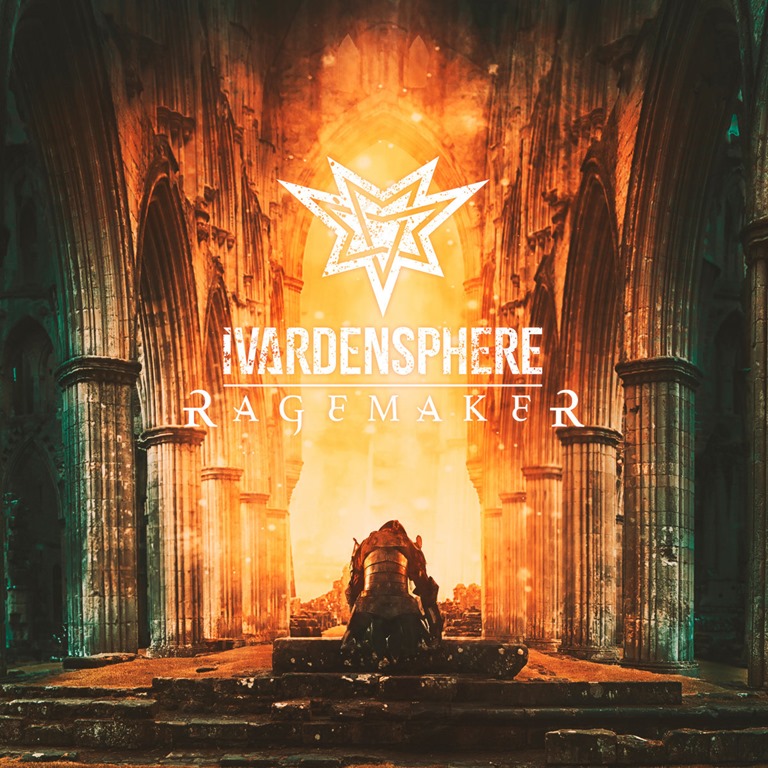
For years, I’ve had the rage. There is, after all plenty in this world, this life, and no doubt beyond, to rage about and against. iVardensphere focus that rage through sound rather than verbally, through an album that articulates darkness and tension through the language of sound.

‘A Whimsical Requiem for the Fey’ is appropriately titled; being a breezy, neoclassical assimilation of light-as-air plucked strings and soft, accessible melody. As such, it does nothing to prepare the listener for the instant plunge into the darkest of depths brough with the growling churn of ‘The Maw’, which features Jesse Thom. But it’s on the title track that the album really hits its stride. Tribal drums dominate a gloomy soundscape, weighted with dense bass tones, but also the portent of soaring vocals. And while the jagged strings add to the tension, the drums simply build and build and batter your very being. This isn’t rage, it’s the unleashing of vengeance via the hammering of the soul.

The individual compositions are each dramatic and powerful in their own right, and the attention not only to the details of the arrangement, but the sequencing of the album stands out, and the ambition is clear without the explanation that this is ‘a sweeping, cinematic album, equally suited as the next evolutionary step of iVardensphere, and as the film score to a post-apocalyptic motion picture.’ It’s dark, stark, and atmospheric, and thunderous rhythms evoke ancient mysticism, and scenes on barren hilltops and sweeping moorlands; tribal rituals, burials, spiritual ceremonies of great import. And there are moments when those rhythms step up, pounding harder and more intensely, so as to be all-encompassing.

As the accompanying notes outline, ‘Traditional percussion from all corners of the world, Taiko, Surdo, djembe, timpani, and more are deftly intermixed with all manner of sourced percussion sounds. Hammers and anvils, slamming doors, even the sound of a dumpster being kicked are sampled and folded into the sonic melange.’ We’re in Neubauten / Test Dept territory here, but there’s a subtlety to so many of the compositions that go beyond these comparisons too: the graceful sweeps of ‘Indomitus’ stray from anything industrial towards progressive / post rock territories, and Seeming’s vocals are almost rock.

The electronic elements are remarkably restrained in the main, with only occasional incursions, such as the bending blasts of bass on ‘Varunastra’ (which features Brittany Bindrim’s vocals); elsewhere, ‘Draconian’ brings the drones, and a low, serrated throbbing. Then, it also brings glitchy danceable beats, which evolve into another crashing assault that batters away relentlessly.

Then there’s the straight-ahead thump ‘n’ grind of ‘Orcus’ and the mournful trudge of ‘The Age of Angels is Over’; these tracks conjure very different atmospheres, but in the way the album unfolds, they develop a sense of significance. If ‘Sisters of the Vipers Womb’, with Brien Hindman’s vocals, seems a little too cliché in its sinister stylings, it sits in the broader context of an expansive and immersive work that has a trajectory through ever-changing moods, and to powerful effect.

AA

a0129874839_10

Room40 – 14th January 2022

I know I’m not alone in experiencing the sensation that large parts of my life have been spent wading through treacle. It may be something of a cliché, but it’s a valuable simile for that slow struggle.

Although these are the associations circulating sluggishly in my mind, they have no bearing on the origins of the album’s title, which is, as Cooper himself explains, ‘a soundtrack for an otherwise silent film. The title of the album, and of course the film, is borrowed from my late friend Fred Hardy’s book The Religious Culture of India – Power, Love and Wisdom, considered to be one of the most important books on the subject. In this book Fred wrote,

“In 1835 the historian Macaulay investigated whether there was anything in the traditional Indian systems of learning and education that could be used in the training of native personnel. In fairness to Mr Macaulay, we must remember that those were days long before the writings of a Tolkien or a Mervyn Peake. He came to the devastating conclusion that people who believe in oceans of milk and treacle had nothing to offer to a modern system of education. A straightforward, realistic assessment in an age that believed in science and realism! The effects were far-reaching. Traditional Indian ways of looking at the world were written off as obsolete. India was provided with three universities (Calcutta, Bombay and Madras, founded in 1857) as the hothouses to nurture a custom[1]built, English-speaking Indian intelligentsia. A new age began for India, and two of its inevitable consequences were the demand for independence and the production of atomic bombs and satellites by the post-independent Bhārat.”

This places Oceans of Milk and Treacle in an altogether more academic context, and perhaps, if only a shade, this knowledge does colour my appreciation of the work specifically, an album consisting of nine compositions.

The pieces themselves present a collaged array of sounds, from distant rumbles and clanging hammers, to wind-chimes and static crackles. The clanking windchimes and eerie vocal moans and bleats, which drift amidst a breaking storm on the first piece, ‘A Chart of the Wet Blue Yonder’ contrive to create something quite sinister, and a significant contrast from the playful Jazz frivolities of ‘Boogie Boards and Beach Rubbish’. Oceans of Milk and Treacle is very much an album of contrasts and of strange sounds, combining chillout grooves and collaged field sounds and weirdness, often simultaneously.

It’s one of those albums that packs in so much, it transcends definition or categorisation, for better and worse – because genre distinctions tend to be lazy marketing pitches, and music – or any other artistic medium – should just be. Why can’t a book simply be a book or a story? Why does I have to be crime fiction, a thriller, sci-fi, or otherwise tossed into the netherworld of literary fiction or speculative fiction? And so why can’t an album simply be an oddball amalgamation of all sorts and simply be an album? Electric guitar and Moogs or something tinkle around while something electronic happens in the background to fill the space like crickets scratching, but clearly actually something less natural in origin on the warping, bending array of almost-pleasantness of ‘Tirta Gangga’, a woozy collision of sedated bleeps and chimes that sounds like it’s nodding off near the end – and it’s not an unpleasant experience.

The title tracks goes deeper into jazz territory, but there’s trilling analogue noise humming in the background, and it nags away at the peripheral sense, while on ‘Mono-Hydra’, amidst tweeting birdsong, the musical elements sound warped., bent, as if the tape is stretched and the notes spin off their spindles to spin into strangeness. ‘Under Vertical Sunlight’ brings hectic percussion to the fore, amidst drones and groans, before drifting into abstraction on ‘Toward Great Piles of Masonry’, which sounds like a wander down a city street while the clubs are still open.

Oceans of Milk and Treacle isn’t really a journey, but then what is it? A meandering sonic amble through a succession of sonic spaces and a range of scenarios? Possibly. Whatever it s it’s interesting, and devoid of genre conventions.

AA

a0586186042_10

Room40 – 14th January 2022

Christopher Nosnibor

One of the many wonderful things about music is that it has no limits, and no constraints. There is music to be found in anything and everything, and music can be made my anyone, anywhere, anytime, with anything, or even nothing. Steve Roden’s choice of instrumentation on Oionos is noteworthy for being quite unconventional, as he explains: ‘The audio was built from field recordings and small “poor” objects such as tin whistles, toy harmonicas, and the like. These “instruments” suggested by the museum of musical instruments in Athens, where the proper instruments take up most of the museum, but there is a wonderful display case in the basement with musical toys, religious objects, and other sounding devices not considered musical instruments.’ These instruments and objects combine to conjure a magical, mystical soundscape with overtly musical sounds contrasting with less overtly musical sounds and woven together to create something that occupies a unique sonic space.

In popular western culture, we’ve come to understand only the narrowest of definitions of music, which for many is represented by an album consisting of a number of ‘songs’, bite-size pierces which are tightly structured and subject to conforming to certain parameters, including rhythm, and suchlike. Even many ambient works, which delineate many of those mainstream conventions, are created within limitations; these are compositional factors, imposed by the creators, rather than being significant of true musical limits.

With Oionos, Steve Roden frees the music, presenting a single, continuous piece with a running time of one hour, one minute, and fifty-five seconds. Time was when the CD format placed a time constraint of seventy-two minutes on a release, but technology has evolved, and the duration of this piece feels entirely natural, as if the music has run its course to a satisfying conclusion by the close.

The composition is, in many respects less concerned with time, than with place. As Roden writes on the album ‘Oionos was created for the exhibition The Grand Promenade, in Athens, Greece. The exhibition took place in various archaeological and historical sites in central Athens, creating a situation for contemporary site specific works to be in dialogue with their historical surroundings.’

Although the location was integral to the album’s inspiration, it’s less integral to the listening experience when taken out of the context, and the music featured is, if not necessarily ambient in the most conventional sense, it is very much abstract, and also very much background sounds rather than music one actively listens to. But zoning in and out is a pleasurable experience, which perhaps serves to highlight the multifaceted nature of the sounds. Metallophone-like notes chime and ring, seemingly with an almost random notations and the loosest of rhythms, against a backdrop of scrapes and drones, while sounds like wind gusts and lapping water fill the space in the background. While the different elements conglomerate throughout, by half-listening, one finds oneself becoming aware of them individually at different times, and you find yourself experiencing the recording differently at different times as you tune into and become aware of the different sounds, textures, and tones.

As a whole, Oionos feels like something living and breathing, as if the sounds in combination have taken on a life of their own – and in many senses, they have, and they merge together to form a shifting, pulsating whole. It’s unfamiliar, but not eerie despite its otherness; there is a certain calm that radiates throughout the duration.

AA

a2445050686_10

4th February 2022

Christopher Nosnibor

Nordic Giants are one of those acts who seem to exist almost mythically. Listening to their recordings, watching their visuals, even witnessing their live shows, does little to render them any more concrete or real. The duo go by the names Loki and Rôka, but beyond that, we know nothing. That they have managed to remain so shrouded in mystery is a remarkable achievement, especially in the Internet age. In doing so, they remind us of so much of what is missing in contemporary culture. Celebrities used to be distanced, unobtainable, out of reach, while underground acts were entirely obscure. It was possible to control the limits of what was in the public domain, by means of mailed or faxed press releases. Any kind of presence was optional, as radio play and word of mouth did the job of promotion. Times have changed, expectations have changed, and not necessarily for the better. Artists are expected to be so much more public now, buy to what benefit, ultimately?

Kudos, then, to Nordic Giants for being Nordic Giants, and doing what they do on their own terms. Symbiosis follows their debut album, A Sèance of Dark Delusions (2015) and their documentary / soundtrack project, Amplify Human Vibration (2017), and as such, it’s been a fair time in coming. So much so, that one worries how things will stand up in a contemporary context. A fair few bands making their post-lockdown return haven’t fared so well, largely because they still sound like their old selves – and times have changed, life had moved on. There may be nostalgia for the old times., but… we don’t need to relive the past times. This is not the early 00’s heyday of post-rock.

But Nordic Giants exist in their open space, and their own time.

According to the accompanying blurb, ‘Symbiosis represents the interdependent relationship of all life. The union and blending of polar opposites, the harmony created when two different elements combine, not just in nature or in a philosophical sense, but at the root creative level… This collection of songs blends light with dark, moments of ambience with power and the subtle with the mysterious – themes that Nordic Giants continue to experiment with extensively over the years.’

The first track, ‘Philosophy of Mind’ comprises many features typical to Nordic Giants: heraldic horns, vocal samples, resonant bass and rolling drums, depth, layers, atmosphere. It’s a mesmerising piece, spacious, moody. Rene Descartes’ famed quote (in translation) ‘I think, therefore I am’ echoes over the lilting piano, ahead of a roiling crescendo, and the closing couple of minutes grow in tension And scale. This is classic Nordic Giants, and the album progresses neatly from here. It may not present may serious surprises, but it does present a succession of immaculately-conceived and perfectly executed compositions, from the driving ‘Anamorphia’ to the supple, subtle melody of ‘Hjem’.

The featuring of guest vocalists – Alex Hedley on the expansive ‘Faceless’ and Freyja on ‘Spheres’, with its delicate, poised atmosphere and cinematic sound – add to the diversity of sound and also the stylistic range of Symbiosis, an album that really reaches deep into the emotional space. It’s lusciously-produced, but at the same time poignant, and you ache on hearing the soaring strings and the nagging piano trills. There are moments of ambience, of mind-sprawling semi-ambience, and of absolute magnificence.

Symbiosis is dateless, ageless, marvellous.

AA=

Digital_Cover