Posts Tagged ‘Album Review’

The Helen Scarsdale Agency – 7th October 2022

Christopher Nosnibor

Having effectively rediscovered her appreciation for the guitar during the pandemic, Ekin Fil returns to her musical roots on Dora Agora, although it doesn’t sound like a ‘guitar’ album in any obvious or conventional sense. The guitar is acoustic, and the compositions are – at least in structural terms – limited to a couple of chords, played in a scratchy strum back and forth, providing more rhythm than melody. There’s so little to take a firm grasp of here, and not only structurally. How to appraise something that touches to lightly, offers so little that’s tangible, and yet has such an effect on a deeper, essentially subliminal level?

Subliminal is indeed the word, a word I spent several hours scratching around for as the most appropriate adjective for this most affecting of works. It touches you, and reaches deep, but you simply have no idea why. After all, there isn’t much to it, at least superficially. There’s no real dynamic, there are no hooks or choruses to speak of, and it’s more a listening experience defined by what isn’t rather than what is. But what it is, is utterly compelling.

I often try to consider just how listening to an album makes me feel over what it necessarily does, but on listening to Dora Agora I can honestly say I’m not sure, and can’t be certain if I will ever know.

Across the ten compositions, the majority of which are comparatively brief, with the longest being just over four and a half minutes, and the majority being closer to three, Ekin conjures waves of wispy atmosphere, and the songs flow through your system and psyche without a trace, existing as nothing but vapour which evaporates instantaneously.

The first couple of pieces are instrumental, and on the subsequent songs featuring vocals, as on ‘Ghost Boy’, she spins achingly magnificently misty melancholia, minimal shoegaze where her voice and acoustic guitar drift in a cloud of echo and the sparsest ripples of synth. ‘Buried Again’ is haunting, eerie, and Ekin sounds like a spirit floating through air.

The production leans toward the lo-fi but not to the detriment of the songs: quite the opposite, in fact. The songs are so sparse, so skeletal, as to be barely there, existing almost intangibly, often so nebulous as to lack obvious structure. ‘Agora’ is built loosely around an undulating back-and-forth chord repetition, while ‘Bulutlar Kuslar’ is overlaid with myriad incidentals as she skips breezily through its soft, open space. ‘Yo Feelings’ is so vague that it slips free of any constraints of order as it points the album into the cloud-flecked sky. As the last seconds of echo reverberate into the distance, there emerges a sense that Ekin Fil has transcended the realms of music and the earthbound domain to alchemise something that’s truly beyond.

AA

a0499157403_10

7th October 2022

Christopher Nosnibor

Having been introduced to GLDN this summer via the gritty industrial gore-flecked First Blood EP, the vehicle of Nicholas Golden continues at juggernaut pace, having prefaced the full-length Haemophilia with lead single ‘Suicide Machine’.

While some are particularly sensitive about anything pertaining to suicide, its disturbing prevalence means it’s a topic that needs to be out there and under discussion. While rates among the young are conspicuously high, here in the UK, rates are now highest for men in the 45-49 bracket (my own demographic), while globally, it’s rocketed among those beyond retirement age. And, traumatic as it may be for some directly affected, it shouldn’t be considered taboo or require a trigger warning – otherwise, pretty much all industrial and metal would need to carry warnings before every song.

Point is, that suicide, death, and, indeed, the fixational theme of plasma and platelets that dominates the work of GLDN are as much tropes, themes as much metaphorical as literal – and that’s ok. To confront one’s darker thoughts is healthy, and is a world apart from acting upon those thoughts. More often than not, those who produce the most dark and grotesque art, in any medium, prove to be the most balanced and the least dangerous, as they’ve found a healthy outlet for whatever it is that’s chewing at them.

On the evidence of Hemophilia, there’s a lot chewing at Nicholas G, and he channels every last ounce of that angst into his art. The result is an album that’s tense, taunt, relentless. And yes, of course it’s harsh. Not to a power electronics level of extremity, but this is an album that’s edges are serrated with industrial abrasion every inch of the way. Oh, and there’s blood and guts all over – just look at the cover. It sounds how it looks: by turns incendiary with rage and ominous and sinister with disconsolate darkness, Hemophilia has sonic and emotional range, but at the sae time, it’s bleak, bleak, bleak, as song tiles like ‘Self-Mutilation as a Form of Compliance’ indicate.

It opens with the lo-fi punky metal thrashabout of ‘Animal’, which is as up-front as it is unexpected, with GLDN roaring raggedly against a gritty, grimy guitar blast. But ‘New Face, Same Lies’ is bleakly electronic, dingy, subterranean, whispered and tense and is everything you would expect. The contrast of these two tracks alone tells you pretty much everything you need about GLDN and Hemophilia – namely it’s every inch the gritty, dark industrial album you’d expect, but it’s got twists – lots of twists. ‘#1 Crush is just one of them – a chugging metal reworking of the flipside to Garbage’s second single ‘Vow’, it clearly recognises the song’s lyrical darkness, then plunges is into an abyss and culminates in screaming angst. Despite being familiar with the song – it’s something of a personal favourite from the Garbage catalogue – it didn’t land as immediately recognisable, and that’s a positive, and a measure of just how much GLDN have twisted and mangled the tune – or put their own twist on it, if you’re talking more commercially. It’s a bold move, and one that proves successful. In contrast again, ‘Half-Life’ is sparse, stark electronics and as gritty, grimy and gnarly as hell.

At times it’s pure NIN: often it’s much more, not least of all in that it does its own thing within the industrial framework and at times pushes beyond, making for an exciting and dynamic album, and one that is, naturally, brimming with anguish and existential angst. And relentless, pounding beats, too. ‘Suicide Machine’ stands as a highlight, with parallels to ‘Happiness in Slavery’ from Nine Inch Nails’ Wish, which is clearly one of Nicholas Golden’s touchstones – and it’s a solid choice, as a release that really took harsh noise to a massive audience.

Hemophilia is dark, dense, and intense, the sonic equivalent of bloodletting. And the production is tight. It’s clearly a studied work, and the execution is magnificent – not just the performance, but the production, too, which presents the songs in their best light, tugging out the details and the dynamics to yield maximum impact.

AA

a0853929147_10

Neurot Recordings – 30th September 2022

Christopher Nosnibor

Tension Span’s debut is quite a departure from the majority of Neurot releases and Neurosis offshoots, of which there are now many. Comprising Noah Landis (Neurosis, Christ On Parade), Geoff Evans (Asunder), and Matt Parrillo (Dystopia, Kicker), the blurb hails the arrival of an album that uses ‘the musical language of their past, the dark punk of their early bands… that infuses classic elements of punk and post-punk, and sounds both urgent and personal, speaking truth to the bleak realities of today’s socio-political collapse, and the angst and identity crisis it brings’.

And The Future Died Yesterday delivers on that, in spades. It’s spiky, jagged, angular, the guitars brittle yet driving and everything is driven by an agitated, twitchy bass that hits on every bear of the relentless four-square rhythms. It’s pitched as for being for fans of Killing Joke, New Model Army, Conflict, and Rudimentary Peni, among others, and there’s a keen sense that Tension Span are drawing on elements of classic anarchist, anti-authoritarian, anti—capitalist punk and post-punk as a means of channelling their ire. It’s the spirit of the early eighties, condensed into an adrenaline-fuelled package that makes perfect sense in 2022. What goes around comes around, but this time around it’s harder and more dysfunctional and powered by the Internet.

It’s harder because it’s difficult to differentiate fact from fiction, and because no-one has any time anymore. Everything is pressure, and everything is relentless. Everyone seems to spend every hour chasing their tails, chasing pay, or otherwise struggling to keep up with life. Even leisure time is competitive as people battle to keep abreast of the latest Netflix binges and post their viewing on social media, from simple posts on what they’re watching to full-blown critiques… and seriously, fuck the fucking lot of it and get a grip! As a society, we really don’t help ourselves.

Not so long ago, the press was all over employees regaining control of their work / life balance, embracing hybrid working that involved more time at home and less in the office, and there are endless column inches devoted to ‘the great resignation’ and ‘quiet quitting’ (aka doing the job you’re paid for instead of doing your manager’s job for your own pay) or whatever. It’s all bullshit, and it’s all manipulation from the controllers of capital, designed to keep workers in check and maximise productivity. But who benefits from productivity? Not the productive worker.

The trouble is, so many are simply too preoccupied or busy to notice, let alone complain. ‘Climbing up the ladder when they’re on a fucking treadmill,’ a line from ‘Crate Song’ (a snarling blast that combines the vintage punk of The Sex Pistols with the snarling contemporary nihilism of Uniform sums it all up perfectly. Society says that careers are imperative; the government certainly does. But why? And why does the majority blindly accept this? Because they need the money – and the enhanced benefits of a career climbing the corporate ladder – to keep up.

Tension Span articulate the fury at this false societal construct which exists primarily as a tool oof oppression. The title brings home the bleakness of view: there is no future now. We’re doomed, fucked. This was the mood that permeated the late 70s and early 80s.

The shadow of early PiL looms large over The Future Died Yesterday, and is nowhere more apparent on the bass-led bleakness of the six-minute ‘Filaments’ with its motoric Krautrock vibe, where The Cure and Killing Joke collide in an ocean of reverb. ‘Trepidation’ is built around a thudding flange-coated bass that’s pure Cure, but the vocal is more metal, and this is heavy, oppressive stuff.

Instead of breathing life, ‘Ventilator’ is a furious assault that requires no explanation in the context of the last couple of years, and the second half of the album picks up the pace to deliver a succession of sonic assaults on the shitshow that is America. But it’s not just America: this is the world right now, and it’s fucked, as ‘Human Scrapyard’ attests most succinctly: ‘Out with the old, in with the new…’

The Future Died Yesterday is a dark album – but these are dark times, making this a perfect soundtrack.

2nd September 2022

Christopher Nosnibor

UK duo Thraa consists of Sally Mason and Andi Jackson, whose bio states that ‘Working without the constrictions of a traditionally structured song, this duo improvise around meditative drones, combining Sunn 0))) influenced guitars with soaring vocals. Making single take recordings, they capture an organic sense of sound that has cavernous textures with minimalism at heart.’

In some respects, this debut EP brings us full-circle in terms of drone evolution, and it’s fitting in the most appropriate, and planetary sense. The most successful and celebrated purveyors of drone, Sunn O))) famously took their moniker as a reference to drone/ doom progenitors Earth, who will, in certain circles, be forever remembered for the tectonic grind of their epic second album, Earth 2, from 1993, which contains just three tracks spanning some seventy-three minutes, with nothing but guitar and bass feedback stretching out, crunching along at a glacial pace and carrying the weight of entire continents. It’s hard to believe that this release will ever be surpassed for all that it is, with two of the three tracks stretching out around the half-hour mark with no shape or form, only an endless, grating, grumbling grind. Into Earth connotes a return to base material, a slow collapse, even a decay into compost form, but also hints at a sonic slide toward this territory carved out by the original and definitive drone act some twenty-nine years ago.

Thraa intimidated at the shape of things to come in June with the release of ‘Move Among Them’, which is the first of the EP’s four tracks. It’s swampy, sparse, beginning with an awkward, gurgling, wheezing, a kind of tentative snuffling grunt in the bass region before soaring, sculpted feedback howls and churns metallic—tinged clouds of scraping ambience. It probably sounds like a contradiction on paper, but hear me out: the screeding layers blur into a whirl without definition and tumble into a vortex of abstraction, and in doing so, create the sound closest to that early Earth whorling wall I’ve heard from any other band.

The title track lacks even more overt form, spurs of guitar feedback screeching as it breaks loose from the dense, rippling wall of undifferentiated noise. There are strong elements of Metal Machine Music here, but it’s around the midpoint that a slow, rhythmic piano emerges, along with a haunting understated vocal from Sally that’s half-buried beneath the noise of explosions and / or tidal waves. It’s both dolorous and ethereal, and BIG | BRAVE comparisons aren’t out of place here, either.

Everything coalesces after the subdued scrape and low-end rumblings of ‘Elgon’ on the seventeen-minute finale ‘Over Warm Stones’. Nothing different happens as such: there is only more, in terms of duration, and in terms of atmosphere. The snaking, rattling notes that swell and shimmer provide a sparse, textured backdrop to a quivering, evocative vocal performance.

Into Earth may not offer anything new, per se, but does provide a strong contribution to the canon of emotive, evocative ambient drone / doom which features vocal, which in this instance are essential to the experience, and it’s an experience which is compelling, immersive, heavy as hell and at the same time heavenly, before it collapses into a landslide of feedback that stretches out to the horizon.

aa

a3764076389_10

21st October 2022

Christopher Nosnibor

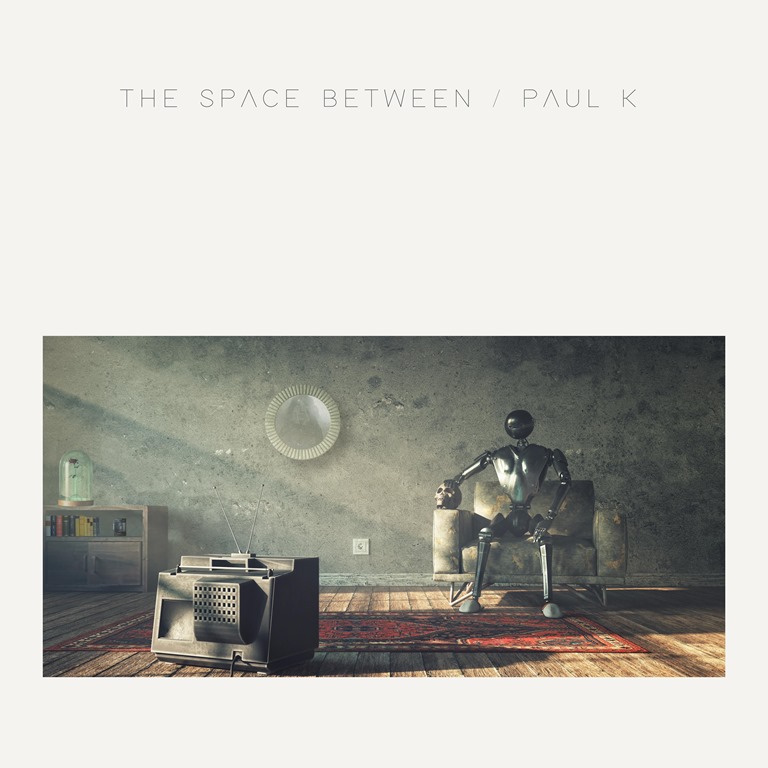
It’s been almost three years since Paul K delivered Reconstructed Memories. Listening to The Space Between, it becomes apparent why. Pandemic or nay, this is an ambitious and complex album which sees Paul return to the territory explored on 2018’s The Fermi Paradox and go the whole hog on devising and scoring a vast conceptual progressive work that’s heavily invested in narrative as it traces what he outlines as being a story ‘about an astronaut who has volunteered for a one way journey through space to pass through the Heliopause and is set maybe 30/50 years in the future.’

Space is both the backdrop and the story, in many ways, and the fascination it holds is something that transcends words or even rational explanation. Perhaps the fact that the sheer enormity and infiniteness of space is beyond our comprehension is a major factor in our space obsession. And however far and deep we probe, I suspect we will never truly be capable of assimilating the universe, especially as we, as a species, struggle to comprehend that we do not exist at its centre.

In classic sci-fi form and echoing 2001: A Space Odyssey, the concept behind the story is that the astronaut’s sole companion is an AI robot that becomes sentient during the journey, before the astronaut eventually dies and the robot continues the journey alone.

As Paul explains, ‘Each track plots the journey from liftoff looking back at the Earth (True Splendour) to the debilitating effect of years alone in space (Pareidolia) and is also related to the love and loss the astronaut has felt in his life’.

Understatement is the album’s defining feature. While it is unquestionably ambitious and incorporates cinematic arrangements, and notably choral-sounding vocals, the instrumentation is subtle and layered.

‘True Splendour’ makes for a gentle introduction and very much sets the tone. The Space Between keeps the drama and pomp to a minimum, and instead, the mood is contemplative, almost subdued, as strolling basslines wander sedately through soft washes of sound. Percussion is minimal, and low in the mix.

‘Sleep Within’ is perhaps the album’s most conventional ‘rock’ composition, but there’s a subdued, soporific overlay to its mid-pace melodic drift, although the reflective, wistful ‘Spektr’ has a certain solidity to it. In contrast, ‘Artifact’, the point at which the AI assumes autonomy, is almost vaporous, a soft piano reverberating among wispy sonic contrails.

The Space Between is an album that functions on numerous levels simultaneously, although they’re not all necessarily obvious. But it’s not imperative to follow the narrative to appreciate the detail; the album works in a way that not only creates space, but conveys space, the eternal distance, the vast emptiness… we are all lost and floating. But some are more lost than others. Welcome to The Space Between.

292588895_411372567443242_3679202510317740520_n

Constellation – 26th August 2022

Christopher Nosnibor

One’s perception of time changes with its passage. As you get older, it seems different, and passes differently too. In childhood, there’s the sense that summers are long and sunny, school holidays stretch out in front of you like a playing field the size of Wembley Stadium, whereas in adulthood, six weeks is no time, and the summer means it’s nearly time to start considering Christmas. But even in adulthood, while there’s a keen and pressing awareness of the rapid passing of time, it’s easy – and perhaps it’s how we’re psychologically wired – to ignore the overall narrative span while focusing on the rapid cycle of existing in the present. You get caught up in the infinite and swift cycle of the working week, thee routine, you complain about how time flies as New Year becomes Easter becomes Hallowe’en becomes Christmas, even how every birthday marks the passing of another year. But for all the talk of making the most of life and living every day or week like it could be your last, that’s what it is – talk. Because it’s almost impossible to comprehend there being an end, not just of life, but of anything. It’s simply human nature to take things for granted, that the sun will always rise, that you will always be able to buy the same bread and crisps and whatever in the supermarket.

And then they stop making a certain brand of crisps or chocolate and there are mutters of discontent, and then, twenty years later, online forums are oozing nostalgia for these things. These things of no consequence.

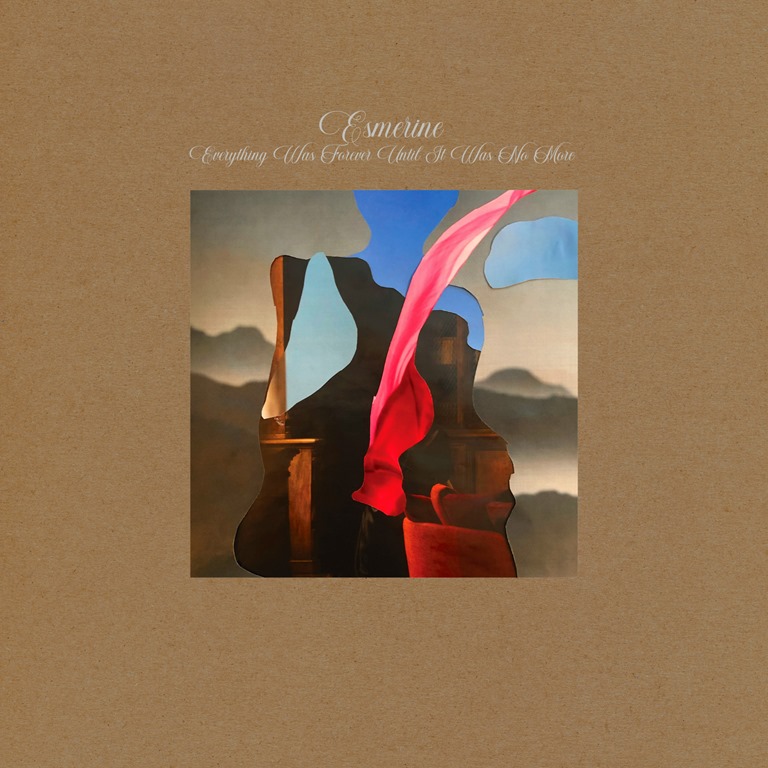
Over the course of seven previous album since 2001, Canadian quintet Esmerine, co-founded by percussionist Bruce Cawdron (Godspeed You! Black Emperor) and cellist Rebecca Foon (Thee Silver Mt. Zion, Saltland) have, as their bio notes, straddled the boundaries of ‘contemporary classical and late 20th century Minimalism’ and ‘more visceral and lyrical sonic terrain born from post-rock, folk and global.’

Such a broad palette is the perfect base from which to paint scenes of shifting perspectives that explore the theme of the title.

Time stalls during the nine-minute ‘Entropy: Incantation – Radiance – The Wild Sea’ – a piece which transitions through numerous parts and brings a range of atmospheres, from quietly brooding piano solo to soaring, majestic post-rock, trickling into the brass-orientated ‘Entropy: Acquiescence’ which evokes that sepia toned Hovis advert kind of nostalgia. And so it’s here I discover that that isn’t an exclusively English thing, but still – there is a cultural heritage of a nostalgia for a golden age of simplicity and innocence. It is, of course, a fallacy: past times were difficult, flawed. It’s easy to hanker for a rose-tinted rendition of a past you never knew, and ‘Imaginary Pasts’ seems to acknowledge this, wordlessly, via the medium of slow drones and rippling piano.

And so it is that Everything Was Forever Until It Was No More mines a golden post-rock seem of evocativeness, conveyed by means of slow-burning epics, interspersed with fragmentary pieces, which, while under three minutes in duration, give the album a certain sense of pace amidst the spic sprawlers, which culminate in the seven-and-a-half minute ‘Number Stations’. The brooding ‘Wakesleep’ is tense and eerie, with a sense of foreboding, that paves the way for the dolorous funeral chimes that herald the arrival of the closer.

There’s a sadness to it, and it’s this sadness which permeates the album as a whole. It’s a sadness that speaks of lost time and fading pasts. And when they’re gone, they’re gone. And yet there are soft hints of redemption, that nothing is entirely finite. Nothing is forever, but memories linger longer than life.

AA

cover Esmerine - Everything Was Forever Until It Was No More

Partisan Records – 16th September 2022

Christopher Nosnibor

It’s simply impossible to keep up with everything all the time. It feels like a recurrent theme, and even something of a mantra: so many bands, so little time.

Over the course of eighteen years, The Black Angels have cemented their position as, as their bio puts it, ‘standard-bearers for modern psych-rock’. And that’s not hyperbole: it’s a fair assessment.

2010’s Phosphene Dream was a major let-down, particularly in the wake of two such stunning predecessors, with Passover and Directions to See a Ghost. Consequently, feeling disillusioned, both Indigo Meadow and Death Song bypassed me, but Wilderness of Mirrors landed in my inbox with the promise of a return to early form after a five-year gap – or, as they put it, ‘marks a triumphant return with their foot on the pedal. Political tumult, the pandemic and the ongoing devastation of the environment have provided ample fodder for their signature sound and fierce lyrical commentary’.

For Wilderness of Mirrors, the band worked with Brett Orrison (co-producer) and Dinosaur Jr engineer John Agnello ‘to achieve something fresh and new while retaining their heavily influential classic sound’.

Wilderness of Mirrors is epic and feels like it needs to be a double album simply because it has such weight and important in a way that’s hard to really define. It’s not sprawling and awkwardly indulgent: yes, it does contain fifteen songs, but less than half extend beyond four minutes. But it’s an album of density.

Opener ‘Without a Trace’ starts out tentative-sounding distant before the bass crashes in like a landslide and in an instant, the listener is sucked into a dense sonic whirl. It’s the gritty bass that also dominates the pulverising ‘History of the Future’ that lands somewhere between Ther Jesus and Mary Chain and Ride, with some blistering guitar that’s a wall of fuzzing, fizzing treble against a busy beat and a bass that buzzes so hard it practically cuts the top off your head. And just like that, you’re back to remembering why this band mattered in the first place. Everything is a murky swamp of reverb, a deep 60s vibe radiating through the 80s and 90s filter.

I’ve long noted how the Jesus and Mary Chain essentially played surf pop with feedback and distortion, and ‘Empires Falling’ follows this approach magnificently, and with its relentless rhythm section and squalling guitars, it bears strong and obvious parallels with A Place to Bury Strangers.

It’s best played at high volume, of course: this is guitar music to melt the brain, and if songs like ‘El Jardn’ and the acoustic ‘Here & Now’ are more accessible, melodic and overtly indie, they offer some much-needed respite, while still boasting some howling guitars. There’s a vaguely gothic hue to the sneaking guitars and dubby grooves of ‘Make it Known’ and the slower ‘The River’, and it works well in contributing to the album’s rich and varied atmosphere and contrast with the jittery tension of the title track.

Ultimately, the best thing about Wilderness of Mirrors is that is sounds like The Black Angels – quintessentially, unmistakeably, with its motorik grooves, simple, repetitive riffs and song strictures that define the chorus not by a significant shift in key or chords, but by the explosion of sound, the simple structures executed with rare panache. They’re definitely on form here.

AA

qGJhuOyC

Negative Gain Productions – 9th September 2022

Christopher Nosnibor

Curse Mackey has enjoyed an enviable career as a frequent performer with legendary industrial collectives Pigface and My Life With The Thrill Kill Kult, and has built a substantial catalogue of work as a solo artist too – and it’s perhaps to be expected that much of this, including his latest, Immoral Emporium, is defined by the vintage late 80s / early 90s Wax Trax! electroindustrial sound.

While Immoral Emporium is undeniably dark, it’s also fairly poppy and accessible, with a title track that calls to mind more recent Gary Numan. And this is in the region of the album’s tone and style overall.

Starting off, ‘Smoking Tongues’ is strong on melody and surprisingly sparse retro synths and while Depeche Mode circa Black Celebration comparisons are likely the obvious choice, it’s as much A Flock of Seagulls. That may appear to some as a rather casual dismissal as being flimsy pop, but the electropop that rode the charts in the early to mid-80s was way darker than it’s usually given credit for or remembered as being. Consequently, suggesting that the spoken-word verses of ‘A Sharp Reminder’ are reminiscent of Pet Shop Boys’ ‘West End Girls’ is absolutely no sleight.

‘The Reveal’ takes a turn for the more overtly industrial, with menacing synth bass pulsations and a death disco thudding beat. ‘Dead Fingers talk’ borders on bouncy, and while ‘Lost Body Hypothesis’ is harder, darker, and driven by a nagging bass, it’s in the same sphere as Nine Inch Nail’s ‘Sin’, and it’s that late-80s grind that dominates Immoral Emporium. Many will bang on about how Pretty Hate Machine broke new ground, but the fact is, without denigrating what is undeniably an outstanding and era-defining album, that it only broke the territory in commercial terms. It maty have added some layers of noise in the production, but it didn’t really add all that much to what Ministry and Depeche Mode had already been doing, and that’s before we get to the conveyor-belt catalogue run of acts churned out by Wax Trax! between 1986 and 1988 with releases by the likes of Revolting Cocks, Front 242, and Fini Tribe. There was a certain sameness among the label’s acts and releases, but they worked, because there’s something instinctive and primal about drums that thump and clatter distortedly against insistent bass workouts and various elements of extraneous noise.

On Immoral Emporium, Curse very much revisits his roots, and it’s well-realised with solid songs packed back-to-back.

AA

a2417364119_10

Christopher Nosnibor

Sometime during lockdown – which one, I can’t remember exactly, but likely the first, where here in England what initially looked like being a couple of weeks, ended up being more like a lifetime. After the lockdown announced on 23 March 2020 was extended on 16 April for ‘at least three weeks’ and in fact running into June, the fear surrounding the lifting of restrictions saw references to Stockholm Syndrome circulating with increasing frequency in the media.

Described as ‘a psychological response’ which occurs when hostages or abuse victims bond with their captors or abusers, and the victim may come to sympathize with their captors, and

may even begin to feel as if they share common goals and causes.

The name originates from a failed bank robbery staged in Stockholm in 1973, where Jan-Erik Olsson, and his charismatic accomplice Clark Olofsson held four employees as hostages, remaining captive for six days in one of the bank’s vaults, and when the hostages were released, none of them would testify against either captor in court; instead, they began raising money for their defence.

While the syndrome is disputed, the concept is something of a source of fascination. Personally, I had never been one of those who found themselves ‘loving lockdown life’, but found myself apprehensive about the easing of lockdown: what would be the ‘right’ way to behave in public, how would things ‘work’? I didn’t need to worry about pub and gig etiquette for a while, but was more fearful of other people than I was of Covid – because people are unpredictable, and after being cooped up for so long, who knows how many might have lost it?

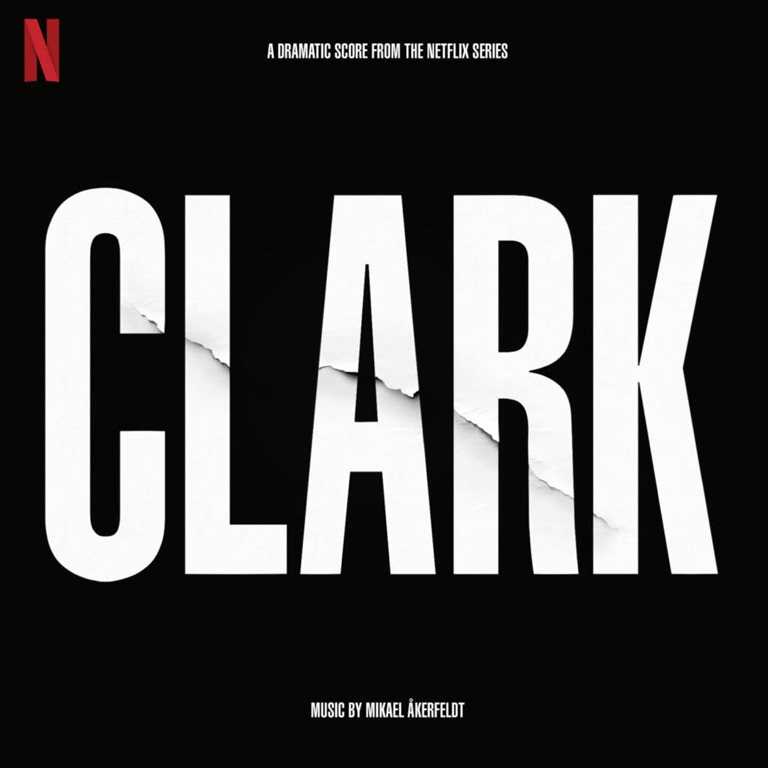
Swedish Netflix mini-series Clark is the story of Clark Olofsson, and while it’s won awards, I found its stylised and flippant comedy-drama approach to be pretty ‘meh’. There’s vague amusement to be had, but ultimately – and for obvious reasons – presents Olofsson as ‘cool’, a cheeky bad boy out for But then, just because it’s not what I would have wanted it to be doesn’t mean it’s no good, it’s just not my bag.

While there are some bold intercuts of ‘proper’ songs featured, it’s not a series where you find yourself really paying attention to the soundtrack for the majority of the time. Listening to the soundtrack independent of the series, it’s a mystery as to why this is.

Of course, much of the interest in the soundtrack will be the fact that it was scored by Mikael Åkerfeldt of progressive metal legends Opeth – and as much as this score is overtly cinematic, it draws equally on progressive rock, funk, laid-back jazz, and 70s cop shows. The last nine of the thirty-four tracks feature vocals, and this portion of the album feels separate again, and may have worked as a separate release or bonus CD or something, as it’s quite a leap. Hell, ‘Måndag I Stockholm’ goes full Sabbath. Incongruous is an understatement and it’s hard to know what to make of it all. Then again… why not?

AA

Varied, engaging and evocative, it’s imaginative and listenable and entertaining – and a lot less frustrating than the series itself.

 MikaelAkerfeld_Clark_LP_Gatefold.indd

Emanzipation Productions – 2nd September 2022

Christopher Nosnibor

From a certain perspective, all aspect of life can be seen to exist as one vast intertext, whereby everything connects and intersects with something, everything, else, by some devious and circuitous route. So the title of Ensanguinate’s debut long player actually makes me think of The Sisters of Mercy, whose singer, Andrew Eldritch, devised the band’s ‘head-and-star’ logo by ripping off one of the illustrations from Grey’s Anatomy – the medical textbook, not the television series. And of course, an inescapable aspect of life, which diagrams for dissection plainly remind us in the most clinical of fashions, is the inevitability of death.

I’ve sat myself down in my office to compose this review under circumstances very few would have predicted only this morning, whereby here, in Britain at least, this morning has become an evening of mourning with blanket coverage of the death of Queen Elizabeth II. I need to simply switch off from all of it, what will likely be the start of a month of commentary, with endless shots of palace gates and cavalcades while the rest of the world is on pause.

The best escape always lies in something completely different, and in strange or difficult times, pure catharsis invariably tends to be the best remedy. Ensanguinate are the very essence of catharsis, distilled to optimum potency. Their bio describes the band as ‘Slovenia’s putrid entry into the death metal grimoire of old. Leaning heavily on the genre’s occult beginnings, the band stands out by distilling Possessed, Morbid Angel, and Grotesque into a searing death/thrash assault that deviates from today’s run-of-the-mill death metal’.

The tiles are great, and speak for themselves, with the likes of ‘Cadaver Synod’, ‘Perdition’s Crown’, ‘Lowermost Baptisms’, and, my favourite, Gaping Maws of Cerberus’ perfectly summarising the music itself – snarling, subterranean, satanic guttural utterances barked against a fast and furious backdrop of guitars charred and blackened like burnt offerings strewn around the opening to the pits of hell.

The hell-for-leather riffing and frenetic drumming is all-out from the first bar, with ‘Hunted’ packing in the darkest, dirtiest sonic carnage into under four minutes, and still shoehorning in a truly frenzied guitar solo.

Ensanguinate really do work the epic solo, and while there’s a certain element of genre cliché and absurdity about it, this kind of gnarly metal is the only context where solos aren’t only excusable, but one hundred percent necessary, essential even. The slower intro on ‘Ghoul Presence’ lumbers into showy, almost symphonic territory, before it goes all-out obliterative pace and raw-throated growling.

Eldritch Anatomy is the sound of a band revelling in excess, with everything louder than everything else, and everything is dank, murky and dripping with the dirtiest distortion. It’s full-fledged filth, bowel-shaking nastiness dragged up from satanic swamps that steam so hard you can picture the sweat running down the walls as the band whip themselves into a furious frenzy.

The album’s final track, the seven-minute ‘Vile Grace’ begins altogether more delicately, with some gracefully picked clean but chorused guitar before the power chords crash in hard and slow and build to a thunderous chug. It’s hard and heavy and offers a condensed rendition of all of the album’s main elements, albeit at half the pace and so with added weight and sledgehammer impact. In doing so, it rounds off an album that has it all in terms of texture and dynamics, and delivers every note with an unstinting ferocity that’s admirable.

AA

a0646941338_10