Posts Tagged ‘Album Review’

Mind Altering Records – 13th November 2023

Christopher Nosnibor

Back at the start of 2021, I penned a pretty positive review of the solarminds album Her Spirit Cracked the Sky. The combination of ambience and extreme weight was a thrilling proposition. And it was – and still is – monumentally epic. It feels a long time ago already, and much has happened in the interim. If emerging from the pandemic was trailed for a long time by the release of myriad ‘lockdown’ projects, we’ve subsequently trickled into a ‘world’s turned to shit’ phase, and like the pandemic, it feels like there’s no end in sight. Trump may be out of office, but he still looms large and continues to pose a threat in the arena of world politics, and it’s a world at war, and a world where alternately wild fires and floods decimate swathes of land. Slowly but surely, the planet is becoming less inhabitable. And yet, still, people jet off on skiing holidays and bemoan the lack of snow despite being the cause of the lack of snow, and whenever it rains, people take to their cars to make five-minute journeys to avoid getting wet, thus ensuring it will rain an awful lot more in the time to come.

And since the release of Her Spirit Cracked the Sky, after more than a decade, Chris Miner has put the project to bed. But, like the proverbial phoenix rising from the ashes, he now returns with Sun Colour Sound, and the first in a projected trilogy of releases. On the evidence of this first one, it will be something special.

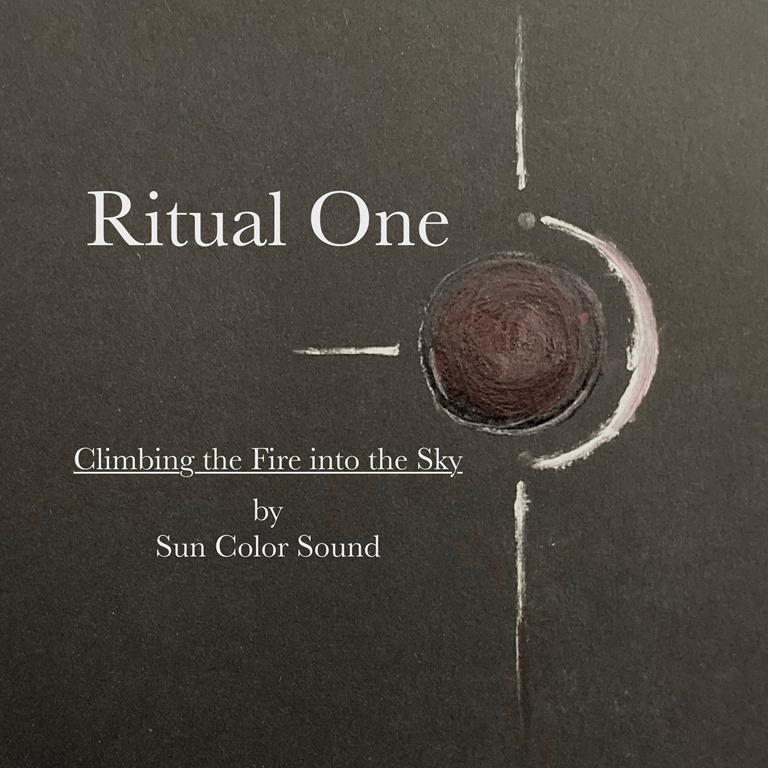
Ritual One (Climbing the Fire into the Sky) consists of a single piece, which runs just short of half an hour, and it shares many elements with solarminds – namely a fair bit of noise, some hefty guitars and punishing percussion, at least in the first two thirds, and it’s heavy, harsh, noisy, and it crashes straight in with some grating, heavy drone, twisting feedback and thudding drums.

This is one of those tracks which stars like the end of many sets, and it feels like it’s winding down from the offing. This is by no means a criticism, simply an observation that what in the context of many works is a climactic, tempestuous crescendo finale, is simply the start of a ferocious sonic storm. It does very much call to mind Sunn O))) and the epic, swirling instrumental passages of contemporary Swans, although the guitars are very much geared towards generating howling feedback rather than crushing, clashing chords that sound like buildings being demolished. Therte’s something of a psychedelic twist in the spacey delivery, too. As whining, whistling notes ring out, the percussion builds from the occasional roll to a relentless thunder. The combination is immensely powerful, and assails the senses with a real physicality. Buy around the thirteen-minute mark, it’s reached wall-of-sound levels, a dense, shimmering sonic force which shimmers and ripples while coming on like a bulldozer, at the same time as hand drums fly at a frantic pace and evoking something spiritual in the midst of a hypnotic frenzy. And still, it goes on, surging forwards.

The shift in the final third occurs subtly: the percussion continues to clatter away, but the guitar abrasion tapers away, to be replaced by altogether softer strings.

Ritual One (Climbing the Fire into the Sky) is more than just a really long piece of music: it’s an ambitious piece in every way, and its scope and scale are immense. There is so much depth and detail here, and it takes repeated listens to really appreciate just how much is happening, especially given that the first reaction is simply to bow to its sheer sonic force.

But the last ten minutes belong to a different world from the first portion. Hypnotic, soothing, graceful, the tension dissipates and Eastern vibes radiate through the gauze-like layers which drift and float over the busy but altogether more subdued percussion.

So while it is an ambitious work, it also delvers far above any expectations, and it’s both unique and special.

AA
Version 3

Metropolis Records – 3rd November 2023 (Digital) / 17th November 2023 (CD)

Christopher Nosnibor

Ian Ross’ electro-industrial project Flesh Field emerges, quite unexpectedly, from almost two decades of dormancy, twenty years in mute, to deliver ‘A concept work with each of its ten tracks representing stages of political radicalisation and violence, Ross states in the CD booklet that “believing falsehoods because those falsehoods reinforce our preferred narratives is not harmless. Promoting falsehoods to benefit your faction is not harmless, particularly in a well-armed society. If we remain locked in our own echo chambers, inevitably there will a voice of the echo chamber that speaks in the language of mass murder, believing it justified. This album describes that tragic inevitability.”

It’s not hard to ascertain ‘why now?’ While I’ve long become weary of the endless and continuing stream of ‘lockdown projects’ emerging, it’s a fair assessment that the pandemic did change everything. Confined, pressurised, and subjected to a relentless bombardment of news media, government ‘information’ and directives, and often with only social media for company beyond the four walls of home imprisonment, people struggled to separate fact from misinformation and conspiracy, reality from fiction and imagination.

I first really noticed the echo chamber some time before, in 2016, with the Brexit referendum in June, swiftly followed by the election of Donald Trump as US president in November. Both results seemed not only implausible, but nigh on impossible. No-one I knew or spoke to supported either as far as I knew – why would anyone vote for either of these outcomes? But against a backdrop of simmering tensions and social divisions and a general melee of things being pretty fucked, these seemingly unimaginable things came to pass. I would subsequently learn that relatives had voted in favour of Brexit ‘to see what would happen’. Fucking Boomers who won’t be around to live through the worst of the fallout. And this is how it goes when you have ageing populations and a swing towards the right in uncertain times. People seek to protect their own interests rather than the greater good. It doesn’t necessarily mean that echo chambers perpetuate falsehoods, but they do most certainly create confirmation bias, foster complacency, and distort reality by creating a bubble. And now… there is no way Ross could have predicted the dark turn that would assail the Middle East just a few short weeks ago. The divisions surrounding this conflict reverberate around the globe. And we watch. And we watch. It’s simply more TV, more unreality to many.

During Flesh Field’s protracted period of inactivity, their work continues to spread, like a fungus, or to perhaps use an analogy more akin to their own spheres of reference, like a virus, numerous tracks from their catalogue were placed in the soundtracks of films including the just released The Mill, TV shows such as True Blood and video games like Project Gotham Racing. Sometimes, being away is the best promotion.

But there couldn’t be a more appropriate time for Flesh Field to return, and Voice of the Echo Chamber is a powerful document reflecting these difficult times. The opening track, ‘

Crescendo’ stars strong, with a cacophony of babbling voices, before thunderous percussion and bold orchestral strikes build big drama. Not since Red Raw and Sore by PIG have I been struck by such a grand intro to an album, and this melds driving metallic guitars, industrial-strength techno beats and seething bombast. It’s a strong cocktail and one that hits the listener right between the eyes, paving the way for a set of ten insistent tracks all driven by loping sequenced synths and thudding hefty beats pushed to the fore and pumping, pulsating hypnotically. The are choral bursts woven into the dense fabric of the compositions, as well as strings and piano and incidental noise: ‘Catalyst’ crunches in with a harsh mechanised grind which gives way to a filly cinematic string segment before the pounding beat slams in and things get dark, like an industrial reimagining of Holst’s ‘Planets’ suite. The vocals are low in the mix and low in the throat. The delivery means the lyrics aren’t always especially audible, but the sentiment and energy is relentlessly loud and clear amidst the grunt, grind, and crackle.

‘Arsenal’ goes big, a gritty anthemic chorus paired with a crunchy industrial verse that draws together elements of NIN, KMFDM, and PIG, to big, big effect, being both attacking and cinematic at the same time. There’s plenty of attack here, but equally, Voice of the Echo Chamber is big on bold, widescreen, cinematic segments. ‘Manifesto’ is a monster, with all the guitars, all the orchestral work, and a relentless beat that hits hard and heavy and it all comes together to create a big, big sound. The pounding ‘Soldier’ is really big on impact, and contrasts well with the brooding, slow-crawling ambience and piano atmospherics of the unexpectedly gentle introduction to ‘Rampage’.

There’s a certain sense of uplifting empowerment to be found in the chorus of the last track, ‘Reset’. Ewe need this glummer of optimism in the face of so much relentless bleakness and gut-crushing darkness, which ends with more crowds, more shouting. You flinch and stall, because it’s too close, too real.

In places harsh and stark despite its enormity, Voice of the Echo Chamber is a strong, relentless, unyielding blast. I feel that this is a time to sit back, let things repercuss in their own time, and step back while Ian Ross blasts distortion, vitriol, and amplifies self-loathing with brutal force. Feel it.

AAAA

a2435923100_10

Human Worth – 10th November 2023

Christopher Nosnibor

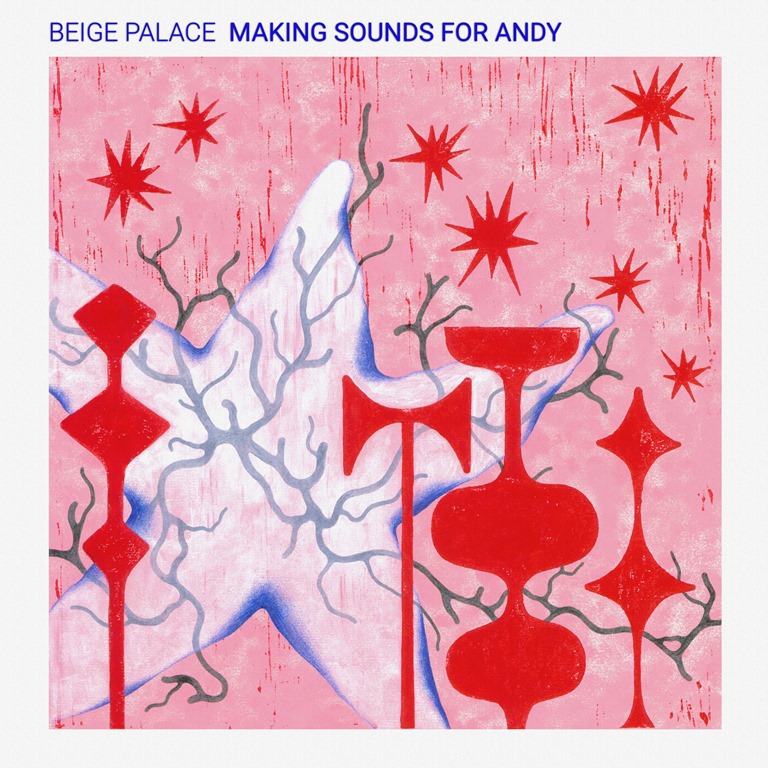
I know it’s not really cool to make that you’re cool because you’re in the know or whatever. A few years ago, it was the way of the hipster, but after what felt like forever, they seems to have disappeared, probably because everyone grew beards during lockdown, so the hipsters had to shave and resort to telling people they were wearing a beard before the pandemic or something. Nevertheless, I can’t help but take some satisfaction from having observed Beige Palace from their very dawn, at their first show in the now-lost CHUNK rehearsal space-cum-gig venue way back in the spring of 2016. The place was a bugger to get to from the train station, being practically in the middle of nowhere you’d actually want to go, and to describe it as basic would be polite. But what CHUNK provided was a place where anything went. It was BYOB, pay what you can, and it was a hub of creativity which lay at the heart of the DIY scene in Leeds. And so it was that Beige Palace – perhaps not quite a supergroup at the time, but simply people in other bands (Freddy Vinehill-Cliffe (Thank), Kelly Bishop (Gloomy Planets) and Ant Bedford (Cattle)) doing something different together – came to be.

They’ve come a way since then, notably with slots at The Brudenell supporting Mclusky and also Shellac, with a personal thumbs-up from god himself, Steve Albini. There’s likely a number of reasons for this, apart from the simple fact that Beige palace are bloody good, a major one being that they make angular noise without being overly abrasive, preferring instead to push sounds that are slated, skewed, imbalanced, jarring, jolting. This is right up front at the start of this, their second long-player, with ‘Not Waving’, a scuzzy collision of Shellac, The Fall, early Pavement, and Truman’s Water. The bass is right up in the mix, the vocals down low, and everything about it is absolutely wrong in terms of conventional sound. You can imagine sound engineers all around the country shaking their heads and saying “but that bass is just booming… it’s drowning out the vocals… and the guitar, maybe you should take the treble down a bit?” But Beige palace’s sound isn’t conventional, and they’re not going for radio-friendly pop tunes.

The album’s title appears to make a nod to XTC, and calls to mind the band’s hit ‘Making Plans for Nigel’ (surely one of the greatest snappy tunes of the New wave era) and the fact that Andy Partridge was co-frontman of XTC. Coincidence? Am I joining dots and identifying references which simply don’t exist? Possibly, but then again, for all the wrongness, the off-key and the off-kilter, there are some neat hooks to be found leaping out from the rumbling basslines and loping drums. ‘Local Sandwich’ is representative: the rhythm section strolls along kicking a loose groove where the bass and drums are seemingly playing alternate to one another, the discordant sprechgesang vocals of the verses overlap one another, making for a tense combination – and then out of nowhere, pow! Hook! And then a squalling climax.

The genius of the songwriting lies in its unpredictability: for as much as the compositions are largely built around repetitive motifs, hammering away at the same nagging loop for minutes at a time, adding and subtracting elements such as keyboard or guitar, they’re prone to veer off somewhere else or otherwise change tempo or burst into a scratchy blast of noise at precisely the moment you least expect – and just when you expect something unexpected, a song like ‘My Brother Bagagwaa’ doesn’t do it. They’re as keen to explore the space in between the notes as the notes themselves, and there are numerous passages on Making Sounds for Andy where they pull things back to stark minimalism. This makes the crackling bursts of distortion and clattering drums all the more impactful.

Leeds has a habit of birthing weird bands who are nosy but not noise, with the legendary Bilge Pump and the should-have-been-legendary Bearfoot Beware providing a brace of examples – but Beige Palace are very much their own band. Making Sounds for Andy is a bold celebration of ramshackle lo-fi, delivered in such a way as to hit hard. It’s got ‘underground classic’ all over it.

AA

HW025_BeigePalace_MakingSoundsForAndy_CoverArtwork

Human Worth – 3rd November 2023

Christropher Niasnibor

For all of our astounding advances over the last three millennia, as a species, man is not only a bad animal, but the worst. We have the capacity to achieve truly great things, but instead expend immeasurable amounts of time and effort – and that most ruinous of human constructs, money – on destroying one another and the planet we inhabit. The world is eternally at war, but recently, tensions have escalated to levels which are difficult to comprehend: as the war in Ukraine continues to rage, with almost universal condemnation of Russia, events in the last few weeks in the Middle East have provoked rather different reactions. Division, it seems, begets division, and it seems that the frame has frozen while people bicker over sides, the need to condemn Hamas and to support the mantra that Israel has the right to defend itself.

Perhaps some of this is war-fatigue, perhaps it’s the influence of the media, perhaps some of it’s simply pure shock at the horror of the scale of the bloodshed, but it feels as if the world has paused while all of this plays out with gruesome inevitability. Social media is a minefield, and it feels like any kind of comment could prove inflammatory. But the fact is, political allegiances need to be set aside in the face of the fact that thousands upon thousands of civilians are dying – with women and children disproportionately affected.

The notes which accompany this release set out the situation plainly and directly: there is no need to employ emotive language here, as the stark facts hit far harder.

‘Children in Gaza are living through a nightmare – one that gets more distressing by the hour. So far since the war broke out nearly 4,000 children have been killed – that’s 800 more than yesterday! This horrifying a number surpasses the annual number of children killed in conflict zones since 2019. With a further 1000 children reported missing in Gaza, assumed buried under the rubble, the death toll is likely much higher. All the funds raised through this charity release will be donated to help Save the Children and their network of charities to provide direct lifesaving and mental health support, distribute essential supplies, as well as education facilities and safe spaces for children.’

We know that Human Worth are good guys: the label’s very name is an advertisement for their operating model which involves the donation of a portion of sales proceeds from each release to charity, and they’ve put out a couple of charity compilations already in their relatively brief existence. And while governments sit and watch on, or otherwise give their unreserved backing to Israel, Human Worth have galvanised themselves and their impressive network of artists to pull together a new compilation from which all funds raised will be donated to support Save the Children’s Gaza Emergency Appeal.

This is reason enough to buy it anyway. But this is a stunning release in its own right, featuring twenty-eight tracks from the Human Worth roster and beyond, with a slew of exclusive cuts which make this a quality compilation of music from the noisier end of the spectrum.

It’s got some big hitters, too: Steve Von Till is up first with ‘Indifferent Eyes’ and Enablers are also up early with ‘In McCullin’s Photograph’, and kudos to both the label and the artists for coming together for this.

Sort of supergroup Cower, featuring among others, members of Blacklisters and USA Nails and who released their album BOYS through Human Worth in 2020 offer an exclusive in the shape of the jarring ‘False Flag’, as do Thee Alcoholics with the jolting ‘Catch the Flare’.

Elsewhere, we get representative selections showcasing the best of the label’s recent releases, not least of all ‘Wasted on Purpose’ by Remote Viewing’ and the astringent nine-minute behemoth that is ‘As Shadow Follows Body’ by Torpor from their devastating debut Abscission. Newcastle noisemongers Friend give us eight minutes of carefully-considered transitions and some really quite nice melodies as they build the emerging riff-monster that is ‘Uncle Tommy’. The buzzy, lo-fi gothy synth-punk of The Eurosuite’s exclusive cover of Smashing Pumpkins’ ‘Zero’ is quite a contrast – and sounds like one of Dr Mix and the Remix’s brutal smash-ups – and on the subject of brutal, the sub-two-minute grindcore assault that comes courtesy or FAxFO is utterly furious. HUWWTD’s Late Cormorant Fishing makes for an unexpected standout. Think Shellac with metal vocals and you’re on the way.

Despite the rushed – by necessity – nature off the release, the sequencing shows real consideration as the songs shift between different atmospheres and moods. Human Worth III displays the consistency of quality we’ve come to expect from the label, and the artists’ rapid willingness to contribute speaks volumes about all of them. As a result, Human Worth III is a bloody good album. Go buy it – and pay as much as you can.

a1762019530_10

Bearsuit Records – 31st October 2023

Christopher Nosnibor

Just a little over two years since the idiosyncratically-monikered Eamon the Destroyer arrived with his debut single ‘My Drive’, he’s gone from strength to strength – to the extent that his output has erupted, Godzilla-like, expanding and flexing immense musical muscles. Sort of. Because Eamon the Destroyer’s work is, despite the connotations of a raging beast laying waste to entire civilizations with a single roar, incredibly intimate, with tension building from the introspective minimalism of the songs. With the release of the debut album A Small Blue Car and a remix / reworking of said album landing in quick succession, the arrival of We’ll be Piranhas seems swift.

We’ll be Piranhas finds Eamon the Destroyer (any truncation of the name feels wrong: Eamon too casual and to cuddly; the Destroyer simply unrepresentative) pushing the parameters of experimentalism, conjuring the sonic equivalent of the surreal oddness of the album’s cover, which looks like a three-way split-screen of medievalism, Anglo-Saxon fable, and a deranged reimagining of some of Captain Cook’s sketches of newly-discovered species with what appears to be a polar bear resting its chin on a narwhal, while gulls look on and rabbits look away. Or something.

‘The Choirmaster’ is both droney and playful, quirky, and mellow, until it spins off its axis and into a whole other world of spiralling prog and doodling daftness. It certainly packs a lot into five strange and disorientating minutes. Single ‘Rope’ is glitchy, awkward, and feels like it doesn’t belong to anything, and suddenly, it lurches too life with a loping rhythm and fuzzy synths which provide a backdrop to tense, almost strangled vocals, hushed, strained, and gravelly. Not for the first time, I long for a lyric sheet as the scratchy vocals render the words difficult to decipher, but this is perhaps his most vitriolic piece to date; more often than not, Eamon the Destroyer croaks melancholy: here, there’s a fire, and it carried through into the wheezing clatter of ‘Sonny Said’. There’s a moment around the mid-point I get a pang of Seventeen Seconds-era Cure. But it’s fleeting, and nothing is pinpointable, particularly in this swirling maelstrom of a piece.

When it comes to Bearsuit releases, I often find myself using and reusing the word ‘weird’ as a descriptor – mostly because it’s the thing that really defines the label. While the likes of Harrold Nono spin Eastern hues into spirals and spin drifts of experimentalism, We’ll be Piranhas finds ETD really going all-out to try stuff. And the result is brain-bending.

‘Underscoring the Blues’ somehow manages to melt fairground oddness with The Doors and prog and, well, all sorts, to blur into a curious cocktail.

It’s difficult – if not impossible –to listen to this album and feel ‘normal’. It feels like the soundtrack to a dream: one of those weird dreams where familiar places aren’t quite right – the walls of familiar rooms are different, doors and windows are in the wrong place, and continually moving, and you look to make your way out and suddenly the door has vanished. The floor is moving and familiar faces warp and acquire new, alien aspects. You don’t know who you are or what’s going on, but you know that this isn’t what you expected as the sights and sounds of the familiar melt into one another. You feel your sense of time and space begin to crumble. Where am I? What even is this?

It feels like isolation. It feels like… like… like numbness, confusion. You feel your body tense, the backs of the legs growing taut. The title tracks sends everything spinning and whirling every whichway, and there is no easy way to assimilate this, and the same is true of the woozy glitchings of the desolate ‘A Call is Coming’. Ignore the call; decline it. Look inwards. Woah, something isn’t quite right.

We’ll be Piranhas leaves you feeling detached, askance, apart, removed, not quite right. It’s an introspective work delivered from on the cusp. On the cusp of what? It’s hard to say. Perhaps it’s best not to.

AA

a3572746252_10

Gizeh Records – 3rd November 2023

Christopher Nosnibor

While Christine Ott has maintained a steady flow of works over recent years – her fifth album arrives just two years after Time to Die – her latest offering has been a long time in the making. For example, we learn that ‘Die Jagd nach dem Glück’ (The Pursuit of Happiness) is an extract from her original composition for Lotte, mon amour, a film-concert created in 2014 based on 4 short films by Lotte Reiniger, a German director from the first half of the 20th century.’

It’s pitched as ‘a collection of twelve pieces for solo piano, twelve impressionistic miniatures, instrumental and cinematic fractals celebrating the beauty of life…

Éclats (Piano Works) is a kind of mirror image to Chimères (pour Ondes Martenot) (2020, Nahal Recordings).

‘Pluie d’arbres’ introduces the album with magnificently weighted, perfectly paces, rolling notes which balance grace and tension, and it’s a beautiful and engaging composition that comfortably slots into the ‘classical’ bracket not simply by virtue of its being a piano piece, but the delicacy of it all, and the way it articulates changing moods intuitively and with a depth of spirit.

The individual pieces follow one another in such a way as to create the impression of their being written to flow together, and while the tempo and tone may shift during the course of a single piece – there are flurries and flutters, moments of airy levity like the morning sun filtering through a curtain wafting on a gentle early summer breeze, notes coming suddenly in tinkling cascades – the album as a whole feels like a single, continuous piece. Rather than any one track being ‘dark’ or ‘light’, they each run through a succession of sensations, turning on a pinhead from brooding to playful, uplifting to reflective.

There’s an honesty about this, which speaks to the human condition. Yes, you may have good days and bad days, but most days are a series of peaks and troughs, highs and lows, unexpected and near-immediate switches that some about as the result of various but specific interactions – or, indeed, sometimes, a lack thereof. Éclats feels real because it doesn’t try to be any one thing, but more taps into the unpredictability of life. And Ott plays in such a way as to bring all of this out through the music, through her connection with the keys.

At times sad, at times uplifting, at times, it simply is… and this is the real joy of the experience of listening to Éclats. At its lightest, it carries you on rippling sonic clouds and pokes at the sky: at its darkest, it hangs heavy in your stomach. It’s hard not to be drawn in and fully engaged with this set of pieces, and it will take you anywhere if you let it.

AA

Eclats_DIGITAL_Artwork

Lost Map Records – 14th July 2023

Christopher Nosnibor

The release of ‘Stillness’ as a single last week by Firestations was a simple but neat bit of promotion. Backed with a remix version, its lustrous dreamy waves alerted me to the existence of Thick Terrain, the album from which it’s lifted. The album was released back in July, but, because there is simply so much music out there, it’s simply impossible to keep up, however dedicated you are in your exploration of new music.

I know a lot of people listen to Spotify while they’re working or on the bus or whatever, and stuff pops up and they like it, and many friends say they like how it recommends them stuff they wouldn’t have sought out but have found they’re pleasantly surprised by and it’s as if it knows… well, yeah, it does, to an extent, but not in a good way. Algorithms, selections by ‘influencers’, or sponsorship – none of these are as organic as people seem to believe. It’s not about choice anymore, but the illusion of choice. Before the advent of the Internet, I would spend my evenings listening to John Peel, and later, as a weak substitute, Zane Lowe, before I could tolerate his effusive sycophancy no more, and later still, but less often, 6Music. These were my Spotify, I suppose, but oftentimes, music in the background while I’m doing other stuff simply doesn’t engage me so much, and if music is to be background, it works better for me if it’s familiar.

I still listen to albums while I work, and have found since the pandemic that I can no longer wear earphones and listen to music in public places. Given what I do when I’m not doing my dayjob – namely review music – I prefer to sift through my myriad submissions, pour a drink and light some candles and fully immerse myself in something that takes my interest and suits my mood based on the press release or, sometimes, just arbitrarily.

Anyway. Back when I used to listen to the Top 40 – mid- to late-80s and early 90s – I would hear singles which piqued my interest, and would discover that often, they were the second, third, or even fourth single from an album that had been out some months, even the year before, and, alerted to the album’s existence, I would go to town the next weekend and buy it on tape in WH Smith or OurPrice or Andy’s Records.

The model has changed significantly since then: EPs are released a track at a time until the entire EP has been released as singles by the release date, and you’ll likely get four ahead of an album’s release and then within a fortnight of the album’s release, that’s the promo done. And so Firestations’ rather more old-school release schedule proves to be more than welcome, because it so happens that their first album in five years is rather special.

Released on Lost Map Records, which is run by Pictish Trail, from his caravan on the Isle of Eigg, it’s a set of psychedelic dreamgaze tunes reminiscent of early Ride, and takes me back to the early 90s listening to JP. Straight out of the traps, ‘God & The Ghosts’ places the melodic vocals to the fore with the chiming guitars melting together to create a glistening backdrop, shimmering, kaleidoscopic. The lyrics are pure triptastic abstractions for the most part, and in this context, the curious cover art makes sense – or at least, as much sense as it’s likely to.

While boasting a chunky intro and finalé, ‘Hitting a New Low’ is janglesome, a shoegaze/country which evokes dappled shade and wan contemplation than plunging depression, before ‘Travel Trouble’ comes on with the urgency of early Interpol, at least musically: the vocals are a dreamy drift and couldn’t be more contrasting.

Thick Terrain has energy, range, dynamics, and stands out from so many other releases that aim to revisit that 90s shoegaze style because the songs are clearly defined, and while displaying a stylistic unity, they’re clearly different from one another: Firestations don’t simply retread the same template, or stick to the same tempo. There is joy to be found in the variety, and Thick Terrain is the work of a band working within their parameters while pushing at them all the time. From the mellow wash of the instrumental interlude of ‘Tunnel’ to lead single ‘Undercover’ – an obvious choice with its breezy melody and easy strum and blossoming choruses – via the psych/county vibes of ‘Also Rans’, Thick Terrain is imaginative.

And ultimately, we arrive at ‘Stillness’, which, clocking in at six-and-three-quarter minutes is anything but an obvious single choice, at least in terms of radio play. It’s the perfect album closer: low, key, slow-burning, it evolves to break into some ripping riff-driven segments before ultimately fading out to space.

Thick Terrain treads lightly through a range of ranging textures and soundscapes, and does so deftly.

AA

a3885607160_10

Corvo Records – 15th October 2023

Christopher Nosnibor

As the saying goes, when life gives you lemons, make lemonade. In the spirit of this optimism, we have the cynical manoeuvring of disaster capitalism – but we also have 60 Seconds Each. Yes, to spin the adage, we have ‘when there’s a massive fuck-up, collaborate to release a compilation album.’

As the accompanying notes explain, ‘This LP was born out of a data leak: In 2022, the opening of the position of Professor for Sound Art at a German Art Academy attracted the applications of a broad, international panorama of sound artists. After the position was filled, the email rejection to all other applicants was sent by mistake by the university with an open distribution list (cc).

‘Kristof Georgen, one of the applicants used this mishap to develop a concept for a collective sound art project, inviting the artists included in the open cc to send a 60-second sound piece.

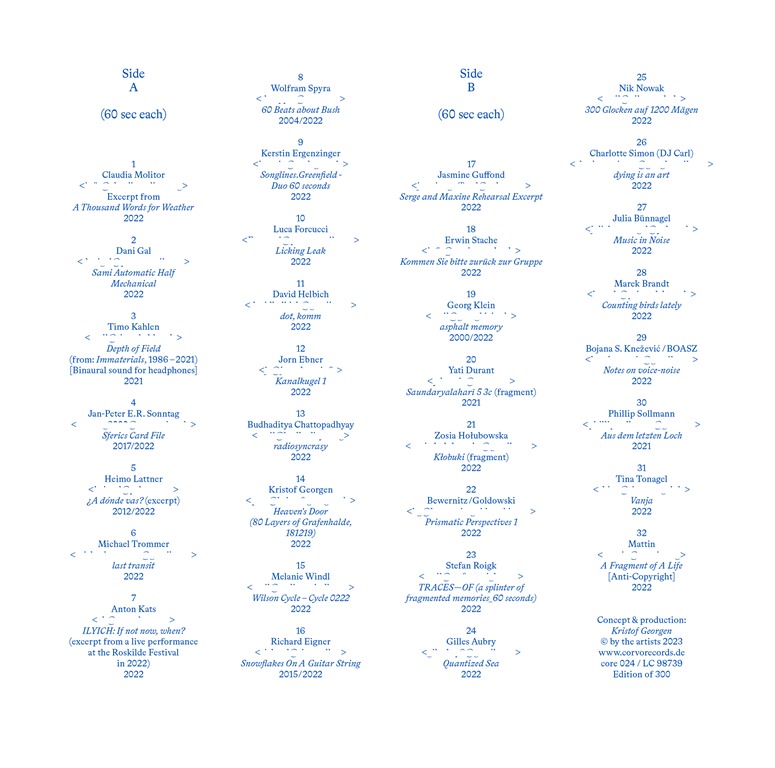
‘A group of 32 artist who were prepared to understand a record as a group work, followed the invitation – the result is 60 Seconds Each. The fragmentation of many music scenes during the pandemic, which still lingers today, is countered here with an artistic statement. This heterarchical approach transformed the application competition into an artistic cooperation which ultimately became a very diverse compilation, a one of a kind „Salon des Refusés“ of sound art. The time limitation of an LP and the restricting concept of 60 seconds stands as an antithesis to the unmanageable and boundless characteristic of the data leak.

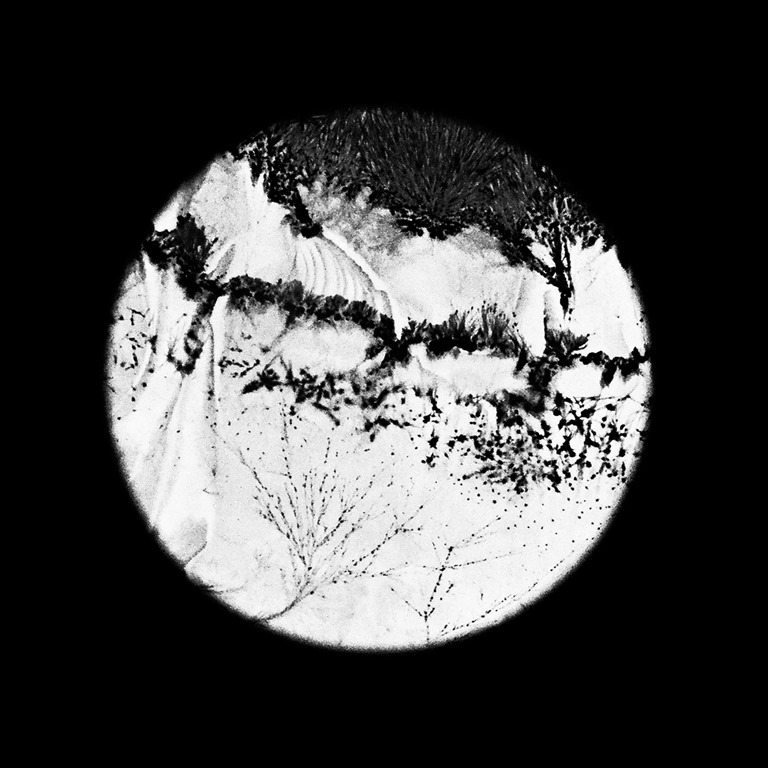
This reduction to the essential determines also the visual concept of the release. Fragments of redacted email addresses of the participating artists, forming a cloud of unreadable data which merges into the background of the cover art are an essential part of the design. The 60-second grid also structures the vinyl groove into a strict visual pattern, which can be read as small chunks of each participating artist’s work.’

The visual aspects of the album are almost worth the purchase alone, with the back cover and each artist’s notes which accompany their piece in the hefty booklet presented as redacted emails, prefaced by a concept-heavy but accessibly-written essay by art, design and music researcher, curator and DJ, Prof. Dr. Holger Lund, who asks:

‘Can sound art be funny and ring 300 bells on 1200 stomachs? Can it be macrocosmic and reflect time, living beings and the future? Can it be micro-cosmic and dedicated to the sound of snowflakes or the beeps of e-scooters? Can it be prophetic and deal with dying instruments? Can it sonify non-sonic things like light, shadow and air? Can it turn techno beats “inside out”, that is left-field? And can it build a specific atmosphere and dramaturgy in the miniature format of 60 seconds? It can do all that – and much more, as the present record project 60 Seconds Each shows.’

With thirty-two tracks – some full compositions, some fragments, others either simply sketches or field recordings – packed back-to-back and lasting just over half an hour per side, the individual pieces become a part of the whole, a jigsaw or sound-collage more readily experienced as the sum of the parts, instead of broken down. The brevity of each piece also makes it rather difficult to really unpack specific merits on the individual works, because out of context, we’re presented with simply a snippet of sampled dialogue, some electronic bleeps, a burst of noise, a gurgling drain, some plan weird manipulated vocal stuff, engines, birdsong, distortion and, well, you name it. Many of the pieces would simply serve as interludes on any other album, but here we have an hour of incidentals and interludes, or otherwise of sample snippets where you may skip pr otherwise choose to listen to the whole track… But rather than being frustrating, this sonic patchwork quilt is so much more than the sum of its parts, and the segments coming at you at such pace is dizzying.

Veering wildly between the playful and the hyperserious, and those which it’s difficult to determine, intermingled with the abstract, hefty beats banging hard between moments of soothing ambience, the experience is one of overload – information overload. But information is currency in this age of digital insanity. We’ve gone beyond the relentless blizzard of information and communication, to an existence dictated by algorithms and three-second video clips, attention spans so stunted so as to even find a hundred and forty characters excessive; tl; dnr – thinking not good. Even our anger at the state of the world is abridged to the point that it’s articulated in GIFs and memes, and we don’t even know why we think what we think, because we’ve been deprived of the time and the capacity to analyse and weigh up our responses. Religion is no longer the opium of the people: 24-7 online media has usurped it, combined with an epidemic of addition to prescription painkillers which means that opium is in fact the opium of the people (prescription painkillers are now considered more addictive than heroin, and their use is certainly more widespread). Anyone in a fucked-up state would probably do well to avoid this release. But I digress.

Despite tighter regulations around data handling, breaches are increasingly commonplace because the pace and pressure of work environments force human error. Whoever hit ‘cc all’ made a mistake with consequences, and while responsible, the ultimate responsibility lies with the system, a system where academic institutions are business operations and everything ultimately comes down to the bottom line.

It’s quite remarkable that this bunch of rejects – sorry, group of academics – came together to contribute to this project instead of pursuing the institution for compensation.

In much the same way as the tape experiments with cut-ups and inching, and drop-ins conducted by William Burroughs and Brion Gysin in the late fifties and early sixties sound to create an experience which was closer to perception, so 60 Seconds Each presents an auditory experience analogous to flicking through TV channels while scrolling X or Facebook as you’re being bombarded by messages on WhatsApp when you’re actually supposed to be working. Yes, 60 Seconds Each is as close to everything all at once as is conceivably possible, and it makes for a truly mind-blowing hour, after which a period of silence with eyes closed is strongly recommended.

AA

core024_front

AA

core024_rear

6th October 2023

Christopher Nosnibor

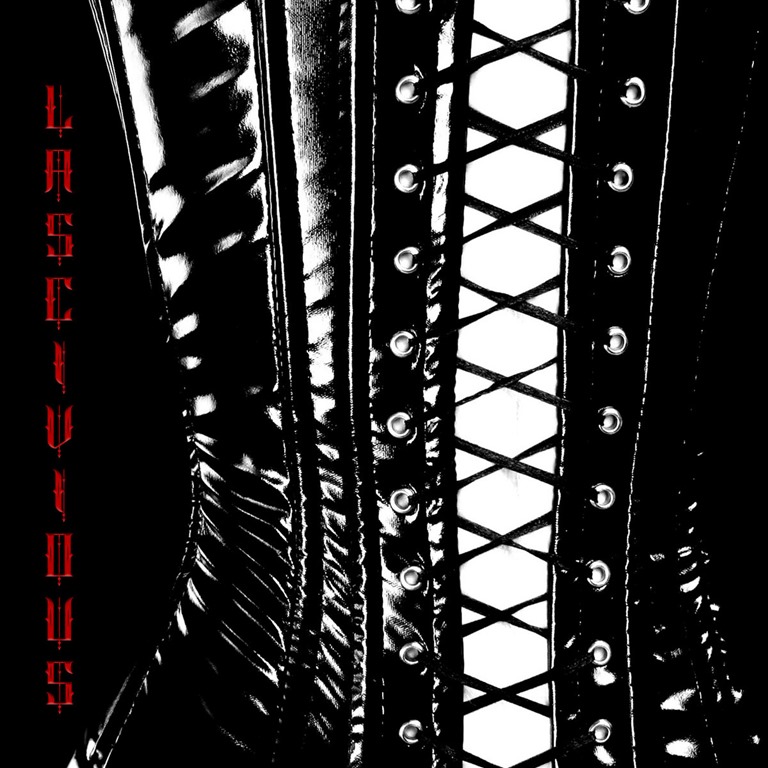
Lascivious is Black Angel’s fifth album, which promises the band’s ‘hybrid Gothic Rock sound and taking flavors from their 80’s predecessors while adding new tones… retaining the essential gothic elements that drive his inspiration as originally provided by the likes of Siouxsie and the Banshees, Bauhaus, The Cult & Sisters of Mercy.’

Certainly, Lascivious is steeped in the stylistic tropes of the 80s, not least of all the thick four-four bass grooves and smashing snare drum which both dominates and defines the sound. But the first thing that strikes me, as a longstanding fan of that golden era in the 80s (I was too young for the start of it all but when The Sisters and The Mission started breaking the Top 40 singles charts between 86 and 88, it was a revelation which set me on a lifelong journey) is that the ‘new tones’ very much involve contemporary production. That is to say, it’s just that much cleaner and fuller, more polished than the true ‘vintage’ sound.

Ah, but they know the features of yesteryear. It’s been a while since I’ve heard a fadeout, but that’s just what happens on the album’s first track, ‘Killer’ – and it’s not the last time on the album they employ it either.

The drum intro on ‘Black Velvet Amphetamine’ is an on-point lift of the snare sound of the Sisters’ cover of ‘Gimme Shelter’, and many of the sounds can be pinpointed as having a certain root or origin. In fact, five seconds into the title track, it’s clear that the drums are lifted from ‘Heartland’, although it also leans on the Sisters’ cover of ‘Emma’ by Hot Chocolate, and it’s clear they’ve been raiding the early Sisters back catalogue – and fair play. The Sisters achieved some incredible sounds with minimal means, with ‘Temple of Love’ marking their first step up from an eight-track ‘studio’ in the run-down northern seaside town of Bridlington.

But if the drums and guitar work make big nods to The Sisters, Corey Landis’ croon is closer to that of Wayne Hussey than the cavernous baritone of Andrew Eldritch. One of the divisions between fan-camps when Hussey and Adams went and formed The Mission – and a source of tension when Hussey began offering songs with lyrics. I write as a fan of the Mission when I say that while they work in the songs, Hussey’s lyrics are more cliché patchworks than literary masterpieces (Eldritch played with and perverted cliché and did so poetically), and one problem with bands who followed in the wake (excuse the pun) of both The Sisters and The Mission is that they’ve had a tendency to ape the lyrical substance without really adding anything creatively unique

‘She’s My Suicide’ slips into more generic rock with a gothy edge, and makes me think of the bands who emerged following the cult but had more of a hair rock leaning, reminding me why despite all my teen goth credentials, I was pretty picky but then, right at the end, they pull out a really gritty, spindly guitar break that’s magnificent, reminding me of The March Violets. And this is a fair summary of the album as a whole: some really good bits, some solid songs, but some rather weak and generic aspects which hold it back in the bracket of ‘decent’ rather than ‘awesome’.

‘Bite It’ bristles with spiky guitars and a low-slung groove, and is perhaps the first song that seems to really fit with the sleaze implied by the album’s title, and ‘Want’ also achieves this, but suffers from trying too hard to be ‘More’. It’s a fair stab at bombast, but it’s hard to compete with the Sisters, especially when they’ve got Jim Steinman on hand, plus a whole host of backing singers and a monster budget for state of the art studio time. I’m sorry I’m not more undemanding. Halfway through ‘Dirty Little Secret’, I realise its chords are based on Motörhead’s ‘Ace of Spades’, and afford myself a small chuckle.

The slower, ‘Ticking of the Clock’ is driven by a crunchy, flangy bass that’s pure early Cure, and is one of the album’s real standouts, by daring to deviate from any obvious formula, and in fairness, the title track is low-slung, sleazy, and grinds out a dark seduction with style.

Sonically, Lascivious is more than solid, and Black Angel clearly know what their doing: there’s no question they have their sound and style absolutely nailed – and consequently, with this set of solid songs, the album will go down well with existing fans and a huge chunk of the goth crowd, and deservedly so.

AA

a3733231510_10

Ipecac Recordings – 13 October 2023

Christopher Nosnibor

Having recently aired the video for the last single cut from Venera’s eponymous debut, in the form of ‘Ochre’ featuring HEALTH, I was feeling energised to explore their eponymous debut.

As their bio outlines, “Venera enigmatically launched their debut single ‘Swarm’ in July. No information, no pre-sale, simply the three-minute single released in tandem with a mysterious screed and a pulsating black-and-white video directed by EFFIXX.”

Some of the excitement is dulled by the unveiling which followed, as the band subsequently revealed themselves as James Shaffer (Korn) and Atlanta-based composer/filmmaker, Chris Hunt. Why? Not because I’m down on Korn: they’re an act I’ve never really felt any gravitation towards. Wrong place, wrong time. But essentially Venera are another supergroup / side project for a major act, which means they’ve already got a head start which places them head, shoulders, and torso above pretty much any other ‘new’ band. What’s more, several guests join Hunt and Shaffer on Venera. Drummer Deantoni Parks (Mars Volta, John Cale) plays on ‘Erosion’ and ‘Disintegration,’ HEALTH’s Jacob Duzsik contributes vocals on ‘Ochre’ and Alain Johannes lends his voice to ‘Triangle.’ The album was self-produced.

Should it matter? Probably not: I judge any music on its own merits, but I am aware that music doesn’t necessarily reach an audience or receive exposure based on the same criteria.

But here we are, and on merit alone, Venera is a strong album: dark, atmospheric, electronic and often beat-driven, but with layers of noise. It couldn’t be much further from Korn, stylistically. The album has range, too: ‘Erosion’ is like minimalist drum ‘n’ bass contrasts powerfully with the surging, enigmatic ethereality of ‘Ochre’. ‘Triangles’ finds Alain Johannes deliver a magnificent vocal that sits somewhere between Scott walker and David Bowie, crooning and emoting over a slow, dense backing of thick but dispassionate 80s synths reminiscent of The Sisters of Mercy’s Floodland. Clocking in at under four minutes, it feels as if it’s only just beginning to take form – not so much unfinished, but it just could do with there being… More.

‘Disintegration’ transitions between bombastic doom and frenzied blasts of noise, an enigmatic pancultural implosion that hints at Eastern influences, but also melts in droning sonorous low-end synths, and percussion that sounds like a brutal attack. In the context of this week’s world news, it simply makes me feel tense, but it’s but a brief passage before it shifts to clattering jazz-inspired energy rattling around amongst the drift. ‘Holograms’, featuring VOWWS is perhaps the album’s biggest surprise: a slow-burning ethereal and dreamy trip-hop song with a vaguely industrial / gothic edge, it’s supremely well-realised and has immense radio potential.

As a critic, declaring something to be ‘good’ or ‘not good’ feels somewhat redundant, like a teacher leaving comments on a piece of homework. Technically, this is good. Sonically, it’s good. The songs – where there are songs – are good: atmospheric, evocative, haunting – while the same is true of the instrumental passages. Venera succeeds sonically, and as a significant departure for its contributors. And perhaps, over time, I shall come to appreciate it more personally. But first impressions are conflicted: I like it, I like what it does, but I simply don’t feel an emotional connection, there’s nothing that elicits a physical pull in my chest or in my gut.

AA

746105