Posts Tagged ‘Abstract’

Mille Plateaux – 22nd March 2024

Christopher Nosnibor

What’s often fascinating to me as someone who writes about music quite extensively, is to observe the avenues other writers explore, particularly when engaging with music that’s ambient, obscure, or otherwise difficult to take a hold of and to pin down. This fascination is amplified when the music, either by its inherent nature, or by virtue of explanatory words from the artist, has a foundations in a theoretical or conceptual context.

Achim Szepanski has been tasked with a challenge when it comes to the notes to accompany

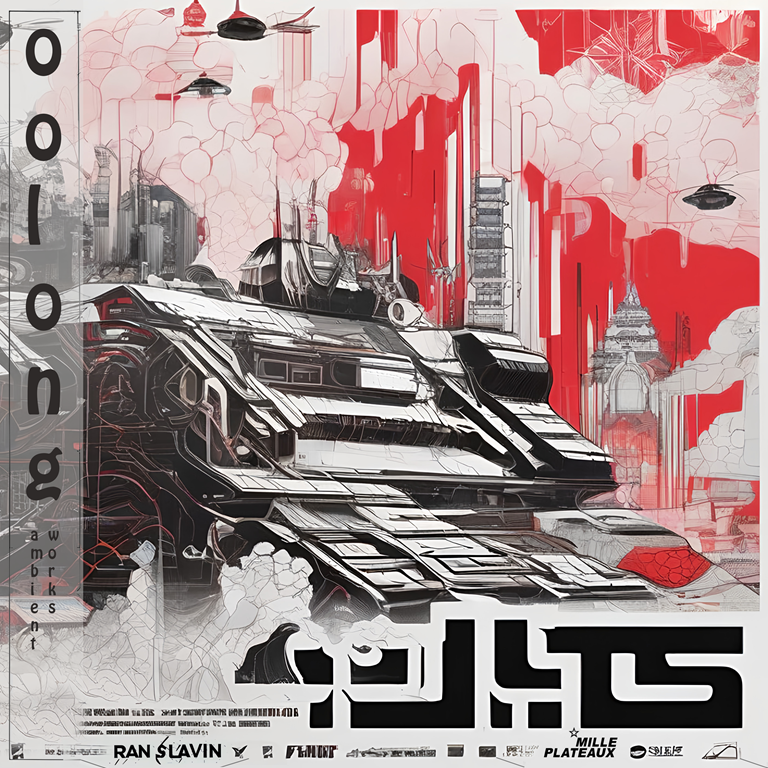
Oolong: Ambient Works, which is the 17th studio album from multi disciplinary artist Ran Slavin, which is pitched as ‘a 74 min drone-ambient-minimal-symphonic infused LP that takes after various teas in the far east.’ To heighten the experience, each track is accompanied by ‘a slow and atmospheric visual journey shot by RS in East Asia and the total can be experienced in total and joined as an immersive 74 minute journey.’

Szepanski helpfully explains the layered meanings in the translations of the word ‘oolong’, and expounds the complex interconnections of tea and dragons through a filter of Felix Guattari (which isn’t entirely surprising, given the label releasing it). He grapples with ‘the minimalist concept of tea architecture’ and the way in which ‘Not only the centripetal, but also the centrifugal orientation of the sound is imaginary.’

While the visuals clearly form an integral pat of the project overall, I shall preserve my focus exclusively on the audio release, and in advance of this draw the distinction between audio created to provide a soundtrack, and visuals created to accompany an audio work, because while Szepanski discusses at length the relationship between the visuals and the tea path and the simultaneous limitations placed on the work by the visuals and their capacity to enhance the experience, Oolong: Ambient Works is an audio release or an ambient persuasion, as the title suggests.

The seventy-four minutes is divided into eight individual pieces, with titles such as ‘Grand Jasmin’ and ‘Assam Jungle; as well as others which are less overtly tea-derived, like the first composition, ‘Time Regained’. It’s fifteen minutes of slow-simmering ambience, the levels of which fluctuate and catch, the glitches rupturing the smooth surface of the soft sonic fabric.

Szepanski makes an important point when he writes ‘It is impossible to know exactly what the individual sounds signify. Sometimes it might be the intention to hear the sounds of nature. But it’s not a question of identifying its source and its effect.’ And so we come to what is, for me, the crux of the ambient listening experience, whereby the source of the sounds is far less significant than what the listener hears. Not even what I hear as a listener, although I can only speak and interpret for myself, and the beauty of this experience is that however much Slavin strives to imbue this work with meaning, it cannot be imposed. Slow pulses bring a rhythmic element to this otherwise abstract piece, which is deeply calming, but occasional warps jolt the listener from their state of tranquillity like a prod.

‘Butterfly of Ninh Binh’ flits by with crackles and scratches by way of disturbance, and the introduction of static and ersatz surface noise to recordings is a curious one, as something which only became a feature with the advent off digital audio. Those who have come to vinyl since the renaissance are less likely to relate, since vinyl is now a plush commodity and not something people leavy lying around or use as a coaster or whatever as was commonplace in the sixties, seventies, eighties. But such interference is integral here: Slavin’s approach to ambience on Oolong is subtly different, and introduces just enough dissonance and discomfort for it to be not entirely comfortable.

The ten-minute ‘Ruby Ceylan’ is soft and ripping repetitive and hypnotic, but something – perhaps the abstract moans, perhaps something else – is just off.

Iroh, in Avatar: The Last Airbender, is a keen advocate of the calming properties of Jasmine tea, and I get a far stronger Jasmine connection from this – the original animates series, that is – than from ‘Grand Jasmin’ here – the album’s shortest track is subtle and soothing, but also marks a change of texture with a thumping beat which echoes away hard and fast beneath its slow-swelling outer layers.

‘Himalayan Flower’ unfurls slowly and with pronounced percussion, before the ten-minute ‘Summer Monsoon’ brings the album’s conclusion. A slow, mesmeric, soporific cloud of ambience passing by, with occasional clangs and abstract interruptions which echo through the drift, this is a real; eyelid-drooper which suggests it’s time to sleep, or time for a coffee.

AA
MP69_front

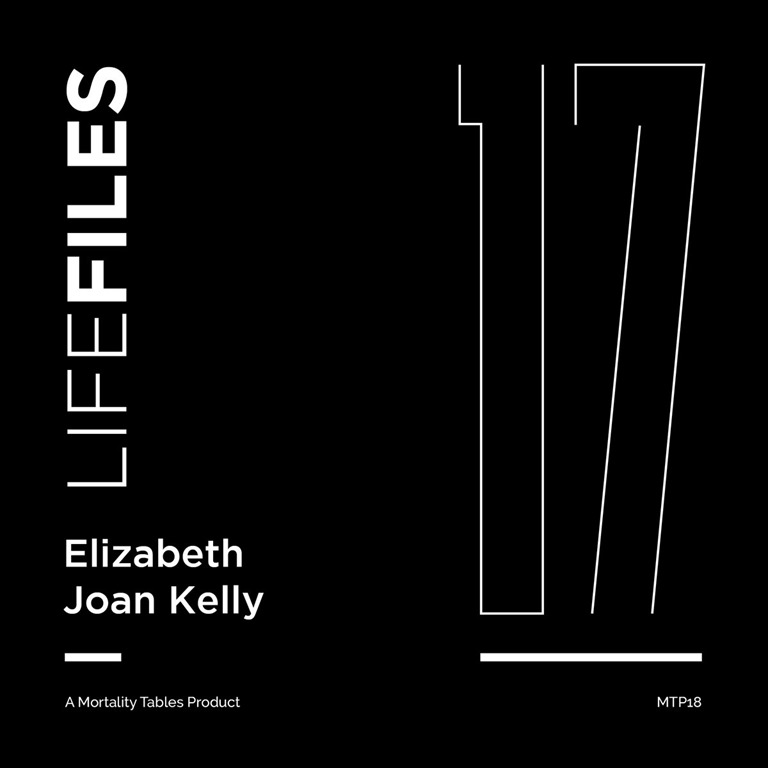
Mortality Tables are blasting out the second series of LIFEFILES releases at quite a pace, and LF17 is the seventh release in the season.

Describing LIFEFILES as ‘creative exchanges’; the premise is simple: ‘Recordings of places, people, objects, moments in time, environments and quotidian events are shared with a range of artists working with sound. Those artists are then free to respond to the recordings in any way they like, either through manipulation or composition.’

LF17/Edinburgh is Elizabeth Joan Kelly’s response to a set of recordings made in Edinburgh in August of 2021 by Mat Smith, namely Emeka Ogboh ‘Song Of The Union’ installation, Calton Hill (24.08.2021), Princes Street Gardens (24.08.2021), and Car on Calton Road cobblestones (25.08.2021).

The titles are plain, factual, locational, without any sense of the temporal or any indication of connotation, association, or resonance. And this is fitting, since the three compositions – ‘Calton Hill’, ‘Princes Street Gardens’, and ‘Calton Road Cobblestones’ are gentle, electroambient works which speak little of either the time or the place. These pieces are very much responses to the recordings themselves, rather than their location. Based in New Orleans, and purveyor of ‘post-apocalyptic junkyard drone pop’, Kelly has brought her own perspective to the source materials. Of course, this is precisely the spirit of the project – to see how each artist interacts with the material to forge something new, and the fact that each artist will have a completely different approach is what makes this so interesting. Because when given material and parameters, however much freedom an artist has, those parameters will also have a bearing on the output alongside the variables of the input itself and the artist’s methodologies.

In Elizabeth Joan Kelly’s hands, the sounds of a vibrant city are rendered, smoothed, with cross-hatching, delicate shading, some light smudging, a soft blending, by which everything clamorous is faded out to leave a slow hazing. There is, ultimately, no sense of Edinburgh itself here, and we find ourselves adrift, drifting on slow tides of sound with no connection to time or space. It’s not an unpleasant experience, by any means.

LF17/Edinburgh couldn’t be further removed stylistically from Ergo Phizmiz’s release, The Tin Drummer Has Collapsed, which came out only the week before. Where there was collaging, there is blending, mixing, reshaping, and where there was noise, there is calm. Neither release is in any way ‘better’ than the other – just different. And these differences are to be embraced.

AA

a2155768596_10

Dret Skivor – 1st December 2023

Christopher Nosnibor

Yes, that’s fjord, not fox, meaning you won’t find these collaborating sound artists bouncing around the woods dressed as furry animals, making daft, random sounds. Well, you won’t find them bouncing around the woods dressed as furry animals, anyway, although Dave Procter did spend many years performing while wearing a latex pig’s head, but he put a stop to that after David Cameron started turning up at his shows.

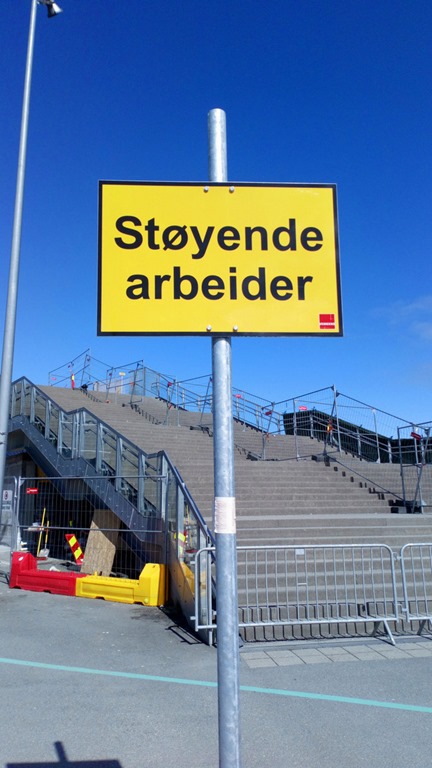
This latest collaboration between Martin Palmer and Dave Procter is, in fact, inspired by the site of previous experimental audio tests in 2019, namely the sculpture “what does the fjord say?” in Trondheim harbour. As they tell it in the accompanying notes, ‘Armed with percussive sticks, contact microphones, audio recorders and the occasional toy and synth, they set about a full exploration of the sculpture and their own sonic ideas in and around the sculpture, using created and environmental sounds to answer the question posed by the sculpture. These recordings are Palmer and Procter’s replies.’

The first reply ‘støyende arbeider’ is more of a lecture than a simple reply, with a running time of twenty-one minutes. Consisting of random clatters, crashes, squidges, squelches and shifting hums which ebb and flow amongst an array of incidental intrusions, it’s more of a non-linear rambling explication, and exploration of the rarely-explored recesses of the mind than a cogent conclusion. But then, why should a reply necessarily be an answer. This, then, is a dialogue, a discussion, not an interview constructed around a Q&A format. It’s nothing so formal, and all the more interesting for its being open-ended, evolving organically. There are points at which the thuds, clanks and scrapes grow in their intensity, creating a sense of frustration, as if attempting to unravel a most complex conundrum and finding oneself stuck and annoyed by the fact that there is something just out of reach, something you can’t quite recall. And at times, this is also the listener’s experience. The way to approach this is by giving up on the expectation or hope of coherence, or anything resembling a tune, and yield to the spirit of experimentalism.

‘Moose Cavalry’ and ‘Mock Paloma’ are both significantly shorter pieces, the former being atmospheric and evocative, the animalistic calls conjuring images of beats roaming moorlands in the mist. Plaintive, droning moans and lows transmogrify into warped, pained cries and needling drones. The latter is different again: dark, tense, shrill tones scratch and scrape, flit and fly, reverberating from all directions. It’s unsettling, uncomfortable.

These three compositions are so different from one another, it superficially makes for a somewhat disjointed set, but on deeper reflection, what Palmer and Procter have forged a work which demonstrates how it’s possible, and even desirable, to approach a subject from multiple angles and perspectives. I still don’t know what the fjord says, but I do know that Palmer and Procter have posed some interesting musings in response.

AA

a3551752136_10

Felte FLT-089 – 14th July 2023

Christopher Nosnibor

Mission to the Sun is Chris Samuels of Ritual Howls fame (synths, samples, programming) and Kirill Slavin (vocals/lyrics), and comes recommended for fans of Wolf Eyes, Moin, Throbbing Gristle, Coil, The Legendary Pink Dots, Drew McDowall, Suicide, Cabaret Voltaire, etc.

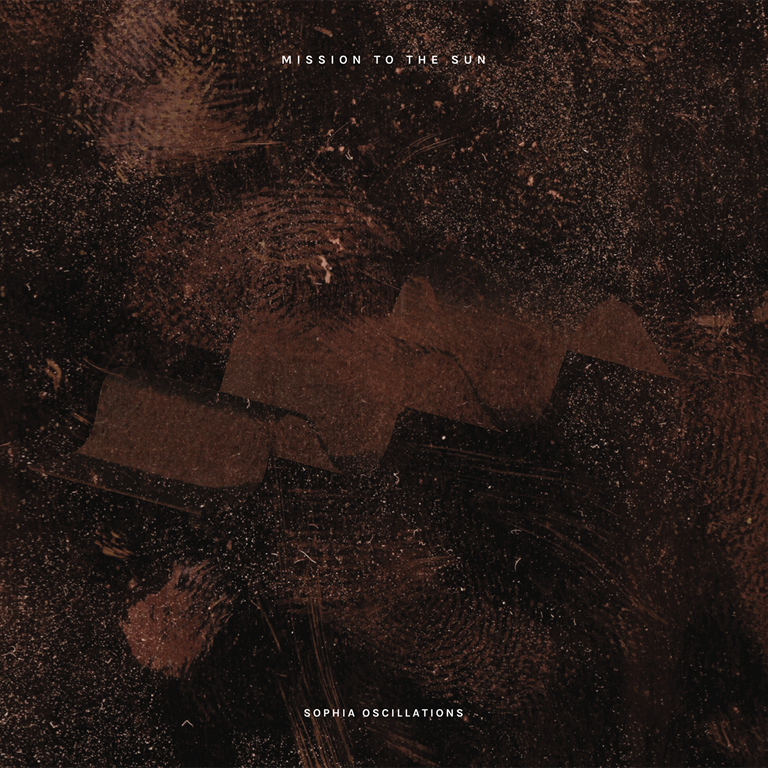
Sophia Oscillations is their second album, and it pitched as ‘an immersive journey through the dark corners of post-industrial music’, whereby ‘The Detroit based duo continues the sonic exploration started on their debut album Cleansed by Fire, while delving deeper into themes of isolation and lost communication. Christopher Samuels’ synths, samples and rhythmic programming is accented by Kirill Slavin’s haunting vocal delivery as the listener receives intersperse audio recordings from the outer reaches of inner space.’ This may seem an unusual angle of approach given their chosen moniker, but the one place hotter than the sun or the earth’s core is the core of what it is to be human. We still understand space better than we understand the deep sea, and the deep sea better than we understand the human mind. There is much scope for exploration in every sphere.

William Burroughs famously described ‘Scottish Beat’ writer Alexander Trocchi as a ‘cosmonaut of inner space’, although he also applied the label to himself, stating ‘In my writing I am acting as a map maker, an explorer of psychic areas, a cosmonaut of inner space, and I see no point in exploring areas that have already been thoroughly surveyed.’

This is an appropriate context for the eight compositions which make up Sophia Oscillations, which are essentislly beatless but strongly rhythmic in form. If they belong to the lineage of the avant-garde and the industrial music of the late 70s, it equally draws on a host of other, more contemporary threads in order to forge something quite different and ultimately new.

‘Drowning’ surges and pulses, rippling waves washing over a slow-treading bassline which wanders up and down, stepping somewhere between DAF and The Cure’s Carnage Visors while the vocals whisper and wheeze low in the mix, a stealthy monotone that’s both tense and detached. Whistles of feedback strain from the speakers and wrap themselves around the whole drifting expanse. Things take a turn for the abrasive on the title track, with machine-gun blasts of noise cutting through grainy swathes of bleak ambience, gradually fracturing and fragmenting quite uncomfortably.

There are hints of medievalism and classical on ‘Censor Sickness’, but they’re melted into a dark murk of muttered voices and unsettling atmospherics, and the combination is quite unsettling and far from comfortable: if anything, it’s queasy, and the minimal yet noisy ‘Unborn’ pushes this to another level: stark, metallic, robotic electronica, it has an 80s dystopian feel which again calls to mind DAF and Cabaret Voltaire. The late 70s and early 80s were exciting because musicians with limited means – and ability – were finding ways of using emerging, and increasingly affordable – technology to make music which represented the world in which they found themselves. As such, the emergence of experimental electronic music and industrial music was born out of a collision of multiple factors, none of which will ever recur, and for this reason can never be recreated.

Mission to the Sun aren’t attempting to recreate history here, but instead, Sophia Oscillations finds them processing history through their own filters. ‘Attrition’ brings together post-rock and crunching industrial electronica with a dash of Gary Numan and more detached spoken-word vocals, and it’s a hybrid that isn’t easy to process, because it all feels so alienating. But then, articulating alienation always does.

The churning grind of ‘Cornerstone’ sounds like the intro to something by Big Black, but instead of Roland kicking in, alongside a relentless bass, it just grinds on and on, and it’s dark and messy. Once again, Slavin’s voice is half-buried in the mix: it’s difficult to decipher the words, and his voice hovers, blank, flat, vaguely Dalek-like, in the vein of Dr Mix, but less harsh.

Sophia Oscillations is a challenging album. Yes, it’s unsettling, bleak, stark sparse, but the hardest part is the fact it doesn’t confirm to any one genre, it doesn’t follow any obvious or specific form, and it’s not the fact that it’s unsettling and difficult to find a place for it that’s the issue, but the fact it keeps you tense and on edge for its duration. But, perhaps even more than that is the fact it feels removed from anything human. But it’s not so far removed as to be alien. The brain simply isn’t equipped to process the inhuman– or the near-human-but-not-quite, the uncanny, the unheimlich. Because we recognise it, and yet we don’t. Sophia Oscillations brings the challenge right in front of your face. Sit back, draw breath, process. This isn’t an easy ride.

AA

FLT089_front

illereye / Eyeless Records – 28th July 2023

Christopher Nosnibor

Lee Riley’s works include only minimal information about their inspiration or methodology, often coming only with the advice of ‘loudspeakers or headphones’. This is sound advice – if you’ll pardon the pun – not least of all because try as I might, I have never yet succeeded in listening to anything telepathically. This no doubt sounds incredibly facetious, but I’m only partly joking. With my inbox bursting with more new music than I could ever listen to in ten lifetimes, and that’s assuming a lifetime is a couple of centuries, I often find myself lamenting my inability to simply absorb all of the music by some kind of cerebral osmosis. I have sat and visualised a method whereby I place electrodes to my temples and the files simply transfer, or even a large syringe by which the music could be injected into me. I have similar visualisations about writing. Speech to text dictation programmes simply aren’t enough, it’s not practical for the most part. Since I compose most of what I write in my mind while walking along or doing other things, what I need is thought to text, by which the ideas simply appear on the screen. Way more useful than the AI shit that’s supposedly taking over.

With no detail to contextualise the title, or the sound contained therein, From Here We are Nowhere leaves us to interpret for ourselves, and before I hit play, I feel a sense of pessimism descend upon me from the inference of the phrase. The future is bleak… we are nowhere… lost, adrift, or worse, the connotations are there of ceasing to exist. Perhaps it’s my habit of having news channels on in the background while I go about my day, while I work my dayjob, while I cook on an evening, on mute but with subtitles, and the last week or two have elicited a sense of impending apocalypse. And I ask myself, why has it taken till now, when half the world is either melting or on fire to take climate change seriously. So where do we go from here? Probably nowhere.

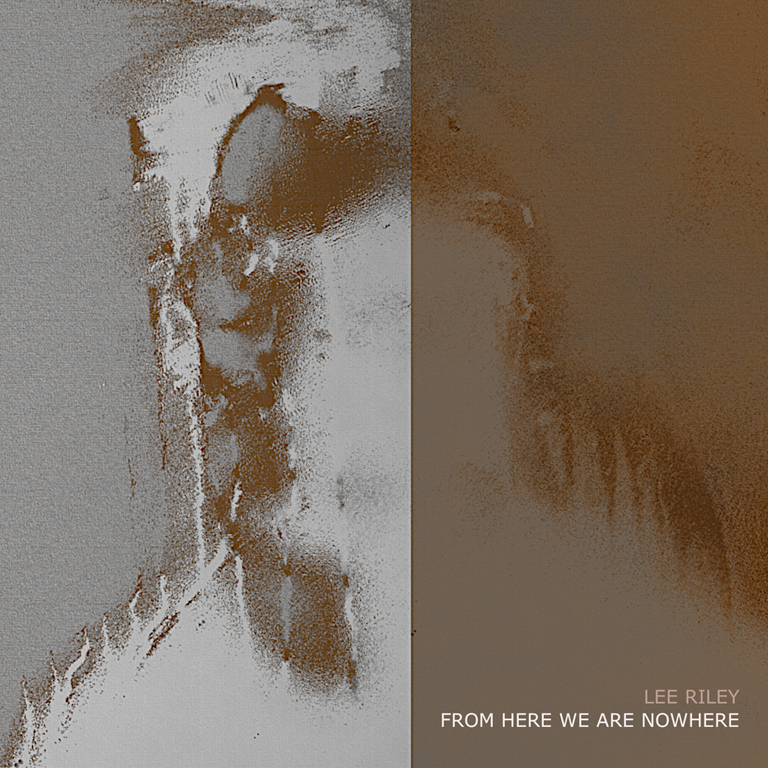
The six pieces on this album take the form of dense, suffocating drones: the title track thrums and throbs like a thick, acrid smoke that engulfs your entire being, five-and-a-half minutes of muffled tones that grow in tension. Shards start to scrape and funnel near the end, but then it’s gone, just beyond reach. There is something illusive about this album. It feels as though there are forms to be found, but they’re submerged. ‘Lifting Undertow’ is ominous, and the scrunching scrapes and rattles are menacing, reminiscent of a sensation I experienced in a recurring dream as a child, perhaps most easily described as the visual disturbance of a migraine manifesting in an aural form. It’s all very quiet and low-key, making you feel quite detached from the plane on which the sound is playing out, and this is true of the album as a whole. ‘Undoing These Knotted Times’ is a long, low, sonorous undulating buzz that’s sedative and soporific, but also uncomfortable and queasy, as bleary and blurry as the cover art suggests. As that final note hovers and fades, a desolation grips harder: is there really any scope to undo these knotted times? Or is this simply a painful paradox?

The idea of ‘Staring Through Lit Skies’ feels optimistic, evoking perhaps a sunrise, but the reality is that the serrated drone and scrapes of feedback are more like looking at the searing sun through the smoke of a wildfire. It’s painful, and damaging, and it saps your strength as the only dawning is the realisation that we are all doomed.

I feel in my limbs and in my lungs and in my heart as the final trails of ‘No One Knows What’s Inside’ dissipate into the thick, claggy atmosphere following a crackling hum of distortion and grumbling, and then, there is nothing. And here we are, as we find ourselves… nowhere.

AA

cover

Kranky – 7th July 2023

Christopher Nosnibor

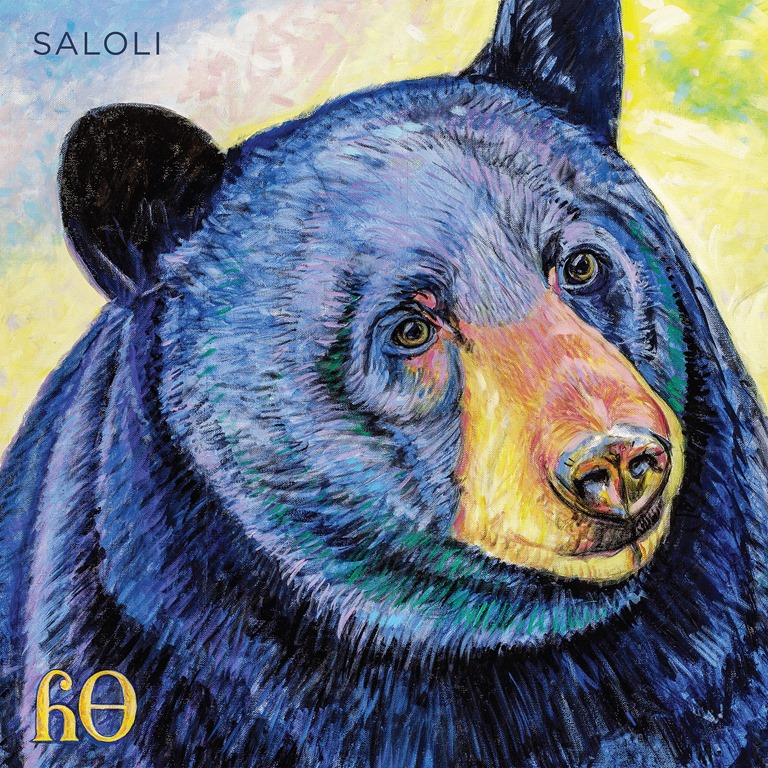
If the prospect of an album from a solo pianist whose recording moniker is the Cherokee word for ‘squirrel’, and which is intended to evoke ‘a day in the life of a bear in a canyon in the Smoky Mountains,’ with each track channeling a different emotion or experience in its daily explorations, sounds as if it may be soft, neoclassical tinkling, Canyon will come as rather a surprise.

As the accompanying notes explain, ‘Canyon was composed and performed live on a Sequential Circuits MultiTrak synthesizer…routed through a delay pedal. This refraction adds a lyrical spatial quality, as though “echoing off canyon walls.” It’s music both gentle and adventurous, curiously rooting through soils and streams, in a sustained state of discovery’.

It’s a proper vintage piece of kit, an analogue synthesizer only produced for a couple of years in the mid-1980s. Described by Vintage Synth Explorer as ‘a six voice analog synth with sophisticated filters, envelopes, modulation capabilities and built-in sequencing’, it’s clearly got versatility in its favour – which means Saloli has a broad range of sounds and effects at her disposal to articulate the range of moods and emotions of her subject. But above all, it has that classic analogue warmth of tone, the rich, organic texture that resonates in a way that’s almost biological. It’s something that’s both affecting and in some way comforting, the fuzzy edges conjuring a sonic blanket, and even when venturing into more abrasive territories, analogue synths very much have the capacity to reach the parts their digital successors somehow can’t.

The album starts strong: ‘Waterfall’ spirals and cascades in a swirl of synth that doesn’t necessarily evoke – at least to me – anything bear-like, but the more ambient end of Krautrock ‘Lillypad’ drifts soft-edged semi-ambience strolling and ‘Snake’ is unexpectedly graceful. But then, if you’ve ever watched a snake move, it is a graceful, supple movement, and snakes have an undeservedly bad reputation among humans. Very few of them are dangerous, and they’re certainly not the only creature to shed its skin. Again, the notes provide an insight which perhaps has a bearing on the tone here, explaining that ‘In Cherokee teachings, humans and animals are considered to have no essential difference – originally, all the creatures of the earth lived together in harmony’, and as such, ‘Canyon captures shades of this Edenic notion across eight elegant pieces, alternately meandering, pensive, playful, and pure. Sutton’s playing, as always, is dexterous and dimensional, mirroring the dazzled senses of its muse. If then, the compositions don’t quite confirm to our expectations, based on our perceptions of the various inspirations, it could well be on account of Saloli approaching them from a very different perspective. Why are we scared of snakes? Some of it is likely biblical in origin, some to popular portrayals in movies and media. But one is not afraid of one’s equal, and living together in harmony means there is no reason for distrust.

Such belief systems may be difficult to comprehend, but how much better, more pleasant, more bearable, would life the world over be if everyone held these views? There would be no social hierarchy, there would be no capitalism, there would be no war. Consider that for a moment.

The beauty of Canyon is that it’s a work which encourages and inspires contemplation.

It’s the playful side of Saloli’s songwriting that comes to the fore on the slowly bouncing ‘Yona’. It’s mellow, light, uplifting, and contrasts significantly with the introspective ‘Silhouette’ which follows, a reflective, melancholy pie, which makes you ache ever so slightly inside: you can’t quite pinpoint the reason, but that’s the power of music. Moreover, it’s the power of Saloli’s music, as the forms shift from string-like elongated notes to shorter, more piano-like sounds, with all of the variables in between.

‘Full Moon’ is positively bloopy and gloopy, trilling tones like synthesized pan pipes echoing out over a bubbling, bass, and it works nicely: there is contrast, there is movement. And in an abstract way, it captures the energy that seems to emanate from a full moon. And there is an energy which affects creatures and humans alike: some if it’s mystical and mythical, but I’ve often felt hyper without even realising it’s a full moon.

There’s something buoyant but also stealthy and predatory and then again, at the same time, increasingly discordant and with shades of darkness, about ‘Nighthawk’, a seven-and-a-quarter-minute monster with transportative qualities, before the true closer, the eight-minute ‘Sunrise’ heralds the arrival of the new. A new dawn, a new hope. Breathe deep. This could be our reality too.

AA

604344

Unsounds Records – 15th June 2023

Christopher Nosnibor

These are certainly three names to conjure with as prominent features of the experimental scene. Anne-James Chaton and Andy Moor have collaborated on numerous albums, and I personally discovered them via the Transfer series in 2011, around the same time as Chaton’s Evenements 09, which I found fascinating in its contemporary application of loops and with its parallels to the cut-up technique and Burroughs’ and Gysin’s tape experiments of the late 50s and early 90s.

As the biography which accompanies the release of this lates outing explains, ‘the duo Andy Moor and Anne-James Chaton continue their conversation with a new set of digital singles, diving this time into the rich language of the traditional metiers. The Handmade series is an homage to crahftsmanship through an exploration of the lexicons specific to bakery and pastry making, jewellery, joinery and wrought iron making, that will unfold over the course of 4 thematic volumes. With guest Yannis Kyriakides on electronics they create works where abstract notions mix with tangible ones by linking the arts of the hand with sound and poetry.’

The Moor / Kyriakides collaboration A Life is a Billion Heartbeats proved to be a gripping work for quite different reasons, and one thing that’s always a feature of any work featuring Moor is his versatility, as well as the fact that he doesn’t use the guitar in a remotely conventional fashion.

The two tracks on this single really do showcase the strengths of all three artists, and shows just how collaboration and collectivism can amplify individual powers.

But never mistake ‘art’, however obscure or experimental, for something which is always entirely serious: This, the first of the ‘Handmade’ series – projected to comprise four digital singles, to subsequently be released as a CD album and download, akin to the Transfer series, sees them taking on ‘the vocabulary of pastry making… Side A «Garniture» offers a curious anthology of poetry written by mixing the actions of the pastry chef, units of measurement and figures of speech. On Side B, «Sur Mesure» deploys all the richness of the culinary language when it comes to expressing the scarse [sic] or the plentiful’.

Truth be told, for a non-French speaker, the linguistic twists and any humour associated with the juxtaposition of subject matter and context with delivery are lost beyond the cover art, leaving simply the sonic experience – but this alone is more than enough. Chaton’s monotone spoken word is nonchalant and gives nothing away, while Moor peels off shards of dissonance from his guitar amidst drones and hums and clanks and a distant but insistent clattering percussion. Feedback and irregular discordant chanks and un-chords all crash and slide across one another in an irregular latticework of noise.

‘Sur Mesure’ is less challenging, less overtly difficult and dissonant, and sees the three employ the same elements but to an altogether more subdued and atmospheric effect, making for a good contrast against ‘Garniture’.

There’s no doubt that most would simply file this under ‘weird shit’, but it’s a strong experimental work which delves deep into dynamics, tones, and unusual juxtapositions, and really prods at the neural pathways in the most unexpected ways.

(Click the image for audio)

77U_art

Kranky – 7th April 2023

Christopher Nosnibor

I had been warned. A fellow reviewer who received this before me had said that this album had made him feel ‘unwell’. It was a compliment, of course. This comes as little surprise: Tim Hecker is an artist capable of creating the most intense and all-encompassing experiences, and while the live performance I attended in 2014 may not have made me feel ill, it did make me feel pretty weird, detached, disorientated. As the only artist I have ever known to use more smoke than The Sisters of Mercy and Sunn O))) combined, filling the room to the extent that it was impossible see your own hand in front of your face, let alone the person next to you, Hecker made me feel uncomfortable, and in some way a little scared in a claustrophobic way.

I’ve had a few records which have had a physical effect on me: listening to PJ Harvey’s Rid of Me for the first time with a brutal hangover is one standout experience, its raw and up-front lurching guitars punching my head and stomach simultaneously with puke-inducing results which went far beyond the post-booze discomfort. Because listening to music is not a passive activity, and as well as requiring focus, it would seem also degree of compassion – you feel its force physically as well as psychologically.

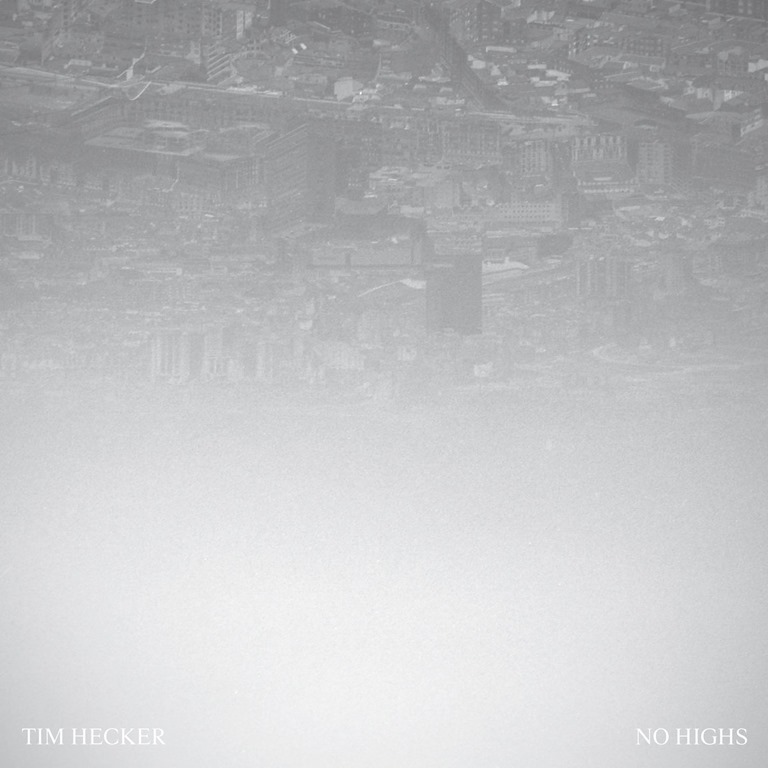
The notes which accompany Tim Hecker’s latest album are bold, to say the least, describing the Canadian composer as ‘a beacon of unease against the deluge of false positive capitalist ambient currently in vogue’ and continues, ‘Whether taken as warning or promise, No Highs delivers – this is music of austerity and ambiguity, purgatorial and seasick. A jagged anti-relaxant for our medicated age, rough-hewn and undefined.’

Clearly, this is exactly what I need, having felt tense and on edge, unable to catch my breath properly for several days now. If the album’s title sets the initial expectation, the track titles reinforce the album’s mood: ‘Monotony’; Pulse Depression’; ‘Anxiety’; ‘In Your Mind’; ‘Total Garbage’ – all the shades of dark, of bleak, of miserable, of self-questioning, panic.

The aforementioned ‘Monotony’ pings a single note back and forth for almost eight and a half minutes. Drones build sonorously behind it and swarm the mind as the volume grows and then shrinks again, and the buzzing and extranea become siren-like. And so, there is movement behind the tedious repetition, but it’s tense and unsettling. Moments of levity which appear to suggest tranquillity is within reach prove to offer nothing but false hope as we’re soon plunged into the gloaming, or otherwise into glitchy, lurching passages of unease. Soft sounds which ought to be mellow and soothing are rendered uncomfortable, or mournful, or both.

‘Lotus Light’ initially intimates a Krautrock pulsation, but some bending frequencies and melting notes swiftly take this trip on a rapid descent. If the lotus flower is supposed to signify rebirth and enlightenment, then this is one which is wilting, poisoned, and if eating the lotus is supposed to provide a conduit to pleasure, this is the soundtrack to picking the wrong plant, as everything rushes forward too fast and you’re not in control. You don’t feel right: you feel drugged, delirious.

‘In Your Mind’ picks and stabs away with tempo changes galore, surging and sweeping this way and that, echoing reverberations around the cranial cavities before booming stabs of synth blast through the drifting haze, before ‘Monotony II’ returns like a waking memory of a traumatic dream from the night before. The trilling saxophone does nothing to calm the mind or the mood. And over the course of more than eight minutes, ‘Anxiety’ recreates the experience if that increasing heartrate and the clenching of every muscle perfectly. That is to say, it’s brilliant, and also brilliantly difficult, and potentially triggering to some. The flickering, fluttering electronic throbs are practically Jean Michelle Jarre reimagined as a fibrillation.

No Highs is a difficult album, but how difficult depends on our headspace: from a certain perspective, it’s a cinematic electronic set, but from various others it’s the soundtrack to being unable to settle, to relentless tension, to jitters and fretting, and worse. The notes oscillate and you clench; sudden spurts of sound burst and you jump momentarily., before ‘Sense Suppression’ pulls you down, slowly, into a sea of sound, before the album drifts away to nothing on the drifting tides of ‘Living Spa Water’.

No Highs is sad and dark and deeply affecting, and not necessarily in the ways you’d expect. Listen and share the suffering.

AA

a2157297652_10

Christopher Nosnibor

I get a lot of weird shit come my way. I guess it’s to be expected: I review a fair amount of weird shit and it just snowballs: weird shit finds me. And this is very much weird shit. Despite some serious deliberation, I can’t decide where the emphasis lies in that statement.

Details about the artist or the release are practically non-existent, but it doesn’t take too much digging to establish that the Tom Belushi Jazz Trio aren’t a trio and they don’t play jazz.

Having released an EP (also entitled Death Mast) and deleted it almost instantaneously, Tom Belushi Jazz Trio seem determined to render themselves as evasive frustratingly obscure as is conceivably possible. But this is clearly not simply a musical project, so much as an exercise in postmodernism that revels in ephemerality. With CD copies of this release being limited to single figures, I’m reminded of various crackers projects by Bill Drummond and The KLF, among others, whereby the objective seems to be to create an objet d’art that’s so scarce it’s beyond reach even before it’s released, essentially only existing in legend.

Slapping synths, gloopy stuttering beats, warping irregularities and groaning keys redefine the sound, along with snippets of robotic, autotuned vocals. Oriental motifs are dominant in this instrumental album’s ten exploratory tracks, which appear to be largely AI in origin. Because yes, it’s taking over the world. Think you can hide or linger on the peripheries now? You’re simply deluding yourself.

There are some nice sounds – and some naff ones – all balled together in an eclectic hotchpotch of ersatz electronic collaging. ‘Traitor’s Gate’ is a droning shanty that’s actually got human vocals; it’s woozy, disorientating in an uncanny sort of a way.

The titles are daft, absurdist, Dadaist or abstract, and littered with references, many of which are obscure – ‘Luke Haines. I Have Your Hat’; ‘No Mark Wynn’;(a particularly cheesy and overly synthetic slice of r ‘n’ b); ‘Stairwell Crooks Shutterstock Dust Jacket’ but ultimately seem to present as little true meaning as the music itself (and I can’t ever recall having experienced any dilemmas over purchasing avocados).

Death Mast is one of those albums that was probably more fun to produce thana it is to listen to. It does have considerable novelty value, and it does have lots of ideas, but few seem to be explored in any real depth or fully realised, and as such, the main idea seems to be the concept for the creative process – or should that be ‘creative’ process?- rather than the end product. But with the ideas and even the passages within the tracks being as fleeting and as ephemeral and impossible to locate as copies of the album itself, what are we really left with? Ultimately, Death Mast presents more questions than answers, a point of discussion more than a musical project. But, if there is one conclusion we can draw from this it’s that there is no need to worry that AI will bring about the end of music as we know it. At least, not this week. Welcome to the post-postmodern age.

AA

54d90880-c561-48af-aa9e-fda70c47391e_thumb_400

Mille Plateaux – 14th April 2023

Christopher Nosnibor

ID[entità] is a collaborative work between composer, performer, sound and multimedia artist Gianluca Iadema and Swiss vocalist, improviser-composer Franziska Baumann, which developed over the span of 2017 to 2021, and is as much a work of decomposition and deconstruction and reassamblage as anything.

We’re deep into the territory of artistic concept and execution here, as the accompanying notes detail how ‘the Italian artist composes for the electronic and the acoustic voice, searching for similarities and contrasts that take styles of glitch, techno, and pop music to the extreme. Far from melody and accompaniment, he composes an oscillating interplay of the acoustic and the electronic environment, morphing and sculpting the two realms as equal sound materials. Rarefied moments, melodic outbursts reminiscent of Renaissance vocal music, and rave rhythms give rise to sonic textures embedded in a minimalist framework. The compositions are conceived in “spaces” rather than linear development, although an “ergodic” narrative is present. With a cubist approach, the spatially sculpted sounds transform into intimate moments and vice versa, thus allowing atmospheres to separate identity and non-identity. Born as a cycle of compositions for electronic voice.’

Cubism in music is something I have never considered, let alone encountered, and so I am – naturally – curious to discover what the album’s ten pieces would contain.

Strange, strange sound it what they contain. This is perhaps one of the oddest voice-orientated works I’ve heard since Mike Patton’s Adult Themes for Voice. Like Patton, Iadema showcases just how strange, unsettling, and unnatural the human voice can sound. That most familiar of things can also prove to be the most uncanny when its familiarity is twisted out of shape in any way. Against straggling strains of digital glitchery and fear-chord drones, we gets breathless utterances, muttering mumbles and off-key scales.

I hear eerie discord and dissonance; I hear voices bent out of shape to create forms that aren’t natural or humanly achievable without manipulation – but being human voices, they resonate subconsciously as belonging within the psyche. I hear stuttering glitches looped into helicopter rotors and panic attacks and sultry, soporific drones. I feel choral exultations and moments of contemplative spirituality. I hear uncertainty and a sense of unease. I hear scrambled bleeps and fluttering microtones, snippets in foreign tongues, a sensation akin to Wiilliam Burroughs’ cut-ups whereby words, sounds and images collage together to portray the world as we experience it, consciously and subconsciously, and simultaneously rather than via chronologically-sequenced narrative. There’s trilling and milling, humming and murmuring, and a sense of something just beyond reach, beyond knowledge, beyond perception, and a sense that something is somehow wrong. I may not hear Cubism, but then perhaps I’m not sure what I’m listening for, but I do hear fragmentation, sonic manipulation and all kinds of jarring effects.

With the majority of the tracks stretching beyond the five-minute mark, ID[entità] is a long album, and one which despite being quite calm and gentle in tone, with protracted ambient stretches hovering in an unsettling mist.

It’s a unique and visionary work which pushes multiple boundaries at the same time. ID[entità] is not always an easy listen and it’s by no means immediate, but it is accomplished and utterly compelling.

MP59_art