Archive for the ‘Albums’ Category

Methodical Movements – 29th May 2020

Christopher Nosnibor

While I’m so desperately missing live music, it seems only reasonable that the least I can do is cover as many fundraiser releases as possible, and there are loads. Hardly surprising, really: there are loads of little venues, and they’re all struggling. And it’s the sub-100 capacity venues and the 100-200 capacity spaces that are the worst affected, and which are the venues that are the most vital for cultivating those communities of underground and unusual artists. That’s certainly not to say that rock, pop, and indie music isn’t suffering, but the market for more obscure stuff means those gig are always going to be held in basement venues in front of 20-30 people – and you might argue they’ve been practising social distancing for years, but while carrying an element of truth, fails to acknowledge the fact that the more niche the music, the more hardcore the following, and moreover, the more the need for its sustenance: often, these are small communities populated by introverts and quietly vulnerable types.

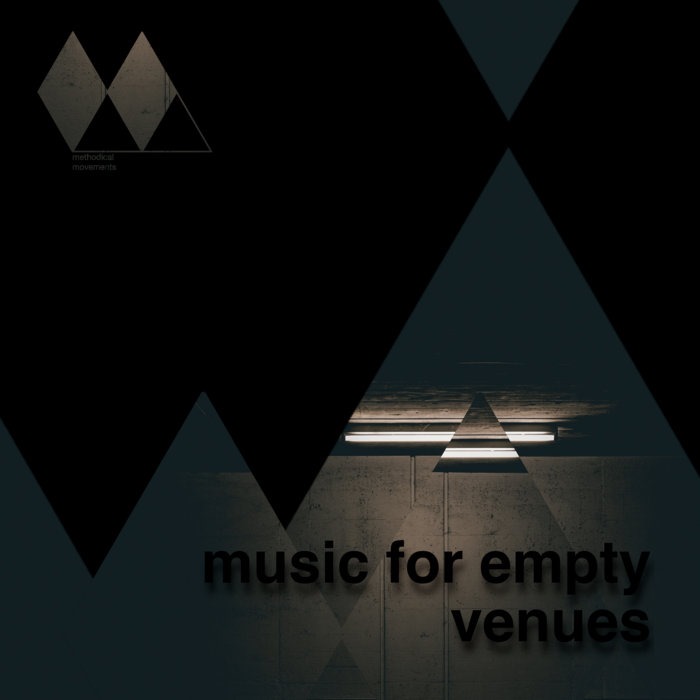
I shall quote from the press release at length, as it feels appropriate here: ‘Music for empty venues is a charitable music compilation in response to the Covid-19 crisis. Independent music venues across the country are struggling more than ever due to the imposed lockdown, with many listings cancelled and the uncertainty over any future bookings. This compilation aims to support some of the affected venues within the city of London through the means of a fund-raising, with all profits of the release going to three chosen independent London venues selected by the featured artists. These venues are: Iklectik, Hundred Years Gallery and Jazzlive at the Crypt.

The compilation features a wide range of forward thinking, electronic based musicians who have graced many of London’s (UK) independent music venues over the years. We’ve all come together in this one moment to support the venues that normally support us.’

I’m reminded of the EMOM nights I’ve attended in York and Leeds: a broad church, and so, so accommodating: they’ve effectively created their own circuit for artists, and a safe space for aficionados of the eclectic electronic music they create. As such, this project isn’t simply one to back in principle, but one that resonates on a personal level. It also helps that the standard of the contributions is outstanding, and the track list is a remarkable showcase for the range of underground electronic music emerging right now.

Blame’s ‘Flummoxed’ is an eight-minute blast of stammering electronic trilling, tweaks and jerks, bleeps and stuttering overload that hovers just below speaker distortion and fried circuitry.

Docor Stevio mines a more conventional, if dark, seam. On the face of I, ‘Another day’ is a throbbing electropop / industrial crossover with a gothy vibe, but there’s a hint of proggines in the vocal delivery and the bridge sections.

This is, incidentally, an absolutely mammoth release: nineteen tracks, many of them way over the six-minute mark, and a few truly behemoth efforts, not least of all, Laura Netz’s ‘Medial Dark Ages’ and the last track, ‘Fragments#1’ by Tony James Morton. Both are expansive and immersive and enjoyable in their own subtle ways.

Adam Paroussos’ ‘Murmurations and the Fool’ is something of a standout, by virtue of the disorientating nature of its collage pile-up of wibbly electronics and overlaid samples colliding in a riot of simultaneity, while Mathr seems intent on dissecting dance tropes to extrapolate aspects of beat, bass, and groove into a shuddering stop-start headfuck. No, you can’ t dance to it. ‘Bloom’s Taxonomy’ by Obrigada Nadamay be almost fragmentary, but with its broad, sweeping drones swishing across Japanese-influenced chimes, it’s textured, layered, and compelling.

‘Desilencing the Sea, Part 1’ by xvelastín contrasts in every way, being a minimal ambient work that’s devoid of beats and overt structure, drifting, without form, without chords… barely there, yet somehow atmospheric. Not dark, not even particularly eerie, but not light or comfortable either, ambulating a sonic no-man’s land, an aural limbo of sorts.

Ambivalence and ambiguity is a positive thing, and the material on this compilation thrives in this space without definition.

AA
a0928354960_16

Sige 071 – 31st July 2020

Christopher Nosnibor

Nordra is the vehicle by which Monika Khot, of Zen Mother, and a touring member of Daughters delivers ‘apocalyptic dirges combining modern classical explorations of electronic ambience with hardware-fueled industrial barrages’.

The press release explains the transition and difference between Pylon III and its predecessor, Pylon II: ‘Nordra’s second outing, the commissioned score for PYLON II, was a hard-edged martial exercise—fitting for the dystopian nature of the series’ second installment. But for PYLON III, Pester was looking for the light at the end of the tunnel and requested that Khot instill her work with hope and calm in order to serve the utopian aims of the performance’.

Hope and calm aren’t the initial senses I draw from listening to the ten compositions that comprise Pylon III. In fact, I find myself adrift, and also buffeted from one emotional moodspace to another. Lugubrious, haunting, and often eerie, unsettling, Pylon III is no relaxation tape by which to practise meditational breathing.

Stuttering beats, murky and muffled and rapid like machinegun fire bather hard against dense, slow-turning, ethereal drones, juxtaposing tension and tranquillity. The seven-minute ‘Monologue on the Beach’ is very much representative of the album as whole: piano notes ring out, sparse and lonely against eddying, undulating notes, particularly as it’s followed immediately by the booming drones of ‘Un-Hopeful’, the sonorous parp of a cruise liner’s horn sounding into a thick fog.

‘Reconciliation’ marches hard, a short, stabbing loop thumping insistently while dark serrated drones loom unexpectedly and seemingly at random, like sharks emerging from the depths. ‘Transcendence 1’ hints at something approximating conventional dance tropes, with its regular, pulsating beat that booms into a ocean of reverb as the bass builds. ‘Transcendence 2’ could well be off another album altogether as Nordra goes ‘rock’ – a chugging guitar plugs away at a couple of chords while drum twitches away nervously, and strong seep in with additional tension. It has hints of Swans about it in its density and its mesmeric insistence, and it makes for a compelling and hypnotic conclusion to an intriguing album.

AA

a0053420620_10

24th July 2020

This Valley Of Old Mountains is a collaboration between Taylor Deupree and Federico Durand, which the press release informs us, ‘quietly creates the folklore of an imaginary land. From a hemisphere apart, share simple sounds with complex stories. Their music balances an edge between translucency and exploration, focusing on obscurity, repetition and a shared

fascination of the mountains between them’.

The album’s thirteen tracks are sparse and lilting, and oftentimes intimate a certain oriental influence as the notes – picked and struck – ring out into a confined-sounding space. For the remainder, they simply hover and hum, an easy, effortless wash of sound. You don’t you just sit as the glitches play out, twisting your psyche fleetingly, and wonder where it’s actually going as you venture into your own head.

Not a lot happens here, but then again, this isn’t about events, and more about atmosphere. Listening to This Valley of Old Mountains, there are moments where I can’t tell if I’m listening to the album or just the throb of the extractor fan in the bathroom next to my office. In a way, it doesn’t really matter either way.

‘Honii’ brings trilling twitters of birdsong to join the slow, echoing chimes of dulcimer and similar, while ‘Wintir’ is minimal, atmospheric, and exemplary of sparsely-arranged warps and wefts. ‘Polei’ is a slow, soporific tinkling piece, and fits with most of This Valley of Old Mountains’ mellow mellifluousness.

This Valley of Old Mountains is background, is barely-present, is vague in structure. It’s a perfectly ambient work of ambience, and works perfectly.

AA

a3671003152_10

Inside Out Music – 28th August 2020

Christopher Nosnibor

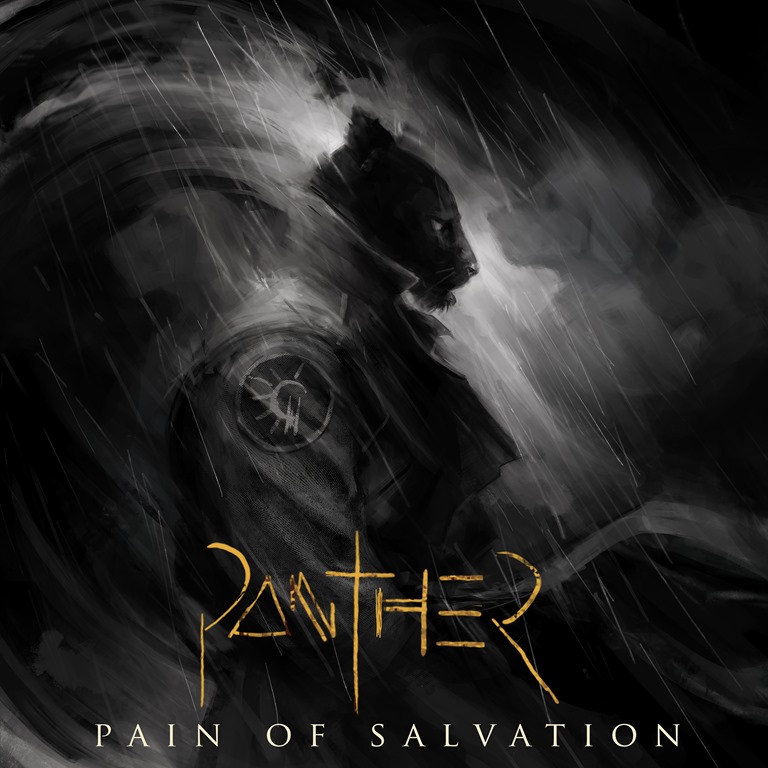
Almost 30 years into their career, Sweden’s Pain of Salvation, led by multi-instrumentalist Daniel Gildenlöw land a new album with the ambition of demonstrating that ‘Ultimately, progress will not be stopped’. They go on to unravel the details that ‘Pain of Salvation have been firmly at the forefront of the progressive rock and metal scenes for nearly three decades now’, and that ‘the Swedish band have consistently demonstrated a sincere passion for moving their own extraordinary music forward, while always remaining lyrically enlightened and ferociously intelligent. As a result, the band’s return in 2020 could hardly be better timed’.

The press release makes a gargantuan leap from the band’s formation and crash-lands us with a ‘Fast forward to 2020 [when] the world is in a state of disarray’. It makes sense in a way: we’ve all landed where with absolutely no fucking clue how 2020 actually relates to or connects with anything: the past has dissolved in a haze of time eroded to desert and a future that seems impossible. Chronology is utterly screwed. I can barely remember last week, or even what I had for dinner last night.

This is one of those multi-layered, multi-textured, multi-genred and highly detailed albums that is simply impossible to digest on the first few cycles. I sat, a shade bewildered, a tad giddy, and not just on account of a couple of strong, hoppy American IPAs down on an evening after three hours sleep the night before. The album’s first track, ‘Accelerator’ collides myriad elements, twisting together contemporary prog with an electronic twist, some dancy synths and some chugging industrial guitar riffage that slams in and it all coalesces to a bewildering sonic whiplash that works well and hits hard.

Next up, ‘Unfuture’ steps up the weight, slugging hard some industrial country with menace that’s a melange of Alice in Chains and Nine Inch Nails and it’s both brooding and heavy. And it’s clear that on Panther, PoS have hit their stride with optimum, riffage and a weight that achieves critical mass when it matters.

It’s not all good: the title track is a cringeworthy and incredibly dated-sounding stab at a hip-hop nu-metal crossover that doesn’t sit comfortably anywhere in 2020, let alone with the rest of the album, and when placed alongside contemporary grunge-tinged prog efforts like ‘Species’ – which comes on like Pearl Jam crossed with Amplifier – it just sounds odd.

Then again, songs like ‘Species’ bring full-blooded riffs and some solid overdrive, and the thirteen-minute finale, ‘Icon’, is the album’s ultimate pinnacle, as a snaking, picked lead guitar line rattles against its cage to twist around a gritty, thick-chorded riff. It yields to moments of folksy levity, but they’re gloriously crushed by the weight of big, grinding chuggery, not to mention a pyrotechnical guitar solo around the eight-minute mark. Miraculously, it actually works without sounding like indulgent wank, and that’s no small feat.

AA

Press_Cover_01

Long Division – 21st August 2020

Christopher Nosnibor

The second of the albums released as a fundraiser for Wakefield’s Long Division Festival presents another mix of established, up-and-coming, and new acts which encapsulates the festival’s egalitarian ethos. With its focus primarily on the local and regional, one may be forgiven for expecting a mixed bag both in terms of style and quality, but local is by no means a byword for low standards around these parts, and while this second collection – like its predecessor – is stylistically varied, the quality is remarkable.

It’s also arranged as an album of two halves, with the second being considerably more commercial, and what you’d probably call summery.

York’s Cowgirl – one of the countess projects from the city featuring the wide-ranging talents of Danny Barton (who’s also just released a new single under his Wolf Solent moniker) makes for a strong start, with its Pavementy slacker indie stylings. It’s got that up-front, full-tilt, everything-loud energy-bursting lo-fi production that delivers the buzz direct into the brain and makes you feel good instantly.

Priestgate’s ‘Now’ is a more 80s vintage style, while ‘Walking Backwards’ by Glasgow’s Life Model’s is a wonderfully poised shoegaze affair. The vocals sound lovelorn, but sign off with a strong and determined refrain of ‘I never liked you at all’ before a swell of rippling guitars surge in.

I’m waiting for a weak track, but Lemon Drink certain aren’t the one’s to serve it, with ‘Manic’ being a tight and lively slice of zesty grunge-tinged indie pop.

Mt Doubt might lack immediacy but bring mood, and HerTiltedMoons’ contribution, the brooding but lightly melodic piano-led folk-pop of ‘Orange Grove’ arrives as quite a surprise in its Coors-like commerciality, and taking a different but equally accessible tack, the quirky electronica of In The Morning Light’s ‘Milk and Honey’ is a groove-orientated tune. Bunkerpop bring a taste of the Caribbean.

It’s back to the 80s again with a dash of Ultravox and a splash of Spandau – and even a hint of B-Movie on Macroscope’s ‘Reveal’, and drawing the curtain on the collection, Little State of Georgia offer up the sparse and intimate ‘Little Tiny Ones’, a devastatingly cool work of brooding minimalist electronica that’s haunting and emotionally resonant, presenting a classic case of less being more, before swelling into a cinematic power-ballad finale.

Once again, there’s something for everyone here, and more significantly, New Addition Vol 2 showcases a wealth of talent that is entirely dependent on grass-roots venues gigs, independent festivals, and indie labels who are willing to take a punt. Because acts who break through are rarely the best ones, but the ones with backing – but getting that backing requires that initial exposure and support. Without that, it all falls apart.

AA

a4204335405_10

InsideOut Music – 24th July 2020

Christopher Nosnibor

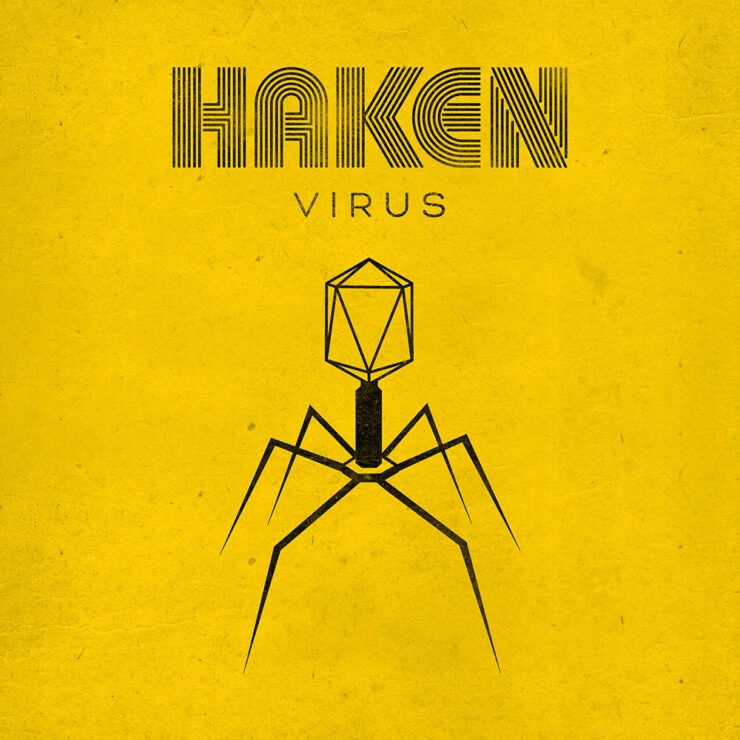
It’s almost as if they planned it, or saw it coming (although not sufficiently to prevent the release date being put back three times). And you could almost believe it, too: there’s a potently portentous aspect to Haken’s brand of progressive rock, and Virus is very much timely as much for its ruminations on the psychology of contemporary culture, as the press release explains:

‘If ‘Vector’ was an origin story, ‘Virus’ portrays an ascent to power, tyranny and subsequent endgame. The opening track, ‘Prosthetic’, bridges the two albums where scars of institutional abuse are brought into focus. This 6-minute onslaught of brutal riffing starts the spread of a virus that affects all aspects of our lives, be they biological, psychological, technological, environmental or political.’

They’ve been working on the album since the release of Vector in October 2018, and it shows: the level of detail in the interweaving guitars and the spacious melodies are remarkable, but then, so are the thunderous riffs.

The ten-and-a-half-minute ‘Carousel’ is a clear standout, and packs the experience of an entire album into a single song. The rest of the songs are much more concise, at least if you take the five-part ‘Messiah Complex’ suite as separate chapters. As you’d perhaps expect, this is a grand and grandiose sequence, with everything elevated and amplified, and with the addition of some bombastic orchestral strikes, while the final part, subtitled ‘Ectobius Rex’ goes full-on industrial metal riffage.

Elsewhere. ‘Canary Yellow’ is a condensed epic, soaring shoegaze anthem, while the final song, ‘Only Stars’ is a magnificently sparse affair which finds Ross Jennings emoting an almost choral elegy. It feels like a moment of calm reflection in the wake of a wave of devastation.

For all of the heavy power chords that crash like slabs of granite in a most contemporary metal way, I’m in some way reminded of Jeff Wayne’s musical version of The War of the Worlds and Mansun’s Six, although Jennings’ vocals often carry that rich but troubled soulfulness of Dave Gahan. If this all sounds like an unlikely and improbable cocktail, it’s testament to Haken’s abilities that they make it all work not only cohesively, but deliver some great songs along the way.

AA

Haken_Virus_1000px-740x740

Gizeh Records – August 28th 2020 – GZH98

Christopher Nosnibor

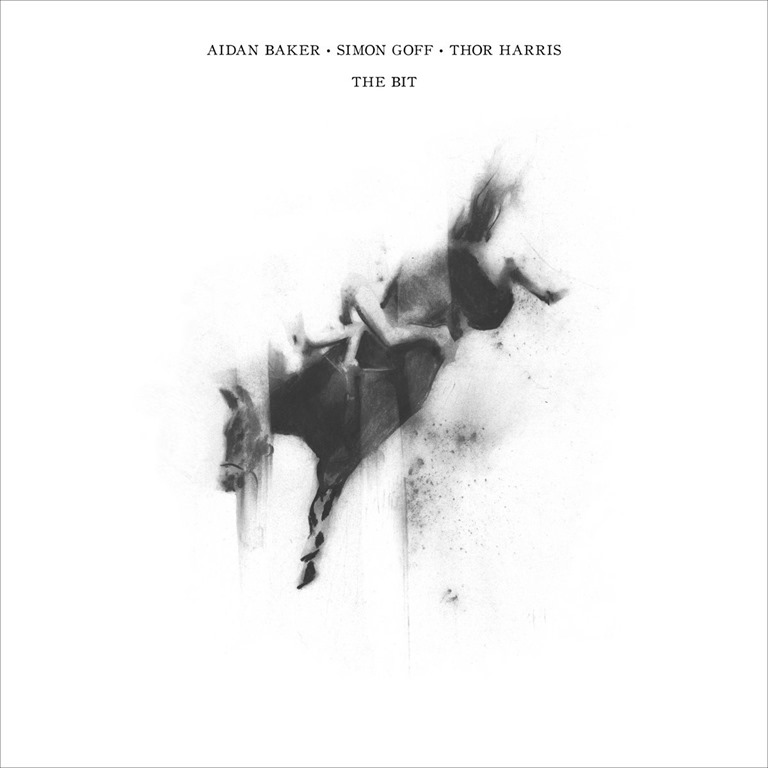
Three years on from Noplace, the unassuming supergroup known only by their actual names, comprising Aidan Baker (Nadja / Hypnodrone Ensemble), Simon Goff (Jóhann Johannsson / Hildur Gudnadottir) and Thor Harris (Swans, Shearwater, Thor & Friends) reconvene for a second instalment of improvisational work created in just a single day. On this occasion, they took advantage of a day off while on tour to record at Voxton Studios in Berlin

The Bit is an edited rendition of that session.

According to the press release, ‘The Bit finds the trio painting with a lighter touch than on its predecessor. Thor Harris’ motorik beats still underpin the music but the atmospherics take a more prominent role and there is a pure and cohesive path to be found throughout the record. Much like on Noplace, Baker’s guitar and Goff’s violin weave together beautifully, forming a deep bed of melody, ambience and reverb.’

There’s an equine theme to many of the titles, specifically ‘The Bit’, ‘Canter’ and ‘Gait’, but the loping drums and slow-moving ambient drone that defines the sound isn’t particularly evocative of the theme.

Of the six real-time compositions, the first five are quite succinct, around the three or four-minute mark, with only ‘Gait’ – a sparse, minimal piece that slowly throbs and pulsates while feathery notes drift down gently in a wide space – drawing out past seven minutes.

‘Springenden’ is a beautifully detailed piece, ostensibly a modern classical work consisting of rippling piano, quavering strings and a soft background wash of synth, which prefaces the twenty-two-minute finale, ‘Wild At Heart’. It’s essentially an expansive ambient work, which whispers, wisps and turns with an understated grace, twisting and turning as a slow beat booms into the rarefied atmosphere. It’s an expansive, exploratory piece that’s murky, ominous, and suspenseful. And the thing about suspense is that you never know what’s around the corner. There is no revelation in the rumbling low tones and wailing, dawning drones that emerge and taper down during this longform piece which descends to distortion and dissonance as the sound thickens and grows grainier. It’s a gradual dilapidation and makes for an intriguing and subtle listening experience.

AA

a2947139286_10

gk rec.

Christopher Nosnibor

This makes for quite a refreshing change: it feels like about two-thirds of my reviews in recent months have been marked by a compulsion to comment on artists going into creative overdrive during lockdown and whacking out releases of new material because they’re not currently touring or working their day-jobs. But for Lithuanian electronic experimentalist Gintas Kraptavičius, it’s business as usual, with a steady flow of output over recent years, and with Amnesia being his second release of 2020.

One of the things I personally admire about Gintas as an artist is how broadly he explores the field of electronic music, with works ranging from minimal ambience to deep dives into microtonal territory, and a whole lot in between. Amnesia conforms to no genre or form, and instead spreads its myriad suggestions from across a host of conceptual spaces to create something wonderfully vague, and also vaguely wonderful.

The release comes with no information whatsoever about its concept or purpose or recording, beyond the fact that it uses drum samples by Travis D. Johnson. Those samples aren’t neatly assembled to form looped rhythm tracks and solid structural foundations for a work with an overt linear trajectory or other sense of solid form.

Amnesia contains a single track which spans a massive forty-four minutes, and begins with crackling, interweaving synths waves which crackle and fizz with distortion, while thumping clatters that sound more like shuffling, clumping footfalls than drums crash sporadically and arrhythmically.

There are some crescendos or swirling noise and shrill, trilling feedback notes that whistle and screech over churning blasts of bilious noise, violent sonic storms. There are segments of laser bleeps and skittering short, sharp toppy notes fire into a swirling morass of mid-range extranea.

A delicate piano tinkles in a nuclear storm and a stammering clanking rattles and clangs behind and alongside. This is a dominant feature of Amnesia: there is always a background and a foreground and a significant degree of contrast between the two, which is both textural and tonal. Harsh top and midrange are laced against softer, more gloopy lower spectrum sounds.

Time slips, drips, dribbles and cascades through a shifting sonic multiverse that’s often uncomfortable, at times undemanding, as the track transitions between ambience and abrasion, and towards the end it takes a turn towards synapse-collapsing early 80s power electronics.

What do you do with this? Where do you take it? What is it all about? There is no clear message, no distinct or decisive form, resulting in a longform composition that meanders and swerves in all directions but ultimately leads nowhere and articulates little – and that’s more than ok: Amnesia is not about sequence and making a bar, but about capturing a sense of vagueness and a certain lack of purpose, of point, and it does so magnificently.

AA

a2114610098_10

Buzzhowl Records – 28th August 2020

Christopher Nosnibor

Anyone who was around Leeds’ live scene about ten years ago will have likely experienced the bludgeoning racket of Blacklisters. When it came to jarring, psychotic noise-rock a la The Jesus Lizard, they were beyond awesome in both volume and intensity, and they had songs, too. Most bands aspire to producing a body of work, but the reality is, any band that can craft one truly definitive song, then they’ve achieved more than more than 99.99% of bands. With ‘Trick Fuck’, Blacklisters nailed it, and in doing so assured their immortality. While for my money the rough and ready EP version was actually better than the one that appeared on their 2012 debut album, that riff… oh, that riff. Fuck, man. That riff. Anyway, the rest of the debut was absolutely belting.

They went a but quiet on the live scene, but second album Adult, which benefited from a beefier production found them on killer form, and with lead single ‘Shirts’ they actually matched ‘Trick Fuck’.

Geography and life kept them quiet thereafter, with just an EP and compilation of EP cuts and radio sessions keeping things simmering over the last five tears. Yes, five whole years.

But in the bleakest, most barren of times, after an eternity of lockdown, Blacklisters unexpectedly deliver album number three. Its arrival was heralded by the dropping of single cut ‘Sports Drinks’, which opens the album and is an instant classic. It starts with a sinewy guitar then the rhythm section hammers in at a hundred miles an hour and it’s the most driving, energised, manic things they’ve recorded to date. It’s tense, crazed, Billy’s indecipherable yelling half-buried under a punishing squall of guitar.

‘Strange Face’ is another explosion of noise that makes ‘Club Foot by Kasabian’ sound like loungecore, and is so lurching jarring and warped it makes The Jesus Lizard sound soft. The title track, up next, provides no respite, pinning down the kind of cyclical riff that marks all of their best songs, and once more evoking the best of early 90s Touch and Go, particularly Tar.

There is absolutely no let-up here: ‘White Piano’ is furious and it’s back-to-back with the brutal bass-driven feedback fest that is ‘Le Basement’. And that’s what differentiates Fantastic Man from its predecessors: it’s tighter, tauter, than anything they’ve done. If before their tightness was in some way disguised by a squalling sloppiness, the playing on Fantastic Man is rigid muscular, gym-pumped and vascular.

‘I can Read my Own Mind’ is the album’s one moment of levity, with hints of Bleach era Nirvana in the messy mix, but the soupy morass of guitars all layered up in a knot of noodly treble is knotty and takes some wading through, especially with the fuzzy-edged vocals – and then it goes a bit Dead Kennedys, only like a DK 45 played at 33 and the effect is cranium-splitting.

The final track, the six-and-a-half minute Shellac-like rhythm driven mess of nastiness that is ‘Mambo No. 5’ isn’t a cover, just as ‘Club Foot by Kasabian’ wasn’t a cover, which is Blacklisters all over – irreverent to the last, its comedic value is twisted by its sonic brutality. And fuck me, it is brutal: they’ve certainly saved the most violently noisy for last, and it clanks and squalls in a thunder of rums and snarling bass.

It didn’t seem possible, but with Fantastic Man, Blacklisters have taken things up another level. The hooks may be sparse, but the slanted, angular riffs are harsh and heavy, and from out of nowhere, this could well be their best work yet. Fantastic and then some.

AA

a3392725730_10

Front and Follow – 31st July 2020

Christopher Nosnibor

Rejection hurts. Always. Some of us can ride it out, brazen it off, better than others, but always, it stings. Artists in any media tend to be sensitive types, and so the sting is all the harder.

The basis for this series is lovely: it’s relevant, relatable, but also worthy because of its wider context: ‘not an isolation project – it’s a rejection project’. Rejection is isolating in itself, but more specifically, this is a collection of rejections released from isolations.

As the accompanying blurb recounts, ‘Isolation and Rejection was born out of thinking about what happened to all the tracks that didn’t make it onto those fancy compilations, and is now turning into an ongoing project to collect, collate and promote rejected sounds.

With over 100 artists signed up, we are going to release five volumes over the next few months. Each volume will showcase those lost gems, discarded and abandoned but now lovingly embraced and put front and centre for your enjoyment. We’ll also be sharing the stories behind the rejection – funny, weird and sometimes a little heart breaking.’

The beauty of this collection lies not only in the music itself, but its eclecticism. The tracks range from fragmentary snippets to eleven-minute explorations, from bubbling electronica to billowing abstraction. With twenty-four tracks, it is a monumental and truly epic set, and not necessarily one to take in in a single sitting.

Lose a Leg provide the first piece, with a delicate piano snippet of a composition called ‘Thinking About It’. It’s barely a minute and a half, so there isn’t much time to think.

There’s a strong leaning towards mellifluent ambient works, abstract, cloud-like sonic drifts of intangibility, but this being a Front and Follow-curated release, it’s got well-considered range: Time Attendant’s ‘Binocular Visions’ introduces Kraftwerkian robotic electronica into the mix, with a motoric sequenced rhythm underpinning its throbbing electronic structures. Then again, there’s a lot of bleepy electronica centred around cyclical grooves and heavily repetitive beats, as exemplified by Caper One & Vandal Deca’s contribution.

Some pieces straddle both: Audio Obscura’s ‘Castles on Earth’ is big, bold dubby, beaty and ambient all at once, an echoic bath that swells around a dense, booming bass, and elsewhere, Crisp Packet Jacket bring woozy pulsations with ‘Dreadful Own Brand’. No Later’s‘The Revenant Sea’ is spectral and haunting, and in many ways encapsulates the spirit of the release in its hybridity, while ‘Music forBroken Piano’s recalls early Pram in its dissonance and discord.

Sairie’s lilting folk cover of ‘House of the Rising Sun’ stands out by virtue not only of its difference, but its beautiful vocal melodies, which later over a sparse et lush acoustic guitar. Why was it rejected? Did they submit to a death metal or power electronics compilations? But we know that rejection is often more about curatorial taste than quality of submission, and it’s quite apparent with this collection because there simply isn’t a weak track to be found.

It is a colossal collection, and likely not one to play in a single sitting, especially with so much going on. This makes it, along with the first edition, a collection of outstanding quality.