Archive for the ‘Albums’ Category

Human Worth – 10th March 2023

Christopher Nosnibor

There’s something of a tightness around the noise scene , especially around a nexus of London acts who swap members for side projects and collaborations on a remarkably frequent basis. This is a good thing, for while all of these projects share much common ground, each offers something distinctive and unique, too, a different twist or angle from the others.

Human Worth has given a home to a number of releases from acts which have emerged from this mini-melting pot, notably recent output from Remote Viewing and Fucking Lovely. And now they’re really spoiling us with the latest endeavours from The Eurosuite, who, their bio informs us ‘consist of 4 lovely people who make disquieting no wave songs that will equally pierce your ear drums and move your hips’ and whose ‘previous musical endeavours include USA Nails, Nitkowski, Screen Wives and Mister Lizard.

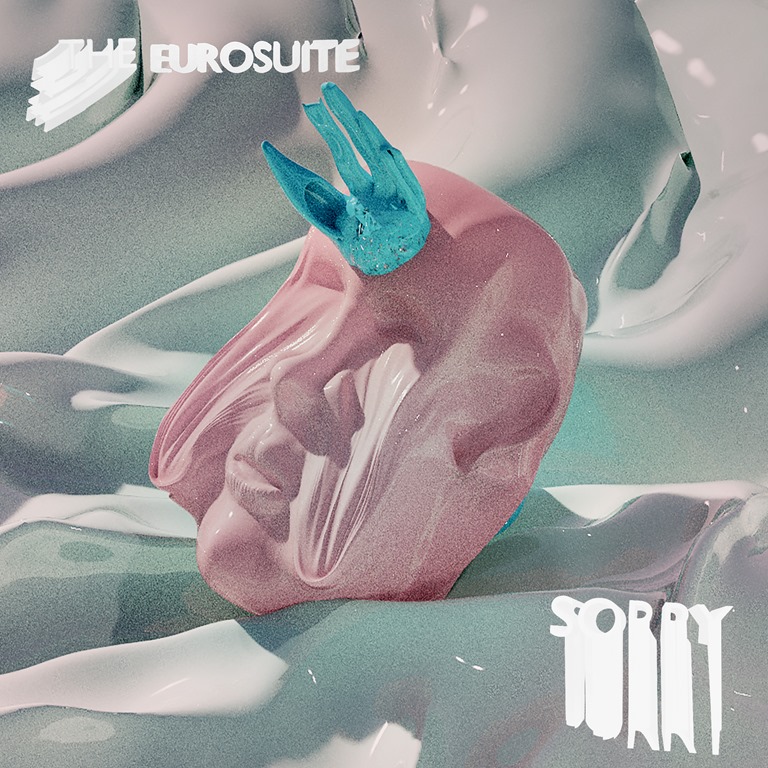
What Sorry has in common with both the Remote Viewing and Fucking Lovely releases is, that like most Human Worth releases, it’s noisy. It’s also absolute class.

But it’s also very different, with electronic elements not only incorporated, but highly prominent. The first track, ‘Cup of Water’ is sparse and atmospheric, with glitchy mechanised drums bouncing about, and it’s intriguing and really quite gentle – and then they bring the noise with ‘BODY’ where it really does all kick off – and kick off it does, with frenetic drums and guitars blasting away like crazy.

The electro/noise rock crossover is unusual – while they’re by no means the first act to do it, their approach means they don’t really sound like anyone else, not least of all because the range across the album’s span is quite remarkable. Noisy as it is, the noise is quite contained for the most part, or otherwise countered by the synths to conjure an equilibrium of sorts – or, at times, a jarring, jolting contrast.

‘Seven’ showcases just how hard it can hit when everything’s cranked up and going full-tilt, but then again, ‘LIB’ throbs and pounds and nags like a melding of DAF’s ‘Der Mussolini’ with I Like Trains’ latest output, but as performed by Big Black. They leap and lurch between jarring, jolting blasts to rather more accessible structures, and I’m variously reminded of Killing Joke, Selfish Cunt, and Daughters – the latter not least of all because of the manic energy and intensity, as well as the skewed angular noise that cuts across the rhythm section.

‘Total’ throws it all into the mix as it goes big on a mathy post-punk vibe while packing on some dense guitars and thudding bass into its two-minute duration, with hints of …Trail of Dead, and again, it positively crackles with a frenetic energy. The last song, ‘The Dream’ is truly climactic, an explosion of squalling guitars, thudding drums and sparking electricity.

Sorry is an album of contrasts, of variety, and an album that doesn’t give a fuck for genre or convention. For these reasons, Sorry is an exciting album. It’s an album that doesn’t sit still for a second, and it’s impossible to predict where it’s going to go from one bar to the next, never mind one minute to the next. It’s dizzying, but also – to use a phrase popular in the tabloid press – jaw-dropping. Sorry is a sonic frenzy and endlessly inventive, and if it leaves you feeling punch-drunk and giddy by the end – Sorry, not sorry.

AA
TheEurosuite_Sorry_Artwork-Cover

10th March 2023

Christopher Nosnibor

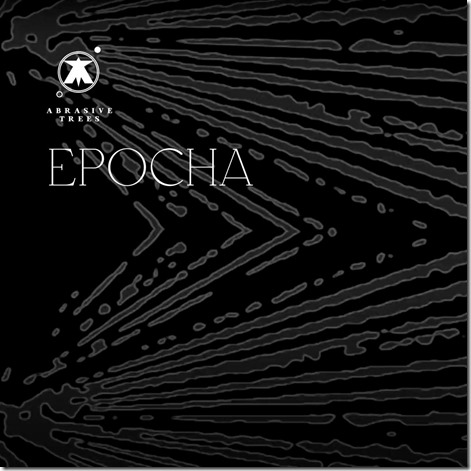
Epocha gathers together Abrasive Trees’ output from 2019-2021 – a brief but pivotal period for the band released four singles and EPs which found them evolving and solidifying their sound. They’ve been variously described as Post-Punk/Post-Rock/Post-Folk and permutations thereof, and all of these elements are in the mix in a style that has gothic – but not explicitly ‘goth’ overtones across the course of the nine tracks gathered here.

Although ostensibly a five-piece centred around Matthew Rochford in their current incarnation, these recordings feature a host of contributors, notably Mark Beazley of Rothko and Band of Holy Joy, who was also involved in elements of production, mixing, and mastering the tracks, and among others. It’s perhaps because of what these individuals bring, both in terms of playing style and instrumentation – with cello, e-bow, organ, and dulcimer among the array of instruments which augment the standard setup off bass, drums, and guitar.

The fact that the songs aren’t simply presented chronologically – and remixes have been omitted – does give this disc a more the feel of an album set than a compilation, and this makes for a journey-like listening experience.

The album opens with ‘Bound for an Infinite Sea’, the lead track of the EP bearing the same title from September 2020, and the chiming guitarline is reminiscent of The Nephilim era Fields of the Nephilim, and sets the expansive atmospheric tone that defines the sound of Abrasive Trees.

While there are vocals, they feature sparingly, rippling up between the lengthy instrumental sections. On ‘Replenishing Water’, this manifests as a percussion led swirling psych groove, whereas elsewhere, as on the slow, hypnotic ‘Before’, the vibe is rather more spaced-out and trippy, and there’s certainly an experimental, almost-jam-based aspect to the music in places.

Predominantly, though, there’s a contemplative, brooding nature that seeps through the rich yet subtle arrangements, and at times, in the folkier parts, I’m reminded of Last Harbour (granted, not a comparison that will likely leap out to many, but so often the best bands are underrated and under the radar). The dark, moody ‘Alone in the World’ is eerie, haunting, and other-worldly.

In pulling together these recordings, released variously on cassette, vinyl, and hand—packaged CD, one would hope that Abrasive Trees will find new converts, even if there are only 100 copies of this CD-only release – if its existence steers people to the digital versions of the original, then it’s all to the good, although it has to be said, as a fan of physical media, Epocha is a lovely item, as well as a well-realised document of the band’s first phase.

a4124501000_10

(Image links to Bandcamp)

Human Worth – 3rd March 2023

Christopher Nosnibor

Irish foursome Hands Up Who Wants to Die feature members of Shifting, No Spill Blood, and Wild Rocket, and – as you’d expect from an album released on Human Worth – it’s heavy. But it’s not just lumpen-headed thumping: there’s a lot to absorb on Nil All – and so much more than noise.

The opening of ‘Clothbound’ is atmospheric, subtle, intriguing. And then the bass slams in like a lump hammer. The guitar, rather than following with any direct riff, creeps around, twisting and turning, while the vocals are those of a strangled gargoyle – ugly, menacing, perturbing.

There’s a fair array of stylistic variation across the album’s eight tracks, and it’s this unusual relationship between the guitar and bass that is most intriguing. ‘0-0’ is a deconstructed jazz semi-spoken word piece where neither bass nor guitar confirm to the time signature of the drumming: Enablers may be a touchstone, but ultimately, this is something unique. The same is true of the low and slow theatrical math-rock of ‘L’inconnue’ that comes on like a dreamed reimagining of Shellac that lumbers its way into a howling psychodrama before slowly falling apart over the course of an eight and a half minutes that will make you feel like your limbs are slowly being separated from our body.

Satre famously wrote in Nausea that ‘hell is other people’ and this messy-sounding gut-churning bass-driven, feedback-strewn behemoth is a worthy soundtrack which corresponds with the urge to purge after too much time among the masses – like the excruciating torture of a trip into town on a weekend or lunchtime. It’s a crushingly heavy dirge, and the guitars nag and gnaw at your skull while the bass kicks you hard in the guts. And then it goes off-kilter and lumbers and lurches all over, and that hellish throb continues into the grainy drone of ‘Hell Is Just More Of What’s Already True’. It may only be a couple of minutes long, but it’s lugubrious as fuck.

‘God’s Favourite’ is like a three-way pileup of Shellac, Pavement, and Her Name is Calla, and these guys seem determined to drag the listener through some dark and difficult places – sonically and emotionally. This, of course, is the selling point for Nil All. It’s an album that rages, raves, groans and sighs as it explores those uncomfortable spaces and challenges the listener in a way that delivers optimal rewards. It channels the pain, anguish, and confusion of being alive and articulates it in a way you didn’t realise was possible.

Signing off with the blasting noise-fest that is ‘Ludger Sylbaris’ – a morass of booming bass and sinewy guitar havoc – Nil All is not overtly uplifting or cathartic. It’s schizophrenic, twisted, dark, unpredictable, deranged. And absolutely fucking top.

AA

a0448521134_10

Keplar Keplar – 3rd March 2023

Christopher Nosnibor

However much you think you know about music, there is always more to learn. And so it transpired that Holo was first released in 1998 and is ‘one of those rare records that managed to carve out a niche of its own while also building bridges to variety of genres like Chicago-style post-rock, the ambient mysticism of projects like Rapoon or the music made at the intersection of shoegaze, and electronic music in the late 1990s.’

Where have I been? Living in a cultural vacuum? Hardly. And yet this is my first encounter with KILN. And I’ve not heard of Rapoon and have no knowledge of Chicago-style post-rock either. Chicago house, I’m aware of, but… well, I daresay I’m not alone, and so this reissue off Holo may well prove to provide an introduction, and an entry point to the trio’s supposedly niche-carving brand of ambience.

It’s an album that’s rich in detail and texture, from clanking, clattering tin can percussion and big sweeps of amorphous sonic clouds that wash and crash in waves.

It’s hard to decipher precisely what’s what – is that a didgeridoo or just a digital drone? It’s impossible to unravel the layers and determine the individual sources as glugs and gurgles slide in between soft dulcimer-like notes and easy beats that bubble between all kinds of textures and tones which drift and slide and groan and drone in and out of the ever-shifting fabric of this fascinating album. Guitars and extraneous sounds flit and flicker in and out while instant drums nag and boom. At times it’s new age, at times it’s more tribal, and Holo pushes ambience in numerous directions.

There are segments – interludes, breaks, fragments – where this is a catalogue of challenging source materials melted together. At others, it’s altogether less challenging and simply washes of you in a soft breeze.

For an album that’s so chilled, there is much happening on Holo¸ and as much as it is an album to chill to, first and foremost it’s an album to explore.

AA

KeplarRev13LP_front

Southern Lord –10th March 2023

Christopher Nosnibor

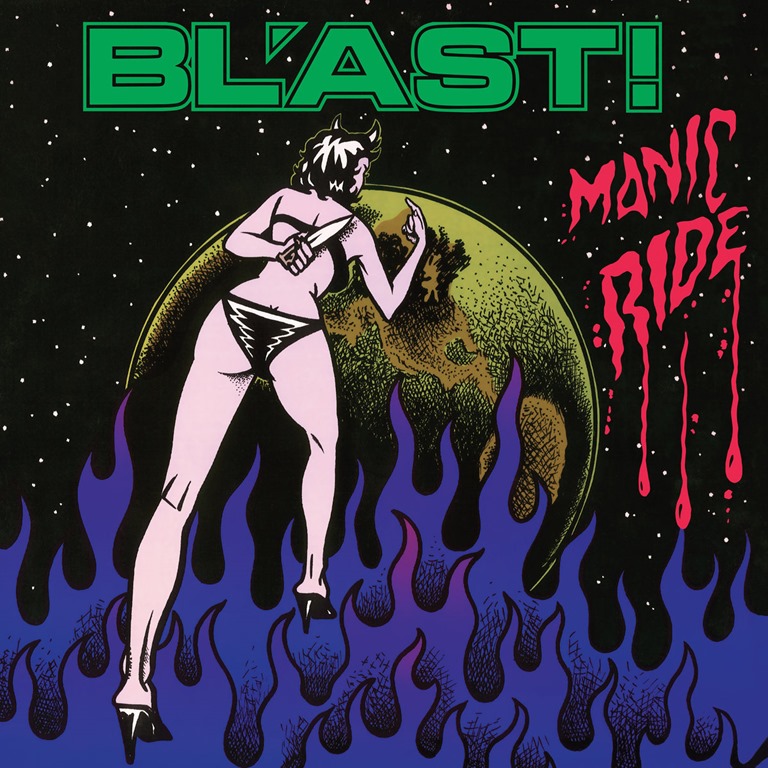
Ask people to name a hardcore band and any money they’ll say Black Flag, but anyone who knows their stuff will likely also mention BL’AST. BL’AST stand as one of the definitive hardcore bands, formed in 1983 and releasing their first album, The Power of Expression in 1986, having recorded it three times.

The story goes – according to the band’s bio – that in June of 1988 BL’AST! went into the studio with Black Flags’ live sound GOAT: Dave Rat (RATSOUND), and the breakneck Take The Manic Ride was recorded. This version was later destroyed after the band was dissatisfied with the original production, with a rerecorded version being presented to the public in 1989.

It perhaps seems ironic that a band as raw and immediate as BL’AST should spend so much time faffing about in search of achieving the ‘perfect’ recording, when the finished article sounds so… unpolished. But of course, that’s the point and the key issue: many bands who are live acts first and foremost find their sound stunted, diminished, compressed and ultimately rendered weak and lacking in bite when attempting to capture the experience in a studio setting. The studio is a sterile environment, clinical, and few producers really get the concept of not actually producing a band. Hardcore is about tearing your guts out with vitriolic rage. The studio is never going to be the best environment for channelling it.

This is the stuff of music legend: the master tapes for that first version were destroyed and were never to be recovered, but as Southern Lord detail, ‘Through some incredibly magical surgery a new heavy as fuck version of the album has been produced.’

Perhaps predictably, Manic Ride is a mess of furious noise and aggression, abrasive and angry. While the Southern Lord reissue isn’t leagues different from the Blast First original, it’s very clearly a different mix. Hardcore (sorry) fans will likely be divided over the mix, whether it’s better or worse or whatever and there’s no right or wrong really. This version is crisper and clearer but also fuller.

What really matters is that this key album is back out there, and if it divides fans, fine. It’s back in the public domain, and will, with any luck, introduce new listeners to the band and their legacy.

AA

a0095993474_10

3rd March 2023

Christopher Nosnibor

Where does the time go? I type this with a rising panic in my chest, the same one which kicks me awake at 5:30 most mornings. I may often panic about the mounting chores and deadlines, the crumbling state of my house and cost for repairs, but mostly I panic about time and its passage. How is it 2023? How is it March already?

However much time you think you have, you always have so much less.

And so the arrival of the new break_fold album is something which both elates and trips me. It’s been six years almost to the month since the first break_fold release, 07_07_15 – 13_04_16 , which in turns reminds me it was thirteen years since Tim Hann’s previous musical venture, I Concur, were an active band. What happened? The simple answer is, of course, life. It happens when you’re not looking. It’s hard not to feel nostalgic for that time: it was a period of discovery. The Brudenell was still emerging as a venue, and putting on lots of local acts, and at the launch of their debut album, I Concur sounded immense, like they could be the next U2 – only not cocks and unencumbered by a Bono, of course. You get the idea. They were just SO good. But then… life. It gets ahead of you.

Tim Hann has been tinkering as break_fold for a while now, because ultimately creatives can’t simply stop creating, even if it’s at night working in the cupboard under the stairs or the shed. You can’t help it. However tired you are from work, life, parenting, there’s an itch that can’t be scratched any other way, and ultimately, it has to be done.

And it’s been done nicely here, a year on from the release of the single ‘Welwala’, which features on This Was Forever and again, I have to pinch myself. Again, a year already?

The title – and perhaps it’s just me – bears an element of melancholy. It was forever, but now…? Well, nothing is forever, and the realisation that something forever has a finite existence is something sad and regrettable. The title track spins together shimmering top synths over stuttering beats and rolling mid-range create a dynamic tension and a certain sense of drama.

This Was Forever is a set of solid instrumental electro with some deep grooves and some dark, jittering moments. It is, overall, easy on the ear, ‘Everything Affects Everything’ mines a dark seem that’s pure 80s movie soundtrack. Indeed, the vibe is strongly eighties for the most part, not least of all with the cracking snare sounds that drive some of the faster pieces – but then again, this type of one-man synth-based style is ultimately contemporary, possible due to the wealth of inexpensive software that has meant that making music is possible for anyone with a laptop. But with such availability, it means you have to be good to stand out. And break_fold’s output showcases Hann’s ear for atmosphere, for range, for texture and form.

‘Welwala’ is one of the album’s standouts, and packs some energy in a track that’s actually danceable, if you’re that way inclined. It’s a solid, meaty groove. Grooves and beats are perhaps the defining feature of This Was Forever, with the murky undercurrents of ‘Did I Say it or Just Think it?’ landing in the space between latter-day Depeche Mode and Ghosts-era Nine Inch Nails. At the lighter end of the scale is the buoyant ‘Mishby’ which bounces along in an overtly synthy-piano way, with the beats backed off a way.

This Was Forever is the kind of album you could pop on while working without getting distracted by it – and sometimes, that’s just the kind of album you need.

AA

11183_JKT

14th February 2023

Christopher Nosnibor

Having first encountered Deborah performing as one half of dark ambient noise duo Spore, I’ve discovered she’s nothing if not prolific, and having hit the classical charts with one recent album and released not one, but two new albums in the last few weeks, it’s hard to keep up, not only with her vast output but the stylistic range. Daughters Of The Industrialists is one of those new albums, and one which again presents a very different musical face.

Daughters Of The Industrialists couldn’t be further from the sound of Spore. The track tiles radiate a glowing warmth which translate in their sound, too. The first of the album’s ten compositions, ‘Sparkle’ does exactly that, a soft a mellow sonic hue rippling in slow waves and gradual washes, and ‘Angel’ is every bit as delicate and skyward-facing as you might expect. The same goes for ‘Dazzle’, a composition which exudes tranquil, calm, and soothing vibes but becomes increasingly busy, hinting at both 80s electronica and the vintage sounds of Kraftwerk and Tangerine Dream.

With no accompanying verbiage, Daughters Of The Industrialists is an album which very must stand to speak for itself. And it’s an album with sonic range and one which stretches out in many directions. A number of the compositions have been released previously as standalone singles via Bandcamp, including the ponderous, reflective ‘Mothtail’ a slow and wistful work built around drones and a swelling digital breeze – but collected here into an album context, everything fits into place with a sense of unity and coherence, with the majority of the pieces being concisely contained between three to four minutes in duration, meaning nothing feels overdone or stretched out to outstay its welcome.

‘Pixel Eye’ possesses space-age qualities despite its having been forged while rooted the spot, and there is much activity here.

‘Orange’ is sparse and contemplative, and while the flickering, misty ambience of ‘Callisto’ and Orb-like bleepery of ‘Waning Moon’ set their sights on the vast expanses of space, what really stands out is their organic feel, a sense of connecting with nature as well as the cosmos. It’s this sense of being attuned to the natural world and its cycles, and of being at one with the earth and in turn the space beyond that feeds through the six-and-a-half-minute closer, ‘Crystal Rain’. Here, slow, turning drones intertwine in a slice of truly classic ambience, and it’s so very soothing, and conveys a sense of vastness, of space. And in doing so, the album concludes by transporting the listener somewhere beyond the confines of four walls and reminds us that there is something outside, and beyond. Go, explore.

AA

a2647674050_10

25th November 2022

Christopher Nosnibor

Two years on from when I covered Open to the Sea’s Another Year Is Over, it transpires that Milan-based Matteo Uggeri and his cohorts are back with Tales from an Underground River. A lot has happened since then – and yet in many ways, not a lot has, and for some of us, it feels as if lockdown never ended.

Governments and employers seem to be content to peddle the idea that with vaccines rolled out and restrictions lifted, the switch had been flicked that restores normality – so much for the endless talk of a new normal not so long ago. This is likely true of some things, primarily retail and public services, but then, many office workers have only returned on a part-time basis, if at all. For me, personal circumstances have meant not at all, which is welcome – much as I miss people, I don’t miss those people.

I digress, but this context is what I bring in terms of my reception to this album, which was, recorded over the course of a couple of years, starting in the Winter of 2019 and spanning the pandemic period – a time that has drifted into near-unreality and feels almost dreamlike, unreal. And this is very much the sensation that Tales from an Underground River creates. Listening to it feels like listening to a dream.

The text which accompanies the release, they’re at pains to point out, is not a press sheet, but a diary, and that makes sense, as it charts the album’s long and convoluted evolution. It certainly isn’t a sales pitch. But then, art shouldn’t be about sales pitches: creatively, the journey to the end result – if indeed it even is the end result – is far more interesting, and of significantly more value.

Beginning life as two long and multi-layered sets of improvisation with piano, guitar and synths recorded by Enrico Coniglio, it was then completely reworked by a process of additions and subtractions by Matteo Uggeri, and over time, incrementally, it was picked apart and broken down into thirteen relatively short pieces, where soft, rolling piano and mournful brass merge with the sounds of thunder and rain and a host off subtle field recordings which add delicate layers to the sound. And they’re segued together in such a way as to render the album one continuous piece in a succession of movements.

The mood transitions incrementally through the segments, and the titles are beautifully descriptive: I found myself forming mental images of scenes while listening, the music providing the soundtrack to a slowly unfurling movie in my mind’s eye – a movie brimming with scenes of nature, as ‘Pebbles Clink, Fluffy Echoes Make the Air Colder’ and ‘Pebbles Clink, Fluffy Echoes Make the Air Colder.’

Indeed, reading the lengthy titles in sequence conjures a semi-narrative in itself. At times ponderous, contemplative, brooding, at others with flickering sun offering hope – sometimes within the space of a single piece, as on ‘Limpid Lights Dig Words in the Rocks’, you feel yourself carried on a current through different terrains and landscapes. ‘Emotions and Thoughts Climb over Years and Years, Always the Same’ brings droning guitar textures and a rather darker hue of ambience with post-rock leanings, and Tales from an Underground River is an album where the movement and changes never cease over the course of its journey. At times eerie and unsettling, at times ominous, and at others – for wont of a better word – cheerful, it’s a magical piece of creativity that shows vision and was very much worth the three years of work.

AA

cover

28th February 2023

Christopher Nosnibor

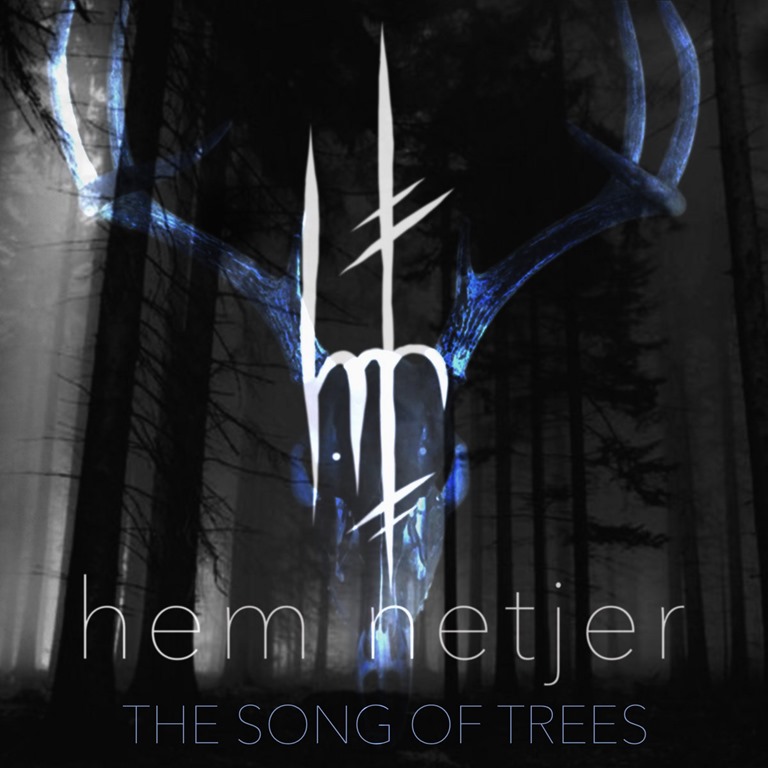
Something about ‘Elemental Cry’, the lead single from Song of the Trees struck a chord and resonated on a subliminal level. It landed with me at a difficult time, personally. Admittedly, most times are difficult, but some are more difficult than others. More often than not, music helps me through those times, and it’s not always the music I’m expecting. Sometimes, old favourites provide the least comfort and are simply too painful. Perhaps I was clawing for something spiritual, music that provided an escape to another realm. Truth is, I’m eternally seeking something. This sweeping, soaring epic channels something that goes beyond notions of derivative Nordic cosplay cal to forge something powerful beyond words.

This is a quite particular and specific thing about music: sometimes it’s not the music itself, but your state on receiving it. I was, and am, in a state, and words aren’t easy. They are a slog. I don’t want to be here, but must power on. And so that transportation, that being lifted to another place, is perfect in terms of needs. Combining heavy synth drone, spacious piano and metallic twangs, The Song Of Trees is tense and atmospheric. It twists at muscles and nerves as drones undulate, hover and hang in the dense air. As the title suggests, it’s rich and earthy, intertwined with nature and the elements, an album that evokes a sense of the vastness of the great outdoors, the space and freedom that instils life into our bodies, and has for as long as we’ve walked the earth. Only now, contemporary living has separated us from nature to the extent that to walk in woods, or to find a place unsullied by human impact feels like some sort of a special treat. This means that while it’s perhaps harder to feel an attunement to the natural world in daily living, experiencing it is something to be cherished all the more dearly. This, then, transports me from the dingy confines of my poky rectangular office space and to somewhere I can feel free.

Given the taster, and the album’s opener, the expansive ‘Void’, ‘Salt and Tears’ lands as an early surprise, being quite beat-driven and overtly electronic with something of a glitchy leaning that’s far from natural or organic. It’s powerful, and it’s all about the dominant percussion, which works well, although it’s not nearly as powerful as third track, ‘Eldur’: the beats are again dance-orientated, but the vocals are positively operatic. It’s a song that registers on a number of levels. In combining the natural, the earthly, the spiritual, and the ultra-modern, with technology-orientated sounds, this could be a clash if not handled with due care and sensitivity, but Hem Netjer create with a sense of balance and equilibrium, which in some way conveys our conflicting, divided existences.

I suppose there are elements of more mainstream artists as well as the likes of Zola Jesus and the wave of Nordic metal acts which seems to be emerging all blended together here, and these imbue The Song Of Trees with a power that’s greater than the sum of the often quite minimal parts. If ‘Freedom’ characterises the album’s more commercial moments, there are plenty more that carve a different space. ‘Elemental Cry’ arrives as the penultimate track with it thunderous drums and steely strings and its power remains undiminished, and it’s the clear highlight of the album.

And elemental is the word: The Song Of Trees has, despite electronic sounds being so integral, a purity that is rare indeed – and that’s both powerful and moving.

The six-minute closer, ‘Otherworld’ is epic in every sense: sparse in instrumentation yet ultimately vast and immersive, it makes for a strong finish to a strong album.

AA

a1911371475_10

Rude Records – 17th February 2023

Christopher Nosnibor

I’m somewhat conflicted here. Broadly speaking, my view is that there is good music and bad music, and it’s not a question of genre: there are good songs in all styles, even if they’re the exceptions to the rule. I’m not a rabid fan of many genres – hip-hop and jazz to name but two – but really rate some songs from each of them. Apart from pop-punk, that is. That’s just the worst kind of music, period. Oh, and folk-punk can fuck off, too. Even worse than the music are the fans, especially at the end of the night at a festival. Anyway. Nu-metal. I can’t say I was ever a fan. I mean, it was a bit shit, right? At its worst, it was juvenile, dumb, and not even that heavy. But then, I was listening to Swans and Godflesh and early Pitch Shifter, bands I still point towards when offering examples of truly heavy music. I even went off Pitch Shifter when they transitioned to nu-metal. But then, I can’t say I hated all of it, and in some respects, I kinda miss it now. Is that simply nostalgia for shit because time? Or is it that there really does feel like there is no specific trend now, and everything is so fragmented there is no real sense of there being any cohesive culture or subculture?

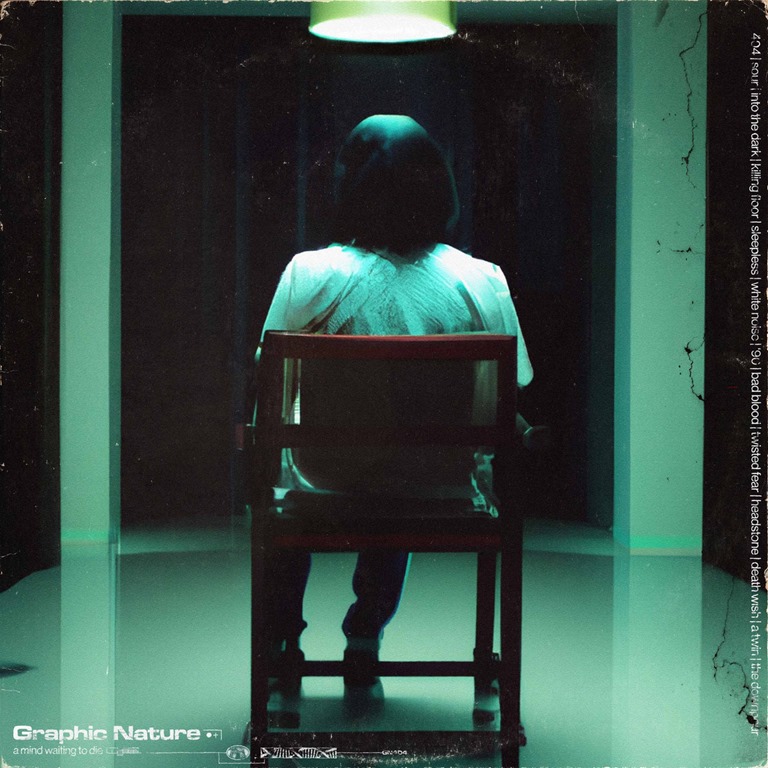
Kent metallers Graphic Nature took their name from a track on Deftones’ Koi No Yokan album and cite Slipknot, but also Nine Inch Nails as key influences on their sound. And having formed in 2019, it’s fair to say that the band represent a new wave of nu-metal (which sounds a bit daft, but not as daft as The New Wave of New Wave that happened briefly in the early 90s, and it wasn’t only shit, but didn’t even really sound especially much like new wave). The point is that while lyrically, the subject matter is pretty obvious – death and decay, but mostly anxiety, people being fucked up, the world being fucked up – the anger and angst is channelled with a focus and force that is rather more sophisticated than some of the turn-of-the-millennium hits. There are no shit rap breaks or scratching, and pitched as an album designed to ‘start a dialogue about the issues that matter’, there’s a seriousness about A Mind Waiting To Die. ‘Rollin’’ or ‘A.D.I.D.A.S’ it is not. Thank fuck.

Halfway through the album, there’s a minute-long drum ‘n’ bass instrumental interlude. I’m not convinced it’s the most comfortable break, but it’s a necessary one, because there’s not much respite for the rest of the album’s thirteen-track duration – although the slower, sparser ‘A Twin’ which pitches the NIN influence to the fore – is a different kind of powerful.

For the most part, they combine their various influences into a dense, murky mess of fast-paced, high-octane racket, and as is the case with a fair bit of metalcore and nu-metal, the song structures tend not to focus too much on the conventions of verse/chorus, instead leaping to and from between tempos and riffs with brutal slabs of guitar, overdriven to the point that chords are compacted and become lumps of noise. There aren’t many easy inroads here, but in terms of an album that relentlessly blasts raging catharsis, well, job done. A Mind Waiting To Die simply isn’t a ‘tunes’ album: it’s gut-spilling nihilism, a mess of entrails and frayed nerves laid bare. It’s not exactly fun, but it’s harsh and heavy and they mean it.

AA

a3556939295_10