Archive for the ‘Albums’ Category

25th November 2023

Christopher Nosnibor

Pink Floyd, Joy Division, and Queens of the Stone Age don’t leap to mind as compatible influences for the pollination of a new musical venture, but we learn from the outset that these are the touchstones of Manchester act Dirty Laces, whose debit album, Blink for Nothing has been fully six years in the making. It’s a fully DIY venture, too – self-produced, self-released, and presented in their own artwork. Steve Albini would approve. It may be that Blink for Nothing won’t sell truckloads, but there’s much satisfaction in knowing that any proceeds will go straight to the band, meaning that any profits will, too, instead of lining everyone else’s pockets first before the band receive any leftover change, if they’re lucky. The model is fundamentally flawed, but of course, the industry thinks otherwise: of course it does, because artists who turn a profit turn a profit for labels, management agencies, etc., etc., and those who don’t, find themselves ejected pretty swiftly. It’s unlikely that the industry machine would have afforded these guys six years to evolve and hone their sound, their songs, and tinker with everything, while giving them complete creative control.

‘Midnight Mile’ makes for a strong opener with a bold, melodic lead guitar line carving an entry into a song that packs in so many different elements while keeping it all tightly together with some strong hooks. With some digital bleepery and kicking guitars and an atmospheric breakdown about two-thirds in, it’s got a very 90s/00s alt-rock indie vibe, and somehow manages to land somewhere between Jesus Jones and The Cooper Temple Clause, all delivered with an archetypal Mancunian swagger.

The swagger is something that could be rather divisive, and the baggy beats and bass runs which crop up here and there make nods to the likes of The Stone Roses and The Charlatans which feel a shade derivative and don’t necessarily do them any favours. But despite these features, ‘Old Friend’ is innovative and solid, some nonsensical lyrics aside (‘There’s an old friend I know / Never seen him before)’, and transitions from paired-back and primarily acoustic to big and – yes, I’ll say it – anthemic. ‘All I See’ does the big, expansive funk-tinged blues thing, but unexpectedly, Charlie Jordan’s vocals are soulful and in combination, the end result is rather more like Mansun than anything – and then it really blasts off. these guys really know how to build a song and bring a rushing climax.

The guitar licks on ‘Another Day’ are a bit Dire Straits, but they fire both barrels on ‘Seeker’, which again boasts a chorus that’s absolutely fucking massive, and the fact it reminds me of several other songs, none of which I can put my finger on, doesn’t detract. ‘Tomorrow Comes Again’ arrives as something of a surprise: a slow-burner that again brings hints of Mansun and even a more guitar Duran Duran.

The fact I’m personally conflicted is no bad thing, and while no doubt some will be absolutely gripped by this from the first listen, it’s healthy to accept that music isn’t always an instant grab, especially when there are moments that feel just a bit standard, a bit Oasis, even. I might not get much of Pink Floyd, Joy Division, or Queens of the Stone Age from this – apart from the mid-section of ‘Wanna Know’, where a bassline worthy of Peter Hook lunges into a dirty riff that does have a strong whiff of QOTSA, that is – but what I do get is a shedload of ideas and some strong attitude, backed up with some solid musicianship.

AA
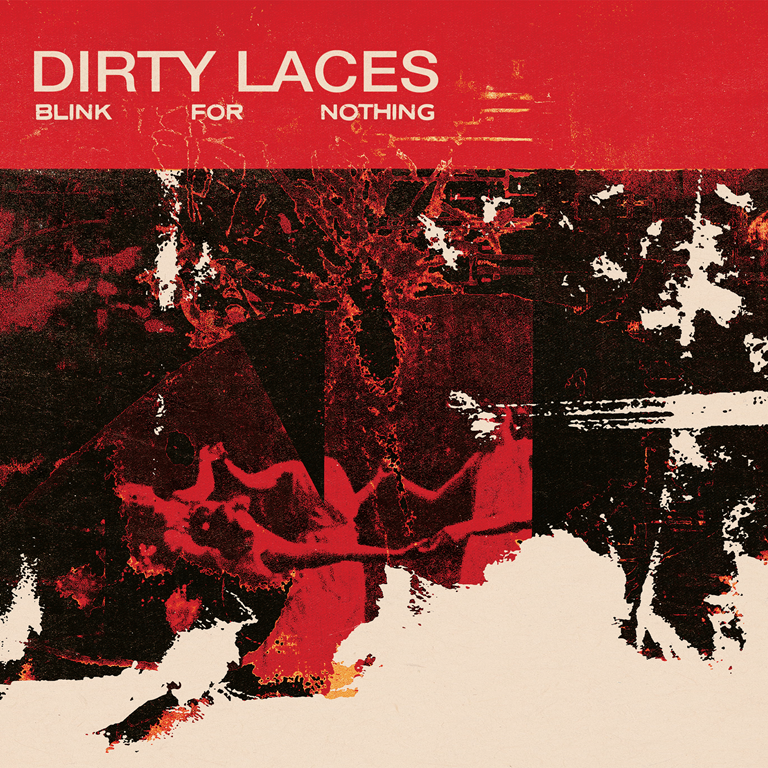
Dirty Laces Artwork

Sacred Bones – 1st December 2023

Christopher Nosnibor

Released simultaneously with the reissue of their eponymous debut, Khanate’s second album originally released in 2003 – which is, incomprehensibly, 20 years ago further evidences just how far out they were at the time. And the time is worth assessing: in 2003, Nu-Metal was in its final throes, and Post-Rock was in the early arc of its ascendency. It was something of a wilderness time in many respects, with no real dominant trend: it was the year Avril Lavigne and Evanescence broke and Muse exploded, amidst an ocean of limp indie and even shitter commercial pop and r’n’b. The underground was the only place of interest, but even in those underground circles, there wasn’t anything quite like this.

The bio accompanying the release points us toward the darkness that pervades the album and does so from the start: ‘“Pieces of us in my hands, on the floor, in my pockets/red glory,” Dubin howls on opener ‘Commuted,’ setting the stage for Khanate’s second installment of existential dread. Dripping in death, murder and desperation, the album is somehow less forgiving than its predecessor. Which was probably the point”.

On this outing, they really do seem to have gone all-out to engineer an album that’s as stark and brutal as is possible, and the four tracks are drawn out to torturous lengths to achieve maximum discomfort. The aforementioned opener, ‘Commuted,’ is over nineteen minutes long, and the instrumentation is sparse, minimal and heavy with lugubrious atmosphere, while Alan Dubin howls like he’s having his fingernails pulled out slowly and painfully, one by one. It’s as bleak and harrowing as one of Derek Raymon’s ‘Factory’ series novels. It’s not pleasant, not even slightly, it’s not even enjoyable, but it’s perversely compelling. When a rhythm and guitars do coalesce, it’s at a glacial BPM, the kind of crushing, feedback-strewn, bludgeoning grind of Swans around the time of Cop, but with the more paired-back, spacious sound of Greed and Holy Money. But Khanate didn’t simply take these as templates – they scrawled all over them and then trampled on them in order to forge something even more challenging and even more fucked-up. There are lengthy passages where there is little more than crackle and hum, and the occasional burst of percussion. It may employ the tropes of avant-garde jazz, but it ain’t jazz. But what it is is hard to define. It’s not industrial, and it’s not doom. It’s not really metal in any recognisable form. But it is heavy. And it is unsettling, harrowing, and an absolute endurance test.

By the end of ‘Commuted,’ you feel utterly beaten and find yourself wilting from the sheer brutality of it all. And then ‘Fields’ crawls in, lower and slower, taking obvious cues from Earth 2 and marking clear parallels with Sunn O))). This is sinister, chthonic, demonic, not so much other-worldly as nether-worldly. It’s almost ten minutes before the bowel-juddering billows of overdriven, low-tuned guitar slides in like a slow-crawling river of lava. It’s monstrous, ugly, explicitly outright horrible. The hovering hum that takes hold around the fifteen-minute mark isn’t in any way a calming pause, but a nuclear wasteland of tension that pressurises the skull. Dubin raves maniacally like a psychotic locked in a soundproofed cell, and there’s a sense that the whole of Things Viral is a prison, whereby the listener is trapped within walls of sound. ‘I did this for you’, he screams murderously. It doesn’t sound like a kind favour, but like it’s time for payback. It’s chilling and grotesque. This is a fair summary of Things Viral overall. Even the quiet segments – and there are many – are occupied by sections of such weight that make your body feel as if its being dragged down, not by gravity, but by a darker force, one which will suck your very soul.

‘Dead’, at ten minutes, is but an interlude, but it radiates serial killer raving lunatic mania vibes for its entire duration, as the guitars throb and burn. It’s messy, and so, so heavy: you feel the pressure in your ribs, a weight in your limbs. The final track, ‘Too Close Enough To Touch’ is an absolute monster, which sits more closely alongside the harsh noise and overt extremism of Whitehouse and the point at which industrial strains its mangled way into power electronics than anything even remotely metal. ‘Stay inside… stay inside’ Dubin snarls, his vocals distorted and crazed. You barely dare move a muscle, let alone leave the house.

Things Viral goes way beyond darkness, and plunges into purgatorial depths that would have terrified Milton, and 20 years on, still sounds like the dankest, nastiest thing you could hear in any given year.

AA

a2725064236_10

Cruel Nature Recordings – 24th November 2023

Christopher Nosnibor

Spanish electronic musician Julio Tornero has been producing minimal techno, IDM and experimental music since 2015. He’s one of those people who has a million different projects and as many different pseudonyms, also recording as Dark Tibet, Oceanic Alpha Axis, Sequences Binaires, with his work published by a multitude of labels including Fmur, Intellitronic Bubble, Detriti, Phantasma Disques.

I never cease to be amazed by artists who simply effuse and froth with creative output: how do they do it? How do they have the time, let alone the headspace? Given the economics of art in the 21st century, the likelihood of a life on the further recesses of obscurity in the most obscure of genres could provide a living seems improbable, but then to have the capacity to produce art after the slog of a day-job seems almost superhuman. And this, this is not just some easy, off-the-cuff, going-through-the-motions half-arsed toss-off.

Tierra de Silencio is pitched as ‘A homage to the formative years and evolution of electronic music’, with nods to Nurse With Wound and other progenitors of that nascent industrial sound, which was born primarily out of a spirit of experimentalism, and a desire to be different, facilitated as it was by emerging technology.

It’s perhaps hard to really assimilate now how the late 70s and early 80s witnessed a technology explosion, which not only witnessed the advent of new synths and drum machines, but saw them become available on a low-budget, mass-market basis. But while many bought them up and started making synth pop, some oddballs did what oddballs always to and decided to push the kit as hard as they could. And some of the results were utterly deranged. Tape loops and all kinds of messing yielded results with varying degrees of listenability, from Throbbing Gristle to NWW to Foetus and Cabaret Voltaire.

With only four tracks, this is one of those albums which would lend itself to an extravagant 2×12” release, with a track per side, since these are very much longform works, with ‘Duermevela’ stretching out beyond seventeen minutes, and the title track lasting more than a quarter of an hour. But if the expectation is for a set of compositions which are primitive, difficult, and in some way steeped in nostalgia for that early 80s noise, this isn’t that album. Despite the analogue feel, Tierra de Silencio finds Tornero exploring the spirit of the period, rather than striving to recreate the sound.

The first track, ‘Metamorph’ splashes in at the dancier end of the spectrum with some hard groove vibes. Fast, urgent, flickery, and glittery, it’s a shimmering curtain of electronica which ripples over a driving, dynamic beat that doesn’t let up. It’s got heavy hints of DAF, but it’s still not without a taste of Yello or Chris and Cosey. And it keeps on going for eleven and a half minutes. In time, the beat peters out and we’re left in a whirlpool of fizzing electronics.

The aforementioned ‘Duermevela,’ the album’s second track, draws on 70s electronica, with endless bubbling, rippling synths and incursions of altogether harsher sounds. Blasts of dark noise deluge over the bleak explosions of dankness. The beats are busy, and also metrononomic, and the effect is mesmerising.

Something dazzles for a moment. Then the lights flicker. What is this? This is likely panic. Negatividad Absoluta binks, bonks, bleeps and tweets, and the atmosphere is 70s sci-fi, something on the cusp of strangeness, jarring, alien, robotic. There are crunches and fizzes, crackles of distortion, and top-end tones ping back and forth like ping-pong.

Tierra de Silencio is very much an album which pushes an experimental vibe, while maxing out on what feels now like more contemporary dance tropes, largely on account of the rippling synths and glooping repetition. But it also incorporates elements of Kraftwerk and early Human League in its deployment of those vintage synth sounds and layerings. It’s an intriguing and entertaining work, and it passes hypnotically in what feels like no time at all.

AA

AA

a0904785816_10

Gringo Records – 15th December 2023

Christopher Nosnibor

By way of a name, Reciprocate doesn’t give much away. With its connotations of collectivism and collaboration, it could be anything from limp indie to a jazz ensemble, although to my ears, it suggests ska-punk or some other corny right-on festival friendly guff. But no: they’re an avant-rock trio, and something of a supergroup when it comes to representatives of the UK DIY scene, consisting of Stef Kett (Shield Your Eyes), with drummer Henri Grimes (Shield Your Eyes, Big Lad), and Marion Andrau (The Wharves, Underground Railroad) on bass, and the name, it transpires, is a reflection of the synergy between the three, promising ‘intoxicating, super catchy good-time, big heart music – a human album delivering a human message of love and love lost.’

The blurbage goes on to outline how Soul To Burn proceeds at a cadence all of its own, halting and blasting, ducking and weaving, zooming away from its distant cousins: Taste era Rory Gallagher or Mr Zoot Horn Rollo of Beefheart’s Magic Band, leathering it at full throttle, fuelled by virtuosic back beats that remind of somewhere between the rolling rock of Mitch Mitchell and the fractured noisebeat of Lightning Bolt’s Brian Chippendale: immediate, innovative, virtuosic, exhilarating.

The album’s ten songs are concise and precise, with ninety percent keeping below the four minute mark, and it’s perhaps this focus which really makes Soul to Burn pop. ‘Sleevetugger’ is pretty minimal, and has soulful, bluesy vibe with even a dash of county twanged into the mix – but it’s played with a wonkiness worthy of Pavement, and that absolutely changes everything. They amp it up on the groovesome ‘Rhodia’, where a riff that comes on like a Led Zep lift is delivered with a rough and ready noise-rock approach.

For context, my first exposure to live music was electric blues acts playing in pubs in my home town of Lincoln, at the tail end of the 80s and very dawn of the 90s. While I was just starting to discover alternative music – via the top 40 and also Melody Maker – I was still that bit too young to go to ‘proper’ gigs, and besides, there weren’t (m)any in Lincoln back then. But what struck me was the musicianship of so many of the acts, many of which would play a mix of originals and covers, and I also came to appreciate how everything blues-based springs from an extremely limited root stock. ‘Derivative’ isn’t really a criticism that holds any water. But, to make blues rock work, it has to either the executed extremely well, or otherwise fuck with the formula in some way, and bring something different to the party. Either is really, really hard to do in such an immense field. The last decade or so has seen countless acts achieve success with some pretty mediocre blues rock played loud: I began to think I was bored of blues. But then an album like Soul To Burn turns up unexpectedly, doing it with a real punk attitude, and turns everything around.

Whereas many power trios – not to mention duos, who are the power trio of the post-millennium years – go all-out to fill every inch of space with sound, Reciprocate create space and separation. Everything isn’t blasting to the max, and instead, what we get is a rare level of detail. The bending strings, the fret buzz, the rattle of the snare, the ragged imperfections – they’re all there, and are integral to the fabric of the recordings.

They do melody and groove, and it’s enjoyable, but when they wander off track, as they do most spectacularly towards the end of ‘Pissed Hymn’ there’s something truly glorious about it. The title track is ahead-on collision between Shellac-like mathiness and raucous, rabble-rousing folk. Everything gets twisted and knotted up, the template gets tangled and torn, and it’s unpredictable and exciting.

And it’s got a cat on the cover. 10/10

AA

Reciprocate - Soul to Burn cover 3000px

Transcending Obscurity Records – 10th November 2023

Christopher Nosnibor

Somehow, despite James Watts having about a dozen musical projects on the go, with each touring in support of recent releases in addition to running a label, Newcastle quartet Plague Rider have come together once more to record a new album. It’s been out a few weeks already, but now, in addition to the myriad packages which include all the merch bundles you could possibly want and more besides, from mugs to denim jackets, it’s available on some pretty lurid-looking coloured vinyl. One might describe the retina-singeing flame-coloured hues of the disc as intense, which is fitting, given not only the album’s title, but its contents.

All of the various outfits featuring Watts are at the noisy end of the spectrum: the man has been blessed – or cursed – with vocal chords which have the capacity to evoke the darkest, dingiest, most hellish pits of hell, and the ability to transform the least likely of objects, like radiators and so on, into ‘musical’ instruments capable of conjuring the kind of noise that would bring forth demons.

Whereas Lump Hammer are devotees of relentless, repetitive riffs, and Friend are heavy buy dynamic, Plague Rider are… Plague Rider.

This isn’t just about Watts, though: guitarist Jake Bielby is of Dybbuk, and ex-Live, Lee Anderson (no, not that one) on bass is ex-Live Burial, and ex-Horrified), as is Matthew Henderson on drums. They make for one mighty unit, who, according to the accompanying notes, exist to weave together ‘vile, repulsive, and challenging death metal music whose original influences are now twisted and decomposed beyond recognition. Sure, you can find bits and pieces here and there, traces of hair, fingernails, broken teeth fragments, but overall their music is too far gone for any obvious comparisons. And that’s only remarkable because it adds an element of uniqueness and unpredictability in their music, a rare thrill to be derived from this style these days.’

There is so much going on all at once, it’s brain-blowing. It’s not technical metal, because it’s simply too raw, to ragged, and it’s not jazz, because, well, it’s just not – but they apply the principles of jazz to extreme metal, resulting in a mess of abrasion that’s… I don’t know what. I’m left foundering for marks and measures, for adjectives and comparisons and find myself grasping at emptiness. ‘Temporal Fixation’ explodes to start the album, and within the first three minutes it feels like having done six rounds in the ring. It’s as dizzying an eight minutes as you’ll experience. When I say it’s not technical, it’s still brimming with difficult picked segments and awkward signatures – but to unpick things, the technicality is more jazz-inspired than metal, the drums switching pace and fitting all over. The vocals are low in the mix, lurching from manic frenzy to guttural growling at the crack of a snare.

And at times, those snare shots land fast and furious, but not necessarily regularly. The rhythms on this album are wild and unpredictable – but then the same is true of everything, from the instrumentation to the structures. The mania and the frenzied fury perhaps call to mind Mr Bungle and Dillinger Escape Plan, but these are approximations, at least once removed, because this is everything all at once.

It’s as gnarly as fuck, and if ‘An Executive’ is all-out death metal, it’s also heavily laced with taints of math rock, noise rock, jazz metal and grindcore. It’s a raging tempest, an explosion of blastbeats and the wildest guitar mayhem that sounds like three songs all going off at once, and that’s before you even get to the vocals, which switch between raging raw-throated ravings and growls so low as to claw at the bowels. The sinewey guitars and percussive assault of ‘Modern Serf’ are very Godflesh, but in contrast, immediately after, ‘Toil’ is rough and ragged, and dragged from the raw template of early Bathory.

The lyrics may be impossible to decipher by ear, but thanks to a lyric sheet, it’s possible to excavate a world that’s broadly relatable to the experience of life as it is: ‘Psychically exhausted / Yet still plugged in and wired’ (‘Temporal Fixation’);

‘An Executive’ nails the way corporate speak has come to dominate everyday dialogue:

‘Chant the slogans

With conviction

Doesn’t matter

What we tell them

All that is solid melts into PR’

Fuck this this shit and capitalism’s societal takeover. As if it’s not enough to dominate the means and the money, the cunts in suits are taking over the language, too. But they’re not taking over Plague Rider. No-one is touching them as they lay convention to waste with this most brutal album. ‘The Refrain’ takes the screaming noise to the next level and brings optimum metal power for almost ten minutes before, the last track, the twelve-and-a-half minute ‘Without Organs’ is grim and utterly relentless.

With Intensities, Plague Rider deliver a set that lives up to the title. It’s utterly brutal, frantically furious, and devastatingly dingy. It’s almost impossible to keep up with the rapid transitions between segments, and it’s likely many will move on swiftly because it’s simply too much. But that’s largely the point: Intensities spills the guts of dark, dirty metal. Utterly deranged, this is the best kind of nasty.

AA

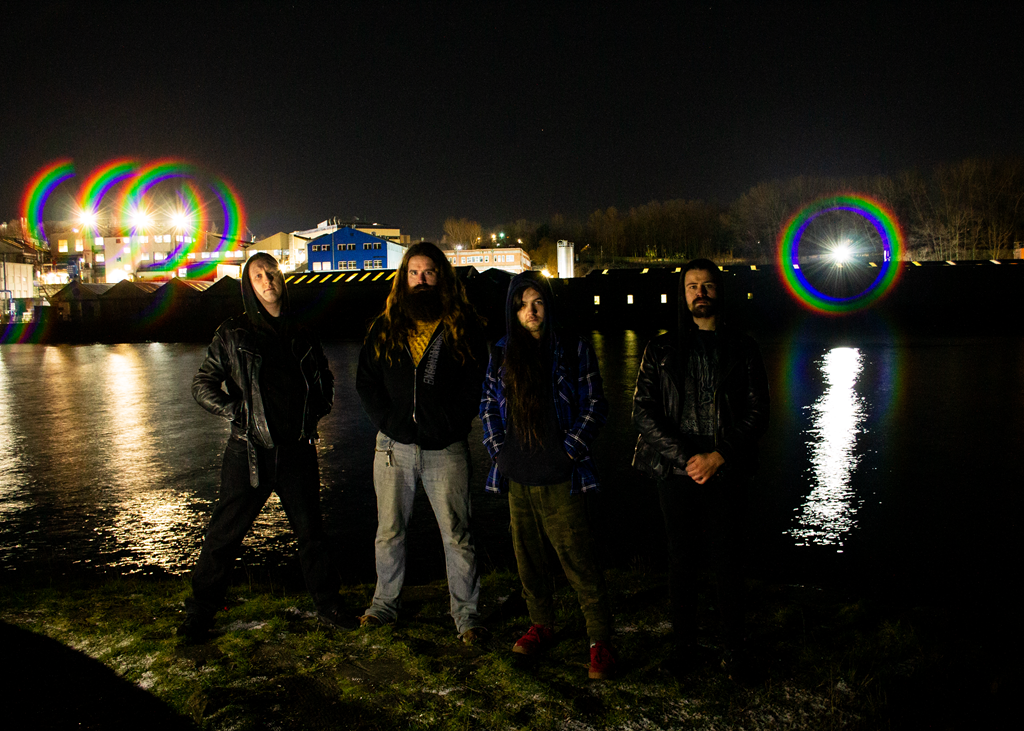
band photo

Klang – 15th December 2023

Christopher Nosnibor

Gordon H. Whitlow has been involved in a number of group projects, perhaps most notably as a member of US avantgarde collective Biota. His first release under the Sorry for Laughing moniker was a solo cassette release back in 1986.

There have been a number of releases since then, and as we learn from the press release, recently, following a pause of some three decades, ‘Gordon reactivated the project and changed it from a solo effort into a new supergroup: it now consist of himself, Edward Ka-Spel of Legendary Pink Dots fame, and Martyn Bates of Eyeless In Gaza. Also contributing is Denver guitarist Janet Feder and the Dots’ Patrick Q-Wright.’

Sun Comes is one of those avant-garde collaborations which is certainly worthy of its contributors. Being an avant-garde collaboration, it exists beyond the realm of Spotify wrap stats, radio playlists and anything remotely ‘industry’ or otherwise concerned with commercialism or even audience. Listening to the first of the album’s four pieces, the thirty-one-minute ‘Sun Comes Suite’ is an uplifting experience, because not only is it a work that’s – in the main – melodic, musical, mellow, and soothing, as strings and electronics combine in harmonious balance, but every bar seeps a sense of pleasure from the enjoyment of simply creating. Whitlow’s vocals are understated, with what one might describe as a folksy lilt. Bold string strikes contrast with quavering mid-range drones which hover and hang. In places, otherworldly voices rise wordlessly, with ghostly moans and cries blending with ascending drama, and the sheer scale of the piece and the way it transition from one place to another is remarkable, moving from classical to shanty to film score and beyond. The transitions are often unexpected, but always seamless. This first piece feels like an album in its own right, and with so many segued segments, the listening experience is a journey which takes substantial mental energy.

‘Heart of the Matter – The Three Roses’ and ‘Adam Lay Ybounden’ are but brief interludes by comparison, running to around ten and seven minutes in duration respectively. The former marks quite a change in tone, with a cinematic string section providing a subtly dramatic backdrop to a spoken word narrative. The score veers between elevating and ominous, and it’s fitting as the accompaniment to a story that has the tone of a children’s tale but the darkness of an altogether more adult allegory, with some disturbing imagery, and the meaning of which remains somewhat obscure. The latter is folky but experimental, which makes for a rather alien experience. How does one process and compartmentalise this? We struggle with the unfamiliar, and Sun Comes is difficult because it uses many familiar elements in an unfamiliar way, often juxtaposed in a way which jars and has no immediate or obvious musical precedent.

The twelve-minute closer, ‘So, You Rest Easy’ begins ostensibly as a minimalist folk song with an almost acapella vocal, with some mangling noise twisting darkly in the background. The contrast between the warm, tuneful voice and the stark, minimal electronics are something for debate. It feels tranquil, sparse, and yet I’m left feeling uncomfortable.

There’s not much to laugh at here, but there is much to explore.

AA

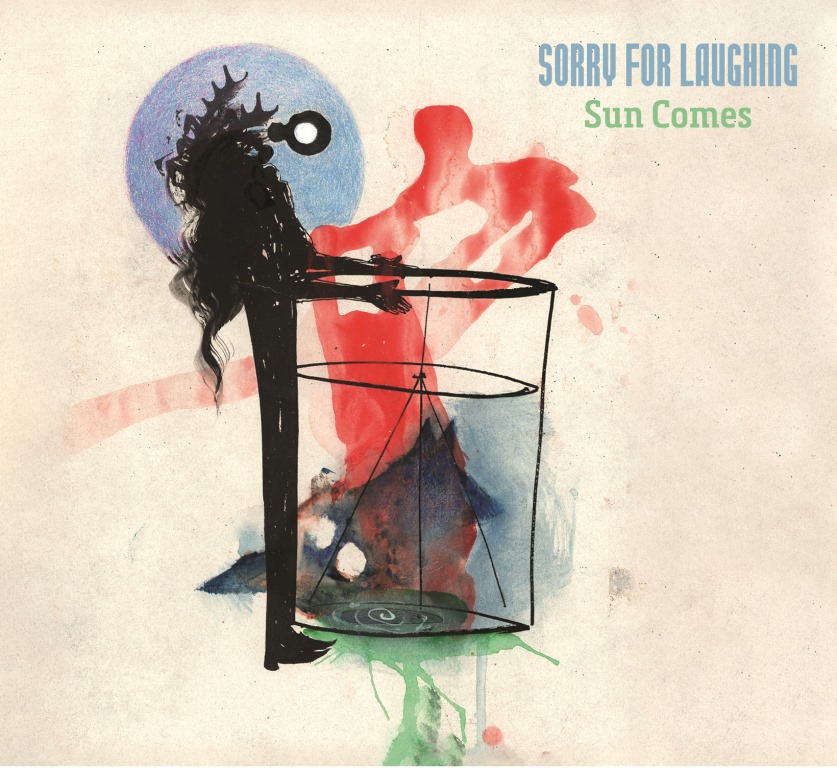
gg456 Digipack

Sacred Bones – 1st December 2023

Christopher Nosnibor

The unexpected and unannounced arrival of Khanate’s fifth album, some seventeen years after they declared that they were calling it a day, and fourteen years after the release of the posthumous Clean Hands Go Foul caused quite a stir in certain circles – predominantly those occupied by black-clad beard-strokers. Although this is very much a stereotype, I’m reminded of the time I went to see Sunn O))) at The Sage in Gateshead on the same night one of Cheryl Cole’s X-Factor protégé’s was performing in the foyer of the three-stage venue. Incongruous doesn’t come close, and suffice it to say, I wasn’t hard to tell who was there for the ultimate lords of drone-doom and who was there for the cheesy mass-market commercial cash-in shit. There were a lot of beards and leather coats.

The reason Khanate are such big news on the underground is that the band is comprised of James Plotkin, Stephen O’Malley, Alan Dubin and Tim Wyskida, and according to their bio, ‘Together, they make terrifying music.’ Between their formation in 2001 and separation in 2006, they managed to find time out from their main projects to record four monumental albums, and the release of To Be Cruel earlier this year came with the announcement of the reissue of all four, both digitally and physically. And so this brings us to the first of these, their eponymous debut.

The press release sets the expectation, for those unacquainted or unfamiliar, telling of how ‘The cramped corner of hell that Khanate takes the listener to, sonically and psychologically, has almost nothing in common with the doom bands that populate stoner-oriented music festivals across the globe. Khanate is doom as a foregone conclusion, as merciless atmospheric pressure, as a blunt object to crack you over the skull with, slowly, repeatedly, and forever.’

Having only released some demos and their debut ØØ Void, Sunn O))) had yet to really break by the time Khanate came out, and in some ways, they beat Sunn O))) to the mark on launching blasting longform drone to the masses, with an album that featured just five tracks spanning a fill hour. And their colossally expansive duration is matched every inch of the way by the sonic brutality.

The album arrives in a squall of feedback before intestine-crushing low-end chords crash in and grind hard, immediately unsettling the lower colon. Thew gnarliest, most demonic vocals shriek amidst the raging infernal wall of noise, dredged from the molten mantel of deep down below. ‘Pieces of Quiet’ is punishing in every way, but not least in that while its devastating, annihilative work is done after about five minutes, it pounds and grinds on well past the thirteen-minute mark.

In context, doom and drone had both crawled out of the depths a good few years before, and with Earth 2: Special Low Frequency Version in 1993, Earth had defined a new form of metal with what will likely stand for all eternity as the ultimate heavy drone work. And yet, these guys believed they could add something further to this – and they were right. Drums, for a start. And vocals.

‘Skin Coat’ is every bit as nasty as the serial killer enthusiast title implies, the guitars mangled to fuck, combining to optimal effect the snarling nastiness of the most blackened of black metal and the sludgiest, most gut-churning doom, with 23bpm drum crashes at the crawling pace of Cop-era Swans. It’s dark and its overtly unpleasant, snarling subterranean oozing tar-thick blackness which crawls like larva and destroys everything in its wake.

‘Torching Koroviev’ is simply a brief interlude which fleetingly opens a portal into hell, before the eighteen-minute ‘Under Rotting Sky’ brings what is arguably the definitive representation of Khanate, again, a squall of feedback prefacing a shredding wall of downtuned and overdriven guitar, billowing and thick with a sludge-like density. It is, of course, an absolute copy of the Sunn O))) model, but with demonic vocals echoing, anguished and wracked with eternal pain through the crushing mesh of noise. It’s fearsome, deranged, the crazed vocal screaming into the abyss. There is no rational or clear way of exploring this: it’s scary, and there is no other way to look. This is the final pulverisation, pacing the way for the album’s brutally dark last track. ‘No Joy’ is appropriately titled, and as heavy as it gets. I crawl, cracked, from the crushing drone experience and as long an hour as nature evaporates from my weary body Slowly the lack-hole darkness takes its grip and begins to crush the very life from my limbs.

This album is twenty-two years old. Yes: twenty-two years. And yet it hasn’t aged a day or even a second. While so much music – particularly rock and metal – has aged and sounds of its time, Khanate froze time when they came together, and the result was like nothing else – and still stands to this day.

AA

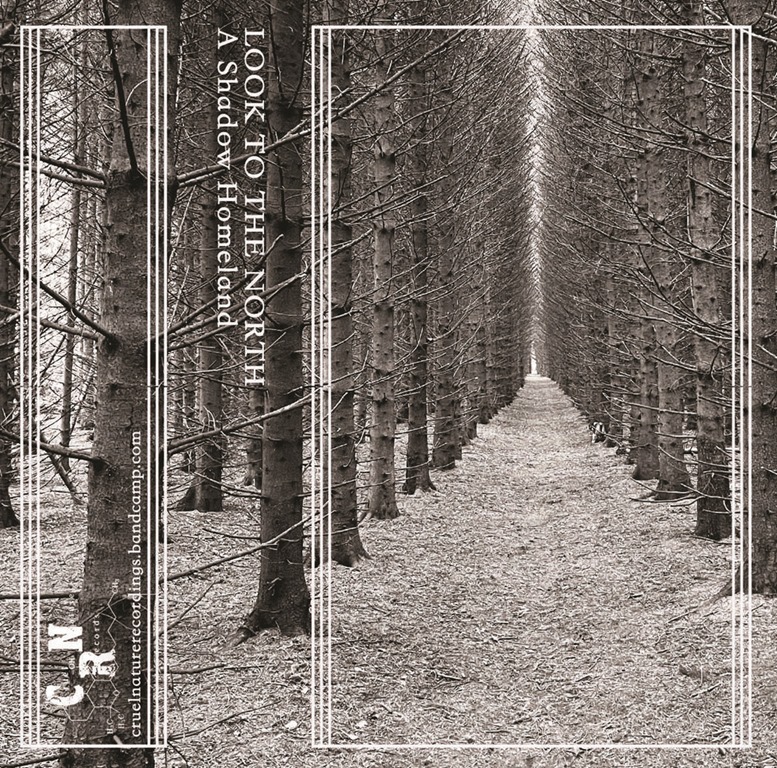
a0016720513_10

Cruel Nature Recordings – 24th November 2023

Christopher Nosnibor

The brief accompanying biography tells us that ‘Look To The North is the ‘dronefolk’ duo comprising David Colohan (United Bible Studies, Raising Holy Sparks) and Zachary Corsa (Nonconnah, Lost Trail)’, and that ‘Recorded in 2021, A Shadow Homeland is 4 tracks of atmospheric other-worldly introspection; melancholic ambience interspersed with sparse piano, spoken word and field-recordings, creating an immersive transcendental twilit experience.

We’re immediately in with what initially sounds like some form of narrative, and joining as we do seemingly in the middle of it, it’s difficult to orientate oneself in terms of context. Soon, soft droning tones drift in like mist and rings out heraldic over the hills and draping the woodlands with string-like sounds amidst images of clouds and nature, interlaced with spiritual abstractions rich in poeticism, but their meanings obscure. The title of this first composition, ‘Disintegrating Consoles And Cartridges’, has a ‘found sound’ connotation, a suggestion of decaying histories and lost origins, and in time, distant voices mutter almost imperceptibly while piano notes roll in and out. Increasingly I find sparse piano notes which are allowed to resonate conjure the saddest and most bereft of emotional sensations, and by the end of eight minutes, I find myself feeling empty, heavy of heart, and pining for something lost – something I can’t quite recall beyond a vague sensation, like the occasional pang of pining for childhood or people and places left long behind, the melancholia of hazy reminiscences which creep at the fringes of a fugue-like memory.

‘The Water That Shattered Their Image’ feels darker at the start, Not necessarily ominous, but there are grainy textures scratching lower in the layers of sound, elongated whisps and broad sonic washes, and they bring a certain discordance and discomfiture. Human voices mingle into wolf-like howls, baying, crazed, before growing hushed, as if in anticipation of the album’s dominating finale, the seventeen-and-a-half-minute ‘An Amulet For The Flux Of Blood’. Here, the piano is very much the central instrument, but surrounded by layers of organ and organic-sounding drones. These sounds coalesce to create a haunting yet smoothly tranquil atmosphere.

To suggest that it seems to share more in common with post-rock than any form of folk is perhaps to pick pedantically at irrelevant details, but I mention this because these genre distinctions have a tendency to set certain expectations. But as elegiac pastoral works, infused with subtle elements of collaging and experimentation, the pieces which make up A Shadow Homeland certainly don’t disappoint, and indeed, confound any expectations one may have. Mood-wise, I’m left feeling uncertain; neither uplifted now downcast, but somewhere in a strange place and a sensation of something missing. It’s neither pleasant nor unpleasant, but remarkable that such understated instrumental works can resonate in such a deep and complex way.

AA

a0117392340_10

Spleen+ (Alfa Matrix) – 1st December 2023

Christopher Nosnibor

Christmas has come early this year, with an absolute deluge of releases landing on1st December, many from acts I like or am otherwise keen to hear. Hanging Freud are in the former bracket, and Worship marks their seventh album release, following 2021’s Persona Normal.

The duo have established themselves as purveyors of premium-quality dark, stark, gothy electro, and with Worship, they solidify their position with aplomb. Persona Normal was recorded at a leisurely pace between 2018 and-2020, and, like so many other releases in the last couple of years, Worship was written and recorded during the pandemic and under lockdown conditions, and the accompanying notes lay out both the contents and context in further detail:

‘The 10 songs featured on this album literally come from a place of contradiction hanging somewhere between courageous vulnerability and fearful resilience, and deal with themes such as collective distress and loss, finding beauty in tragedy or yet questioning about what makes us human in the symbolic contrasts of life and death…. It’s no surprise to hear that this “less is more” introspective ode to melancholia was written in particular claustrophobic circumstances during the pandemic lockdown. “Because of what was going on, we were essentially stuck in temporary accommodation in Scotland, away from our studio and forced into a period unexperienced before. The songs that came out therefore come from a different place. Everything was done within a laptop and is proudly 100% digital. It was recorded and mixed while literally sitting on the side of a bed in a mouse infested apartment…” explains Paula Borges.’

If it sounds like a grim and oppressive set of circumstances for creating art of any kind, then the singles which prefaced the album have set the tone and expectation, while affirming the claustrophobic intensity of the music which emerged from these challenging conditions.

The result is a hybrid of Siouxsie and 17 Seconds era Cure with a hefty dose of New Order’s Movement and dash of Editors circa On This Light and On This Evening. Reference points may be lazy journalism, but they serve a purpose. While this album stands alone like an icy obelisk, singular and a monument to the darkest introversions, some musical context is probably useful for discursive purposes.

The stark ‘Falling Tooth’ is as bleak and haunting as it gets: Paula’s vocals are breathy but theatrical, pitched over a strolling squelchy synth bass and a vintage-synth sound that wanders around over just a few notes, while ‘I pray we keep the world’ is low, slow, sparse, and lugubrious, as well as emotionally taut, and dominated by a truly thunderous drum sound. ‘This Day’ is particularly drum-heavy, withy only gloomy, droning synths sweeping through a heavy mist of atmosphere.

There are some who bemoan the use of drum machines, and who complain that they lack the vibe of a live drummer. Hell, there are contributors to forums and groups devoted to The Sisters of Mercy who question why they don’t get a real drummer, some forty-two years on from their inception. These people are missing the point. Drum machines can do things that human drummers can’t, and one of those is how drum machines can be louder, heavier, more monotonous than a live drummer. And in context for certain music, this can be a real asset, accentuating the sensation of dehumanised detachment of synth music that sits at the colder end of the spectrum. And Worship is one of those albums which will leave you with chapped lips.

It’s against brittle snare cracks and sweeping synths that Paula claws her way through complex emotions, and where the lyrics aren’t immediately decipherable, the haunting vocal delivery is heavy with implicit meaning. It resonates beyond words alone. Everything is paired back to the barest minimum, exposing the darkest recesses of the psyche.

Standing alone as a single, ‘A hand to gold the gun’ was bleak and heavy. Sitting in the middle of the album, this sensation is amplified, accentuated, and the gracefulness of the vocals as they drape around the broad washes of sound which surge and well is that of a dying swan.

‘Her Joy’ is perhaps the least joyful thing you’re likely to hear in a while, and if ‘Beyond’ feels somewhat uplifting, it’s only because it’s a flickering candle flame in an endlessly dark tunnel, as devoid of air as light. The mood is heavy, and presses on the chest, slowly pressing the air out and crushing the spirit, and as the album progresses, the effect is cumulative. By the time we arrive at the piano-led ‘Don’t save yourself for him’, I feel my shoulders sagging and my back hunched forward from the endless weight of this.

Worship is a masterful exercise in poise and restraint, a work which conveys the purest essence of isolation, of desolation.

AA

HFreud

Panurus Productions – 1st December 2023

Christopher Nosnibor

What better way to mark the start of advent than with a new release on Newcastle’s Panurus Productions, home of noisy and weird shit on tape, eh?

This latest offering covers both bases, being noisy and weird, but predominantly weird.

Panurus releases always come with cracking explanatory notes, and they’re worth quoting for this one, too:

‘Glitching and laced with interference from its temporal transit, Splat R. intercepts nine broadcasts of lo-fi noise drenched beats from a possible future. Hooks lead you through what could be samples, generated electronica or interference noise, that at times meshes and augments the beat and others swells over and underneath it with a sense of menace. There’s a sense of retro-future to the album in its tones and the recognisability of some of the sound used, but presented as if those ideas were carried further forward before being thrown back towards us, warped and distorted; as if it was constructed from pieces of culture scavenged in the aftermath of some distant cataclysm.’

My work here is done.

Of course, I’m not being entirely serious, but whereas many press releases bring a heap of hype, much of which is a world apart from the product being presented, or otherwise fails to really explain what the release is about, Panurus always absolutely nail it in their summaries.

But of course there is more. ‘Kill Spill Thrill’ is a murky, messy mash-up which evokes The Last Poets, Dalek, and RZA’s Bobby Digital, as well as glitched-up, chewed-up, mangled elevator music. It’s chilled-out hip-hop, trip-hop, and ambient tossed together, melted down, and left to fester and ferment for a while. ‘peace to you, if you’re willing to fight for it’ adds a whole load of wrecking bass and distortion to the bubbling dingy mess, lurching into the territory of dirty experimental industrial noise in the vein of Throbbing Gristle, only with samples thrown in hither and thither. ‘reality denied comes back to haunt’ is plain fucking horrible: lurching booms of thunderous noise and trills of feedback and wailing synths pushed to their limits in a power electronics meltdown suddenly segues into a crackling mess of club-friendly dance, but distorted in a nightmarish way.

‘authentic creation is a gift to the future’ lurches so hard as to reach the pit of the stomach, before ‘there is nothing new under the sun, but there are new suns’ pumps a beefy beat that’s pure nightclub – but obviously, the vibe is anything but buoyant or euphoric. It’s bad trip, apocalyptic, the dance dynamics distorted to the shade of a nightmare, fizzing sparks and subsonic detonations occurring simultaneously, like a nuclear blast landing a direct hit on a night club.

I can’t decide if I need to puke or shit as the messy mass of stuttering overload stammers and rolls and lurches onwards. This is glitch of the highest order: the briefest, almost imperceptible of stammers are amplified to the most uncomfortable, blurring, bilious horrors which emulate the worst post-binge room-spin.

Kill Spill Thrill is a splurging, intestinal-churning, head-shredding sonic attach that lands thick and heavy. For all of its touchstones, it doesn’t sound quite like anything else, and it rips the ground before it to devastating effect.

AA

Cover