Archive for the ‘Albums’ Category

The Helen Scarsdale Agency – HMS040 – 2nd December 2016

Christopher Nosnibor

My first encounter with the work of Jim Haynes (the musician, not the writer who rose to a degree of cult prominence in the 1960s) came when The Decline Effect landed with me in 2011. Haynes’ territory is the dark, the ambient, the subterranean, but Throttle and Calibration is an altogether harsher work, which emerged from Haynes’ 2015 residency at MoKS in Estonia, where he would collaborate with and contribute to Simon Whetham’s Active Crossover series.

As the blub accompanying the release on the label’s website explains, ‘Throttle and Calibration is the first in a series of albums that find Haynes digging through the Active Crossover archive and grotesquely exaggerating the details into exploded compositions of volatile dynamics, nerve-exposed dissonance, caustic shortwave signal abuse, and a considerable amount of scarred metal. Marked as one of the more discordant works to date in Haynes’ career, Throttle and Calibration finds company near the atonal compositions from Hermann Nitsch and the sour, industrial collages that pock the Nurse With Wound catalogue. Previously released digitally on Crónica, Throttle & Calibration is fleshed out with an additional 20 minutes of material.’ This time around, the augmented digital release is also accompanied by a cassette edition. But, sadly, no vinyl, and no CD. Sadly because

As the blurb which accompanies the release intimates, discordant is it, and Throttle and Calibration does, most certainly, slot into the space where industrial and avant-garde intersect, and this reissue, expanded to eight tracks from the original five, is an essential work within its field. The album finds Haynes in exploratory mode, and he delves deep into the granular elements of sound over the course of this challenging work.

A long, buffeting rumble, like a distant train or the sound of wind on a mountain-top (if there is no-one there to hear it, does the wind still roar around the rocks?) is the first sound. The harrowing bleakness is but short-lived. Explosive blasts of noise rip and tear like detonations, atmosphere and ear-shredding eruptions. Small sonic ruptures are rendered at such volume and intensity as to inflict sensory and psychological.

What exactly is this? The Arctic wind ripping through an empty water tower? Or the apocalypse? It could be either, and may be both. It’s disorientating as well as full-on. Throttle & Calibration is an album which places sound under the microscope, so to speak. It’s not microtonal, but it is microcosmic, at least on the one hand. But in placing its focus on a small corner of the scene, Haynes then blows it up to A3 and zooms in 500%. The effect is terrifying, bewildering, intense, and the results are immense. In Haynes’ hands, mundane sounds are reforged and take on sinister dimensions. His addressing them from alternative perspectives – up close, amplified – is the key to building a new understanding.

A quiet rattle is annihilated by a roar which melts all definition into a whirling multitextural aural vortex in ‘Tabula Rasa’, and over the course of the album, Haynes repeatedly drags the listener through a succession of vertiginous sonic sinkholes. Single impacts – origins unknown and undisclosed – resonate and decay slowly n heavy atmosphere. The spoken word introduction to ‘It Doesn’t Matter’ sets an eerie tone, but this again is devastated in a tinnitus-inducing wall of screeding noise worthy of Merzbow at his most brutal.

It takes time and focus to peer through the harsh noise to discern the textures. Like stepping into the dark from a brightly-illuminated interior space, it takes time to recalibrate the senses. There are quieter passages, but they’re no less intense and no lighter in tone. Ominous monotone drones and hums hang for aeons; time is suspended in space.

Neither the full-throttle abrasion nor the shady, moody spells of dank mental torture offer anything by way of respite or levity: Jim Haynes is an artist who dwells in darkness and creates work that ranges from the darkest greys to the pitchest of blacks. Throttle & Calibration stands at the darker, more violent end of the spectrum. Uncomfortable unpleasant, and unforgiving, it’s a well-realised plunge into the bowels of a new shade of, rendered from the terrains of the everyday.


Jim Haynes – Throttle and Calibration

Ici d’ailleurs – IDA121 – 3rd February 2017

James Wells

The duo call it ‘death swing’, ‘weird wave’ or ‘funeral pop’. These self-made tags go some way to describe the multiple facets of their quirky, homespun brand of analogue-driven bedroom electropop. Grainy, grindy synths tones undulate through opener ‘Archaic Landscapes’, a primitive drum machine keeping time and clattering away tinnily as Xavier Klaine croons and yelps. The overall effect is like a psychedelic garage reimagining of Suicide.

Trilling fairground organs wow and flutter to forge light-hearted odd pop moments. It’s all very lo-fi and fizzy, and ‘Yallah’ manifests as a squalling new-wave noise of overloading treble, reminiscent of early Jesus and Mary Chain on speed. But ‘Jesus’ brings a graceful, funereal melancholy and a previously unheard sensitivity.

The scuzzed-out rap-rock racket of ‘The Land of the Free’ reveals further facets of their quirky style: Ruth Rosenthal hollers into a swirling vortex of sound. The quavering eeriness of ‘Delightful Blindness’ is intriguingly atmospheric, and the creeping stealth of ‘Imagine’ draws the curtain in suspenseful style.


WINTER-FAMILY-South-From-Here

Gizeh Records – 17th February 2017

Christopher Nosnibor

FOUDRE! describe themselves as ‘a telluric drone quartet’. Composed of Frédéric D. Oberland (Oiseaux-Tempête, The Rustle Of The Stars, FareWell Poetry), Romain Barbot (Saåad, I Pilot Dæmon), Grégory Buffier (Saåad, Autrenoir), Paul Régimbeau (Mondkopf, Extreme Precautions, Autrenoir), and featuring ‘electric chimeras’ by Christine Ott on ondes martenot, they’re effectively an avant-garde drone supergroup. And EARTH is their third album.

Said album is in fact a soundtrack, scored as a live audio accompaniment to the motion picture of the same title, an experimental film directed by Singaporean artist Ho Tzu Nyen. Of the film, Ho Tzu Nyen explains, “We see the site of an unknown disaster, the debris of history that constitutes the story of Earth. Upon the site, lay fifty humans oscillating between consciousness and unconsciousness, life and death. Sometimes, one of them emerges into the foreground – clutching a fist, batting an eyelid, or weeping for his neighbor. At other times, these figures recede from the light, losing their individual shapes to form a gigantic organism, breathing in unison, pulsating like a jellyfish, though their journey across Earth.”

The concept is strange, alien, and the soundscapes forged by FOUDRE! are very much within the realms of the eerie: dark, ominous, tense, essentially preoccupied with conveying a sense of the unknown, the unknowable; the unseen and the unseeable. As Mark Fisher discusses in The Weird and the Eerie, what renders a work ‘eerie’ is the tension, the fear of the unknown. The revelation or the breaking of the tension is the moment at which eeriness ends. There is no end on EARTH beyond the end of the sound. There is no resolution, and the creeping strangeness simply hangs in the air as the silence encroaches.

The creeping fog of the ten-minute ‘Still Life’ opens the album by opening a portal to a strange, dark landscape. Precisely how strange and alien is indeterminable by sound alone, but the mind’s eye conjures shadows, half-light, a dense, sulphuric atmosphere. Willingly or otherwise, you are transported, and are now in the moment, and elsewhere. Geography is, after all, a state of mind. On ‘Goliath’ shrieking, ghoulish notes, disembodied and strange howl and hum as rapidly oscillating synths simmer to a jittery edginess beneath.

An ambient soundtrack, detached from its visuals, becomes a vessel into which the listener, by a certain sense of necessity, pours in their own meaning. Abstractions take on meaning simply by virtue of the way certain sounds and frequencies resonate in the lister’s mind, stirring subconscious recollections and sensations which lack clear definition. The elongated drones gradually turn, vaporous and ethereal, twisted and thick inspire reflection and projection: you empty yourself, casting your uncertainties into the sonic vortex, to find your emotional fragilities offered back in return. This is a film soundrack – and one performed and recorded live, as the rapturous applause at the end reminds us – but in the space between, this becomes your soundtrack. Immerse yourself. And see the film if you can.


Foudre - Earth

Room40 – 17th February 2017

Christopher Nosnibor

The title carries an implicit connotation of juxtaposition. It’s also a direct reference to the 2011 text by Lauren Berlant, which explores power and the ‘cruel optimism that has prevailed since the 1980s, as the social-democratic promise of the postwar period in the United States and Europe has retracted’ and the collapse of the liberal-capitalist dream.

English explains the album’s context as follows: ‘Over the course of creating the record, we collectively bore witness to a new wave of humanitarian and refugee crisis (captured so succinctly in the photograph of Alan Kurdi’s tiny body motionless on the shore), the black lives matter movement, the widespread use of sonic weapons on civilians, increased drone strikes in Waziristan, Syria and elsewhere, and record low numbers of voting around Brexit and the US election cycle, suggesting a wider sense of disillusionment and powerlessness. Acutely for me and other Australians, we’ve faced dire intolerance concerning race and continued inequalities related to gender and sexuality. The storm has broken and feels utterly visceral. Cruel Optimism is a meditation on these challenges and an encouragement to press forward towards more profound futures.’

For Cruel Optimism, English has enlisted, amongst others, Swans contributors Norman Westberg and Thor Harris. As their recent excursions outside Swans demonstrate, they are both musicians capable of magnificently nuanced sound – a stark contrast to the shuddering power of Swans in full force. They bring subtle, understated performances to the pieces on which they feature here. Tony Buck and Chris Abrahams of The Necks are also featured, although again, their input is suitably muted and the line-up is far from overplayed in the promotional materials which accompany the album.

A sense of contrast and contradiction is woven into the fabric of the soundscapes which combine to form Cruel Optimism, as soft layers drift down over coarser, grainer sonic terrains beneath. There are moments of darkness, shadowy, vaguely unsettling but not overtly eeriy or horrific, tempered equally by moments of tranquillity and light ‘Hammering a Screw’, as its title suggests, is an awkward, jarring piece. Sinister chords jam and jolt abrasively, rupturing the soft tissue of sound which hangs almost invisibly in the air while fluttering heartbeats pulse erratically way down in the mix. ‘Negative Drone’ rumbles ominously, a formless, amorphous cloud of sound which bleeds into the must-like atmospherics of ‘The Somnambulist’. The album ends with the entwined drones of ‘Moribund Territories’, which offers a tone of bleakness which intimates the dissipation of optimism in the face of a chilling future.

Writing in October 2016, English described the album as an album of ‘protest against the immediate threat of abhorrent possible futures’. Depressingly, those futures have arrived, and we are now living in dark, dark times. But for all of the turbulence which motivated the compositions and the underlying anxiety poured into their realisation, Cruel Optimism is a beautifully calm album, in the main – or at least, it maintains a calm exterior. As such it’s a work of peaceful protest, which succeeds in making itself heard in a loud, violent, and ugly world.


RM470_Lawrence_English_Cruel_Optimism

Symbol Of Domination – 30th January 2017

Christopher Nosnibor

The album’s title translates as ‘through difficulties to honours’, and this collection of Iberian folk songs, popular in the late 19th and the early 20th century conveys nothing if not the supremacy of strength of character, and a sense of journey, through adversity to triumph in a way which speaks of the resilience of the human spirit, and the human soul.

The album’s accompanying blurb sets the scene: ‘A travel through the rural Spain watered by our ancestors’ sweat and blood, an approach to the magical Spain with its lights and its shadows, and a gaze in to the abyss of the black and tenebrous Spain with the inner cruelty and brutality of human beings. Pieces of memory, tradition, secrets and myths transmitted over the years from generation to generation, around bonfires, while long working days under the sun or during celebrations. Small samples of popular wisdom which, unlike others already entered into the mists of time and have been rescued from our elder memory before their demise.’

Folk music, by its nature, tends to be narrative, but also dramatic and allegorical. While the lyrical content is, admittedly, entirely lost to me, the sentiments conveyed by these ambitious reshapings of traditional compositions remain intact, and, using contemporary rock instrumentation Aegri Somnia succeed in rendering them powerful and moving in an alternative context.

To unravel the workings of this project, which was pieced together over the course of some five years, some biographical detail may be useful: formed by Cristina R. Galván “Lady Carrot” from the Castilian folk music scene and Nightmarer from the avant-garde metal projects As Light Dies and Garth Arum. Aegri Somnia is a folk / dark wave duo from Madrid, Spain.

If it sounds like a curious hybrid, Ad Augusta Per Angusta is proof that it’s one that can work well. It’s loud, dark, metallic. It’s contemporary, but also timeless.

‘Seran’ launches the album with an immense swell of theatricality, huge swathes of post-metal guitar propelled by a spiky drum machine bringing force and layers of drama to the gothic symphony.

‘Señor Platero’ is a beautiful, graceful folk song – played in a full-throttle metal style. The guitars burn, slabs of molten lava over which Galván’s operatic vocal soars s if swooping from the heavens to grace this interzone between the earthly and the ethereal. The loping drums and serpentine vocal of ‘La Niña de la Arena’ is high-tempo and high-power, but features some neatly executed techno-industrial percussion breakdowns. Entirely incongruous with the origins of the material, such features serve to highlight the versatility and absolutely timeless nature of traditional folk music.

Elsewhere, on ‘Charro del Labrador’, the violent, top-end-orientated drum track duels with a chorus-heavy picked guitar line to create a sound that will resonate with anyone who’s heard – and enjoyed – a bootleg containing demos by The Sisters of Mercy from circa 1984. I’m probably writing for myself alone at this point, but this is by no means an album exclusively of interest to old goths. Far from it.

The album’s sound is dominated by big, grainy, up-front guitars with a thick, metallic edge: sometimes almost overbearingly so. That’s by no means a criticism per se: the production values are unusual, in that the guitar sound is as ‘unfiltered’ as it is up-front, a shade messy, and prone to burying everything else in the mix, including the vocals. All of this adds to the potency of Ad Augusta Per Angusta, an album which yields rewards through perseverance. Exactly as the title foretells.


Aegri Somnia

Moabit Music – 27th January 2017

Christopher Nosnibor

Despite having three previous albums to her credit, including one with Gudrun Gut, this is my first encounter with Canadian spoken word artist Myra Davies. I sometimes wonder, as an occasional spoken – or shouted – word performer myself why there aren’t more talkers putting out spoken word recordings. As a medium, spoken word is enjoying a surge in popularity, with both open mic and curated spoken word nights springing up all over, in addition to those longstanding ones which have survived, sometimes by virtue of being the only platform around for a form of entertainment which is, one could argue, the oldest of all.

There are a fair few big name authors who have extensive catalogues – Charles Bukowski, William Burroughs, Henry Rollins are among the first names which spring to mind – but apart from the odd clip on YouTube, it seems that very few writers who read aloud commit their voices to the recorded medium. Granted, some writers simply aren’t cut out to perform, and sadly, their readings to their material a disservice. But then, when done well, performance can bring a piece of writing to life and convey elements of the work not always immediately apparent to a reader. It’s all about the emphasis, the intonation. And there’s nothing to say spoken word recordings have to replicate the experience of those readings which take place in pubs and libraries: there is infinite scope to render the words very differently and to add myriad depths and dimensions – as Joe Hakim’s collaboration with Ashley Reaks and the recent album by The Eagertongue evidence – when done well, spoken word can be exciting and can reconfigure whatever perceptions one may have of the genre – which, of course, isn’t really a genre. Because spoken word can spill into so many other fields, and far beyond rap at that. Kate Tempest? C’mon, please! Her accessible, right-on doggerel may be well-meaning, but it’s little more than sixth-form poetry delivered in a hip-hop style without the beats.

On Sirens, Myra Davies brings the beats, thanks to her two musical collaborators, Beate Bartel and Gudrun Gut, who provide the backing to alternate tracks Despite this, Sirens demonstrates a remarkable cohesion, and doesn’t flip-flop between styles. Davies is a fantastic orator: she’s not only blessed with a cool, laconic tone, which benefits from her dry Canadian accent, but she’s also got a real sense of what works for narrating her own words. Sounds simple, but many writers lack this skill.

‘Armand Monroe’ sets the tone: sparse, angular, electropop with a funk groove, it’s cold yet fiery, as Davies spins out a succession of evocative imags. Jittery, tense robotix with propulsive, grinding synths abound, and wibbly loops and sumptuously spacey motoric beats dominate the album. ‘Golddress’ is a taut effort: listening through ‘phones, I find I have a racing pulse and my sense of anxiety increases as the track builds: it’s steely, detached tone is curiously out of kilter with real time and current space, it’s hard to let it simply pass.

Instead of sounding like a retro hash of futuristic music from the 80s – to which it does bear clear parallels – Sirens captures a sense of alienation, of otherness. It’s not simply in the weird doubling and echo-based effects on the vocals, or the treatments of the drums, or the twitchy, slowly warping effects of the synth backings – all of which contribute to Sirens being far more than a ‘spoken word’ album – but a combination of all of these factors, with the addition of something intangible. Perhaps it’s simply the restrained force and clinical focus of Davies’ delivery of words which are both gritty and discomforting. Ultimately, it comes down to the fact that Sirens is a superlative work of art. A hybrid of spoken word and electro-pop / coldwave / etc., it represents a perfect creative synthesis.


Myra Davies Music by Beate Bartel & Gudrun Gut – Sirens

Ipecac Recordings – 24th February 2017

Christopher Nosnibor

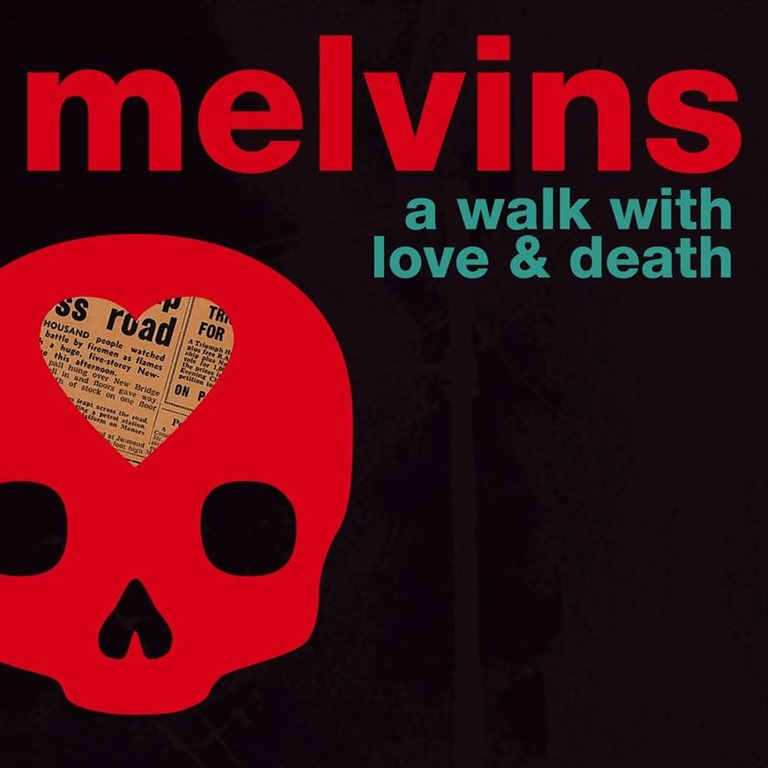
Some project ae just so wild and so awesome that they can’t fail. Crystal Fairy is one. The fact that it’s out on Ipecac should be a big clue. Essentially another Melvins offshoot, this project features King Buzzo and Dale Crover (Melvins and myriad mental offshoots), with Teri Gender Bender (Le Butcherettes), Omar Rodriguez-Lopez (Mars Volta, At the Drive In). If you haven’t already encountered Le Butcherettes, our life is sadly lacking and you need to do something about it, immediately.

Le Butcherettes are one of the most ferociously angular, choppy, abrasive and truly awesome contemporary exemplars of the no-wave ethos, and Terri Gender Bender is a fearsome and fantastic front woman: the perfect foil to the sludge with a grin craziness of The Melvins. Omar Rodrguez-Lopez (Mars Volta, At the Drive In) is hardly a weak link here.

As the press release recounts, ‘The whole idea for Crystal Fairy began when The Melvins and Le Butcherettes toured together and The Melvins started doing the song “Rebel Girl” with Teri at the end of their set.’

The album erupts with a whack! Think! Chug-a-chug thundrball punk-tinged rock racket of Chiseler’. It crackles. It fizzes. But what’s perhaps unexpected is just how accessible it is, courtesy of its strong, melody-led chorus. It also has that early 80s vibe and the poke of a small-town pub gig or a demo tape recorded by an ultra-proficient provincial band who deserve a wide audience. That’s not a criticism of Crystal Fairy, but of the industry, at least as it was.

Rock cliché is never far away on this album: ‘Necklace of Divorce’ wheels in AC/CDisms and Led Zeppelinisms galore, but there’s a savviness to the delivery that hints at a certain knowingness, a play on the clichés being stirred in and churned around in the mix. The result is alchemy, and an album brimming with choppy tunes that explode with full-throttle drive, and build the dynamics with passages of tension-building stealth. Grunge classic? Yeah, and so much more

‘Moth Tongue’ simply sounds like Terri Gender Bender fronting The Melvins playing one of their poppier tracks. As such, it’s ace, and ‘Bent Teeth’ is simply scorching. As is the album as a whole: raucous rambunctious, it combined churning, gritty riffs with wild-eyed histrionic vocals. As much as I’m a sucker for a meaty guitar, I’m even more one to be pulled in by a vocal delivery that borders on the psychotic, and Terri’s go that absolutely nailed. But then, as the title track attests, the foursome can also nail a full-throttle post-punk pop tune: think Blondie, think PJ Harvey, delivered with energy and guts and raw sex. Belting as the backing is, Terri makes it: she sounds dangerous, intense, precarious. While the basslines tear through your guts, she tears through your very soul.

Crystal Fairy is the supergroup every supergroup should aspire to: the embodiment of rock ‘n’ roll awesome, they’ve got the full works going on here.


CF-cover_3000x3000(2)

Cat Werk Imprint – CW11 – 8th February 2017

Christopher Nosnibor

The inspiration for Olivia Louvel’s latest album (fantastically presented, like its predecessor, in a DVD size digipak) casts an arc way back into history. Louvel, it transpires, was fascinated by the lives of Mary Queen of Scots and Elizabeth I – two queens who existed simultaneously on the same island, during the 16th Century – a period dominated by men. Two queens who, powerful and celebrated in their own lifetimes as well as posthumously, would never meet. And so, on Data Regina, Olivia Louvel sets herself the challenge of addressing their simultaneous yet entirely separate, disparate narratives of these two bitter rivals, and presenting distinct voices as she charts their adversarial relationship.

The twenty years during which the two queens reigned simultaneously were fraught, tempestuous ones, punctuated by battles on the Anglo-Scottish borders, disputes and reconciliations, and ultimately saw Mary Tudor sentenced to death and executed.

Effectively two works intertwined – ‘The Antechamber; and ‘Battles’, with the latter comprising a sequence of relatively short instrumental pieces positioned between the longer ‘songs’ – Data Regina is no polite period drama in musical form. It most certainly doesn’t correspond with the popular Elizabeth-slanted syllabus readings of the period, or correspond with the backdrop generally presented on degree-level modules taught on ‘Elizabethan’ and ‘Renaissance’ Literature (the Renaissance was late to reach Britain in relation to the rest of Europe). Herein lies an immense problem, of course: how can we learn from history when so much of the past is unknown, shrouded in layer of mystery and obfuscation as the result of political (self)interest? Would the present be as fucked as it is if we all had a better knowledge and understanding of history? Maybe, maybe not. The age of Elizabeth I, of Shakespeare, of – my preferred man of letters, Christopher Marlowe – is a long way in the past.

Data Regina an album of dark, haunting electronica, which stands in a league of its own: it has no obvious reference points in music, history or elsewhere. It’s a bold project, for sure, and Louvel admirably achieved her ambitions with a work which conveys its intent without becoming overly mired in explication and cumbersome narrative segments which disrupt the flow.

Louvel sets the tone – both musically and in terms of narrative – with the dark swell of ‘Battlefield’. Vaporous in its atmospherics, the track combines echoey beats which clatter and rattle around between resonant, woozy basslines and sparse, drifting notes. ‘My Crown’ weaves a haunting spell, slow pulsating electronics and mournful strings first float and then rise to a tense climax. At times, juddering electronics and stuttering, glitchy rhythms spasm and render scenes of claustrophobic intensity, Louvel’s detached, icy vocals eerily menacing. The pieces – they don’t follow clear or conventional song structures – are intense sonic explorations of character and voice.

‘Langside, 1568’, is a dark, dolorous interlude, the fractured vocalisations preface the marching drums which dominate the barren landscapes of ‘Deploy’ and ‘Battle’. It’s uncomfortable, queasy listening, the elegance and grace of the sparse compositions and Louvel’s voice countered by a discomforting undercurrent that runs throughout. It’s by no means an easy, accessible work: in fact, Data Regina is dark and turbulent and often uncomfortable, but it is deeply compelling.


Olivia Louvel - Data Regina

Reject and Fade – 28th February 2016

Christopher Nosnibor

Tim Hann used to front a Leeds-based alternative rock band called I Concur some years ago. I forget exactly how I discovered them now, but they were really, really good, one of those bands you would see play liv and think ‘Fuck. How are they not immense?’ One of the most precise and exhilarating live acts around, they were in another league, and it felt wrong to see them play as a support at the 450-capacity Brudenell Social Club. With the NME and Huw Stephens backing them they should have been huge. Sadly, the show I caught at the Packhorse in Leeds in 2010, where they tried out some of the material that would appear on the 2012 album Burial Proof would be one of their last, and Burial Proof would effectively be their sign-off. Life had already got in the way prior to the album’s release: ‘the usual thirty-something excuses of jobs, kids & houses’, as they put it on Facebook. And so it goes: ambition and dreams crushed by reality. The guilt and the money-pit of leaving your wife to deal with the children, while you go out on tour, pursuing the life of a young, single man.

I get it. Bands slog their guts out for fuck all. So do music reviewers, it so happens. ‘It’s not work, you don’t get paid for it,’ Mrs N retorts as I wade through the thirty or so emails which have crashed into my inbox while I’ve been at the day-job. Don’t free CDs, downloads and gigs count as pay? I’m not going to argue: I take the point. At least I get free stuff in abundance. Bands just hand out free stuff to buggers like me in the hope they’ll get a review. I review maybe 20% of the material I receive these days. It’s not because I’m a shit – no, it’s not the reason – it’s because I simply can’t do any more. The point is that being in a band is hard. It’s no life for a grown adult with mouths to feed.

A brief backtrack: in my endless quest for self-promotion, I used to run round slapping stickers and postcards everywhere every time I attended a gig. I didn’t sell many books off the back of it, but I did get an introduction to Tim’s younger brother Michael, a writer and soon-to-be head honcho at experimental Reject and Fade, a label devoted to dark ambient and generally weird, dark electronic-based nastiness. It’s a small and sometimes wonderful world. Were it not for all of this backstory – and I make no apology for the anecdotal meanderings with their Sartrean, Robbe-Grillet tinted reflections – this review would not exist. You should be grateful for the existence of this review because this offering by break_fold – Tim Hann’s latest project, released on brother Michael Hann’s Reject and Fade imprint is an inspired underground work, which, by its nature is unlikely to receive much mainstream critical coverage, deserves your attention.

break_fold represents a significant departure: there isn’t a jangly guitar to be heard here, not a single emotive swell, and no vocals: in other words, nothing remotely resembling the conventions of rock. This is music produced slowly, during moments away from life. And it’s music made by one man, at home, likely in the small hours, without the need to rely on the input of others. Hann clearly has music in his blood, and possesses an incredible focus when he’s making it. As a dark ambient work, amorphous, intangible yet curiously challenging, it’s an outstanding release and one which displays a meticulous attention to detail. The tones, the texture, the crispness of the beats and the overtly synthetic elements, in contrast with the swirling background elements is quite something.

About the title: 07_07_15 – 13_04_16 is pitched as ‘a record of memories and time stamped bursts of creative activity, captured and crystallised in glacial beats, foggy textures and electrified rhythms.’ The track titles are, in fact, the dates on which the individual track were started. As a whole, it’s a document of a specific time-span. There is something simultaneously resonant and alienating about this location in time, in that time is both universal and personal. Events take place at given times which are known globally. Other events are strictly personal. But our location in time is often marked not by the event but by our reaction to it. Take, for example, the announcement that the UK had voted to leave the EU. Many, if not most, UK citizens will forever have the fateful events of the 23rd June 2016, and also the 24th (very much the morning after) etched into their memories. But their responses will vary wildly, and the memories will inevitably be shaped by that immediate reaction on hearing the result.

07_07_15 – 13_04_16 is a journey into the break_fold mind-space, but without context in terms of the events of the dates in question. This accentuates the sense of dislocation already present in the music itself – music which conveys emotional tension, conflict, unease through the medium of rumbling, uncomfortable layers of sound which drift and hang like mist or toxic gas. Murky, impenetrable, tense and dubby, it’s a challenging journey into the unknown defined by low, strolling basslines streaking, slow-turning ambient tension and clamorous beats swathed in echo.


break_fold

SOFA – SOFA 555 – 13th January 2017

Christopher Nosnibor

It’s no secret that I have a real penchant for what the man on the street – and most of my friends, and certainly the uncultured crets in my dayjob would brand ‘weird shit.’ Indeed, it’s fair to say that Aural Aggro’s primary raison d’être is to give coverage to the obscure, weird shit that exists way, way off the radar. It’s not necessarily that I’m being wilfully perverse: oftentimes, I will simply find that the supposedly weird shit resonates with me on some subconscious level, in the way that only music can. But then there are some releases that I appreciate because they’re plain bizarre. Muddersten’s Karpatlokke is an album that appeals on both levels, in that sonically, it’s intriguing, unusual, dark and intense, and conceptually, and in its construction, it’s utterly perverse.

‘Muddersten is a type of mudrock whose original constituents were clays’, the press release explains. Perhaps it was creative misprision on my part, but I immediately began to envisage the trappings of an obscure subgenre, a bastard offshoot of sludge metal, or a hybrid born out of crust punk. This would ordinarily make more sense, contextually, than the literal meaning which in fact applies here.

The second release to land with me in a week to feature Martin Taxt and his microtonal tuba, the instrumentation listed in the creation of this creeping compost-based composition is nothing if not unusual: Håvard Volden plays (relatively) conventional instruments, the guitar and the tape loop. Taxt, along with his microtonal tuba, contributes electronics. And then there’s Henrik Olsson, master of objects, friction, and piezo. I had to look up piezo. Precisely how one renders music from abstractions is unclear, but this strange union, which finds the trio conjure an album which is ‘all about the hydraulic’ and is preoccupied with the movement of moisture through clay and soil and its absorption by plants, is a successful one. And, for the second time in a week, I’m compelled to contemplate the line in Marvell’s ‘To His Coy Mistress’ which refers to ‘vegetable love’. Karpatlokke could well be a definite soundtrack to the Aristotelean reading of the concept.

The sounds the trio produce are appropriately earthy, although by no means overtly or conventionally musical in their nature. As such, the music does not feel as if its mechanical origins are instruments as man-made as guitars, tape-loops and electronics. Although predominantly organic-sounding, there are some pretty gnarly tones to be found here: droidal, digital squeaks and bleeps ping rapidly around sharp-edged bursts of sound. Drips and groans counterpoint dark, growling rumbles. ‘Kjempeløk’ grinds out a heavy, trudging vibration, thickly abrasive. Slow-motion scrapes turn through glitchy, crackling rhythms on ‘Stjerneskjerm’, as strings bend, bow and slowly slip the sprockets of time. It’s an unsettling work, evoking slow, creeping movement and evolutionary growth, amplified: the sonic equivalent of a nature documentary shot in high-definition, with ultra-close-ups, the frames sped up and slowed down to render in the sharpest relief the brain-bendingly awesome occurrences which take place daily in the natural world, unnoticed and invisible to the naked eye.

Each track’s title refers to a plant: ‘Stjerneskjerm’ translates as ‘Astrantia major’, commonly known as ‘master wort’, and the impressive-sounding ‘Blodstorkenebb’ is in fact a composition inspired by the rather humble Geranium sanguineum, aka bloody crane’s-bill or bloody geranium. Yes, this dark, dank, swirling noise which gnaws as the intestines and churns at the cranium is inspired by a bloody geranium. Which why it’s a great, if extremely unusual, album. Well worth digging out.


Muddersten – Karpatklokke