“’These Things’ was the last song written for Delights Of My Life. Often the last song is written with the aid of what has come before it, the other songs on the record. We have one song to write, or so we think, now then, what shall it be and why? I think that I asked this question. We will never know. And I also think that I thought that it might be novel to have a song with a very clear form (four times through a melodic verse, with a tag at the end that wraps it nicely). That, and that the record may very well appreciate a song with little to no improvisation. A straight curveball!
Eric Cazdyn, who made the ‘These Things’ video (and around 18 other videos for my music) may have heard the song similarly. He has certainly given me that impression. What I see in the video is a very simple movement or gesture, but with an immense amount of minimal detail. Well, that is how I often describe the dance of Angela Schubot, although she is just on the verge of dancing here in this video. She dances like vegetation. Or, she shows me again and again that vegetation is a dancing world.”
The latest single, ‘Forget About You’, from ‘nouveau post-punk troubadours’ Monta At Odds’ is pitched as ‘a dark-natured opus about resisting attraction, especially when the bound proves hazardous.’
The trio, consisting of Mikal on vocals, Krysztof wielding the baritone guitar, and founding member Dedric polymathing on all other sonics are aiming for a ‘danceable mixture of eras past and present to match this raw but crisp sound.’
It’s very much of the school of neo-new wave / post-punk from circa 2004-2006 – think of Editors breaking through, Interpol’s Antics, and the likes of The Organ, and The Cinematics – particularly The Cinematics, in fact – with the electro element of She Wants Revenge’s debut. It’s post-punk with that clear contemporary slant, and a heavy dose of New Order’s buoyancy and accessibility. There’s shade around ‘Forget About You’, but a lot of sunlight and vibrancy, too: the crisp, clean, vaguely brittle guitars positively jangle against a thumping disco beat, and the melancholy is cut through with eyes cast to bright blue skies and a forward-facing optimism.
It’s only while writing this that the fact 2004 was twenty years ago has begun to register. What goes around comes around, of course, but twenty years is a generation, broadly – it seems, in my ever-lengthening experience – and the time it takes for kids to start picking up their parents’ record (or CD or whatever) collections and start drawing influence and inspiration. I say ‘or whatever’ because I do worry about the future. I worry less about styles rolling round in a repetitive cycle than what music will be coming through another twenty years from now. How is it going to go when it comes to teens raiding their parents’ Spotify playlists and finding nothing but Ed Sheeran, Taylor Swift, and, er, does anyone listen to anyone else? Of course I’m dramatizing slightly, but the point is that so much of the mainstream has become focused on quite literally a handful of artists – and what will be their legacy? Does Sam Smith capture an element of the zeitgeist beyond his identity? What does Dua Lipa speak of, and who does she speak to? A part of the problem is that where we used to have shows like Top of The Pops, The Tube, The Roxy, The Chart Show (with its alternative charts and other segments) and the Top 40 on Radio 1 (followed by something rather more alternative), the charts were pretty open and it was possible for stuff that wasn’t slick major-label sonic wallpaper to chart. This meant that it was possible to encounter something different without having to go to great lengths to seek it out. Now what do you do? Where do you go? How do people source music beyond the endless pumping of algorithms?
‘Forget About You’ hits me with a sense of nostalgia I had not anticipated, and which isn’t welcome: for some, nostalgia brings golden-tinged fuzziness and a warmth, an uplifting sensation. For me, it’s more like the sand tricking down in a sand timer, a slow-sapping pull in the guts, a seeping sadness. 2004 was twenty years ago. Less ‘yay, good times’ and more ‘fuck, I’m that much closer to death and twenty years have evaporated with depressingly little to show.’
Nostalgia isn’t a defining element of ‘Forget About You’: that’s simply something I bring to the table, highlighting the way that reception and perception colour the way an individual responds to music. It’s uptempo and catchy, bouncy even, and ultimately danceable, and neatly balances darkness and pop.
Today, Thou share ‘Unbidden Guest’ from their upcoming album, Umbilical.
About the track, Bryan Funck comments, “Physical deterioration by way of psychological disarray. Retreading a well-worn path of self grievance. Othering mental illness and learned behaviour in order to crush them under the dominance of epistemic willpower. ‘The last time you cried, who’d you think was inside?’”
Listen to ‘Unbidden Guest’ here:
Thou has always been a force of raw energy and unapologetic dissent, defying easy categorisation and challenging listeners to confront the complexities of existence. Their forthcoming album, Umbilical, is their firmest nod to the raw intensity of obscure ’90s DIY hardcore punk. It’s a record filled with mosh-ready riffs, heavy breakdowns and scathing vocals. The band’s aesthetic and political impulses have always been punk and like anyone embroiled in the subculture Thou have been exploring what it means to exist within and without a rigid morality. That exploration takes thematic centre on Umbilical and their self-assessment is as harsh as that of the world around them.
Ordinarily, interviews on Aural Aggravation are run with titles which serve to encapsulate the contents in half a dozen words. This is an interview where that simply isn’t possible.
Since Nocturnal Emissions came into being in the late 70s, emerging from the experimental / industrial scene which evolved after Throbbing Gristle broke ground first tested by William Burroughs and Brion Gysin, they’ve existed in various forms, often as much known by reputation as by their actual work, which is nigh on impossible to pin down or pigeonhole. For most of their career, Nocturnal Emissions has been the solo vehicle of founder Nigel Ayers, who has come be a pivotal figure in the field of underground and experimental music – and beyond, working in a host of media including film and text, with a number of books since the turn of the millennium: The Bodmin Moor Zodiac (2007) is a characteristically quirky example of his wide-ranging interests which include psychogeography and occultism. Then again, any summary would be to omit so much as to misrepresent his divergent eclecticism. And then there are the countless collaborations… John Wisniewski was fortunate to pitch some questions to Nigel about his lengthy career, his influences, and current and future projects…
When did you start experimenting with sounds, Nigel?
I must have been aged 13 or so. Actually, I was experimenting with sounds in the form of soundtracks because had happened is my dad had this very old-fashioned format camera, it was called a Standard 8 camera, which was a kind of silent home movie film that preceded Super 8.
So, it was this kind of film that you could run twice through the camera, and it had large sprocket holes like 16mm, that was the difference between Standard 8 and Super 8 film. So, he’d bought this camera and he’d been using it to film his work in schools and as a youth club leader, but this camera was lying around. And when I was 13 or so, I was watching these experimental films on TV, and I’d been watching them in black and white, but there was things like the Magical Mystery Tour by The Beatles and then there’d be segments like “I am the Walrus”. These very early rock videos, were extremely surreal. And then there was a TV programme for kids called Vision On, there was sort of experimental animation on there. And then also there was Monty Python, where there was Terry Gilliam’s cut-out animation going on. There wasn’t the easy access to visual culture you get these days, but I had been exposed to and absorbed this kind of aesthetic and I was just looking at these ways of manipulating film. And I realised this camera, you could do stop-frame animation, you could also run multi-layers of film together.
Now, these techniques of layering and stop-framing and getting into individual segments of imagery are really what I used later when working with sound, because I was aware of how the context and meanings of images and sounds change through overlay, almost randomised factors, which could lead to an exploration of something which was intrinsic to the medium. Or intrinsic to memory, a memory of imagery and how imagery is imagined and restructured within our minds and within our culture. So these ideas, I was exploring film at a very early age, I mean, I’m talking like age 13 to 16. Meanwhile I was having a very conventional school education, really. This was not the sort of thing I could do at school.
I also acquired this reel-to-reel tape recorder, which was like another sort of cast-off that had been bought for some purpose, and it was an old-fashioned technology by then. Of course, it was this very solid mechanical thing with a manual sort of gear, that you could change to make the tape go backwards or forwards or rewind.
I think it had different speeds on it, I used this later on the raw material that went into the first Nocturnal Emissions records.
So yeah, I was exploring these sort of overlays of memory, I suppose. And I wasn’t really able to articulate that in words. Now as an adult, as an elderly adult, I can articulate this in a way I couldn’t do as a teenager.
But then I got onto a foundation course in art school after being thrown out of school, really. Excluded from school, really, it wasn’t an environment I fit in with very well.
So I went to do a foundation course in art and design, and the thing that I really warmed to was, they had this studio set up to do “light and sound”.
And in there they’d got, oh, I don’t know if modern people will understand this technology, but they had slide projectors, which could be synchronised to a reel-to-reel tape. And this reel-to-reel tape was a four-track TEAC tape recorder, routed to four speakers in this darkened room for a quadraphonic surround sound experience.
And they had a Revox in there, which is a two-track tape recorder. That’s something which you can, when you know the technique, do tape echo on. Wonderful machines.
And also I think I had the loan of a cassette recorder, I was recording incidental sound from the TV. I was recording children playing. I was recording dogs barking, and constructing this into sound collage.
We were making handmade slides, it was a sort of technique that was probably used by the Victorians in magic lantern shows. These are very high contrast slides, that I made anyway, and hand-coloured them with overhead projector markers and with coloured acetate. And I sort of made this scenario of, a sort of an alien civilisation, but it was really close-ups of the insides of a vintage and broken radio, with these parts of toys inside it. It was Bela Lugosi as Dracula and Boris Karloff as Frankenstein. These heads from Revel plastic kits that my brother had made years ago and then lost interest in, these parts of plastic toys. And I was constructing this sort of miniature city and then sort of overlaid in that city.
I had made these sort of, these non-functioning machines, but like science fiction devices,
A projection from the wartime era, rather than steampunk. Yes, that’s what it was. From the era of electronics, not the era of steam.
And I made this elaborate sort of titillation machine, which a friend of mine, she posed on it and as if she was pleasuring herself on this very strange sort of dynamo construction with loops of wires and coils and high voltage fuse boxes and transformers. And this was superimposed against these miniature sets.
I suppose it was like probably a DIY version of Fritz Lang’s Metropolis, but with this sort of different surreal sexual-mechanical angle that I gave it. So that was actually a quadraphonic sound installation that I did when I was 16, 17. So I sort of continued experimentally making films.
And so the sound that I worked on were to do with film installations and to do with, I suppose, visual art more than anything else. But all the time, I was DJing as well though, as at school, you know, I ran the school record club and I was at art school, I was DJing at events for the student union. I had very strong likes and dislikes in the way of music.
And also I knew some songs, which are dance songs, which would work. And I think very early on, I developed a very deep affection for reggae music. And that was going back to late sixties, early seventies anyway.
So yeah, so I was experimenting with sound ages 17 in art school anyway. So, but I didn’t have any equipment of my own, so to speak.
And so when I graduated and was out of that context, I started acquiring instruments. d I think the first thing I got was a cast off electric guitar and, a Watkins copycat echo, which I messed around with.
I found I used to cover up the erase head so you could get these endless loops building up on it and just gradually kept acquiring sort of sound manipulating equipment. And I bought a synthesizer in 1978. I bought the Korg MS-10 in Sheffield, you know, from the same shop that the Human League probably shopped in and ABC and Cabaret Voltaire shopped in.
And quite soon after buying this synthesizer, I was talking to Mal out of Cabaret Voltaire. I think it was at a Pop Group gig in Sheffield. And he invited me to use his studio, which was very good because I didn’t have access to that sort of thing, but I had some ideas that I was working on and not quite sure where to take them.
But then I got invited to London to stay with Caroline K. She was finishing a degree course and I’d met up with her and she’d seen that I got this synthesiser. And she wanted to install this sine wave, this sort of constant hum to be playing in this exhibition she’d done with some very austere black and white photographs of this house she was living in.
And the photographs all had different captions on which made you think different things about this location, was making it into the site of murders and various other fictional things for this exhibition. And with the sound, I think she was trying to give it a disturbing edge to it.
The place that she had photographed was actually quite a disturbing place and quite disturbing events happened there, but this was unrelated. This was probably what was at the back of her mind when she was thinking about this installation.
What did you hope to accomplish through your work with Nocturnal Emissions?
Well, what I wanted to accomplish was to get my inner visions out into the world somehow.
And at the time, it seemed the easiest way to do this was through the format of an experimental music group. Because I couldn’t see the experimental films I was doing being screened at any cinema, because they were too abstract, to fit in that context. And what was trying to do was like a live improvisation between multiple layers of projection, and multiple layers of sound.
That’s what Caroline and myself were aiming for, really. Caroline was always focused on soundtracks, and that’s reflected in her solo album, Now Wait for Last Year”, the track titles are named after Tarkovsky films, and it’s got a very strong John Carpenter influence going on there, as well as an Ennio Morricone influence, and as well as the radiophonic workshop influences that were going on.
What I want to accomplish through my work, though, was to get these inner visions, these inner sounds and visions out in the world, and to share them with the world, really. I just want to sort of bring things out, because I thought what was happening in the world of music in the early 80s didn’t exactly reflect my preoccupations.
I did want to get a political idea over, and a sort of an altered reality over, as well, because I think by deconstructing and restructuring reality, we get a better perspective of what’s going on, and we can see that other worlds are possible, and it’s possible to make the world into a kinder place, and a more compassionate place, and a friendlier place, and a more beautiful place than it is at the moment> That’s really what I wanted to get over in the music. I know the very early music was quite harsh. It continues to be quite harsh and abrasive occasionally, but I think that’s a way forming focus and dramatic tension within the work.
Tell us about forming the label “Sterile Records”. Who are some of the artists that you collaborated with?
I get the impression that when [people] form record labels, they have some sort of financial backing and they might also have some kind of business sense. That certainly wasn’t the case with me.
When we put our first Nocturnal Emissions records out, I was living rent-free because we were squatting. I had to do a lot of house maintenance to keep the place a bit habitable, but the housing and space costs were near zero, and I was in the middle of London, and so it was quite good for venues and things like that. I didn’t have transport.
I was working as a cleaner. Caroline was working as a library assistant, and we scraped together… What was it? Maybe it cost £1,000 to put out 500 records back then.
Whatever it was, we scraped it together, and I think we went into an overdraft to put together this first record. We didn’t have the equipment to do it on, really… We went to evening classes and used their equipment and borrowed instruments from friends and neighbours.
Vicki Aspinall out of the Raincoats was a neighbour, and I borrowed her electric violin. I don’t play it. I created sounds with it, on Tissue of Lies.
We hired a four-track and a two-track reel-to-reel to mix down onto for one weekend, we initially intended to make a single, but it worked out we could do an LP and give better value, and probably get more money back from doing an LP than we would do from doing a single. So that’s why our first record was an LP, Tissue of Lies.
Within months from doing Tissue of Lies, we’d actually made some money on it, and so we thought we’d do another record. The plan was just to carry on with what we were doing… after we’d done Tissue of Lies, our technical skills had improved, and we were able to do more, and we were getting. it to sound more like we wanted things to sound Our craft skills improved, so we wanted to do another record.
And then Maurizio Bianchi (M.B.) got in touch with me from Italy, and he wanted to pay me to put out a record on my label, but I didn’t have a label. I had just done one record, and I’d done a compilation cassette, which Maurizio had been on, about a year previously. I’d been in contact with Maurizio when we put out cassettes before Nocturnal Emissions, before we did any vinyl.
Maurizio wanted to put out 100 records, I was going to the pressing plant anyway, and it looked like I got enough money to add to make an edition of 250.
We could call this the start of a record label, I suppose, that with Fruiting Body, the second Nocturnal Emissions record. That’s how Sterile Records actually happened, really, what sort of started me made me open to the idea of it being a label.
But I mean, as a label, you know, people assume you’ve got money behind your venture, and you’ve got an office. But we didn’t even have any transport. A few hundred records would arrive at our house from a van.
But then getting them to the numerous record shops that we sold through in London, … I had this sort of shopping cart like old ladies have, you know, with wheels on it. And I’d go on the tube or on a bus and deliver boxes of records that way…. it was the most basic, crudest, cheapest DIY-est way you could operate a record label.
It was operating an absolute shoestring budget. but, you know, we sold a few thousand records this way, and it created quite a lot of interest and influence, I suppose, within that sort of very small, tight, obsessive community, which was the early industrial music world.
So we were gigging around London, and I think our first gig we actually played with anybody who was doing anything in a similar vein was with SPK. SPK asked us to play with them, and Brian Williams came along to it. He was a big fan of SPK’s and later joined SPK.
He was making his own experimental noises up in Wales, quite different to what he’s doing nowadays (nowadays he’s a Hollywood sound designer). His very early music sounded like train sound effects records, really, with this sort of ring-modulated vocal shouting over the top of them. But he sent me this demo cassette, so I said, ‘oh, let’s put this out’.
Let’s do a Lustmord cassette. And that did okay, I suppose. So then we did a Lustmord vinyl album, and I actually hired a studio for him to come down and record that.
And he invited… his friend from Wales who was called Nigel Dunster, and he also invited this other guy who was like a mutual friend correspondent, who was Geoff Rushton, who later changed his name to John Balance of Coil. He was involved in this first Lustmord album that we made, around the time he was involved in the preparations for Psychic TV.
And, yeah, I suppose…
Yeah, who’d we collaborate with? Well, quite a lot of people… you have to go and look at Discogs, and you’ll see who we put out on Sterile Records.
Yeah, we’re trying to develop something. I was going to do one of the first Portion Control records I was going to put out, but then they got a better deal with somebody else, and they got to do a tour with Depeche Mode.
So I didn’t do that one. And a band of Holy Joy was going to do a record with. I had that on a compilation.
Who else? Lustmord. Control Bleeding. And Nurse With Wound, but I rejected what they gave me. We were friendly with Bourbonese Qualk and collaborated with them on a few things. And helped one another out…… these were our friends who we hung out with, these old-school industrial people.
Who are the composers and recording artists who have influenced your work?
The big one would be, way, way back, the big one would be Captain Beefheart, and especially Trout Mask Replica.
That sort of field recording like a reconstruction of music. By this possibly crazy outsider artist, an incredible piece of post-blues music/ come field recording and it just conjured up a different, expressionistic, freeform natural world.
That was a big influence. Another big influence was the work of the BBC Radiophonic Workshop. I’m talking Delia Derbyshire and Daphne Oram.
There were quite a lot of women involved in this early electronic scene, and it seems they weren’t really credited at the time. They were quite important. The way they talked about putting sound together.
From loops and from music concrete. That’s the way it went in radio plays. Which they were doing soundtracks for.
And for TV work with things like Doctor Who. Some very strange children’s TV that was being made in the early 70s.
Ennio Morricone.
Just the beauty of those westerns. Those really operatic works. The good, the bad and the ugly. Beautiful, beautiful, beautiful.
I’ve got to say that almost all the music I’ve been exposed to has influenced the work. But I have to say very early on I was very black and white in my likes and dislikes. It was intense love or hatred, not by genre, but by individual pieces, I think that might have got in the way of some enjoyment sometimes.
Tell me about your work with digital sound assemblage.
I was talking about the way I constructed the films. In terms of overlay which changes the context of what lies beneath. The altering of speed and pitch and timbre. And time and space manipulation. Looping. And getting into the basic building blocks of sound. And. messing with it, Improvising with it. And editing it in such a way that it becomes something new that feels beneficial and healing.
And interesting and stimulating. That’s what I’ve done over the years. And nowadays I’m working digitally – largely. I’m out doing field recordings all the time. I use real instruments some of the time… I think with Digital sound you can do so much. And so.
I just like the way it’s gone actually. Because the way it’s been.
The access to. I’m not precious about technology, I’ve grown up. In an analogue world.
Of analogue tape. And analogue film. And analogue loops.
And I continue. To use some of that technology. Certainly the things you can do with analogue film which are impossible to do digitally.
Do you listen to genres such as rock or jazz music?
I don’t really listen to radio or streaming services, I tend to go to live music events as much as I can, and play CDs I’ve bought, rather than other people’s selections.
So these are some titles in a rack on my wall…
Bo Diddley. Donovan. Captain Beefheart.
Gavin Bryars. James Brown. David Bowie.
The Blind Boys of Alabama. Black Grape. Count Basie.
Asian Dub Foundation.
Johnny Cash.
The Bollywood Brass Band.
Sinead O’Connor.
Brian Eno Michael Nyman. Moondog. Thelonious Monk.
Andrew Lyles. Lead Belly. La Düsseldorf. The Unthanks
The Kinks. Daniel Johnston. The Human League.
Gil Scott Heron. Richie Havens. The Beatles.
The Fall. The Velvet Underground. Penguin Café Orchestra.
Nico. Lou Reed. Lou Reed’s solo work.
Lou Reed’s ambient work. Miles Davis. Bob Dylan.
Everything by Dylan. Wreckless Eric.
High Voltage. Flashpoint. 20th Century Experimental Electronic Sound.
The Bundu Boys. Gregorian Chants.
George Formby. The British Sixties. These kind of things.
Any future plans and projects, Nigel?
I’m preparing to do more live performances because involving more of a physical presence and more spoken word. I don’t want it to be an anonymous figure hiding behind a table while a film goes on in the background. It’s to do with spoken word and it’s to do with interaction and it’s quite pleasurable, dance orientated and dare we say quite funny what I do, I suppose.
And also, I’m trying to bring a bit of joy into this world. A joyful foundational industrial practice. And I’m also producing paintings.
I’m painting a lot on canvas and I’m writing and I’m keeping very creatively busy in these elder years. I hope to be performing all over the place, really. I’m putting out the vibe that I’m available for gigs anyway.
I’m available for live performances and I’m saying yes to a lot of things I probably wouldn’t do before. I’ve been performing in the UK which is very different to me because I very rarely played in the UK. So, yeah, I’m just making myself available and I’m saying yes to things, I’m writing, I’m doing spoken word performances and things like that if anybody’s interested in booking me for spoken word performances.
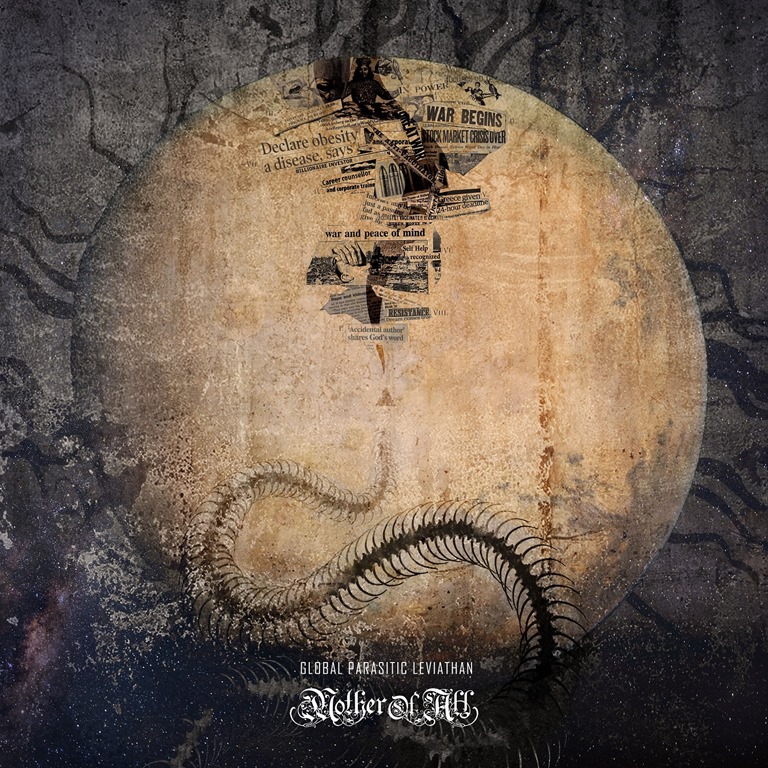
Having showcased single cut ‘Hypocrisy – Weaponised’, released ahead of the second album by progressive/melodeath act Mother of All, I was keen to get my lugs around the album in full, not least of all to see if I could get a handle on what ‘melodeath’ is. There doesn’t seem to be a week where I don’t stumble on another microgenre. This isn’t something exclusive to metal, although it certainly seems to be the strain which contains the most minutely fragmented forms.
While now a full and proper band, Mother of All is Martin Haumann’s concept. As the bio informs us, ‘With a background in The Royal Danish Conservatory and extensive training in different musical disciplines, Martin draws on varied and unusual influences to create a unique vision for Mother of All, but his prime inspiration comes from the deep cauldron of metal. Continuing to explore the art form with Mother of All, Martin creates songs that are diverse and eclectic in nature by incorporating melodic and progressive elements into death metal.’
On the evidence of Global Parasitic Leviathan, that means some crunching riffs played fast and furious and driven by rapidfire drumming, but with a lot of fast, flamboyant licks which are big on harmonics and fretwork tapestry. While the contrast is nicely separated and the detail adds layers to the thunderous assault, I can’t help but feel it falls into that self-made trap of showcasing technical skills to the extent that it undermines the overall power of a song at times.
Again, it’s a trait common across the board, but particularly in metal that there seems to be a compulsion to overcompensate, but overshowing the technical competence. It happens a lot in writing, too, though, particularly among newer writers who feel the need to demonstrate their writing skills by overwriting, packing in superfluous adjectives and paragraph upon paragraph of detail because look! I can do this! Well done. But how about you actually tell us a story? Or, in this context, play us a song?
Mother of All have some songs, and they’re burning with incendiary rage, and when they knuckle down and let the fury flow, they absolutely kill it.
The sentiments are solid, and the song titles speak for themselves: ‘Corporate Warfare Leviathan’, ‘Debt Crush’, ‘Merchants of Self-Loathing’ all rage antagonistically against the machines of capitalism and corporate domination, and when they trim the flamboyant fretwork and focus on delivering brute force, as on ‘The Stars Already Faded’, they really hit hard, Haumann’s raw, raging vocal a magnificent articulation of tortured anguish. ‘Debt Crush’, too, is five minutes of full-throttle fury, and although ‘Merchants of Self-Loathing’ gets a bit rap-metal, it’s in the Judgment Night vein and so deserves a pass. ‘Pillars’ seems to lean on Neil Young during the intro, before going all-out raging metal. Keep on rockin’ in the free world, indeed. The sentiment extends beyond genre, of course.
Global Parasitic Leviathan isn’t short on ideas and positively froths and overspills with technical ability, as they’re keen to show us, over and over. But, and this a lesson that takes time – less is more. Global Parasitic Leviathan is good, and it’s consistent in style and tone, but I can’t help but feel that tempering the fretwork would hit harder, because when they really riff out they’re utterly pulverising.
Fresh off a European tour with country-mates Kollapse, Danish screamo/hardcore collective Demersal today share a music video for a brand new song off the band’s forthcoming self-titled second album due out on May 10th.
"’Som Et Barn Mod Dit Bryst’ is the last song on our upcoming self-titled album,” says the band. “The song is essentially about the importance of taking part in communities with people you love and trust – whether it be family, music communities, activism, friendship, romantic relationships and so on. The whole album is mainly about facing global crises – climate change, war, extremism and so on. It can seem immensely incomprehensible to figure out what one can do as an individual to make a difference in a global perspective. But one thing we can do is to find comfort and love in the people we trust, as a way of dealing with our world that, in many ways, is slowly decaying.”
“The video consists of footage from our recent tour with Kollapse in Germany, France and Switzerland. It portrays one of the communities that we value and trust – our band and the scene we’re a part of."The video consists of footage from our recent tour with Kollapse in Germany, France and Switzerland. It portrays one of the communities that we value and trust – our band and the scene we’re a part of.”
As much as this is an album it’s an historical document, and one they’ve had to blow the dust off ahead of its release. Kullu was recorded by Carl M Knott, aka Boycalledcrow, as a series of field recordings as he traversed India in 2005 and 2006.
As the accompanying notes explain, ‘The album is an audio travelogue of Knott’s travels through India in 2005 and 2006, just after he’d graduated. That journey was part of Knott’s concerted efforts to overcome the intense feelings of stress and anxiety that had gnawed away at him throughout his adolescence. Along the way, he documented his travels in a blog and accumulated countless memory cards of photos and videos.’
Life has a habit of delaying projects, of getting in the way (I have a number of book-length projects which I embarked upon circa 2010 which are languishing, incomplete, on my hard drive, and have every sympathy). When a project has lain so long, has been placed on a backburner, or whatever else, how viable is it after eighteen years? Is it really worth resurrecting? Yes. Always, and especially if / when it’s personal.
You read and hear often talk of ‘closure’, and usually it’s in relation to a bereavement or a specific trauma. But life is trauma: a path strewn with rocks of trauma to trip you unexpectedly.
Kullu is a road trip, a narrative, and also an exorcism, a sequence of processing, a coming to terms.
More than anything – and any critic’s outlook is limited to their experience – I’m struck by the range of sounds and the way in which Kullu is an album that expands over so much ground. At the outset, the beats are to the fore and Joujouka come to mind initially, as percussion thunders loud and hard, but before long, things start to melt and dissolve into entirely less form-shaped compositions. Twisting between ambience and various shades of dissonance and slow-shifting pulsations, Kullu grates and scrapes its way through a twisted journey of difference, of fresh terrains, ranging from ominous vocal and semi-orchestral compositions like ‘Kanashi’, to clanging, clattering, altered and warping. There’s a lot going on and I sometimes wonder if I’m equipped to cover this. But ultimately there is always room
Kullu presents all the moods, all the vibes, all the breadth of experience. It’s often discordant and difficult, and that’s as it should be.
Dret Skivor seem to have managed to sync their release schedule to Bandcamp Fridays pretty neatly. Meanwhile, the man behind the label, Dave Procter, has enough different musical projects to fill the entire label’s roster single-handedly.
Not content with pumping out harsh noise as Legion of Swine and ambient drone with mathematical divination as Fibonacci Drone Organ, and spoken word ramblings backed with dark noise as Trowser Carrier, or collaborating with countless other artists, notably Claus Poulsen with whom he (ir)regularly convenes for a release, and a brief excursion as twAt clAxon, Procter has also been operating as Klôvhôvve, a vehicle for ambient / glitch weirdness.
Following on from Is it? It is, an album containing two longform tracks which offered their own call and response, released in March, Live at JT Soar feels on one hand like a bit of a stop-gap, but on the other, a reasonable consolidation. More than reasonable, in fact, considering that Procter devotes a considerable amount of time to performing live – and is perhaps the only artist I can think of who will book a tour and not play under the same guise more than a couple of times, or for two consecutive shows. It is, undoubtedly, easier to get bookings if you have a broad range of styles to offer promoters, even if that range does sit under the wider umbrella of obscure electronic weirdy shit.
Before we ger to the obscure electronic weirdy shit of the recording, it’s worth a brief acknowledgement of the cover art, which is truly classic Procter (the photographs which grace the covers of his two collections of poetry / rants as Dale Prudent are strong cases in point). Gritty, unpretty, urban, and a bit off kilter, snapshots of the everyday strange. Here was have a shot of the outside of the venue, still with its signage for JT Soar, Wholesale Fruit and Potato Merchants, from which it takes its name. Unassuming is an understatement for this building, with graffiti on one door, and a piece of street art depicting Nottingham’s best-known polemicists, Sleaford Mods, replicating the artwork for their most recent and widely-acclaimed album, UK Grim on the garage door. The shot is some real-life documentary, its relevance heightened because the vocally socialist Procter departed the UK for Sweden post-Brexit because… well, Brexit.
Klôvhôvve’s set, which lasts twenty-four minutes, is mellow and mellifluous to begin with, but soon swerves into a melting together of soft tones with scratched, warping drones, the glitching eating into the surface of the looping tapes affected at first. Vocal snippets, fractured, fragmented, distorted, cut in and out, as the music ebbs in and out unpredictably.
There is a sense of nostalgia about this, but the overarching sensation is more that of a post-apocalyptic narrative, a bleak dystopia of degradation, of societal collapse whereby only damaged recordings and fragments of past technologies remain, twisted, rusted, malfunctioning. The set does have distinct segments, although they do flow together to form a continuous set, and as such, it makes sense that it’s released here as one single track. It’s not as if anyone is going to be skipping to hear the hit or their favourite song of the set, and it’s structured around transitions between evermore haunting atmospheres. It’s pretty unsettling stuff, dank and grumbling with thunderous rumblings away off in the background while a continuous slow of babbling and sharp scrapes cut into the foreground. But then there’s something resembling a trilling, twisted rendition of ‘Silent Night’ which crackles and stutters through static, and it warps and crackles its way to a slow fade.
There is some strong tonal separation here, and the interjections which appear unexpectedly are almost enough to make you jump But for the most part, it makes your skin crawl – slowly, in a state of curiosity and ponderous hesitation – as you winder where it may be heading.
Procter understands the importance of music which makes you feel uncomfortable, which tests your limits, and this release captures a live set which really teases at the tenterhooks.
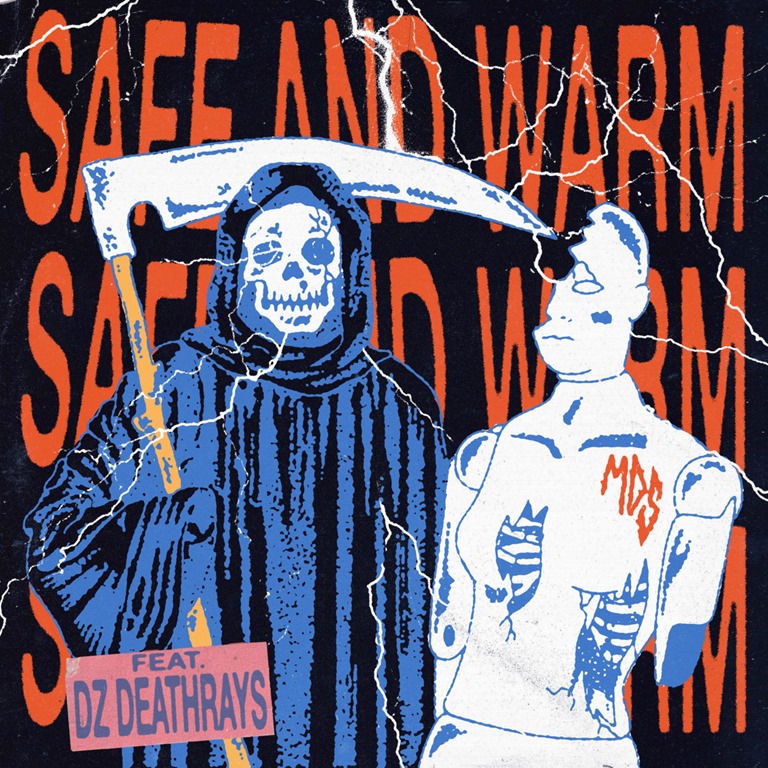
It’s a good day when two of our favourite Australian alternative acts come together to release a single, especially when that single represents the best of both, and comes on with a bustin’ cyclical riff reminiscent of Bleach-era Nirvana and packs everything into a magnificent no-frills, no-fat two-and-a-half minutes.
Today is that day, when Mannequin Death Squad unveil ‘Safe and Warm’ featuring DZ Deathrays.
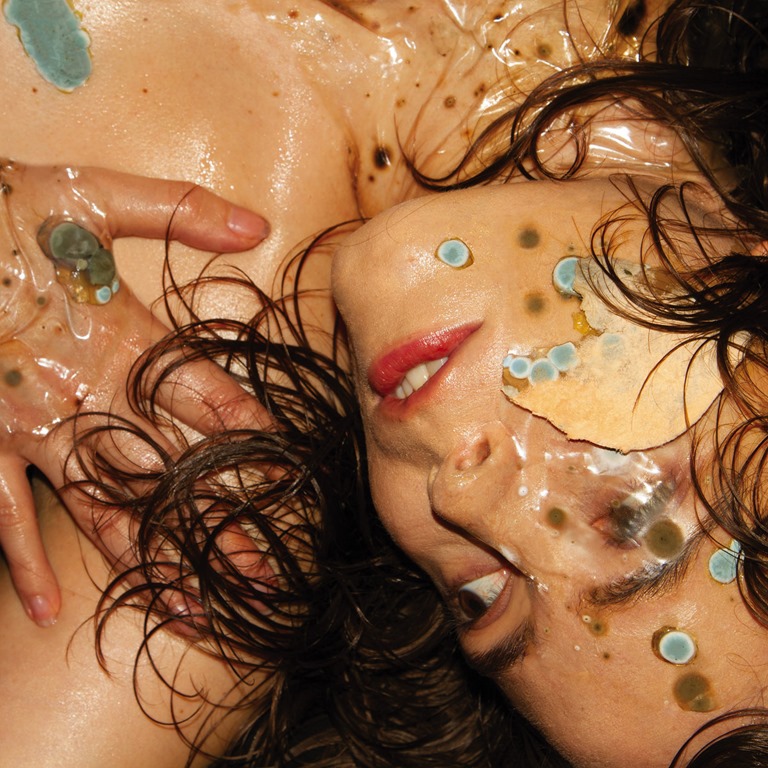
Ah, that difficult second album. Kee Avil set the bar high for herself with her debut, Crease, two years ago.Crease was a highly experimental, boundary-pushing collection of compositions, which was as challenging as it was entertaining. But the trouble with setting out one’s stall in such a fashion is that you can’t retread the same ground, you can’t do the same thing twice, you can’t repeat the same experiments and expect different results. Not to suggest that Crease was in any way a ‘novelty’ record, but experimentation and avant-gardism has to be ever new, fresh, and novel. Pushing the boundaries requires an artist to continue to push them further, to expand the parameters, or otherwise risk being confined withing the limits set initially, at which point, it becomes prescriptive, a template. Small wonder, then, that Avil found the process for Spine to be quite different from Crease. But, unlike many artists who struggle to regain the creative spark in the wake of their debut, whereby some languish for years in a creative trough only to return with some second-rate slop (there are many articles devoted to examples of the ‘sophomore slump’, and I feel neither need nor inclination to recap on them here), Kee Avil seemingly found herself fizzing with ideas, as her bio details:
‘Spine was written in Kee Avil’s home studio after a lapse in writing while touring Crease and working on other projects. She is a well-known and respected member of the Montréal experimental scene, and formerly ran Concrete Sound Studio with Zach Scholes, who continues to work with her as a producer on Spine. Compared to the three years that went into making her debut, Spine emerged in a matter of months—a process that may also be a factor in its intensity and sharpness: “This record was much harder, like it was really discovering everything from scratch.” In her desire to not simply replicate or extend the sound of Crease, she felt she had to rip up the rule book, write in a different way, and pare back songs against her usual instincts.’
Touring does seem to have a habit of affecting the creative flow. It seems almost as if the industry model with its cycle of release – tour – write – repeat – serves to doom artists to dealing with unnecessary pressure to deliver, and it’s entirely self-defeating since inspiration simply cannot be forced – it’s something that happens. And it happened for Kee Avil, for sure.
Spine is brimming with discord and dissonance, angularity and oddness. ‘Felt’ fucks things up from the very off with warped, wrangling, jangling guitar that twists and mangles across flickering, stammering beats and extraneous noise that gets in your ears like a hatched moth fluttering against your eardrum. It’s a cringy, unsettling sensation, and it’s not really all that pleasant, and Avil breathes and croaks her way over it.
‘the iris is dry’ is magnificently weird, a close, breathy semi-spoken word muttering about lamps and eyes and angels, and it’s tense and claustrophobic and claws its way into your cranium. ‘It makes no sense,’ she croaks by way of a closing refrain, and it’s hard not to agree.
‘remember me’ continues the form of minimally-arranged alternative / eerie indie with a dark folk vibe crossed with a vocal style that sits in the realm of spoken word with a performance art delivery: Avil doesn’t sing, but whispers and breaths the words in a fashion that creates a palpable tension.
The only real difficulty in Kee Avil’s second album is for the listener: with its shuddering percussion and harsh frequencies, as well as the up-front vocals, this is a challenging work. And this is a good thing: art should be challenging, and the quality is outstanding.




 Aural Aggravation