Archive for July, 2021

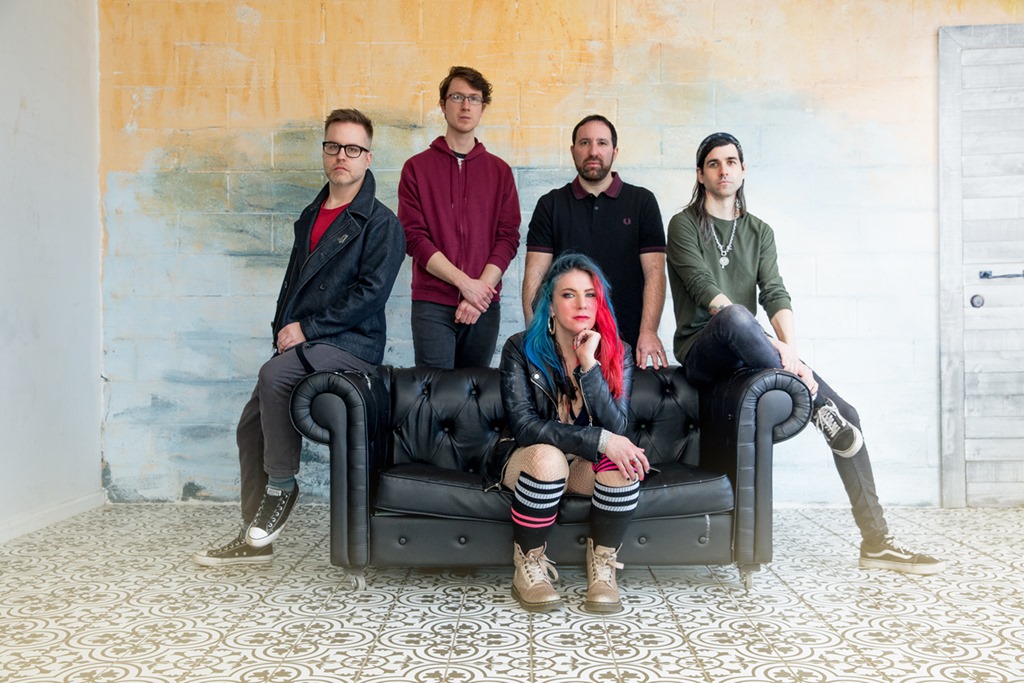
Brooklyn, NY’s Typhoid Rosie is rolling out another new single off the band’s upcoming album Queen Of Swords, out August 13.

The latest track, ‘Defend Your Temple’, is an empowering feminist anthem– and an urgent plea to stop seeking validation outside of ourselves.

Rosie Rebel describes it as ‘A punk song for every little girl who was sold a sham fairy tale, and is still waiting to be loved in such a disposable age: She don’t need no prince, she don’t need no mice, she’ll make it on her own just fine!’

Check ‘Defend Your Temple’ here:

AA

Rosie-0166-5x7

Photo: Mark Doyle

Cleopatra Records

Christopher Nosnibor

As a label, Cleopatra has arguably established itself as the home of goth and dark music, with leanings toward the vintage period where goth emerged from post-punk – alongside some classic 80s acts, old-school punk, and some weird shit, of course.

Belgian ‘band’ Controversial – the vehicle of Bart Coninckx – mines a largely industrial seam in the vein of Wax Trax! – early Ministry, KMFDM, Skrew, blending stark synths with grating guitars and thumping programmed beats.

It’s a bleak, barren start to the album with the eerie dark drone of ‘The Trauma of Birth’ that ruptures the haunting, ethereal choral sound with dirty guitars and grainy samples, before things get 80s motoric with the cyclical synth groove of ‘With a Vision of Death’: plinking videogame laser sounds give way to the heavy chug of a metallic guitar, and, low in the mix, a distorted, Al Jourgensen style raspy roar that growls and spits and snarls its way through a cacophony of tortured howl.

Having done birth and death, we’re into the myriad shades of pain of the human condition, from recent single ‘Violence’ – an absolutely relentless riff-driven pounder – to the brooding piano-led ‘Is This the Best’ via serene theatricals of ‘Crying’ that swerves into an epic prog guitar solo. You couldn’t accuse Controversial of being predictable or one-dimensional.

Over the course of thirteen muscular cuts (plus a couple of bonus remixes courtesy of Die Krupps and Laether Strip) dominated by some brutally heavy, hard-edge riffage, Controversial tears through modern society like, like a typhoon, like a forest fire, like a juggernaut with the brakes cut.

‘Commercial Breakdown’ blasts its way through pandemic control mechanisms and leans heavily on both ‘NWO’ and ‘Psalm 69’ but works because of it rather than in spite of it – because if you’re going to be overt, best to take a solid source of influence, and while much of the album is geared toward the grating guitar sound, a handful, like ‘Suffering Unseen’ (which nabs the drum fill from Cabaret Voltaire’s ‘Nag Nag Nag’) go all out technoindustrial / aggrotech. The songs tend to be centred around heavy repetition, both with circular, repetitive riffs and motifs, and looped samples, pitched around the optimal 120 BPM to render them instant grippers.

No two ways about it, Second Genesis is a solid album with plenty of attack paired with an unexpected range.

AA

174872

Khatacomb – 7th July 2021

Christopheer Nosnibor

Some artists clearly thrive on collaboration, throwing themselves fully into the possibilities and potentials ideas from other quarters offer. Ukrainian experimentalist Kojoohar, aka Andrii Kozhukhar, is clearly one such artist, with the self-explanatory Split– a collaboration with fellow Ukrainian Acedia and New Zealander Acclimate – is his second release of the year so far.

Split is something of a celebration of darkness, and a coming together of artists with fundamentally divergent styles, and its finding a home on Ukrainian label / webzine Khatacomb is no coincidence, given its commitment to ‘covering various manifestations of Ukrainian post-industrial music, from dark folk to experimental electronics, and art in general’. It’s an immense departure from anything Kojoohar has done before, with his 2019 and 2021 collaborations with ködzid goo exploring the realms of industrial and avant-garde hip-hop.

The way Split is split is interesting in itself, with four solo Acedia pieces, one Acedia and Kojoohar composition, and a brace from Kojoohar and Acclimate, making it very much an album of three segments – and as such, split.

In context, the vocal element of Acedia’s contributions come as something of a surprise: against minimal, stark electronic backing, with snaking percussion and strong snare sounds that cut through, Acedia delivers a vocal that’s glacial yet warm in its human vulnerability. Ugh, comparisons feels like lazy journalism, but serve their purpose: Depeche Mode, Ladytron, and New Order’s Movement coalesce in the tone and style on these chilly tunes.

‘You’re already dead’ she intimates in a blank monotone on the cold as ice ‘Cocoon’, and the insularity closes in as each song progresses: ‘Slaughterous Game’ is as dark and dangerous as it gets, so cold that it strikes chill to the very marrow. It’s bleak but bold, and the four Acedia cuts feel like an EP in their own right.

I can’t help but feel that this release would work best in physical format, either as n album with the Acedia tracks on one side and the rest on the other, or as a pair of 12” to give each segment clear separation.

Acedia with Kojoohar conjure some darkly dreamy drone with ‘Forget my Name’, with its rolling, woozy bass and whipcracking snare that slashes away at a slow pace, and dark gets darker with ‘Enwomb’, the first of the pieces jointly forged by Kojoohar and Acclimate. It’s nearly ten minutes of ambient drone that billows and rumbles while treble bubbles and bounces eddy this way and that amidst the grumbling mid-range fog. Sparks fly and stutter incidentally but without effect, and the horizon grows broader in the face of this vast vista despite the grumbling discomfiture and whispering in tongues. It’s unsettling, a squirming, churning, twisting and turning with no breaks in which to find a position that’s comfortable. The same is true of the final track, the second Kojoohar and Acclimate cut, and it’s a cut that cuts deep: serrated edges burr and saw away, and tribal percussion thuds away insistently against subdued but wince-inducing trails of feedback.

None of this is comfortable; none of this is easy. But it’s a contrasting set that strains the edges of convention to create something quite, quite different.

AA

a4099095908_10

Vinyl Eddie Records – VINED006 & VINED007 – 9th July 2021

Christopher Nosnibor

Opposites and opposition – and the way in which those contrasts are core to our understanding of the world and our place in it – have been key points of exploration in art for centuries. The concept of either / or, light / dark, heaven / hell is the foundation of Judaeo-Christian religions and those polarities became the core tropes of Elizabethan poetry, at the dawn of modern literature. Sir Thomas Wyatt’s ‘I Find No Peace’ cements these tropes that have come to define both internal conflict, the turmoil of love, and the fundamental dichotomies of the human condition.

And yet it’s Earth’s Angels Of Darkness, Demons Of Light, released in two parts that comes to mind when presented with Soma Crew’s new offering, a twin vinyl release capturing two days’ intensive recording to collectively forge one monumental document of the band’s creative work since the release off 2019’s F for Fake in 2019.

I know, I know I always say the same when writing of Soma Crew – which I have done often since they formed under the guide of Muttley Crew back in 2013 – that they get better with every release, with every show. But that’s the simple fact of the matter. They tend not to deviate far from their psychedelic drone style that’s most reminiscent of Black Angels, but that isn’t to say they don’t push their limits in the execution. But most importantly, they know how to batter away at a riff for an age and whip up a psychedelic haze.

Out Of Darkness / Into Light is a slow-burner, and marks something of a shift, and on first listen, I was a shade concerned by the lack of motoric beats and shimmering walls of distortion and delay rippling over cascading riffs. But this is the new direction: the beats are still motoric, but simply more minimal and subdued, and the emphasis has shifted toward a more understated and minimalist sound.

The first track, ‘Phantom’ starts off simple, plugging away at a four-chord riff with a hint of swagger that’s almost Primal Scream. The guitar sound is clean, shimmering, and Si Micklethwaite’s vocal is pretty low in the mix, meaning everything blends together gently. There are heavy hints of early Fall about the six-and-a-half-minute ‘You’re So Cool’ – the easy-tripping clean guitar with its naggingly repetitious riff is straight off Live at the Witch Trials or Dragnet. It’s simple, it’s immediate, and the fact it was recorded on the spot only accentuate these qualities.

Soma Crew don’t do short songs: of the twelve here, only two are under five minutes, with the majority clocking in around the six-minute mark. There’s plenty of throbbing bass runs and repetitions and spacey slide guitar going on here, and these qualities are integral to the Soma sound. They’re not a ‘chorus’ band, but a band who create a hypnotic atmosphere through their endlessly cyclical riffs and the plod of the percussion – by no means a criticism here, as drummer Nick understands that less is more – using a setup consisting solely of snare and floor tom for the duration. This minimal ‘Bobby Gillespie’ setup works well, meaning the instruments occupy the space – or don’t – instead of the conventional sound whereby crashing cymbals fill the sound the a load of top-end mess that so often sounds crap.

‘There’s a Fire’ steps up the urgency eight songs in, but instead of going all guns blazing with distortion and a blast of cymbals and snares, Soma Crew hold steady. The slow down again for the forlorn country meandering of ‘Broken Matches’ and counterpart ‘Machines’ with some nice lap steel work, and there’s no question that Out Of Darkness / Into Light is a more ponderous, reflective set of songs, and rather than being a set of two distinct halves, it’s very much a coherent and unified work.

If anything about Out Of Darkness / Into Light intimates production values that eschew slickness and polish, that’s one of its real selling points: recorded live over two days in January 2020, this is a band at work, and it’s an album that captures what they actually sound like, rather than a studio-based tweaked and fiddled fantasy version of what they might sound like if they were another band entirely. Hearing them stripped back and sparse, they sound musically confident even while Micklethwaite’s plaintive vocal navigates seams of self-doubt and introspection through the lyrics, and this album shows that plugging away at simple, cyclical chord structures is as effective and hypnotic without the deluge of effects as with.

AA

a3992898530_10

The Secret Warehouse of Sound Recordings – 29th June 2021

Christopher Nosnibor

The thing that fades with the morning is the night, the hours of darkness in which so many of us find ourselves, if not sleeping, in contemplation or otherwise tormented with thoughts, while others find the memories of the night before receding with the sunrise. And what is so often vivid in those dark hours becomes hazy, intangible, and moved further out of reach with every hour that passes. And it’s that sense of loss, of the passing, of an absence that permeates ‘Fading with the Morning’ with a palpable ache.

Over the course of five finely-crafted minutes, The Beatflux build from a delicate, twinkling guitar intro that’s almost post-rock in its persuasion, into a colossal country-tinged grunger and Enrico Minelli’s gritty vocal has a grainy timbre that’s thick with emotion and a tone that says ‘drunk it, smoked it, lived it’.

Musing on how the ‘Sunlight cuts our eyes, changing hue’ may not be a startlingly poetic or vivid image, but it’s all in the delivery as the band conjure something far more evocative in the moment than on paper. ‘Fading With The Morning’ very much harks back to the sound of Alice in Chains, with a keen sense of melody and a layered subtlety in the arrangement that means it gains momentum as it progresses to truly anthemic scale.

AA

Cover

Dedstrange Records – 16th July 2021

Christopher Nosnibor

It’s been a while since we last heard from New York’s purveyors of treble-blasting psychedelic post-punk noise – they slipped album number five, Pinned out back in the spring of 2018, since when they’ve been relatively quiet. Not that one of the contenders for the ‘loudest band in the world’ tag ever do quiet, in terms of volume of output, with an EP and self-released single in 2019.

The Hologram EP is the first release with a new lineup, whereby core member Oliver Ackermann is joined by John Fedowitz (bass) and Sandra Fedowitz (drums) of Ceremony East Coast, and comes from a difficult place at a difficult time, ‘with songs addressing the decay of connections, friendships lost, and the trials and tribulations of these troubled times, Hologram serves as an abstract mirror to the moment we live in’, details the press release. The tone is pretty apocalyptic: ‘Written and recorded during the on-going global pandemic and in the midst of the decline of civilization, Hologram is a sonic vaccine to the horrors of modern life.’

And if Pinned was perhaps their most overtly 80s-sounding release, Hologram pushes the experimentalism that began to become pronounced from Transfixiation while amalgamating all of the elements that have featured across their career to date.

Previous singles ‘End of the Night’ and ‘I Might Have’ provide the opening salvoes: the former’s murky percussion-driven blast of noise is a bassy, booming, raw slice of fucked up psychedelia. Everything is warped, melting, overloading, like MBV covering The Monkees, and the latter being pretty much classic APTBS, a blur of three-chord rock ‘n’ roll riffing – the Jesus and Mary Chain as filtered through Black Rebel Motorcycle Club – minus any desire for even the slightest hint of polish.

‘Playing the Part’ is short, a melodic indie jangle with a light, easy melody and a melancholy that belies the breeziness as it emanates from the frayed edges. ‘In My Hive’ revisits the form of ‘Now It’s Over’ from Transfixiation, only it goes somewhere else – and if Transfixiation pushed the boundaries of songs that felt incomplete, fragmentary, as if the structures are only partial and prone to cracking and splintering apart as they go, then the Hive is being used as a piñata by some crazed maniacs, and all the while the insistent beat hammers away like a palpating heart in the midst of a panic attack.  

Things gets slower and dreamier with the slow-unfurling shoegaze wisps of closer ‘I Need You’. With a Cure-like wistfulness, it’s again familiar territory, particularly in context of Pinned, but also songs like ‘Dissolved’ from Worship. Where this differs, again, is in the production: the brutal shards of feedback still swirl and soak the bass and vocals and at times almost bury the sparse drums, but whereas before the EQ was geared toward the top-end and walls of ear-splitting treble, there’s a lot of mid- and lower-range present here, which creates a more subdued and less attacking sound.

As with everything APTBS do, it sounds distinctively like ABPTBS, but once again, sounds and feels different, and the mood on Hologram is as much the departure as any aspect of the songwriting or sound itself. Whereas there has historically been a sense of obliterative catharsis about the shattering noise that defines their catalogue, Hologram feels darker and more introspective, and it feels fitting.

AA

820398

Room40 – RM4143 – 9th July 2021

Christopher Nosnibor

This cassette release’s liner notes are prefaced with an epigraph from Fredric Jameson, one of the preeminent writers on postmodern theory. It reads, ‘It is easier to imagine the end of the world than it is to imagine the end of capitalism.’

One of the most profound things about Jameson’s writing is that much of it seems more true and more relevant now, than when it was first published. Postmodernism, or, The Cultural Logic of Late Capitalism appeared in 1991, with the rather more succinct The Cultural Turn, which collected his writings on postmodernism form 1983-1998 distilling his critique of the era. The present feels like postmodernism on steroids, a relentless blizzard of media, technology and consumption progressing at a pace that evolution simply has no hope of keeping abreast of. The worst spins ever faster, but our bodies and brains aren’t equipped for the environment we’ve created. And it’s capitalism that drives much of the pace, perpetually reinventing, recreating, reselling to milk the market dry. And any suggestion that the pandemic would cause a rethink is already proving to have bene but wishful thinking. Capitalism has made off the situation, even when high-street retail and hospitality has been dying, and now the race is on to get everyone back to work, back to the office, and to supply those ever-growing demands.

This, then, is part of the context for Robert Gerard Pietrusko’s new album, and the press release provides a more granular and specific level of context, explaining how ‘On Elegyia, Robert Gerard Pietrusko reflects on notions of accumulation and decay, calling specifically on his memories of the demise of the Soviet Union. The sudden collapse of the USSR shocked the world and in that moment came an intense and wholesale reveal, that spoke to the impermanence of all political and social structures, no matter how fixed they might appear. Using this as a compositional metaphor, Pietrusko creates an edition of muted sonics, rich saturation and submerged low energies.’

The album and the compositions it contains are highly structured, ‘based on five piano motifs that are repeated with constant variation and extrapolation across the album’s nine tracks. In structure, harmony, and timbre each piece attempts to capture the contradictory condition of a macro-level stasis versus a tumultuous interior, rigorous movement but no progression, and a threat of its own undoing’.

Indeed, the greatest threat to capitalism is always capitalism itself, and it’s the endless recycling and regurgitation of ideas that keeps it alive: each revival is a reimagining of the past that exploits the ache of nostalgia, which grows ever stronger the worse the present becomes.

And so it is that Elegyia mourns the passing of the past through its subtly-sequenced movements of droning ambience and slow-turning mellifluous aural abstractions. The nine-minute ‘Perishing Red Skies’ sets the tone and is formed from slow-turning waves and the most gradual of movements. The motifs are often buried beneath broad washes of sound, and twist and warp further out of shape as the album progresses – but they are, breaking through the waves, at times discernible, bobbing around in eddying flows. Sometimes, the feel is quite light-hearted – but then, at others, it feels vaguely threatening, while at others simply contemplative. How I miss those periods of quiet introspection, before work, family, and simply life took over.

Dark clouds build on the two-parts of ‘The Lost Seasons’, the second occupied by a stammering oscillation of slow disruption to a smooth, soft surface. It’s soothing, but is it real? Postmodernism is all about surface, about deception, about appearance, and so one must inevitably ask how much of Elegyia is art, and how much is artifice? take the sepiatone cover image. It’s an evocation of a bygone age – but it’s simply a shortcut, a signifier – rather than the signified.

And these are the questions to ponder as you cast away on the drift, and without expending too much energy on what lies beneath the surface.

Elegyia is a delicate and finely-balanced work, with expansive sweeps and fine detail coexisting, layering atop of one another, reforging its own reality in the moment.

AA

Print

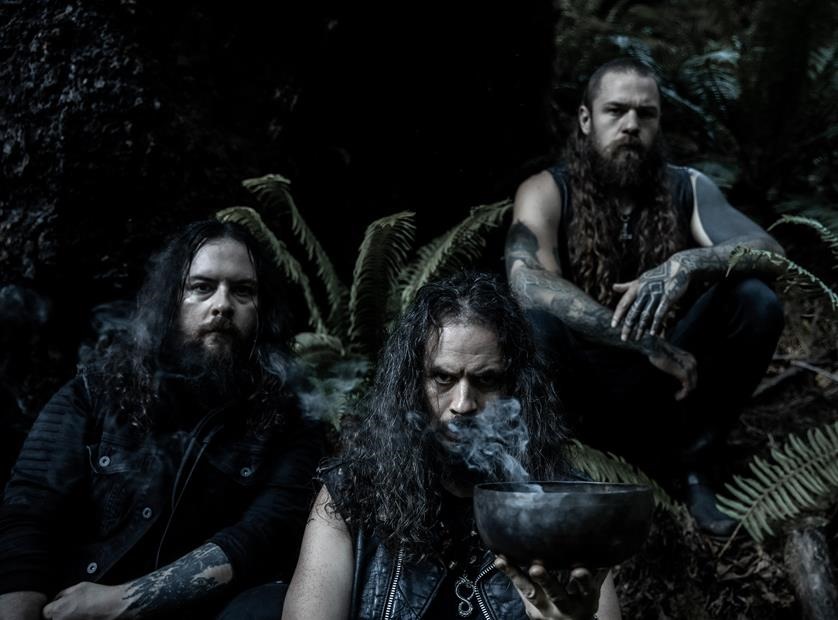
Two decades into their journey as ritualistic black metal conjurers, Wolves In The Throne Room have emerged from the forest with Primordial Arcana, their most majestic album to date, and their first release via Century Media Records (outside of USA and Canada) and Relapse Records (USA and Canada) out August 20th.

After releasing a first taste with “Mountain Magick” in June the band has just launched “Spirit of Lightning” including a special visualiser that is diving deeper into the aesthetics of Primordial Arcana. Yet again the clip was produced by Wolves In The Throne Room.

Check the clip here:

AA

ei

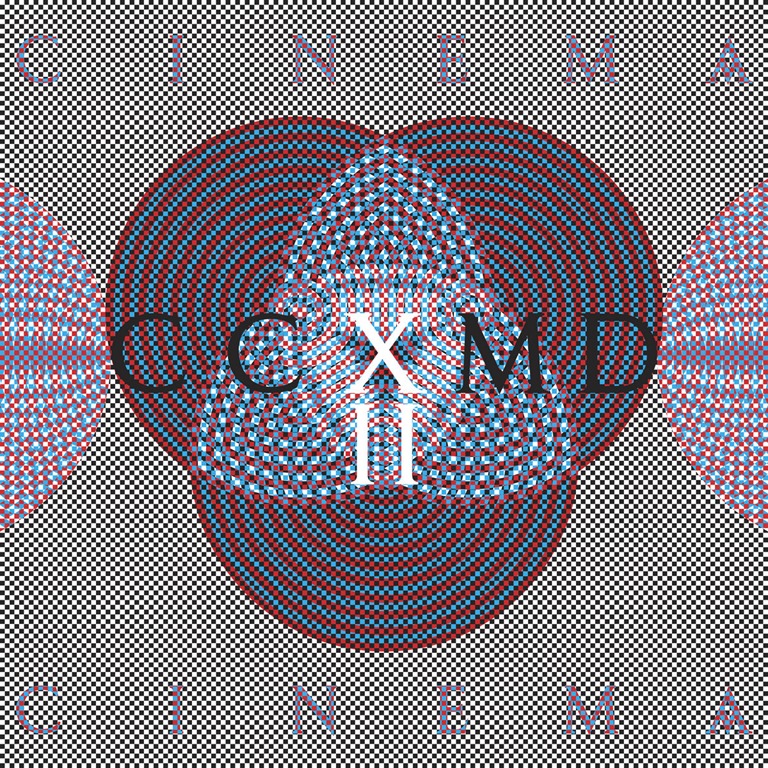
New York experimental art punk duo Cinema Cinema continues their partnership with Nefarious Industries for the upcoming late August release of their new album, CCXMDII. Alongside the album’s cover art, track listing, and more, the lead single ‘A Life Of Its Own’ has been posted alongside preorders.

With a running time past 18 minutes, ‘A Life Of Its Own’ is no conventional single. Get your lugs round it here:

AA

a4061372668_10

16th July 2021

Christopher Nosnibor

One of my mates enjoys expounding on the opinion that all band names are inherently and fundamentally crap, at least when taken on face value and interrogated for their meanings and connotations. He invariably takes it back to The Beatles – a shockingly bad pun if ever there was one, and I would have to say that point is hard to argue. It’s not even especially clever.

Any band with a one-word name prefixed with ‘the’ is, unquestionably terrible (even allowing for the fact that The Melvins is purposefully bad), and existing and acts who’ve added a definite article have gone rapidly downhill on doing so – take The Offspring, for example. But maybe not so much The Verve, because they were gash to begin with, with their overblown, flappy indie shoegaze flailings.

Recently, we discussed Death by Unga Bunga and Ender Bender, and unanimously agreed that they were both terrible names. But then, objectively, pretty much every band name – even your favourite – is poor and difficult to defend.

But we were divided over Weston Super Maim, which he deemed a bit shit, and which, objectively, is based on a terrible half pun that only UK residents and only then a percentage will grasp. But, despite knowing this, I can’t help but find amusement and a certain admiration for it and the audacity.

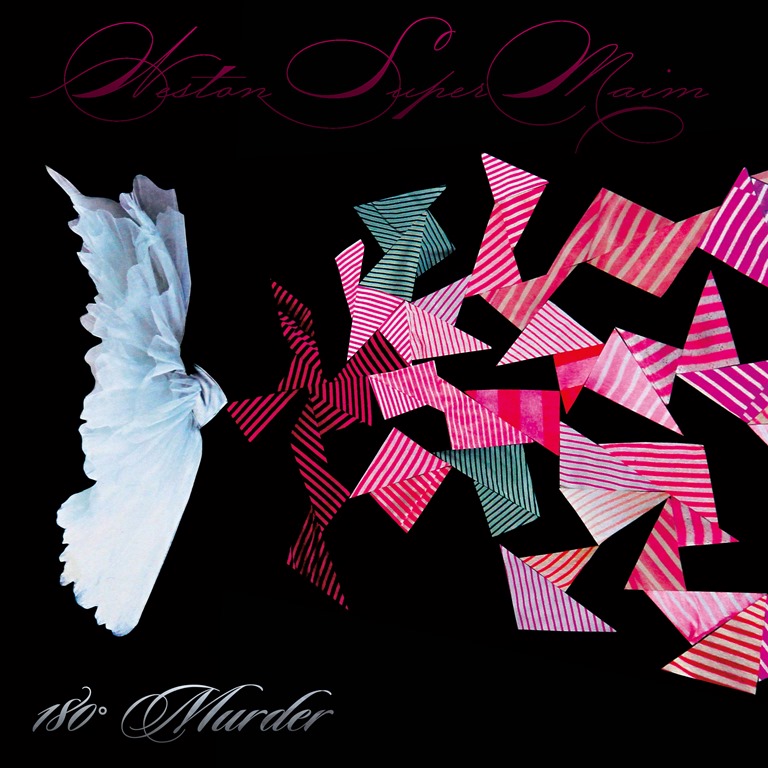
Their latest offering, the 180-Degree Murder EP isn’t so much a source of amusement, but more of a brutal industrial battering. Tom Stevens (All Of Space, Brown Stratos) teams up with US-based Seth Detrick of Los Angeles thrash outfit PDP to handle vocal duties. It’s an EP in the 80s tradition, where two tracks too long for a 7” would make up a 12” release. The two tracks on offer here both extend beyond the six-minute mark and pack all the punch.

It’s been a long time in the making, as the press release details: ‘Written as a single track, 180-Degree Murder traverses caveman heaviness, tech-driven grooves and shifting melodic patterns to create an immersive experience that rewards multiple listens. The writing process for the EP began in 2019. By the time the pandemic hit, an early instrumental draft had already been recorded, but it wasn’t until Detrick joined the project in June 2020 that things really began to take shape. Making use of extra time at home in London during the first UK lockdown, Stevens retracked instruments for the EP at his home studio while Detrick developed lyrical ideas and vocal patterns from his home in Eugene, Oregon. Vocal tracking was completed in early 2021, and the mix not long thereafter.’

‘180 Degree Murder’ is a cacophony of hard slabs plus squalling bleeping fretwork, roaring, ground-razing vocals and an air of explosive violence as guttural roars set against the most pulverising of riffs. Strapping Young Lad is the comparison that comes to mind, but then there’s also the relentless mechanised industrial blast of Wiseblood and Swans that’s also hard to ignore. Oh yes, this is hard and heavy, alright.

‘We Need to Talk About Heaven’ offers a graceful intro and the breaks are remarkably light and melodic in context, but the chug never stops, and cuts loose into violent distortion-driven fury at precisely those crucial points, and it’s not for wimps. In fact, it may only be some fifteen-and-a-bit minutes in duration, but 180 Degree Murder is a savage and brutal affair.

AA

236758