Archive for August, 2016

Perpetual Motion Studios

James Wells

The backstory is one I can relate to: Dominic Franciso, aka the brilliantly-named Space Monkey Death Sequence recounts how at the age of twelve he decided to fight sleep and watch more TV, with his channel-surfing landing him at the start of an episode of The Twilight Zone. The episode in question, ‘People Are Alike All Over’ stuck with him, but on revisiting it a decade later, the experience wasn’t the same – although this particular episode out of all of those he watched, resonated in a peculiar way.

I’ve long maintained that sleep is the enemy and is for wimps, and in this line of work, I find I’m not so much nocturnal as around the clock. Granted, I spent most of my teenage years watching weird shit, bad sitcoms, and late-night Channel 4 in the hope of something with nudity rather than The Twilight Zone, but I certainly get how these formative experiences are integral to a person’s development, and how returning to those experiences of youth will inevitably bring forth a range of emotions and that the sense of ‘same but different’ can be disquieting. It’s not the film or TV show that’s the issue, but the underlying sense of looking back into one’s mind as it was, from an adult perspective.

People Are Alike All Over is not an easy album to pin down, or to get into. ‘No Brain’ is a classic example of why this is: a difficult mash-up of bits and pieces, it lumbers from jazzy wig-out to hefty hip-hop beats, while sounding like the tape was spliced at random in a studio located in a coral cave half a mile under the sea. ‘All Brawn’ is a spaced-out, disorientating affair, and ‘I Think We’re Alone Now’ is not a cover of Tiffany’s 1987 hit, but woozy wobble of an instrumental with slithering, crunching extraneous sounds and anxietised samples (lifted from the episide of  The Twilight Zone in question) incut.’Diaphragm’ is a Spartan dirge that calls to mind Movement era New Order and The Cure’s Carnage Visors, and elsewhere, ‘Funeral Pt I’ sounds like some weirded-out whale-song, a woozy drone of underwater depths, and a metronomic drum machine accompanies a fractal, chorus-laden guitar on ‘Leave’. Samples crackle away in the background as flashes of synth swirl around and pass like comets through the strangely uncanny soundscape before spiralling into almost drum ‘n’ bass territory.

People Are Alike All Over is unsettling and intriguing, and best of all, it’s inventive and atmospheric.


images-albums-Space_Monkey_Death_Sequence_-_People_Are_Alike_All_Over_

Metropolis Records – 9th September 2016

Christopher Nosnibor

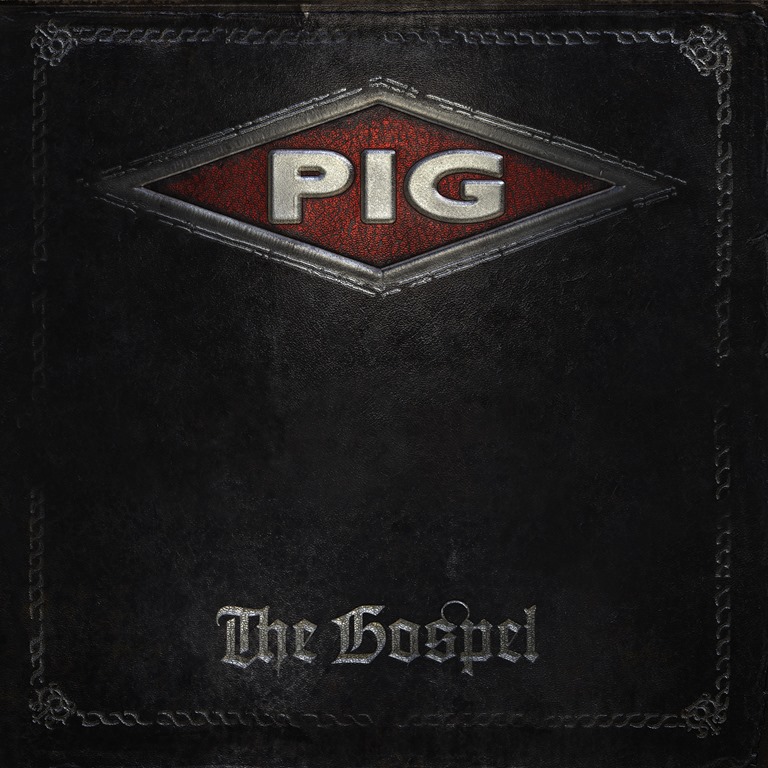
Halleluja! Praise the Lard! The god of gammon himself, Raymond Watts, returns with another PIG album after what feels like far too long away. In fact, the last PIG album was Pigmata, a remastered and expanded version of the Watts album Pigmartyr (2004) in 2005. That’s over a decade ago. Apart from a couple of EPs, including the Long in the Tooth one-off with Primitive Race, Watts has been suspiciously quiet. But The Gospel shows that no, he’s not run out of ideas, he’s just a bit of a perfectionist. Armed with a plethora of porcine puns – as is standard – and an abundance of grating industrial guitars, he’s on fine form, and if anything, the time away has refreshed his creative impetus.

Accompanied this time around by ‘partners in swine’, En Esch, Z. Marr, Guenter Schulz & Mark Thwaite (Primitive Race), Watts has assembled a collective with a crack(l)ing pedigree, and the resultant album delivers all the hallmarks of classic PIG in the form of gnarly industrial grooves with panache with a whiff of postmodern parody.

Single cut ‘The Diamond Sinners’ gets the album off to a fairly sedate start, but its mid-tempo simmer still packs plenty of grunt ‘n’ grind, before ‘Found in Filth’ slams down a gloriously trashy and quintessentially PIG industrial thrashabout, only it’s altogether poppier than the majority of previous material, with ‘woo-ooh!’ backing vocals seemingly lifted from The Dandy Warhols’ ‘Bohemian Like You’. Such unexpected twists and apparent incongruities are precisely what makes PIG such an exciting proposition, and why Watts remains one of the most interesting figures to have emerged from the whole late 80s technoindustrial scene as represented by Wax Trax! and the KMFDM collective (of whom Watts was a one-time member, as well as being part of the Foetus live lineup on the extensive tour of Thaw, which yielded the official live album Male and the unofficial but in some respects superior Rife album).

‘Toleration of Truth’ slows it down and goes for epic territory, although you’d be hard-pressed to call it an anthem, despite its climactic guitar solo or lighter-waving tone but ‘Missing the Mainline’ has real lighter-waving potential and offers up one of Watts’ most emotionally heavy – and overtly commercial – vocal deliveries to date. That isn’t to say that with The Gospel PIG have sold out: they’ve always been an act given to exploration and their extensive back-catalogue isn’t short on killer hooks or emotional resonance, as tracks like ‘Save Me’ from Wrecked evidence. 

‘Drugzilla’, previously featured on the Compound Eye Sessions EP, emerged as a collaboration between Watts and Marc Heal (Ashtrayhead, Cubanate) as MC Lord of the Flies but as this – the first official PIG release in a decade – was only given a physical run of 500 it’s fair to say it’s inclusion here is welcome., not least of all because it’s a stonking track. ‘Found in Filth’, which appeared on the aforementioned ‘Diamond Sinners’ release as remixed by Marc Heal also appears in its ‘original’ form. The gritty Americana ‘The Fly On The Pin’ is uncharacteristically delicate, but with its flamenco guitars contrasting with the snarling bassline, it’s another example of Watts expanding his sonic palette to good effect. ‘I’m So Wrong’ has hefty hints of Bowie as Watts bursts into a soaring chorus, providing the most pop moment of PIG’s career to date. But this is no sell-out: it’s merely a progression, and even early tracks like ‘Shit For Brains’ were ultimately hooky and accessible.

If The Gospel lacks the immediacy or soaring orchestration of Sinsation or Wrecked, and fails to replicate the innovation or eclecticism of Red Raw & Sore or The Swining, it’s still by no means lacklustre. It’s a more considered work than some of the later albums, and lyrically, Watts is on fine form. While still pulling together and corrupting clichés and popular phrases in a postmodern parody of lyricism, and demonstrating that he learned a fair amount from JG Thirlwell, he’s expanding his spheres of reference and demonstrates some neat flourishes here.

Everything that’s classic PIG is in place here: churning guitars, insistent bats, grating synths and snarling vocals delivered with a blend of heavy postmodern irony and emotional sincerity. Put simply, The Gospel has all of the defining aspects of PIG and no shortage of killer tunes. Let pundemoneum reign.


7823881040

Immedata – IMM006 – 4th July 2016

Christopher Nosnibor

‘Instruments that sound like instruments!’ boasts the sticker on the cellophane in which North of North is shrinkwrapped. It’s a good selling point, and I’m not being sarcastic. It’s not a matter of selling tradition, but what could reasonably be described as the album’s manifesto: ‘this is no random grimprov get together or free jazz blowout, this is a serious engagement with compositional parameters combined with instrumental virtuosity from a working band’, announced the press release. It’s a bold statement which is likely to rankle with a fair few in avant-jazz circles, but fuck ‘em. Isn’t that what avant-gardism is all about?

As it happens, there’s a lot of fucking going on with this release. The interior of the lurid pink gatefold cover contains the following uncredited quotation, impressed in silver text:

It doesn’t come from fucking somewhere else,

It comes from your fucking brain.

Your brain tells you what to do, and you fucking do it.

If your brains are fucked, then the music will be fucked.

And the music is a little fucked, but in a good way. In the way that this album is all about what the title states: ‘The Moment In and Of Itself’. It’s immediate. It’s real. The moment is the only thing that matters. The moment is history in the making. It’ a moment in time, captured, distilling the coming together of three musicians to create something – to create music. Nothing more, nothing less.

Featuring the talents of Anthony Pateras (piano), Scott Tinkler (trumpet) and Erkki Veltheim (violin), the album’s five tracks represent spirited, free-flowing improvisation – a subject they discuss at length in the three-way conversation (it’s not strictly an interview) in the 16-page booklet which accompanies the album. It’s all in the moment. It’s not pre-planned improvisation, guided, ordered, conducted. Naturally, just because the instruments sound like instruments doesn’t mean that this is a perfectly accessible work. At times in perfect accord and at others creating tempestuous discord, there are jazz elements in the compositions, such as they are. And of course, the range of sounds three instruments can name, individually and in combination, while still sounding like instruments, is immense, and at times brain-bending.

There’s certainly a strong element of playfulness which runs throughout the project as a whole. What lies North of North? It’s like the question posted in Spinal Tap when discussing the cover to their Black Album. And just as there’s none more black so there is none more North than North, unless you’re going to leave the planet completely. Which could well be the aim of these fellows, as they explore what it means to participate in ‘real-time composition’. I’m also reminded of the Bukowski book, South Of No North. Which is presumably nowhere or also off the planet. Whatever: location is a state of mind.

Leaping between brooding drama and fleeting, skittering leaps and transitioning from moody to frantically busy, with scratches and scribbly scrapes, fast fingerwork and mindboggling intuition are what make this album happen. And in the moment, they eke out extended crescendos and embark on wild detours and impromptu romps in myriad directions. It’s challenging, at times manic and eye-popping. But this is the real deal. It happened. And this album is a document of a moment, as it happened.

North of North

Kit Records – 31st August 2016

James Wells

The title is a reference to various artists who enjoyed a creative surge in their later years, who, instead of tapering away to an end horizon, defied the conventional downward trajectory to create works which marked a new and noteworthy phase in their already illustrious careers.

As the blurb explains, ‘Ageing isn’t always a dignified, serene fade. The brink before death can be violently creative; it can bring about loss of inhibition, unexpected innovations and sourceless leaps. In art, late style often means an unfettered outpouring. Confined to a wheelchair following cancer surgery, Matisse turned to simple paper cutouts in his later years. The work produced in this period, his ‘seconde vie’, became his most admired – physical restriction had been inverted in an expression of freedom and colour. Goya’s last works were also a departure from former style. Increasingly deaf and fearing insanity, he created a series of dark paintings reflecting this bleak, morbid outlook on life. Sensory deterioration seemed to offer Goya unprecedented vision’.

In recent months, I’ve heard and reviewed a number of albums which use – and abuse – church organs to unconventional ends, although a common thematics are their slow decay and their relationship with their surroundings, the architecture and sense of place. Sense of space is also integral to the instrument’s sound: as grand an instrument as a church organ is, much of its power resides in the natural reverb of the building in which it is installed.

But Late Style is a work preoccupied less with location or architecture, but time, and where the organ’s power is concerned, the focus of attention here is on the diminishment of that power, something which also inspired Stefan Fraunberger’s recent album Quellgeister 2: Wurmloch.

However, while Fraunberger’s work and Michel Moser’s Antiphon Stein were centred around pipe organs, Drömloch’s instrument of choice is a Hohner church organ, a synthesiser situated at the label’s headquarters. And so it is that an instrument which once produced sounds resembling a pipe organ near the end of its life wheezes in a different kind of way, leading to the contemplation that ‘Perhaps circuitry and software can have late style, too.’

As is often the case when process becomes integral to the end product, a little expanation goes a long way: ‘Like creatures and plants, they change over time; they decay, confront mortality, and their functions adapt. This record is a collection of live takes recorded directly from a Hohner church organ at the point of collapse. This circuitry of this hulking synth, long-installed at Kit HQ, has inexplicably decayed over time, rendering its preset drum loops and melodies as raptures of white noise, squelches and and bizarrely spiralling clangs. The result is primitive, aleatoric music – weirdly moving digital swan-songs, each named after the mangled preset triggered during recording’.

Late Style may be dominated by elongated drones and quivering, wavering hums, sounds recognisable as originating from the groan and swell of a dilapidated organ, but bubbling bleeps and less organ-ic sounds are overlaid and cut across these to forge strange juxtapositions.

The first track ‘8 Beat Variation’ finds the organ fading in and cutting out while stop-start percussion and variable echoes and delays disrupt any kind of flow. With volumes and tones wavering and fluttering unpredictably, and extraneous feedback, whistles, crackles and pops interfering with the irregular drum machine beats, the effects is disorientating.

‘Waltz’ sounds very like the time one spends fiddling with a keyboard trying to find the right sound, when every preset just sounds naff. If much of Late Style sounds like s much pissing about, then perhaps that’s largely the point: like many experimental albums – Miguel Frasconi’s Standing Breakage (for Stan Brakhage) captures the artist striving to push a cracked glass bowl to its limits and beyond – Late Style is about taking an opportunity when it presents itself and capturing the outcome. In this sense, it’s a truly experimental work.

The fact that this album, and those mentioned previously, are concerned with the destruction, or death, of an instrument, is significant: the fundamental premise of the avant-garde is that in order to move forward, to create anew, it is first necessary to destroy.

There are also some quite compelling moments to be found here: the surge and swell of ‘OI’ builds an ominous drama, while ‘Key’ is a rather fun exercise is microtonal blippage that sits alongside Mark Fell’s exploratory releases on Editions Mego. However, unlike Fell’s works, Late Style is both more varied and more listenable.

Drömloch - Late Style

House Of Mythology – 26th August 2016

Christopher Nosnibor

Like Natalie Imbruglia, I’m torn. Fence-sitting is no position for anyone, least of all a music reviewer: ho-hum is no critique. But I’m torn between instinct and critical distance here. Y’see, it’s a fine line between spirituality and pseudomystical bullshit. And the trouble is, one man’s spirituality is another man’s pseudomystical bullshit. The orientation of most organised religions and many other credos includes a certain emphasis on collectivism and unity, but ultimately any belief system or spiritual framework is inherently personal.

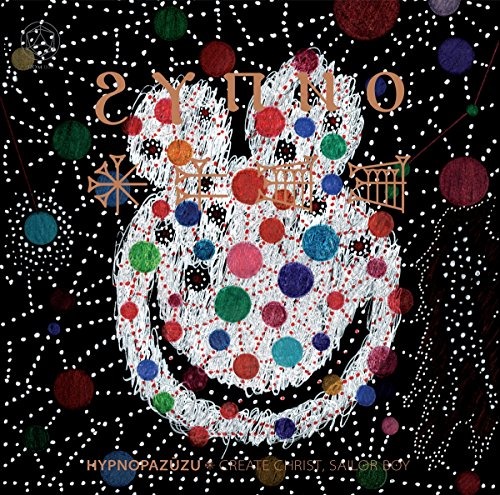
This review starts on difficult ground: Hypnopazūzu is a collaboration between David Tibet and Youth. I’m a huge fan of Killing Joke, and can only salute Youth for his production work, despite the fact I’m not keen on many of the major artists he’s worked with. David Tibet is an entirely different proposition and is someone I’ve never really been a fan of. I don’t have any issue with Current 93 per se, and it would be a grave mistake to overlook their contribution to the development of the experimental strain of industrial music in the early 80s. I’ve simply never got into their work. But some of the company David Tibet has kept over the course of his career does give cause for concern, not least of all prominent neo-Nazis Boyd Rice and Douglas Pearce. It would be a mistake to call Tibet guilty by association, but perhaps he should be more careful about the people he works with: Current 93 re broadly associated with Neofolk, and the Neofolk scene is conspicuous for the number of dodgy people connected with it. And beyond that, there are an awful lot of really turgid albums in circulation, which, when not revelling in far-right thematics, are preoccupied with disappearing up their own sphincters while preaching high occultism.

To give Tibet the benefit of the doubt, he presents as a broad-minded individual, who identifies himself as a Christian, but has devoted a lot of time to exploring occultism, Buddhism and Gnosticism, and as such, appears to be genuinely exploratory (rather than hiding behind the pretence of exploration as a means of justifying the use of dangerous imagery), engaged with spirituality in its broadest sense on a purely intellectual level first and foremost. Which brings us to Create Christ, Sailor Boy. How does one position a work such as this?

The press release describes it as ‘transcendent, tumultuous, and tricky, the sound of two spirits skipping as one to create a sidereal glimpse into uncounted cartoons,’ and quotes Tibet as saying, “I am happy always to work with Youth in any way, forever and for ever and always and in all ways… I wait for my Ouija Board Planchette to receive his Mind’s Eye Text.”

I’ll refrain from making any gags about the mind’s eye, third eye, and the brown eye and keep things as objective as possible. In such a context it’s perhaps a mistake to attempt to determine whether or not this is an album of high spirituality or pseudomystical bullshit, primarily in the interest of keeping a certain critical distance. Is it possible to separate the aesthetic from the art? Perhaps: Tibet has also long shown himself to be a man preoccupied with the apocalypse, and the sense of apocalyptic foreboding hangs heavy over this album. In the current global climate, it feels entirely appropriate. These are scary and challenging times, regardless of one’s faith or faithlessness, and in this context, Create Christ, Sailor Boy is an album of our times. It’s the soundtrack to struggle, the soundtrack of desperation, of humanity reaching out and clutching, desperately for something. Anything.

There can be no question that Create Christ, Sailor Boy is truly immense in scope and depth. Particularly in depth. This goes beyond the human condition. And in many respects transcends vague notions of spiritualism. This is not soul music, or even soulful in the conventional sense, so much as music which probes the very core of the soul, pulling hard at the gut. From the opening notes – shimmering, sweeping synths and crashing cymbals – provide an epic and portentous backdrop to Tibet’s evocations of apocalypse and build to a momentous climax. And all within the album’s first five minutes. Yes, this is colossal work that’s epic on every level. Every level. On first listen, I detested this album, but it needs time to grow. And time to grow. Whichever side of the fence you may sit.

‘Christmas with the Channellers’ brings forth an ethereal subterranean atmosphere which typifies the album as a whole. It’s an immense track which brings together heaven and hell in a battle on this earthly domain and as Tibet tears his guts out through his vocal delivery, the enormity of existence is thrown into sharp relief. ‘The Crow At Play’ is a tense colossus, which finds Tibet rasp into a frenzy as he name-checks Gary Glitter. Yes, this is a work’s that’s socially engaged and as such it would be wrong to accuse it of being a work which focuses on the spiritual at the expense of the real world.

‘It’s tool time!’ Tibet announces in a wide-eyed and excited tone on ‘Sweet Sodom Singings’. Is the invocation of Home Improvement intentional? It surely must be. There is no shortage of lyrical evidence to confirm that Tibet is as in touch with the upper world and its culture as he is with all things internal and far above the flesh.

Sonically, it’s interesting, too, with tracks like ‘The Sex of Stars’ whipping up a dense sonic maelstrom in contrast with the psychedelic / eastern / industrial crossover of ‘Sweet Sodom Singings’ and the trudging ‘Pinoccio’s Handjob’, the ethereal spacetronica of ‘The Auras re Escaping into the Forest and the and brooding folk of ‘Night Shout, Bird Tongue’. In terms of textural range, it’s hard to fault.

In many respects, I’m still on the fence, but musically and compositionally, Create Christ, Sailor Boy is an impressive work. It may be pseudomystical bullshit, but it’s a powerful album that has a lot of listening hours in it.


Hypnozazu - Create Christ Sailor Boy

Cinema Cinema, the full-throttle, experimentally-inclined rock duo from Brooklyn,  are getting ready to undertake their latest European tour (dates below). They are currently preparing to maser their fourth full length album, their second with Martin Bisi producing at BC Studios in Brooklyn, NY. In finishing the work they’ve overcome obstacles that included the studio – and much of their equipment being stolen from the recording studio.

Cinema Cinema first met Martin Bisi in 2012 in the aftermath of Hurricane Sandy. Bisi, whose BC Studios was located just a few blocks away from the band’s rehearsal studio, was walking through the streets overwhelmed by the destruction he encountered when he came upon guitarist Ev Gold and drummer Paul Claro clearing ruined instruments and amps from the remains of their practice space. The three immediately struck up a friendship and kept in touch thereafter.

Soon after that incident, the band experienced an amazing outpouring of sympathy and support from their friends, fans and fellow musicians who donated money and equipment, bought records and merchandise. This allowed Cinema Cinema to refurbish and replace equipment, and – with a bit of borrowed gear – and start playing live again within two weeks. In 2013, the duo would wind up performing some 75 shows, including  a handful of dates opening for Black Flag, as well as their first European tour, opening for Bisi.  Martin had kept in contact and they shared bills in Brooklyn shows which led to the European touring and then producing A Night At The Fights.


European tour dates are as follows…now if only they’d come to the UK!

SAT 20 AUG
@ Rock The Station Open Air
Leitersdorf AT

SUN 21 AUG
@ Funktown Chill Festival
San Leonardo IT

MON 22 AUG
@ TBD
Vienna AT

TUE 23 AUG
@ Stajenka Pegaza
Poznan PL

WED 24 AUG
@ Frappant
Hamburg DE

THU 25 AUG
@ Schokoladen
Berlin DE

FRI 26 AUG
@ Gangeviertel Festival
Hamburg DE

SAT 27 AUG
@ Gurtel NightWalk Festival
Vienna AT

Gizeh Records – GZH68 – 2nd September 2016

Christopher Nosnibor

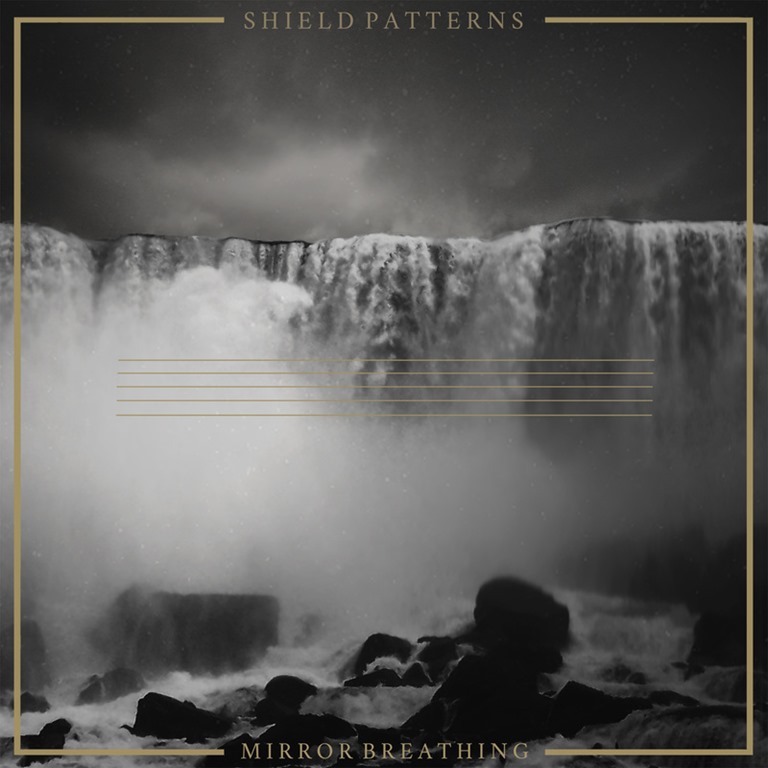
Richard Knox’s musical career is marked by works which are ponderous and atmospheric. Howeevr, his latest venture in colaboration with Claire Brentnall, is distinguished by a leaning toward material which feels more focused, compositionally, and more direct. It’s all relative, of course, and Mirror Breathing is, as the title implies, a work which is hazy, misty, the songs grasping, just for a second, at the ephemeral and reflecting the moments back, refracted and rarefied. Following on from debut album Contour Lines (2014) and 2015’s Violet EP, Mirror Breathing marks a step further into dark pop territory, although dark is indeed the operative word here, and it’s clear that in Brentnall he’s found the perfect collaborator: a person with not only an amazing voice, but an equal understanding of what it takes to forge ponderous, nuanced, atmospheric music. It’s not a matter of drawing out which each brings to each composition: Shield Patterns are built on collaboration and intuition, more of a case of a creative space emerging from a collective ‘third mind’ than the simple coming together to two musicians. 

The musical backing the pair create is atmospheric, and captures elements of light and shade which contrast magnificently; dark, rumbling low-end and industrial scrapes are tempered by ethereal ambient sounds of indeterminate origin. Claire Brentnall’s breathy vocal hangs, spine-shiveringly, over the drifting soundscape. The whole production is draped in a soft-focus feel, a mist which partially obscures the shapes and forms and renders them vague, unfamiliar and ambiguous. This ambiguity and unfamiliarity is an unsettling sensation, and while the graceful vocals superficially soothe, the emotional tension and overall sonic disquiet ultimately leave the listener pulled in different directions, peering into the shadows and wondering what lies just out of view. Arrhythmic percussion echoes in the dark, detonations which send shuddering vibrations through the ground. There’s a stark beauty to ‘This Temporary Place’ that calls to mind Zola Jesus, and elsewhere, dark industrial grumbling tremors contrast with the dreamy, otherworldly atmosphere of ‘Cerulean’.

Julia Kent is an artist who has a tendency to crop up in all sorts of places and with remarkable frequency: a respected solo artist in her own right, she is also a one-time member of Black Tape for a Blue Girl, as well as performing as a member of Rasputina and Anthony and the Johnson, he cello work on three of the tracks here adds further texture to the arrangements. Ultimately, though, it’s the balance of the instrumentation which really makes the album work: there’s a lot going on, with many incidental sounds blended in, but it’s seamless and no one aspect or sound dominates at any point.

Again returning to the connotations of the title, if the image of a steamed mirror can be read as a twist on the ‘smoke and mirrors’ metaphor, then there is an element of deception in the way the compositions seem sparse, but are in fact constructed from manifold layers which form strata of remarkable sonic depth and density. The drums may be distant-sounding and low in the mix, but they roll like thunder. In Claire’s vocals, you don’t hear every word, but you feel them. Sometimes she soars so high as to be barely audible to the human ear. Sometimes, it’s less about the actual lyrical content than the delivery, and her voice as of and in itself conveys more than mere words ever could. There’s a quality in Claire Brentnall’s voice which communicates on a subconscious, subliminal level. Her voice echoes in the recesses between the beats, drifts along, enveloped in the gauze-like textures, and occupies invisible spaces between the notes. Hers is a voice which is delicate, but by no means weak; yet the strength of her delivery lies in her ability to convey vulnerability.

From the alluring ‘Dusk’ to the dolorous chimes of ‘Blue Shutters’ and the sinister depths of ‘Balance & Scatter’ with its dark jazz intimations, via the tranquil and sedate(d)‘Sleepdrunk’, the songs conjure scenes of both anguish and ecstasy and often explore the pull of existing in both states simultaneously. Haunting, hypnotic and disquieting, Mirror Breathing is an impressive work that warrants time for thought and reflection.

Shield Patterns - Mirror Breathing

Metropolis Records – 12th August 2016

Christopher Nosnibor

It’s been a full thirty years since Sam Rosenthal began operating as Black Tape for a Blue Girl. Over that time, there have been ten albums showcasing ethereal, gothic (in the theatrical, brooding sense, rather than goth-rock sense) and dark ambient sounds which established them as pioneers of American darkwave. Perhaps it’s because of their vanguard position that they’ve maintained a relatively modest cult status in the shade of various associated acts and artists they’ve influenced.

These Fleeting Moments, their first album in seven years and released to coincide with their thirtieth anniversary, sees the return of original vocalist Oscar Herrera, after a seventeen-year hiatus from music. It’s perhaps fitting, then, that the album represents something of a return to the roots of Black Tape for a Blue Girl, a name which conjures uncomfortable images while simultaneously evoking doomed romance and the extremities of twisted devotion.

Opening the album with a seventeen-minute behemoth is a pretty bold move. ‘The Vastness of Life’ encapsulates its own essence within its title: a track that builds from a brooding neofolk strum and drifts through a succession of transitions through weeping string and passages and segments of wispy, ethereal ambience, it’s an epic journey which is practically an album in its own right. The twin vocalists emote achingly and pour every last drop of soul into these rarefied moments. Where could any album go from there? With the exception of ‘Meditation on the Skeleton’, with its ten-minute running time, the remaining twelve tracks are relatively concise, with ‘Limitless’ a quintessential example of the 90s goth darkwave sound as exemplified by the likes of Every New Dead Ghost and Suspiria: fractal Cure-esque guitars reverberate around cold synths by way of a backdrop to a melodramatic baritone vocal delivery. But neither track individually represents These Fleeting Moments as a whole. In fact, no one track does, and the album’s diversity is quite something, spanning shoegaze and folk and neoclassical, often simultaneously.

Much of the instrumentation is organic and natural-sounding, with piano and strings at the heart of many of the compositions. These are used to diverse effect, from the sparse, haunting moorlands of ‘Please Don’t Go’ to the insistent throb of ‘Six Thirteen’. But for all the range, all of the grace and elegance, a darkness hangs over every piece: ‘Bike Shop’ is no whimsical indie pop ditty, and elsewhere, ‘You’re Inside Me’ invites comparisons to both Scott Walker and Marc Almond, and ‘Zug Ko-In’ is a slow-turning hypnotic track which calls to mind both The Doors and more recent Swans and features a soaring guitar solo.

It’s an album which is more exploratory and expressive than linear: the track flow together to form a much greater whole, forging a work that’s immersive and meditative. Yes, it’s an album one listens to, and it’s not one to dip in and out of or select highlight tracks from: rather, it’s an album to make time stand still and to get lost in.

7823881033

Christopher Nosnibor

What began life earlier in the year as one man’s seemingly crazy idea to organise a festival showcasing York-based bands, tentatively mooted on Facebook to see if there was any interest gained traction pretty swiftly, and a few short months later here we are: 18 bands across two stages. And not only is it a killer lineup, but it’s free. So while I fully intended taking the day off just to soak it all up, socialise, drink beer and watch bands, I figured that since Dan Gott and some of his mates put in so much work to make it happen, then the least I could do was record the occasion.

With bands alternating between the indoor stage and the second stage in the car park from 1.30 to gone 11 (with a civilised break for dinner), it wasn’t an event to race round and pack ‘em in as much as going with the flow, meaning that while I didn’t watch all of the bands on the bill and took some well-earned time out to kick back on the beach (yes, this summer a portion of the car park has been converted to an urban beach of golden sand) or on the grass in the beer garden, I got to see, and hear, plenty.

Anyone who complains that York doesn’t have much to offer, or that it lacks diversity isn’t getting out enough: with only a smattering of indie bands and even fewer acoustic performers, the quality and range of acts on the bill is impressive by any standards. And while it’s about the ‘local’ scene, many of the bands playing are making – or already have made – an impression in much wider circles, building audiences nationally. York may be a small city, but when it comes to its bands, parochial it ain’t.

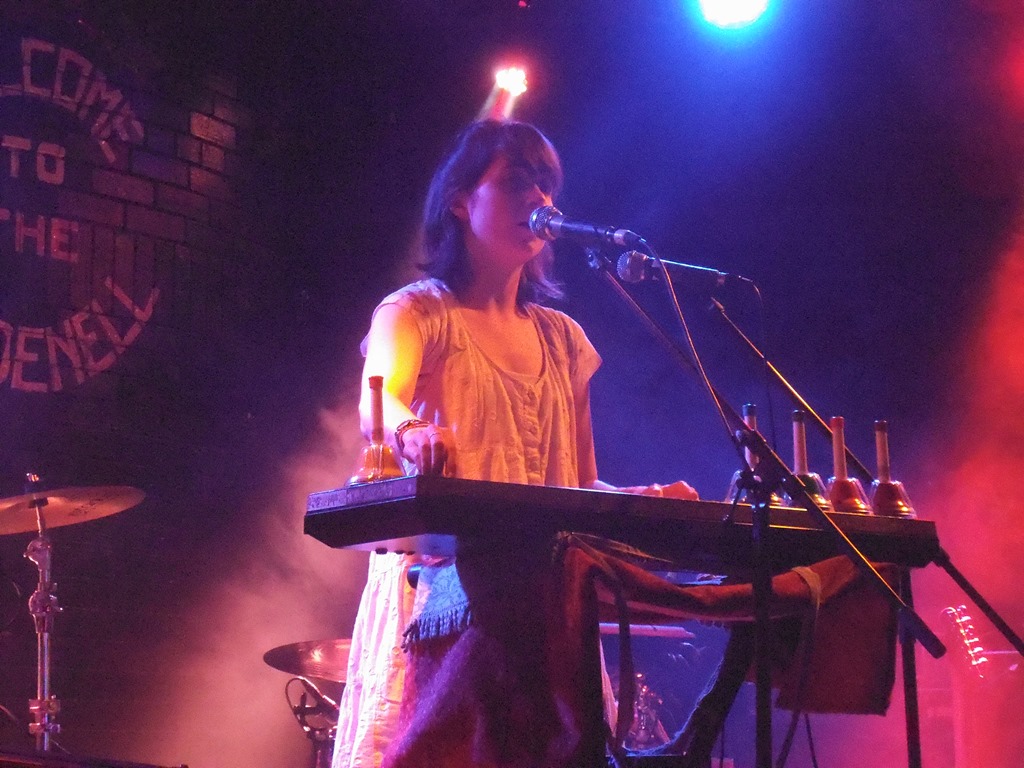
It wouldn’t be a York event without Boss Caine, and Dan Lucas’ solo set gets the afternoon session going in glorious sunshine on the outside stage. In fact, it’s the perfect way to start a festival: there’s barely a breath of wind, it’s baking hot, but there’s plenty of cool beer served well (the Milestone Brian Clough was nice and refreshing, but it eventually ran out, forcing a shift to the Sunny Republic Shark Head Friesian Pilsener, which was superbly crisp and hoppy), and the sound is excellent.

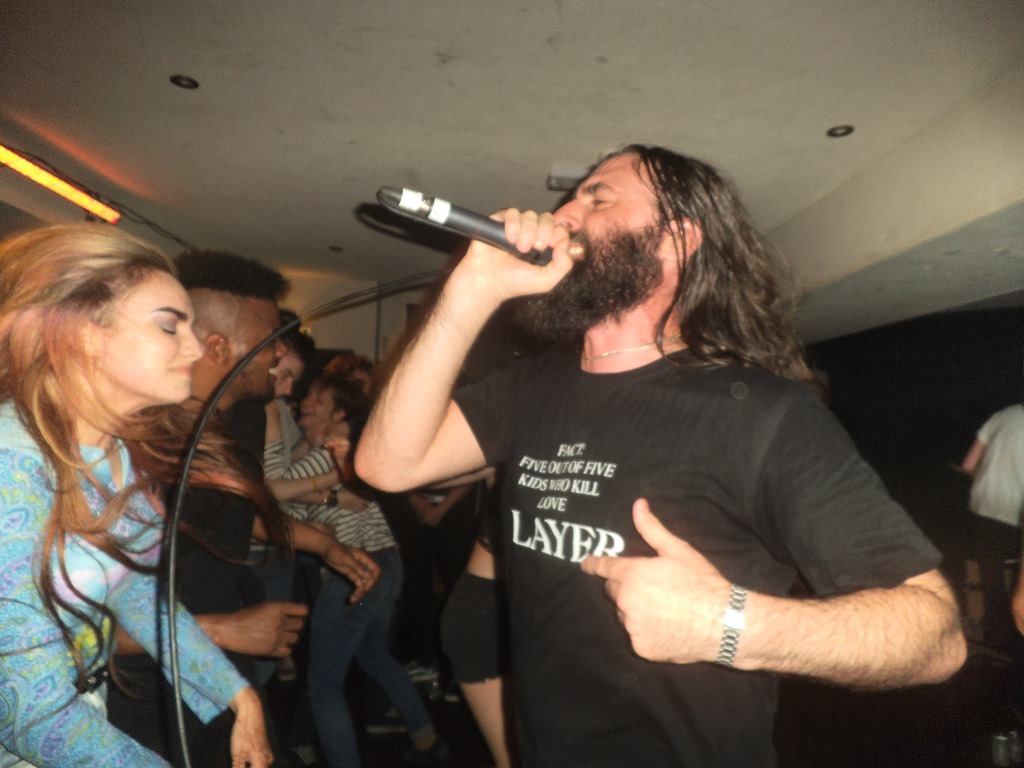
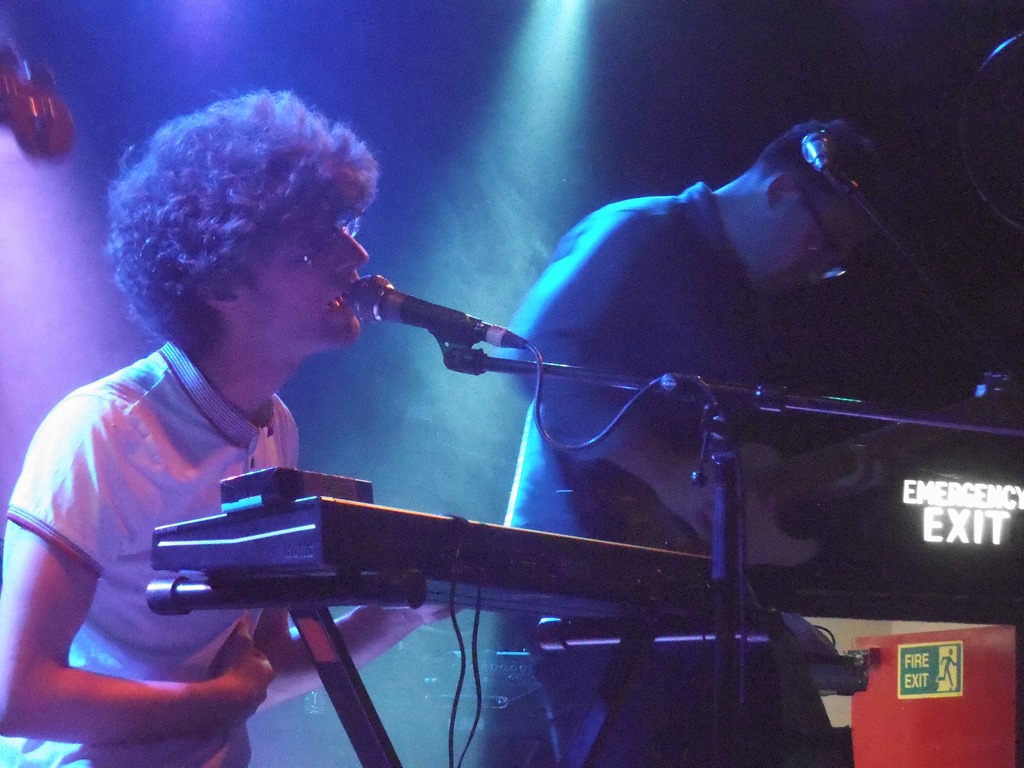
With each act having a 20-minute slot, no-one outstays their welcome and everything runs smoothly, even giving ten minutes between acts to get to the bar and all the rest. It’s fair to say there wasn’t a duff act on the bill, but noise-rock duo Push provided an early highlight. Fusing choppy guitars with the dynamics of Nirvana and kicking out songs with titles like ‘Kitty Basher’ and ‘Moggy Wrecker’ with maximum scuzz, they’re anything but wet indie and make for an exhilarating experience. Putting on the full-throttle raging racket of Deathmace at four in the afternoon was a bold move, and ultimately a stroke of genius. The purveyors of ‘repulsive thrashing death’ are fully committed as they growl and grind their way through a set that’s a relentless onslaught of rage and monumentally heavy. Just the way it should be.

Deathmace

Deathmace

How I’ve managed to avoid Fat Spatula this long will forever remain a mystery, but hearing the hard-gigging alt-rock foursome leaves me confident I’ll be back for more, and soon. Having a genuine American-born frontman gives their Pavementy post-hardcore / noise pop / surf rock an air of authenticity. The scratchy guitar sound may be lo-fi but it’s eminently listenable and there are some strong melodies that provide earworms galore.

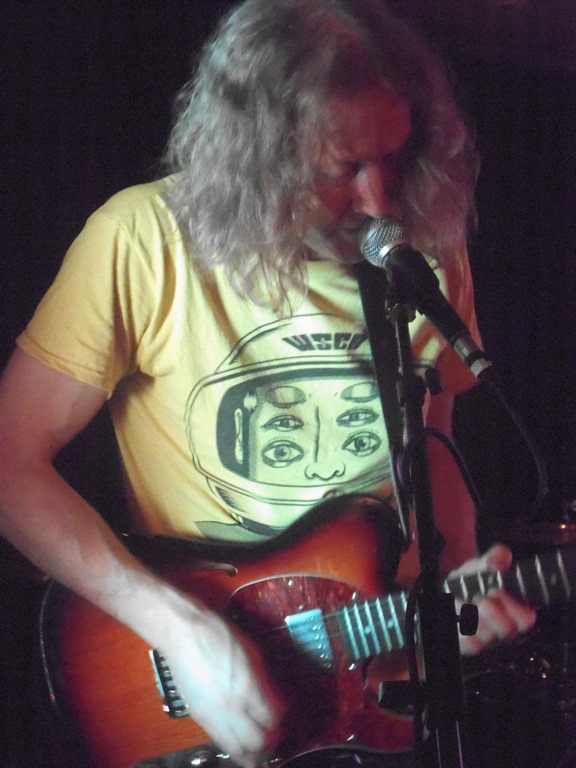
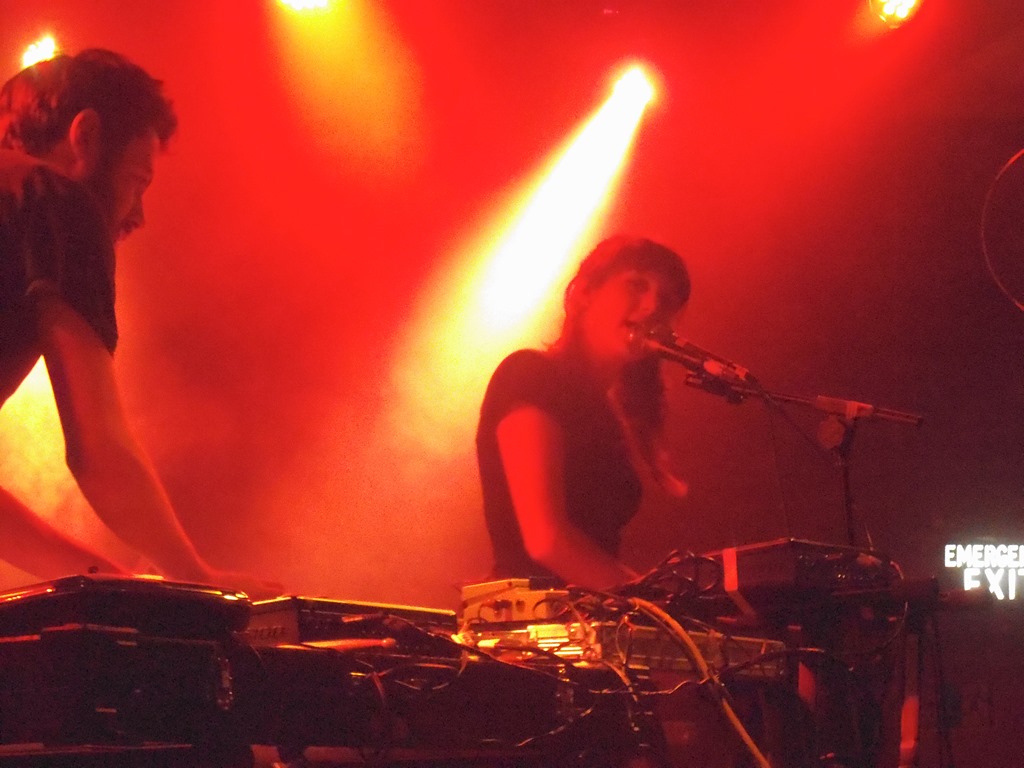
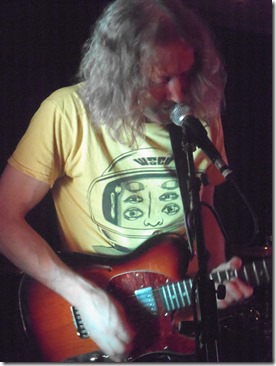
Soma Crew, meanwhile, I’ve seen a heap of times and it’s no secret that I dig their scene. On a good night, their psychedelic drone hits a perfect groove to hypnotic effect, and on this outing they really hit their stride.
DSCF5529

Soma Crew

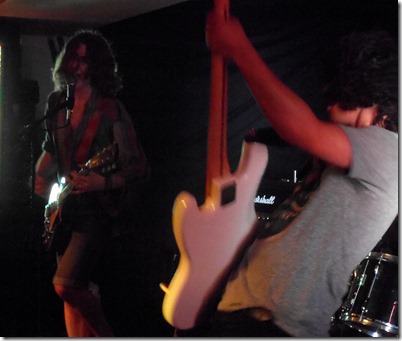
After the break, Naked Six provided another of the day’s highlights. Again, a band who’ve bypassed me on the live circuit up to now, it’s not hard to grasp why there’s a buzz about them right now. They’re a classic power trio with a sound that’s rooted in that classic vintage, steeped in blues rock and with a big Zeppelin vibe and delivered with incredible panache. Making inroads into London and with backing from BBC Introducing, they’re a band on the up.
Naked Six

Naked Six

The last three acts on the bill have all been building reputations further afield and as a killer bam-bam-bam three-way finale, it works well: the power-punk of The Franceens gets things moving down at the front. As is standard for them, they’re on fire and their blistering energy turns the already hot room into a sauna.

The Franceens

The Franceens

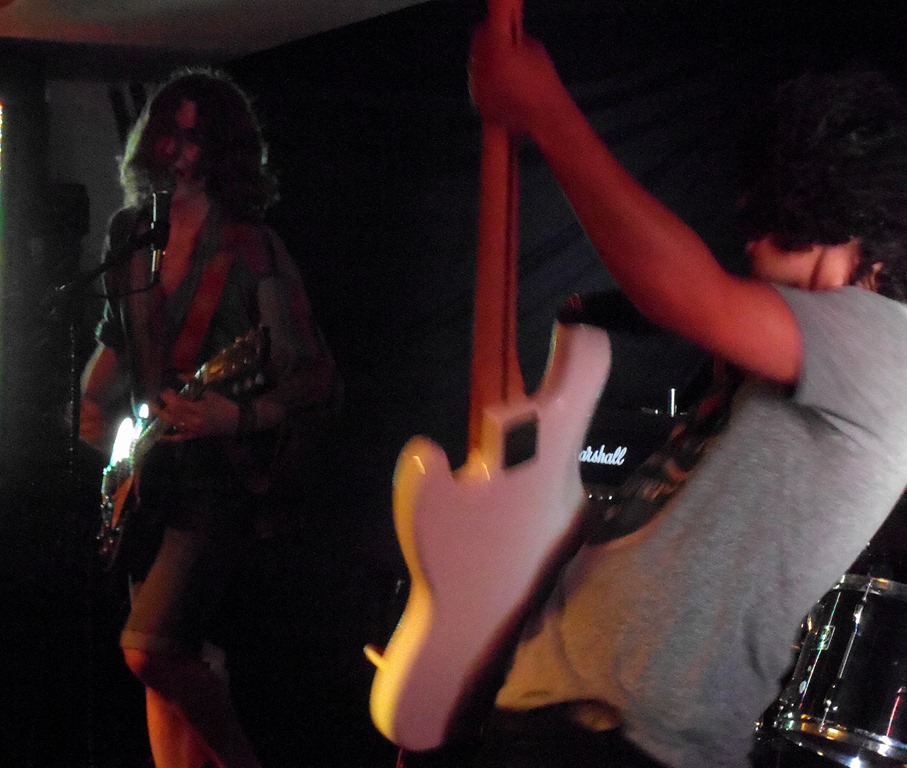
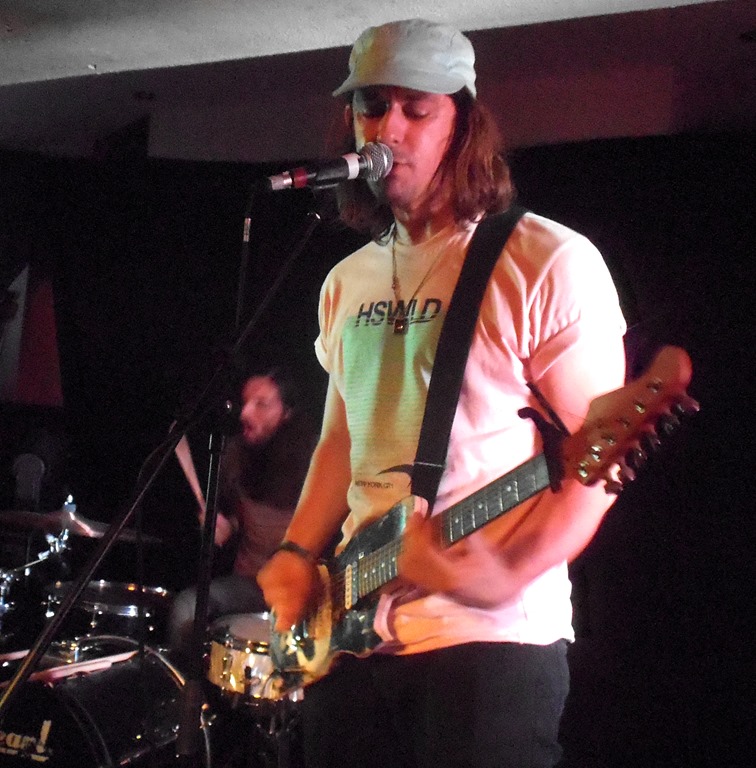
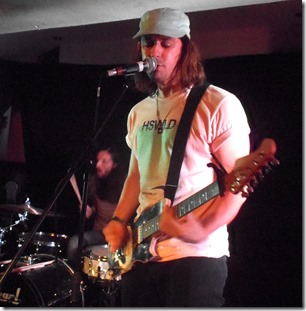
It may be their second set of the day having pegged it back to York after playing at Hull’s Street Sesh festival earlier in the evening, but if they’re in any way weary, it doesn’t show. Martyn Fillingham plays the first half of the set, which boasts a cluch of new songs, with a guitar that could reasonably be described as ‘stripped back’: the body’s sawn down to minimal size, with just enough wood to house the essentials, namely the pickups, wiring and controls. It still yields a barrage of noise, it’s treblesome clang pinned down by Steven Reid’s superhuman drumming.
And the Hangnails

…And the Hangnails

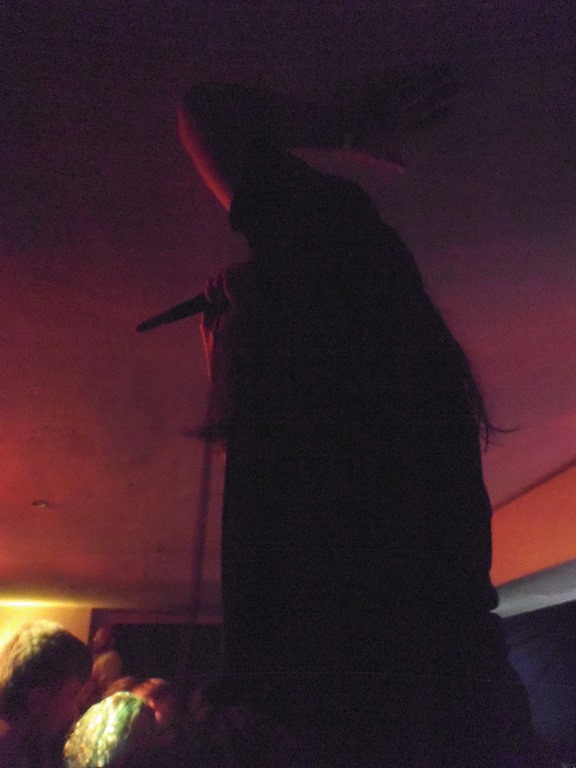
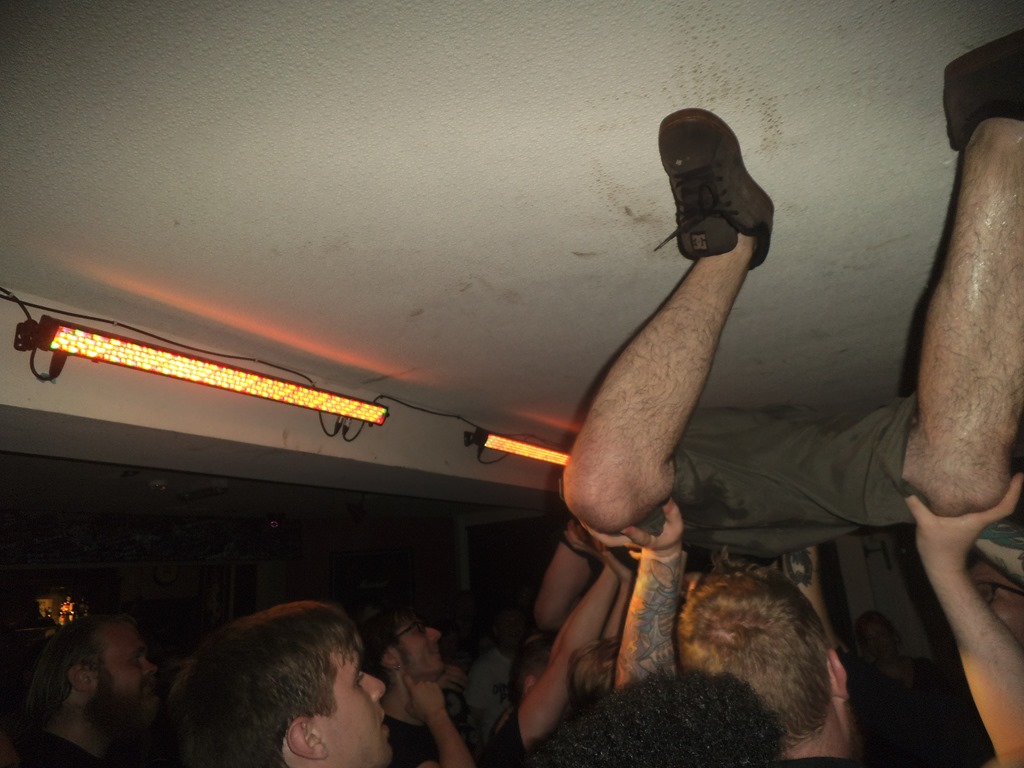
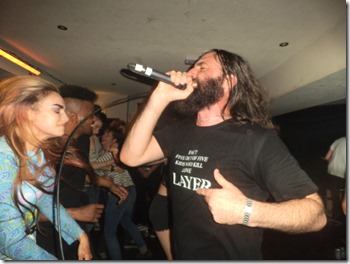
And then there’s ((RSJ)). They may not be your everyday family-friendly festival crowd-pleasers, but the this isn’t your everyday festival, even though it’s been very family friendly all day: there’s no doubt they’re the biggest band on the bill, and have the biggest sound o match. That they’ve toured and played with Raging Speedhorn, Orange Goblin, Funeral For A Friend and American Headcharge, and opened for Slayer gives a fair indication of their stature, and to see them in a place this size is something else. Current single ‘Hit the Road Jack’ features John Loughlin of Raging Speedhorn (making it a kind of RSJ / RSH collaboration), and it’s suitably punishing. When it comes to delivering thunderous, sludgy riffs that hit like a juggernaut, ((RSJ)) are absolute masters. They’re also consummate showmen, and the in-yer-face delivery really amplifies the intensity of the material. There’s been much beer drunk and the floor is awash with at least half a gallon, and the moshpit erupts, but remained good-natured. It’s only fitting that toward the end of the set, Dan Cooke should be borne aloft and traverse mere inches below the venue’s low ceiling: because while everyone is melting, they’re also loving every moment, and it’s an uplifting experience indeed.
DSCF5667DSCF5658DSCF5676

((RSJ))

In all, a great day / night, not just as of and in itself, but also in terms of what it represents: a casting aside of all genre differences and a coming together of bands and fans. There is strength in unity, and in diversity, and Fully York is a triumphant celebration, which reminds us that ultimately there are only two kinds of music – good and bad. And at Fully York, it’s all good.