Posts Tagged ‘world music’

Constellation – 3rd October 2025

Christopher Nosnibor

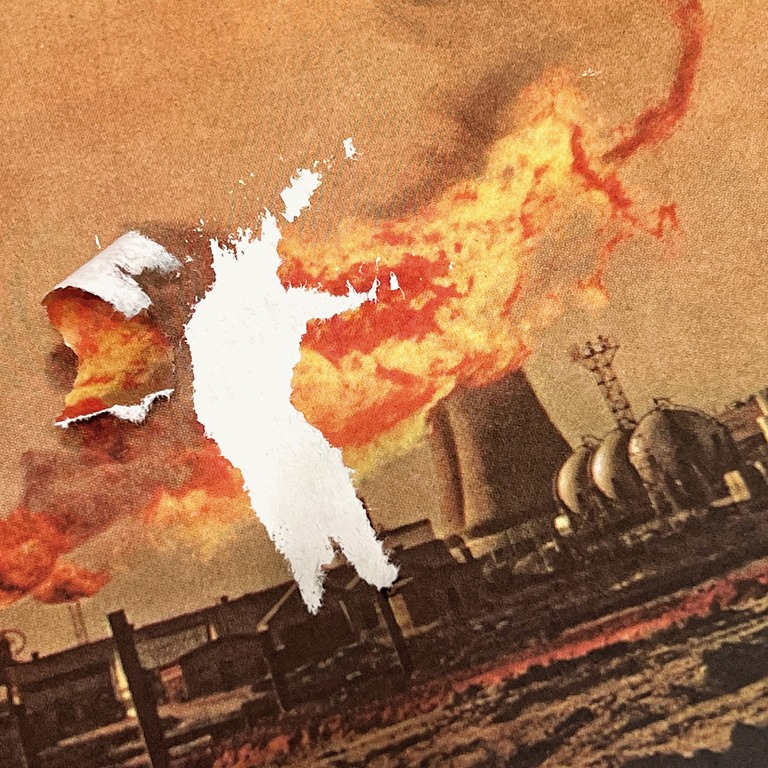
The third album by The Dwarfs Of East Agouza (Maurice Louca (Lehkfa), Alan Bishop (Sun City Girls, Sublime Frequencies), and Sam Shalabi (Land Of Kush) promises ‘a focussed set of rhythmic psych-trance free/improv’.

As their moniker and the album’s title suggests, they demonstrate a collective interest in urban myths, the strange, the embroidered and embellished tale, perhaps spun with a twist of esoteric mysticism, but at the same time, aren’t entirely serious about it all. That is by no means to imply they’re not serious about the music they make, even when the pieces have titles like ‘Goldfish Molasses’, ‘Saber Tooth Millipede’, and ‘Swollen Thankles’. Because it is possible to be intense and serious and at the same time retain a capacity for humour, a sense of the absurd.

Sasquatch Landslide is an album that’s knowingly ‘out there’, but at the same time, it’s clearly the work of a collective who are completely immersed in the world they’re creating through a conglomeration of sounds which border on the transcendental. Elongated, quavering drones and an array of percussion merge in a haze to forge loose, yet curiously intense grooves. The aforementioned ‘Sabre Tooth Millipede’ is a full-on wig-out jazz frenzy played with the psychedelic loopiness of Gong as their most far-out, and at the same time, amidst the twanging and clattering, there’s something of the spirit of The Master Musicians of Joujouka about it. For an added addling bonus, there are tempo changes galore, and some parts where there are multiple tempos crossing one another simultaneously as the players seemingly detach from this physical realm into different plains of consciousness, separate from one another yet still connected by some kind of telepathy. Because however weird and disjointed it gets, somehow it works.

‘Double Mothers’ goes spaced-out, haunting, and atmospheric. On the one hand, it’s one of the most overtly jazz pieces on the album, but the wandering, reverb-soaked saxophone weaves its way through a nagging twang of a distinctly Eastern influence, while a pulsing heartbeat rhythm creates an underlying tension.

Single cut ‘Titular’ is busy and adds an easy listening, lunge-like organ trill which is completely at odds with the hectic hand drums and frenzied fretwork. They really cut loose on the ten-minute ‘A Body to Match’, stretching things out in all directions – tempo, texture, detail, serving up a pan-cultural smorgasbord of noodlesome improvisation. There, they slowly pick apart the component elements, a slow-motion explosion or deconstruction of the composition, each part slowly moving further from the rest. ‘Goldfish Molasses’ slowly melts, a plodding beat reminiscent of ‘What A Day’ by Throbbing Gristle provides the spine for this slow, pulsating Industrial thudder, where a woozy bassline undulates in the background, and incidental noises and chattering yelps fill the space behind some indecipherable vocal.

Sasquatch Landslide is big on warped, looping drones and layers of intricacy upon layers of intricacy, which weave a shimmering sonic cloth that ripples and shifts before the eyes – and ears. Time itself bends and stretches, taking on an almost elastic quality as the threads unravel to reveal new layers and dimensions. One can feel the instrumentation expanding outwards into infinity – and infinite reverb – in the same way that the universe is continually expanding, only in an accelerated timeframe. For all of its abstraction, Sasquatch Landslide provokes quite visual interpretations of the sounds emanating from the speakers. I expect to have very strange dreams tonight after this.

AA
08 - The Dwarfs Of East Agouza cover art

Transnational Records – 10th April 2025

James Wells

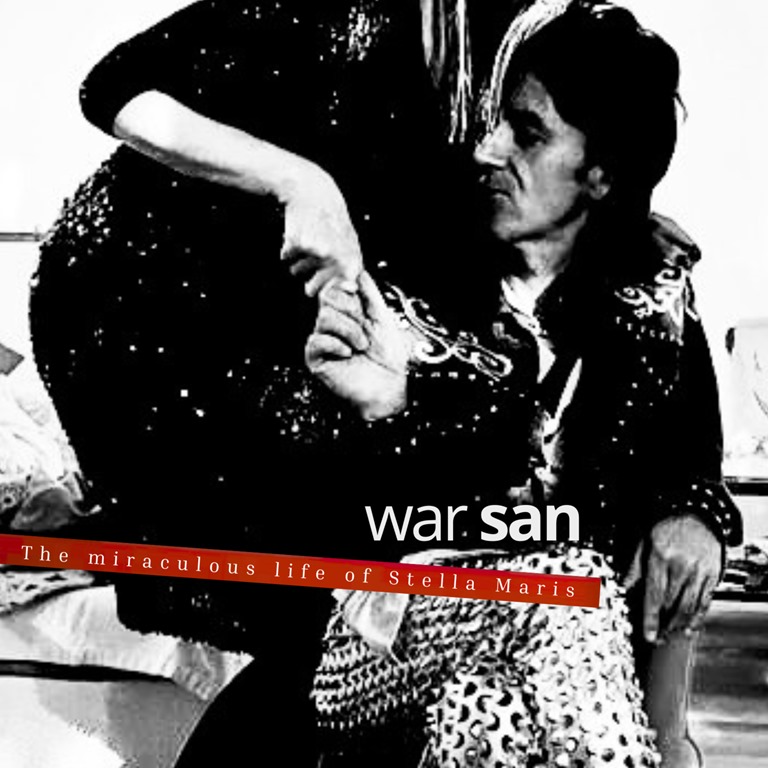
War San is the musical vehicle for Kim Warsen, an artist given to experimentalism and combining a range of genre elements. To date, he’s released four albums and an EP since starting out in 2019, and The Miraculous Life of Stella Maris is album number five. That’s quite a work rate.

Warsen himself points toward a ‘diverse range of genres, including alternative rock, electronic, and world music.’ The concept of ‘world’ music is very much a Western one, whereby Western music presents an infinite spectrum of styles, where there’s pop, electropop, EDM, EBM, rock, alternative rock, indie, indie rock, indie pop, punk, post-punk, heavy metal, thrash metal, folk, country, jazz, while the rest of the world is represented by ‘world’ music, a determination which suggests an otherness, a separation, and something of a dismissal that puts ‘everything else’ ‘over there’. I do not blame Kim Warsen for any of this: it’s simply how our (western) world works, and we use compartmentalising genre distinctions which are widely recognised as short-cuts in order to pitch works in a culture where attention is limited at best.

The first of the seven tracks, ‘The Drunken Thief’, delivers on the promise, as Warsen croons in a Leonard Cohen-esque tone over a shuffling beat, and a conglomeration of mournful strings, which surge on ‘The Sanctuary of Wonders’ amidst busy hand-percussion, while there’s a dash of David Bowie to be found on ‘Rise Rebel, Rise’, which I suspect is intentional, and if anything is even more pronounced on ‘The Iberian Oracle’. The title track is hushed and intimate, in contrast to the expansive ‘Celestial Doorway’.

Overall, The Miraculous Life of Stella Maris has a magnificently fuzzy feel, a blurry haze which clings to all aspects of the sound and the overall production lends the album a sense of mystique, and of there being something behind or beneath what you hear that’s just out of reach.

AA

STELLA_2400Photo_Pablo_Zapata

By Norse Music – 1st December 2023

Christopher Nosnibor

First released in 1989, Gula Gula was Mari Boine’s second album proved to be her breakthrough, earning her a Norwegian Grammy award and providing the gateway to a career which continues over thirty years later as an international voice for the Sámi peoples. The album, originally self-released, would later come to the attention of Peter Gabriel, who would release it worldwide on his label Real World Records in 1993. But 1993 was twenty years ago already, and there are many – including myself – who will be unacquainted with this album, or even Boine’s work. This reissue comes with the added bonus of two previously unreleased tracks from the Gula Gula studio sessions which were only recently discovered.

That the songs of Gula Gula are primarily sung in the Northern Sámi language is both unusual and significant, being key to what her bio described as ‘the fight of preserving the culture of the Norwegian Sami people and the natural world. Two matters that lie close to Mari’s heart and are still threatened to this day. The indigenous people have a wisdom that says that the earth is our mother, and if she is harmed, we are harming ourselves.’

These feel more salient now than ever, as we witness the effects of global climate change and a world riven with cultural conflicts whereby dominant cultures continue to oppress and obliterate older, indigenous cultures in the name of ‘progress’ – as if the most brutal applications of capitalism are the only way. This album’s reissue happens to land in the same week that Israel resumed its onslaught to decimate the whole of Gaza in the name of defending itself against a minority terrorist organisation, while the UK government slammed down some truly brutal plans to slash immigration under the premise of benefiting the economy. This determination to stamp out difference is diabolical, but somehow accepted as reasonable by many. But in taking such destructive paths, it should be apparent that the harm goes far deeper and wider than the claimed intent. Similarly, those who vent their ire against the likes of Just Stop Oil and XR for employing methods which are disruptive and argue that these methods turn people off from their message are missing the point that a) non-disruptive protest hasn’t achieved anything like enough b) there should be no debate when it comes to their message. What they’re objecting to, then, ultimately, is that these protesters are trying to force them to face uncomfortable truths. The saddest fact is that those objecting to the protests don’t give a fuck and just want to get on with driving their SUVs to the McDonald’s drive-thru.

So, at the heart of Mari Boine’s songs is a certain tension which may not always be immediately apparent from their melodic musicality, especially if you’re not fluent in Northern Sámi. For that, you can be forgiven, and whether or not you’re versant in the sociopolitical aspects of their context, it’s easy to appreciate the music on a more superficial level.

The songs of Gula Gula are quite simply arranged, and are, fundamentally, manifestations of folk music. But while the instrumentation is predominantly acoustic, and serves to provide a backing to Mari’s voice, which while always melodic, shows at times a stirring degree of ferocity and passion, as on ‘Vilges Suola’ while the piano-led ‘Eadnán Bákti’ is a soft ballad. ‘It Šat Duolmma Mu’ brings both raw power and some intricate musicianship melded to a thumping subterranean groove.

‘Oppskrift for Herrefolk’ (‘Recipe for a Master Race’) finds Mari singing in Norwegian on the album’s most overtly political song. Musically, it marks something of a departure, too, with a screeching 80s rock guitar solo slicing through the trilling folksiness. It’s almost as if it’s there to reinforce a point. And it works. It’s worth considering for a moment that there are places where such a song could lead to arrest, and worse. This isn’t to say that the Sámi have it easy, but to highlight the fact that these struggles are real and often go widely unreported, unacknowledged, the voices unheard.

Whether taken in, or out, of context, Gula Gula is an enchanting and powerful album.

AA

a2659250302_10