Posts Tagged ‘The Cure’

Christopher Nosnibor

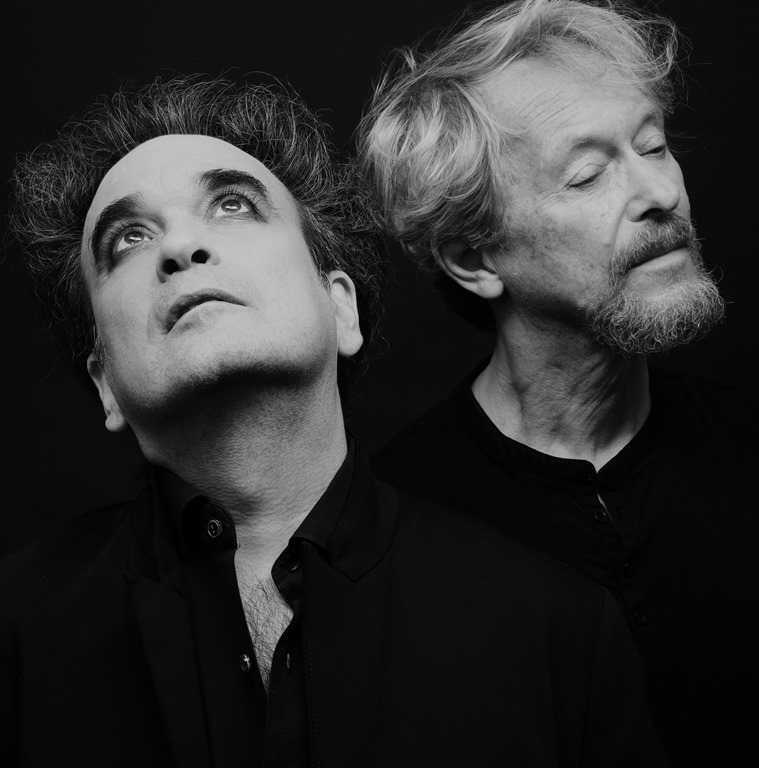
Lifted from their forthcoming double album Duel, scheduled for release in April, Deine Lakaien have unveiled their cover of The Cure’s 1983 classic pop tune ‘The Walk’.

The duo, comprising pianist Ernst Horn and vocalist Alexander Veljanov, have over the course of ten albums attained a significant status in their native Germany, but haven’t quite the same reach further afield, but there’s a strong change that this could change with Duel, which pairs an album of original compositions with an album of paired covers, ‘The Walk’ being one of them.

And it’s good. By which I mean, it’s an affectionate, even reverent cover that pays an overly sincere homage to the original – as it should, of course. Much of the appeal of the original is its rough edges, and the sound of those early 80s synths and drum machines, recorded to tape. Listening to it now, along with so many contemporaneous songs, reminds us for that for all we’ve gained with advancing technology in terms of fidelity and ease of recording, mixing, and so on, so much has been lost in terms of essence.

As Ernst Horn comments, “For an old-school synthesizer freak like me, ‘The Walk’ was of course a welcome opportunity to celebrate beautiful old sounds in simple tone sequences, although I really blunt my teeth on the hook… I guess I couldn’t get it to sound as dirty as in the original. ‘The Walk’ is really an acoustic advertisement for the original sound of a vintage synthesizer. The instrumental part was also a lot of fun, the increase to the last, ‘Take Me to the Walk‘, where I could let my equipment totally off the leash.”

It’s telling that the artist himself feels a certain sense of shortcoming, and in a way, it’s refreshing: instead of artistic ego, we get an insight into the anxiety of influence experienced by the influencee.

Horn’s comments demonstrate an unusual degree of self-awareness, and it’s true that Deine Lakaien’s efforts to recreate the spirit and sound of the original falls short: the playful exuberance is lost to a certain self-applied pressure to deliver, while the sound is close, but somehow artificial. But for all that, I’m not going to do this down one iota: it very much does capture the 80s vibe, especially wit the dominant crack of a processed snare sound that cuts through everything… everything… everything. The brooding, swampy break is nicely done and if for the most part it sounds like A-Ha covering The Cure, the play-out goes darker and sounds more like a post-First and Last and Always Sisters of Mercy demo. And from me, that’s a compliment, and this is a solid cover, for sure.

AA
Deine_Lakaien_04_by_Joerg_Grosse-Geldermann

Deine Lakaien by Jörg Grosse-Geldermann

11th of December 2020

Christopher Nosnibor

Lifted from their Codependency D.S.T. EP, ‘The Causeway’ for no obvious or specific reason evokes the experience of reading Lee Rourke’s debut novel, Vulgar Things, which is set on Canvey Island in Essex. It may be in the Thames estuary, but it’s not connected to the mainland by a causeway – at least not since 1931. Although inspired by the street on which a pub in London frontman Ted Joyce stumbled upon and had been about to frequent before discovering it was boarded up due to COVID restrictions, ‘The Causeway’ in some way reminds us of the ways in which we’re all cut off and isolated, and how we’re all subject to – and dictated to – by the ebbs and flows not just of tides, or time, but of life, and of moods, ours and those of others.

The lyrics are a stream of consciousness unfolding, the tune is a colossal hybrid of indie, alt-rock, post-punk and funk. The fat, strolling bass is the focal point and bounces a groove that owes a debt to The Cure in their poppier moments (and coupled with the buoyant lead line in the bridge, if they weren’t listening to ‘Hot, Hot, Hot!!!’ around the time of writing, then it only goes to prove that influence is transmitted through the ether and spreads like a rhizome in the subconscious) before cutting hard left into a driving chorus that’s got indie anthem stamped all over it.

AA

DST part ii EP Artwork

Wise Queen Records / Shapta – 4th September 2020

Christopher Nosnibor

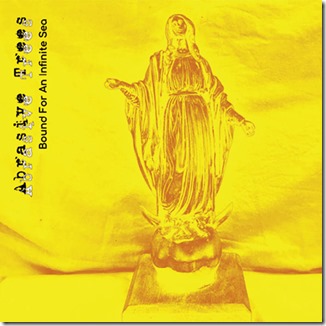
Abrasive Trees may be the solo project of Scottish-born guitarist and singer Matthew Rochford, and this may be a debut release, but already the project has acquired a roll-call of contributors on a par with Pigface or The Damned. Amongst these are Peter Yates (Fields of The Nephilim), Mark Beazley (Rothko/Band of Holy Joy), Steven Hill (Evi Vine), and Jo-Beth Young (Talitha Rise/RISE/Yates & Young).

The sum of this three-tracker bears little obvious relation to its parts, in the best possible way: there’s no sense of baggage or of any of the contributors striving to define the sound with their various stylistic signatures, and what’s more, none of the compositions sound remotely alike, showcasing a creative openness and willingness to experiment and embrace different forms.

Emerging from a thick atmospheric mist, ‘Bound for an Infinite Sea’ has gothic overtones, with picked guitars echoing out over a deep, rumbling bass. With hints of early Cure, Skeletal Family and Salvation, it broods through shadowy shapes in a fashion that’s perfectly evocative of the early 80s post-punk sound, but it’s also spun with an ethereality that owes as much to the 4AD roster and 90s shoegaze. Rochford’s voice sounds dislocated, disembodied, as it floats into the air, lost, alone. The production is hazy, a vagueness hangs over the notes, with the instruments blurring together as the percussion lingers hesitantly in the background.

Beginning with hints of expansive post-rock, there’s almost a folky feel to the delicate instrumental ‘Brother Saint’, which washes into the more abstract, experimental semi-ambience of ‘Replenishing Water (Stripped)’.

Uncertainty, trepidation, and a certain sense of otherness permeate this set, and if Abrasive Trees’ identity and direction seems unclear at its conclusion, then it’s all to the good, leaving open all avenues and possibilities for exploration.

a3041202781_16

Cool Thing Records – 7th August 2020

The band – the coalescence of an enigmatic visual artist, a prodigal singer-songwriter and an ambitious beat-maker ‘trapped inside a digital landscape’ describe their debut, ‘Lumbering’ as being ‘about viewing the world with a sense of claustrophobia and dread, as humanity bounces between various financial crashes, wars and climate disasters, whilst continuing to lumber endlessly forwards, seemingly in a wounded state.’

This is, indeed, the world of the now, and as such, I expect it’s broadly relatable to many on its perspective. It’s certainly relatable to me on a personal level, having become attenuated to a sense of perpetual panic and wild upheaval. The only thing you can be sure of is that nothing is certain, and you can’t rely on or trust anything – or anyone. The fact is, no-one is exactly who you think, and we live in an evermore divided and more extremely polarised society, be it Brexit or the wearing of masks.

‘Lumbering’ is pitched as ‘an intriguing soundscape of skeletal guitars, layered angular rhythms and fantastic lyrics’ and a hybrid of Boards Of Canada, 00’s Radiohead and The Cure’s Bloodflowers era.

With clattering drums and a pulsing bassline, I’m reminded more of the early 00s New Wave revival as spearheaded by the likes of Interpol and Editors, as well as The Cinematics. A Cause In Distress capture that tension and sense of urgency and distil it down to a truly gripping three-and-a-half minutes of surging dynamism.

It doesn’t necessarily make me feel better, but articulates my restless tension perfectly.

 AA

thumbnail_Lumbering Cover

1st July 2019

Christopher Nosnibor

Dog on a Stick is the second musical project featuring Rick Senley to have come my way this year – and we’re only halfway through June.

Dog on a Stick came about ‘thrashing out Cramps and Pixies noise while squeezing melodies from the din under a west London railway arch’, but there’s a post-punk edge to debut single ‘Dead Driver’. Selney’s guitar intro is a chorus-heavy Curesque effort before the overdrive kicks in and the song takes off on a tense trajectory. The propulsive rhythm hits a taut groove, over which Liam’s vocals become increasingly wild and desperate.

Singer/bassist Liam starts out coming on with something of a Bowie-like croon, but by the end, he’s emitting a rabid howl of anguish, rendered even more potent by the motoric nature of the backing and the dirty, squalling distortion that screams through a mess of treble beneath that bulbous bass.

Clocking in at almost five minutes, it’s a sustained scream of raw emotion that hits hard and cuts deep. It’s blistering and it’s intense. Bring us more!

AA

Dog on a Stick

Pretty Ugly Records – 24th May 2019

Christopher Nosnibor

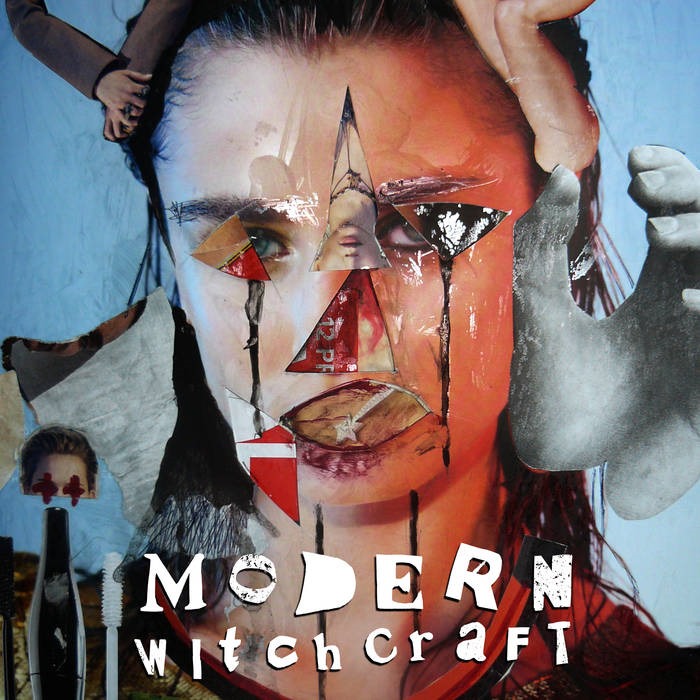
The London synth duo follow up on last year’s debut double A-side ‘Are You Ready’ / ‘Hell Is Where the Heart Is’ with ‘Modern Witchcraft’, which according to the press release ‘sees the band explore Britain’s lost highways in their darkly psychedelic animation’.

Having spent the last few months holed up with Dave M. Allen (The Cure, Sisters Of Mercy, Yassasin), Matt Kilda and Willow Vincent have been experimenting hard, and this singe is the first fruits to be revealed from the forthcoming ‘Cheer Up The Apocalypse Is Here’ EP.

Instead of lamenting the absent comma, I shall instead concentrate on focusing my energies on celebrating the taut goth-hued electropop of ‘Modern Witchcraft’. It mines a supremely retro seam of 80s bleakness, pulling together Gary Numan, The Human League, and Depeche Mode, with the warmth of analogue condensing against a chilly atmosphere and brittle, stripped-back production to evoke a sense of desolation, of isolation.

Whichever fan review suggested Sex Cells are ‘helping define the anxiety and utter dread of late-stage Capitalism’ was on the money: if it’s the sound of the 80s intensified for the post-millennial world, it’s fitting, given that the parallels between then and ow are clear – only then, we only had one clear enemy and cause of social division, and less CCTV.

AA

Sex Cells

Christopher Nosnibor

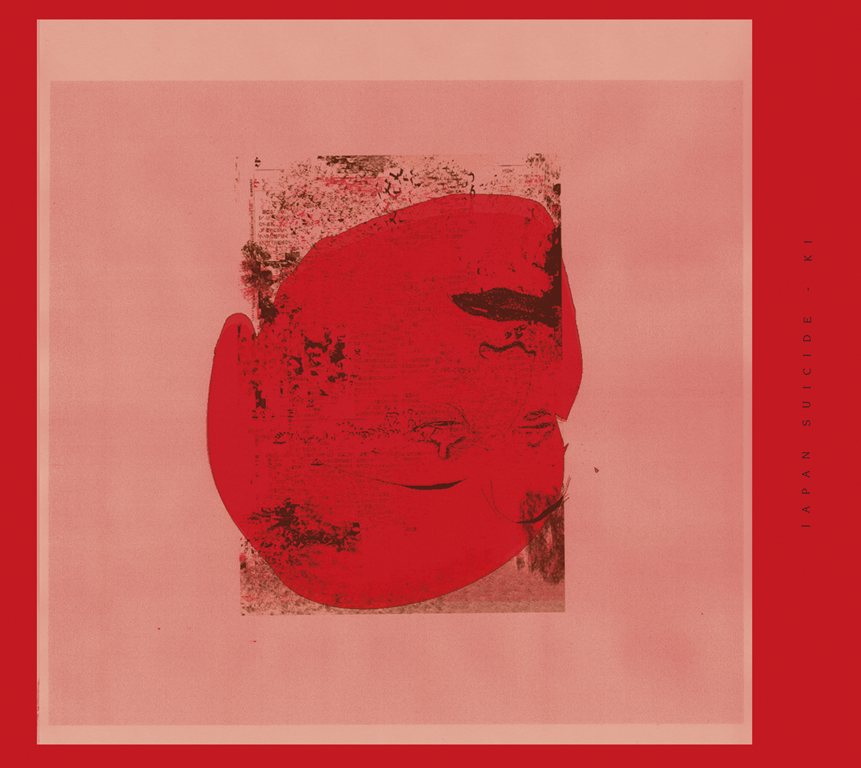
No bones: Santa Sangre was one of the standout albums to land with me last year. The perfect amalgamation of dark-edged 80s synth-pop which took its cues from Depeche Mode and A-Ha, and gritty guitar-driven post-punk, it felt contemporary while also joyously retro. Having found myself in the late 80s (circa ‘87/’88), when the goth of the early/mid 80s was finally cracking the top 40, and could be heard on R1 on a Sunday night and even on Top of the Pops. At a time when pop was altogether darker anyway (I recall, aged 8, seeing Killing Joke perform Love Like Blood’ on TOTP and being rapt), I find myself right at home with this.

For the recording of their third album, the Italian quartet made the journey to Leeds, the heartland of the 80s post-punk / goth scene and equally a hotbed for its postmillennial revival, to work with Matt Peel, perhaps best known for producing Kaiser Chiefs and Eagulls, at The Nave Studios. And all of this shows, and the band have very much continued to embrace their influences to deliver an album that’s both taut and atmospheric.

KI perhaps lacks the immediacy of its predecessor, but that’s no bad thing. This means that instead of kicking in with lasers set to stun at the opening, ‘Dance for You’ makes for a fairly low-key entrance, a thrumming sequenced synth bass and Curesque sweeps overlaid in misty layers, the vocals low in the mix and twisting together wistfulness and melancholic desperation.

It isn’t until the second song, ‘Empire’, that Ki really hits its stride and immediately expands the band’s sonic palette: a yawning shoegaze blur that’s part Ride, part Curve, but filtered through a Jesus and Mary Chain mess of treble noise and driven by a thudding four-square bass, it’s a mid-pace squall of density – and it’s this that really kicks through the driving ‘Fury’, which combines drifting, fractal guitars with a pulsating bass, driving drum track and darkly desperate vocal. It’s the Sister’s circa 84, it’s early Mission, it’s brilliantly crafted, capturing the spirit of the retro zeitgeist.

‘Kanagawa-oki Nai-ura’ broods like all the brooding over droning organs and glacial synths underpinned by a murky funeral rhythm section, replete with dolorous bass before a crunching guitar glides in and

‘Mishima’ slips into dream-pop territory, again taking obvious cues from The Cure – which is no criticism. Is it wrong to chuck in references to early Interpol and Editors? I’ll say no: this is music cut from the same post-millennial post-punk cloth. It’s no longer about uniqueness, but how well influences are assimilated, and here, Japan Suicide show enough capacity for crafting a tune that their stylistic appropriations are more than acceptable.

‘One Day the Black Will Swallow the Red’, which lifts its lyrics from a piece of writing by artist Mark Rothko , with its thumping beat and chunky bass underpinning a wash of hazy guitars, and moody but driving ‘The Devil They Know’ make for a strong finale to a solid album that has ‘grower’ written all over it.

AA

Japan Suicidie - KI - copertina WEB

Hangman Ho Records – 14th March 2019

Christopher Nosnibor

Every 18 months or so, I get contact from Rick Senley. This has been happening for a good few years now. I like him, and I like his work. There’s a pattern of sorts. He seemingly hibernates for a while, then emerges with a brace of albums, one each from his main projects, Music for Voyeurs and I Am A Man With A St Tropez Tan. Both different sides of the same coin, they tend to be contrasting but complimentary.

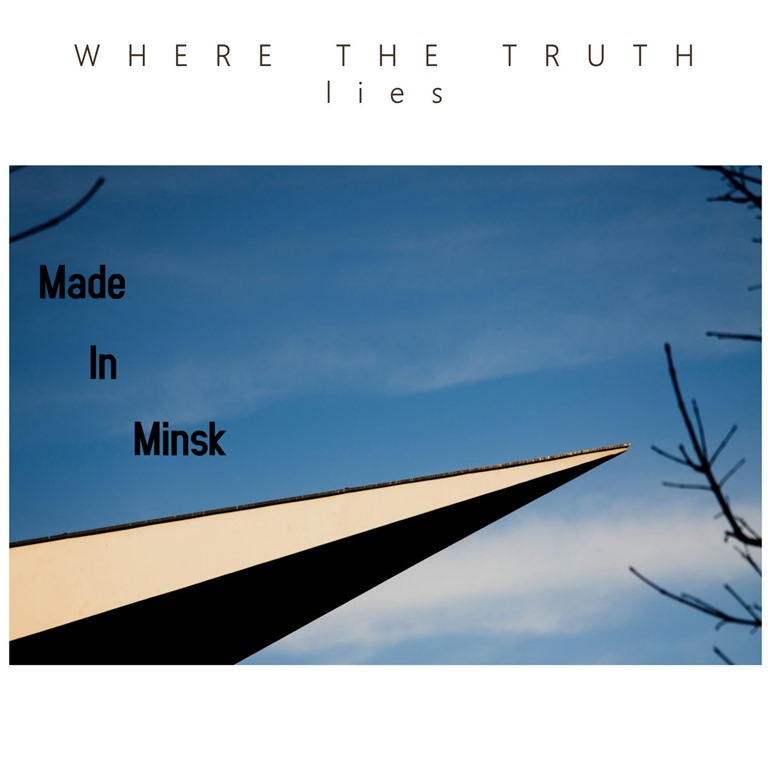
So this latest arrives came as something of a surprise: not an album but a single, and representing a new project. Made in Minks sees Senley return to the fold of a band-orientated project after many years operating in a solo capacity, and the international quintet, which initially coalesced in 2014, they’ve been honing their sound before declaring that ‘now is the time’.

Citing influences from Pixies to The Cure, Kate Bush, Black Sabbath and Aztec Camera, Made in Minsk claim to ‘sculpt a unique sound of psychedelic indie thrash folk’. If that sounds deranged, well, yes, it is.

‘Where the Truth Lies’ starts with darkly atmospheric muttering that calls to mind the Cure’s ‘Pornography’, before breaking out into a muscular riff that builds on a thunking bass throb and insistent rhythm that contains elements of The Fall but combines it with the snaking reverby bleakness of The Cure circa Faith and the fiery goth favours of Skeletal Family. It’s retro as, and it’s all the better for it: whereas so many contemporary acts play post-punk through a post-millennial filter of Interpol and Editors, MIM return to source to deliver something that feels authentic in every way, from the sentiment to the production.

Dark, stark, and angular, it’s also hypnotic and catchy, and a really strong song.

AA

Made in Minsk

Evi Vine previews ‘My Only Son’ single ahead of the Black Light White Dark album. The new LP features The Cure’s Simon Gallup, Fields of The Nephilim’s Peter Yates and Martyn Barker (Shriekback, Goldfrapp).

Evi formed this band while living in LA, quickly getting a support show opening for Slash at the Whiskey-agogo. She has collaborated with Graham Revell (SPK, The Crow Soundtrack), The Eden House, Tony Pettit (Fields of the Nephilim), and Peter Yates (Fields of the Nephilim).  In 2016, Evi sang on Phillip Clemo’s DreamMaps album, together with Talk Talk’s Simon Edwards and Martin Ditcham, subsequently making appearances on BBC6, BBC3 Late Junction and Jazz FM.

In recent years, Evi Vine has toured with The Mission, Chameleons Vox, Wayne Hussey, And Also The Trees, Phillip Boa and The Voodoo Club, and Her Name is Calla. After hearing Evi Vine’s debut album and including it among his top five albums, Wayne Hussey invited them to tour with him in 2016 and subsequently with The Mission in 2017. Invited on stage to sing three songs by The Mission, the seed was sown and Vine joined The Mission as featured vocalist for their 30th Anniversary Tour.

Watch ‘My Only Son’ here:

AA

Evi

Solemn Wave Records – 22nd February 2019

Christopher Nosnibor

Over a decade into this music writing thing and I still get a massive buzz receiving albums I’m excited about hearing ahead of release. Mostly because like many other music fans, I get impatient and overhyped with anticipation. And then… well, what then? When a work is so rich and resonant, and communicates on a level which transcends words. Describing not sound, but sensation is more than a challenge, especially when that sensation is overwhelming.

Single release ‘Sabbath’ gave me something of an Evi Vine rush and raiding the back catalogue only amplified my anticipation for BLACK//LIGHT//WHITE//DARK, and never mind the suspense, it’s a belter. No doubt much will be made of the roll-call of contributors, including The Cure’s Simon Gallup on bass and Peter Yates of Fields of the Nephilim on guitar, but the songs ultimately speaks for themselves here.

A mere six songs, yes, but when the first is a slow-burning behemoth that treads the delicate line walked by Chelsea Wolfe, it’s immediately apparent that these are songs of a rare intensity. ‘I Am the Waves’ explores brooding, hushed and downright downbeat passages which glide into deep, immersive washes with serpentine guitar lines snaking around trepidacious drums and haunting, fragile vocals. ‘Afterlight’ ups the tempo and the tension, rolling drums and extraneous electronics creating a dense swell of sound. Evi sounds twitchy, anxious, her voice adrift in multidirectional reverb. The atmosphere is fractured and strained: you don’t just listen to this, you feel it. BLACK//LIGHT//WHITE//DARK leads the listener to some dark places, but then a function of the most powerful art is often to challenge, to affect, rather than to simply exist and entertain.

The sprawling yet elegantly-poised nine-minute ‘Sabbath’ is still a standout, its contrasting passages of fragility and crushing weight the perfect counterpoint to one another. It drives and surges, on and on, a dense, textured wall of sound that’s completely immersive. Its only shortcoming is that it is, well, just too short.

‘My Only Son’ presents a more minimal aspect, a delicate piano providing the primary accompaniment to wistful, reflective lyrics. It’s well-placed, bringing things down a notch – but the incidental strings and voices bring contrast and discord, meaning it’s never an option to really settle into a sense of relaxation and comfort, and the low-rumbling electronics which open ‘We Are Made of Stars’ deepen the unsettling atmosphere. Stretching out to forge a suffocating dark ambience, voices whisper hauntingly in the distance, before the eleven-and-a-half-minute finale, ‘Sad Song No. 9’ dredges every last ounce of aching beauty from the deepest melancholy. And when the bass booms in and the guitars kick in, it soars majestically. It’s a perfect conclusion to an album worthy of the word masterpiece.

AA

AA

389607