Posts Tagged ‘texture’

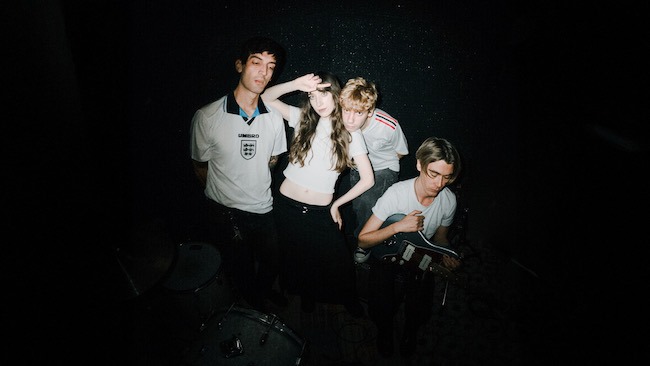
Glazyhaze return with ‘Romeo’, the final single and B-side from their acclaimed album SONIC.

Following the release of their acclaimed album SONIC earlier this year, Italian alternative band Glazyhaze shares ‘Romeo’, the final single and B-side just before their EU/UK tour kicks off.

At its core, ‘Romeo’ blends raw rock energy with dreamy, atmospheric textures. The track carries the spirit of the ’90s, where distorted guitars and floating reverbs meet a subtle tension between anger, sweetness, and nostalgia. Built on shimmering guitars and driving rhythms, ‘Romeo’ captures the feeling of powerlessness that comes with loving someone who cannot love themselves or change. It’s a song for those who hide behind pride, who destroy everything rather than show vulnerability, for those who live through control yet burn inside and will never admit it. ‘ROMEO’ is a farewell to the illusion that you can save someone who doesn’t want to be saved.

Recorded and mixed by Paolo Canaglia and mastered by Maurizio Baggio,‘Romeo’ marks an emotional and sonic conclusion to the SONIC era, reaffirming Glazyhaze’s ability to fuse intensity and atmosphere into something deeply human.

AA

After being nominated for the Music Moves Europe Award and announced for ESNS 2026, Glazyhaze will embark on a tour across the EU/UK in November and December.

Tue 11 Nov – Kranhalle – Munich, Germany 

Wed 12 Nov – Isc Club – Bern, Switzerland

Sat 15 Nov – Nová Cvernovka – Bratislava, Slovakia

Mon 17 Nov – Badehaus – Berlin, Germany

Tue 18 Nov – Helios 37 – Koln, Germany

Wed 19 Nov – Patronaat – Haarlem, Netherlands

Thu 20 Nov – Supersonic – Paris, France

Sat 22 Nov – The George Tavern – London, UK

Sun 23 Nov – The Croft – Bristol, UK

Tue 25 Nov – The Prince Alberto – Brighton, UK

Wed 26 Nov – Voodoo Daddys – Norwich, UK

Sun 14 Dec – Bronson, Ravenna, Italy

Sat 20 Dec – Arci Bellezza, Milano, Italy

AA

5tqs_GHRomeowide2copy--1018

Coup Sur Coup – 17th October 2025

Christopher Nosnibor

Few drummers receive much recognition, unless they’re the backbone of bands who are household names (people know Ringo Starr, Keith Moon, Dave Grohl, Mike Joyce, Lars Ulrich), or have otherwise featured prominently in a specific musical milieu (Martin Atkins and Paul Ferguson come to mind). Their contributions are overlooked and underappreciated, and in the main, there’s a tendency to only notice exceptional drummers, or poor ones. It’s not the job of a drummer to grab attention, but to hold everything together at the back. Consequently, you might be forgiven for being unfamiliar with William Covert, whose career is defined more than 15 years of drumming in math rock, post-rock, and post-hardcore bands (Space Blood, Droughts, and Rust Ring).

As the narrative goes, ‘Covert began experimenting with live-looped synths alongside acoustic and electronic drums. This experimentation birthed two full-length solo albums characterized by post-rock and krautrock-inspired synth loops and melodies, all performed solo with loop pedals and sequencers.’ Dream Vessel was born out of a desire to pursue a different approach and a different direction, and indeed, the first part of this latest offering was a collaborative, group effort, with Nate Schenck on bass and Jack McKevitt on guitar, while we learn that ‘the other half was performed entirely solo, diving deep into cinematic ambient soundscapes, dreamy Frippertronic-influenced guitars, modular synth, and free-jazz drumming filtered through a post-industrial lens.’ Nothing if not varied, then.

The album’s five tracks span thirty-eight minutes, and it’s very much an exploratory experience. ‘Brotherhood of Sleep’ eases the listener in gently, with a slow, strolling bass and reverby guitars. It’s an expansive and spacious instrumental work, rich in texture and atmosphere – a shade proggy, a little bit jazzy, unfurling at a sedate pace. ‘Trancers’ fades in, and offers similar vibes, but it’s both more spacious, and more groove-led. The guitars bend and echo that bit further, and as the track progresses, so the pace and urgency build, along with the density of the guitars, which warp and stretch more with every bar. It may not hit the extremity of My Bloody Valentine’s Loveless, but the guitars do sound as if they’re melting by the midpoint, before the track locks into a muscular, driving groove that’s a world away from where it began. There’s an appeal that’s not easy to pin down when it comes to compositions which begin in one place and end up entirely in another, while it’s not entirely clear how they’ve transported the listener from A to B. The experience isn’t completely unlike making an absent-minded walk somewhere, when you haven’t been paying attention, and arrive with minimal recollection of the journey- although the difference is that the walk is usually via a familiar route that requires little to no concentration or engagement, whereas a song that swerves and switches involves an element of brain-scrambling along the way.

‘Dream Void’ is a centrepiece in every way: The third track, right in the middle, it’s over nine minutes in duration and a towering monolith of abstract drone. It’s immense, cinematic, widescreen, gentle. Around the mid-point, the drums arrive, and they’re busy, but backed off in the mix, and we’re led down a path to a place where frenetic percussion contrasts with chords which hover and hum for an eternity. Slow-picked guitar brings further texture to the mellow but brooding post-rock soundscape of ‘C-Beams’, which pushes toward nine minutes, as the album ventures into evermore experimental territory. As present as the drums are, they don’t provide rhythm, but bursts of percussion, swells of cymbal and wild batteries of rolling, roiling whomps.

The more concise, feedback-strewn ‘Throttle’ marks a change in aspect, a roar of noise, a wail of feedback, and positively wild, before ‘Come True’ closes the set with some Kraftwerkian bubbling synth and undulating bass, paired with a rolling beat. It’s all nicely done. And this is true of the album as a whole.

Dream Vessel is gentle, overall, but not without edge, or variety, and certainly not without dynamic. Here, ‘interesting’ and ‘unusual’ are not dismissive shrugs with a hint of condescension: Dream Vessel brings together a host of ideas and traverses a succession of soundscapes , never staying still for a second.

AA

a0283722598_10

Vinter Records – 5th September 2025

Christopher Nosnibor

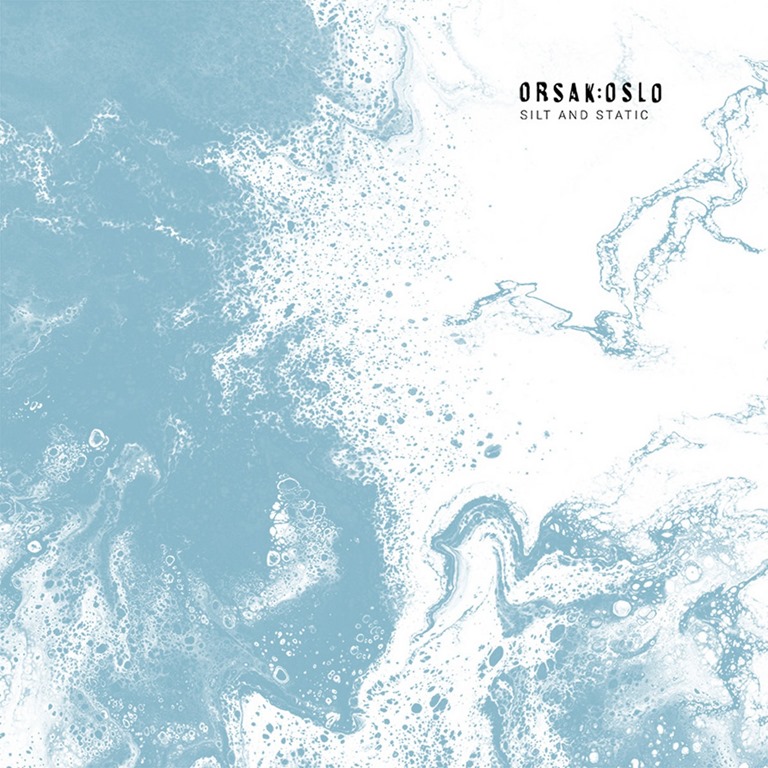
The post-rock boom feels like a long, long time ago now. Perhaps because it was: realistically, we’re talking about nearly twenty years since Explosions in The Sky and Her Name is Calla were super-hot topics. I discovered HNIC supporting iLiKETRAiNS on tour circa 2007, and Maybeshewill via their split 12” with Her Name is Calla, before seeing them playing with AndSoIWatchYouFromAfar… There are always chains and sequences, but the post-rock bubble burst in a tidal wave of oversaturation maybe around 2009. It all got a bit samey. But there was – and still is – always room for a band that take a genre template and take it somewhere else, offering something different, instead of a template-based rehash. Enter Osak:Oslo, who most certainly offer something different. Silt and Static is nuanced, but at the same time forceful.

There’s nothing like going all-out epic on an opening track, and that’s what precisely what Osak:Oslo do here, with the eight-minute forty ‘Biting In’, which begins with some enticing, chiming guitar that’s quintessential post-rock in every way, but then the rhythm section kicks in, and it drives along straight ahead, riding a solid motorik groove for a bit. After taking it down in the mid-section, they come back in, driving harder than before, a sprawling desert-rock soundscape expanding like a straight road headed to the horizon. Hell yes! You feel this. Exhilarating is the word.

They take things slower and bring more weight on ‘Days Adrift’, but still conjure rich layers of atmosphere, and bring things together with a chunky, chugging, bass-driven groove. In contrast, ‘Salt Stains’ is altogether more jangly, indie, at least to begin, and then, less than a minute in, a solid riff powers in, topped by soaring lead guitar work.

Over the course of the album’s nine expansive tracks, Osak:Oslo demonstrate a real knack for beefy riffery – nothing overloading, hugely overdriven, distorted or gritty, but just big, bold, solid and defined by a sense of forward trajectory, and what’s most remarkable is the way the band arrived at this work:

Recorded spontaneously, Silt and Static captures the band at their most stripped-down and unfiltered, balancing atmospheric fragility with crushing depth. With tape rolling and no roadmap, the album emerged naturally, giving shape to a sound that’s both deeply personal and bleak yet beautiful.

‘Bleak yet beautiful’ is a fair summary, but establishing, or unravelling, precisely what’s personal on an instrumental work is not easy, or sometimes even possible, although it is clear that certain elements, sounds, structures, transitions, which hit in a particular way are deeply evocative, often moving. But as a listener, those moments feel personal and are rooted in one’s own experience, one’s own individual response. I write this as someone who has sat with friends, playing songs saying, as I practically burst with enthusiasm, “Wait… there! That’s the key change!” or “That’s where the distortion comes in!” or “There! There!”, to be met with… mixed results. Is that moment which floors me the same one which the creators feel is the pivotal point in the song, the one which articulates, through the medium of sound alone, that deep-seated, complex emotion which has been tormenting your psyche for months, or even years? I suppose it doesn’t really matter. What matters – for artists and listener alike – is that connection, achieving that vital emotional resonance, where the music speaks.

‘Resonance in Ash’ slips into shoegazey territory, but also offers the most potent swell of noise that threatens the eardrums, bursting into a ragged explosion of noise, bordering on post-metal and racing to a blistering crescendo, and despite being one of the album’s shortest songs, ‘The Onward Strike’ feels like one of the most immense. Then again, there’s ‘Break and Sink’, which goes all-out to crush… It’s riffy, it’s heavy, and it lands hard. The bass… it grinds, alright.

The beauty – and creative success – of Silt and Static is that it succeeds on both levels. Because of the bold riffery – never succumbing to the post-rock cliché of the slow-build and epic crescendo, but instead forging these strong, cinematic, rock-orientated bursts of energy which are immersive, transportative, and reach far beyond genre confines. Silt and Static is an imaginative, inspired work, and the circumstances of its creation make it even more remarkable. It’s the work of a band operating with a rare level of cohesion, and it’s pretty special.

AA

a1841796365_10

San Diego/Los Angeles-based shoegaze outfit Distressor returns with their latest single, ‘Broken Glass’. Following their breakthrough collaboration with shoegaze giant Wisp on Tomorrow (via Interscope Records), the independent four-piece is carving a new lane for themselves—one that blends the haze and texture of shoegaze with the raw, melodic punch of early 2000s emo.

Formed in late 2017, Distressor has built a reputation for pairing massive, driving rhythm sections with high-register vocals and emotionally charged choruses that cut through the fog. Their 2023 debut LP Momentary established the band as one to watch in the new wave of heavy shoegaze, and ‘Broken Glass’ pushes that momentum further.

Originally a shelved demo, ‘Broken Glass’ came to life after new drum and bass parts lit a fire under the track, transforming it into a setlist staple almost overnight. Leaning harder into their emo roots, the band challenged genre norms on this one:

“We’ve grown a little bored of the classic soft shoegaze vocals,” says the band. “With ‘Broken Glass,’ we wanted something more pushy and hooky—a big chorus that hits just as hard as the guitars.”

The accompanying music video, directed by longtime friend Diego Guardado, captures the band’s raw live energy in an unpolished, visceral way. Shot in a small, sweaty LA room—while an island-themed church service played loudly (and out of tune) next door—the DIY spirit of the video reflects Distressor’s independent ethos:

“Even though music videos aren’t as popular anymore, we still love making them,” the band explains. “This one was nothing fancy—just us, some friends, a few Modelos, and a lot of sweat.”

With ‘Broken Glass’, Distressor continues to evolve beyond nostalgia, pushing shoegaze into modern, emotionally honest territory while staying true to their roots.

AA

yfBvQzqlxiHrr3cCEyVIuOiWYWqAN4khfEaPdeV4

Photo: Samuel David Katz

Torto Editions / Ramble Records / Atena Records – 25th July 2025

Christopher Nosnibor

DuChamp (certainly not to be confused with the seminal avant-gardist Marcel Duchamp) is a Berlin-based artist, and for this release, is the product of ‘a journey of development, research, and refinement of a deeply personal voice’, their chosen selection of instruments is listed as ‘baritone guitar, voice, organ, synths, bouzuki, electronics, incredible stubbornness.’

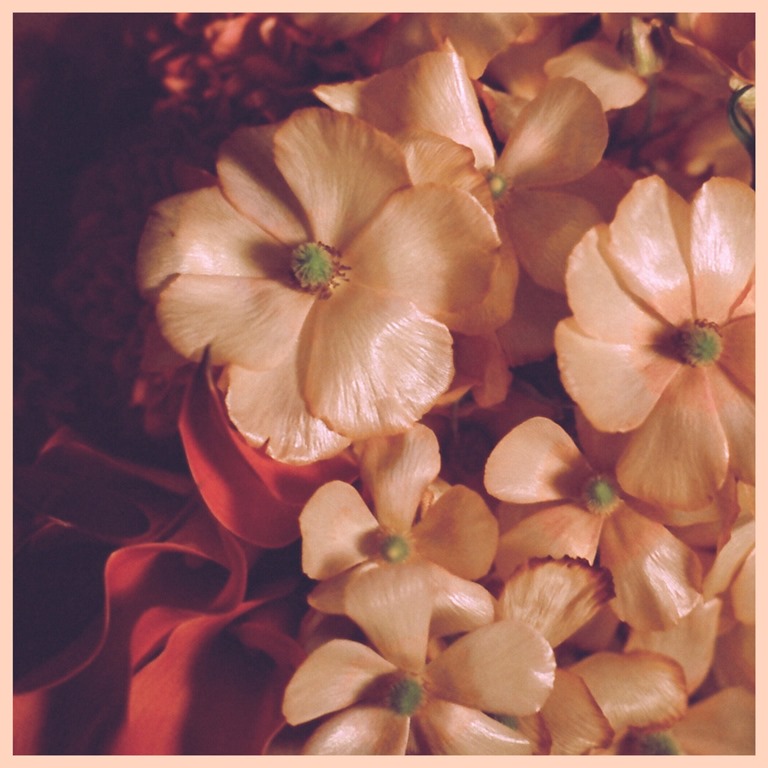
The baritone guitar is not a common instrument, but oner which sounds quite unlike any other guitar in terms of its tonality. Its application here is in providing the core to elongated sonorous drones on the five compositions on The Wild Joy. It’s a title I take to be somewhat ironic, for despite the resplendent flora which graces the album’s cover, the title of the first piece, ‘Sine proprio’ translates, depending on your choice of reference source, as ‘without property’, ‘without possession’, or ‘poverty’. Whether or not this is a reference to a physical or spiritual poverty isn’t apparent, but what this nine-and-a-half minute dronescape does possess is a wealth of texture as the layers build and vibrate against one another.

‘The Shape of Time’ is very much constructed around contrasts; a whining, scraping drone nags the conscious level of listening, while a low, rumbling bassy resonance lingers way below, and it’s something you feel as much as hear. In the space between, incidentals drift in and out. In the distance, gongs chime and fade slowly, and the disparity between their timing and that of the pulsating throb which has begun to build is disorientating, unsettling.

‘Epithalamion’ marks a dramatic shift – in every way, starting with the change of instrumentation, and by no means ending with the change of approach, with a wild, undisciplined key-bashing crescendo occupying the first couple of minutes, before giving way to a wheezing sound like an organ on the brink of expiry. With its origins in the classical age, an epithalamium is a poem written specifically for the bride on the way to her marital chamber. This, however, sounds more like a piano being pushed down six flights of stairs, before a ghastly gasp sputters along interminably for the remainder of the duration. I pity the bride this was penned for.

Things are different again on ‘Fulaxos’: there, the baritone guitar comes into its own and to the fore, played conventionally, a picked, rolling motif that’s brooding, even doomy provides the starting point for a piece which gradually unfurls toward a place of light and optimism. The final track, which is also the title track, brings us almost full-circle, but there’s a levity to this extended, delicate dronescape, and the soaring vocal only accentuates this sense of elevation.

The joy may be somewhat subdued overall, but it’s there, on what is, ultimately, an accomplished, multi-faceted work.

AA

a3734767457_10

30th May 2025

Christopher Nosnibor

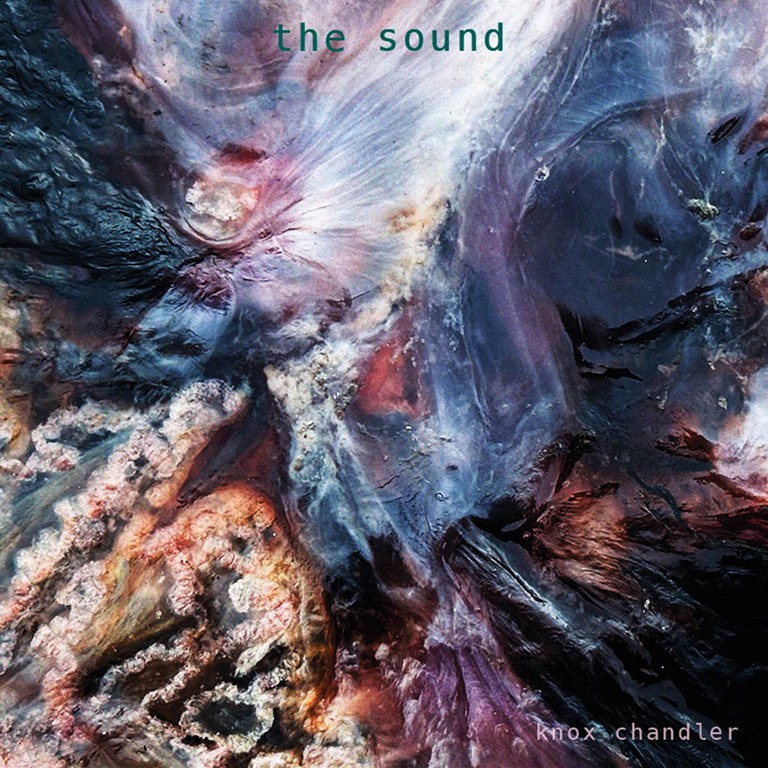
Knox Chandler may not be universally known, but many of the acts he’s credited as playing with over the last forty years are, with long stints as a member of  and the Cyndi Lauper band. Then there’s his work in various capacities with REM, Depeche Mode, Grace Jones, Marianne Faithful, Natalie Merchant, Tricky, The Creatures, Dave Gahan, Paper Monsters and The Golden Palominos… it makes for quite the CV.

This solo outing marks a fairly significant departure from all of that, though. The context behind it is that ‘Knox spent a decade residing in Berlin, Germany, while he explored sound-scaping. He developed a technique he calls “Soundribbons”, which he recorded and performed in its own right as well as applying it to different genres and mediums . He composed, recorded, toured, produced, and wrote string arrangements for Herbert Grönemeyer, Jesper Munk, Pure Reason Revolution, The Still, TAU, Miss Kenichi and the Sun, Mars William’s Albert Ayler Xmas, Rita Redshoes, Them There, The Night…”

And so what we have here is a collection of ten instrumental works, whereby the guitar doesn’t sound like a guitar. In fact, it doesn’t sound specifically like anything. Chandler conjures wispy, ephemeral sound sculptures, atmospheric, brooding, a shade filmic, soundtracky, with hints of sci-fi and BBC radiophonic workshop about their strange, twisting, abstract and keenly non-linear forms.

There’s more than simply droning guitar on offer here, though: flickering, surround-sound precision provides a shifting backdrop to the ever-morphing ‘Tea Stained Edge’, where tremulous, reverby guitar bounces here and there off sonorous string-like sounds and even something resembling a jazzy double bass, but in contrast, ‘Lost Dusk Feather’ takes the form of a magnificently disjointed collage work, flipping between ambience and discordant confusion. The playfully-titled ‘Hidden Hammock Pond’ is one of the album’s most overtly experimental works, a mish-mash of sounds overlaying one another, smooshed together and as strange and unpredictable as it gets, venturing via exploratory ambience and quivering drones and allusions of abstract jazz into Krautrock . It’s wilfully perverse, and swings between the dark and serious, and the light and entertaining within the space of a heartbeat. ‘Mars on a Half Moon Rising’ goes a shade New age strange, insectroid flutters, field sounds and mystical hoodoo, bells and chimes, Morris dancers and scraping bass which occasionally strays into some kind of Duran Duran bending bass moments.

It’s all going on here. It’s impossible to predict direction over the duration of this release: The Sound meanders here, there, and everywhere. At times expansive (as on ‘Burn’), at times claustrophobic, it’s never less than compelling or varied listening.

If you’re seeking anything in the vein of the headline acts with which Knox Chandler is associated with, you may well be disappointed. But if your ears are open to abstract, instrumental strangeness, you’re in the right place. The Sound is weird, unapologetically and strange – and it’s the sound of an artist cutting loose and exploring sound. It’s weird, and wonderful, in equal measure.

AA

a0385212710_10

Ideologic Organ – 10th January 2025

Christopher Nosnibor

It’s already looking like 10th January is going to be an intense date in terms of the sheer volume of releases. Time was when January was something of a quiet spell for new music, as everyone recovered from the Christmas glut, and labels tended not to release much since people were skint. It also used to be the case that unexpected releases would sneak unexpectedly high in the charts, especially the UK singles top 40, with remarkably low sales figures, usually with cult acts with savvy labels whacking out a release that would have barely scraped the charts any other month – White Town’s ‘Your Woman’, released 13th January 1997 and hitting number one in the UK and going top ten globally – however briefly – is a classic example.

There’s no danger of Nate Wooley registering on any charts with Henry House, released on the Ideologic Organ label, curated by Stephen O’Malley of Sunn O))) legend, and home to a long line of truly magnificent avant-garde and otherwise most unusual musical works, of which this is very much one. That’s not because it’s not good, it’s just that the nature of charts has changes beyond recognition over the last thirty years. There is also the statistic which recently came to light that there was more music released on any single given day of 2024 than during the entirety of 1989. It’s a pretty staggering statistic, and one of many factors when considering just how difficult it is for artists to make a living from making music. Something I have touched on previously is the fact that simultaneous with this explosion of output, culture has become both more homogenised and more fragmented. In terms of the mainstream, this homogenisation has facilitated the advent of multimillionaire and even billionaire ultra-megastars like Taylor Swift – but at the other end of the spectrum, there are tens of thousands of artists releasing music on Bandcamp and Spotify with no backing or publicity whatsoever, to be heard by maybe five people.

But we need music that’s unpopular, that isn’t created with any commercial intent, and we very much need labels like Ideologic Organ to provide a platform and to point us toward the cream of those artists who may not otherwise reach the audience they so richly deserve.

And as an album containing a single composition split into five parts, described as ‘a recurring dream song’ with a running time of some eighty minutes, this is a work which is very much non-commercial in every way.

As the accompanying notes detail, this is a work which combines ‘closely tuned instruments and sinetones, tape-music editing techniques, field recordings, and voice,’ providing the context that ‘this eighty-minute, five-part song cycle is an evolutionary step away from the spontaneity of the free jazz/noise aesthetic usually found in the music of Nate Wooley. Henry House expands on the ecstatic, durational work found in Wooley’s Seven Storey Mountain, a six-part composition that has been premiered over the last ten years by an ensemble that now includes multiple drummers, guitarists, a twenty-one-person choir, and the composer on amplified trumpet. But its ritual is more serene, more natural, slower.

Henry House is the first long-form piece that doesn’t feature Wooley’s trumpet. It is also the first to be constructed around his poetic writing. Wooley weaves a strange funeral mass for a fictional everyman from isolated phrases culled from essays, poems, and non-fiction written by Wendell Berry, John Berryman, Joseph Mitchell, and Reiner Stach. After organizing the fragments into a dream narrative, Wooley rewrote the text dozens of times, manipulating the stitched-together story until only glimpses of its sources remained.’

It’s ten minutes into the twenty-minute opener, ‘Acacia Burnt Myrrh’ that the poetical oration begins, with the words spoken by Mat Maneri. He speaks in a calm, not entirely flat, but level tone, of geometry, of space, of time. The words conjure abstractions, images, moods, against backdrops of elongated hovering hums, oscillator-driven quivering drones. The words are audible, but comparatively low in the mix, and it’s not always easy to stay focused on the narrative, such as it is: instead, the mind focuses on absorbing the atmosphere. There’s a lot of that, and Henry House is an immense project with near-infinite dimensions. Megan Schubert’s faster-paced, more driven-sounding delivery is quite a contrast to Maneri’s, and from these counterpoints, the album grows in terms of dynamics and depth.

So much happens: listening to Henry House is like reading a book which contains stories within the story, and illustrations in a range of styles. No two tracks are really alike, and the arrangements change across the course of each piece. It draws you into a dark fairytale, a unique world which isn’t exactly scary, but unsettling because it feels unfamiliar, dissonant. The fact that two of the pieces bear the same title only add to the bewilderment. Horns and drones radiate between the narrative segments, and the final piece, ‘Aleatory Half Sentences’ is led by some flighty piano work, which trills and flickers against a heavy, nagging, low-level hum. It’s one that really takes some time to process, but it’s very much worth the effort.

AA

a3180996504_10

Self-Released – 13th December 2024

Christopher Nosnibor

Sometimes, the notes artists pen to accompany their latest works are somewhat dry, rather technical. Others provide effusive essays, while others still no details whatsoever. Flin Van Hemmen’s words which accompany Luxury of Mind are poetic, somewhat vague and elliptical, but lyrically rich and personal, if vague.

In order to thaw matters of the heart, one must go to where it’s cold.

It was the summer of 2022 and I was finally summoned there.

My personal winter had come, a place at once foreign and familiar.

In a flash I was made aware of all my life’s dimensions – the ones less welcome, or simply too big to face.

My sense of musicianship was temporarily halted, at that point unsure of its return.

Early 2024 I knew my personal winter was waning, and so I started tinkering away again, musically.

The pitter patter of the rain, the orchestra rehearsing their parts simultaneously, the sounds inside the corner store where I buy my daily coffee.

And how do they sound, together?

What indeterminacies reveal itself, or do I pick up on?

That’s my journey and a journey I wish to share with you in Luxury of Mind.

I have elected to quote in full because they are clearly pertinent to the substance of this material. Van Hemmen is clearly and peculiarly specific that he feels the need to share this specific journey, which clearly has involved stasis and self-doubt. Writer’s block? He seems to allude to rather more than that here.

Flin van

‘A Picture of Your Face (In the Light of the Fire)’ is bold, choral to begin. It’s not grand in the bombastic sense, but feels deeply spiritual, ceremonial, and for wont of a better word, ‘churchy’. While the sense of grandeur is uplifting, and spiritually powerful, the drone of organ and voices coming reverberating in a large, echoey space reminds that where there is a ‘churchy’ aspect, religion – particularly of the Christian persuasion – for all the exultation, is laced with guilt, apology, pleading – pleading forgiveness for sins, pleading for entry into heaven. And as such, it reminds of the paradox whereby Christians prefer to confess and atone their sins rather than simply try harder not to err in the first place. There are scratches and crackles which rupture the graceful smoothness of the piece, and the title track slips into a darker, danker space, with a sound like torrential rain on a tin roof, with murky ambience lurking about.

‘Eloquence and Grief’ brings new levels of disorientation, sort of a film-soundtrack piece with discordant background babble and crowd noise as an orchestra forges a soundscape which evokes mountains and canyons. Its meaning is difficult to extrapolate: it feels like multiple narratives occurring simultaneously, and the same is true of the eerie dark sound collage of ‘Volition & Velocity I’, and its equally gloomy, dolorous counterpart, ‘Volition & Velocity II’.

The whole feel of Luxury of Mind is haunting, unsettling, like walking through the soundtrack to a vague and abstract film, traversing time and space, intersecting scenes of bustling medieval towns, and post-apocalyptic shots of burning villages, intercut with occasional psychedelic visuals, while electronic circuits in heavy rain and church bells chime for the funerals of unnamed bodies. It’s not quite horror, but it’s heavy with gloom and trauma, and, by this measure, Luxury of Mind sounds like the soundtrack to a period filled with anguish and psychological pain. It concludes with the sparse and dank clanks of ‘Last Year in Cantecleer’ – and it must have been a washout.

It feels as if we’re sinking in floodwater, drowning in a tidal wave of toxic bullshit, while all around everything goes wrong. But at least one thing has gone right for Flin Van Hemmen: Luxury of Mind is an album with so much texture, so much depth of texture, so much mood, that it’s impossible to deny its creative success.

AA

a0351313896_10

InsideOut Music – 11th May 2024

Christopher Nosnibor

Maybeshewill rose to prominence on the crest of the instrumental post-rock wave swiftly on their arrival in 2005, and while many of their titles and song structures, with brooding passages splintered by bold crescendos, were quintessentially of the time, what set them apart from their peers was the electronic element of their sound. Between 2008 and 2014, they released four albums, with Fair Youth being the final one. And then they called it a day the following year.

Something happened in the years which followed. Not to the band themselves, but in the culture. As so often happens, their reputation and the appreciation for the band seemed to grow in their absence. There’s inevitably an element of nostalgia involved, but with fashions being ever cyclical, post-rock’s popularity was somewhat diminished by 2014, largely due to oversaturation, no doubt – how many instrumental bands playing seven-minute songs with chiming guitars and crashing crescendos all wanting to be Explosions in the Sky do you need to see on a single evening, and how many such lineups do you need in a week, month, year, lifetime? But as time passed, there emerged a new generation who hadn’t been going to gigs in the mid-noughties, who’d missed out, and thus grew a renewed interest.

Maybeshewill reconvened in 2020, releasing No Feeling Is Final in 2021, an album which, seven years after Fair Youth, further cemented their style and certainly didn’t disappoint.

As 2024 marks the ten-year anniversary of Fair Youth, it seems an appropriate time to review the merits of a definitive album – here, reassessed, remixed, and remastered. Jamie Ward comments of the new mix and master: “With 10 years more mixing experience under my belt I feel a bit better placed to conquer the wall of sound and get a little more separation between the instruments to really bring out the details of those arrangements. In general I’ve tried to make things hit a little harder and be bit a more vibrant and technicolour.”

I haven’t been anal enough to play the two versions side by side or to really focus on those minute details which some fans will likely revel in for hours, and I sincerely hope they do. There is a certain and quite specific pleasure in rediscovering an album you know intimately, finding fresh details and dynamics along thee way, but this is perhaps more the material for fan forums and individuals to immerse themselves in.

For me, it’s been a long time since I’ve listened to this album – not because I don’t rate it, but because of the sheer volume of music in the world vying for my attention.

From the very start, rolling piano and brooding strings pair with chiming guitars, strolling bass, and solid percussion to make mood music that’s not meek or fay, but driven and dynamic, with remarkable texture and depth, and it draws you in instantly. There’s a magical musicality to ‘In Amber’, largely derived from the piano which ripples and rolls its way through the surging guitar.

The title track is one of many which, with vocals, would likely have made an epic academy-size venue-filling anthem, and ‘All Things Transient’ has soundtrack written all over it. The quality of the compositions – and their execution is impossible to fault, as they present back-to-back tunes which are solid, energetic, expansive, imaginative. ‘Sanctuary’ is mellow but at thew same time has drive and energy, pulsating shoegaze with a solid rock spine in its tight rhythm section, which stands in contrast to the rather more mathy, jazzy, folksy ‘Asiatic’.

The album’s eleven songs showcase a real range, and Fair Youth represents not only a high point in the band’s career, but also in the post-rock oeuvre. It’s an album of a rare consistent quality, and holds up as well ten years on as it did at the time – if not, perhaps, better.

AA

a2908336688_10

10th May 2024

Christopher Nosnibor

Back in April 2020, writing on the release of their second album, Prepared for a Nightmare, I remarked that it had been four years since their debut, Observed in a Dream, and it had felt like an eternity. And here we are, a further four years on, and ‘A Foretold Ecstasy’ has landed as the prelude to album number three, due in the autumn.

Here, they’re straight in with that tight, solid rhythm section – a chunky bass with a hint of chorus to fatten it out while also giving it that classic spectral goth sound, melded to a relentless four-four metronomic thump, minimal cymbals, no flamboyant fills, just taut, a tense, rigid spine around which the body of the song grows. This, of course, is the foundation of that vintage gothy / post punk sound which originated with The Sisters of Mercy and, thanks largely to Craig Adams – who is arguably one of the greatest bassists of all time by virtue of his simple style of nailing a groove and just holding it down for the duration – carried on in The Mission. The Mish may lack some of the style and certainly the atmosphere and lyrical prowess of The Sisters, but the musical ingredients – and in particular that unflinching rhythm section – are fundamentally the same. And so it is that while the dominance of that thunking bass and bash-bash-bash snare may have become something of a formula, it’s hard to beat and absolutely defines the genre.

Mayflower Madame have always sat more toward The Mission end of the spectrum, whipping up songs which owe a certain debt to Wayne Hussey’s layered, cadent guitar style. But what they bring that’s unique is a swirly, psychedelic / shoegaze hue, a fuzzy swirl of texture and light. There’s a dark decadence, a lascivious richness to Mayflower Madame that accentuates the dramatic aspects of the gothiness: theatrical, flamboyant, but without being hammy or campy. And of course, Trond Fagernes’ vocals drift in an ocean of reverb, and the cumulative effect isn’t simply atmospheric: it carries you away on a sea of mesmeric sound.

With layers of synth which drift like mist across a production that balances dreaminess with a driving urgency, ‘A Foretold Ecstasy’ floats between haunting verses and surging choruses – and it’s hinting at their best work to date.

AA

5tqs_MayflowerMadame1photobyMiriamBrenne650--1

PHOTO CREDIT: MIRIAM BRENNE