Posts Tagged ‘Swans’

Young God Records – 28th April 2017

Christopher Nosnibor

The great Swans back catalogue reappraisal and re-release continues with a brace of albums from near the end of the band’s initial incarnation. The latest pairs Swans’ 1995 album The Great Annihilator with Gira’s simultaneous solo release, Drainland. 1995 was a fertile year: Jarboe also released Sacrificial Cake through Alternative Tentacles in the same year, in some respects mirroring the period eight years previous, when two different Skin albums – effectively Gia and Jarboe solo releases – appeared in 1987 and 1988 in near synchronicity with Swans’ pivotal Children of God. Indeed, while the ‘definitive’ reissue programme is both extremely welcome and is a genuine boon for Swans fans both new and old, it does highlight the complexity of the band’s back catalogue. Precisely which album sits with which is a question which will never find an easy resolution, but on balance, Gira and Young God have made a decent fist of presenting a cohesive and linear recataloguing of the band’s initial history.

The Swans album The Great Annihilator arrived some three years after the epic twin salvoes of Love of Life and White Light from the Mouth of Infinity, which had represented both an evolution and a return to form following The Burning World in 1989. And while The Great Annihilator clearly belonged to the same broad phase as its immediate predecessors, it also felt more focused and more intense. It also stands as a transitionary album, the last studio release before the immense, everything-through-the-wringer churning mash of Soundtracks for the Blind, at which point the first phase of Swans collapsed and terminated.

Soundtracks perhaps hinted at the direction the reincarnated Swans would take on their return, but lacks the immensity of the sound they would produce on their post-millennial return, and equally lacks the focus of The Great Annihilator, and in this context, it’s this album which stands as such a significant document of the band in the later years of their first phase. The 2002 reissue saw the album augmented with a six-minutelive recording of ‘I Am the Sun’, which is also included here. However, this version is more about presenting a ‘restored’ version, returning to the recently-excavated original tapes to deliver the album as intended.

Great Annihilator / Drainland (Remastered 2017) - PRE ORDER

By this point Gira had perfected the cavernous, monotone drone which is now his signature: emerging on Children of God and honed over the course of White Light and Love of Life, on The Great Annihilator and Drainland the dark, bleak detachment conveyed in that vocal is as terrifying as any of the growling, barking threats of violence contained on Filth and Cop. He may have sounded brutal in his rage on those releases, but here Gira affects a demeanour which is altogether calmer, and consequently all the more dangerous in its psychopathy. He no longer sounds like a tortured, tormented human soul: he sounds like he’s detached himself from humanity.

What makes The Great Annihilator such a strong album is its range, which is equalled by its force and its cinematic production, balancing slow, repetitive, hypnotic tracks with explosive, percussion driven compositions. As such, it’s a perfect encapsulation of the ugly / beautiful juxtaposition which characterises the Swans ethos. The raw, visceral Jarboe-led ‘Mother/Father’ is gruelling in its intensity and contrasts with the mesmeric ‘Killing for Company’ and the expansive, uplifting ‘Where Does a Body End?’ (which stand among some of my all-time favourite songs by Swans – although, if truth be told, in the scheme of their vast output, it would be easy to fill a double album with my favourite songs by Swans).

‘I Am the Sun’ shares common ground with previous percussion-led tracks like ‘Power and Sacrifice’ (which stand a world away from earlier percussion-led tracks as featured on their albums prior to Children of God, which very much marked a turning point for the band), but at the same time, offers the first hints of what the band would evolve to produce during their second, post-millennium phase. Elsewhere, ‘Mind/Body/Sound/Light’ and ‘Celebrity Lifestyle’ display a certain newfound commercialism (beyond the folk leanings of The Burning World), magnificently counterpointed by Gira’s monotone baritone drone. And who else could succeed with a line like ‘she’ just a drug addiction, a self-reflecting image of a narcotized mind’? ‘Alcohol the Seed’, meanwhile, is sparse, stark and harrowing, the direct, declarative lyrics standing at the point where art and life intersect to deliver maximum discomfort to the receiver. ‘Killing for Company’ is delicate yet beyond dark, a song which reflects Gira’s interest in serial killers and takes its title from Brian Masters’ 1993 biography of Dennis Nielsen.

Gira’s solo debut, Drainland, has always stood as a singular release, both stylistically and in overall terms of the Swans / Gira oeuvre. It also seems to be one of those releases which has been somewhat overlooked.

The first track, ‘You See Through Me’, which features a serrated, grating, oscillating drone and haunting piano provide the musical backdrop to a recording of Gira, drunk, nasty, arguing with his then-partner Jarboe over money and his alcohol problem. It’s one of those works which crosses a line that will never be readily acceptable, where art transgresses the boundaries of the personal and the public. This, of course, is art of the highest order, that demands the receiver face uncomfortable and painful realities. Simultaneously, Gira, in his capacity or artist, dismantles all sense of persona and lay himself bare in the most unfiltered way imaginable.

It paves the way for what is a difficult album on every level, as he trawls the darkest recesses of his psyche: the lyrics may not be as visceral as those contained on early Swans releases, but they’re every bit as gut-wrenching in their impact, not least of all because they’re so intensely personal.

Great Annihilator / Drainland (Remastered 2017) - PRE ORDER

It’s a dark, stark album, which makes for uncomfortable listening on many occasions: even the more overtly post-Children of God tracks, where Gira spins hypnotic, opiate-hazed acoustic strums, as on ‘Unreal’, it’s more nightmarish than dream-like. And then there are jarring, nauseatingly difficult loop-led nightmare dirges like ‘Fan Letter’. And yet, the album contains moments of true beauty. Songs like ‘Why I Ate My Wife’ (which again alludes to Gira’s serial killer fascination and also draws on, and shares its title with, a piece from 1993 which appeared in Gira’s book of collected prose, The Consumer (1994)), dark as they may be lyrically, are also truly magnificent, and as touching – and well-crafted – as anything Gira has done during his long career.

The mastering seems comparatively quiet, but that’s largely on account of the fact everything tends to be mastered so damn loud and so damn bright these days that much of the dynamic range is lost. The very purpose of this remaster is about audio fidelity and unravelling knots in the original processing. Sonically, this remaster feels richer, denser than the original releases, although it would take obsessive comparison and a lot of time to draw out all of the detail. Most importantly, this release makes two classic Swans / related albums (one being something of a lost or unsung classic at that) readily available once more, and on vinyl, too – The Great Annihilator has been commanding obscene prices on the second-hand market for a long time now, while Drainland was only released in the US packaged with Jarboe’s Sacrificial Cake and is again expensive and hard to come by: as such, it all adds up to an essential release.

Room40 – 17th February 2017

Christopher Nosnibor

The title carries an implicit connotation of juxtaposition. It’s also a direct reference to the 2011 text by Lauren Berlant, which explores power and the ‘cruel optimism that has prevailed since the 1980s, as the social-democratic promise of the postwar period in the United States and Europe has retracted’ and the collapse of the liberal-capitalist dream.

English explains the album’s context as follows: ‘Over the course of creating the record, we collectively bore witness to a new wave of humanitarian and refugee crisis (captured so succinctly in the photograph of Alan Kurdi’s tiny body motionless on the shore), the black lives matter movement, the widespread use of sonic weapons on civilians, increased drone strikes in Waziristan, Syria and elsewhere, and record low numbers of voting around Brexit and the US election cycle, suggesting a wider sense of disillusionment and powerlessness. Acutely for me and other Australians, we’ve faced dire intolerance concerning race and continued inequalities related to gender and sexuality. The storm has broken and feels utterly visceral. Cruel Optimism is a meditation on these challenges and an encouragement to press forward towards more profound futures.’

For Cruel Optimism, English has enlisted, amongst others, Swans contributors Norman Westberg and Thor Harris. As their recent excursions outside Swans demonstrate, they are both musicians capable of magnificently nuanced sound – a stark contrast to the shuddering power of Swans in full force. They bring subtle, understated performances to the pieces on which they feature here. Tony Buck and Chris Abrahams of The Necks are also featured, although again, their input is suitably muted and the line-up is far from overplayed in the promotional materials which accompany the album.

A sense of contrast and contradiction is woven into the fabric of the soundscapes which combine to form Cruel Optimism, as soft layers drift down over coarser, grainer sonic terrains beneath. There are moments of darkness, shadowy, vaguely unsettling but not overtly eeriy or horrific, tempered equally by moments of tranquillity and light ‘Hammering a Screw’, as its title suggests, is an awkward, jarring piece. Sinister chords jam and jolt abrasively, rupturing the soft tissue of sound which hangs almost invisibly in the air while fluttering heartbeats pulse erratically way down in the mix. ‘Negative Drone’ rumbles ominously, a formless, amorphous cloud of sound which bleeds into the must-like atmospherics of ‘The Somnambulist’. The album ends with the entwined drones of ‘Moribund Territories’, which offers a tone of bleakness which intimates the dissipation of optimism in the face of a chilling future.

Writing in October 2016, English described the album as an album of ‘protest against the immediate threat of abhorrent possible futures’. Depressingly, those futures have arrived, and we are now living in dark, dark times. But for all of the turbulence which motivated the compositions and the underlying anxiety poured into their realisation, Cruel Optimism is a beautifully calm album, in the main – or at least, it maintains a calm exterior. As such it’s a work of peaceful protest, which succeeds in making itself heard in a loud, violent, and ugly world.


RM470_Lawrence_English_Cruel_Optimism

We don’t normally replicate press circulations wholesale, but this… well, this is huge It just had to be shared, and requires no input from us here at AA:

‘WHERE DOES A BODY END?’ is the first-ever authorized documentary of the band Swans. A Kickstarter fundraising effort is being launched to raise production funds and help see the project to fruition.

The film will not only focus on the various historical stages of the band’s career but also investigate band founder/leader Michael Gira’s vision and determination, which have been the powerhouse that has fueled this group’s run of unprecedented, explosive art for 35 years, a burden shouldered by him for better or worse the entire time.

The aim of the documentary is not to be just a traditional music documentary about a band but more of an artistic piece to help put the band and its music in their rightful place in the annals of cultural history. Marco Porsia, the filmmaker, has gained great personal insight into the band by filming them live since 2010.

…and collected hundreds of hours of never before seen archival video and photographic documentation of Swans from 1982 to 1997.  This will capture the intensity of the band throughout the years and will be supported with interviews from past and present band members and journalists, as well as importantimportant musical figures of the music industry – Sonic Youth’s Thurston Moore and Lee Ranaldo, JG "Foetus" Thirwell, Karen O, Amanda Palmer, Kid Congo Powers, Daniel Miller (Mute), Jehnny Beth (Savages), and Jarboe among them.

Consistently at the vanguard of music, as Swans in its current incarnation approaches its ‘end’ with a final album and tour, it is important to capture one of the most influential, unique and powerful bands in history at its peak.

35 years of perseverance, creativity and self reliance has seen the band Swans maintain a unique position in modern music.  From its inception as a NYC ‘noise experience’ to its current maelstroms and intensely focused grooves, Swans have not only survived the music industry, they have transcended musical preconceptions by consistently delving into new musical territory.  This is a band of collaborators, linked by one man, its leader, Michel Gira.

https://www.kickstarter.com/projects/1000942931/where-does-a-body-end-a-documentary-on-the-band-sw

Thor & Friends’ eponymous debut recently received the Aural Aggravation seal of approval, and now the mighty percusionist Thor Harris and his cohorts have unveiled their first video. You can watch it here:

Swans have shared an edit of the closing track on their latest album, The Glowing Man – out now on Mute / Young God (N America) – ahead of the start of their European tour in October 2016.

Listen to ‘Finally, Peace’ (edit) here:


‘Finally, Peace’, described by Michael Gira as a "farewell", sees Jennifer Gira join him on a double vocal track, an uplifting finale for the last album in Swans’ current incarnation. The song was described by The Arts Desk as "…redemptive and uplifting" and by The Quietus as "…optimistic" while The Line of Best Fit said, "…on closer "Finally, Peace", Swans bow out with a knowing nod to the innate vanity of the physical and fleeting."

Swans embark on the European leg of their mammoth world tour next month and return to the UK for a series of shows including two SOLD OUT performances at the Islington Assembly Hall on October 13 and 14. Anna von Hausswolf is Swans’ very special guest on the European dates, full details below:

SWANS EUROPEAN TOUR

6 Oct – Brussels BE, Orangerie Botanique

7 Oct – Eindhoven NL, De Effenaar

8 Oct – Brighton UK, Concorde 2 – SOLD OUT

9 Oct – Manchester UK, 02 Ritz

11 Oct – Glasgow UK, Oran Mor

12 Oct – Newcastle Upon Tyne UK, Northumbria University

13 Oct – London UK, Islington Assembly Hall – SOLD OUT

14 Oct – London UK, Islington Assembly Hall – SOLD OUT

15 Oct – Reims FR, La Cartonnerie

17 Oct – Hamburg DE, Kampnagel

18 Oct – Berlin DE, Huxleys Neue Welt

19 Oct – Prague CZ, Divaldo ARCHA Theatre

21 Oct – Budapest HU, A38 Ship

22 Oct – Vienna AT, Arena Big Hall

23 Oct – Graz AT, Orpheum Extra

25 Oct – Ljubljana SL, Kino Kiska Centre for Urban Culture

26 Oct – Zagreb HR, Lauba

28 Oct – Basel CH, Kaserne

29 Oct – Vevey CH, Rocking Chair

30 Oct – Bern CH, Reitschule Dachstock

1 Nov – Nantes FR, Stereolux

2 Nov – Nimes FR, La Paloma

5 Nov – Bologna IT, Teatro Auditorium Manzoni

6 Nov – Rome IT, Orion Live Club

8 Nov – Tourcoin FR, Le Grand Mix

9 Nov – Paris FR, Le Trabendo

10 Nov – Cologne DE, Gebäude 9

11 Nov – Munich DE, Feierwerk

12 Nov – Wiesbaden DE, Kulturezentrum Schlachthof

13 Nov – Utrecht, NL, Le Guess Who? festival

* with Anna von Hausswolf

LM Dupli-cation – 26th September 2016

Christopher Nosnibor

Thor & Friends is the eponymous full length debut from the avant-chamber ensemble formed by its namesake, polymath percussionist Thor Harris. Anyone who has heard – or, more so, seen – Swans in their current incarnation will be aware of Thor Harris’ remarkable percussion skills, and likely know that he is a man worthy of his name: a burly, bearded, hirsute figure who appears to have been transported from the mists of Norse mythology and onto the stage, surrounded by chimes and gongs, he’s something of a drumming deity and a figure far more fearsome than Chris Hemsworth.

Swans fans may, then, be somewhat surprised by this album. Surprised, but not disappointed. Despite it being Thor’s project, the percussion is not a dominant factor: it’s very much about the contributions of his ‘friends’, namely Peggy Ghorbani on marimba and Sarah ‘Goat’ Gautier on marimba, vibraphone, xylophone, organ, voice, mellotron and piano. Harris also plays, alongside myriad percussion instruments, wind instruments including some of his own devising. The core trio are joined by Jeremy Barnes on accordion, drum, and mellotron, Heather Trost on violin, voice and marimba, John Dieterich on guitar, bass, castanets and special effects and Raven on bone flute, and electronic sounds.

The choice of instruments may provide an indication of what to expect, but to be clear, there are no thunderous crescendos to be found during the nine tracks on offer here, and Thor and Friends is a remarkably graceful, elegant and understated work. In place of volume, there is atmosphere.

Soft chimes ebb and flow and soft, supple droning tones rise and fall before soft, soothing strings layer down over them on the album’s first track, ‘White Sands’. It’s a multifaceted, mood-shifting piece which sets the album’s gentle, hypnotic tone. Airy rhythms bounce from softly struck xylophone bars, and the general leaning toward instruments fashioned from natural materials lends the pieces a soft, organic feel. Supple woodwind melodies drift and trill effortlessly through semi-ambient passages, and there’s almost a sense of playfulness about the light, skipping, rippling motifs of ’12 Ate’. Elsewhere, ‘Lullabye for Klaus’ presents a darker, more brooding outlook, but nevertheless manages to lift the listener with its cyclical motifs.

Many of the pieces would work well incorporated within film or series soundracks, and while the compositions in themselves aren’t overtly evocative of anything specific, they possess a malleability allows their context to be ascribed by the listener. If ‘pleasant’ strikes as being a wet, nondescript word, in reference to Thor and Friends it most certainly is not: we live in a world befouled by unpleasantness, we’re jaded, cynical and mean. Thor and Friends offers a rapturously pleasant listening experience, in many ways simple, natural, and honest. It’s a magnificent antidote to modern times.


Thor_and_Friends-2016-Thor_and_Friends-300x300

Hallow Ground – HG1605 – 1st June 2016

Christopher Nosnibor

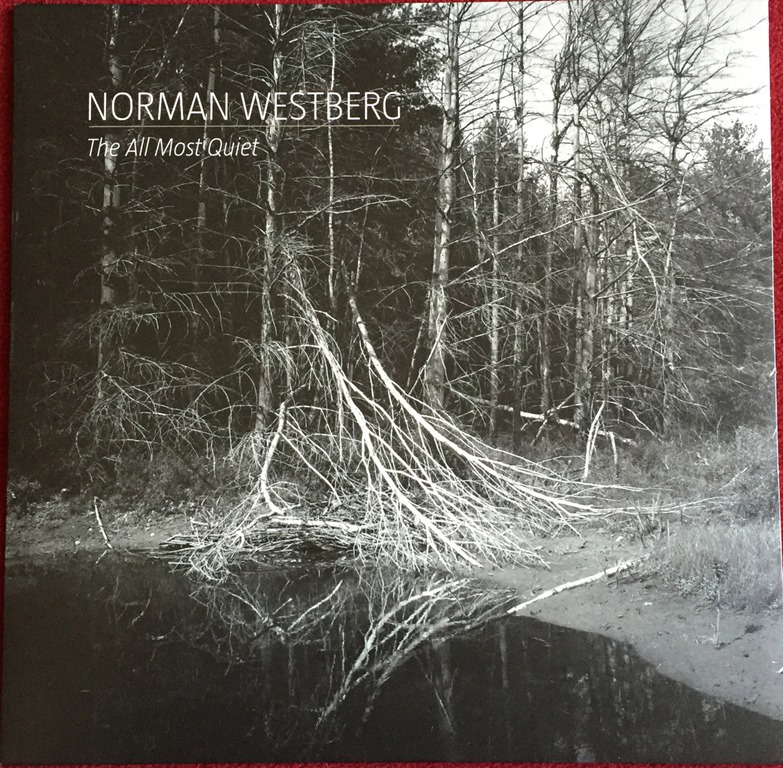
While MRI, released by Room40 in February, was a reissue of a 2012 album, The All Most Quiet contains new material in the shape of two long-form tracks. Like its predecessor, The All Most Quiet is radically different from his contributions to Swans. The fact he’s actually found the time to compose and record new material is impressive in itself: the latest Swans album, The Glowing Man was released on 10 June, and the two-hour colossus of a sonic experience was developed and recorded off the back of a full year spent touring its predecessor, To Be Kind. Given the duration and intensity of a Swans live show, it’s remarkable that Norman Westberg’s had time to piss and still has the energy to stand, let along record a new album. But then, perhaps his solo work has therapeutic benefits, and affords him the opportunity to decompress after long days spent in the Swans pressure-cooker.

The All Most Quiet is, as the title suggests, not a loud album. It is also a gentle album. But that doesn’t mean it lacks dynamic tension, and while it is calming, it’s also not completely undemanding.

The title track starts its long, meandering journey as a mid-range drone which pulsates subtly. The tonal changes which emerge are gradual. It’s easy to let it simply drift by, and it’s pleasant enough to appreciate in this way, but attentive listening brings its rewards. The introduction of new layers, textures and tones, shifts in the scale and pace of oscillations change the mood, subtly, inconspicuously, but no less definitely. And while The All Most Quiet bears no obvious resemblance to Swans, it is possible to hear a certain correlation in the way Westberg builds on slow-burning transitions to hypnotic effect. There are hints of ominousness and darkness, but the sense of scale and grandeur seeps through the very fabric of the sound. The second track, ‘Sound 2’ maintains the atmosphere, and the absence of any clear highs or lows builds a tension beneath the calm surface.

The All Most Quiet once again highlights the trait I most admire in Norman Westberg’s approach to guitar laying: patience. No heroics. No sense of the ego common to guitar layers. His playing is focused on achieving texture and an overall listening experience. Whether he’s peeling off shards of noise, as on early Swans’ releases or creating more sculpted sound, as on their later releases, and in his solo recordings, at no point dos one ever find oneself thinking ‘what fretwork! What guitar wizardry!’ In fact, much of the time, Westberg’s guitar doesn’t sound like a guitar, particularly on The All Most Quiet. And for the most part, the sound is too immersive for one to really think at all.


Norman Westberg - The All Most Quiet


Norman Westberg Online

Swans have shared the first full track from the forthcoming album, The Glowing Man, out on Young God (N America) / Mute on 17th June 2016.

‘When Will I Return?’, described by MOJO as a ;revelation’, was written, explains Michael Gira "specifically for Jennifer Gira to sing. It’s a tribute to her strength, courage, and resilience.’

But enough preamble. Listen to this:


As a further taster for the forthcoming album The Glowing Man, with its Ballardian connotations, Swans have offered up an excerpt of ‘When Will I Return’.

‘When Will I Return?’ was written, explains Michael Gira, "… specifically for Jennifer Gira to sing. It’s a tribute to her strength, courage, and resilience."

It sounds like vintage Swans, and calls to mind the sound of  The Great Annihilator, Love of Life and White Light.  Hear it here:


The Glowing Man is out on 17th June.

On June 17, iconic avant-rock ensemble Swans are releasing The Glowing Man,  the fourth and final studio album from this line-up since their reactivation by band primum mobile Michael Gira in 2010 after a 14 year hiatus. This will be followed by their customary year-long world-wide tour celebrating the release after which Gira says, "I’ll continue to make music under the name Swans, with a revolving cast of collaborators…touring will definitely be less extensive." This is an excerpt of "Cloud of Unknowing" from the live concert DVD that will accompany the deluxe 2-CD release: