Posts Tagged ‘strings’

Sonic Pieces – 30th May 2025

Christopher Nosnibor

Five years is quite some time, and a lot has happened in the last five, that’s for certain. Although the fact so much has happened means that the last five years have been something of a void for many. And so it is that Reverie, recorded in October of 2024, sees Otto A Totland (piano) and Erik K Skodvin (guitar, cello, electronics, and processing) reunited in concert for the first time since 2019.

It’s pitched as ‘a follow up to 2014’s Recount, which saw two pieces of music created around their live-sets in different periods. This time, we are treated with a contemporary, raw live performance from October 2024 in Rabih Beaini’s studio, Morphine Raum in Berlin, during the 15th anniversary celebration of Sonic Pieces.’

The two longform pieces which make up Reverie were recorded live, and as if to prove the point, there’s the sound of a light cough just as the first piano note hits, then hangs in the air. They could have dubbed it out, I’m sure, but to have done so would be against the spirit of this work – spontaneous, improvised, in the moment. The recording is not only about capturing the music, but the moment itself.

The seventeen-minute ‘Rev’ is delicate, built primarily around Totland’s graceful, nuanced piano work, and considerable reverb, which may well be natural from the room, but however the sound is achieved, the sense of space is integral to the atmosphere. Skodvin’s contribution is magnificently understated: the slow scrapes of strings and subtle sonic details may seem secondary or additional because they’re not the focal point, but without them, the effect would be diminished by more than half. A great musician is not necessarily the one who dominates or demonstrates virtuosic talents, but the one who understands their contribution to the work as a whole, and appreciates that less is more. And so it is that elongated notes quiver and quail, wailing tones and sonorous drones swirl about and bring so much depth and texture, an as the piece progresses, the piano and extraneous incidentals achieve an equilibrium, and it’s utterly mesmerising.

‘Erie’ turns the tables, and it’s Skodvin’s strings which take the lead initially, before trepidatious piano creeps in. Trilling tones hang hauntingly like distant memories and displaced ghosts, and there’s a melancholia to this piece which is difficult to define, but lingers amidst the brooding lower notes. The slow piano is soft, and sad, while tremulous strings evoke a sense of something lost, somehow.

Without words, Reverie paints a picture, and hints that memories and reveries are inherently tinged with sadness. For even to recall a happy time is to remember a moment which has passed, and will be relived. However many times one may return to a particular place which is imbued with fond memories, however many times one may listen to that favourite song which carries such joyous connotations, that moment, that time will forever continue to recede into the past, never to be experienced again. The past is forever past, and will become further past with each day that goes by. Summers will never be as long, or as carefree as in childhood. The exhilaration of new experiences will never provide the same buzz, however hard you chase it. And with this realisation comes the slow fade, and a sense of acceptance. Bask in the reverie, and hold those times dear as the years slip away.

AA

ReveriePATTERN013 front

Photo: Alex Kozobolis

1st November 2024

Christopher Nosnibor

Imagine having your album release scheduled many months in advance only to find the release date crashed by The Cure’s first album in sixteen years. Imagine you’re not only an act likely to appeal to Cure fans, but your act features a former long-serving member of The Cure. This is the true story of Vamberator, the duo consisting of Jem Tayle, formerly of Shelleyan Orphan, and Boris Williams, Cure drummer from 1984 to 1994, and sometime contributor also to Shelleyan Orphan.

The album’s title is telling and possesses a certain resonance. Much has already been written on the contradictory impact of social media, and the idea that while we’ve never been more connected, we’ve never felt more isolated. Scrolling through endless snaps of people’s holidays, parties, nights out is a hollowing experience, and one that’s anything but inclusive. Of course, you want to be pleased and happy for these people sharing their experiences as they live their best lives, as is the parlance, but inside, you’re being eaten away as you’re confronted with your own mundane, grey existence.

If anything, the pandemic heightened the agony for many: half the population was basking in being work-free, spending days baking bread and discovering new hobbies and bingeing on Netflix, while the other half was battling their way into work, or juggling work and home schooling, or simply trapped indoors on their own – or worse. Virtual drinks via webcam and group WhatsApps and streaming gigs were poor substitutes for the real thing.

And now we’re supposedly back to normal, but it feels as if something has been lost, and possibly lost forever. Our lives have become more distant, more disparate. In my own experience, it simply seems harder to co-ordinate meeting with people, and while some people seem to be so busy with their social lives it’s a wonder they can remember what the interiors of their own homes look like, their busyness leaves some off us at home, disconnected for weeks at a time. I am not alone in being alone: for many, the creeping sense if isolation and loneliness weighs heavier than ever before. This is truly The Age of Loneliness.

I’ve begin with the digression in order to contextualise the point at which I arrive at this album, having spent the last few days – like a lot of people – immersed in the melancholia of the new Cure album, having not seen proper daylight for the best part of a week and struggling against the urge to hibernate.

The single release ‘Sleep the Giant of Sleeps’, which came out in the summer, showcased an energetic embracing of myriad firms, and I myself described it as ‘a mega-hybrid of alt-rock, post-punk, and psyche.’ It set a level of expectation for the album and despite being born from a place of comparative darkness, the spark of experimentation and joy of creating illuminates the recesses of Age of Loneliness.

‘I Used to be Lou Reed’ kicks the album off in a flurry of strings and takes flight with a quite poppy flavour. It’s got horns and string and synths bursting all over, and there’s a slick funk groove which emerges after a minute or so… but despite being there, there, and everywhere, from James Bond to crooning 90s indie all in the space of five minutes, nothing feels forced or corny. Wish-era Cure meets Pulp might not sound like the ultimate pitch, but prepare to be pleasantly surprised.

Shades of negativity colour songs with titles like ‘I Need Contact’ and the title track, as well as ‘I Don’t Want to Cut the Grass’, a paean to lethargy which drifts and lilts like a Kraftwerk piece, but with the drollness of late Sparks. ‘Pilgrim’ brings tints of Beatles-esque twanging and some Eastern shades alongside elements of psychedelia. With loping rhythms and layered instrumentation, the title track slips into a groove worthy of late 80s Wax Trax releases then swerves unexpectedly. ‘I Need Contact’ is a sparse piano-led ballad, and its simplicity in itself is affecting. ‘Creature in My House’ begins haunting and ominous, before swinging into an electropop glam stomp which shouldn’t work, but does. This is true of much of Age of Loneliness.

Being predictable is not an accusation one could level at Vamberator: Age of Loneliness is ambitious, and bold. Sometimes it goes over the top, but it’s forgivable, because instead of playing it safe, as musicians of their experience often do, Tayle and Williams have tested their limits here, and they’ve emerged victorious.

AA

AA

a0433341087_10

Unsounds – 24th May 2024

Christopher Nosnibor

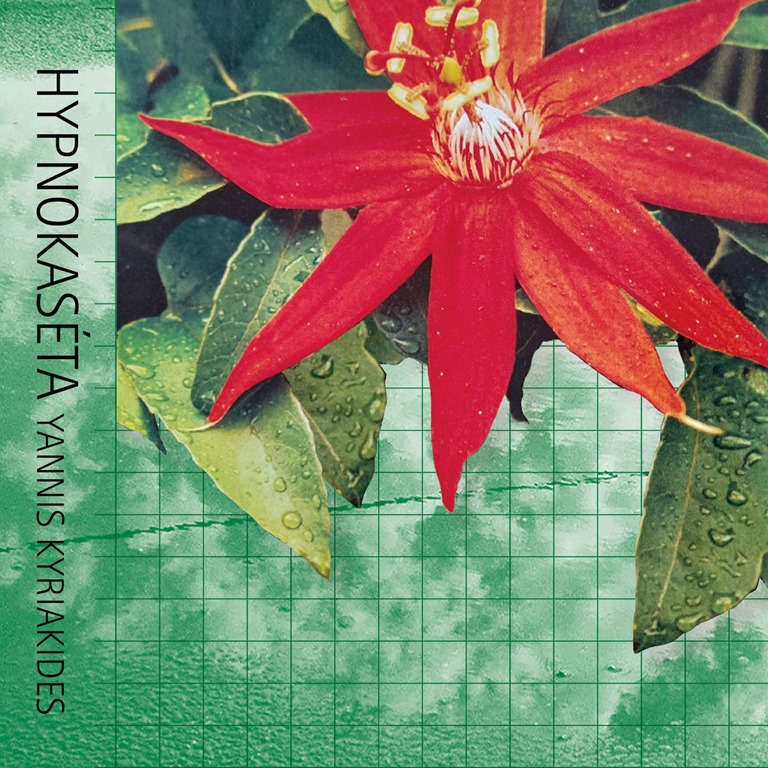
When it comes to being a music writer, for me, at least, perhaps even more of a buzz than getting advance listens of the most eagerly-anticipated releases is being exposed to music I otherwise wouldn’t have. And the nature of the avant-garde means that you have to be in the know to know. Being introduced to the Unsounds label and the work of Yannis Kyriakides certainly opened my eyes – and more so my ears – to a whole expanse of music I assumed must exist, but would have had no obvious means of locating or accessing while going about my ordinary life before.

Although I’ve only dipped in and out of Yannis Kyriakides’ output, more as one with a casual interest than a fan per se, his work has never ceased to impress with its range and constant questing for something different, something new, both sonically and methodologically and “Hypnokaséta (2020-2021) is no exception.

Kyriakides’ introductory notes explain both the concept and the practice behind the recording of the album: “Hypnokaséta (2020-2021) is a continuous set of 16 pieces for string quartet, improviser (playing cassettes and any instrument) and live electronics. The source material is based on dreams that I had during the first few months of lockdown, April-June 2020. Accounts of these dreams are encoded in the music that is played by the quartet and also encrypted in the sound textures that surround this.

“The pieces alternate between quartet as the foreground and electronic interludes, where solos or duos underpin the soundscape. The title of the piece (Greek for ‘sleep-cassette’) refers to a theory of dreams proposed by Daniel Dennett, that says that dreams are loaded into consciousness like a cassette tape during the night and played just before waking.”

It’s longtime collaborator Andy Moor who provides the guitar and tape work on these recordings, and together with Kyriakides’ electronics, which move between shuddering skitters and unsettling scratchiness and quite abstract sounds, when juxtaposed with the strings – which span playful to mournful to droning discord.

The sixteen pieces have been mastered as six separate tracks, but they flow as one immense composition in a continuous state of transition. Within each of the six numbered tracks, the individual segued pieces bear titles, with their time markers also noted. The titles present, if not strictly a narrative, then a guide to the theme, the idea, the inspiration.

‘Hypnokaséta I’ comprises ‘The government’s new cultural scheme’, ‘All roads to the airport are blocked’, and ‘Everyone is nervous, everyone is lost’, titles which serve to encapsulate the events and the sensations they engendered within the populace at the strangeness and uncertainty of lockdown.

‘Hypnokaséta III’ is a stunning work of contrasts, containing as it does the gentle, almost light-spirited string-led ‘The reluctant hotel manager’ and the dramatic, jarring ‘She lifts the mountain’, a dark, alien drone brimming with electronic tension that crackles and tweets. The rapid switches in mood and form recall the sudden and wild extremes I experienced myself during this time: it was impossible to keep up with the constant stream of developments in the news, while at the same time entrapped within the confines of the house, where the world outside felt so very far away, while also having to accommodate the changeable and diverse headspaces of friends, family, and colleagues. No-one knew what the fuck was going on, or how to cope.

There was an air of unreality about it all, and at times it became difficult to distinguish between the bewildering nightmarish reality of the wakeful hours and bewildering nightmarish sleep, and in drawing on dreams in the creation of Hypnokaséta (2020-2021), Kyriakides captures the essence of that abstract space forged in the mind where everything blurs. This blurring and abstraction is also reflected in the titles: ‘The concert promoter complains that not much happens in the piece’ sounds like something that could happen in one of those self-reflective semi-anxiety dreams, and ‘Bridges are being dismantled

across the city’ has an apocalyptic sense of separation, while ‘Body swap opera’, ‘Swimming pool synthesis’, and ‘Mutations on an empty grid’ are altogether more surreal in their connotations.

Throughout the album, the lister is jolted from a moment of tranquil reverie by some abrasive thud or rasp, an unexpected spike in volume, and a turn towards an altogether more disquieting atmosphere.

The composition is nuanced, the placing of the switches and transitions perfectly timed to achieve optimal impact, never allowing the listener to truly settle, to relax, to sit back and enjoy, and the moments of tension are indeed tense; but credit must also go to the performers: the strings are played with a keen awareness of the importance of both dynamics and detail, and Moor, in his capacity of ‘improviser’ brings texture and tone delivered with an infallible intuition. The album’s structures may be subtle, almost invisible, but they’re affecting, and as a whole, Hypnokaséta (2020-2021) is an experience which permeates the psyche in unexpected ways.

AA

a2874939530_10

InsideOut Music – 11th May 2024

Christopher Nosnibor

Maybeshewill rose to prominence on the crest of the instrumental post-rock wave swiftly on their arrival in 2005, and while many of their titles and song structures, with brooding passages splintered by bold crescendos, were quintessentially of the time, what set them apart from their peers was the electronic element of their sound. Between 2008 and 2014, they released four albums, with Fair Youth being the final one. And then they called it a day the following year.

Something happened in the years which followed. Not to the band themselves, but in the culture. As so often happens, their reputation and the appreciation for the band seemed to grow in their absence. There’s inevitably an element of nostalgia involved, but with fashions being ever cyclical, post-rock’s popularity was somewhat diminished by 2014, largely due to oversaturation, no doubt – how many instrumental bands playing seven-minute songs with chiming guitars and crashing crescendos all wanting to be Explosions in the Sky do you need to see on a single evening, and how many such lineups do you need in a week, month, year, lifetime? But as time passed, there emerged a new generation who hadn’t been going to gigs in the mid-noughties, who’d missed out, and thus grew a renewed interest.

Maybeshewill reconvened in 2020, releasing No Feeling Is Final in 2021, an album which, seven years after Fair Youth, further cemented their style and certainly didn’t disappoint.

As 2024 marks the ten-year anniversary of Fair Youth, it seems an appropriate time to review the merits of a definitive album – here, reassessed, remixed, and remastered. Jamie Ward comments of the new mix and master: “With 10 years more mixing experience under my belt I feel a bit better placed to conquer the wall of sound and get a little more separation between the instruments to really bring out the details of those arrangements. In general I’ve tried to make things hit a little harder and be bit a more vibrant and technicolour.”

I haven’t been anal enough to play the two versions side by side or to really focus on those minute details which some fans will likely revel in for hours, and I sincerely hope they do. There is a certain and quite specific pleasure in rediscovering an album you know intimately, finding fresh details and dynamics along thee way, but this is perhaps more the material for fan forums and individuals to immerse themselves in.

For me, it’s been a long time since I’ve listened to this album – not because I don’t rate it, but because of the sheer volume of music in the world vying for my attention.

From the very start, rolling piano and brooding strings pair with chiming guitars, strolling bass, and solid percussion to make mood music that’s not meek or fay, but driven and dynamic, with remarkable texture and depth, and it draws you in instantly. There’s a magical musicality to ‘In Amber’, largely derived from the piano which ripples and rolls its way through the surging guitar.

The title track is one of many which, with vocals, would likely have made an epic academy-size venue-filling anthem, and ‘All Things Transient’ has soundtrack written all over it. The quality of the compositions – and their execution is impossible to fault, as they present back-to-back tunes which are solid, energetic, expansive, imaginative. ‘Sanctuary’ is mellow but at thew same time has drive and energy, pulsating shoegaze with a solid rock spine in its tight rhythm section, which stands in contrast to the rather more mathy, jazzy, folksy ‘Asiatic’.

The album’s eleven songs showcase a real range, and Fair Youth represents not only a high point in the band’s career, but also in the post-rock oeuvre. It’s an album of a rare consistent quality, and holds up as well ten years on as it did at the time – if not, perhaps, better.

AA

a2908336688_10

It is no wonder that the experimental string duo Lueenas often work with film music. In their recent collaboration with animator and video artist Jonas Bentzen, their affinity for the magic that can happen moving image and moving music is highly apparent. From the p.o.v of a solo traveler, the camera takes us hauntingly through underground tunnels and fantastical sci-fy spaces of ancient aesthetics while the violent track ‘Nyx’ is carrying us through it all. For Lueenas darkness and beauty are two beautifully intertwined sensations and this duality is a driving force in their video collaboration with Jonas Bentzen, creating an eerie yet alluring and sensual journey.

For fans of Tarkovsky’s Stalker and Mica Levi’s soundtrack to Under The Skin, this music video from Lueenas and Jonas Bentzen is one to watch. “Nyx” conjures the story of Hemera’s mother, the Goddess of Night, born from Chaos and feared by all, even Zeus. Through distorted and shrieking layers of violin, and the mammoth double bass figures, she carries at once a brutal wrath and conciliatory power. Transforming into

upward blazing howls, we are reminded that there is beauty in darkness. Nyx is part of the self-titled album by Lueenas, released November 4th, 2022.  Cinematic, strings & electronics duo, LUEENAS, announce self-titled debut album, out Nov. 4. Intuition and acceptance are at the core of the debut album from Danish electrified string duo, Lueenas. Exploring the complex spaces between typical emotional dichotomies, their language emerges brimming with imaginative uses of form and texture. Born over a year of improvised sessions, and informed by their involvement in other projects across pop, jazz, electronic, experimental and post-classical music, Maria Jagd and Ida Duelund then set out to puzzle together the luring soundscapes that make up their self-titled debut. Experimenting with the limits imposed by their stringed instruments, and pushing the boundaries between acoustic, amplified and electronic sources allowed them to draw on a much broader and expressive colour palette of sounds.

Taking inspiration from ancient sacred practices, the album encompasses millennia of storytelling from distinctly female perspectives. Lueenas’ fully-cast debut album is at once the evocative score for a lauded expressionist film yet to be made, and a sermon for the fluidity of the emotional experience across time and space. As an ode to the communicative power of strings, it tells us what would otherwise remain untold. Lueenas is an experimental string duo formed in 2019 by Ida Duelund and Maria Jagd, and based in Copenhagen, DK. With violin, double bass, effects and amplifiers, they create violent and beautiful soundscapes full of panoramic grandeur. Their cinematic aesthetic has roots in both classical minimalism and improvisational rock music.

Watch the video here (click image to play):

Nyx 2

14th April 2021

Christopher Nosnibor

I’d take cheap red win over red, red wine any day: back in the early to mid-90s as a poor student (back when such a thing existed), Liquorsave – the off-license department of Kwik Save, who at the time were selling their No-Frills baked beans for 3p a tin – it was possible to purchase a bottle of Hungarian red wine at 12% ABV for £1.85. It was actually better – by which I mean not only stronger, but also fuller-bodied – than the £5-£6 bottles of French wine. Nowadays, cheap mis under a fiver, but I’ll still stand by budget wines from the right sources, and in the absence of pubs, people, and life in general over the course of a year of lockdown, cheap red wine has become a friend on a par with strong Polish lager.

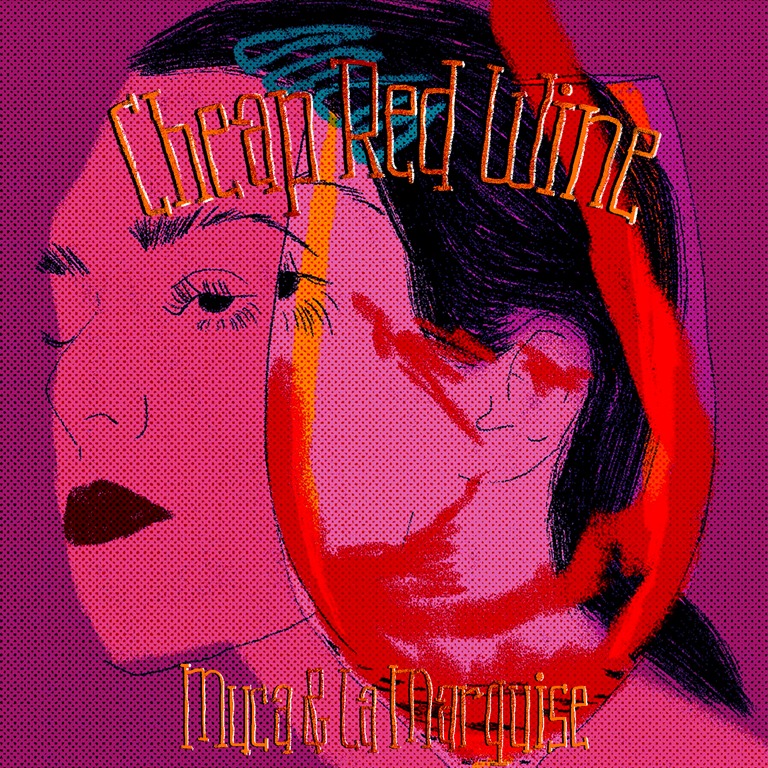
Anyway: on ‘Cheap Red Wine’, Muca and the evasive, semi-illusory Marquise paint a laid-back, smoky picture from a minimal sonic palette, evoking the spirit of smoky basements bars of times gone by. It wasn’t so long ago you could find somewhere down some stairs that was open till 1 or 2am and sip a bottled beer or a whisky and feel like you were somewhere else while people smoked… but time is relative. Nevertheless, the easy-going, laid-back jazzy vibes of ‘Cheap Red Wine’ evoke a pretty deep nostalgia, and it hits harder than the song itself, which is simple, melodic, reflective, landing somewhere between Amy Winehouse and Portishead.

Based around a simple acoustic guitar and Muca’s magnificent vocal that drawls, but isn’t quite lazy per se, ‘Cheap Red Wine’ builds to incorporate layers of strings and a wandering electric guitar solo, and conveys a heavy ache of emotion, too. An understated instant classic.

AA

Cheap Red Wine_Artrwork_Kelly Emrich

Inverted Grim-Mill Recordings – 2nd April 2021

Christopher Nosnibor

This is one of those albums you can judge by its cover – and title. Golden Threads From Riven Rot continues to trace the same themes of death and decay as its Inverted Grim Mill predecessor, The Sea To Which The Body Is Drawn.

The liner notes promise Wreaths’ ‘signature swells of fragile strings [which] drift and fluctuate throughout, laying down a thick atmosphere that draws the listener in. While there’s a swamp of sadness to be sinking in, there’s also a hopeful tone.’

The hope isn’t always immediately apparent, and it’s the bleakness of eternity stretching out with nothing to grasp hold of that dominates the album’s eight pieces, the majority of which extend beyond the six-minute mark, giving them room to fully immerse and envelop the listener. The compositions are rich in texture, and the long, slow, droning swells of sound – not notes, not chords, just dense, yet at the same time wispy and intangible, like layers of smoke or fog hanging in the air. The grand sonic vista of ‘The Throes of Them’ is defined by a slowly pulsating rhythmic chime, while ‘That’s How Buildings Burn Down’ grows deeper, darker, denser as it progresses, a rumbling lower-end drone sonorous and heavy beneath the creeping stealth of the top layer, a thin, stratospheric drone that twinkles and shimmers.

The theme of decay dominates the bleakly suffocating smog of ‘Words Come to Rot in the Throat’, the title conjuring the sensation of all the thoughts we fail to articulate as the rise and catch in our throats and remain unuttered, for fear, for shame, for cowardice. Where do those words go? Sometimes, we swallow them back down, but something remains lodged and decaying as those recollections return and manifest as angst and self-loathing. Here, the sounds quiver tremulously as they linger, lost, directionless in the darkness.

Originally self released as a digital album, this CD reissue of Golden Threads From Riven Rot includes the lengthy final ‘lost’ track, ‘A Cloak For Rotting In’. Where it’s been and for how long is unclear, but it’s a sixteen-minute expanse of cold sonic desert. Strings scrape and whine as they suffer in quiet solitude and a sepulchral chill descends. It’s a gloomy, dolorous affair, steeped in sadness.

After Golden Threads From Riven Rot has drifted into nothingness, it leaves you cold, shaken, somehow empty and adrift. The prospect of moving feels beyond attainment, and there is nothing you want to do or listen to afterwards, but sit and bask in the faded silence.

AA

cover

Emerging from the ashes of several pop bands, BRUIT ≤ was born out of the desire of its members to turn their backs on the majors and return to a process of creation without constraints.

Initially the band’s intention was not to perform live but to research and experiment with sound in a studio environment.

At the end of 2016, this research resulted in two live videos filmed in their studio that would enable the band to make its debut on the Toulouse scene. After this experience, Clément Libes (bass, violin), Damien Gouzou (drums) and Théophile Antolinos (guitar) composed together in search of their own sound identity and with the aim to create progressive music that subverts genre and would result in the expansion of stylistic boundaries. Consequently, during this time the band went through several line-up changes until Luc Blanchot (cello) joined in January 2018.

It was only then that BRUIT ≤ truly felt complete and sure of their direction, creating emotively intense and expansive instrumental compositions of a conceptual nature that merge post-rock, ambient electronica and modern classical.

On 19 July, 2018, BRUIT ≤ signed to Elusive Sound who released their first EP titled “Monolith” in the fall of 2018. Afterwards Bruit went on a 20-show tour of France and Belgium sharing the stage with bands like Shy Low, Slift, The Black Heart Rebellion, Silent Whale Becomes A Dream, Jean Jean, Endless Dive, Poly Math, Orbel or A Burial At Sea. The band was invited to play at the Dunk Festival in 2020 but the event was cancelled due to the Covid19 pandemic.

BRUIT ≤ focused on the composition and production of their first full- length album, changing their line-up again with Julien Aouf taking over on drums. ‘The machine is burning and now everyone knows it could happen again’, will be released digitally on the 2nd of April 2021. In the spring the album will be released on vinyl by Elusive Sound.

New single ‘Renaissance’ is the 1st track to be shared from the band’s debut with them commenting,

”The piece evokes a humanity reborn from its ashes and rebuilding itself from nature. On this track Mehdi Thiriot has created a video clip, woven with symbols that illustrate the everlasting conflict between nature and culture.’

Watch the video here:

AA

bNfXdDuQ

Icarus Records i008 – 1st December 2019

Christopher Nosnibor

This is one of those albums, recorded live, that contains continuous sound. This makes sense in context: when improvising a set that’s determined by duration rather than compositions. There is necessarily an element of artifice and restriction around time-constrained ‘slots’. This isn’t necessarily the issue here: Icarus is a radio show, a concert organisation and a record label that focuses on experimental music, contemporary classical and electronica. For more than 10 years, this weekly radio show on Urgent.fm, a university radio station in Ghent, Belgium, invites artists to record live sessions on a monthly basis. Over the years, more than 60 Icarus Live Sessions have been recorded, and the library is still growing.

Five-piece instrumental collective BOW – who play a selection of cellos violins, and, as the name suggests, bowed instruments – played Icarus’ 59th live session in March 2019, and is the first to be released, as a cassette and download.

At times truly beautiful, at others dark and difficult, with manifold shades in between, many of which explore dissonant, challenging sonic spaces that test the listener’s capacity in a host of ways as things veer out of sumptuous classical territory and into dramatic discord, Bow lead the listener through succession of passages. The final minutes are laden with drama, transitioning from a soft jazz swing into a raging tempest of scraping string-bleeding trauma, a surging crescendo that assails the senses with a sustained intensity. This is improvisation at its best, where a collective can read one another and the immediate space around them to not only coalesce each segment and segue between them naturally and intuitively, but to form an overall structure from beginning to end that feels planned, arranged, co-ordinated.

There’s a bonus track on the cassette release: another half-hour of difficult, dissonant drones which begin as a brooding chamber orchestra work and evolves – or perhaps more accurately mutates -into something less graceful but altogether more powerful.

AA

i008_art

A ‘stripped back electronic companion to Omertà and Fermi’, Reconstructed Memories features just Paul Kirkpatrick and cellist Rachel Dawson. Kirkpatrick describes it as ‘quite different, more ambient but hopefully still engaging and melodic’, and frames it as ‘the story of life in an hour’.

Omertà and The Fermi Paradox were very different albums, with the latter (link) being an ambitiously expansive work, pushing outwards in all directions, not least in its exploration of time and space. Reconstructed Memories is much more inwardly-focused, and while it’s far from claustrophobic or suffocating, its minimal approach is, in itself, enough to redirect the energy and create a very different atmosphere.

As opening piece, the atmospheric, piano-led ‘A Beginning’ suggests, this is a linear, chronological work. The spoken-word intro, presumably delivered by Dawson, is instructive and creates the space for Reconstructed Memories to unfurl. ‘What should I write and tell? Big stories, big memories are always there… Let’s talk about some small, beautiful memories… Life is full of small memories…’ And it’s so very true. Life is not about the events, but the everyday details. It’s is easy to miss those details, too, caught up in simply existing, and waiting for the events, But you won’t move house, get married, have a child, or otherwise experience something momentous daily, or even often. Landmarks are rare and infrequent, and are relative in the context of the trajectory of a life. But life goes on, and is defined by those fleeting interactions. It’s not just the devil who exists in the detail, but life itself which occupies the cracks and recesses, the spaces in between.

And so it moves, in an evolutionary trajectory, gradually unfurling, expanding, revealing new vistas through a series of memories, reflections, and reconstructions. And it’s beautifully executed, each piece a perfectly-formed vignette delicately spun from soft, rolling piano and graceful strings. The moods are varied, at times light and lilting, others more melancholic and pensive, but ever-shifting and ever-evocative.

‘Regression One’ takes a step into darker territories, with a whispered spoken word narrative and connotations of the awkward, disturbing plunderance of the recesses of memory picked psychotherapy. How real and accurate are those memories? Memories are unreliable, coloured by perspective and faded by time. The effect, is, as the title of the next piece intimates, a blurring. Picked guitar echoes hesitantly, decaying into the mist among atmospheric, ambient strings. The arrangements make optimal use of the minimal instrumentation to create music that’s spacious and contemplative.

The artistic success of Reconstructed Memories lies in its vagueness. Such non-specificity places the process of input onto the listener, and it is they who find themselves reflecting on their experiences, their own hazy and tainted memories, prompted by abstract reminders to turn their gaze inwards. It’s the complete absence of context or meaning which renders the album simultaneously universal and personal.

Screenshot_2019-05-16 Reconstructed Memories Pre-Release Listening Masters