Posts Tagged ‘Spiritual’

Room40 – 22nd August 2025

Christopher Nosnibor

Sometimes, I will encounter a release, and while knowing that I need to cover it, I find myself paralysed by the discovery that I am completely out of my depth. This is never more common when presented with works which represent cultures from beyond my – embarrassingly small – sphere of knowledge. And embarrassing is the word. Doubtless some would steam in and opinion with an overflowing confidence which presents itself in perfect disproportion to their knowledge, but bluffers inevitably come unstuck sooner or later, and are shown up as the arrogant cocks they are. I’ve always been of the opinion it’s better to be open about those gaps in knowledge, accept that no-one can know everything, and take the opportunities which present themselves to gain some education.

During my first or second year as an undergraduate studying for a degree in English, one tutor commented that I had squandered almost half of the first page on ‘rhetorical throat clearing’ – a magnificent and amusing turn of phrase, which summarises something I’m still guilty of some thirty years later.

Anyway: the point is, when presented with Ŋurru Wäŋa, the new album by Hand To Earth, I find myself swimming – or somewhat sinking – at first. The accompanying notes set out how ‘A search for a sense of belonging is at the heart of what drives Hand to Earth, a group of five people, who come together from different backgrounds, different birthplaces, and different musical approaches to share their songs, and by doing that to create something new.’

Peter Knight (trumpet, electronics, synthesisers, bass guitar) goes on to explain that ‘Ŋurru Wäŋa traces notions of home, belonging, and displacement. In the two parts of the title track, Sunny Kim intones the words of Korean poet Yoon Dong Ju’s poem, Another Home, in counterpoint to Daniel Wilfred’s song, sung in the Wáglilak language. Ŋurru Wäŋa (pronounced Wooroo Wanga), translates as ‘the scent of home’, and as we travel we long for that fragrance, passing the bee, guku, making the bush honey while the crow circles calling overhead.’

The notes add that ‘The music Hand To Earth creates collisions between the ancient and the contemporary; between the ambient and the visceral.’

And indeed it does. Listening to Ŋurru Wäŋa is a transportation, and transformative experience, not entirely similar from watching a documentary soundtracked by the sounds of the peoples being documented. From the very first minutes of the spacious whispers and slow, elongated notes of ‘buish honey (guku)’ the lister finds themselves in another place, another space, another mind. It feels, in ways which are hard to pinpoint, let alone articulate, spiritual, beyond the body, but at the same time closer to the earth – closer to the earth than I have ever been or even understand how to become. I realise I have been, and become so conditioned that such senses are beyond me, likely eternally, but on listening to the ringing sounds – not unlike the droning hum of a singing bowl – and breathy incantations of ‘Ŋurru Wäŋa Part I’ and revisited in the dark, sonorous rumbling of ‘Ŋurru Wäŋa Part II’ which brings the album to a close.

In between, swerving drones and impenetrable utterances evoke another time, another place, far removed, something mystical. It’s the sound of nature, of forests, of grass, of sky, as well as of soul, of heart, exultation, of but also the sound of humanity in a form so many of us have lost, and lost our capacity to connect to. This is the music of life, and it swells and surges, it’s the sound of being alive, and celebrating its magnificence.

Under capitalism, we forget that we’re alive, we trudge along, under duress, hating every day. Making it through a day is the goal for the most part, our ambitions are tied to capital, to the drudge, to the eye on the promotion, but, mostly on the commute, the team meeting, to clocking in and out, to the wage, to the 9-5, the confines of the shift, the need to pay the rent… We are all so numb, so desensitised. We’re not even living, but merely existing. With Ŋurru Wäŋa, Hand To Earth sing of another life – and it’s another world, and one we should all aspire to.

AA

AA
a1662627484_10

Christopher Nosnibor

Whistles, hoots, and pipes welcome the sellout crowd as they filter in – very slowly, due to the intense security involving airport style metal detectors on the forecourt, and of course, bag checks, the disposal of any fluids, and enforced cloakrooming of said bags (once any bottles of water etc. have been confiscated). Having only frequented small shows for the last few years, I’d forgotten – or erased – this aspect of attending larger venues, and it strikes me as sad that this is the world we live in now, and I drink my £8 pint very slowly indeed. But tonight is a night where it’s possible to distance oneself from all of the shit and recapture some of what’s been lost, however fleetingly.

Jo Quail, who never fails to deliver less than stunning performances, commands the large stage – and audience – with a captivating half-hour set, which opens with ‘Rex’ and swiftly builds an immense, dramatic, layered sound with loops continually expanding that sound. There’s no-one else who is really in the same field: with the innovative application of a range of pedals – not least of all a loop – she makes her solo cello sound like a full orchestra, with thunderous rumbles, percussion and big rock power chords all crashing in.

IMG_20250322_200724

Jo Quail

It’s a new song called ‘Embrace’ which is the second of her three pieces, and she closes with ‘Adder Stone’ from 2014 LP Caldera, which would subsequently provide the mane for her independent label. The rapturous reception is well-deserved. Her richly emotive sound is certainly a good fit with Wardruna, and it’s likely she’s won herself a fair few new fans tonight.

While the place had been pretty busy when she took to the stage, the lights come up at the end of her set and suddenly, it’s packed. Thuds and rumbles build the anticipation for the main event.

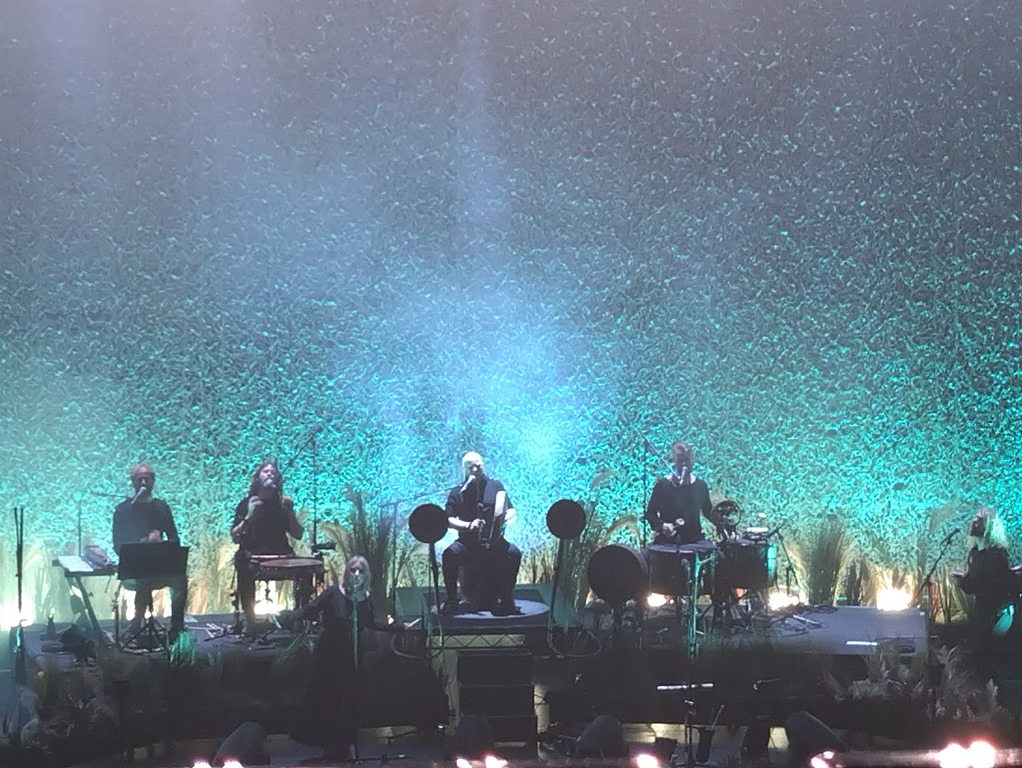
Opening the set with ‘Kvitravn’, Wardruna immediately create a fully immersive atmosphere with strong choral vocals and huge booming bass, and it’s an instant goosebumps moment. Recorded, they’re powerful, compelling: live, the experience goes way beyond. The vibrations of the bass and the thunderous percussion awaken senses seemingly dormant.

Performing as a seven-piece, hearing their voices coming together, filling the auditorium and rising to the skies is stirring, powerful and infinitely greater than the sum of the parts. It’s the perfect demonstration of what can be achieved through unity and collectivism, and the multiple percussive instruments being beaten, hard, with focus and passion produces something that’s almost overwhelming, and goes so far beyond mere music… It’s intense, and intensely spiritual, too.

IMG_20250322_205728IMG_20250322_213016

Wardruna

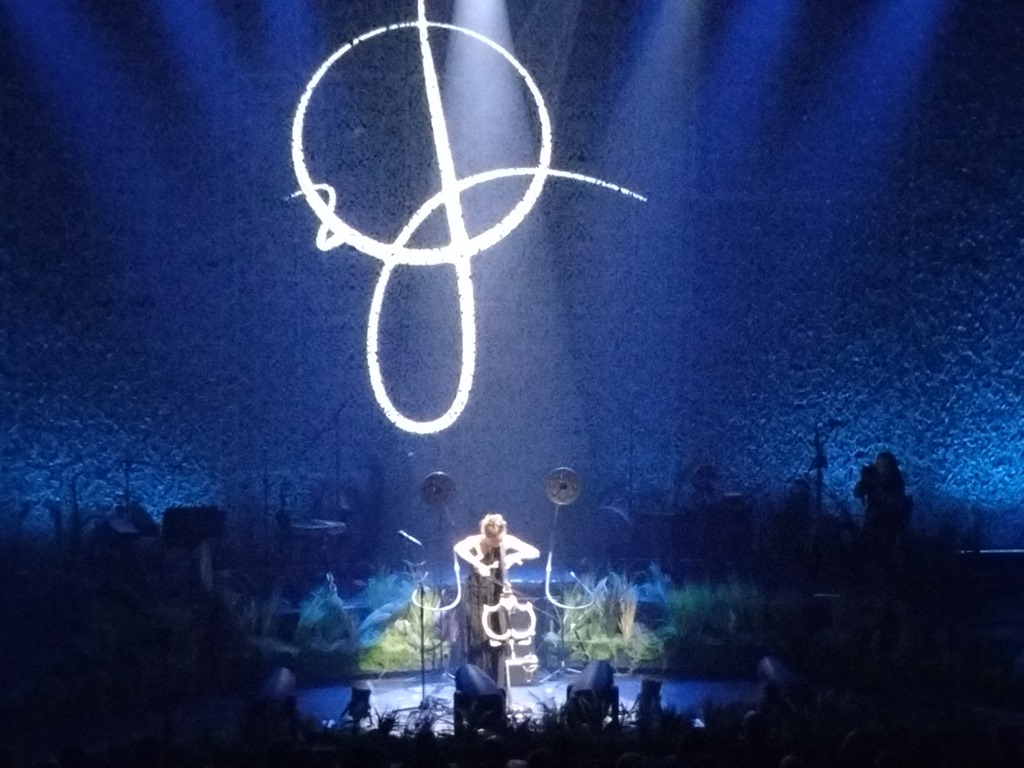
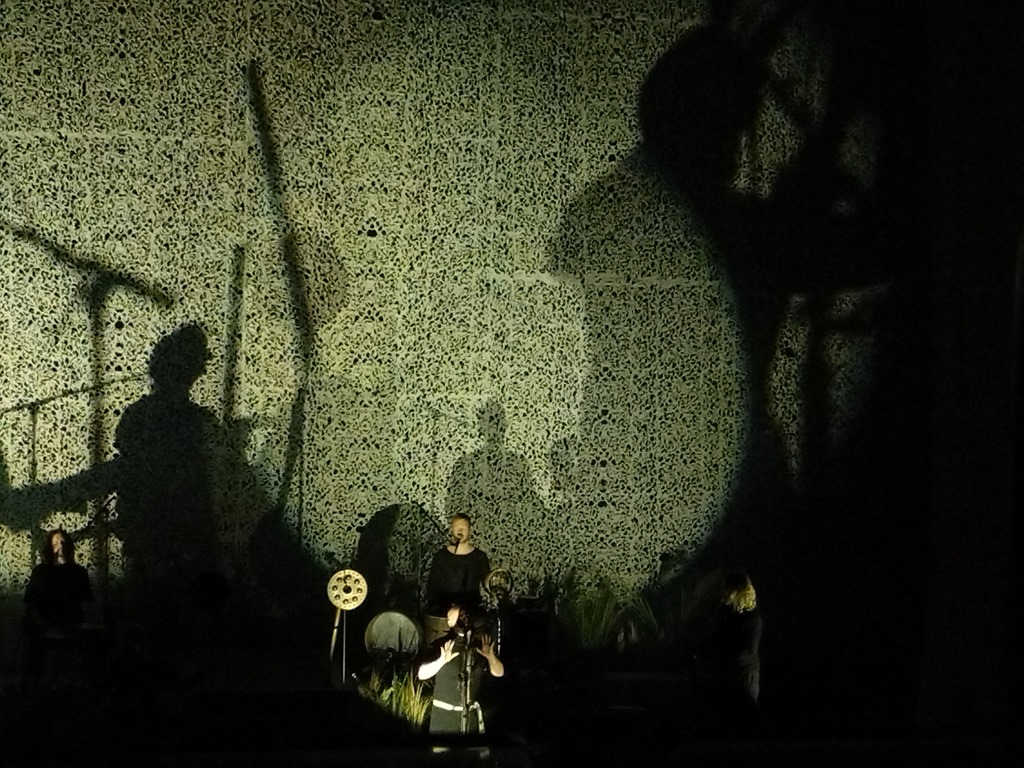
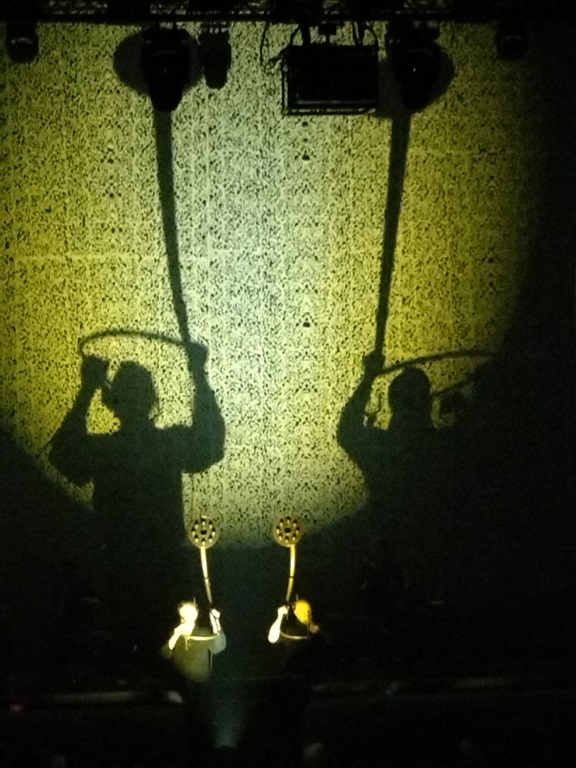
The sound is phenomenal, and it’s augmented by some incredible lighting: no standard spots or flashy lasers here: this is a magnificently considered and perfectly-choreographed display which works with the backdrop and the foliage on stage to optimally compliment and accentuate the performance. While I’m often somewhat unenthused by the larger-venue experience, preferring the intimacy of the sub-five-hundred capacity venue, this is a show that could only work on a big stage. Somehow, it’s the only way to do justice to music that truly belongs in a forest clearing, or on a clifftop, or on a glacier amidst the most immense and rugged vistas on the planet.

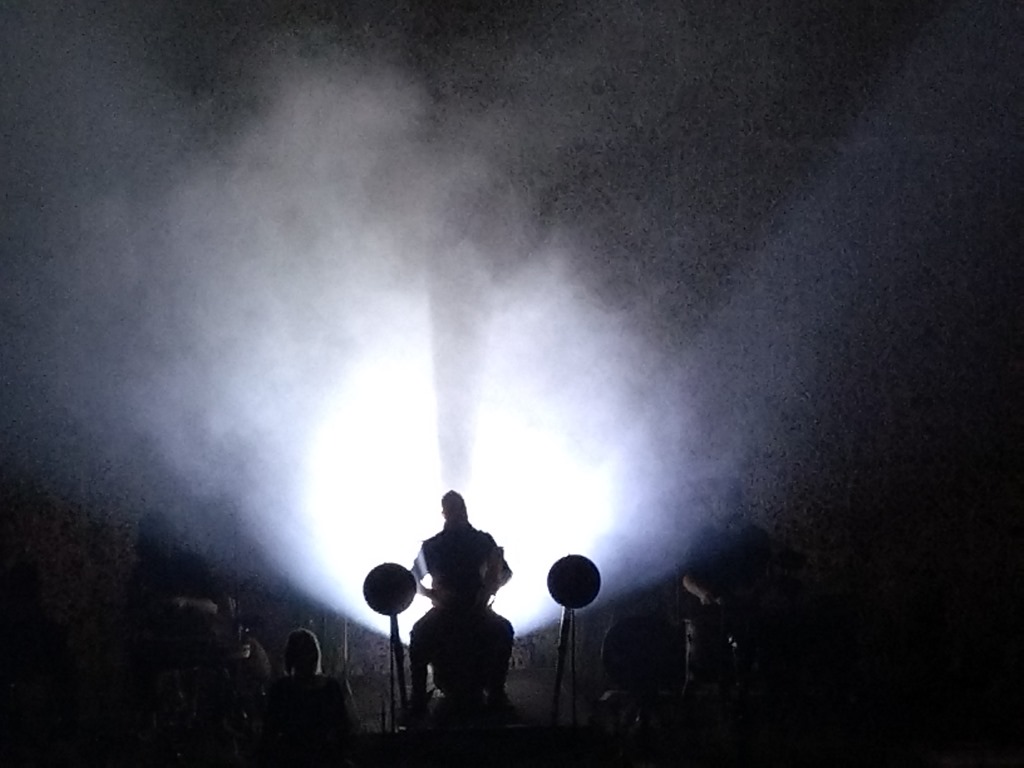
On ‘Lyfjaberg’, they achieve the perfect hypnotic experience, while dry ice floods the stage and lies about their ankles like a thick, low-lying forest mist, before Einar performs a solo rendition of Voluspá.

The second half of the set elevates the transcendental quality still further, as the percussion dominates the throbbing drones which radiate in Sensurround. This is music that exalts in the wind , waves, birds, trees – and the bear – and celebrates power of nature. It’s an experience that brings home just how far we have come from our origins, and a reminder that not all progress is good. Humans are the only species who adapt their habitat to their needs, rather than adapting to their habitat, and it’s a destructive trait. Even parasites strive to achieve a symbiotic relationship with their host, and a parasite which kills its host is a failed parasite because it finds itself seeking a new host. Without the earth, we have no habitat: we will not be colonising Mars any time soon, whatever Elon Musk says, or however much Philip K Dick you may read. But experiencing Wardruna live is the most uplifting, life-affirming experience.

IMG_20250322_213855

Wardruna

They bring up the lights and bask in the rapturous applause for some considerable time, before Einar speaks on nature and tradition and the importance of song, before they close with funeral song ‘Helvegen’, illuminated in red with burning torches along the front of the stage. It’s a strong, and moving piece delivered with so much soul that it’s impossible not to be affected.

IMG_20250322_214101

Wardruna

After another lengthy ovation, Einar dismisses the rest of the band and performs ‘Hibjørnen’ – a lullaby from a bear’s perspective – solo. After such a thoroughly rousing hour and a half, it makes for a beautifully soothing curtain close.

This was not merely a concert, and the performance, theatrical as it was, was not theatre, but a sincere channelling of purest emotion, a quest to connect the players with the audience and their innermost souls and their origins. It’s a unifying, and even a cleansing experience, a reminder of how we can all step back, breathe, and refocus. This was something special.

Trace Recordings – 11th October 2024

Christopher Nosnibor

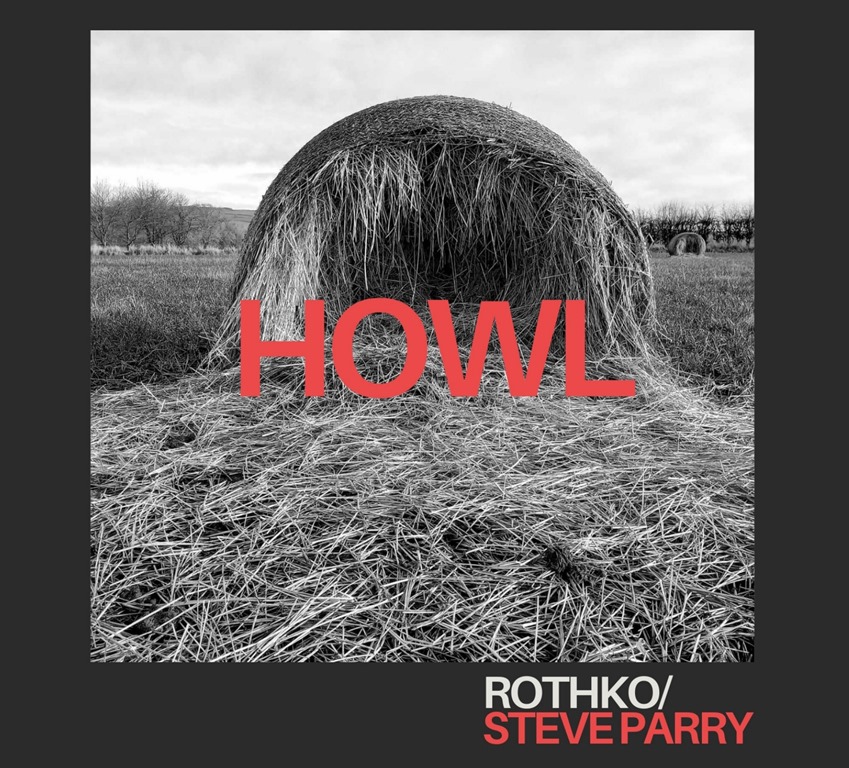
One might say that this collaboration has been a long time in coming: the pair have been friends for some twenty years, and have made contributions to one another’s recordings over that time. There’s no question that it was worth the wait. Their process and the way in which they each contributed is integral to the finished work, and here, not only to save typing, but to ensure nothing is lost in translation or paraphrase, I shall quote from the accompanying notes:

‘Emanating from the sounds of a church organ, with many short pieces recorded by Steve Parry in an ancient secluded church, and then embellished by Beazley, with his resonant bass tones, electric guitar and electronics, HOWL captures the senses of ambience, harmony, discordance and noise, with recordings of the churches space, of its emptiness, interspersed with the music.

‘The two, long, resulting pieces, create an almost ritualistic event, of something taking place that is mysterious, uplifting, and, in parts, unsettling.

‘The album reflects an emptiness, the echoes from ancient walls, a deep sense of place—and the refractions between these two artists. HOWL veers between moments of meditative beauty and unsettling discord, creating a soundworld that feels ritualistic, mysterious, and transformative.’

This is very much an accurate summary and fair description of the album, consisting as it does of two compositions each with a running time of around twenty minutes, but it’s more of a challenge to convey in fullness the resonant effects of this vaporous sonic drift. The first, ‘In the Season of Darkness’ is formed around elongated drones, but their organ origins isn’t immediately obvious in the ear. One associates the instrument with bold, piping swells which sing to the heavens, but here, it’s more subdued, almost a low, rumbling wheeze which provides an eddying undercurrent. Acoustic guitar and slow, meandering bass are far more dominant, and it’s very soon clear that this is by no means an ambient work, or a work without structure or form. The guitar and bass play distinct notes and motifs, often alternating with one another, but sometimes playing in co-ordination, and others still across one another. Treble strains like taut whines of restrained feedback filter through, these higher-end frequencies forming a counter to the resonating bass and the mid-range organ drone which slowly begins to emerge and take form a few minutes in.

The dissonant incidentals rupture the surface like lightning through a thick, rolling cloud cover. The mood is sombre, ominous. The fact it’s pitch black outside and has been since around 6:30, I’m feeling autumnal and writing by candlelight probably means I’m feeling it more, but this is music with a subliminal, subconscious pull. There’s a segment around the mid-point where there’s a pause, and there’s nothing but clatters and clanks, like tin cans rattling in the wind, before the drone returns, darker and denser than before, and with a sepulchral reverb, and it’s something which taps into something primitive and earth-born within. I can only really articulate it by way of a brief recollection of a time I visited an obscure stone circle in Scotland. Most of the stones were gone, but the shape of the circle was marked out by a ring of nettles. It was probably around twelve metres in diameter, and the few remaining stones were no more than three feet high. It was a little way off a minor road, in an unkept grazing field and as unremarkable as it was forgotten and neglected, and I had only paused by it because I had spotted it on the map. But, arriving at the place, something happened: the air temperature dropped a couple of degrees, the wind sped up and clouds obscured the sun; but more than this, there was an atmosphere which brought goosebumps and a shiver down my spine. The place had an atmosphere, and I almost felt as if I was for a brief moment splitting across millennia. The sensation was but fleeting, but it was palpable. The experience of hearing this piece is akin to that, resonating on a level beyond the sphere of commonplace experience.

Counterpart composition, ‘In the Season of Light’ is, again, constructed around a long, long, reedy drone, this time with piano and delicate scrapes and wind-like rustles and whooshes adding the additional layers and textures. It doesn’t feel our sound especially light or uplifting: dark sonorous tones and groaning creaks occupy the corners, before, again around the mid-point, a gentle guitar part, reminiscent of later Earth tunes, arrives, and there are some delicate strings, too. Finally, light begins to break through.

HOWL clearly has no correspondence with Allen Ginsberg’s seminal poem, but does very much tap into something primal and primitive, the way we feel the effects of the seasons, the sun, the moon, possessing what one might perhaps describe as a ‘spiritual intuition’, reaching elemental aspects of the human DNA. Understated, but powerful and moving, it’s a subtly intense work.

AA

6 page ECOpack with measurements.pdf

By Norse Music – 6 September 2016

Christopher Nosnibor

It was reading Naomi Kline’s Doppelganger recently that I truly came to appreciate the way in which western colonialism has annihilated indigenous cultures. I have no real defence for my ignorance, although it’s most apparent that the version of history we receive from virtually any source you care to name is slanted, skewed, almost to the point of revisionary fabrication. The fact that so many countless indigenous cultures have been erased or so diminished so as to be rendered invisible has become normalised and recounted as a process of ‘civilisation’ or ‘improvement’ renders the wider world oblivious to the brutality of fact.

And so it was that reading the text which accompanies Mari Boine’s latest release struck me with a heightened impact, and it’s worth quoting for context:

‘Like so many people impacted by colonisation which we see throughout the world today and throughout history, the Sámi people of Norway (Sweden, Finland and Russia), have been oppressed and deprived of their distinct indigenous culture and language since the 17th century. Mari’s music aims to convey a sense of oppression and frustration, anger and sorrow, which stems from this history. On Alva specifically, a Northern Sámi word which translates to energy, determination or willpower, Mari’s compelling use of traditional joik singing bores through layers of history, imploring the Sámi people to

‘Bring out, breathe out the stories

that ask to be told

With your light feet

trespass the border of time’

This release, we learn, sees Mari Boine ‘blending ancient traditions and resonating with a message of respect for the earth. Alva is not just an album – it’s a journey into the very soul of Sámi heritage, brought to life by one of the world’s most compelling and visionary artists.’

And indeed it is. The thirteen songs on Alva which translates as ‘willpower’ – possess a palpable sense of spirit, of – for wont of better words as I fumble around in a weak effort to articulate – heritage, culture. Even where it’s not possible to comprehend the words themselves, the music, and Mari’s voice speak, and do so on an instinctive, human level.

You see, colonialism – and our capitalist society – was / is based on division, a narrative of ‘us’ and ‘them’, with an othering of indigenous peoples as being lesser. The fact the world as is – particularly in the last few years, and particularly on social media, which has increasingly become a cesspit of division and self-centredness – means a lot of us have lost sight of the fact that fundamentally, we have more in common than we have separations, and division is another instrument of control exercised by those who strive to hold power in this capitalist society. When society tells us that the only way becomes dog-eat-dog (and migrant-eat-dog, and cat, becomes a topic in a presidential debate), it’s apparent just how fucked-up things have got, and how far we’ve come from living in harmony with symbiosis with the planet.

Alva doesn’t evoke ‘simpler’ times by any stretch. In fact, I suspect what may prove unexpected for many is just how timeless – and at the same time, contemporary – Alva sounds. ‘Dánsso fal mu váhkaran’ manages to infuse an airy, folksy song with a tinge of funk and a buoyant, almost Eurovision groove, while ‘Várjaliviĉĉet min vuolláneames brings bold, ceremonial beats, and ‘Anárjoh’ gáttis’ is expansive and atmospheric, and again, percussion-driven. But there’s an air of fluidity, of naturalness, of something at once earthy and above the earth which lingers around the delicately-poised melodies.

Alva is graceful, life-affirming, meditative, transportative, and magical.

AA

MariBoine_Alva_Front-9903cf014505143c

Cruel Nature Recordings – 23rd February 2024

Christopher Nosnibor

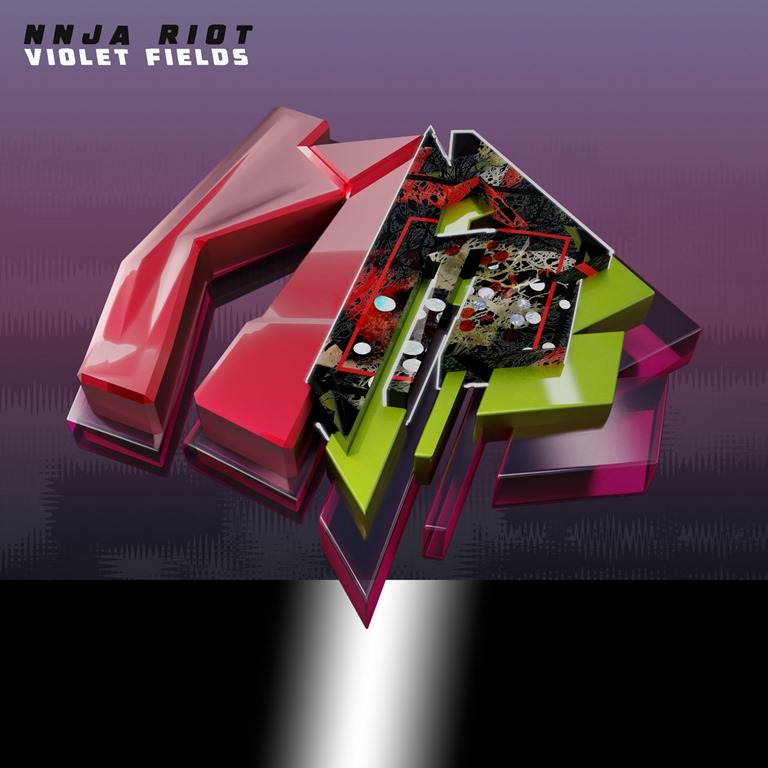
Nnja Riot is the solo project of Lisa McKendrick, who also happens to be one half of experimental electronic noise duo Isn’tses, with Tim Drage, who makes serious noise as Cementemental.

It’s a small world, especially in circles of noise and experimental electronics, and so it is that a few years ago, I paired with Tim for a one-off collaborative set in London at the bottom of a bill curated by Human Worth, with the mighty Modern Technology headlining. I lost my hearing in one ear before the set due to some congestion, and by the end, I’d lost my voice, too. Somewhere along the way, I’m convinced I’ve crossed paths with Isn’tses, too, but can’t find the evidence at this moment in time.

Anyway, my needless digression brings me to the point of observation that their individual projects are quite different from one another, and their collaborative output. This is ultimately a good thing, because while algorithms which have seemingly replaced the music press in making recommendations of the ‘if you liked listening to this, you’ll like this’ ilk, it ain’t necessarily so. Because algorithms don’t understand art, or the fact that an artist’s output may be widely varied.

And so it is that as Nnja Riot, Lisa takes a much more songwriterly approach to things, and Violet Fields contains seven songs which can be described broadly as stark industrial electropop. ‘Horror Heart’ brings all of the elements in together to raise the curtains on the album: understated verses, with a thumping heartbeat bass beneath a delicate vocal bathed in reverb, are suddenly blown away in a wave of noise and monotone robotics with whipcracking synthetic snares cutting through the murk with some harsh treble.

‘The Evolve’ is a low, slow, dark pulsating grind which swells to a blistering ruckus of bubbling, broiling eruption of glitching electronic froth, and things get mangled fast and hard. Nnja Riot is indeed an appropriate moniker: the noise grows and takes over by stealth, as if from nowhere: one minute things are pretty mellow, the next, it’s all going off and you’re being carried away on a sonic tidal wave.

The album’s longest track, ‘Dark Assassination’, stretches beyond the seven-minute mark, and with a stuttering, beat hammering like a palpating heart in a state of fibrillation against the ribcage, it’s creates a muscle-tightening tension which is uncomfortable. The vocals are disconcerting, sounding as they do detached, off-key, non-melodic. Desperate drones bend and warp in the background, adding layers of dissonance and discomfort.

Everywhere across Violet Fields, there are subtle but essential incidental details, little lines of melody which ripple and fade. The title track is hazy, sedated, spaced-out, with melodic elements juxtaposed with swerving sci-fi noise which threatens to drown out the erratic beats and she cuts loose to another level of intensity with the vocal delivery: fuzzed with distortion, there’s a outflowing from the innermost which pours into the swirling wash of multi-faceted noise.

Violet Fields crackles and fizzes, often promising structures which crumble and evaporate and leave the listener feeling a little lost, grasping for something uncertain and just beyond reach. It’s this sense of vagueness which remains after the grainy ‘Musical Fix’ and the ephemeral drift of ‘Slow Release’, a mere fragment of a song which carries a spiritual richness on a ritual drumbeat before fading. There’s a sense that hearing Violet Fields and fully grasping it are not one and the same, and it feels that however long one spends engaging with it, there will always be depths and layers of implicit meaning that exist beyond the realms of conception. You wave a feeble hand, desperate to clutch and cling, but it’s gone. It’s gone.

AA

a2182947288_10

7th July 2023

Christopher Nosnibor

A year after unveiling ‘The Nature of Light’ with the promise of a debut album in September 2022, Celestial North’s Otherworld is finally with us. With the title track and ‘Yarrow’ having also built a level of anticipation, it’s left like an album that’s been a long time coming.

Some things simply cannot be rushed, and Otherworld is appropriately-titled, as Celestial North creates songs which sound as if transported from another world, and another time. A she says of the album’s evolution, “I imagined that I was time-traveling through different and exciting worlds. Wandering through the ancient, sacred stone circles at Machrie Moor and then jumping straight into an underground rave in the forest.” And on Otherworld, she transports the listener on these journeys alongside her.

The album opens with the sweeping dreampop of ‘Are You Free’, which begins as a spoken word piece with misty synths, her Scottish accent strong and honest, before piano ripples in and she slides with grace and elegance into her lilting singing voice. It’s a question phrased as a statement, and I suppose it serves to remind us that whatever society’s constraints, we can, to an extent, choose our freedoms.

And yet, for all this ethereality and otherness, Otherworld has a deep-seated earthiness or sense of nature flowing through it. I don’t mean it feels like Celestial North is connected to nature: she is nature, and channels it through her ever molecule.

Raised in Scotland and now residing in Cumbria, Celestial North channels her natural surroundings and their rich, ancient history and heritage. Many artists have promotional photos shot by standing stones and in stone circles, but she describes her music as ‘pagan euphoria’, and listening to Otherworld, you feel that this isn’t image or posturing: these are the spaces where she belongs, and draws the energy from these places. Some – many – will likely dismiss the notion, but many of these locations do possess a unique and indescribable power that goes beyond mere awe. Castlerigg, near Keswick, is one which surprises me every time I visit; yet I have also felt something, like a crackle of electricity, on stumbling upon a minor circle, only half-intact, while in Scotland; the landscape was barren, and gorse had grown beside it, but the full circle was marked by a ring of nettles and a chill ran over me. These are the sensations which emanate from Otherworld.

Her piano-led rendition of REM’s ‘Nightswimming’ is a magnificently-realised slice of quintessentially dreamy indie. Ordinarily, I’d question placing a cover as the third track on an album, but context counts: this featured on a lauded and band-backed charity compilation released by God is in the TV – but moreover, it just works. ‘Olympic Skies’ is breezy, wistful, easy, airy, with a lilting melody that brings folk and dreamy indie into perfect alignment.

The aforementioned title track packs pitter-batter rhythms and sweeping synths and soaring backing vocals which wrap themselves around a fragile, yet confident-sounding lead vocal as it floats on air, before the more overtly 80s electro-sounding ‘Restless Spirit’, another paean to freedom, this time driven by a thumping dance beat. Her voice is unique and complex: it’s quiet, reserved, breathy, with hints of Suzanne Vega and The Corrs, but also Cranes’ Allison Shaw but also Maggie Riley on ‘Moonlight Shadow’. It makes for compelling listening, especially on songs like ‘The Stitch’, which convey powerful, wild-outdoors Celtic pagan vibes – but again, in an understated fashion. ‘Yarrow’ plays the album out with a rolling piano-based post-rock piece that’s sedate and soothing. Otherworld avoids the bombastic clichés which tend to mar much so-called pagan folk or electronic folk: many acts overdo the gothic leanings, and go for bold (melo)drama, which feels contrived and emotionally empty, simply because it’s trying too hard.

For Celestial North, it all comes naturally, and the dancier elements feel comfortable because one doesn’t get a sense of the artist trying to be simultaneously ‘hip’ and ‘deep’; this is simply her music, her style. Otherworld demonstrates that ‘powerful’ doesn’t have to be heavy or hard, and that ‘light’ doesn’t have to mean lightweight or flimsy. It’s accessible, but complex, deep but not dark or difficult. Sit back and let it carry you.

AA

856085

28th February 2023

Christopher Nosnibor

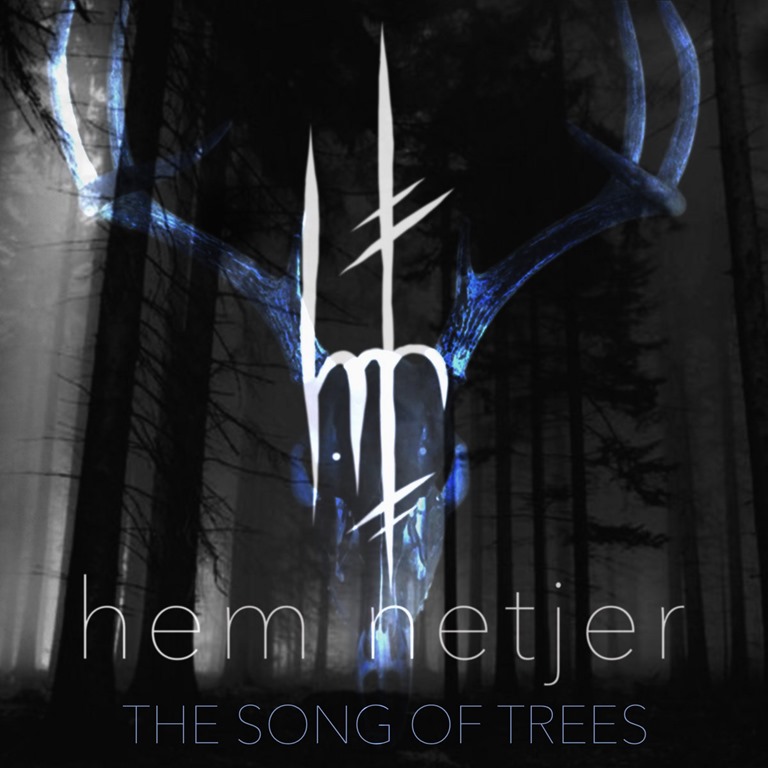
Something about ‘Elemental Cry’, the lead single from Song of the Trees struck a chord and resonated on a subliminal level. It landed with me at a difficult time, personally. Admittedly, most times are difficult, but some are more difficult than others. More often than not, music helps me through those times, and it’s not always the music I’m expecting. Sometimes, old favourites provide the least comfort and are simply too painful. Perhaps I was clawing for something spiritual, music that provided an escape to another realm. Truth is, I’m eternally seeking something. This sweeping, soaring epic channels something that goes beyond notions of derivative Nordic cosplay cal to forge something powerful beyond words.

This is a quite particular and specific thing about music: sometimes it’s not the music itself, but your state on receiving it. I was, and am, in a state, and words aren’t easy. They are a slog. I don’t want to be here, but must power on. And so that transportation, that being lifted to another place, is perfect in terms of needs. Combining heavy synth drone, spacious piano and metallic twangs, The Song Of Trees is tense and atmospheric. It twists at muscles and nerves as drones undulate, hover and hang in the dense air. As the title suggests, it’s rich and earthy, intertwined with nature and the elements, an album that evokes a sense of the vastness of the great outdoors, the space and freedom that instils life into our bodies, and has for as long as we’ve walked the earth. Only now, contemporary living has separated us from nature to the extent that to walk in woods, or to find a place unsullied by human impact feels like some sort of a special treat. This means that while it’s perhaps harder to feel an attunement to the natural world in daily living, experiencing it is something to be cherished all the more dearly. This, then, transports me from the dingy confines of my poky rectangular office space and to somewhere I can feel free.

Given the taster, and the album’s opener, the expansive ‘Void’, ‘Salt and Tears’ lands as an early surprise, being quite beat-driven and overtly electronic with something of a glitchy leaning that’s far from natural or organic. It’s powerful, and it’s all about the dominant percussion, which works well, although it’s not nearly as powerful as third track, ‘Eldur’: the beats are again dance-orientated, but the vocals are positively operatic. It’s a song that registers on a number of levels. In combining the natural, the earthly, the spiritual, and the ultra-modern, with technology-orientated sounds, this could be a clash if not handled with due care and sensitivity, but Hem Netjer create with a sense of balance and equilibrium, which in some way conveys our conflicting, divided existences.

I suppose there are elements of more mainstream artists as well as the likes of Zola Jesus and the wave of Nordic metal acts which seems to be emerging all blended together here, and these imbue The Song Of Trees with a power that’s greater than the sum of the often quite minimal parts. If ‘Freedom’ characterises the album’s more commercial moments, there are plenty more that carve a different space. ‘Elemental Cry’ arrives as the penultimate track with it thunderous drums and steely strings and its power remains undiminished, and it’s the clear highlight of the album.

And elemental is the word: The Song Of Trees has, despite electronic sounds being so integral, a purity that is rare indeed – and that’s both powerful and moving.

The six-minute closer, ‘Otherworld’ is epic in every sense: sparse in instrumentation yet ultimately vast and immersive, it makes for a strong finish to a strong album.

AA

a1911371475_10

Liturgy has shared the single ‘Angel of Sovereignty’ from their upcoming album 93696, out March 24th, 2023. The piece showcases Liturgy’s boundless ambition towards transcendence through rich compositions untethered by traditional rock constructs. Comprised almost entirely of a children’s choir, the track is unmistakably the work of Liturgy, building tension through an evolving round whose chords grow more dense and textured.

Liturgy transcends the traditional parameters of what constitutes a rock band. Founded by Ravenna Hunt- Hendrix, Liturgy is a part of a shared discipline of composition, art, and philosophy that thrives on exploring the spaces between. As an ever-evolving practice Hunt-Hendrix has incorporated elements of black metal, art rock, opera, and trap production into the musical language of Liturgy while engaging with transcendental, theological and eschatological theory through lectures series’ and art installations. A profound sense of yearning and emotional depth weaves through the Liturgy’s dense layers and anchors the project’s increasingly complex and innovative work.

New album 93696 is the purest synthesis of the diversity of Liturgy, a sprawling and monumental double album exploring religion, cosmic love, the feminine, and metamorphosis while manifesting the ecstatic with breathtaking grandeur. Listen here:

SK1CygqQ

Photo Credit: Jessica Hallock

The Circle Music – 9th September 2022

Christopher Nosnibor

Dakini, the debut album by Lisa Hammer (Requiem In White, Mors Syphilitica) was originally released back in 2009. It’s been described as ‘music for ritual, introspection and awakening of the senses’, ‘a complete manifesto of inner search in which a lot of influences from different genres of music’, and that it was ‘designed to carry the listener away from the manifest world and into a deeper space’.

Re-released here on limited coloured vinyl as an expanded release with three additional tracks, it provides an ideal opportunity for existing fans to re-evaluate, and reacquaint themselves, and for latecomers to be introduced.

It happens that I’m in the latter camp, and so am coming to the album with fresh ears, and only the facts that it’s pitched as being for fans of Dead Can Dance while promising ‘unprecedented vocals, sometimes angelic and sometimes damned as if they come from another period forgotten by the time.

Now, one might ask, if the original release was a ‘complete manifesto’, is the inclusion of additional tracks not gilding the lily? Especially when considering that ‘the Indian ragas correspond with times of the day, so the album represents a condensed 24 hours, which is perfect for ritual, or any emotional and spiritual trip.’ In context, there is the question off how to assimilate the additional material in the least obtrusive way, with the least impact on the flow that is so integral to the original concept?

Opening the album with a new, seven-minute ‘Alte Clamat Epicurus’ works nicely; it’s an evocative vocal incantation with a sparse droning backing. It sounds – in the mind’s eye, and with a small soupçon of imagination – like a sunrise, like an awakening. Hammer sounds both otherworldly and most incredibly earthy, which is no small feat – but then, I find that this is something particular to music, particularly vocalisations, which tap into echoes of ancient spirituality. While exalting the heavens, there feels as though there is a deeper connection with the ground, the rocks, trees, the elements. It paves the way perfectly for ‘In Taberna Quando Sumus’; simple, rhythmic, repetitive. As the album progresses, one becomes attuned to the sense of an arc, of a cycle, and Hammer leads the listener on a journey inside. Some of the musical arrangements are so minimal as to be barely there, the sound of the wind and cavernous reverberations, while others are centred around hypnotic percussion and wordless choral vocalisations, as on the powerful ‘Samsara’ and the lilting, ethereal ‘Vajra’.

That flow is disrupted somewhat with a dance mix of ‘Chant Nr 5’ dropped as the fourteenth track at the end of side three. In the sense that it bookends the side, which opens with the original version, it makes some sort of sense, but still… it’s incongruous, sweeping away the drifting incense with a busy beat and quavering organ tone. Perhaps this is why I’m always hesitant to use the term ‘world’ music: it’s such a western-centric view of the globe, where ‘the world’ is vast and the west occupies only a sliver of it, both geographically and culturally. In the west, the west is the world and perceives its cultural dominance as such. It’s a badly skewed perspective.

While Dakini incorporates elements of what would commonly be described as ‘world’ music, it’s really ‘world’ music in that it truly embraces music from the world in its full breadth, with the delicate sing-song of ‘Lullaby’ perhaps owing more to western traditions and showing that for Hammer, all sources are equal, and it makes for a rich and moving listening experience.

Side four ends, and closes the album, with the third and final bonus track, ‘Hurdy Gurdy Gavotte’. And there, it sits perfectly.

803437

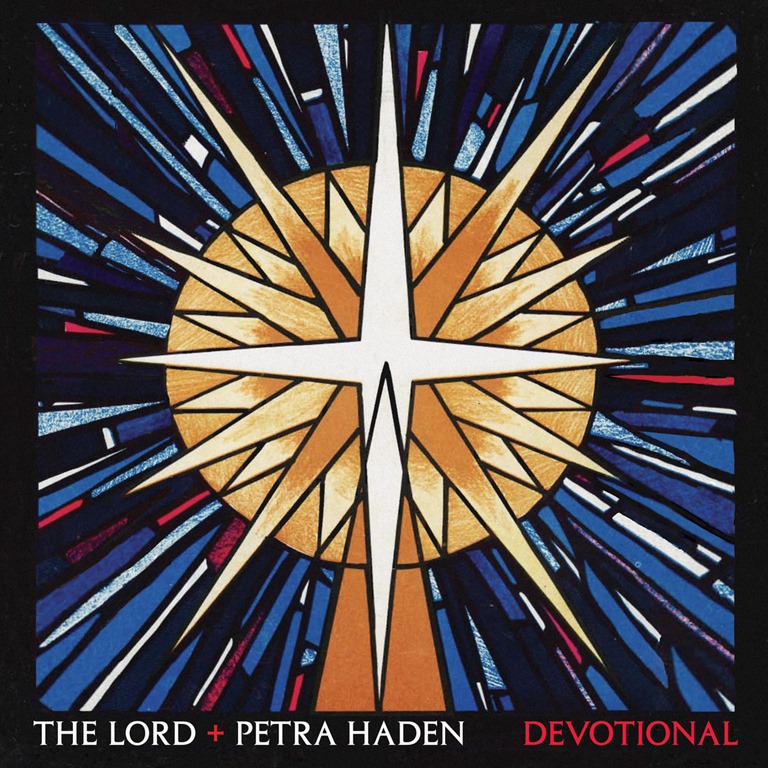
‘The End of Absence’ is the second single to be taken from Devotional, the new collaborative album from The Lord & Petra Haden arriving on 21st October. The track is the closer of the album, and provides a beguiling mixture of vocals and droning guitar to create a seductive atmosphere as incessant as waves beating upon a shore.

Devotional is a rapturous and heady offering of wordless vocalisations, droning guitars, and heaviness explored in unexpected and intoxicating ways. Inspirations came from deep listening to Indian classical music, as well as a fascinating look at the chaotic and unbelievable life of Ma Anand Sheela and the Rajneesh community.  

Through a haze of incense, flowing robes, and secret mantras, Haden’s voice rings out over constant drones in ecstatic chants throughout this musical investigation into the myriad of ways in which worship can lure and intoxicate.

Listen to ‘The End of Absence’ here:

AA

a1145457555_10