Posts Tagged ‘Sparse’

Coju Recordings – 1st April 2024 (CD & digital)

Cruel Nature Records – 29th April 2024 (Cassette)

Christopher Nosnibor

Letters and things lost have an almost mythical status in the field of literature. So many volumes are dedicated to the reproduction of exchanges between authors of revered status, and are poured over, clawed over, by both fans and academics. Many writers of great novels were also great letter-writers, and the letters often serve to build not only biographical depth and detail but also shed light on the development of the novels, that mystical ‘creative process’. Much of history exists in letters – the rich primary source material from which we piece together the picture and assemble a coherent narrative. It may be a construct, but it’s a necessary one when it comes to understanding the world and how we collectively came to arrive at the present.

The fact no-one writes letters anymore is a great loss. The same thought and effort simply doesn’t go into emails, and they tend to be considerably shorter, too, especially in the last decade or so. In fact, the quality of communication has slumped through the floor in recent years. Emails volumes – at least, ones that aren’t transactional in some way, have plummeted in favour of WhatsApps and messenger missives via FaceBook, Twitter, etc. It’s hard to really articulate just what’s been lost over the last few years, besides simply the art of in-depth, detailed longform communications, but with anything more than five lines long likely to be dismissed as TL;DR, it’s significant. I digress… because there are rare avenues open to expand on these matters.

Benjamin Heal, one of those multi-faceted, polyartistic individuals who is hard to pin down due to the sheer range of his output, has, through the years, pursued an academic career with a focus on William S. Burroughs – a prodigious writer of letters – and performed experimental noisy indie under the guise of Cowman, sharing stages with the likes of Trumans Water and Gum Takes Tooth, as well as his more electro-centric vehicle Coaxial.

Now resident in Taiwan, his latest project seems to bring together these elements of a diverse life. The material on this, the debut release from The Lost Letters – which finds Heal working with Fulia, is a calm and calming collection of delicate songs. The duo offer a quite gentle and melodic set of tunes in which is mostly centres around mellow acoustic-led indie, and slow, sparsely-arranged, soporific shoegaze and it’s not merely projection on my part in detecting a wistful, vaguely nostalgic air permeating the songs. The songs effortlessly drift and weave, Fulya’s vocals adding a layer of sound rather than easily audible lyrics.

The seven-minute ‘Cecille’ has, by its trilling gentility, nothing to do with The Walking Dead: it’s a graceful exploratory work which is mellow, melodic, and carries heavy hints of The Cure circa Disintegration thanks in no small part to its fulsome, airy bass sound and crystalline guitars, and it’s fair to reference Cocteau Twins at this juncture, too.

Things take a turn for the darker and more discordant on the lugubrious, plodding ‘Cut’, which scrapes and scratches for another seven minutes. With its muttered, monotone vocals and insistent sparsity, it offers hints of Shellac and latter day Band of Susans, in contrast to the soft acoustic instrumental work of ‘Route Rute’. These songs are on the longer side by necessity: repetition has greater impact over duration, and if the literary allusions and lifts by means of the deployment of the cut-up technique devised by Burroughs and Gysin are largely lost in the mix, the overall effect of discomfort and disjointedness remains strong throughout the set. ‘Crystal Skies’ is murky, with a drifting ambience spun through with a softly picked guitar, before ‘Sails and Sou’wester’ brings the album full circle to its nautically-themed beginning. While inviting comparisons to Slowdive and Cranes, it cascades dreamily into a mesmerising sea of sound, so richly evocative that you ache as it drifts on toward the horizon, leaving you reaching for something intangible.

Critics often write of craft, but the most moving music often comes from intuition and feeling, and this is moving in the subtlest of ways. Quite simply, The Lost Letters is a beautiful album.

AA

a3976784992_10

15th December 2023

Christopher Nosnibor

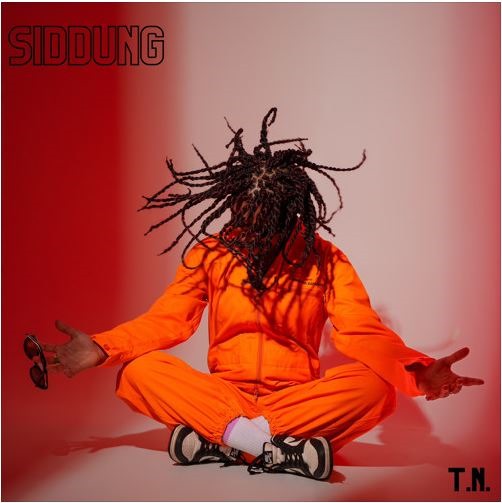
This is an odd one which will likely baffle and bewilder many of those who encounter it – which will likely be far fewer than it deserves. It’s rare for a track that isn’t thrash or grindcore to run to less than a minute and a half, for a start. I know absolutely nothing about T.N. beyond that they’re from Spain, but T.N.’s ‘Siddung’ is a sliver of minimalist hip-hop that sends a shiver down the spine.

If commercial hip-hop has come to be synonymous with bragging and banging, flashing cash and blades, it’s worth remembering that its roots were a different kind of ‘street’, and with acts like Last Poets emerged from spoken word, the jazz and beat scene of the late 50s, giving a voice to black culture and the civil rights movement.

This track is something of a hybrid – it’s ‘street’ but it’s introspective and uncomfortable, and after an atmospheric introduction, halts just as it seems to be finding its groove. It’s difficult to unravel the track’s meaning or intent: ‘siddung’ is patois for ‘sit down’ – as the cover art relays in a literal sense – but beyond that…?

It feels more like a sketch than a complete song, but one could imagine an album containing maybe twenty or so of these vignettes would add up to paint a quite compelling picture.

Spleen+ (Alfa Matrix) – 1st December 2023

Christopher Nosnibor

Christmas has come early this year, with an absolute deluge of releases landing on1st December, many from acts I like or am otherwise keen to hear. Hanging Freud are in the former bracket, and Worship marks their seventh album release, following 2021’s Persona Normal.

The duo have established themselves as purveyors of premium-quality dark, stark, gothy electro, and with Worship, they solidify their position with aplomb. Persona Normal was recorded at a leisurely pace between 2018 and-2020, and, like so many other releases in the last couple of years, Worship was written and recorded during the pandemic and under lockdown conditions, and the accompanying notes lay out both the contents and context in further detail:

‘The 10 songs featured on this album literally come from a place of contradiction hanging somewhere between courageous vulnerability and fearful resilience, and deal with themes such as collective distress and loss, finding beauty in tragedy or yet questioning about what makes us human in the symbolic contrasts of life and death…. It’s no surprise to hear that this “less is more” introspective ode to melancholia was written in particular claustrophobic circumstances during the pandemic lockdown. “Because of what was going on, we were essentially stuck in temporary accommodation in Scotland, away from our studio and forced into a period unexperienced before. The songs that came out therefore come from a different place. Everything was done within a laptop and is proudly 100% digital. It was recorded and mixed while literally sitting on the side of a bed in a mouse infested apartment…” explains Paula Borges.’

If it sounds like a grim and oppressive set of circumstances for creating art of any kind, then the singles which prefaced the album have set the tone and expectation, while affirming the claustrophobic intensity of the music which emerged from these challenging conditions.

The result is a hybrid of Siouxsie and 17 Seconds era Cure with a hefty dose of New Order’s Movement and dash of Editors circa On This Light and On This Evening. Reference points may be lazy journalism, but they serve a purpose. While this album stands alone like an icy obelisk, singular and a monument to the darkest introversions, some musical context is probably useful for discursive purposes.

The stark ‘Falling Tooth’ is as bleak and haunting as it gets: Paula’s vocals are breathy but theatrical, pitched over a strolling squelchy synth bass and a vintage-synth sound that wanders around over just a few notes, while ‘I pray we keep the world’ is low, slow, sparse, and lugubrious, as well as emotionally taut, and dominated by a truly thunderous drum sound. ‘This Day’ is particularly drum-heavy, withy only gloomy, droning synths sweeping through a heavy mist of atmosphere.

There are some who bemoan the use of drum machines, and who complain that they lack the vibe of a live drummer. Hell, there are contributors to forums and groups devoted to The Sisters of Mercy who question why they don’t get a real drummer, some forty-two years on from their inception. These people are missing the point. Drum machines can do things that human drummers can’t, and one of those is how drum machines can be louder, heavier, more monotonous than a live drummer. And in context for certain music, this can be a real asset, accentuating the sensation of dehumanised detachment of synth music that sits at the colder end of the spectrum. And Worship is one of those albums which will leave you with chapped lips.

It’s against brittle snare cracks and sweeping synths that Paula claws her way through complex emotions, and where the lyrics aren’t immediately decipherable, the haunting vocal delivery is heavy with implicit meaning. It resonates beyond words alone. Everything is paired back to the barest minimum, exposing the darkest recesses of the psyche.

Standing alone as a single, ‘A hand to gold the gun’ was bleak and heavy. Sitting in the middle of the album, this sensation is amplified, accentuated, and the gracefulness of the vocals as they drape around the broad washes of sound which surge and well is that of a dying swan.

‘Her Joy’ is perhaps the least joyful thing you’re likely to hear in a while, and if ‘Beyond’ feels somewhat uplifting, it’s only because it’s a flickering candle flame in an endlessly dark tunnel, as devoid of air as light. The mood is heavy, and presses on the chest, slowly pressing the air out and crushing the spirit, and as the album progresses, the effect is cumulative. By the time we arrive at the piano-led ‘Don’t save yourself for him’, I feel my shoulders sagging and my back hunched forward from the endless weight of this.

Worship is a masterful exercise in poise and restraint, a work which conveys the purest essence of isolation, of desolation.

AA

HFreud

ME LOST ME shares the video for ‘Festive Day’, from her upcoming album, RPG (due 7th July via Upset The Rhythm). A selection of dates in support of Richard Dawson throughout May have also been announced, more details below.

Songwriter Jayne Dent comments on the track;

“’Festive Day’ is a song about being overcome by intense sensory experiences, of nature, the elements and desire. It’s inspired by spending a midsummer festival in Denmark, when the huge bonfires lit along the coast stayed alight through torrential rain and dense sea fog, which left a massive sensory impression on me. It’s about the coming together of all these elemental forces, feeling connected to this seasonal ritual, and connecting it to the English folk traditions around the same time of year, explored in May carols and similar songs, which often celebrate desire, lust and love alongside celebrations of nature and the land. The music video is an overload of artefacts, it’s fast paced and intense in terms of the editing but I wanted to contrast the emotional intensity of the song by framing it almost as an archive or museum of the future, that is documenting folk traditions and trying to reconstruct them and understand them, but missing that vital emotional component. I worked with folk musician and dancer Mark Insley, who choreographed a dance in the Cotswold Morris tradition, to be featured as part of the music video, and made handkerchiefs in the Morris style featuring elemental symbols.”

Watch the video here:

AA

A prolific writer, ME LOST ME has released two crowdfunded albums: Arcana (2018) and The Good Noise (2020), which was included in Electronic Sound Magazine’s Album of the Year list. These in addition to her latest EP The Circle Dance (2021), which was described as “her most textural and sonically adventurous music to date” by NARC Magazine, and an extensive touring schedule around the UK DIY scene, has won her unique sound much support across the musical spectrum. Dent has notably performed live for BBC Radio 3’s After Dark Festival and as part of the 2022 BBC Proms alongside Spell Songs, Royal Northern Sinfonia and the Voices of the Rivers Edge Choir. She recently received the prestigious Paul Hamlyn Foundation Award for Composers and was 2020-2021 Artist in Residence at Sage Gateshead.

ME LOST ME LIVE DATES:
03/05 – The Gate Arts Centre, Cardiff, UK w/ Richard Dawson – tickets

04/05 – St George’s Bristol, Bristol, UK w/ Richard Dawson – tickets

05/05 – Barbican, London, UK w/ Richard Dawson – tickets

06/05 – The Bradshaw Hall, Birmingham Conservatoire, UK w/ Richard Dawson – tickets

07/06 – London – EartH Theatre w/ Xiu Xiu

30/06 – Hyper Inverter Festival, Ulverston, UK

15/07 – The Lubber Fiend, Newcastle, UK (ALBUM LAUNCH)

YEi1gOlg

Photo credit: Amelia Read Photography

10th December 2022

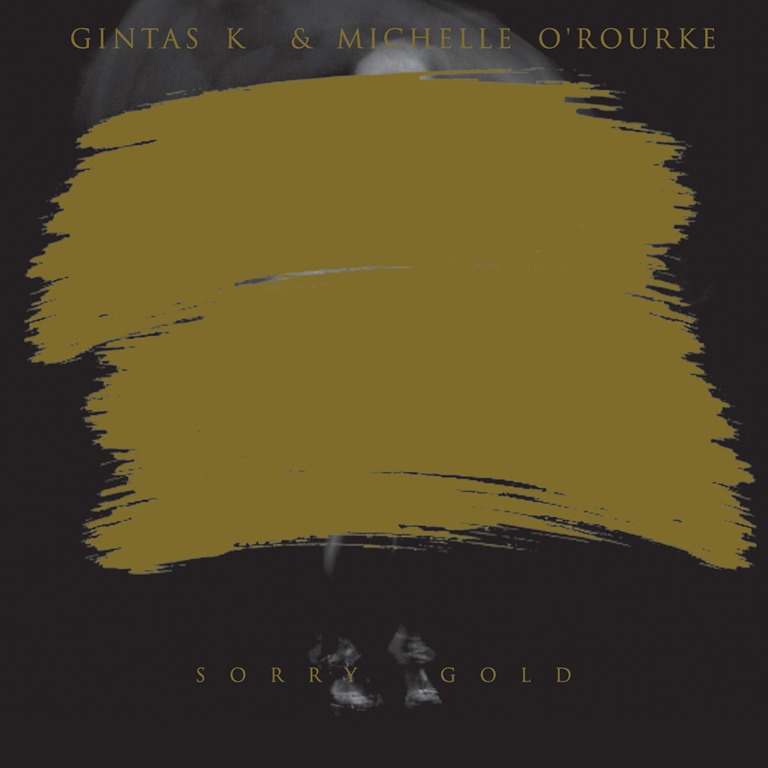
Gintas K wraps up a(nother) truly prodigious year with a collaboration – and an apology. The Lithuanian sound artist hasn’t strayed so far from his experimental electronic roots, at least fundamentally, but at the same time, Sorry Gold does mark something of a substantial and significant departure.

As the accompanying text explains, ‘this recording was made on stage at the Project Arts Center in Dublin, during the making of the film Sorry Gold Emily Aoibheann. The artists improvised to the visual landscape of the rehearsal space, stage design and dancers…’ it was funded by the Arts Council / An Chomhairle Ealaíon and Dublin City Council, supported by Dublin Fringe Festival, add the performances premiered as a part of Dublin Fringe Festival at Project Arts Centre in September 2019.’

With additional production and resigned from the original project, the album is only sort of a soundtrack, and the track numbering is both confusing and frustrating, with #1, #2, #4, #3, being followed by #4 #2, #2 #2, #4 #3 and #3 #2 before the more sequentially logical #5 and #6 conclude this most eclectic listening experience.

Replacing the glitching frenzy of bubbling, frothy digital frenzy that is Gintas K’s trademark is a much sparser, more minimal approach to composition, with single notes that sound like ersatz strings being plucked, atop quivering drones and low-rumbling organ sounds that fliker erratically like gas lights and resonating out into a spacious room. It has an almost orchestral feel, albeit distilled to absolute zero. The notes are a little fuzzy and ring out into emptiness, while the haunting vocals of Michelle O’Rourke are utterly mesmerising and border on transcendental. In combination, the atmosphere is deeply absorbing and heavily imbued with a spiritual, other-worldly element.

The first piece introduces us to a strange, haunting space beyond the familiar, and while it’s not by any means unpleasant, it is disconcerting, and sets the tone, ahead of ‘Sorry Gold #2’, which is melancholic, brooding, spaced-out notes hovering while O’Rourke ventures into almost operatic territories. It’s a not only a different atmosphere, but a different mood when placed alongside K’s other works: it feels a lot more serious, and has a different kind of energy, a different kind of intensity. I’m accustomed to feeling bewildered by the frenetic kineticism and abundant playfulness of his work. Sorry Gold isn’t entirely without joy, but it is much darker and much, much slower-paced, delivering a different kind of intensity.

It’s not until ‘Sorry Gold #4’ that things even hint at K’s more characteristic and overtly electronic noodling, and as the album progresses, we do encounter more of his feverish electronic tendencies, notably on the grinding ripples of ‘Sorry Gold #3’, but they’re much more restrained. ‘#4 #2’ brings a surging swampy wash of noise that’s a buzzing, grinding industrial blast of fizzing distortion. O’Rourke, barely audible in the sonic storm, sounds lost, detached.

Of the ten tracks, only two are under four minutes in length, and the pair use these extended formats to really push outwards: the ten-minute ‘Sorry Gold #4 #3’ brings helicoptering distortion that crashes in waves, at times low and rumbling, at others, crackling and fizzing with treble, and it creates a different kind of disturbance. Dissonance howls desolately on ‘#3 #2’, and so does , wracked with pain and spiritual anguish.

By the time we arrive at the brief and delicate bookend that is ‘Sorry Gold #6’, one feels inexplicably drained. The experience is somewhat akin to wandering ancient tunnels by flickering candlelight, observing ancient wall art while a subliminal mind-control experiment blasts random frequencies directly into your brain. You’re left feeling somehow detached, vaguely bewildered and bereft. And you feel deeply moved. Sorry Gold is special: Sorry Gold is bleak and harrowing, but it’s solid gold.

cover

Cruel Nature Records – 2nd December 2022

Christopher Nosnibor

Seems I’ve blinked and missed a while slew of releases from Ontario experimentalist Clara Engel since writing about Hatching Under the Stars in the spring of 2020. Then again, the spring of 2020 doesn’t so much feel like a lifetime ago, as much as it does another life. Released on 5th April 2020, we were only just over a week into the first lockdown here in England, and we had no sense of what was to come.

As the blurb outlines, the album was ‘recorded entirely at home / solo’ and ‘Their Invisible Hands presents 13 tracks of subtle dream-like beauty… A mystical work, mixing classical and dark folk wanderings with misty soundscapes, which creates an abstract, new world atmosphere.’ Self-released in April digitally and on CD, Cruel Nature are giving it a cassette release.

In a way, returning to Clara’s work now is a powerful, and grounding experience. What has happened in the space between? Everything…and nothing. As they explain in the accompanying text, replicated on their Bandcamp, “I’m not writing the same song over and over so much as writing one long continuous song that will end when I die.”

If the last couple of years or so have reminded us of anything, it’s our mortality. And the sound of Their Invisible Hands is both spiritual and earthy. To unpack that, the sparse instrumentation, which consists predominantly of creening woodwind, chiming, picked strings, and hand percussion, has a simple, primitive aspect to it, and the slow, rhythmic undulations are attuned to elements of nature, as grounded as the act of breathing. ‘Dead Tree March’ is exemplary, a long, expansive drone that pulses in and out, repetitively, hypnotically, a sparse guide to a meditation.

Engel’s vocals, meanwhile, are ethereal and other-worldly, with a primal folk leaning that moves effortlessly between narrative and incantation, both of which tap into that subconscious part of the mind that it seems only music and nature can reach.

These themes of nature and of the ancient, of thoughts and tales lost in time, are constants in Engel’s work, giving credence to their comment about writing one long continuous song. In this context, it’s easy to see their entire catalogue as an interrogation and exploration of a quite specific field. Engel’s world is one full of magic and mystery, cryptids and magic beans and magnificent birds which sing. These songs are steeped in atmosphere and wonderment.

‘Ginko’s Blues’ is perhaps the most overtly classical piece on the album, a sparse composition led by picked acoustic guitar that calls to mind a stretched, dispersed rendition of Beethoven’s ‘Ode to Joy’, as it’s slowly dragged into a sea of scratched strings and gauze-like reverb.

Dissecting Their Invisible Hands too hard is to misunderstand its nature. It’s not an album to pick apart for the various elements, or even to comprehend its structures, origins, or meanings: any attempt to do so is to demystify its resonance. ‘It’s all fun and games ‘till somebody shows you their heart.. on a platter on a stake on a riverbed rusted…’ they sing on ‘High Alien Priest’. The metaphorical and the literal blur unsettlingly.

You shiver and find yourself mute as Engel leads you through an array of evocative soundscapes. All you can do is let go, and to explore them.

AA

a0799919546_10

11th November 2022

Christopher Nosnibor

Yorkshire based Mayshe-Mayshe’s bio references blending ‘dreamy art-pop and electronica with rich storytelling, skittering percussion and infectious melodies’, and how her ‘deceptively simple songwriting – at once universal and deeply personal – incorporates choral vocals, vintage synths and the occasional hairdryer.’

Said hairdryer was observed in a couple of live reviews I’ve penned in recent years, in catching her live in 2016 and 2021, but what always stands out during her performances is just how deftly she combines an array of elements, both stylistic and instrumental. She’s by no means just ‘another’ loop pedal artist, but a musical who judiciously uses the tools available to conjure textured, layered, detailed works which are, at the same time, simple and radiate aa unique sense of – for wont of a better word – naivete. But equally, her capacity for understatement is a defining characteristic. The fact that while playing a number of regional shows to launch Indigo, her second full-length album, her hometown show in York on the release date is in a record shop/café with a capacity of about 30 speaks for itself.

Performing as Mayshe-Mayshe, Alice Rowan presents as not necessarily shy, but introspective, considered, contemplative and as much as immersing her work in reservedness, there’s a certain sparkle of sass and levity in the mix, as titles like ‘You Throw Lemons, We Throw Parties’ from 2019’s Cocoa Smoke indicates.

Indigo is simultaneously simple and complex. As the lyrics to the title track demonstrate, she’s given to exploring emotional depths by balancing the direct and the oblique to create an obfuscating haze. And, in record, the same is true of her compositions.

‘But I Do’ kicks the album off in a style that’s minimal and poppy and kinda urban but at the same time ethereal and shoegazy, with busy fingerdrums and a crystalline distillation of mood that invites solid and favourable comparisons to The XX.

‘Dark Mountain’, released as a single in September, is really rather buoyant, with a bouncy bass and busy lead synth and twitchy urban vocal delivery that’s quite at odds with the tense lyrics and the ‘I’m drowning, downing’ hook which speaks to anxiety and panic. I suppose you might call it a sugar-coated pill, but it showcases Alice’s capacity to pen bleak yet buoyant pop tunes.

In contrast, ‘Moonflood’ is altogether darker yet dreamy, in a Curesque way, while ‘The Colours of Anxiety’, which originally featured on the 2019 Long Division compilation, is looping, lilting, and easy on the ear in a way that brushes over the tension it channels via a stuttering beat akin to a palpating heart. In this way, Mayshe-Mayshe conveys sensation beyond the words, beyond the explicit, and does so beautifully, in the most subtly resonant fashion.

In many ways, ‘Eczema’ speaks for itself, an itch that just won’t go away, sore and raw, uncomfortable and irritating, but presented in a palatable fashion, and ‘How to be Happy’ feels like a conscious attempt to be uplifting – which is it, but there are strong undercurrent which are less joyous. ‘Zachter’ is another previous release, having featured as the lead track on the two-track Zachter EP last year. With its lyrics in German and its instrumentation sparse and gloopy and with a hypnotic minimal dance groove, it’s something of an oddity which sits apart from the rest of the album.

The title track, released as a single only the other week, rounds the album off in a hazy, intricately detailed style. Accessible, and often breezy-sounding and easy on the ear, Indigo is an album that’s rich in depth and complexity. It’s thoughtful and emotive and dark and tense yet still extremely enjoyable. It’s a wonderful thing.

AA

su49355-Mayshe-Mayshe_2022-1_-_smaller_copy

Shows:

Nov 10

Cobalt Studios

Newcastle Upon Tyne, UK

Nov 11

FortyFive Vinyl Cafe

York, UK

Nov 12

Hatch

Sheffield, UK

Nov 14

Dubrek Studios

Derby, UK

Nov 15

The Holy GrAle

Durham, UK

Nov 17

Oporto Bar

Leeds, UK

Nov 18

The Peer Hat

Manchester, UK

Nov 19

The Studio

Hartlepool, UK

Nov 20

The Grayston Unity

Halifax, UK

Nov 26

Blues Night

Richmond (North Yorkshire), UK

Poole Music

AB – Experimental musician John Also Bennett – may be absolutely nothing to do with COVID vaccines, although there is something of a pandemic element to his new album, which, as the accompanying notes explain, ‘emerged from a bicoastal pandemic road trip through the badlands of South Dakota’ before ‘relocating with his wife (Kranky composer Christina Vantzou) to the cliffside village of Livaniana on the island of Crete, [where] Bennett discovered a method of translating his minimalist lap steel phrases into live MIDI information, which he then used to trigger different waveforms to extend the resonance of the instrument. This multi-layered generative process resulted in a collection as vast and bewildering as the terrain that inspired it: Out there in the middle of nowhere.

It’s quite a backstory for quite an album. The first piece, ‘Nowhere’ is a fifteen-minute epic that’s ultra-sparse and also immensely evocative of… nowhere. It’s the sound of a lost, lonely desert twang: notes bend and hang in the overheated, dusty air. Anyone who’s seen that cover art to The Eagles Greatest Hits – and we’ve all seen that – will know what I mean when I say this sounds like the music that cover really should house. That hot, red sun, the eternal road, straight stretching toward a bewildering horizon, desert on either side… It’s not about tequila sunrises and living life in the fast lane. It’s an image of desolation, of isolation, or being lost and alone. ‘Nowhere’ is the soundtrack to that. A minimal twang that reverberates across the dunes says that in time, without water, without sustenance, you could die out here. You are lost. So lost. And not just geographically. Chords land, in time, but they’re still the sound of desolation, of isolation, and they exist out of time and out of space.

The album contains four tracks (or five if you have the digital-only bonus of the instrumental version of ‘Badlands’), three of which extend beyond the twelve-minute mark, alternated with briefer compositions, with the four-minute ‘Spectral Valley’ and seven-minute ‘Embrosnerós’ are both ambience embodies, and serve as interludes to the big pieces on here.

‘Badlands’ is a beast, but also a work where very little occurs. Notes hover like spectral shadows, ghostly glyphs riding above the solid realm while feet trudge through gravel. There’s something steadily mundane that contrasts with the immensely spatial single-note reverberations. And it’s extremely appropriate. This is not an album of action or movement.

JAB is clearly focused on atmosphere here, and less is very much more. It’s haunting, and leaves you wondering, feeling as though you’re wandering a deserted graveyard, wondering… wondering.

It’s an album that explores both time and space and leaves you wondering if you have either.

PM007_front

AAA

JABB

JAB. Photo: Christina Vantzou

Composer and experimental filmmaker Christina Vantzou has shared "Kimona I", set to powerful and heart-breaking footage from Lizzie Borden’s 1983 feminist film, Born in Flames.

"Kimona I" is a sparse track with only a piano and one vocal present, echoed and distant as though the song is being performed at the end of a cathedral. Quietly melancholic, the track is somewhat at odds with the footage of smiling women, which makes the ending all the more impactful. Christina Vantzou speaks to the inclusion of the Born In Flames footage;

"Filmed in the early 80’s, mainly in the East Village, largely with friends, non-actors and activists, Born in Flames is a film about work, class & race divisions, and organized revolt. Meanwhile on No. 5, ‘Kimona 1 & Kimona II’ were written for workers, specifically low-wage employees at giant institutions."

About her collaboration with Christina Vantzou Lizzie Borden says;

"I was honored when Christina Vantzou approached me with her beautiful piece of music “Kimona I,” accompanied by scenes from my film Born In Flames. As we collaborated, I was stunned to see familiar images take on new meaning when set against her haunting, elegiac music. Thank you for your exquisite work, Christina."

Watch and listen here:

AA

gaHEv3Ic

Misanthropic Agenda – 20th June 2022

Christopher Nosnibor

I’ll admit, I was struck by the name when this landed in my inbox. Success! With an insane number of submission emails day, I don’t even open most, let alone play the albums attached. But then I learned that PWIS is Nathalie Dreier – who’s interesting for her visual work as well as her audio – and Dave Phillips, who’s To Death I covered last year – which deepened my intrigue. And it’s one hell of a cover, too.

Meaning What Exactly? is quite a different proposition – from pretty much anything, in truth. Presenting four lengthy compositions, it’s fundamentally an electronic album, but it’s far more than that, or anything. The title is a challenge, a query, a – what I keep hearing as a phrase in my corporate dayjob – a ‘provocation’. It comes down to ‘exactly’. The word is weighted; even without explicit emphasis, it feels emphasised, vaguely stroppy even. The addition is the lexical equivalent of a hand on hip, a raised eyebrow, a scowl, a sneer of condescension to a worker from another department who has no facts. ‘Yeah, do your research, bitch’, is what it says.

And who really knows what it means, or what anything means? Exactly. And what this album means – exactly – I can’t quite fathom. The titles conflict with the contents, at least, based on my lived experience, on my reception. They say it’s a ‘dialogue mixing treated field recordings with organic acoustics and digital sources, brought together in long trance-inducing sessions of meticulous audio de/construction and philosophical debate’. But how much of that is apparent in the end product? Well, that’ debatable.

‘Pangolin’ is otherworldly eerie: a booming drum echoes out through a shifting reverberation of spine-shaking synths. It doesn’t readily evoke aardvark-like creatures, apart from perhaps in the final minute or so when Drier’s monotone vocals are replaced by snuffling barking sounds. It’s weird, but then, what did you expect? I don’t know what I expected, if I’m honest, but probably not this. This is dark, disorientating, disturbed and disturbing, and even more challenging for the absence of context. Meaning is the end product of intent, of purpose, and there’s no clear indication of where this is coming from, meaning we’re left to face the strange with no guidance.

A grinding bass and muffled, muttering voices, whispering about fish all build to a hellish tumult of murmurs and doom-sodden low range hums and thrums, and nothing feels right. It’s awkward, and unsettling. You – certainly I – don’t really tune into the words delivered by Drier in her suffocating spoken word passages, not out of disregard or disrespect, but because all of it comes together to create a claustrophobic listening experience. Meaning What Exactly? is not an album you sit and dissect, or sit and comfortably disassemble or analyse. I find myself, instead, contemplating the meaning of meaning.

‘Us vs Us’ plunges into deeper, darker territories, with a grinding, driving bass worthy of Earth, propelled by thunderous sensurround drumming, with purgatorial howls echoing all around. It’s heavy, harrowing, and it’s that simple, tribal drum style that defines and dominates the eerie eleven-minute closer, ‘The House is Black’. The house is black and the atmosphere is bleak: the vocals are mangled and distorted and play out against a murky, fragmented, fractured backing, to unsettling effect. The beats are sparse, subdued, distant, yet taut, crashing blasts and ricochets. You make it want to stop. The clock is ticking. Your chest tightens. The nerve rise, jangling, fearful. It’s like walking through a graveyard at night, knowing there’s someone lese shuffling around nearby. Make it stop, make it stop!

A crackle, a crunch. What is this, exactly? Perverts in White Shirts don’t only excavate darker domains, but scour and gouge their way into the darker, deeper territories where tension pulls tight and tighter still. It’s the sound of trauma, of suffocation. Meaning it feels like a direct passage to the depths, meaning it’s dark, uncomfortable, like it’s almost unbearable at times. Meaning it’s good.

AA

a2108573613_10