Posts Tagged ‘Soundtrack’

Futura Resistenza –16th June 2025

Christopher Nosnibor

Much of Felix Kubin’s work since the turn of the millennium has involved radio, although film and theatre and other soundtrack works have also been a feature. Der Tanz Aller is one such soundtrack work, which was ‘created for the performance of the same title by the experimental arts collective LIGNA. The group specialized in site-specific, participatory works. Der Tanz Aller is based on Rudolf von Laban’s radical 1920s concept of ‘Bewegungschöre’ (movement choirs), collective dances in public space that aimed to reimagine social order through shared movement.’

The context and objective behind the composition are particularly useful to be aware of when listening to this album in isolation, as Kubin sets out: ‘When the performance group LIGNA approached me in 2012 to compose music for a play based on Rudolf von Laban’s revolutionary kinetic theories and so-called ‘Bewegungschöre’ (movement choirs), I thought of a soundtrack that would be both rhythmically engaging, abstract and mechanical. I knew there would be pre-recorded voices talking about his philosophy and guiding the audience via headphones. So, I had to leave some “air” in the arrangements, allowing the visitors to concentrate on the spoken words, while simultaneously becoming dancers. In LIGNA’s conceptual works – just like Laban’s idea of the movement choirs – the audience members become the performers.’

I shan’t dwell too long on the conceptual aspects here, beyond noting that this predates John Cage’s 4’33” by more than two decades, and while Cage’s silent work was on many levels a quite different proposition, the way in which any sound made by the audience – be it a cough or the shuffling of feet or the creaking of a chair – immediately becomes part of the performance indicates clear common ground. Likewise, William Burroughs’ cut-ups, which invited ‘creative reading’ whereby the engagement of the reader and their experience and perception was integral to their success, arrived some thirty years later. As such, ‘Bewegungschöre’ represent the cutting edge of avant-gardism, belonging to the era which brought us Duchamps’ readymades and – perhaps more pertinently – Tristan Tzara’s directions to make a Dadaist poem.

For the most part, the ‘air’ in the arrangements is apparent: there is space, separation, and while we can only imagine the prerecorded voices talking about Laban’s philosophy through headphones, it’s possible to get a sense of how it would work. But then, occasionally, Kubin’s compositions get father more busy, as on ‘Dämonen der Zerstreuung’, with big band percussion and noodlesome orchestration that’s of a strong jazz persuasion, but has a whole lot happening, and often simultaneously. There’s drama with orchestral strikes, and creeping, urgent glockenspiels that bring a noirish, detective movie feel – not a chase scene, but a cat-and-mouse scenario.

There are some spoken-word passages, in German, as on ‘Raumstunde Vera Skoronel’, accompanied by evolving sonic backdrops, the likes of which I find hard to imagine inspire dancing, but spasmodic twitching and erratic lurching, while the title track is a slice of jerky, and quite insular and intense, Kraftwerkian synth bleepery, and ‘Rotes Lied’ is a perfect exemplar of sparse, spaced-out, glooping, blooping, reverby weirdery with occasional chimes and stuttering shot of snare. There is plenty of air here, as you sit and wonder what exactly is going on?

Who knows? And does it even matter at this point? The percussion builds from all sides, and the nagging away – until suddenly it doesn’t.

The unpredictability of Raumstunde Vera Skoronel is its strength. It is weird, unexplained in many respects, beyond simply the initial onboarding awkwardness. We should probably celebrate this weirdness, this sense of separation. Raumstunde Vera Skoronel is never dull, but always strange and alien – and these are reasons to appreciate it.

AA

AA

RESLP040 front

Impossible Ark Records – 4th April 2025

Christopher Nosnibor

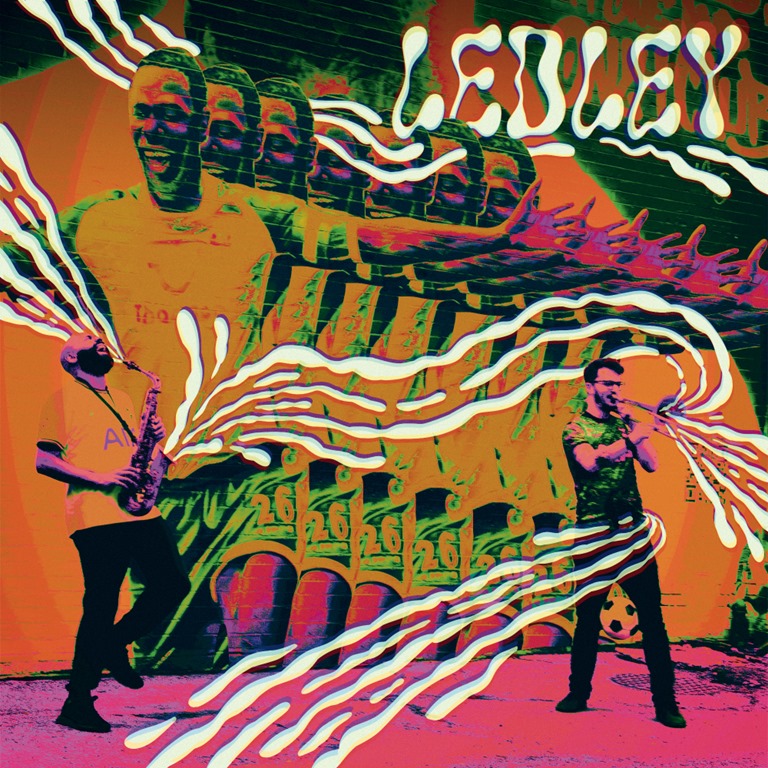
The jazzosphere has a way of throwing surprises, and in the most unexpected ways. Ledley’s eponymous debut, which sees acclaimed electroacoustic improvisational musicians Raph Clarkson (trombone, FX), Chris Williams (saxophone, FX) and Riaan Vosloo (electronics, post-production), is – let me check this – yes, a tribute to legendary Spurs footballer, Ledley King. You didn’t see that one coming, did you?

My knowledge of football is scant: I was born in Lincoln and so feel obliged to follow The Imps – by which I mean check on the scores on the BBC when I remember, and I sometimes watch England international, when I have time and can bear to – but clearly, this does not make me a football fan. But I do have a deep interest in music that’s out of the ordinary, the weirder the better. And this is pretty weird.

Ledley is pitched as ‘is a celebration of improvisation, friendship, and shared passions, blending music and sport into an exploration of community, belonging, and resilience – one of the most extraordinary tributes ever paid to a footballer.’

Although split into eleven tracks digitally, the album is essentially two longform compositions, corresponding with the two sides of the vinyl release, which contain loosely-defined segments, or passages, which flow into one another. Some of these are dramatic, film-score like, with the trappings of bold orchestral bursts, only without the full spectrum of instruments, lending these pieces the feel of somewhat stunted reimaginings of John Williams scores. But then there are the meandering straight-up jazz meanderings, trilling, tooting woodwind, and moments that sound more like some kind of noir soundtrack excerpt – you can envisage some old black and white movie version of something by Raymond Chandler – and then the more extravagant, indulgent moments, which are, it must be stressed, brief and infrequent, evoke the spirit of Kerouac and The Beats. The association with The Beat Generation is something I’ll park here, as The Beats were as stylistically diverse in their writing as The Romantics, and there was nothing jazz about Burroughs. I digress, but to do so feels appropriate: while it does have a musical flow to it Ledley is not a narrative album, and it in no way presents a sense of sequentiality.

The second half is most definitely more sedate, and more prone to abstract wanderings, as the instruments criss-cross, snake, and interweave through and around one another, before tapering down into spacious, semi-ambient, almost drone-line expanses which yawn and stretch in one direction and swoon and glide in the other. Towards the end, it feels as if the batteries are slowly winding down to a low drone. There are bird-like squawks and slow, heraldic horns ringing out, but it’s more the sound of mournful defeat than triumph and celebration. Perhaps this is intentional, and perhaps an understanding of the context is beneficial here Or maybe not: hearing the final tapering tones fade over the horizon, Ledley could as easily be a hymnal to seabirds as it is to a football player, and the beauty of music, particularly instrumental works, is that regardless of their intent, there is ultimately a sense of interpretation which lies with the receiver. Personal experiences, life in the moment, these things come to weigh on how we receive and interpret, and determine not only pour reaction and response but the relationship we have with a given work of art.

Having a knowledge of Ledley King and his career may, or may not, be beneficial when it comes to this album. Sonically, it’s interesting, it slides between moods and spaces, pulling the listener along through them. No naff sporting analogy is required in creating a punchline for this one: it’s simply intriguing, and the musicianship is of an undeniable quality.

AA

LEDLEY – Ledley artwork cover 1000px

Hallow Ground – 7th February 2025

Christopher Nosnibor

If it’s got Norman Westberg on it, I’m in. The longtime Swans guitarist is – and I’m not ashamed to say it – something of a hero of mine in the league of guitar players. The discipline he displayed churning out sometimes just a couple of chord at a crawling BPM is beyond admirable, and those releases, particularly from Cop to Children of God were entirely reliant on punishing guitar monotony, and while his post-Swans solo works have been of a significantly more ambient persuasion, his brilliance as a musician still lies in his adherence to a ‘less is more’ approach, playing to achieve sonic effect rather than to showcase himself or his musicianship. There’s something refreshingly egoless about this.

The context of this release is that ‘Night Keeper is a collaborative album by New York City-based artist Aaron Landsman and former Swans guitarist Norman Westberg that is based on the former’s eponymous play. Westberg recorded it together with performer Jehan O. Young for the Swiss Hallow Ground label, with Landsman serving as the record’s producer. The original piece was first performed in the Spring of 2023 at The Chocolate Factory Theater in Queens and filled the stark industrial space with spoken text, choreography, projections, and music in dim light and, occasionally, complete darkness. Westberg and Young afterwards brought it to the studio to record it as a two-part album in whose course his textural sounds, based on loops and samples, set the stage for her soothing, sonorous vocal performance.’

In a sense, then, it’s a soundtrack album of sorts, and it’s also a spoken-word album.

The accompanying notes explain that ‘Night Keeper is a performance inspired by sleeplessness and the wanderings of the human mind at night—about time and memory… The initial spark for Night Keeper was a run of almost sleepless nights in different neighbourhoods of a city that is perpetually insomniac. Instead of trying to force himself to go back to sleep by any means necessary, Landsman started writing down his thoughts.’

I first experienced insomnia at the age of five while staying at my grandparents’. As the time wore on, I grew increasingly scared, and convinced that if I fell asleep I wouldn’t wake up in the morning. Bordering on hysterical, I went downstairs to see my parents, who told me not to be ridiculous and to go back to bed. I cried myself to sleep that night, But I did wake up.

In my mid-teens, I came to embrace the insomnia, spending my nights watching television and videos, drawing, writing, making music, and later, dwelling in internet chatrooms and talking shit till the small hours while writing a novel and downloading stuff from Napster and Soulseek, before perhaps embracing it a little too hard in my mid-twenties, reaching petrifying levels of paranoia and experiencing hallucinations, before collapsing and being off work for six weeks.

I recount this, because the spaced-out, dreamy, disjointed stream-of-consciousness un-narrative of Night Keeper feels uncomfortably familiar. The way the internal monologue flows on, and on… and sometimes spills out to external monologue without realising. The soundscapes forged by Westberg as a backdrop to this is abstract, unsettling. At the end of the first part, there’s a glitching loop, which starts with a thud. It’s an uncomfortable rhythm, akin to water torture and replicates, to some extent, that heightened sensitivity and self-reflectiveness which interrupts the flow of the monologue: what is that? Am I going mad? Oh my god, I’m going mad. What is it? Make it stop… And then, it does, and the silence feels strange.

‘I still can’t sleep. Am I sleepy?’ the narrator asks as one point, after picking through an alertness to a range of sounds. There are people out there, and not everyone is asleep. Sleep’s for wimps, and you can get so much more done if you sleep less, even if that’s starting a fight club. The narrator counts the hours – not with close attention, but suddenly, it’s gone form 2:15 to 4:15. ‘How did it get so late? When is it time to give up?’ are questions which resonate. It’s no longer a late night, it’s no longer tomorrow, it’s almost time to get up for work again. It’s not worth going to bed. Might as well get a couple of chores done and arrive a bit early at work in the hope of an early finish. As if.

In the main, the musical backdrop is supremely subtle: occasionally, ripples of chiming guitar ripple across the murky surface of the dark, misty drones. Sometimes, there are some stuttering crunches, thick scrapes, and they change the dynamic, create seismic shudders which break through the low, slow, undulations. It’s the perfect soundtrack: sympathetic, subtle, nuanced, detailed, textured, dynamic, and understated. You find yourself drifting in and out of the words, and drifting in and out of the backdrop, too – and this is the most fitting experience, in that it’s the most accurate representation of the insomniac life. If you’ve ever not slept for a prolonged spell, Night Keeper will feel familiar. If you’ve had the good fortune to habitually enjoy the luxury of quality sleep, then Night Keeper may provide some education and insight into the torment of what it’s like, you lucky bastard.

HG2407_Outer Sleeve_643x328.indd

25th July 2024

Christopher Nosnibor

The art world is not so much a desert as a breakers’ yard, stacked to the sky with abandoned and aborted projects, works which were commissioned and shelved or otherwise dropped, canned, kicked into touch. The endless hours spent on projects which have never seen the light of day hardly bear thinking about. A career in the arts is likely to be one dominated by failure over success, even for a successful creator. But what is success? Artistic success and commercial success exist in different spheres, and while the world at large seems to judge more or less anything by the measures of the latter, one should ask why this us. Units shifted, radio plays, streams on Spotify, these are the metrics of success, based on the monetisation of art. Something is simply not right.

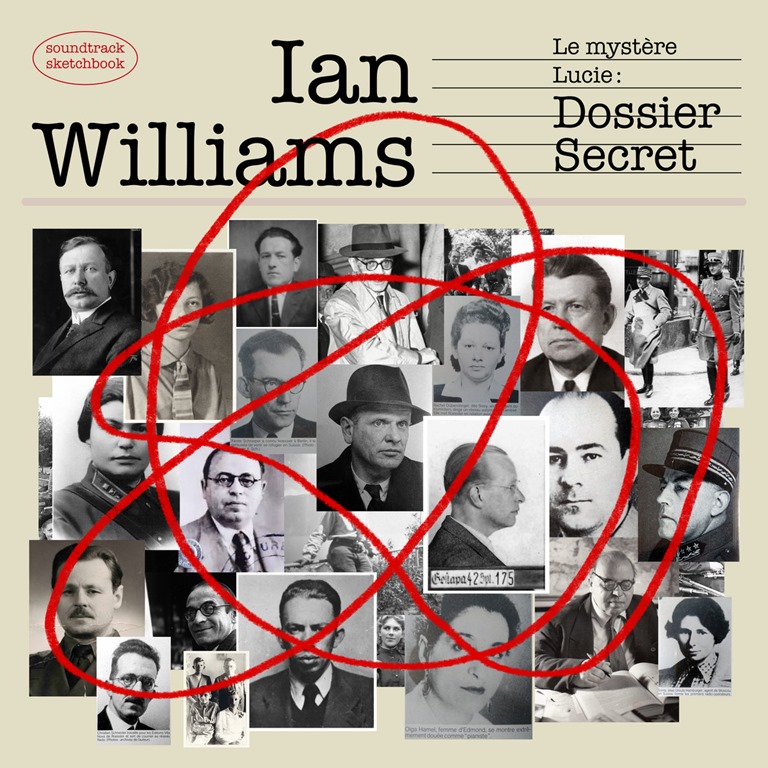
Ian Williams’ latest release is a product of failure. Le Mystère Lucie (Dossier Secret) (that’s Codename Lucy (Spies Against Nazism)’, a companion piece to the recently-released Le Mystère Lucie (Des Espions Contre Le Nazisme), his recent soundtrack album of music for the 2023 French documentary Le Mystère Lucie (Des Espions Contre Le Nazisme) / Codename Lucy (Spies Against Nazism).

As the accompanying blurb expounds, ‘it features music composed for but ultimately not used in the documentary, which was originally conceived as a 75 minute film but eventually released as a 52 minute TV broadcast. It seemed a pity not to make these additional themes and sketches available, so here they are, another collection of World War II spy music – melodic, electronic, orchestral, tuneful, abrasive, with both releases showcasing Williams’ knack of fusing big tunes with occasional blasts of industrial noise.’

Grand, bold, epic, expansive… these adjectives give a hint of the cinematic compositions n offer here. Being designed as a soundtrack, the album’s seventeen compositions are brief – largely under three minutes – and gentle, employing smooth synth bass and conjuring an atmosphere which is accessible to the ear. The tracks blur into one another with great rapidity, as one would expect for a soundtrack, where the segments flow with the scenes.

Le Mystère Lucie (Dossier Secret) is rich in mood and atmosphere, as befits its subject. There’s not much industrial noise present here but string-soaked cinematic sweep abound. Le Mystère Lucie (Dossier Secret) feels filmic, it builds drama and layers of simmering tension, as well as lakes of brooding darkness and ripples of uneasiness. It’s an accomplished score, and one which most certainly was too good to go to waste.

AA

a2382814546_10

Hallow Ground – 7th February 2024

Christopher Nosnibor

Silent movies provide a perfect inspiration for musical scores: unencumbered not only by pre-existing scores, but also dialogue or incidental sound, they offer a completely blank canvas and space for musicians to fully explore – and articulate – the mood of the movie, the moments of drama, to become both immersed in and enhance, even create, atmosphere.

Following the split of Siouxsie and the Banshees in 1996, Steven Severin devoted much time to writing scores for old movies, and performing them as live soundtracks in movie theatres, and I was fortunate to catch him in around 2012 when touring Carl Theodor Dreyer’s 1932 Vampyr. It was a powerful and haunting experience, and one which clearly brought new dimensions to a very old film.

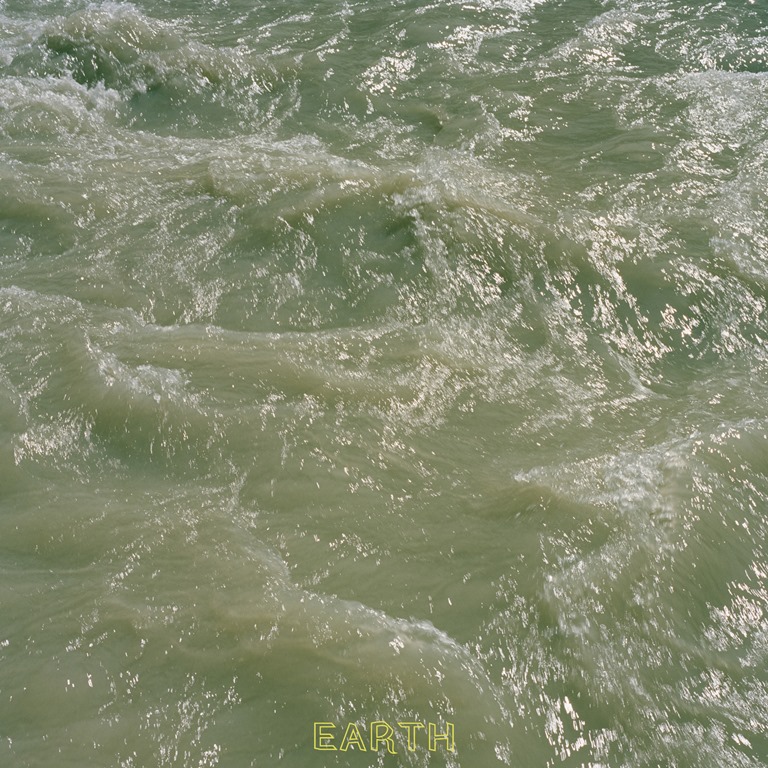
In the same vein, Musique Infinie – the collaborative project of Manuel Oberholzer a.k.a. Feldermelder and Noémi Büchi – present an improvised score for Alexander Dovzhenko’s groundbreaking 1930 silent movie Zemlya (Earth) created for the 24th edition of the VIDEOEX festival for experimental film.

For those unfamiliar – such as myself, the crib notes inform that ‘Frequently cited as a masterpiece of early 20th century filmmaking, the movie deals with the collectivisation of Ukraine’s agriculture.’

Now, the movie clearly holds up on its own to be so revered and still revisited almost a century on, but what of the soundtrack? How does it hold up without the visuals which inspired it?

The soundtrack is divided into two movements of roughly similar duration – ‘Creation’ (14:25) and ‘Destruction’ (12:54). It begins with big, bold, sweeping symphonia, synthesised choral soarings atop majestic, broad-sweeping synth tones. There is a palpable sense of grandeur, and with deep string sounds resonating low beneath big, emphatic surging drones, this feels immense and so strongly cinematic that it’s hard not to be caught up in the tide. A sudden droning downturn marks a temporary change of mood before we’re brought out into calmer waters and begin to regain our breath around the five-minute mark. Robotic, industrial glops and bleeps undulate and oscillate, cresting through the smooth surface. Over time, the piece transitions between organic-sounding orchestral manoeuvres to altogether more space-age sounding synthscapes, before fading rapidly at quite an interesting intersection.

‘Destruction’ – as one might well expect – steps up the drama and the dynamics, but perhaps less expectedly becomes more overtly electronic, with stuttering, glitching disturbances and cold, dark waves blasting in, bending and warping. At times haunting, disconsolate, others foreboding and unsettling, this is certainly the more challenging half of the album. But on the one hand, while it’s more exciting, in some respects, it’s also less fulfilling. Partly, it’s because of the way in which the organic-sounding strings rub against the more overtly electronic sounds, and as much as this juxtaposition and interplay is essential to the compositional form, it sometimes feels like a clash whereby the pair are seeking to achieve two separate ends. Given its improvised nature, this is perhaps to be expected, and the overall flow of the album as a whole is marked by moments of convergence and divergence.

There’s also the nagging sense of just how contemporary this feels in contrast to the visuals the sound is designed to accompany, although without being able to observe the intended setting, it’s difficult to fairly judge the level of success here.

One could – and probably should – see the film, and should also watch it with this accompanying it, as intended – but that isn’t this release, which must be judged on its audio content alone. And taken apart, in isolation, Earth is a stimulating and dynamic work, and one which demonstrates that Musique Infinie aren’t afraid to test themselves and to test boundaries, and to create a powerful and dramatic listening experience.

AA

HG2401_front

Christopher Nosnibor

Sometime during lockdown – which one, I can’t remember exactly, but likely the first, where here in England what initially looked like being a couple of weeks, ended up being more like a lifetime. After the lockdown announced on 23 March 2020 was extended on 16 April for ‘at least three weeks’ and in fact running into June, the fear surrounding the lifting of restrictions saw references to Stockholm Syndrome circulating with increasing frequency in the media.

Described as ‘a psychological response’ which occurs when hostages or abuse victims bond with their captors or abusers, and the victim may come to sympathize with their captors, and

may even begin to feel as if they share common goals and causes.

The name originates from a failed bank robbery staged in Stockholm in 1973, where Jan-Erik Olsson, and his charismatic accomplice Clark Olofsson held four employees as hostages, remaining captive for six days in one of the bank’s vaults, and when the hostages were released, none of them would testify against either captor in court; instead, they began raising money for their defence.

While the syndrome is disputed, the concept is something of a source of fascination. Personally, I had never been one of those who found themselves ‘loving lockdown life’, but found myself apprehensive about the easing of lockdown: what would be the ‘right’ way to behave in public, how would things ‘work’? I didn’t need to worry about pub and gig etiquette for a while, but was more fearful of other people than I was of Covid – because people are unpredictable, and after being cooped up for so long, who knows how many might have lost it?

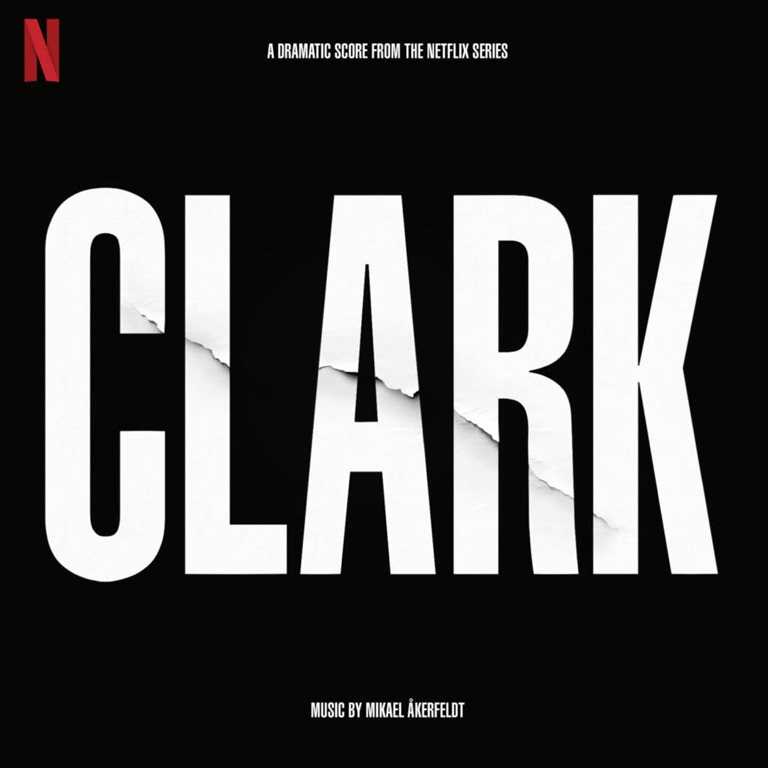
Swedish Netflix mini-series Clark is the story of Clark Olofsson, and while it’s won awards, I found its stylised and flippant comedy-drama approach to be pretty ‘meh’. There’s vague amusement to be had, but ultimately – and for obvious reasons – presents Olofsson as ‘cool’, a cheeky bad boy out for But then, just because it’s not what I would have wanted it to be doesn’t mean it’s no good, it’s just not my bag.

While there are some bold intercuts of ‘proper’ songs featured, it’s not a series where you find yourself really paying attention to the soundtrack for the majority of the time. Listening to the soundtrack independent of the series, it’s a mystery as to why this is.

Of course, much of the interest in the soundtrack will be the fact that it was scored by Mikael Åkerfeldt of progressive metal legends Opeth – and as much as this score is overtly cinematic, it draws equally on progressive rock, funk, laid-back jazz, and 70s cop shows. The last nine of the thirty-four tracks feature vocals, and this portion of the album feels separate again, and may have worked as a separate release or bonus CD or something, as it’s quite a leap. Hell, ‘Måndag I Stockholm’ goes full Sabbath. Incongruous is an understatement and it’s hard to know what to make of it all. Then again… why not?

AA

Varied, engaging and evocative, it’s imaginative and listenable and entertaining – and a lot less frustrating than the series itself.

 MikaelAkerfeld_Clark_LP_Gatefold.indd

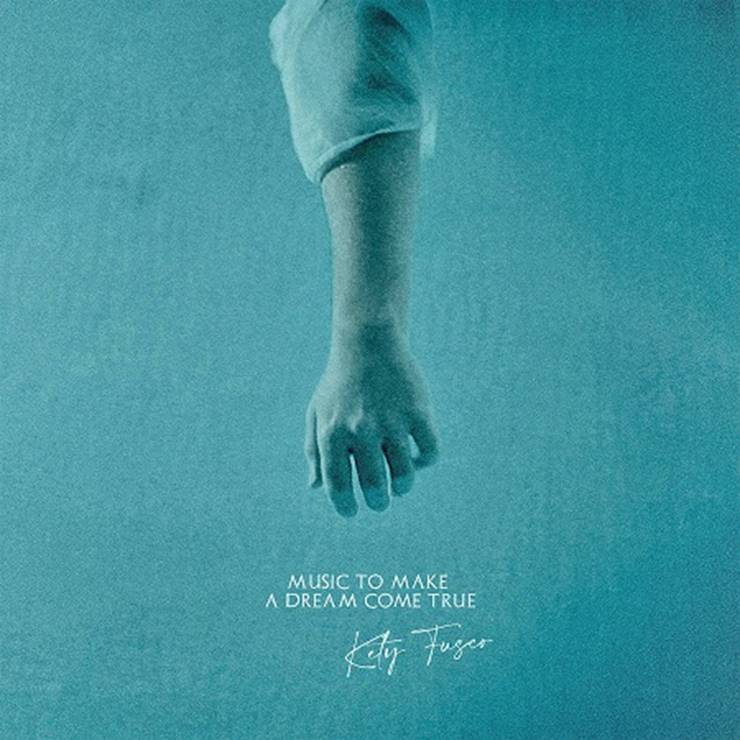
Kety Fusco: ‘Music To Make A Dream Come True’ is the new soundtrack by the harpist and sound researcher, out 4 March 2022 on Floating Notes Records.

Kety Fusco transports us to a new era, one of music to make dreams come true and the subversive sounds generated by her harp sound research. ‘Music To Make A Dream Come True’ is an imaginary soundtrack composed by the Italian-Swiss harpist, to be released on all digital platforms on 4 March 2022 on the international label Floating Notes Records. This soundtrack is the result of a sampling of sounds from Fusco’s harp, collected in a digital sound library named Beyond the Harp, Extreme Extended Experimental, available for artists, producers and art lovers on the musician’s official website.

Fusco destabilises the usual perception of the harp, moving away from the arpeggios and sound carpets that the instrument can easily call to mind, thus entering a universe that no listener would ever think belongs to a harp. Fusco has dedicated herself to transforming the sound of the harp, an instrument rich in sonic possibilities, and wishes to make its innovations available to everyone, not just harpists: "For me, thanks to my technique as a harpist learnt during my academic studies, it would be easy to produce arpeggios and soundscapes, but I don’t like playing easy. Instead, I’m interested in the harp being freed from any taken-for-granted connotations and for any kind of musician to explore it with a more punk approach".

In 3 minutes and 47 seconds of experimental music, ‘Music To Make A Dream Come True’ fuses noise, drones and screams with a magical aura. You can hear the cascades of nails on the strings, followed by vocal resonances emitted inside the harp’s sound box. Nicknamed ‘The Queen of the Electric Harp’, Fusco made exclusive use of the classical harp this time. ‘Music To Make A Dream Come True’ conveys to the world for the first time ever a new sound timbre given by the oldest instrument in the world, the harp, which Fusco has completely revolutionised in style.

The highly esoteric video clip accompanying the track was shot by Francesca Reverito and Riccardo Bernasconi of Studio Asparagus, amidst woods, harps suspended in the air like heretical-mystical instruments, evocations and dances in the grip of possession: "Kety Fusco’s sound research is very evocative and immediately triggers dreamlike images, spirits and presences, sometimes disturbing. We have always been attracted to Genre and Fairytale, which is why ‘Music To Make A Dream Come True ‘immediately ‘spoke’ to us". Fusco confirms the creepy mood of the film: "My dream? To make the soundtrack for a horror film!".

Watch the video here:

AA

KF pic

Metropolis Records – 4 February 2022

Christopher Nosnibor

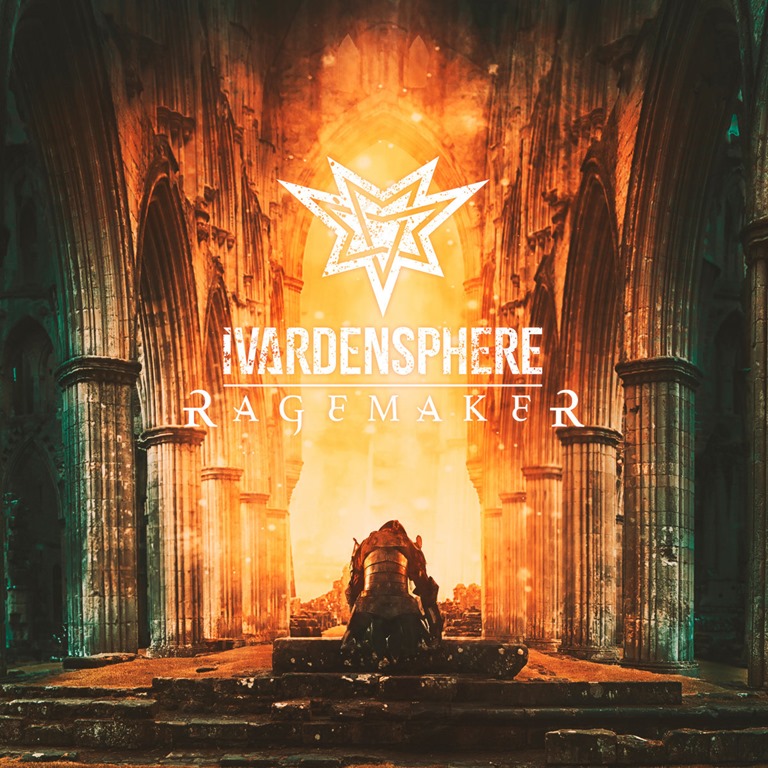
For years, I’ve had the rage. There is, after all plenty in this world, this life, and no doubt beyond, to rage about and against. iVardensphere focus that rage through sound rather than verbally, through an album that articulates darkness and tension through the language of sound.

‘A Whimsical Requiem for the Fey’ is appropriately titled; being a breezy, neoclassical assimilation of light-as-air plucked strings and soft, accessible melody. As such, it does nothing to prepare the listener for the instant plunge into the darkest of depths brough with the growling churn of ‘The Maw’, which features Jesse Thom. But it’s on the title track that the album really hits its stride. Tribal drums dominate a gloomy soundscape, weighted with dense bass tones, but also the portent of soaring vocals. And while the jagged strings add to the tension, the drums simply build and build and batter your very being. This isn’t rage, it’s the unleashing of vengeance via the hammering of the soul.

The individual compositions are each dramatic and powerful in their own right, and the attention not only to the details of the arrangement, but the sequencing of the album stands out, and the ambition is clear without the explanation that this is ‘a sweeping, cinematic album, equally suited as the next evolutionary step of iVardensphere, and as the film score to a post-apocalyptic motion picture.’ It’s dark, stark, and atmospheric, and thunderous rhythms evoke ancient mysticism, and scenes on barren hilltops and sweeping moorlands; tribal rituals, burials, spiritual ceremonies of great import. And there are moments when those rhythms step up, pounding harder and more intensely, so as to be all-encompassing.

As the accompanying notes outline, ‘Traditional percussion from all corners of the world, Taiko, Surdo, djembe, timpani, and more are deftly intermixed with all manner of sourced percussion sounds. Hammers and anvils, slamming doors, even the sound of a dumpster being kicked are sampled and folded into the sonic melange.’ We’re in Neubauten / Test Dept territory here, but there’s a subtlety to so many of the compositions that go beyond these comparisons too: the graceful sweeps of ‘Indomitus’ stray from anything industrial towards progressive / post rock territories, and Seeming’s vocals are almost rock.

The electronic elements are remarkably restrained in the main, with only occasional incursions, such as the bending blasts of bass on ‘Varunastra’ (which features Brittany Bindrim’s vocals); elsewhere, ‘Draconian’ brings the drones, and a low, serrated throbbing. Then, it also brings glitchy danceable beats, which evolve into another crashing assault that batters away relentlessly.

Then there’s the straight-ahead thump ‘n’ grind of ‘Orcus’ and the mournful trudge of ‘The Age of Angels is Over’; these tracks conjure very different atmospheres, but in the way the album unfolds, they develop a sense of significance. If ‘Sisters of the Vipers Womb’, with Brien Hindman’s vocals, seems a little too cliché in its sinister stylings, it sits in the broader context of an expansive and immersive work that has a trajectory through ever-changing moods, and to powerful effect.

AA

a0129874839_10

Cruel Nature Records – 11th June 2021

Christopher Nosnibor

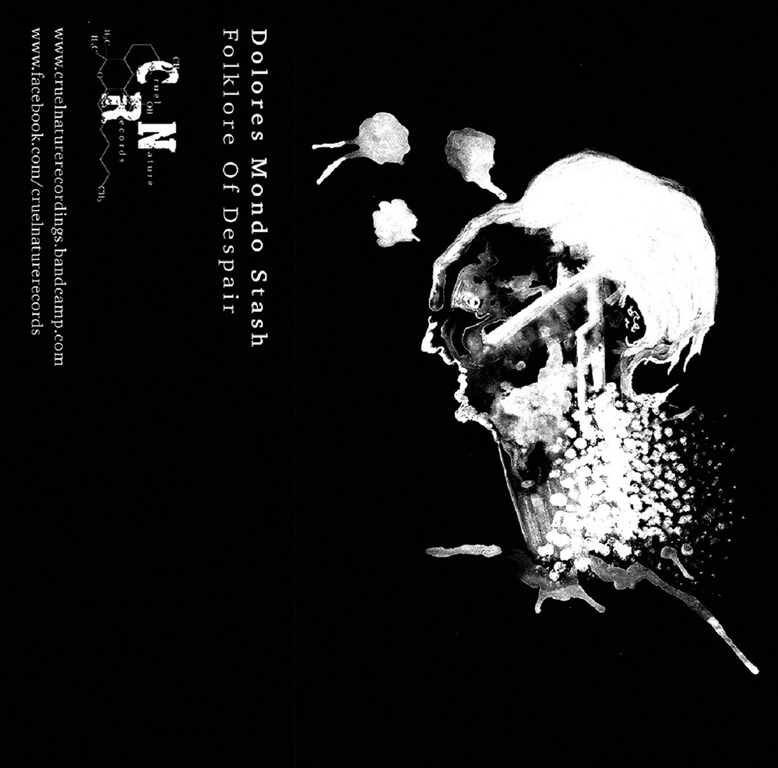
We’re in eerie electronics territory here. Haunting, creepy. Suspenseful. There’s something of a vintage sci-fi feel to this nightmarish trip, as gurgles and scrapes bibble up through swamps of whistling organ-like drones. It’s a dark record, but not because it relies on heavy drones, low, rumbling, doomy bass, hard volume or distortion: Folklore Of Despair worms its way into the psyche, prodding and poking stealthily into the recesses of the subconscious, gently rubbing and scratching at those small, nagging uncertainties that stem from the fear of the unknown. Whistles and bleeps intermingle with tense violin-type drones and quibbling analogue sounds, spooky, spectral notes and crashing crunches which disrupt the flow and create a different kind of tension, one that feels like things are going out of control and colliding on every side, a catastrophic nightmare where carks skid into one another as every third driver find their steering no longer works or their brakes have been cut. It’s disorientating, and the effect is so strong because everything about the album is so unpredictable.

There are no conventional structures here, or even any clear structures at all. Like the best suspense movies, the unexpected always occurs unexpectedly. The tense build-ups are often false markers, but then again, there’s not much letup in the tension, which they sustain and sustain, and your nerves are jangling because your gut tells you ‘something isn’t right’.

Things get really weird really fast: second track ‘Darkness is Driving the Machine of Debauchery’ is quite headfuck, as glitches and warping sounding like a stretched and buckled tape struggling to traverse over the heads. It squeaks and squeals and sounds as if whatever was recorded on the tape before is bleeding through, like voices from the other side – I’m reminded tangentially of the 7” containing sample recordings of voices from the ether that accompany Konstantin Raudive’s 1971 book, Breakthrough: An Amazing Experiment in Electronic Communication with the Dead (something that would feed into the theories expounded by William Burroughs on the tape experiments he conducted withy Brion Gysin).

An actual voice, murky, muffled, drifts, disembodied and strange through the creeping chords on ‘If the Forest Ate the Trees’, where the notes drift like fog, but there’s more to its being unsettling than that: there’s an otherness, a strangeness you can’t quite put your finger on, as if maybe the drifting fog in the graveyard scene has been filmed in reverse. It’s the fact it’s difficult to pinpoint that heightens the effect so.

Thunderous beats – distant, as if playing in a club three blocks away – pulse, deep, and bassy, on ‘Floral Patterned Gearshift’, and the sound is all but drowned out by the shrill, clamorous shrieking synapse-shattering tweets that flurry like a swarm of bats scurrying and flurrying. You have to fight the impulse to duck to avoid the aural assailants, invisible yet somehow tangible in the mind’s eye.

At times, everything simply collapses into chaotic cacophony. It’s hard to process, and ever harder to digest. Folklore Of Despair is a complex and uncomfortable album, which is nothing the title hints it may be. I’m not even entirely certain what it is, but it leaves you feeling jittery, jumpy and on edge.

AA

a0307778435_10

24th July 2020

Christopher Nosnibor

For the Benefit of All represents the coming together of two artists whom the descriptor ‘visionary’ isn’t really hyperbole: having led Her Name is Calla through a decade-long career of turbulence which produced a catalogue of truly definitive, landmark releases in the field of post-rock which pushed the boundaries of the genre in myriad directions, as well as forging a solo career as a minor-key acoustic troubadour T.E. Morris’ cult status is based on his creative singularity. Meanwhile, Jo Quail has very much created her own niche, bringing the cello to a whole new audience with her tempestuous compositions that are far more rock than classical, turning her instrument of choice from an orchestral element to a full band and more courtesy of her innovative playing techniques and judicious use of effects (admittedly a bloody huge bank of effects).

As the press release outlines, For the Benefit of All was inspired by, and was originally intended to be performed within, Kelly Richardson’s Mariner 9 panoramic exhibition at the Attenborough Arts Centre in Leicester, but was cancelled due to the global Covid-19 pandemic.

As such For the Benefit of All is essentially a soundtrack work, but also a narrative work, which plots the trajectory of a mission to Mars. It’s a sci-fi hybrid that tells of a future based on true events past and present, and more than this, it’s a reflection on time and space. With the original project plans put paid by the COVID-19 pandemic, they elected to continue work remotely and release the music as a standalone work, and it succeeds – although it does work best with an understanding of the context, because an abstract ambient work without context is simply one more abstract ambient work. In context, it’s very much a departure for both artists, devoid of climaxes and crescendos, instead focusing on the recreation of the emptiness of space, where movement is slow, and the immediate surroundings are filled with vast expanses of nothing.

In many mays, it also stands as a metaphor for the circumstances of its creation: we’re all together apart, distant, separate, isolated however adept we are at calling, Zooming, or meeting in the street. We are all floating in space, just out of reach, and sometimes two metres may be two thousand miles. And we’re not built for this.

The chapters contained within the booklet which accompany the compositions provide a textual narrative which adds to the substance of the work. The track titles, meanwhile, signify dates on the journey, from the significant 1972 ‘(A map from Mariner 9)’ which was the first vehicle to orbit another planet and successfully returned over 7,000 images from the enigmatic red planet, to the futuristic dates projected for colonisation. Going further back, 1610 relates to Galileo, the polymath from Pisa, the first person to use a telescope for astronomical purposes, and his viewing the red planet through the newly-invented ‘spyglass’.

The majority of the music is quiet, spacious, minimal, and while the plot includes raging global and galactic wars, the soundtrack is more given to creating the sense of distance, of isolation, of… space. The emptiness. The void. The tranquillity. The absence of atmosphere.

A hushed rapidfire beat flickers like a palpating heartbeat beneath the barely-there ripplings of the penultimate piece, ‘2212 (We Had it in Our Hands the Whole Time)’ and while it’s still subtle, it’s dramatic in its effect, and the rising tension is palpable.

The final section, ‘2452’ leaves us with both a cliffhanger and a sad sense of emptiness at the end of an expansive and exquisitely delicate album that often belies the violence, turbulence, and often bleak reflection on humankind that it soundtracks.

AA

a2831098516_10