Posts Tagged ‘Silver Jews’

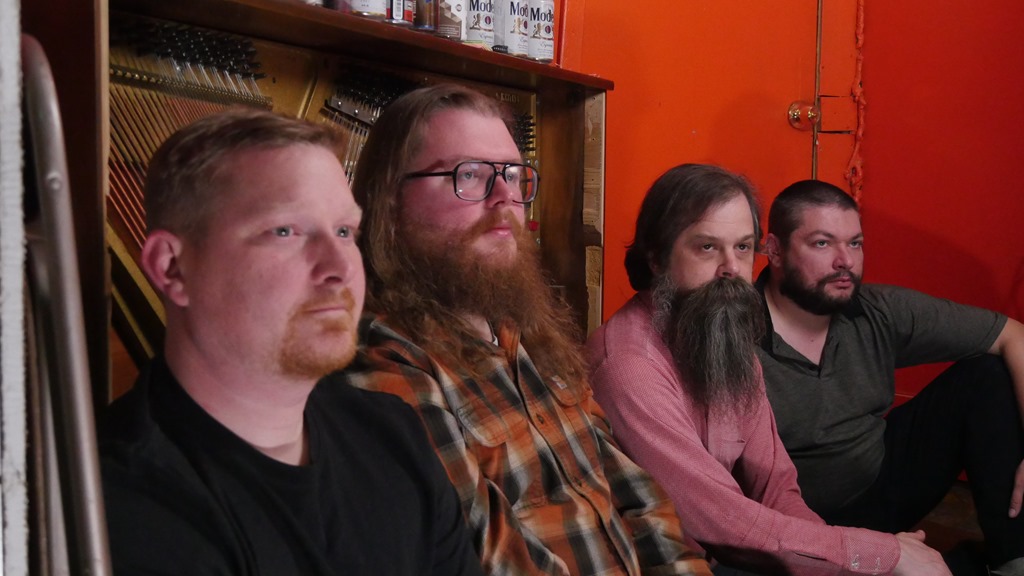
The Whimbrels is an outer-borough masterpiece. The sound is dense, polyrhythmic, hard, and sweet, hooks and riffs to save your soul pop out at unexpected moments. The players’ credits — The Glenn Branca Ensemble (dating to the 1980s), The Swans, J. Mascis — predict the guitar-driven, sonic onslaught of The Whimbrels, captured on their startling debut – and as a taster, they’ve unveiled a video for the song ‘She is the Leader’.

A Whimbrels show involves racks of guitars, tuned in different and unconventional ways with the players constantly switching between them. ‘The Whimbrels’ album showcases this. There are counterpoint choirs, dueling e-bows phase against each other, chunking, poly- and cross-rhythmic interludes, soaring arias of distortion from Westberg and Evans’ strangely melodic and inventive guitar. Evans’ and Hunter’s vocals front a three-guitar line up tuned every way but normal. The ax men are veterans with contrasting styles that come together in a potent whole. The beats are smart and unrelenting. The album concludes with the instrumental Four Moons of Galileo, four short sections with the inner two framed by shimmering walls of descending, slowly evolving harmonies. The title recalls the four moons discovered by Galileo, suggesting the many more then lurking unknown in space.

ARAD EVANS (guitar, vox, primary songwriter) was a member, recorded and toured with Glenn Branca’s ensemble from the 1980’s until Branca’s death a few years ago. He is founder and still performs with Heroes of Toolik. In addition to Branca, he has played with Quiet City, Rhys Chatham, Ben Neill, John Myers’ Blastula, The SEM Ensemble, The New Music Consort, Virgil Moorefield’s Ensemble and many other groups. “A truly inventive and surprising guitar player.” (Rick Moody, The Rumpus Aug. 25, 2016).

NORMAN WESTBERG altered the course of rock as the main guitarist of the Swans over 35 years, contributing "overwhelming waves of volume with a mix of the rhythmically slashing and the harmonically sensual." He has a busy career as a solo artist and with other projects, such as Heroin Sheiks, NeVah and Five Dollar Priest.

LUKE SCHWARTZ is a New York guitarist and composer to watch; he also toured and recorded with Branca, and he performs in a wide range of groups, including Rick Cox, Joh Hassell, Lotti Golden, Wharton Tiers and with several of his own projects, The Review and the improvisational Hive and Quiet City and is in demand for film scoring work.

MATT HUNTER (bass, vox, songwriter) is a co-founder of New Radiant Storm King and plays or has played with a galaxy of cool projects, including J. Mascis & the Fog, King Missile, Silver Jews, SAVAK, and his own Matt Hunter and the Dusty Fates.

Drummer STEVE DiBENEDETTO, is a widely shown and collected fine art painter but also in in high demand for his music. ("The Spinless Yesmen" 1984—89, "Wonderama",aka "The Shapir-o-Rama" 1990—95, Airport Seven from 2010 to 14). He frequently collaborates with Dave Rick (Bongwater, King Missile, Yo La Tengo, Phantom Tollbooth) and Kim Rancourt (When People Were Shorter and Lived by the Water).

LIBBY FAB (drummer on That’s How It Was) is a founding member of the noise duo Paranoid Critical Revolution. She was technical director of Glenn Branca’s Symphony 13: Hallucination City from 2006-09 and toured as drummer for his ensemble on the Ascension: The Sequel tours. Her own electro acoustic and video works have been featured in festivals in Europe, North America and the Caribbean.

JIM SANTO (producer) partnered for many years with Wharton Tiers in the fabled The Kennel studio. At his own Tiny Olive, Santo has worked with a wide range of clients and projects. As a guitar player, his credits include The Sharp Things, George Usher and Harley Fine.

The New York Times once placed Arad Evans on “an index of creative or experimental electric-guitar-based music in America — young lords of the wild in the post-rock tradition.” That description fits The Whimbrels perfectly. You may need earplugs.

AA

Whimbrels_platforms

Cruel Nature Records – 21st February 2025

Christopher Nosnibor

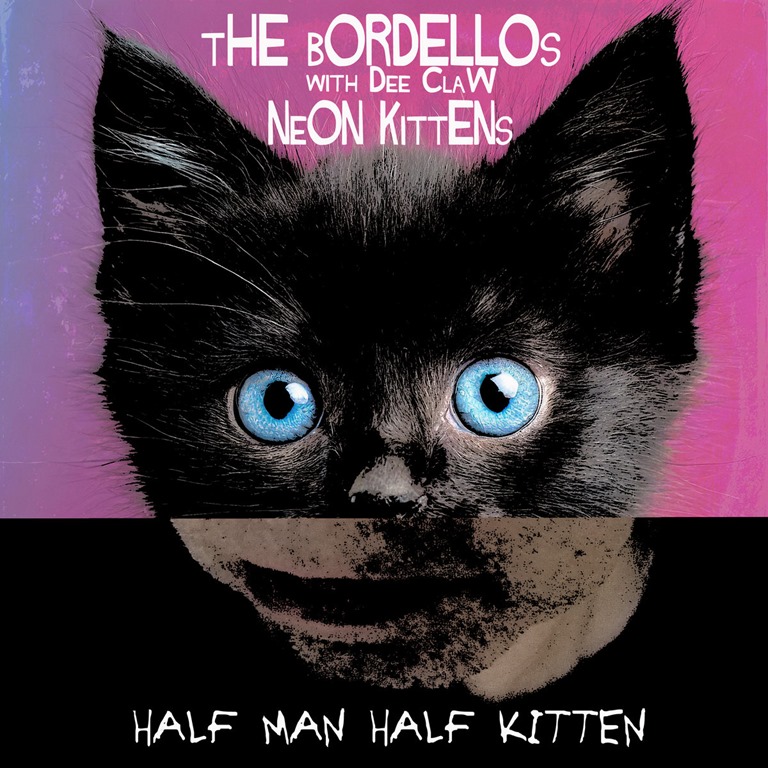
This split release has a lengthy backstory, which is given in full on the label’s Bandcamp page – but the short version is that when York’s Neon Kittens (how had I not heard (of) them, given that they appear to be from round my way and absolutely my bag? I feel ashamed, and fear I cannot even remotely claim to have the finger on the pulse of my local scene right now – but still, better late than never, right?) approached The Bordellos about a collaboration, the latter, having taken an eternity to only half-finish their current album-in-progress, some ten years after the release of will.i.am, you’re really nothing, offered everything they had for a split release. And lo, this is it.

I suppose the eight songs Neon Kittens have contributed here provide a solid starting point to their rapidly-expanding catalogue, and being paired with The Bordellos works a treat. Both espouse the same lo-fi DIY ethic, with a certain leaning toward indie with a trashy punk aesthetic.

That the cassette edition sold out on advance orders hints at the anticipation for the release: for, as The Bordellos describe themselves as being ‘ignored by millions, loathed by some, loved by a select few’, when you’ve got a small but devoted following, they get pretty excited for new material.

‘Set Your Heart to the Sun’ is perfectly representative of their scratchy, harmony-filled indie – kinda jangly, a tad ramshackle, but direct, immediate. Dee Claw’s airy vocal contributions really lift the sound and raise the melodic aspects of the songs. Not all of the songs have full drum-kit percussion, often favouring tambourine or bongos or seemingly whatever comes to hand, and more than any other acts, I’m reminded of Silver Jews or really, really early Pavement – those EPs that sounded like they were recorded on a condenser mic from the next room with more tape hiss than music, but still undeniably great tunes. And yes, they really do have great tunes – overall, they’re pretty laid-back in their approach to, well, everything: remember when ‘slacker; was a thing? Yeah. In place of polish, they have reverb, and these songs tickle the ears with joy.

Neon Kittens bring a rather denser sound and a greater sense of urgency with the buzzy, scuzzy ‘Better Stronger Faster’. A hyperactive drum machine stutters and flickers away beneath a sonic haze of fuzzy guitar: there are hints of Metal Urbain crossed with The Fall and Flying Lizards in the mix, while ‘All Done by Numbers’ brings Shellac and Trumans Water together in a head-on collision – and one suspects any similarity to Shellac’s ‘New Number Order’ is entirely intentional from a band who recently featured on a Jesus Lizard tribute. ‘Cold Leather’ presents a spoken word narrative over a lurching, lumbering morass of discord, held together by the whip crack of the snare of a vintage-sounding drum machine.

The majority of their songs are around the two-minute mark, and crash in, slap you round the chops, and are done before you really know what’s hit you. ‘Deaf Metal’ is a work of beautiful chaos, constructed around a thick, rumbling bass and rolling drums., while the rather longer ‘White Flag’ is almost a stab at a grunge-pop song, while the discordant clang of ‘Sailing in a Paper Boat’ is absolutely The Fall circa Hex Enduction Hour: lo-fi post-punk racket doesn’t get much better than this.

AA

a3951021685_10

Now That We Are All Ghosts is the second album from Milwaukee’s Resurrectionists. The project was self-engineered, recorded and produced; it was mastered by Bob Weston at Chicago Mastering Service. The album features nine songs of Doom Chamber-Americana, all powerfully cinematic and ripe for video treatments, leading the group to take the unusual and ambitious step of commissioning videos for every one of them.

‘Let Me Talk You Through This One’ is the fourth of these videos, and it accompanies a laid-back, strung-out lo-fi tune reminiscent of Pavement at The Silver Jews.

The video: An exquisite moody piece by animator Eric Arsnow. Floating towards home (maybe) in a small boat lit only by a lighthouse on an ominous night. He gets there in time.

The song: Originally written for the solo project “The Intelligibles” around the year 2000. A song about ambition, moving places and time.

-Joe Cannon/Resurrectionists

Check the video here…

AA

Resurrectionists pc Brian Theisen

30th June 2022

James Wells

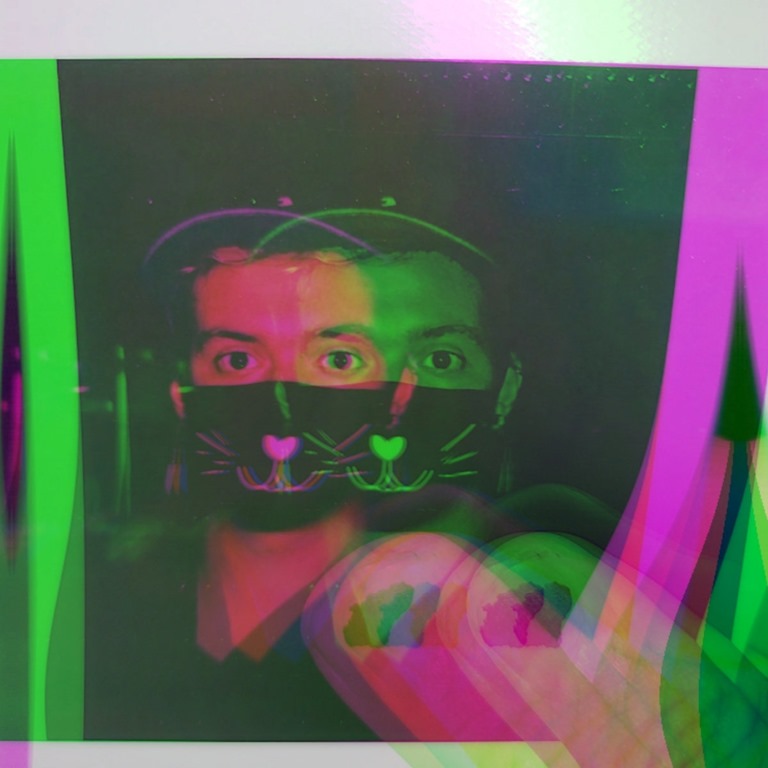
‘i write weird songs for weird folks’ writes alien machine, all in lower case. ‘A solo artist pretending to be a 3 to 5 piece garage punk outfit,’ ‘the sea complains’ is their fourth release. Details of this US-based artist are sparse to non-existent, but it appears that having emerged in 2014, they lay creatively dormant before deciding to reconvene with racketmaking during the pandemic, which seems to be a common thing as people sought ways of dealing with the strangeness and the isolation.

This is raw, primitive, and psychotic. The skewed, angular, murky mess of the first track, ‘math’ sounds like it was recorded on a Dictaphone in the living room while the band play their first rehearsal in the basement. The overall effect is very much early Pavement (pre-Slanted, those EPs collected on Westing were betonf lo-fi) / Silver Jews lo-fi so slack as to not give a shit about being in time / holding a tune / anything at all really, and it’s played with the wild, frenzied mania of Truman’s Water. Then again, ‘coward’ is a pulverising screamo-fest that brings in elements of Shellac, the guitars sliding and jerking in all directions over a loping drum beat, and closer ‘aquaburst’ goes fill Truman’s, with clanging Big Black guitars and everything going off all at once, but not necessarily in the same key or time signature.

It’s a headache-inducing discordant buzz, and it’s wonderful.

There’s nothing particularly weird about this – although fans off mainstream chart music would likely disagree – but it is a hard-on-the-ears trebly racket, that’s so slack it can’t even be arsed raising a finger to production or concessions to clean sound. It doesn’t get much more DIY than this.

AA

a3486262544_10

GoldMold Records – 10th February 2016

Christopher Nosnibor

Once upon a time, everything was tapes. The romanticism of a frustrating and often inconvenient medium has endured perhaps largely on account of the potential impermanence of their nature: how many music fans of the cassette age mourn the loss of a beloved recording on account of a moment’s forgetfulness which resulted in overrecording, or some freak event which resulted in demagnetisation? How many hours spent spooling and respooling tape which had become mangled in the heads, or otherwise stretched or snapped? The albums of yesteryear, all recorded to quarter inch tape, slowly decaying are an integral backdrop to our appreciation of the existence of the sounds they contain.

But is with books in the printed medium over digital text, it’s easier to form a bond with an artefact which feels somehow personal and personalisable. Just as a book with various creases and marks, perhaps even annotations develops a tangible, unique sense of ownership a Kindle edition never can, a playlist can never have the same resonance as a lovingly-sequenced mix-tape with hand-scribbled notes accompanied by a creased post-it or page from a spiral-bound notepad containing a covering note, folded into quarters and stuffed inside a scuffed case. On an emotional level, at least, sonic fidelity counts for less than fidelity to a pure moment, and it’s the thought that counts: those analogue documents of yesteryear can contain the entirety of a crush that dissipates in weeks or the early stages of a lifelong relationship on any level.

While the debates over the nostalgia ‘industry’ continue to rage, it’s fair to say that the renaissance enjoyed by the cassette is not a purely economic one. After all, the costs involved in burning a bunch of CD-Rs and stuffing them into handmade sleeves is negligible, and even though a bulk batch of 100 C30 cassettes can be obtained for in the region of 55p per unit, the time and effort required to dub even a small run of tapes is proportionally greater than any number of CD-R burns. But the changing nature of the music industry means that where it’s at now is in the small-scale, the personal, and the idea that an artist or label has invested time and personal attention on a product imbues the object with an instant emotional resonance.

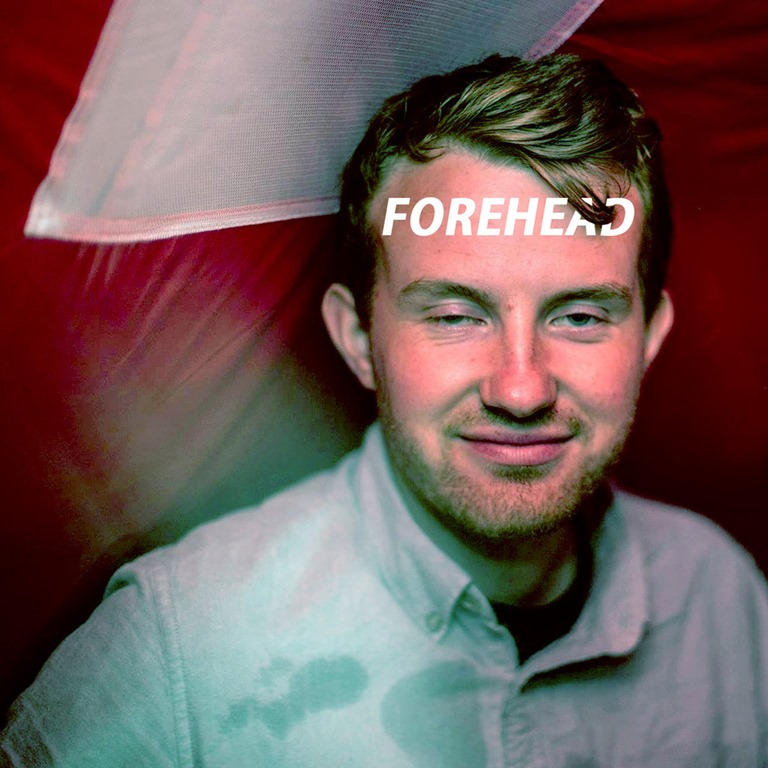
The debut release from Glasgow’s Forehead – the vehicle of Sean Garrett (said to be ‘the shyest frontman you’ll ever meet’ and mother goose of the Lovely Ladies) – is appropriately named, as it is being released – if you hadn’t already deduced – on (baby blue) cassette, in a limited edition of just 15. It’s also being released as a download of course. Because no artist makes a release exclusively for 15 people.

The blurb notes that the four tracks contained herein ‘have been about for a while but are only being released now, a testament to Sean’s wholly unwarranted modesty’. And yes, the songs are superb, in a sketchy, nervous, hesitant yet achingly sincere way. You get the impression that Garret’s shyness is integral to the material, to the extent that its awkwardness defines what makes it special. And by no means interpret awkward as clumsy: there’s a skilled songwriter hiding behind the sonic fog here.

Regardless of the protracted journey between conception, recording and release, in keeping with the EP’s title, Bedroom Tapes conveys the spirit of 90s analogue enthusiasm. Low-key, lo-fi indie rock songs, reminiscent less of Pavement and more of Silver Jews, define the Forehead sound. This only serves to amplify the nostalgic quality of the release, evoking the excitement of hearing something stubbornly lo-fi, dubbed from a cassette or a record, the grind of a worn stylus on cheaply-pressed vinyl, for the first time.

Forehead also captures the awkward shyness of J Mascis on ‘Honest’, and the swampy plod of ‘Corner Pieces Falling Apart’ bursts into slanted psych-hued noise before crawling off to hide under the table.


Forehead