Posts Tagged ‘Shellac’

Ipecac Recordings – 9th May 2025

Christopher Nosnibor

mclusky was one of those bands which built a cult following without ever really breaking through in the period they were active, in the period which spanned from 1996-2005. None of the greats are ever appreciated in their time, of course. Their albums would fetch premium prices second-hand, in the years after they called it a day, and my local Oxfam had prohibitively-priced copies of a couple of them for a while, which got progressively more tired and shelf-worn. With Future of the Left, Andrew Falkous found a wider audience while still doing much of the same, but as loved as they became, there was always a sense among fans that ‘they’re bloody brilliant… but they’re not mclusky’.

Of course, nostalgia has a large part to play here, and it’s almost inevitable that practically no second or subsequent band, however popular or successful, will experience the same affection as their forebears, unless, perhaps, they’re The Foo Fighters, in which case that affection is misplaced anyway.

mclusky flirted with occasional comebacks, while Falkous would release solo work as Christian Fitness. But, somewhat unexpectedly, the Wikipedia note on Mcluskyism (2006) that ‘This compilation is, without doubt, the final chapter in Mclusky’s nine-year saga, as Falkous informs in the Mcluskyism liner notes, “that’s it, then. No farewell tour… no premature deaths (at time of writing), no live DVDs…”’ First, there was the EP unpopular parts of a pig in 2023, and now, here we have it: their first full-length album in a full two decades. What has happened? I really don’t know, but seemingly from nowhere, a stack of bands from the Jesus Lizard to Red Lorry Yellow Lorry, have re-emerged with their first new albums in twenty years or more, and they’ve not been some second-rate, tepid late- (or even post-) career cash-ins, but up there with the best of their work.

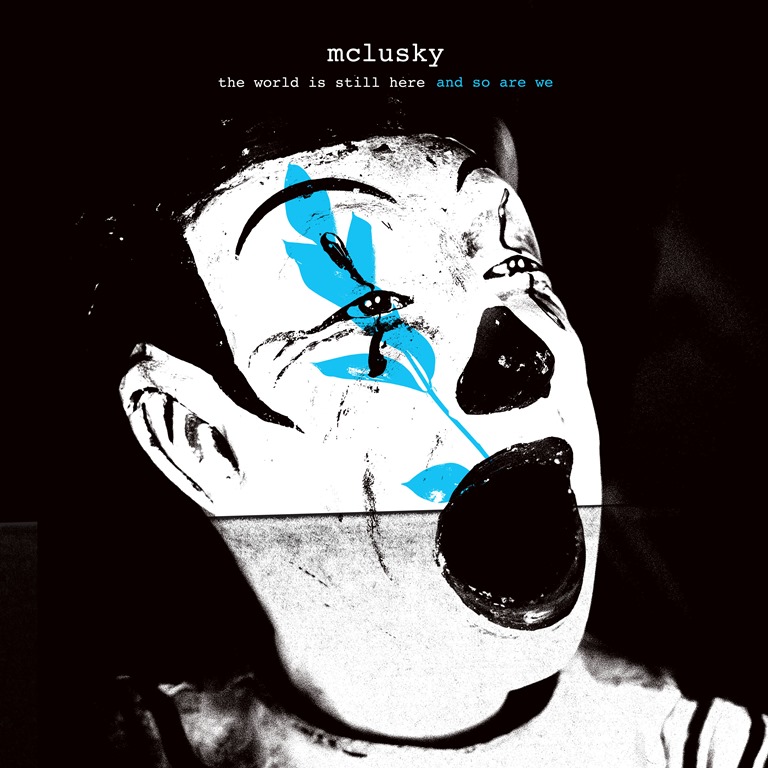
‘Is it any good?’ people will be asking. ‘Is it as good as the old stuff?’ Anyone who has heard lead single, ‘way of the exploding dickhead’ will probably already be thinking that the answer to both of these questions is in the affirmative, and they would be right. the world is still here and so are we is indeed up there. As they put it, ‘it was important not to cos-play the past but also not to flubbity-flub over everything like a gang of big stupid flubs.’ Yeah,. There’s definitely no flubbing, or flab here. This is lean and full-on, and sheer quality.

It’s ‘unpopular parts of a pig’ which launches the album in a scratchy blast of cutty treble, a skewe(re)d tumult of stop / start angular punk which is frantic and irreverent, compressing elements of Nirvana and Shellac and Butthole Surfers, Dead Kennedys, and the Jesus Lizard into a manic two minutes and twenty-one seconds.

It was often the case, especially in the 70s, 80s, and 90s – before streaming, essentially, but while record company exploitation and the industry gravy train was racing at a seemingly unstoppable pace – that the singles, which would lure you in to buy an album, were the only decent songs on it, and you’d feel pretty bummed and short-changed at having forked out £7.50 for an LP or cassette – unless if had been one of your bonus purchases through Britannia Music – when you might as well have just paid 99p for the 7” and not bothered with the album. This may still be the case in some instances, now that the album format is supposedly dead in the world of the mainstream, where people only stream the songs they know already as part of the playlist they’ll loop for weeks, but beyond the mainstream, it feels like the album is stronger than ever, and acts are committed to making albums which are 100% quality from beginning to end. This certainly rings true for the world is still here and so are we.

Of the album’s thirteen songs, only three are over three minutes in duration, and it feels like there’ve compressed and distilled everything to achieve peak intensity. The bass is absolutely immense, a thunderous boom that dominates the sound, leaving room for Falkous’ guitar to wander and explore sinewy tripwire picked lead parts and discordant textures.

‘people person’ also released as a single, lands with a swagger and showcases a gutsy bass-led groove, while also highlighting the sarcastic, ironical humour and misanthropy that’s integral to both mclusky and FOTL: bursting with pithy one-liners and sharp commentary, it’s everything that makes them so loved and so bloody great. Elsewhere, the more overtly mathy ‘not all the steeplejacks’ channels the spirit of Shellac rather nicely.

the world is still here and so are we is gritty, unpretty, full-throttle, and fiery. It’s a racket. And yes, it’s fucking mint.

AA
Print

Human Worth – 7th March 2025

Christopher Nosnibor

I hate to moan, I really do. No, really. But January has a tendency to be pretty shit, being cold, and dark, and bleak, and twice as long as any other month and having to turn on the lights at midday and crank up the heating and just wanting to hibernate, and the bills keep on coming but payday is still a lifetime away. But this January, January 2025… just fuck January 2025. It felt like the end of the world even before Trump took office, and now, as California burns and the UK is hammered by one of the worst storms on record, the end of the world looks positively appealing.

I’m not one to pray, but if I was, I would be praying for just one sliver of good news – and this would have been the answer to my prayers. Because a new release on Human Worth is always good news.

Things have happened in the Cassels camp sin the three years since their last album, A Gut Feeling:

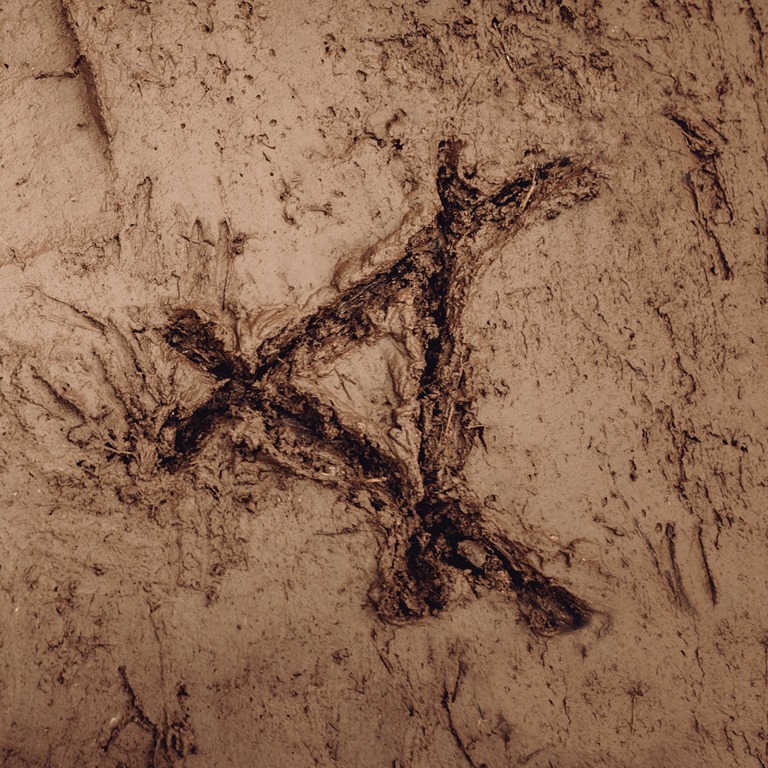
“Close to burnout from heavy touring, the brothers Beck returned to their Harringay warehouse practice space. Jim, tired of his last record’s overtures at pop culture, got very into Converge. New songs came: heavy, and weird. Gone are the sharp-tongued character sketches, replaced with a heady cocktail of philosophy and body horror. Ditched, too, are the flirtations with mid-aughts indie rock and electro. On Tracked in Mud, we’re treated to something bigger. Wilder. More… elemental. This is a record about humanity’s disconnection from nature, after all.”

You might be forgiven for thinking that the cover art, so similar to that of A Gut Feeling signifies a neat continuation. It does not. While the sharp angularity of their previous works remains present, Tracked In Mud marks a distinct departure, and the newfound weight is immediately apparent on ‘Nine Circles’, which brings the riffs. Not that you’d necessarily describe their previous output as jaunty, but this hits hard, bursting with disaffection and blistering noise and collapsing into a protracted howl of feedback.

‘Here Exits Creator’ crashes in like a cross between Shellac and Daughters (thankfully minus the dubious allegations) – sparse, twitchy, drum-dominated spoken-word math-rock with explosive bursts of noise, before locking into a sturdy motorik groove.

The songs tend to be on the longer side on Tracked In Mud, with the majority extending beyond the six-minute mark. This feels necessary, providing the space in which to explore the wider-stretching perimeters of composition, and to venture out in different directions. Each song is a journey, which twists and turns. Midway through ‘…And Descends’, there’s a momentary pause. ‘Can someone change the channel, please?’ asks Jim, with clear English elocution, which could be straight from a 70s TV drama – and then spurts of trebly guitar burst forth and lead the song in a whole other direction. It lists and lees and veers towards the psychedelic, but then slides hard into a monster sludge riff worthy of Melvins.

‘…And Descends’ spits venom in all directions, and it’s tense as. The headache that’s been nagging at me half the day becomes a full temple-throbber as I try to assimilate everything that’s going on here. I’m not even sure what is going on here, but it’s a lot. ‘Two Dancing Tongues’ is almost jazzy, but also a bit post punk, a bit goth, its abstract lyrics vaguely disturbing in places… and then, from nowhere, it goes megalithic with the sludgy riffery.

Tracked In Mud is by no means a heavy album overall in the scheme of things – it’s as much XTC and Gang of Four as it is anything else, but equally Therse Monsters and early Pulled Apart by Horses – but it is an album that packs some weight at certain points, and explores the full dynamic range. There are moments which are more Pavement than Converge, but it’s the way in which they bring these disparate elements together that really makes this album a standout. The stylistic collision is almost schizophrenic at times, but, to paraphrase the point rendered in the most impenetrable fashion by Deleuze and Guattari in Anti-Oedipus, schizophrenia is the only sane response to an insane world, and this has never felt more true.

Tracked In Mud is crazy, crazed, disjointed, fragmented. It’s not a complete departure from what came before, but it is a massive leap, a gigantic lurch into weightier territory. It’s a monster.

AA

HW043_Cassels_TrackedInMud_DigitalArtwork

Reptilian Records – 4th October 2024

Christopher Nosnibor

It’s remarkable how quickly the future can become past. Take the Wikipedia entry for God Bullies for example. It closes with the statement ‘God Bullies are slotted to record a new album at Steve Albini’s Electrical Audio this April set for a September 2024 release on Reptilian Records followed by touring In the US and Europe.’

The album recording happened, and here it is, but Steve Albini isn’t – just a month after the recording of this album, and the week of the release of the latest – and now last – Shellac album. Life has a habit of throwing unpleasant surprises – something I have first-hand experience of in the most devastating of ways.

It’s been quite the year for long-dormant bands crashing in with new releases, and certainly not only Shellac – the Jesus Lizard recently dropped their first album in twenty-six years, which is staggering. And it’s a belter, as, indeed, was Shellac’s To All Trains. God Bullies certainly sit in the same bracket, as purveyors of noise rock in the 90s and aligned to classic labels Amphetamine Reptile and Alternative Tentacles. Active between 1986 and 1995, they reconvened in 2010 for the Amphetamine Reptile Records’ 25th Anniversary concert.

But that was fourteen years ago, and it would remiss to ignore the fact as part of a balanced review that there’s some dispute over this release, because, as we know, bands have a habit of falling out, and it’s widely documented how there have simultaneously been two versions of Fleetwood Mac, of Hawkwind, among others.

Bassist Mike Corso, who runs the God Bullies website explains that ‘Mike Hard and his long time band “Thrall” have chosen to illegally co-opt the God Bullies Trademark in an effort exploit its legacy in hopes of fulfilling their delusional dreams of hitting it big. And the truly sick fact is that on numerous occasions they’ve held out that they are doing it in the name and spirit of our fallen comrade, David Livingstone… Mike Hard and his band Thrall have recently recorded a CD and plan on fraudulently release it calling it the God Bullies. A little back story here. The fact of the matter is that in 2002 the actual God Bullies (Adam Berg drums, Mike Corso Bass, Mike Hard Singer, David Livingstone guitar) have had a 10 song CD with all the drum and bass tracks recorded. All that was needed was for Livingstone and Hard to do guitar and vocal tracks to complete the project. You will see numerous times mentioned about completing that album. While finishing that album was mentioned many times, completing the God Bullies album was evidently never a top priority for either Livingstone or Hard.’

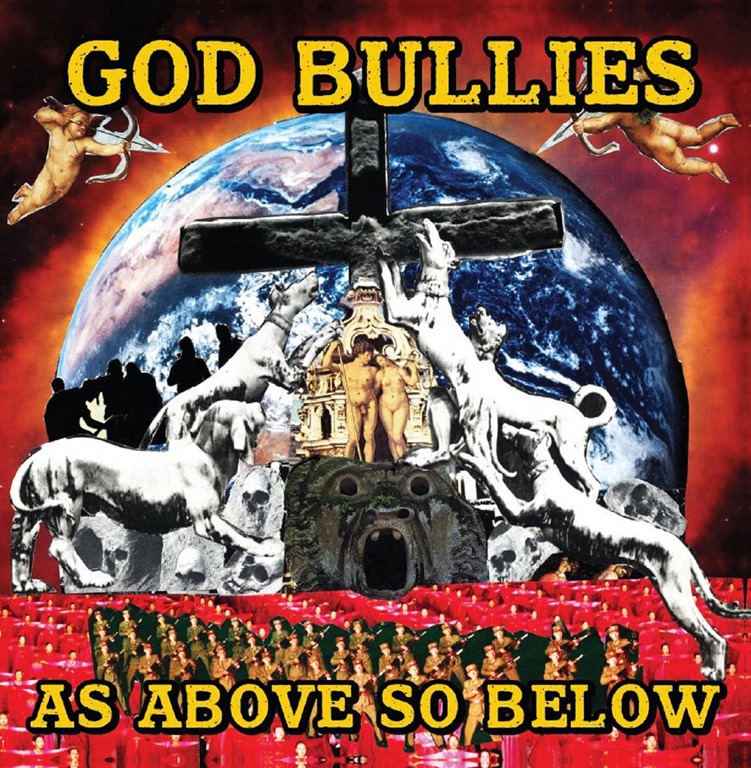
And so it seems we have two different perspectives on the ‘real’ God Bullies. It’s true that this is not the album the band recorded the bones of in 2002 that never made it over the finish line. But As Above, So Below certainly does feature vocalist and founder member Mike Hard, but not bassist and founder member Mike Corso. And guitarist David Livingstone sadly died in February of last year, an event which was always going to make any subsequent activity… not quite the same. Corso says it’s not a God Bullies album… but it’s here as a God Bullies album, and, well, it sounds like one. That is to say, it’s gnarly, mangled dirty noise-rock that is quintessentially of the sound of Amphetamine Reptile and Touch ‘n’ Go in the 90s, which saw God Bullies sitting alongside a host of bands including the Jesus Lizard, Tar, Guzzard and countless others who have largely been forgotten by the majority.

Sidestepping any interpersonal wranglings between (former) band members, on its own merits, As Above, So Below is a cracker. It’s a raging, roaring tempest of noise, blurred, slurred, dingy, dirty, and vaguely demented and delirious. The riffs rage and tear savagely, and As Above, So Below is a brutal, scuzzy blast of raucous noise and rabid, manic vocals.

‘Help’ is a twisted classic and finds Hard yelling and hollering like a man possessed, while ‘You Never Know’ is more brooding and overtly contemporary goth. ‘Love’ sounds like the kind of love that will likely end in strangulation, with a hookline of ‘You call this love?’ hollered over a larynx-vibrating bass snarl. In fact, everything snarls and grinds on every track.

No doubt fans will be riotously divided on this release, and that’s understandable. But objectively, As Above, So Below works as a classic example of the ferocity of God Bullies. It may not quite be the comeback album it’s been pitched as, featuring as it does more members of Thrall than it does original God Bullies, and I’ll leave it for the band and fans to fight that one out. Sidestepping all of the stuff, As Above, So Below is a brawling dingy blast of noise and it kicks some serious ass.

AA

a3399313706_10

27th August 2024

Christopher Nisnibor

Just read that bio, and reflect for a moment:

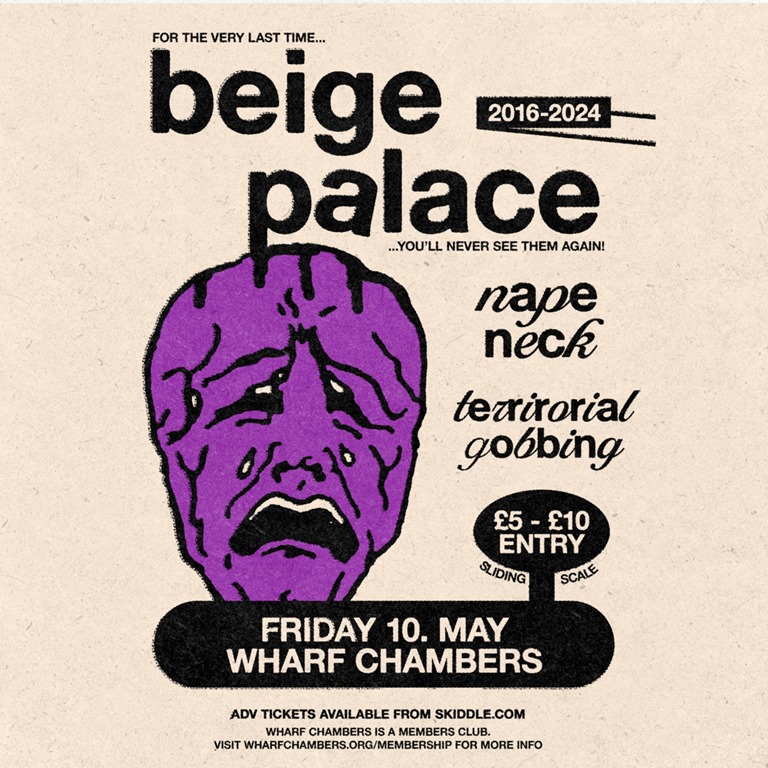
Beige Palace was a band from 2016 to 2024. During that time we released two albums, an EP, a split 7" and some other miscellaneous bits. We toured the UK a bunch, we managed to play shows in France and Belgium, and we opened for some of our favourite bands like Shellac, Mclusky and Dawn of Midi. It has been lovely!

These are no small achievements. But for all of them, Leeds’ leading exponents of low-key lo-fi have been humble and kept it DIY throughout their eight-year career. Fans inevitably feel a sense of loss at the demise of any band, but as someone who was present at their first ever show and having followed their progress through the years, this feels like a particularly sad moment. It shouldn’t: the members have moved on to become Solderer, with the addition of Theo Gowans, a Leeds luminary, gig promoter, purveyor of mad noise as Territorial Gobbing, and one-time member of Thank, another of Freddy Vinehill-Cliffe’s vehicles, and of course, they’ve all received coverage here along the way.

So we shouldn’t feel sad. Instead, we should celebrate the achievements of a band who seemingly set out with no ambitions other than to make music for themselves. But still… I was in attendance at their first show, and as I documented at the time, and as I’ve mentioned in subsequent reviews, they were ace. Unassuming, a shade awkward, perhaps, but warm, human, and appealing in the way they presented their set of sparse, minimal tunes, Young Marble Giants were my first-choice reference point.

How YMG, a band whose album was released on Rough Trade and who have been the subject of a number of articles, not to mention being referenced and covered by the likes of Hole, remain obscure, I will never comprehend. But no matter: Beige Palace picked up their baton and, er, hid it under the settee.

In contrast to the wildly flamboyant dayglo-sporting Thank, Beige Palace were always the introspective, introverted musical counterpart who hung back, heads down as they looked at their shoes. Beige Palace’s successes happened almost in spite of the band themselves. That’s no criticism. They were a great live band, and they released some great music, too. I’m reminded of one of the other great DIY Leeds – via Bradford – bands, That Fucking Tank, who bookended their career with recordings of their first and last shows. Without the documents, the events would be but myths and legends.

This looks like being the first of two retrospective releases, and as a recording of their last live show – which neatly bookends my experience of the band, having attended their first – makes my case about the quality of their performances.

LIVE For The Very Last Time (2016-2024) presents a career-spanning set, with opener ‘Mum, Tell Him’, ‘Dr Thingy’, and ‘Illegal Backflip’ representing their 2019 debut album, Leg, and a fair few cuts from Making Sounds for Andy packing out a varied set, which culminates in single ‘Waterloo Sublet’.

But there are a handful of unreleased songs here, too: like Thank, Beige Palace were always focused on the next project, the next release, and as the very naming of ‘Waterloo Sublet’ illustrates, irreverence was their thing. ‘Local Sandwich’ is a perfect illustration of their quirky irreverence, as Vinehill-Cliffe rants about, yes, a local sandwich shop.

LIVE For The Very Last Time (2016-2024) captures everything that was great about this trio. Awkward, honest, slightly disconnected between-song chat is integral to the experience, and there’s plenty of that – including comments on someone’s wind – on this warts-and-all, as-it-happened recording, captured in Leeds in the intimate but awesome grassroots venue, Wharf Chambers, where the sound is always good – and loud – the audiences are friendly, and the beer is cheap.

There are no overdubs, there’s no polish or pretence, and LIVE For The Very Last Time (2016-2024) is all the better for the fact. The mix isn’t always balanced – the vocals are half-buried and times and the guitars are way loud at times, but what you get is a feel for being in the room.

The music is gloriously wonky, skewed, angular math-rock with some valiant forays into noise. The vocals and guitar both veer wide of melody; it’s the lumbering, loping, rhythm section that keeps everything together: without them, it would be a complete disaster. But this is how some bands work, and Beight Palace always sounded like a band on the brink of falling apart, in the same way Trumans Water always sounded like they may or may not make it to the end of the song as they jerk and jolt their way through waves of chaos.

‘Update Hello Blue Bag Black Bag’ which lands mid-set making its debut and final appearance is unexpectedly evocative, and the eleven-and-a-half-minute ‘Dinner Practice’, also unreleased, hints at the trajectory they might have taken on their next album.

Beige Palace were never going to be huge: they were cut out for cult fandom, and comfortable with that, being one of those bands who made music for fun first and foremost. It’s the sense of fun that come across here. Even in the most downtempo songs, what comes across is that they’re enjoying playing. They will be missed, but we look forward to their next incarnation.

AA

a3696456151_10

Southern Records – 24th May 2024

Christopher Nosnibor

I’d feel guilty for taking so long to get around to reviewing this one, but since the band took twelve years to get around to putting out a new album, I figure I deserve some leeway. Besides, this isn’t an album that you can just grab ‘n’ go with an opinion; with near-infinite twists and turns, it requires time to digest and reflect. Hell, ‘Soul Catchers’ kicks it off and packs into six minutes a whole album’s worth of riffs, tempo-changes, curves, and detours. At times angular and noisy, at others, showcasing a more technical style.

Loping drums and noodling guitars dominate the opening of ‘Mother’ before scratchy discords crashes. The Shellac comparisons have been done to death, but are entirely appropriate, although there’s something that’s perhaps a shade more jazzy in the playing style here. This is highlighted by the instrumental interludes, which really do change the dynamic of the album as a whole, with some really nice piano work on display. But crucially, during the actual songs, it’s the drums that are front and centre, and batter hard at delivering stuttering, stop/start rhythms. It’s a timely reminder – well, after the arrival of To All Trains – of the impact Steve Albini had on alternative rock and recording methodologies. Before Albini – and still, generally – in rock music, the drums are background, keeping time, while the guitars dominated. His approach saw the drums take on a new level of importance, and expressive drumming, recorded right, alters the whole dynamic of a track. And there’s a lot of dynamic and some serious drumming on From Fire I Save The Flame. Every snare smash blasts the top off your head, and you feel like your in the room while the band are cranking this out live just feet from your face.

Again, another lesson from Albini: bands are often at their best live, when the energy and adrenaline are pumping and the heat and the blood are up, and to capture that on record is gold. From Fire I Save The Flame feels live: the performances are raw, unpolished, intense. That Steve is gone doesn’t really seem entirely credible right now, and the world – not just the world of music – will be so sadly lacking in his absence. But it’s clear that his legacy will endure, and endure. This album might not even exist without him, and certainly wouldn’t sound the way it does were it not for him, and the same is true of many releases now and in the future. This isn’t to detract from anything the band themselves have done here – and Three Second Kiss have reconvened to deliver something special – but, well, the point stands.

‘Garum’ lurches into noisier territory once more, reminding us why you’ll often find TSK mentioned alongside the Jesus Lizard – who have recently announced a new album after significantly longer than twelve years. It’s as pretty as a barroom brawl, spilling and staggering in all directions: the bass repeatedly punches you in the gut while the drums leave you dazed and with a split lip.

There’s sinewy, straining guitar galore on ‘Fuss’, before the final track, ‘Heart Full of Bodies’ grinds down to a slow-swinging crawl, before the growling bass and some thrashing drums whip up a climactic frenzy to draw the curtain quite dramatically on an album that’s heavy with dinge and dirt, unashamedly unsmooth, untamed, unprimed for radio.

From Fire I Save The Flame isn’t just a brilliant return, it’s a brilliant album in its own right, period. And landing as it does in between the Shellac album and the upcoming LP from the Jesus Lizard, 2024 is shaping up to be an outstanding year for quality noise music from bands many had considered dormant. It’s about time we had some good news, and this is some very good news indeed.

AA

a2253768086_10

21st November 2023

Christopher Nosnibor

It’s now an established fact that many, if not most listeners make judgements on a song within seconds – to the extent that back in 2014, it was revealed a quarter of Spotify tracks get skipped within the first five seconds. And only thirty seconds or more counts as a stream. I suspect that figure may be even higher now, as attention spans have hardly increased in the last few years. I only speak for myself when I think of the jittery hours where scrolling and skipping has become more of a nervous twitch than social media engagement – although I still refuse to use Spotify, meaning any review request containing only a Spotify link is an instant rejection. It’s one way to filter the fifty-plus daily submissions.

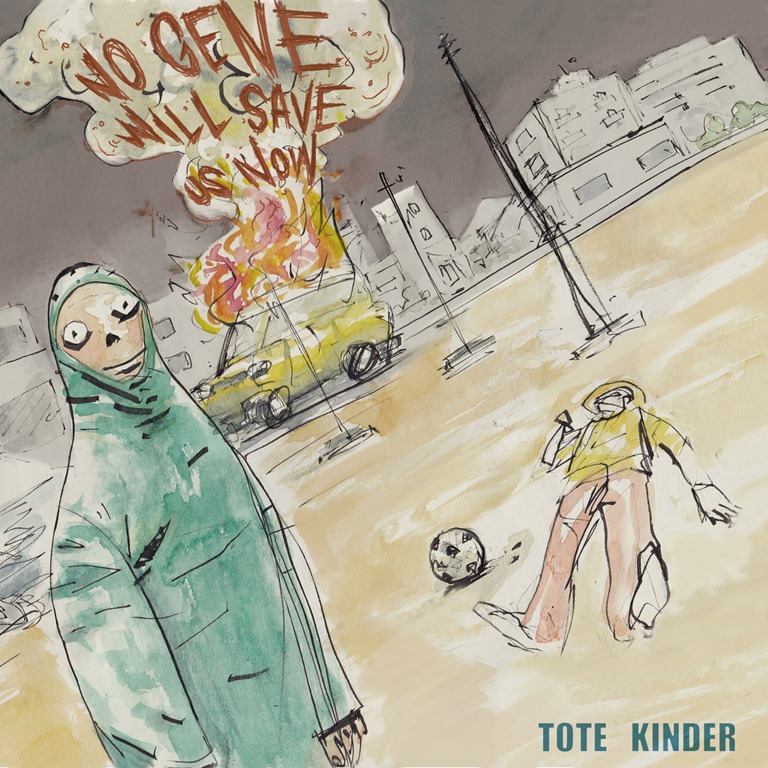
But while I’m likely to give a track more than five seconds, I am prone to making pretty snap decisions when it comes to new music. The chances are the squalling mess of noise that crashlands ‘Overfed’, the opening track on No Gene Will Save Us Now by Greek ‘machine-driven noise rick duo’ Tote Kinder will repel 95% of potential listeners in less then five seconds, because its skronking scrape of slanting, skewed guitar is an instant headache – and the very reason I love it immediately. It’s a shouty, angular mess of – well, everything, and probably the first time I’ve heard anything overtly mathy and a bit Truman’s Water using quite such a barrage of drums right up front. It’s like The Young Gods in collision with Daughters and slams hard between the eyes, and the crunchy bass-led ‘Permanent Damage’ is equally hard-hitting. Taking its guitar cues from Gang of Four, it’s noisy and difficult, despite its leaning towards a groove.

‘Hard to Swallow’ really is, arriving in a shrill blast of power electronics with overloading noise before plunging into darkness and with distorted bass and thudding relentless drums. It’s a hybrid of DAF and PIL, and it’s strong. It doesn’t stop. ‘Die Letzte Weste’ is all thumping beats and grinding bas, again reminiscent of DAF – at least until the blasting guitar noise crunches in, and thereafter, it’s Foetus and KMFDM who spring to mind, but there are others, too. This is some full-spectrum noise.

Tote Kinder are taut tight, poised, in their delivery of churning industrial noise. ‘The Falling Man’ is a sneering, snarling, industrial chug worthy of Filth Pig era ministry, a workout that froths with nihilism. The last couple of tracks don’t exactly offer a mellow finish – and nor should they.

No Gene Will Save Us Now may only contain seven tracks, but they’re all strong and incredibly hard-hitting. – and fittingly reminds us that we are all fucked. Why will people not accept or otherwise recognise this? They just continue as normal, booking their overseas holidays. We are so over. And this album will so break your head.

AA

a0565283797_10

Human Worth – 10th November 2023

Christopher Nosnibor

I know it’s not really cool to make that you’re cool because you’re in the know or whatever. A few years ago, it was the way of the hipster, but after what felt like forever, they seems to have disappeared, probably because everyone grew beards during lockdown, so the hipsters had to shave and resort to telling people they were wearing a beard before the pandemic or something. Nevertheless, I can’t help but take some satisfaction from having observed Beige Palace from their very dawn, at their first show in the now-lost CHUNK rehearsal space-cum-gig venue way back in the spring of 2016. The place was a bugger to get to from the train station, being practically in the middle of nowhere you’d actually want to go, and to describe it as basic would be polite. But what CHUNK provided was a place where anything went. It was BYOB, pay what you can, and it was a hub of creativity which lay at the heart of the DIY scene in Leeds. And so it was that Beige Palace – perhaps not quite a supergroup at the time, but simply people in other bands (Freddy Vinehill-Cliffe (Thank), Kelly Bishop (Gloomy Planets) and Ant Bedford (Cattle)) doing something different together – came to be.

They’ve come a way since then, notably with slots at The Brudenell supporting Mclusky and also Shellac, with a personal thumbs-up from god himself, Steve Albini. There’s likely a number of reasons for this, apart from the simple fact that Beige palace are bloody good, a major one being that they make angular noise without being overly abrasive, preferring instead to push sounds that are slated, skewed, imbalanced, jarring, jolting. This is right up front at the start of this, their second long-player, with ‘Not Waving’, a scuzzy collision of Shellac, The Fall, early Pavement, and Truman’s Water. The bass is right up in the mix, the vocals down low, and everything about it is absolutely wrong in terms of conventional sound. You can imagine sound engineers all around the country shaking their heads and saying “but that bass is just booming… it’s drowning out the vocals… and the guitar, maybe you should take the treble down a bit?” But Beige palace’s sound isn’t conventional, and they’re not going for radio-friendly pop tunes.

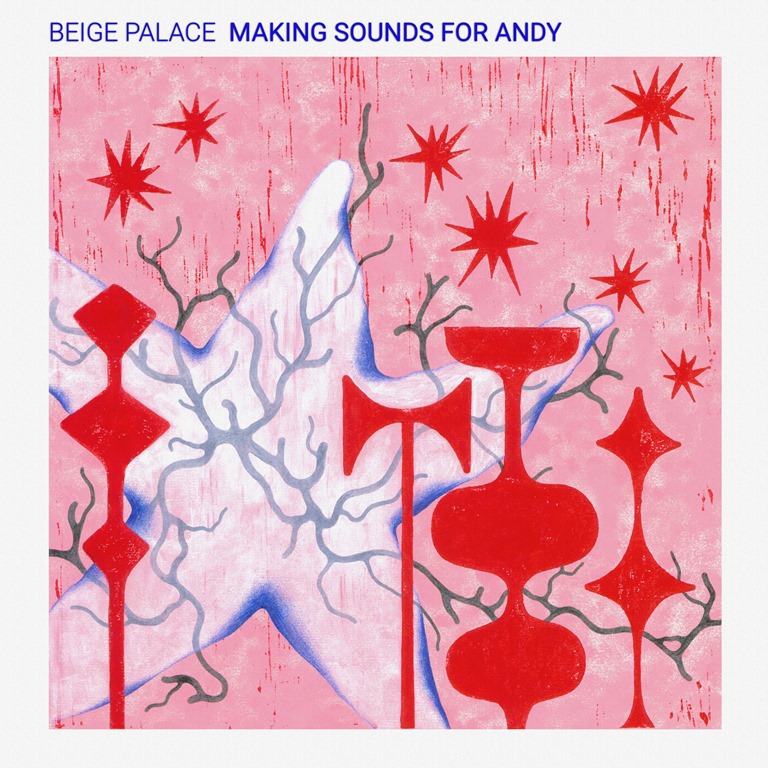
The album’s title appears to make a nod to XTC, and calls to mind the band’s hit ‘Making Plans for Nigel’ (surely one of the greatest snappy tunes of the New wave era) and the fact that Andy Partridge was co-frontman of XTC. Coincidence? Am I joining dots and identifying references which simply don’t exist? Possibly, but then again, for all the wrongness, the off-key and the off-kilter, there are some neat hooks to be found leaping out from the rumbling basslines and loping drums. ‘Local Sandwich’ is representative: the rhythm section strolls along kicking a loose groove where the bass and drums are seemingly playing alternate to one another, the discordant sprechgesang vocals of the verses overlap one another, making for a tense combination – and then out of nowhere, pow! Hook! And then a squalling climax.

The genius of the songwriting lies in its unpredictability: for as much as the compositions are largely built around repetitive motifs, hammering away at the same nagging loop for minutes at a time, adding and subtracting elements such as keyboard or guitar, they’re prone to veer off somewhere else or otherwise change tempo or burst into a scratchy blast of noise at precisely the moment you least expect – and just when you expect something unexpected, a song like ‘My Brother Bagagwaa’ doesn’t do it. They’re as keen to explore the space in between the notes as the notes themselves, and there are numerous passages on Making Sounds for Andy where they pull things back to stark minimalism. This makes the crackling bursts of distortion and clattering drums all the more impactful.

Leeds has a habit of birthing weird bands who are nosy but not noise, with the legendary Bilge Pump and the should-have-been-legendary Bearfoot Beware providing a brace of examples – but Beige Palace are very much their own band. Making Sounds for Andy is a bold celebration of ramshackle lo-fi, delivered in such a way as to hit hard. It’s got ‘underground classic’ all over it.

AA

HW025_BeigePalace_MakingSoundsForAndy_CoverArtwork

Human Worth / God Unknown – 28th June 2023

Christopher Nosnibor

The release date may be a long way off, but I wanted to get in early with a review and put word out before it’s sold out – not least of all because I’ve been following Beige Palace from the very start, catching their live debut at now defunct DIY rehearsal-space-cum-venue CHUNK in Leeds in 2016. And Christ, I miss that place. It wasn’t the most accessible of spaces, but still within walking distance of the train station, and they hosted some bloody great bands. And it was the place where …(something) ruined made its debut, meaning that on a personal level, it will always be remembered as a special place. Beige Palace impressed then (so much so they used a quote from my review on their website and in press releases), but there was no way of foreseeing that they’d go on to support both Mclusky and Shellac on their visits to Leeds in recent years, bringing their brand of minimal lo-fi indie to the main room at the legendary Brudenell. I’d like to claim I have an ear / eye for bands with unique qualities, and that my many long nights spent seeing unknown bands in tiny venues is not only indicative of a commitment to grass roots music and seeking out the next hot act, but something of a talent, but the truth is I simply enjoy these smaller shows.

The fact that Mclusky and Shellac chose to play the 450-capacity Brudenell suggests they are of the same mindset.

And so it is that the ever-brilliant and ever-dependable Human Worth have teamed up with Good Unknown for a split 7” featuring Beige Palace and Cassels – thus demonstrating the beauty of the split single, which more often tan not you tend to buy because you like one of the bands, and then discover another band in the process.

This split single is a corker.

The punningly-titled ‘Waterloo Sublet’ is a dingy, dungeon-crawling post-punk drone where a long intro of feedback and gut-quivering bass paves the way for a deranged up-and-down angular noise-rock workout that leaves you feeling punch-drink and dizzy. The dual vocals are more the voices of psychosis than a complimentary bounce back-and-forth, and the result is psychologically challenging. It’s not easy or accessible, but it is unhinged and big on impact. And once again, Beige Palace show that you don’t need extreme volume or big riffs or loads of distortion to make music that disturbs the comfortable flow in the best possible way.

Cassels also bring some spiky, jerky, jarring post-punk, and their crisp, cutty guitar work paired with half-sung narrative lyrics are reminiscent of Wire. And then, halfway through, the tempo quickens and it erupts into a guitar-driven frenzy and from out of nowhere, it goes flame-blastingly noisy. It pretty much articulates my own relationship with writing – and not writing, and channels a whole range of complex issues spanning the relationship between mental health and the creation of art. It’s a cracking tune, and one that says that for the unfamiliar, Cassels are a band worth exploring.

Split single – purpose fulfilled.

AA

cover

Venerate Industries – 4th November 2022

Christopher Nosnibor

Now this is a fine justification of why I don’t do end of year lists. This may or may not have made mi ne, because I simply haven’t had time to process or digest it, but it’s been out a month and a half and I’ve only just got my lugs around it, with only a week or so left of 2022 – and it’s one of those albums that slaps you around the skull and has that instant impact by virtue of its sheer force.

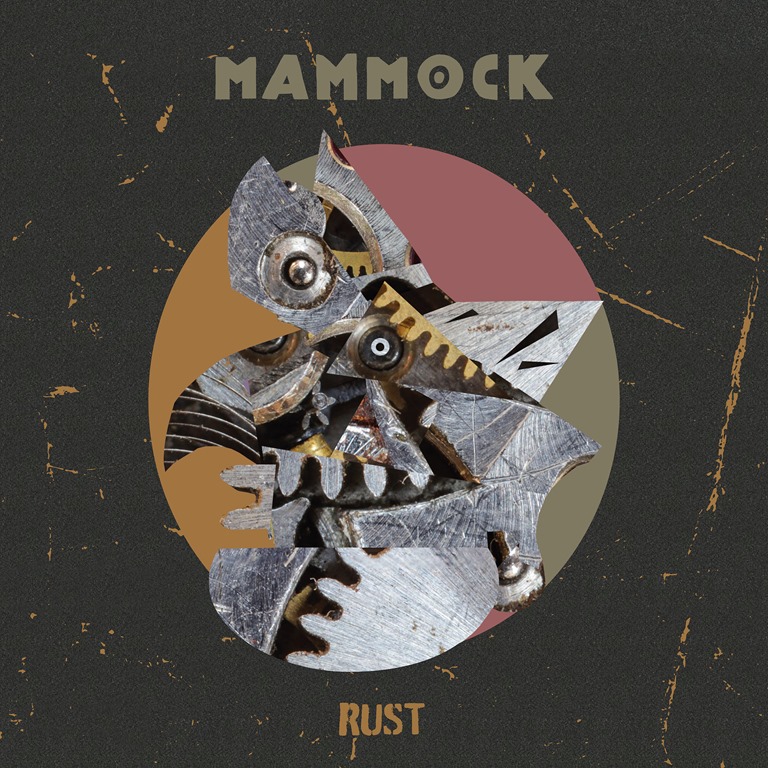
Their bio tells us that Athens-based ‘Mammock’s compositions stray from the typical rock forms, incorporating various elements from punk to jazz, post-hardcore and the nineties’ US noise rock scene. The quartet possesses the self-awareness and technical capabilities to carve their own sound and explore their character into finely tuned songs, which grab the listener from beginning to end.’

What it means is that they make a serious fucking racket and sound a lot like The Jesus Lizard, from the rib-rattling bass to the off-kilter, jarring guitars, and the crazed vocals. Some of the songs sound like they have some synths swirling around in the mix, but one suspects it’s just more guitar, run through a monster bank of effects. Overall, though, they seem to be more reliant on technique than trickery.

They formed in early 2018 by Giannis (guitar) and Klearhos (bass) with the addition of Vangelis (drums), they started out as an instrumental trio, before the addition of Andreas (vocals), and if it seems like a contradiction to remark that they feel like a coherent unit when cranking out so much jolting, angular discord, but that’s one of the key tricks or deceptions of music like this: it isn’t mere racket, and in fact requires real technical precision: those stuttering stops and starts, judders, jolts, changes of key and tempo require a great deal of skill, intuition, and of course, rehearsal.

They take many cues from Shelllac, too: the drums are way up in the mix – to the extent that they’re front and centre, something Shellac make a point of literally on stage, and replicate the sound on record, with the guitar providing more texture than tune, and the vocals half-buried beneath the cacophonic blur.

The last minute or so of ‘Dancing Song’ blasts away at a single chord that calls to mind Shellac’s ‘My Black Ass’ and ‘The Admiral’. The lumbering monster that is ‘Bats’ is a bit more metal, in the sludgy, stoner doom Melvins sense.

Stretching out to almost seven minutes, ‘Jasmine Skies’ blasts its way to the album’s mid-point, a wild, grunged-up metal beast with an extended atmospheric spoken-word mid-section which gives the lumbering black metal assault that emerges in the finale even greater impact.

If the semi-ambient ‘Interludio’ offers some brief respite, the ‘Boiling Frog’ brings choppy, driving grunge riffage and a real sense of agitation and anguish, and the album’s trajectory overall paves the way for an immense finish in the form of the seven-minute ‘Away from Them’ that roars away as it twists and turns at a hundred miles an hour.

Yes, Rust packs in a lot, and it packs it in tight and it packs it in hard.

AA

AA

259722

Human Worth – 4th February 2022

Christopher Nosnibor

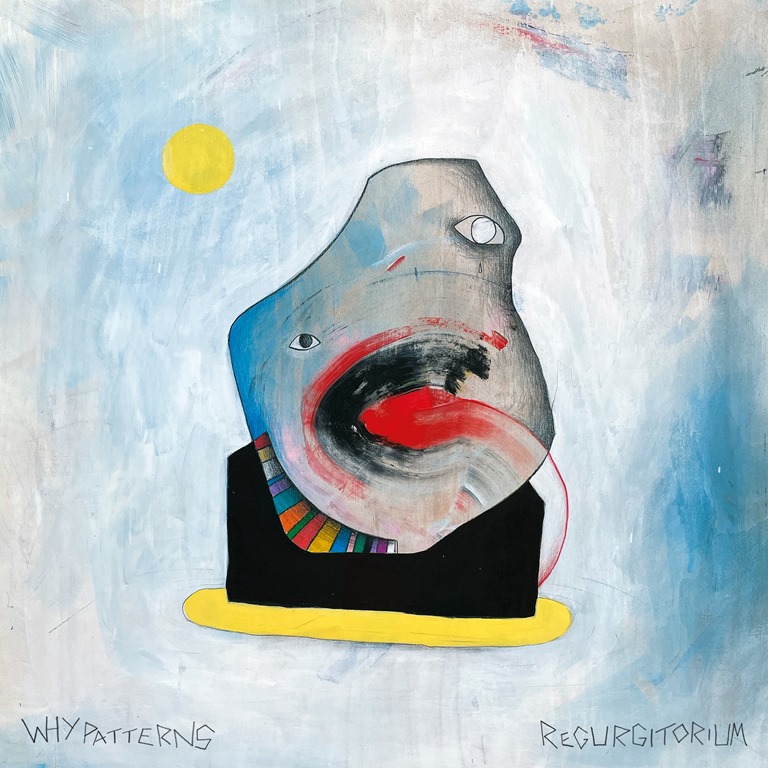
Pitched as being for fans of Primus, Lightning Bolt, Swans and Mudvayne, the accompanying text informs us that ‘Regurgitorium was haphazardly constructed with the sole goal of distressing and alienating their few remaining friends and family. Members of Warren Schoenbright, Wren and Deleted Narrative come together to deliver angular drums, discordant bass, and harrowing vocals accompanied by themes of existential paradoxes and day-to-day despair. The result being something best described as “Not Subtle”.’

If there was ever a strong and perfectly nihilistic reason to make music, that has to be it. It’s one of those hilarious band clichés that get wheeled out when they say they make music for themselves, and if anyone else likes it, then it’s a bonus. It’s almost impossible to not to be sceptical, because, well, fuck off. I mean, I believe Nirvana were sincere in not wanting international mega-stardom and that they wrote In Utero to get back to their roots and piss off casuals and their major label, but they still wrote songs to be heard by an audience – just a more select one. Of course, it depends on your ambitions as an artist, but I would say it’s better to have a small but devoted fanbase than one consisting of a larger but fleeting, fickle bunch of casuals whose interest will have cooled faster than their post-gig McDonald’s fries.

Regurgitation is not subtle, but it is high impact, and it’s a monster racket from the outset, with a clunging bass-rattling racket and squalling guitar mess of noise bursting forth with ‘Parapraxis’. It’s a minute and a half of total mayhem.

They hit optimal Big Black drilling grind on second track ‘Bachelor Machine’: the bass sounds like a chainsaw, while the guitar fires off tangential sprays of metallic feedback and harmonics, bringing together ‘Jordan, Minnesota’ and the intro to ‘Cables’. It’s a brutal squall of noise, and it goes beyond guitar: it’s sheering sparks off sheet metal that singe your skin as they fly, and it really makes a statement about both the band’s influences and intent. It’s messy, and it’s noisy. And it’s perfect.

Every track just gets nastier, more deranged. ‘Elective Affinities’ is all about wandering verses and choruses that sound like a seizure. Everything is overloading all the time: max distortion, max reverb, max treble, max crunch: the bass sounds like a saw, the guitar sounds like a drill, the drums sound like explosions: it’s intense, and it’s punishing, in the best possible way. It’s the sonic expression of a psychological spasm, and everything goes off all at once.

There’s no obvious sense of linearity or structure to the songs on Regurgitation. There’s a bass that sounds like a bulldozer grinding forward at the pulverising climax of ‘Bone Apple Teeth’. And then things go helium on ‘Wretched Makeshifts’: it’s like the Butthole Surfers gone avant-garde. And then there’s the stark spoken word of ‘Silentium’, which is tense, dark.

Listening to Regurgitation is like taking blows to the head in rapid succession. It’s not just the hits, but the dazing effect. Everything mists over, you don’t know where you are, and you’ve even less idea what the fuck this is. It’s bewildering, overwhelming. ‘Railways Spine’ is a nerve-shattering explosion of feedback-riven chaos and there is no coherent reaction. ‘Untismmung’ is the epitome of wordless anguish, this time articulated by means of experimental funk that yields to head-shredding noise. Noise, noise, noise: I keep typing it, and that’s because Regurgitation is relentless in its noise. It’s noisy. So many shades of noise. It’s fucked up. It’s deranged. It hurts. There is just so much noise, and no escape from it. Not that you should seek escape: bask in the brutality, the yawning bass grind and King Missile-like spoken-word segments that provide the brief passages between the blasts of noise, noise noise.

Closer ‘Vomitorium’ sounds like a collision between Shellac and Suicide, and the maniacal laughing at the fade sounds like the only sane reaction to all this madness.

AA

HUMANWORTH_WhyPatterns_CoverArtwork