Posts Tagged ‘Reinhold Friedl’

zeitkratzer productions – 21st November 2025

Christopher Nosnibor

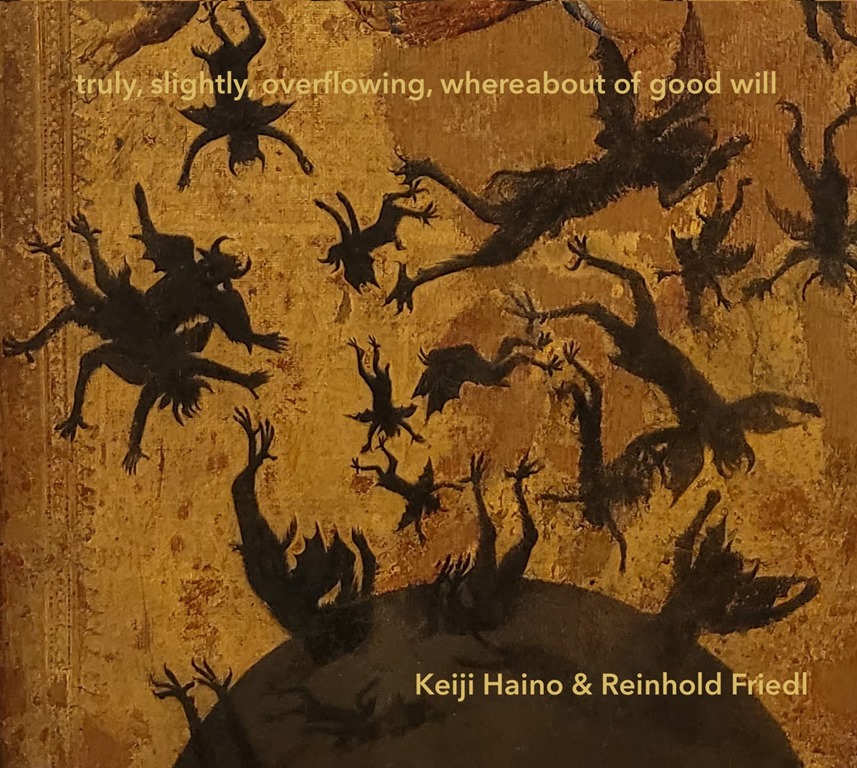
This is by no means the first time these legends of the experimental world have come together, and one would hope it won’t be the last either. Reinhold Friedl, leader of the Zeitkratzer collective and master of the prepared piano, as pioneered by John Cage, has built a staggering body of work through the years, taking into account Zeitkratzer releases, solo works, and almost countless collaborations. Of those many collaborations, this latest one is indeed strong and ambitious.

There’s something unsettling about the sound of laboured breathing and strangled whispers – and not just because they’re the domain of horror movies. Something in the human mindset makes us fearful of these sounds. Perhaps there’s the notion that a certain type of breathing is the sound of panic, and hearing it triggers a panic response. And so it is that against jangles and creaks and wispy, wraith-like drones and hovering hums, conjured by Friedl, Haino gasps and chokes and hums mystically through the thirteen-minute abstract journey that is the appropriately-titled ‘strange fruits’.

‘wild harvest’ eighteen minutes of exploratory dark ambience and abstraction. It starts quietly, a soft haze of static – and then very swiftly gets weird. Haino’s vocals rapidly transition from a plaintive mewling to satanic snarlings, while Friedl tinkles and scrapes like he’s tinkering away on an egg-slicer. But then there’s a slam of keys like psychotic demanding attention, and Haino violently switches between gasps and rasps like he’s being strangled by a poltergeist, chthonic grumbles, and tortured howls like he’s having his fingernails torn out while on the rack. The eerie metallic scrapes which set the teeth on edge are one thing, and Friedl masterfully builds a wall of discomfort, the sound of post-industrial collapse. It’s the sound of rust, of degeneration, rain-sodden sci-fi dystopia, and in itself it’s bleak, harrowing. But Haino’s contribution amplifies the discomfort, gargling and gurgling like nothing recognisable as human. It’s hard to place and hard to describe as anything but the sound of suffering. And we reel at such sounds: something biological, instinctive, primal, kicks from the inside and tells us this is not good. How we react is varied – some rush to aid, others cringe and curl – but ultimately, it’s something which affects us, it’s something we feel in a way which isn’t readily articulable. But however we react, the paint of others, it hurts us (and if it doesn’t, you’re clearly defective as a human being). As much to the point, however, is that this is challenging listening: discordant tinklings and guttural retchings are not pleasant or easy on the ear, and later, it trips into wailing psychosis and derangement. Again, we struggle when confronted with psychotic gibbering and incomprehensible raving, because we simply don’t understand, and many look upon those experiencing metal disturbance with distain, but this is, in truth – an often unspoken truth – born from a fear that they’re only a slide away from being there.

But regardless of and individual prejudices and fears, the fact remains that this is disturbing, weird, and does not correspond with out normal way of interacting with the world.

‘true, sightly fly’, the track which provides at least half of the album’s title, is a twenty-three-minute monster of a track. It’s on the CD and digital edition, and included as a digital download by way of a bonus with the vinyl edition, which feels like a shame, but then the cost of adding a second disc would likely be prohibitive both in terms of productions costs and sales. How times have changed from the late 80s and early 90s when vinyl was a budget option compared to a CD, when an album cost £7:50 against the cost of a CD being £11.99 or so. But it does feel like vinyl afficionados are being somewhat short-changed with only two of the three tracks, particularly given the fact that ‘true, sightly fly’ is arguably the belt of the set.

On ‘true, sightly fly’, Haino and Friedl plunge into the deepest, darkest, most unsettling depths, gasping, throat wrenching, slithering, churning noise unsettling the stomach writhing and churning, unsettled with beastly gasps rushing onto your nervous, trepidatious face.

This… is not fun and it’s certainly not entertainment. truly, slightly, overflowing, whereabout of good will is not fun: it’s uncomfortable, unsettling, and at times deranged, demented. Inarticulable is, sadly, a reasonable description; I am out of words, and this is weird – but good.

AA
a0384773058_10

Room40 – 9th August 2024

Christopher Nosnibor

Reinhold Friedl was one of the composers / musicians who provided an introduction to new musical forms to me when I started doing this ‘properly’ late in 2008. I’d done bits and bobs of reviewing in local and regional inkies in the mid- to late-nineties, but at that time, I was very much preoccupied with a fairly narrow spectrum, not that I realised at the time.

While I had got into the likes of Throbbing Gristle and Cabaret Voltaire at that point, it was while researching my PhD on William Burroughs’ cut-ups that I came to appreciate John Cage and the prepared piano, meaning that when I was introduced to the work of Reinhold Friedl, I was finally ready.

I certainly don’t want to perpetuate a sense of elitism around this kind of music or art; quite the opposite. I feel that comprehension grows from exposure, and that what’s needed is wider exposure to art which is considered niche. Anyone who has studied the avant-garde will have likely come to understand that much of what is mainstream has evolved from the avant-garde, the underground, before being repurposed, repackaged, commodified and marketed. This is the nature off the avant-garde; this is the nature of capitalism.

But like Burroughs, like Cage, Friedl has remained fringe, underground. The same is true of Gwennaëlle Roulleau, whose biographical details seem rather more obscure.

strata & spheres is a quintessentially experimental collaborative work, which brings together the elements of both contributors in equal measure, with squelchy, microtonal rivulets running through the channels which lay open between slow, ponderous chimes of almost piano notes. Surges and scrapes, like factory workings or excavations, rub against glitchery insectoid flickerings and harsh polar winds.

More often than not, albums such as this, even when released as a download, tend to feature compositions of a similar length, broadly corresponding with sides of vinyl, be it two or four. This seems to be something that many avant-gardists have ingrained in their creative psyche, a certain connection to physical formats – which is rather strange, when one considers the function of the avant-garde, and, simultaneously, the way in which physical formats are now inherently entwined with nostalgia. But strata & spheres is unevenly weighted, and conspicuously so, with ‘Papillon’ having a duration barely over five minutes after the ten-minute ‘Tectonique’, before the two ‘side two’ pieces each spanning a solid fifteen minutes.

In context, the discordant scrape, the buzzing discord, the rattle and crash of piano abuse and broken mic distortion of ‘Papillon’ feels like a mere interlude – albeit a chaotic, violent one. But then, the elongated drones and sighs of ‘Entre les vides’ and ‘Frottements’ are far from mellow; these are difficult, disjointed compositions, full of twangs and scrapes and sounds which simply set the teeth and lungs on edge, and you find yourself, on the edge of your seat, neck muscles tense. The former flits between doomy drones and hyperkinetic movements like liquid mercury rolling as if shaken around a maze.

Clattering, clanking, chiming, and slow liquid bubbling conclude the track before heavy drones and fracturing, snapping strings split apart the arrival of the woozy, droney, fragmented ‘Frottements’. Twangs and scratches pass through low hums and hovering feedback, creating a haunting, atmospheric effect.

While violence and chaos breaks out around the country, strata & spheres may be far from an exercise on calmness and blissful relaxation, but it is immersive and a work which offers a certain escape from reality and the every day. The fact that it’s sonically quite weird at times is welcome.

AA

a3688775077_10

Karlrecords – 21st January 2024

Christopher Nosnibor

Reinhold Friedl’s career has been long and interesting, and continues to be so. The list of collaborations on his resumé is beyond outstanding, and he has taken the concept of the prepared piano, as first conceived by John Cage, to limits beyond imagination. As such, while the idea may not have been his own, Friedl’s advancement over the last twenty years has been the definition of innovation. But what makes Friedl such a remarkable figure is his capacity to explore so many different and divergent avenues, and to turn his hand to so many different projects – and this latest, with Martin Siewert is exemplary. Siewert’s instrument is the guitar, but his style of playing is far from conventional, tending to conjure atmosphere from feedback and sustain and otherwise working the space between the notes instead of blasting chords. As such, this is an inspired pairing.

Lichtung blasts in with a thick, heavy, grindy drone that almost borders on Sunn O)) territory: the twenty-four-minute first track, ‘Genese’ is a journey, which begins with an all-out assault of thick, gut-twisting drone and shards of shrieking feedback which twist into a maelstrom of chaos before receding to reveal altogether more tranquil shores. From this, it builds, a droning, churning wash, buzzing drones and dramatic crashes. And from the rising tempest, lone piano notes rise… These particular notes are identifiable as a regular piano, rather than a ‘prepared’ one – but that’s the nature of the tweaked instrument: random items on the strings create random sounds. It’s a curious array of sounds, and over the course of the track, the sound rises and falls, ebbs and flows, but the water is always choppy, the storm building and rumbling before it rages its full force. ‘Genese’ feels like it could be an album in its own right, but there’s a whole lot more to come.

‘Gedstade’ is a mere interlude at five minutes in duration: with plinking, plonking random twangs and scrapes and woozy drones, not to mention extraneous noise and crashes and more, it’s strong on atmosphere and oddness.

Often when interacting with music, or when critiquing music – and these are two different, if quite proximate experiences – I will ask myself, or otherwise consider, ‘how does this make me feel?’ Because ultimately, music, like any art, is about the experience of the recipient, and that experience defines its success and / or impact. To expand on that, and to clarify, many may dislike and so decry a great work of art on account of their singular experience, because it’s difficult to rationalise or otherwise quantify said work. As a critic, to baldly declare ‘they’re wrong’ would be a mistaken and to devalue the experience of others. But if others share a very different experience… then that is their experience.

And so we arrive at ‘Gestitche’, the album’s third and final track, a fifteen minute exploratory work which begins with crashes of low-end piano which sound like thunder and shake the ground beneath this exploratory composition. It’s heavy, doomy, dolorous. The scratchy, discordant guitar work only accentuated the album’s immensely broad sonic range. Squalling squealing guitar ruckus and feedback riot tears its way through the tempest of noise and plunging piano and sputtering sparks of wires. As the track progresses, things evolve and escalate, the thunder builds to a tempest, and at times you feel thoroughly assailed.

To my ears, then, Lichtungis a compelling experience. Lichtung is unquestionably niche, like all of Friedl’s but that in no way diminishes its value. And the joy of Friedl’s work is its variety, and the way in which he interacts with his collaborators. To this end, this album is a work which brings joy.

AA

a1344738009_10

zeitkratzer productions / Karlrecords – 22nd September 2023

Christopher Nosnibor

SCARLATTI represents something of a departure for zeitkratzer, the neoclassical collective headed by Reinhold Friedl, master of the prepared piano and a renowned avant-garde composer in his own right. While their performance and recordings usually focus on modern composers and avant-gardists spanning Stockhausen and John Cage via Whitehouse and Lou Reed, with a reinterpretation of Metal Machine Music, here they turn their attention to the altogether more historical figure of Domenico Scarlatti (1685-1757). He is best known – although this is relative – for composing some five hundred and fifty-five keyboard sonatas, and his being a progenitor of classical music. But a large portion of his work went unpublished in huis lifetime, and much has only been available sporadically since.

As the notes which accompany the album explain, ‘Little is known about Domenico Scarlatti… His music is, so to speak, left to its own devices: free, cheeky, playful, sonorous, surprising… Harmonically strolling again and again into unforeseen regions, the ear leads, not the theory; and also the fingers get their right: playful and haptic it goes. Scarlatti explained, “since nature has given me ten fingers and my instrument provides employment for all, I see no reason why I should not use all ten of them.”

But Scarlatti does not contain music by Scarlatti. Instead, the six tracks presented here are all composed by Friedl in response to Scarlatti’s work.

As such, this is much a celebration of Scarlatti’s ideas and approach to composition and so the explanation of the process and thinking behind it bears quoting: ‘Freedom, friction and listening pleasure instead of convention: “He knew quite well that he had disregarded all the rules of composition in his piano pieces, but asked whether his deviation from the rules offended the ear? He believes there is almost no other rule than that of not offending the only sense whose object is music – the ear.”

‘Reinhold Friedl applied this principle and composed the music for a choreography by dance company Rubato. Dance music drawn from Scarlatti, who was so inspired by dance music. The material of the piano sonata F-minor K.466 is twisted anew in all its richness, shifted back and forth, declined, frozen, noisified, sound structures extracted, floating. Those who know the sonata, will more than smell it’s [sic] shadows.’

The six pieces are indeed varied, in terms of mood and form. ‘lias’ is booming, droning, woozy, slow discordant jazz, low, slow, and with lengthy pauses. It’s not something anyone can dance to, and rather than light and playful, it feels dark and sombre. This is less true of the altogether sparser, but stealthily atmospheric ‘muget’.

‘pissenlit’ blasts in with churning industrial noise, a snarling blast that lurches and thunders, crashes and pounds withy relentless brutality. It’s clearly as far removed from the music of the seventeenth century as is conceivable, but beside the lilting piano and quivering, droning strings and subsequent stop-start levity of ‘reine des prés’ the sequencing of the pieces serves to highlight Scarlatti’s versatility, if not necessarily his predilection for playfulness. The playfulness manifests differently and unexpectedly here: ‘pissenlit’ is in fact the French word for ‘dandelion’, a plant often associated with a certain element of fun, of lightness, so the fact that this piece is three and a half minutes of gut-punching abrasive noise worthy of Prurient or Consumer Electronics is illustrative of the disparity between expectation and actuality.

Discord and discomfort abounds as drones and strings tangle amongst one another, heaving and wheezing and occasionally offering glorious, sun-hued vistas through the breaks in the widely varied forms, which feel elastic, and as if Friedl and co are stretching the fabric of the material to see just how much it will give. And it turns out, there is a fair bit of room. ‘reine des prés’ explores space, the gaps and pauses between the notes, and feels like a sort of musical cat-and-mouse which would equally work as soundtrack piece, but it has a cartoonish quality which means it’s more Tom and Jerry than anything else. But it is by no means flippant, throwaway. Entertainment is serious business, after all.

‘violette des marais’ brings pomp and drama… while the final track, ‘astis’, is skittish, playful but also frustrating in its hesitant, halting structure.

Scarlatti is interesting, entertaining, and bold, going out on a limb to present such an unconventional interpretation of a historical artist’s career. But this is largely the purpose of zeitkratzer: together, they re-present music, excavating the archives but presenting them through a prism of contemporary and avant-gardism, with jazz leanings but without being jazz in the way most would interpret it. In short, zeitkratzer continue to push and redefine musical boundaries, and long may they do so.

AA

a1585066167_10

keitkratzer productions (zkr0020) (CD) / Karlrecords (KR027) (Vinyl) – 26th February 2016

Christopher Nosnibor

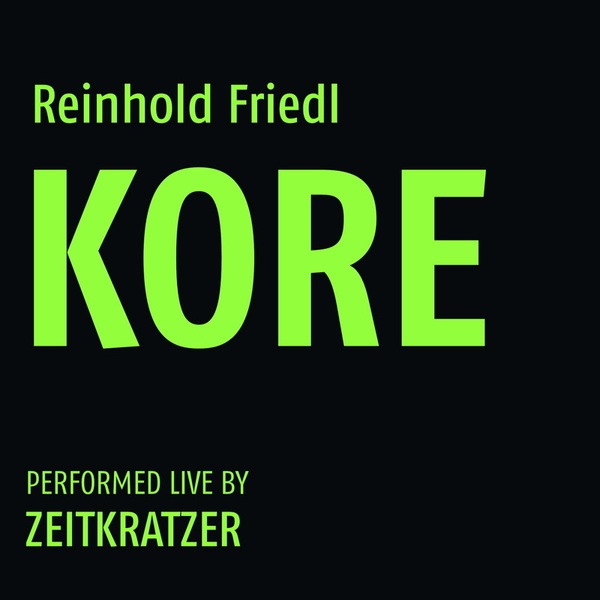
Reinhold Friedl’s keeping it in-house with this one, with the Zeitkratzer collective which he helms performing a reworking of one of his own pieces. Kore is a development of his earlier Xanakis [a]live! (2007), which was an homage to French-Greek composer Iannis Xanakis. Originality may be dead, but artistic evolution is not, and here we see Friedel engage fully with the organic processes of influence and appropriation, and the idea that a work is never complete but continually subject to re-evaluation, reinterpretation, reconfiguration.

Pained screeching of tortured strings, form long, agonized screams and wails. On the lower register, cavernous rumblings and ominous echoes. It quakes and trembles and teeters and bucks, crashing and lashing, a sustained and calamitous wall of sound akin to how one may reasonably imagine a galactic storm. And it goes on for what feels like an eternity, light years of shuddering textural depth stretching out and fully enveloping the senses.

While the CD track-listing shows ‘Kore’ as being presented in just two parts, its mastering in fact replicates the vinyl edition’s four sides, with each piece between 11 and 16 minutes in length. As a single entity, it crashes and grates, squalls and shrieks, grunts and groans. And it never lets up, a sustained crescendo of sonic and psychic disturbance, a tempest of clashing noise, a raging storm.

The segmented arrangement works well: for while ‘Kore’ is clearly a single body of work, there are distinguishable differences between the four tracks. The second is comparatively quieter and less intense than the first, but the tones still forge sharp shards which slice into the cerebellum. Trilling and tweeting shrilly in the upper reaches of the spectrum, dark scrapes create perilous undercurrents which build in density.

Vast crashes of sound, immense gongs of violence slice the atmosphere in the third, more percussively-orientated part. It shudders and heaves, before finally screaming onwards through the tumultuous final 11 minutes. A blasting wall of noise which assails the listener with all sounds all at once, it’s an immense sound and an immense sensation that sounds like no orchestral work you’re likely to have heard before, and, quite conceivably, nothing else you may have experienced, period.

Zeitkratzer - Kore

zeitkratzer Online

clang records – clang031 – 6th November 2015

Christopher Nosnibor

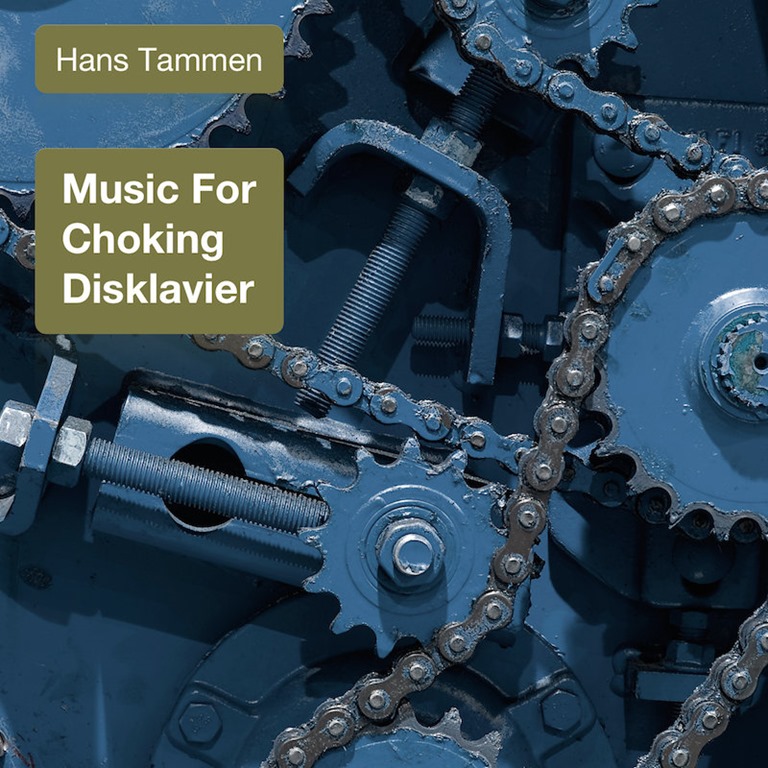
This isn’t how the instrument was designed to work. Just as John Cage made the piano sing in ways it really oughtn’t by the addition of various foreign objects, so Hans Tammen has made the Disklavier his choice of instrument for desecration.

The Disklavier, for those who don’t know (and I’ve had to research this) is an electronic piano produced by Yamaha, which first came on the market in 1987. The way it works is key to Tammen’s project, and I’m going to quote from that fount of all information, Wikipedia, here, and accept any harangues over ‘lazy journalism’ because surely some research is better than none: ‘The typical Disklavier is a real acoustic piano outfitted with electronic sensors for recording and electromechanical solenoids for playback. Sensors record the movements of the keys, hammers, and pedals during a performance, and the system saves the performance data as a Standard MIDI File (SMF). On playback, the solenoids move the keys and pedals and thus reproduce the original performance.’

Tammen’s project is concerned with the ‘hidden sonic qualities’ of the machine. Tammen explains his methodology thus: ‘technically the Disklavier is fed too much information, and at the lowest possible volume. At this point the hammers do not have enough power to bang the strings anymore, and ideally they only vibrate to produce low a rumbling sound. Occasionally the MIDI brain stops for a few seconds – “chokes” – on a chord due to the data overload, hence the title Choking Disklavier’.

Calling to mind Reinhold Friedl’s 2011 ‘Inside Piano’, a colossal exploration of the prepared piano, Music for Choking Disklavier finds Hans Tammen make his instrument sing in unexpected ways, and with intriguing and often very interesting results. And it’s not all unlistenable, experimental noise, either. There are clear and definite tunes present here, albeit played in the most skewed of fashions.

A clumping rhythmic trudge provides the basis of ‘Ascending and Descending Chairs’; over what sounds like slow marching feet, delicate single piano notes rise crystalline into the rarefied air, The levels of dissonance and discord grow as the notes begin to emerge stunted, jarring. ‘Looking Down Sacramento Street’ resembles the whupping hum of a helicopter’s rotas; and so many of the sounds which occupy the album are rhythmic, mechanical, and owe little resemblance to a piano, electreic or otherwise.

The compositions make full use of the Disklavier’s diverse capabilities, especially when messed with. Swing goes south and ragtime goes out of time with fuzz and crackle, the sound of drunken piano being played with wild abandon in heavy rain, and thumping the low notes with a dogged persistence: these are the sounds that tinkle and topple precariously from the speakers at the hand of Hans Tammen. It’s an innovative work, which finds Tammen exploring ways of making new sounds by previously unexplored means and confirms, pleasingly, that originality isn’t entirely dead yet.


Tammen

http://tammen.org/