Posts Tagged ‘Post Rock’

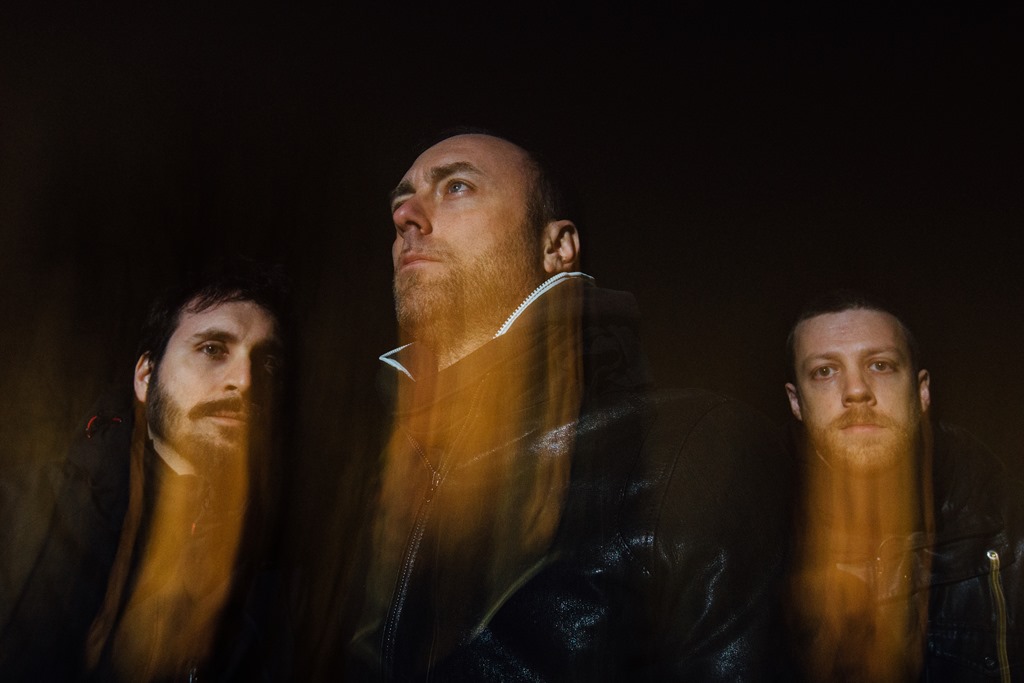
Emerging from the ashes of several pop bands, BRUIT ≤ was born out of the desire of its members to turn their backs on the majors and return to a process of creation without constraints.

Initially the band’s intention was not to perform live but to research and experiment with sound in a studio environment.

At the end of 2016, this research resulted in two live videos filmed in their studio that would enable the band to make its debut on the Toulouse scene. After this experience, Clément Libes (bass, violin), Damien Gouzou (drums) and Théophile Antolinos (guitar) composed together in search of their own sound identity and with the aim to create progressive music that subverts genre and would result in the expansion of stylistic boundaries. Consequently, during this time the band went through several line-up changes until Luc Blanchot (cello) joined in January 2018.

It was only then that BRUIT ≤ truly felt complete and sure of their direction, creating emotively intense and expansive instrumental compositions of a conceptual nature that merge post-rock, ambient electronica and modern classical.

On 19 July, 2018, BRUIT ≤ signed to Elusive Sound who released their first EP titled “Monolith” in the fall of 2018. Afterwards Bruit went on a 20-show tour of France and Belgium sharing the stage with bands like Shy Low, Slift, The Black Heart Rebellion, Silent Whale Becomes A Dream, Jean Jean, Endless Dive, Poly Math, Orbel or A Burial At Sea. The band was invited to play at the Dunk Festival in 2020 but the event was cancelled due to the Covid19 pandemic.

BRUIT ≤ focused on the composition and production of their first full- length album, changing their line-up again with Julien Aouf taking over on drums. ‘The machine is burning and now everyone knows it could happen again’, will be released digitally on the 2nd of April 2021. In the spring the album will be released on vinyl by Elusive Sound.

New single ‘Renaissance’ is the 1st track to be shared from the band’s debut with them commenting,

”The piece evokes a humanity reborn from its ashes and rebuilding itself from nature. On this track Mehdi Thiriot has created a video clip, woven with symbols that illustrate the everlasting conflict between nature and culture.’

Watch the video here:

AA

bNfXdDuQ

Cruel Nature Records – 5th March 2021

Christopher Nosnibor

Aiden Baker’s releases have become a regular feature here at Aural Aggravation. His prodigious output, not only as a solo artist, but through innumerable collaborations, often released through Gizeh Records, have given us no shortage of material to contemplate and ruminate over. It’s often hard to keep up with his output,

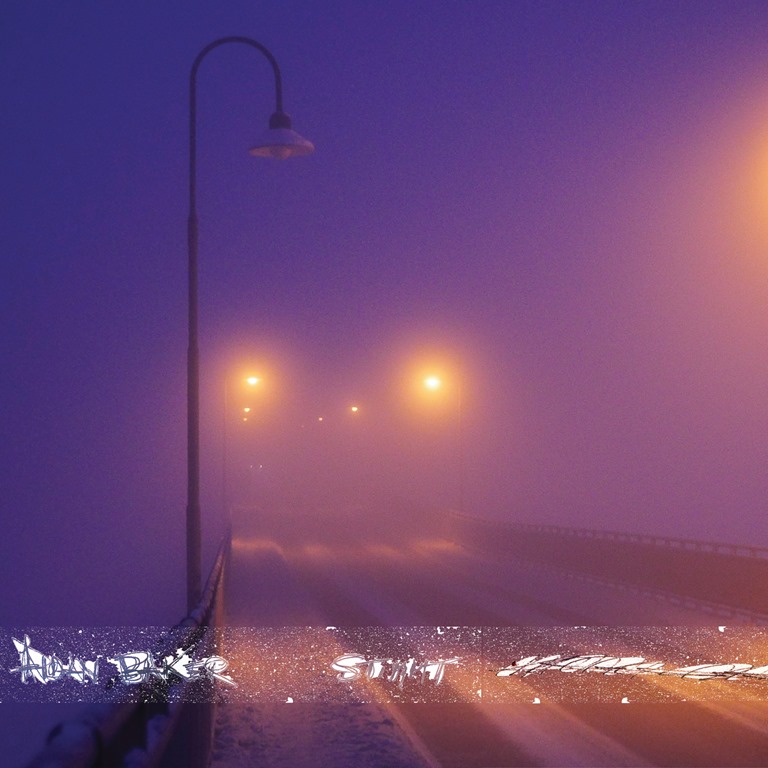
Stimmt was first released digitally back in 2015 on Broken Spine Productions, and has been was remixed and remastered for its first physical format outing via Cruel Nature in a limited edition of 60 cassettes (as well as digitally again).

Baker is to guitar what John Cage and Reinhold Friedl were / are to piano, with the ‘prepared’ guitar being a prominent feature of his musical arsenal, along with an array of other ‘alternative’ methods of playing, across a genre span that incorporates elements of rock, electronic, classical, and jazz, within his broadly ambient / experimental works

Stimmt sits at the more overtly ‘rock’ end of Baker’s stylistic spectrum, launching with the heavy riffology of ‘Dance of the Entartet’ that’s got a prog vibe but comes on with a heavily repetitious throb that owes more to Swans than Pink Floyd or Yes. The percussion crashes away hard but it’s almost buried in the overloading guitar assault that’s cranked up to the max and is straining to feed back constantly throughout, before it wanders off into ‘Atemlos’, where it’s the strolling bass that dominates as the guitars retreat to the background and sampled dialogue echoes through the slightly jazz-flavoured ripples. It’s here that things begin to feel less linear, more meandering, and the chiming post-rock sections feel less like an integral part of a journey and more like detours – pleasant, appropriate detours, but detours nevertheless – and it culminates in a climactic violin-soaked crescendo.

Veering between hazy shoegazey ambience that borders on abstraction, and mellifluous post-rock drifts, Stimmt is varied, and, oftentimes, rich in atmosphere. ‘Mir’ is very much a soporific slow-turner that casts a nod to Slowdive, but with everything slowed and sedated, wafting to an inconclusive finish.

The lumbering ‘Staerken’ stands out as another heavy-duty riffcentric behemoth: it’s low, it’s heavy, and finds Baker exploring the range of distortion effects on his pedal board, stepping from doom sludge to bolstering shred and back, and there’s a deep, crunchy bass that grinds away hard, boring at the bowels and hangs, resonating at the end.

After the full-on overloading ballast of ‘Quer’ that really does go all out on the abrasion, with squalling guitar paired with a nagging bass loop that’s reminiscent of The God Machine (the track as a while, calls to mind ‘Ego’ from their debut Songs From the Second Story), closer ‘Resolut’ is eight minutes of semi-ambient prog.

It’s a lot to digest, and it’s certainly not an easy pigeonhole, but it’s an intriguing album that stands out as being quite different both musically, and in the context of Baker’s output. Unusual but good, and offering much to explore.

AA

cover

Panurus Productions – 5th March 2021

Christopher Nosnibor

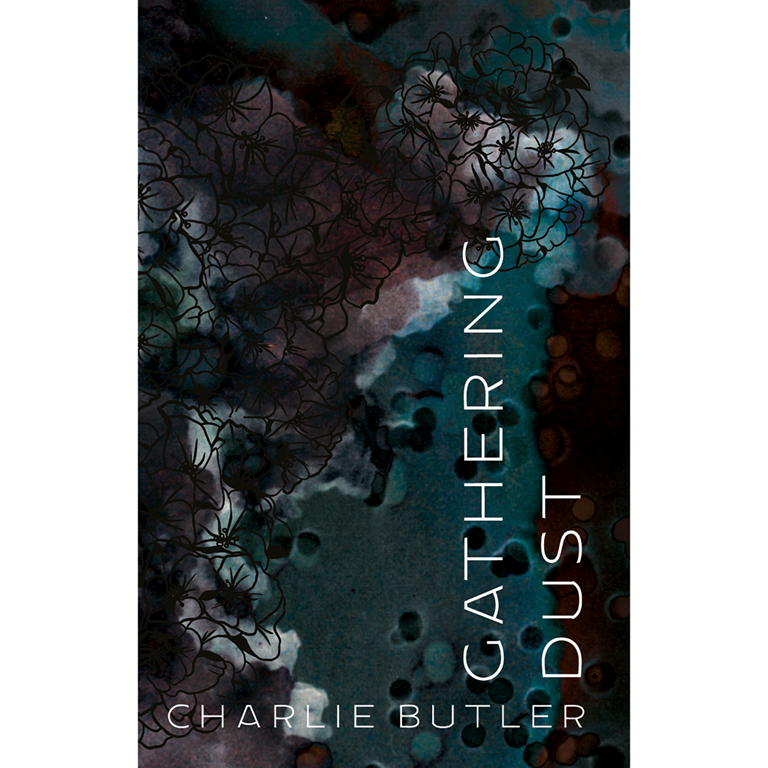
Charlie Butler’s Gathering Dust is something of a departure for Newcastle tape label, PANURUS Productions, in that it’s incredibly mellow. It’s not a complete departure, through: designed as a cassette release, it features two longform tracks, each fitting neatly onto one side of a good old C30 (the likes of which I used to get from Maplins back in the early 90s) – or, in an ideal world, perhaps one side of a 12” or 10” vinyl release. But we know that for a niche label like this, the cost of a vinyl run is prohibitive, and while their print runs are extremely limited, they do sell out – which is the perfect operating model: knowing the scale of their audience and sales reach, and catering to demand without massively overreaching, means costs are covered, and everyone wins. There’s a stream and digital download for anyone who wants it, after all. Everyone’s a winner.

The album title is in fact an amalgamation of the individual titles of the two tracks, and separated, the context shifts a little. Gathering dust connotes a lack of movement, a stasis, something that’s essentially furniture, something neglected, unused. This places the power of word association in sharp relief: together, the words suggest something very different in contrast to when they’re independent of one another.

And so ‘gathering’ brings connotations of collecting, bringing together, of hunter—gathering. And from the dense, swirling drone of a trilling keyboard on the fifteen-and-a-half-minute track that is ‘Gathering’ emerges a slow-picked guitar. The drone und strang approach, whereby echo and tube crunch coalesce to envelop the guitar in a soft sonic bubble is highly reminiscent of latter-day Earth and Dylan Carlson’s solo releases. It doesn’t ‘do’ much, and doesn’t need to: ‘Gathering’ is a long, slow, and expansive work that explores atmosphere.

‘Dust’ is a deep, sense drone that billows and booms, and is indeed reminiscent of the heavy drone of Sunn O))). Its effects are soporific, and for a time my notes are sparse as I drift and move beyond the immediate environs of my workspace to immerse myself in this thick fog of a composition as it slowly unfurls with its post-rock leanings and immersive atmosphere. There’s a tonal warmth that surrounds this, and it borders on ambience at times, and dust washes and drifts like particles descending. And over time, it builds… and builds, swirling into a dense, billowing sonic cloud. The final minutes are reminiscent of the eternal drone of Earth 2 – and being one of my all-time favourites, that’s very much a compliment and an indication of just how textured and enthralling Charlie Butler’s brand of drone is.

Gathering Dust is remarkably dense, but it’s not heavy per se. It’s one of those releases you can simply surrender to, and lose yourself in the enormity of the sound.

AA

cover

When an album contains just three tracks, you know before you even hear a note that it’s going to be possessed of epic qualities. Similarly, when a band’s pitch includes ‘RIYL bands like Swans, MONO, lots of layered drums and percussion, ambient soundscapes, and wall of sound guitar and big strings’, (and I think it’s pretty much public knowledge by now that I do), then the same applies, and so needless to say I was all over this in an instant.

The first track, ‘The Gift’, is a twenty-minute behemoth, a sweeping exploration that builds from tense strings of the kind that would likely be at home on a Netflix period drama into something altogether more awe-inspiring, as the drums rumble like distant thunder at a gathering pace and intensity. Over its immense span, it leads the listener on a journey through an array of soundscapes, and there’s not only considerable atmosphere being conjured here, but the music also has a very visual aspect. You feel as if you’re being transported through different scenes, and at times, are creeping cautiously and peering around corners, while at others, staring out from a high plateau overlooking immense vistas that stretch further than the eye can see.

This is very much latterday Swans providing the inspiration here, with the expansive instrumental passages and near-ambient stretches that came to define releases from The Seer to The Glowing Man via To Be Kind, each of which stretched over a full two hours apiece. However, solarminds’ compositional approach and overall sound is quite different, leaning very much toward more conventional post-rock tropes (but without the contrivances of, say, Sigur Rós) and while there are some immense percussion-driven crescendos, with the strong-centric instrumentation, they don’t hit the explosive peaks of, say, Explosions in the Sky or Her Name is Calla. None of these are bad things, and while the sheer scale of their music does definitely sit within the domain occupied by MONO.

‘The Visit’ begins with an amorphous mass of dank, dark ambience, and is thirteen minutes of elongated, undulating drones that twist, turn, scrape and screed against a tumultuous barrage of percussion.

Closer ‘The Lie’ marks a significant departure, as the sound of heavy rain and extraneous noise gives way to a near -acappela vocal, an acoustic guitar, muffled and distant, providing the sparsest of accompaniment. It’s here they’re most reminiscent of Her Name is Calla at their most minimal, stripped-back, and folky, and it’s a delicate, tender experience that grows in emotional intensity and pulls at the gut with its starkness, its rawness.

Dissolving in a rumble of thunder, it’s a fitting conclusion to an album that, beneath some smooth surfaces, presents some quite troubled currents in the depths.

AA

sddefault

Lo Bit Landscapes – 3rd December 2020

Christopher Nosnibor

A New Kind of Weather was composed in New York City in the first months of the pandemic, against a backdrop of global panic, and with refrigerated trucks were parked at the hospital a few blocks away from the band’s residence while the city racked up in the region of 1,000 deaths in just a few weeks in March and April. Around the same time, the brother of Nihiti’s primary songwriter committed suicide. This is the bleak space in which the band found themselves – one which, to varying extents – we can all relate to.

Here, at the end of December after an interminable year, the spring of 2020 feels like another lifetime. If anyone thinks we’ve adjusted to some ‘new normal’, they’re simply thinking wishfully. Yes, we may have been ground down into trudging through the day-to-day, existing, but the separation and isolation, the ongoing restrictions and mask-wearing has a cumulative effect. Unlike the curve, our moods may have flattened out and we may well have all but erased the spasm that was late March and early April as lockdowns began to be enforced around the globe, and what had seemed like a distant issue in distant countries suddenly became the reality on our doorstep.

The title tracks sets the tone, but also represents an early album peak as a dark, blank monotone reminiscent of Michael Gira, croons against a woozy, eerie bassline – again reminiscent of Swans: ‘There are words on Christmas day, just living right in your eyes / Asking you if you will fall to the ambulance’s siren songs’. Painting a scene of tension and claustrophobia, it grows in darkness and density with rolling tom-based percussion and layered guitars. If a track ever captured the creeping paranoia that swept so much of the western world via the news media and social media in those first few months, this is it.

Slow-oscillating synths spin slow ambient mists at the start of the twelve-minute epic that is ‘Shudder into Silence’, robotix vocal snippets cutting through the cascading crystalline digital droplets that fall like dew. A heavy throb pulses low in the mix, but rises and falls again in an ever-evolving transition of sound layers. Turning, soft, smog-like, a slow-wailing siren rings out a lonely cry. The tension is palpable.

The more conventional post-rock instrumentation of ‘Into the Sands’, with it’s metronomic drums and chiming guitars marks a significant shift – if it’s gentle and vaguely shoegazey / psychedelic it’s spun through shades of Jesu, and a maudlin, almost sepulchral feel casts a long shadow over its gothic melancholy.

The percussion-free interpretation of Roy Orbison’s ‘I Drove All Night’ is different again, and perhaps the least comfortable fit on the album – if comfortable is a word that’s appropriate for describing any of the heavy atmosphere of A New Kind of Weather. Following on, ‘The Practice of Injury’ builds heavy swirls of ambience that washes and eddies in abject desolation.

Despite only containing five tracks, A New Kind of Weather clocks in at around forty-five minutes, and fill this space with a remarkably broad range of styles, while making every moment count in terms of maintaining the darkly oppressive atmosphere throughout.

AA

LBL012_front

Lamour Records / Purlieu Recordings

Christopher Nosnibor

Spending most evenings immersing myself in an array of weird and wonderful and sometimes not so wonderful noise, this album came as a real surprise. The accompanying text does little to prepare the listener for such a gentle and exquisite collection of cinematic neoclassical compositions.

And yet the liner notes are precisely why Transformation is surprising, because all is not as it seems, explaining that ‘The album Transformation challenges the boundaries of human and machine, the physical and the artificial, the feasible and the impossible. The result is a thoughtful and true emotional storm where the piano forms the basis for an opposite pole between sound and playing technique. When the sound is real, it is played with inhuman technology. When played by hand, the sound moves outside the spectrum of the physical piano. What role does "lying" play for the listener?’ And what exactly are we listening to here?

It’s impossible to distinguish organs and organic sounds from synthesised or sampled approximations, and while the human / inhuman / orchestral /electronic sounds are impossible to distinguish – is that piano, performed by a musician with a real passion and a deep sense of drama, creating rippling waves of notes, or is it all so much programming? Listening to ‘Skeppsrå’, it sounds real. It feels real. I want it to be real. Can I therefore simply not believe that it’s real and accept it?

It’s not quite as straightforward as that. Once you’re aware of something, it’s impossible to erase that awareness. You want to feel as though you’re tapping into something real, otherwise it’s just muzak, film music made to fill a space and manipulate an emotional response to what may otherwise be a blandly-shot scene.

‘Tradition’ sounds like the product of synthesised sounds, while the brooding sonorous atmospherics of ‘Mekanik’ are simply other-worldly, while ‘Skogsrå’ is another magnificently supple slice of post-rock flavoured ambience that swirls and soars towards the stratosphere.

There’s no questioning that the elegiac solo piano piece, ‘Artikulation’ a beautifully poised piece, understated yet rich and immersive, and likewise ‘Klinga’ which follows. But are those ‘wrong’ notes simply artifice? Are they programmed in to create ‘imperfections’ in order to create a sense of humanity and therefore a greater ‘trust’ in the machine? Or is this an example of an openness about human error? I’m not convinced: why would any musician play to highlight their flaws? But this is the challenge and the dilemma: what and who do you trust?

Trust nothing and trust no-one: but do trust me when I say that Transformation is a fascinating and most listenable work.

AA

a2896102920_10

Pelagic Records – 20th November 2020

Christopher Nosnibor

The Swedish quartet’s fifth album finds them freely drawing on myriad genre references to conjure a cocktail that extends far beyond even the broadest perimeters of post-rock to render this a truly hybrid work. The scale of the ambition is immense, and for a band who rarely spent time together and only rehearse ahead of tours or to write and record albums, the way they’ve drawn everything together so organically is remarkable.

The title is quite fitting as they swing back and forth across the forms and styles, with a brooding electroambient introduction in the form of the title track which builds by stealth over the course of seven and a half minutes to a grand-scale swell of cinematic hypnotism with rolling drums driving a cyclical synth motif.

‘E22’ brings the guitars to the fore and is more overtly conventionally post-rock, but it’s got a certain progressive edge, not to mention some weight, breaking into some hefty bass-dominated riffage around the five-minute mark. There’s a pace-rock / psyche twist to ‘Mindtrip’, by far the album’s most accessible and buoyant tune, and it contrasts with the altogether more tense ‘Shelter’, which emanates a simmering tension. The absence of vocals actually accentuates the mood and renders it all the more relatable, as the listener pours the emotional contents of their own experience into the empty vessel the band present.

This, for me – and doubtless for many, having attended countless instrumental post-rock shows in the decade spanning 2002-2012 – is the draw of the genre, at least when well-executed: post-rock presents sonic expanses without authorial steer, without any insistence on specific meaning, leaving the listener to fill in the spaces. And with vast, expansive spaces in which to wander, into which to pour one’s thoughts and experiences, this is music that opens its arms to a world of freedom.

They don’t do short songs: Oscillate only contains eight tracks, but only two of those clock in under six minutes, and the final pairing of ‘Eraser’ and ‘The Headless Man’, both of which extend well past the eight-minute measure. The first of these is a dynamic rush of a tune, with propellant drumming and a solid bass throb, while the second is a redemptive sunburst of a tune, the light of dawn breaking over the horizon.

Oscillate is a strong set, and the album will indubitably appeal to fans of MONO, Explosions in the Sky, and Godspeed You! Black Emperor, but in context, comparisons are reductive: this is an album that stretches far wider than its influences and is truly impressive in its breadth and scale.

AA

a2086206515_10

17th August 2020 – Submarine Broadcasting Co

Christopher Nosnibor

According to the blurbage (I can’t claim to spend all that much time on research when my primary objective is to report a critical and sometimes emotional response to a release, and band and PR invest a lot of time in their explications, so why not?) ‘Hozro’, is a native American Dineh word that means living being conscious about the beauty, the magic and the mystery of the universe to which we belong.

I’ve been struggling to find much hozro myself in recent months, confined to a diminished space, rarely seeing or speaking to anyone outside my immediate household and inundated with reports of the shitshow that is western governments, so ,maybe I need this album right now.

Iyari describes it as post-rock, but threatens elements of folk and traditional music, avant garde and electronica, as performed by him and a while slew of guest musician, who all contribute

‘Eloher’, the first composition, is but an introduction, a path that leads the listener toward the body of sound that lies ahead, and it’s a wide-ranging and eclectic set, of which the title rack is representative. There’s a certain restraint in the echo-soaked lead guitar line that rings out over a low-key but insistent sting-damped strum.

Is it just me that instantly connects reverb and atmosphere? Is it the musical equivalent of an autosuggestive word association? Maybe, but Hozro brings all the atmosphere with its sparse arrangements.

There’s a magnificently moving vocal on ‘The Great Spirit’, and while it soars and quavers most movingly, there are undercurrents that intimate ancient folk traditions, and one suspects its this that taps into a deeper level of the psyche than the surface of the singing or the tune itself. ‘Islay’ may or may not be a musical homage to the Scottish island which is home to distillers of the finest single malts going, because Hozro is a pancultural melting-pot, and moreover, one which actually infuses the elements effortlessly. ‘Land of the Silver Shadows’ stands out, not by virtue of its difference, but the fact it encapsulates every magnificently understated aspect of the album within a softly-ripping six minutes.

Iyari clearly grasps the idea that less is more, and in bringing the volume and the detail and the level of demand on the listener down, Hozro brings more – much more, making it one to explore.

AA

a3729313554_10

This is It Forever – 9th October 2020

Christopher Nosnibor

The years between 2004 and 2008 are something of a musical blur now, a period – well over a decade past – spent at the Brudenell and various other venues – immersed in endless post-rock sets. The similarness of so many bands wasn’t a problem: if any one band could be considered immersive, then the scene as a whole melted into one protracted wash of chiming guitars and a succession of crescendos that became almost an integral aspect of life itself as everything drifted into a mist that was pure escapism from the drudgery of work.

I didn’t actually manage to catch Bradford’s Falconetti, and instead came to them by way of a mate who picked up an EP – the self-released debut Oceanography – at Jumbo Records in Leeds on the basis of the staff write-up (Jumbo’s attention to detail with the inclusion of a blurb for everything they stock, coupled their support for local and regional acts really is special)

Falconetti were active between 2003 and 2008, and the fact A History of Skyscrapers contains just eight tracks while representing (almost) the entirety of their output (barring ‘Solid State’ from their last EP, given away at their final show in 2008, and the outlying hip-hop crossover collaboration ‘Falconetti vs The Enemy’), which emerged slowly along the way is evidence of just how they didn’t rush their work. It may or may not have hampered their short-lived career, but listening back now with fresh ears, it’s clear that the small legacy they have left is practically faultless.

If the title, and the connotations of ‘a history’ suggest chronology, then A History of Skyscrapers brings a certain disappointment, in that the tracks aren’t arranged in order of release, and do don’t provide a sense of the band’s evolution over time: the idea here is that A History of Skyscrapers approximates the debut album that never was.

‘Finisterre’ stays with the nautical themes that dominate their work, but breaks from the instrumental form to incorporate soaring, semi-operative female vocal curtesy of guest singer Emma Adams, against a shimmering, lustre-filled guitar.

‘Body of Water’, from the 2003 Oceanography is outstanding, building as it does from a delicate meandering into a full-on heavy riff noise that betrays their appreciation of Jesu and takes it further into lunging God/Godflesh territory with grinding guitars, lumbering bass, and some wild free jazz horns.

Lifted from that final EP, ‘Sonatine’ is lugubrious, spacious and the sound of a band expanding and experimenting, while the twelve-minute ‘Straits of Messina’, from 2007’s Finesterre is a slow-simmering exercise in subtlety and texture that’s minimal and mournful and moving, as is fitting for a composition about the site of a major earthquake in 1908, which had a magnitude of 7.1, almost completely destroying the cities of Messina and Reggio Calabria, with the loss of between 75,000 and 82,000 lives.

For all of the bleak history, there is a grace and elegance about Falconetti’s work, and while much of the sound of very much rooted in the time, not least of all the mournful brass and rolling guitar lines, softly picked and reverb-heavy, over a decade on, their brooding atmospherics and range, which incorporates elements of shoegaze and dream pop and ambient and even post-punk mean that Falconetti sound as fresh and exciting as ever.

There’s a strong temptation to reflect on what could have been, but knowing how fickle and chance-based the music industry is, it’s as likely they’d have stalled and faded around regional small-venue gigs as it is they’d have progressed to headlining 200+ capacity venues nationally and acquired the kind of cult following in mainland Europe that would have kept them going nicely. So instead, it’s better that A History of Skyscrapers is viewed with the appreciation for the music as it is: as ‘Magna Via’ builds to a cathedral of a crescendo, we’re reminded of just how cathartic and invigorating the best of post-rock was, and still is. And while Falconetti may be no more the music still remains – and is now considerably easier to access, thanks to This Is It Forever and this compilation.

cover hi res

One Little Indian – 1st May 2020

Christopher Nosnibor

Like many, Daisy Chainsaw’s incursion into the singles chart with ‘Love Your Money’ in 1992, was my introduction to KatieJane Garside. I’ll admit that I wasn’t immediately sold, and it wasn’t until I caught Queenadreena supporting The Rollins Band in the early noughties that I came to appreciate her as a performer, at once captivating and terrifying. Queenadreena, and, subsequently, Ruby Throat charted an artistic and musical progression, and Liar, Flower is a continuation, a new iteration of Ruby Throat, consisting of Garside and multi-instrumentalist Chris Whittingham.

The band moniker intimates the kind of juxtapositionality of Daisy Chainsaw: pretty, delicate, and brutal, and it proves to be most fitting. Geiger Counter is mostly delicate, if not necessarily pretty, and definitely presents those elements of juxtaposition and opposition with serenity colliding with screaming abrasion in a varied set of songs.

‘9N-AFE’ is sparse, eerie, a mesmeric beatless trip-hop backing accompanies a lost, haunting vocal, and it calls to mind early Cranes. It’s followed by the slow-skipping chamber-folk of ‘baby teeth’ and the stark country hues of ‘blood berries’, which finds Garside weaving and soaring stratospheric notes and evoking Kate Bush.

Geiger Counter may be geared toward the quieter, more introspective end of the sonic spectrum, but it’s stylistically varied. The instrumentation is subtle, delicate, and remains very much in the position of accompaniment, placing Garside’s voice to the fore.

There are exceptions: ‘doors locked, oven’s off’ is a lilting acoustic instrumental just a couple of minutes in duration, while the stripped-back vaudeville ‘broken light’ suddenly breaks into jazz-tinged piano discord, and ‘even though the darkest clouds’ goes full electric, sucking hints of Neil Young and Dinosaur Jr into its maelstrom of guitars. Garside is on fire, sounding dangerous and demented. The lyrics are often difficult to decipher, but ‘don’t worry darling, I’ve got to wash my hands’ breaks through the chaos and screams OCD. Or maybe that’s just me. They rock it up again on ‘little brown shoes’ too, a scuzzy blues stomper with a solid groove where KatieJane wails like a banshee witch and growls like all the menace. The swampy ‘Mud Stars’ plunges into a miasma of soulful blues that becomes increasingly uncomfortable as it slides into a haze of noise.

The simple acoustic arrangements are understated, Garside’s vocals haunting in a way that slides beneath the skin: the brooding post-rock atmospherics of ‘Hole in my Hand’ are moving, but in an almost imperceptible way. It feels like the reflective calm after protracted spell of emotional turbulence.

There’s a clear and strong arc that carries Geiger Counter, an album which builds in volume and intensity as it progresses, culminating in the all-out abrasion of the no-wave noise rock riot that is ‘My Brain is Lit Like an Airport’. As a journey, it becomes increasingly challenging as it goes on, and as an album it’s stunning.

index