I struggle to find Bad Apples, even with my phone’ sat-nav. Talk about underground! There’s nothing like being in the know for more niche events. Hunkering down with a Newcastle Brown and Jean-Paul Sartre’s The Age of Reason, there’s a relentless thunder of thrash and grinding metal hammering out of the speakers in the upstairs bar while I wait for the first act.
It’s pretty quiet in terms of people, but then it’s the Thursday before payday and storm Doris is raging hard outside: it’s cold, it’s wet, it’s windy, and generally unappealing. Storm Doris is also the reason the headliners – who are bringing the drum kit – have still to arrive at the venue five minutes after the first act is due on, and our planned interview hasn’t happened. Music writing isn’t all cut-and-thrust, hob-nobbing and ligging: it involves a lot of hanging around, a lot of waiting, a lot of time sitting, drinking beer alone in a corner and reading books. It also involves a lot of standing, a lot of cross-city legwork, and a fair amount of train travel.
In a change to the advertised bill, which listed Sinkers (who are nowhere to be seen), and Lincoln ‘soul punk’ four-piece Striped Sight as the first act on the bill, Conrad Ashton steps up to play some acoustic numbers. This comes as quite a relief, because the write-up for the aforementioned ‘soul punk’ act sounded truly heinous. Durham Yakka Conrad Ashton – who handed me one of his plectrums sporting a Newcastle Brown logo on the flipside having clocked me supping a bottle of Broon – knows how to bash out a heartfelt punk tune solo on an acoustic guitar. Balancing keen melodies with a real sense of attack, he’s an engaging performer. He pings a string during the third song, ‘Straight to the Man’. “I’ve not got a spare guitar, like,” he apologises. Thankfully, one of the guys from Lost in Winter is on hand, and armed with a seven-string electric guitar, Conrad picks up precisely where he left off to play the last six bars. He wrapped up his acoustic -now-electric set on yet another guitar after another string met its end, and its credit to him for carrying it off with self-effacing humour. A true pro, and with some decent songs to boot.
Conrad Ashton
Lost In Winter scream ‘technical’ and ‘rich middle-class posters’, with their haircuts, clan suede boots, neat beards, a five-string bass and two guitarists both geared up with seven strings. One of the guitarists spends an age clamping a camera to the PA speaker stand while the drummer fiddles with his cymbals and the singer, in a shiny new-looking biker jacket performs head-rolls. Christ, the kit they’ve got probably cost more than I earn in a year – and of course, they sound absolutely fucking incredible. They need to, of course: their brand of atmospheric, melody-driven neo-prog is crafted with near-infinite attention to detail. It wouldn’t work without those microscopic nuances, the fifty shades of delay and delicate tube crunch. But what does it all amount to? Not a lot. Lost in Winter prove slick but dull in their overly serious emoting of lines about how we ‘crumble to dust’ and how ‘we must fight our way out and into the light.’
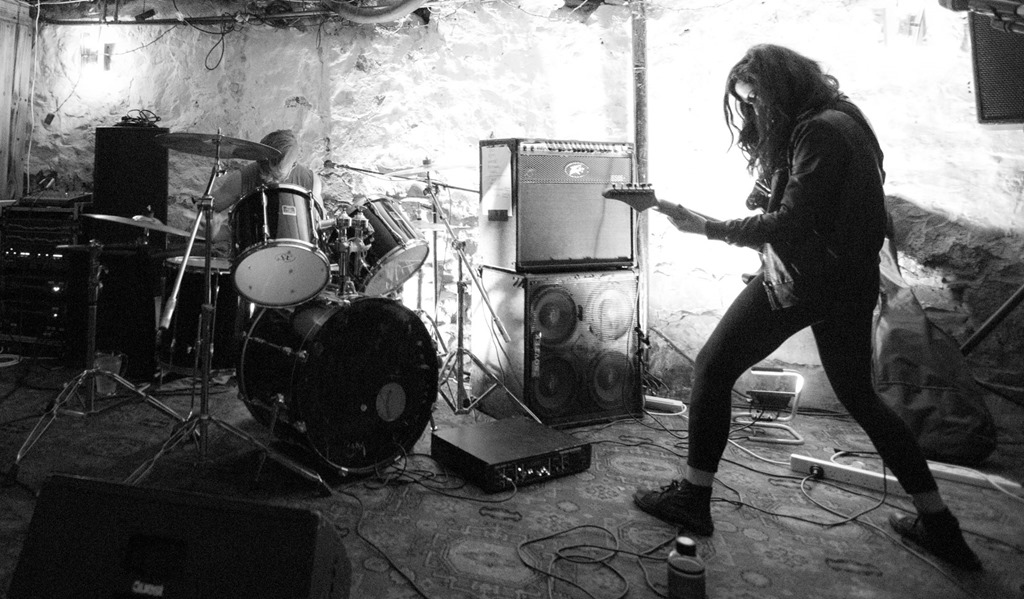
There’s no such pomposity where Maidstone five-piece Weekend Recovery are concerned. They set up swiftly, and Lorin rocks up in a long animal-print coat which she whips off to reveal a crop top that says she’s read to rock. And rock they do. This is a band with power, passion and an infectious energy, and watching them pour everything into every song, you’d never guess they’d just spent eight hours stuck in a van and piled on stage with barely three minutes to soundcheck.
Weekend Recovery
And while Lorin is the band’s clear focal point – she’s got real presence and never stays still for a second, as she struts her stuff and tosses banter like she was born to do it – it’s clear that this is a band who operate as a unit: they’re tight, cohesive and look like they’re having a blast up there. The songs themselves are punchy: banging out solid rock tunes with a keen pop sensibility, Weekend Recovery know their way around a hook, and no mistake. The set concludes with single cut and reason for the tour, ‘Don’t Try and Stop Me’, and it’s ace.
It’s a strong start to an ambitious tour, which should – if there’s any justice – see them expand their fan base considerably.
Balancing expansive, bombastic, surging songs with more introspective, low-key yet deft and accessible songs, Ukrane’s Vagabond Specter produce pop of a rare quality: their synth-led songs are dreamy, layered. Pablo Specter, the band’s singer dispenses lyrics – his voice heavily processed and accented – about swans and dancing, and he’s got a decent range which spans from the light and soaring to a crooning baritone.
They’re not lightweight or lacking in substance or imagination, either. There’s a magical electronic snowstorm in the middle of ‘Scars as Notes’, and ‘Dancing in the Light’ has guitar chug, buoyant synths and a bouncy vocal, and calls to mind XTC’s ‘Making Plans for Nigel’. XTC are a perfect example of a pop band and ‘Making Plans for Nigel’ is as good a pop song as you’ll ever hear. This is not critical opinion: it’s fact. So, by associative connections, Vagabond Specter are a great pop band, and ‘Mirrors’ is a great album. And it is: as much as it’s steeped in nostalgia and historicity, it’s a cracking pop album which harks back to certain vintage. There’s nothing wrong with that: great songs defy genre, age and epoch.
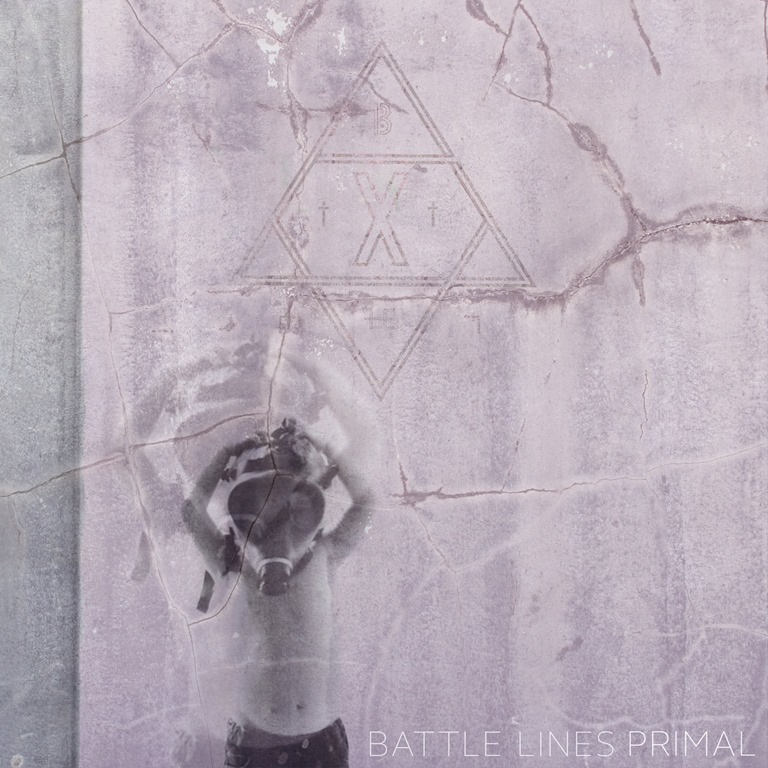
I have to admit, I’d been wondering what was happening with Battle lines. Following the single releases ‘Colonies’ and ‘Hunting’ (split with Post War Glamour Girls), and a storming set at the Brudenell to launch it, there was talk of an album when I chatted with the band afterwards, and then… Well, they seemed to drop off the radar. Carly had mentioned work and all of the things that get in the way of doing things, although it was some time ago, and I’d had a few pints during the evening and what with work and an endless stream of new releases demanding my attention… well, I sort of forgot about things. I’m sorry for the fact that this makes me the same as pretty much everyone else: I blame the ‘net age, the insane pace of our post-postmodern culture, where memories are overlaid and replaced in an instant, buried in the endless blizzard of shiny new things, images, sounds, more bad news and another media frenzy over the latest celebrity scandal. And so, a guilty late review of an album by a band I’m a big fan of.
While I’m looking around at intangibles to blame, I’m also aware that I’m feeding my own anxieties and understanding more the pressure on any artist, in any medium, to devote as much time to promotion as to the production of actual art. It’s all about the momentum! Paradoxically, to weather the storm that is the blizzard of social media, one is required to contribute to it further, and constantly. If you’re out of the public eye, you’re forgotten in a flash. It’s an absurd situation, of course: artists need to retreat in order to produce. In an over-loud world, silence is good, and importantly, silence from a band means they’re likely holed up working on material.
Battle Lines, individually and collectively, have been getting on with their lives, and thankfully, have been doing the things that are important, instead of fretting over their public profile. The press release apologises for their apparent absence, but is matter-of-fact about things:
It’s not a secret that we’ve been very quiet over the last year… There’s no big story, we love each other, we’re as good friends as we’ve ever been. Life has moved on for all of us, and we now reside in New York, London, Brighton and Leeds, geography prevents us from touring, but it can’t prevent us from releasing new music.
And so, while I was busy being distracted, Battle Lines slipped out their debut album, a record I’d waited more years than I care to count for: having first discovered them in their previous guise as Alvin Purple, I’d been captivated by the quality and richness of their dark, post-punk influenced material and the incredibly assured live performances they gave so consistently.
The switch to Battle Lines marked a refocusing: the energy which effused from their earlier songs was directed more inward, and the material displayed an almost ascetic discipline in its execution on those first single releases and in the live shows, more clinical, more icily intense than their previous incarnation.
This is all captured perfectly on Primal. The sparse title track and album opener hints equally at The XX and Closer era Joy Division. But then, glacial electropop undercurrents and thunderous tribal drumming also define the sound. And the sound… the fact they’ve taken their time over this means that the sound is honed to perfection. There isn’t a note out of place. That isn’t to say it’s overproduced within an inch of its sterile life or stripped of its soul: they’ve pulled everything to tight as to render it almost claustrophobically dense, a work which offers an insight into a near-obsessive control over the output. In context, it makes sense:
There’s an honesty about the notes which accompany the release which is at once uncomfortable and refreshing:
Lyrically this was an incredibly dark place to go to, I had come out of a relationship that became mentally abusive; looking back I wondered who I had become in excusing that kind of behaviour. This is what drove me in the album, those darkest moments became a journey of self discovery and a realisation of who I really am and what I deserved.
When life is out of control, what can you do but obsess about the things you can control – your art? But from darkness comes light, and creativity can be so cathartic. As dark as Primal is, it contains some truly beautiful and magnificently uplifting musical moments. Carly’s vocals at times soar so high as to disappear from the register of the average human ear, but ‘Sea of Fear’ is a swelling anthem of a track, and the sunburst shoegaze of ‘Smother’ ripples with the joy of drinking in clear air and rediscovering the potentialities of life.
‘Outsider’ is built around an insistent motoric beat and exploits the quiet / loud dynamic, bursting into explosive shoegaze wall-of-FX guitars which call to mind Ride in their early years, but as is always the case with Battle Lines, Carly’s ultra-high-frequency vocals means they don’t really sound like any of their forebears, or their contemporaries.
Of their single releases, only ‘Hunting’ has made it to the album. This is a bold and admirable choice, and one which makes a statement: a statement which says that \Primal is an album proper, a document, and not a ‘Hunting’ is, of course, a belting wall of noise driven by a twitchy disco beat and shuddering synth with metallic screeds of guitar peeling off a Donna Summer groove, over which Carly comes on like Siouxsie Sioux, breathy and intense.
The album concludes with ‘Riot’, a richly-layered and uplifting song which blossoms in a screed of guitar noise over an insistent rhythm section, the drums and bass tight and locked into a sedate groove.
Primal displays remarkable poise, and as much as its architecture is concerned with the turbulence which inspired its lyrics and overall tone, its coherence and control are remarkable. But rather than feeling soulless in its clinical execution, there’s a clear sense that Primal is about holding it together and showing just what can be achieved through sheer will and determination and the exertion of mind over matter. Despite the obstacles, personal and geographical, Battle Lines have (meticulously) produced a powerful album that was more than worth the wait.
Doing what I do, I get to hear a lot of music. I’m talking 30 or so CDs in the mail each week, and at least twice that in terms of emails offering downloads and streams. It might sound glamourous, but actually, with time, it gets increasingly dull. So many dull, derivative bands, all being hailed by their PR and labels or themselves as the next big thing, the most exciting band to emerge in a decade or whatever. On first hearing ‘Sick’ by Mannequin Death Squad, I found myself getting properly excited for the first time in a while.
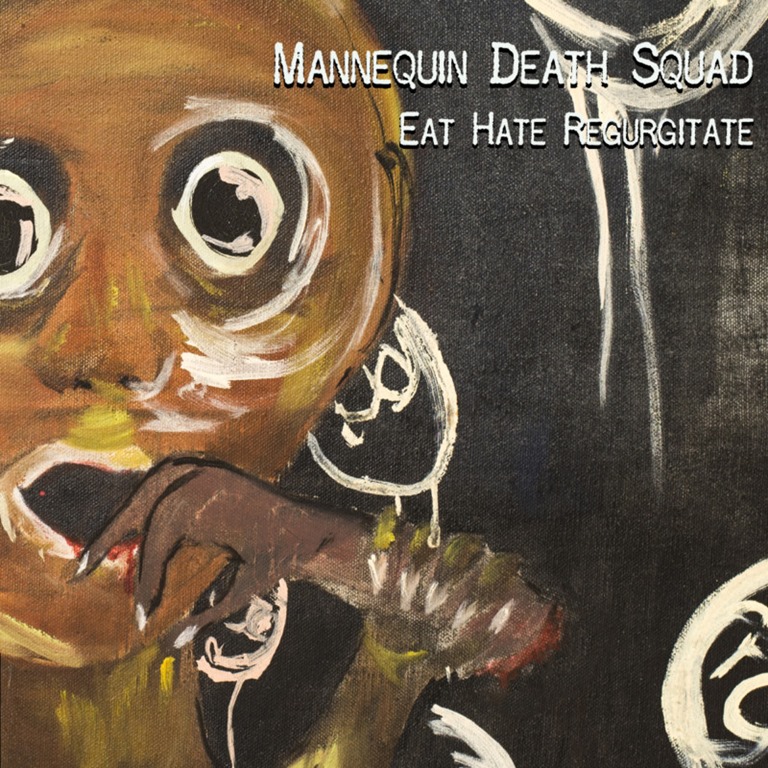
On meeting the Australian duo, consisting of Daniel Cohn and Elena Velinsky – who surely have one of the best band names around – just before their gig at Santiago in Leeds, as main support to Hora Douse, I was immediately struck not only by how down to earth and thoroughly pleasant the duo are, but by their insuppressible enthusiasm and the fact they’re so genuine. We meet in the downstairs bar of the little venue and sit around a table. The idea is that I’ll do a five to ten-minute quick-fire Q&A, but we end up chatting and talking around stuff instead. El is the ultimate rock chick, sporting a faded Led Zep T-shirt, shades perched on top of her head, and immediately I get a sense that these people were born to do this. They may be about to play to room with a capacity of 100 or so, which looks and feels like someone’s living room, but they’re rock stars irrespective of sales or fanbase. That said, on the strength of tonight’s outing and their Eat Hate Regurgitate mini-album, they won’t be playing venues of this size for long.
I ask them how their first trip to the UK as a touring band has gone so far.
‘Good,’ they both reply without hesitation. ‘I think the Adelphi’s probably been our favourite show so far,’ El expands. ‘It’s a cool, real, dirty venue…’
‘…and a big community,’ Dan adds.
I’ll admit I’m slightly surprised, but then, Hull is a surprising place. It’s not the first place that springs to mind when you’re listing cities with buzzing music scenes, but as the City of Culture for 2017, there does seem to be a lot going on there these days.
‘It’s amazing. It’s a lot like the scene back home in Newcastle,’ Dan says. ‘It’s got a strong community, and big bands…’
‘Everyone takes care of each other, and likes each other’s music and supports each other, it’s cool’ El adds.
They’re archetypal Australians, in many ways: they’re paid back, and say ‘cool’ and ‘awesome’ a lot. They also finish one another’s sentences in a way which shows a real synchronisation and intuition, and I feel that I’m witnessing the key to their music-making in action.
They’ve been equally impressed by the reception of their shows in London, and in Brighton, at the Hope and Ruin. Their tour has certainly taken them to some of the country’s less obvious cities and venues: not only Hull, but also Scunthorpe… Still, that gig (along with a second Hull date) was supporting Slaves, which a big deal and remarkable exposure for a band with only two singles to their credit. I’m eager to find out about how they scored that slot on their very first trip.
‘We had a gig booked in Scunthorpe, at the Café independent, which clashed with theirs,’ Dan begins
‘…so they wanted to book it,’ chops in El.
‘They listened to our music and they liked it, so they asked us…’ and being rather a music-starved backwater, the show went down particularly well, ‘They really appreciate musos coming up that way. I think it’s like an ego thing for those big cities that are really highly rated with music, that people take it for granted, and then at the other end of the spectrum, you go to small towns and everyone makes the most of it.’
How have you found UK audiences have differed from audiences at home?
‘They’re pretty similar,’ El observes.
‘We were getting a good response in Melbourne just before we left,’ adds Dan. ‘We’re a relatively new band, kinda like a year of playing gigs, but we’re getting really good responses here, probably even a bit better.’
‘We’ve got a lot of our friends back home, so it’ always going to be a good response,’ El says with a laugh.
It’s a fair observation: the test of any band is how they go down when playing to strangers and non-fans. The reactions of audiences on this tour indicates it’s a test they have nothing to worry about. El talks about the number of people going up them to compliment them on their sets – particularly the diversity of their style – afterwards, which is gratifying.
‘We’ve got a good mix of songs in there, there’s only two of us, and people seem to like them all differently, evenly.
They certainly do have a good mix: the band pitch themselves as existing in the space between The Melvins and Taylor Swift, which I suppose is a fair summary of their balancing sludgy riffs and magnificent pop melodies. Are their individual tastes conflicting or simply diverse?
El laughs. ‘Well, actually, I listen… he’s like the heavier guy, but I do heavy too, but he actually loves ‘Shake it Off’, and I like Melvins, but we both like Melvins, and we both like I all sorts. We listen to things that are heavy and poppy.’
‘We listen to absolutely everything,’ Dan confirms. ‘It helps to break the monotony of one genre.’
‘Slaves are awesome, because they’re so heavy, but when you look, they’ve got really catchy, poppy choruses,’ says El.
Dan feels compelled to explain the Taylor Swift thing in more detail: ‘The Taylor Swift thing came from when we were backpacking in Thailand and we went and did karaoke, and I absolutely smashed that ‘Shake it Off’ song…. Terribly’, he adds at El’s prompt.
They throw an eclectic and quite unexpected mix of acts into the ring when listing other artists they listen to: (Led) Zeppelin, (Pink) Floyd, Breeders, Hole, Marilyn Manson… ‘Going back to my roots, I used to be a thrash metalhead,’ Dan adds, and we love grunge. But we love pop as well. I’ll like something completely left of centre and not be embarrassed to say it.’
England has a strange perception of Australia, filtered through Neighbours and Home and Away, and internationally, Australia has been represented by the likes of Kylie and Savage Garden. How do you reconcile that with the actuality of bands like yourselves and, say, DZ Deathrays? I imagine they, and you, are more representative of what’s actually going on…
‘For sure!’ Dan says.
El gives some cultural context: ‘Neighbours and stuff is for, like, stay at home mums, I mean, you can watch it, it’s a good show and all, but…’
Dan: ‘The whole country’s obsessed with AC/DC still, but…’
El: ‘…we’ve got this whole buzzing music scene in Melbourne, we just keep going to gigs and there are so many awesome bands…’
Dan: ‘It’s an amazingly diverse scene in Melbourne. You can find anything in there: there’s an underground punk scene where everyone’s playing in squat houses that no-one knows about, you have to know somebody, there’s this rock scene that’s happening in all the bars, and little grunge scenes…’
Do you think, in your experience, that music scenes have fragmented and that there’s more underground than there ever was but you really have to seek it out?
‘Yeah’, they reply in unison.
Dan: ‘There are so many venues in Melbourne, that you’re spoiled for choice. There’s this avant-garde thing happening…’
El: ‘There’s a good gig guide, and if you go on the gig guide in Melbourne, you can just see all these bands, and you can just choose one and go and I’ll always be pretty cool.’
Dan: ‘There’s always something on. We’ve been all around Europe and we’ve tried to catch gigs, and haven’t really taped into the underground bands, but we came here and playing in Hull, and there are all these good bands. We went back to the same venue the next night and have drinks at the Adelphi, and all the bands are great. It reminds us of back home in Melbourne, there’s talent everywhere.’
I suggest that in terms of getting bands to an audience outside their local catchment, the Internet, far from killing the music industry, has simply made it different, particularly where small bands are concerned.
El concurs. ‘I think it’s made the game more creative,’ she says. ‘And we certainly have more access to bands.’
Do you consider yourselves primarily a live band? How do you enjoy the studio work?
‘’Cause we’re really new,’ El says, her voice going up at ‘new’, ‘we’ve only done one studio session, for the EP, so we’ve played live more. But we love both. I think you have to play live if you’re recording an album, that’s the fun part.’
‘We love all aspects,’ Dan adds. ‘Our favourite thing is to record a song, listen to it back, and change it, and experiment, but then, there’s nothing like playing a show, either. But even promoting can be fun, putting so many different mediums of art into it.’
They’ve certainly been creative with their own promotion. ‘Sick’ was a hell of a debut, and the video is fucking brilliant. How did the ‘zombie’ video come about?
El: ‘Well, we had a different idea, and it kind of failed… and then we came up with this idea really quickly, ‘cause the lyrics are “cigarettes and soda pop” and we wanted to pretend that it’s really easy to sell something like that…’
Dan: ‘It’s a bit of stab at consumerism in a way, and how everyone’s pretty easily manipulated by branding. It goes for everything, where you like stuff because you’re told to like something: don’t be a sheep and figure it out for yourself.’
El: ‘And then we came up with the branding thing, like a stamp…’
Dan: ‘It wasn’t supposed to be zombies, but kinda just escalated really quickly, and it worked.’
El: ‘It was fun, a lot of fun. My brother directed that one.’
So you’ve got elements of social commentary and criticism in there, and there’s a certain venom and angst in your songs. Are you angry? Or is the music just a release?
El takes a moment to consider this. ‘I think it’s more… it’s fun. It is fun, yeah!’
‘From my side, it’s pretty much all expression,’ Dan says. ‘We like just getting in a rehearsal space and just jamming songs, and it’s good fun: you’ve got good vibes going round…’
El again: ‘We’ve got older songs that I wrote where I was upset about something, as well, and then you put them in, and it’s sort of attitude behind it…’
Dan: ‘Lyrically, usually there’s a lot to be said…’
‘Yeah, it’s definitely a release,’ El concludes.
That release is clearly apparent in the medium of the live show. They explain how they like to layer things up, with bass tracks and additional guitars to create a full band sound, something which isn’t possible on stage, however much instrument-swapping they engage in. Still, this gives the live sound an immediacy and when cranked up loud, it works a treat. And, of course, such multi-instrumental capabilities afford them a lot more flexibility than the average two-piece. How do you decide who plays what on which track?
‘It’s kinda like who writes the guitar part does guitar and sings’ El explains. ‘And then if I have an old song, I’ll bring it in and if he has one, he’ll bring it in, and I’m like “right then, I’m drumming for this song”. We work together to make the song, though. We try to make it equal, but at the moment, I’m doing more guitar than him, so he’s going to get at some writing.’
‘That’s our opposite instruments, too’, says Dan.
‘I’m originally a drummer,’ El confirms.
‘I’ve only been drumming for about a year,’ Dan admits. ‘El smashes it on drums. It’s good to mix it up.’
So, finally, the burning question: when can we expect an album proper?
Dan hesitates. Can they say?
El steps in: ‘We’re going back to Australia – ‘cause we have to, and we’ve got gigs set up after this tour – and the we’re going to start writing. We’ve actually already got about half the album done…’
‘…about six tracks,’ Dan confirms.
El: ‘…yeah, about six tracks, so we only need a few more. So once we get back, we’re going to save up money to actually do the album. We might even try to do a Kickstarter.’
Dan: ‘Yeah, maybe.’
El: ‘Yeah, I think an album by the end of the year.’
Dan: ‘Hopefully, next time we come here we’ll be promoting it.’
Here’s very much hoping. Meanwhile, the mini-album Eat Hate Regurgitate is a blistering five tracker, and it’s out on October 7th through Integrity Records.
There must be something in the air. Or the water. Or maybe it’s climate change. Or perhaps it’s simply how things go with the passage of time: Courtney Love becoming uncool has slipped off the radar, and there’s a whole new generation discovering Live Through This and albums by L7 tucked away in their parents’ CD collections. This is certainly the most rational explanation for the current rash of female-fronted grunge-orientated bands. It makes sense: look at the contemporary female role models. Outside the mainstream, proliferated by slick, overproduced r’n’b and anodyne pop and as promulgated by the likes of Beyoncé, Rihanna, and Miley, strong contemporary female role models ae few and far between: even the likes of Amy Lee and Hayley Williams – a front-woman who spawned infinite clones by virtue of being practically alone in her field – are inching towards moving beyond the position of well-established toward establishment. Besides, they never stood out quite as strong as the old guard: neither of them had the guts of Courtney in her prime, or Lydia Lunch, ever.
Weekend Recovery are a Kent-based band, who cite the likes of Paramore, Green Day and Jimmy Eat World amongst others as their influences, and they’re pretty self-evident in their debut single, ‘Focus’, which sees them go for what they describe as ‘a straight up catchy pop punk number’. It’s also precisely what they deliver.
But make no mistake, this is a band with ambition, grit and drive, not to mention some songs with aggression and edge, and here’s no question that Lorin Forster is a strong vocalist and front woman. Cliché as it is, with some high-profile support slots booked, they’re ones to watch.
This instrument-swapping Australian duo don’t piss about, blasting into their debut EP at a hundred miles an hour with the spitting guitar frenzy of ‘KYMS’ – that’s (should) ‘keep your mouth shut’, as the refrain goes.
They’re pitched as being ‘lost somewhere between The Melvins and Taylor Swift, and Dan’s aggressive holler is contrasted by El’s nonchalant pop tone. Previous single, ‘Sick’ doesn’t only sustain the initial momentum, but ratchets things up a notch. ‘Sky’ brings a mammoth bottom-heavy sludge riff to underpin the duelling vocals, the end result being somewhere between the no-wave noise of Sonic Youth and school of ’94 grunge.
The well-timed breakdowns and softer moments only accentuate the force of their straight-ahead, driving, hell-for leather blasts of bratty, sharp-tongued punky noise. Of course, as much as it’s always about the songs – and these are killer songs, without exception, with an unquestionable pop tint – it’s about the attitude. And yeah, MDS have got plenty of that. This is the sound of a band who have that perfect blend of being pissed off and not giving a fuck, the sound of a band who play hard for the release, who crank it up to the max because, well, it feels good and because they can. It’s a short, sharp, shock of a release, and one equates to awesomeness turned all the way to eleven.





 Aural Aggravation