Posts Tagged ‘Organic’

Room40 / A Guide To Saints – 7th November 2025

Christopher Nosnibor

Free time? What’s that? Who actually has free time anymore? Something seems to have gone awry. Every technological advance promises more leisure time: from the industrial revolution to the advent of AI, the promise has always been that increased productivity through automation would give us more free time. So where the fuck is it? I don’t know anyone who isn’t constantly chasing their tail, running just to stand still, who doesn’t feel like they’re losing the plot or on the brink of burnout simply because the demands of working and running a household is close to unmanageable, and making ends meet is a major challenge… and the stress suffered as a consequence. N

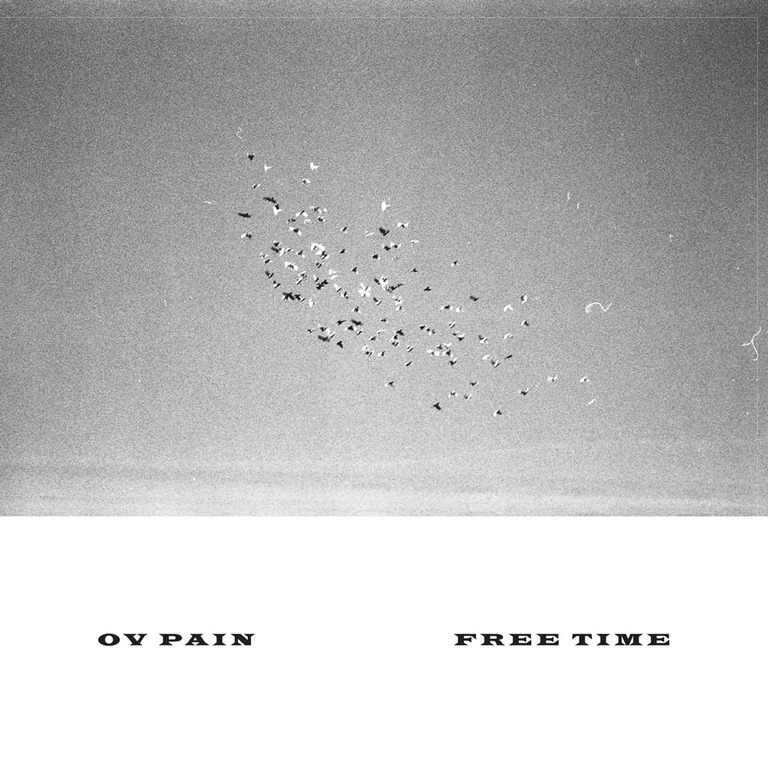
Ov Pain – the experimental duo consisting of Renee Barrance and Tim Player seemingly scraped and made time to record this album, a set of live improvisations (saving the time required to write and rehearse compositions), whereby, as Tim explains, ‘We recorded four different synthesizers – two apiece – straight into a computer pulled from a skip.’ This is how you do it when there’s no free time and no spare money. Although not explicitly detailed in Tim’s commentary, these factors are quite apparently central to the album’s creation, and by no means unique to Ov Pain. There’s a reason many acts peter out when the members reach a certain point in life: jobs and families mean that creative pursuits require some serious drive to maintain.

Tim adds, ‘One thing that is important to us is the immediacy and economy with which it was made and how that immediacy and economy becomes the thing itself.’

For all of its expansive soundscapes and layered, textural sensations, there is very much a sense of immediacy to Free Time. But, by the same token, for an album recorded quickly, it certain makes the most of time, in terms of space. There are long periods of time where little happens, where drones simply… drone on. The sounds slip and slide in and out, interweaving, meshing, separating, and transitioning organically, but not without phases of discord and dissonance.

The first track, ‘Fascia’ – with a monolithic running time of nearly eleven minutes – is a tormenting, tremoring, elongated organ drone, soon embellished with quavering layers of synth which warps and wavers, .it; s like watching a light which initially stands still but suddenly begins to zip around all over. It sits somewhere between ambient and extreme prog, with some intricate motifs cascading over that monotonous, eternal hum. Towards the end, the density and distortion begin to build, making for a climactic finale.

‘Slouching Toward Erewhon’ tosses in a neat literary allusion while bringing a sense of bewilderment and abstraction to proceedings, before ‘Comparative Advantage’ slowly pulses and trills, then crackles and buzzes, a thick surging swell of noise which is uneasy on the ear. And yet, the seconds of silence in the middle of the track are more uncomfortable… at least until the throbbing distortion bursts in atop stains of feedback and whirring static.

It may have been building for some time, but this is one of those evolving sets which after a time, you suddenly come to appreciate has expanded, and gone from a fairly easy drift to a heavy-duty drone assault.

Over the course of the album’s seven pieces, Ov Pain really do push the limits of their comparatively limited instrumentation. ‘Slander’ is a squalling, eardrum-damaging blast of gnarly treble that borders on extreme electronica, a straight-up assault on the ears and the mind. It hits all the harder because there is no let-up, and the frequencies are harsh and the sounds serrated. Around the mid-point, it goes darker, gritter, more abrasive, making for a punishing six minutes. Further layer of distortion and screaming noise enter the fray. It’s not quite Merzbow, but it’s by no means accessible. The final track, ‘Pusillanimous’ presents seven minutes of slow-pulsating ambience, and is altogether more tranquil to begin with, but before long, there are thick bursts of distortion and overdrive, and low rumbles heave and grind in ways which tug at the intestines. I feel my skin crawl at the tension.

Free Time is an album of surprises, and, more often than not of discomfort. It’s the sound of our times.

AA

AA

a2380798111_10

Swedish electronic environmentalists TWICE A MAN unveil a video clip with dark untertones for the catchy track ‘Second Field’ as the next advance single taken from their forthcoming new full-length The Coloured Breeze Is a New Dimension. The highly anticipated album has been scheduled for release on June 13, 2025.

TWICE A MAN comment: “The cogwheels of modern times are controlled by evil leaders without empathy”, Karl Gasleben states matter of fact on behalf of the band collective. “They grind us down and destruct our mental health. It is time to take back our dignity, nourish our inner dreams and connect them towards a more hopeful future. Are you ready to fight for what you believe in?”

AA

While the skies of the world are darkening, something powerful and resilient is pushing from below through the pungent springtime topsoil close to the City of Göteborg in Sweden. This sprout that is charged with organic and electric energy bears the name The Coloured Breeze Is a New Dimension. TWICE A MAN planted its seed with the song ‘Dahlia’, a ‘new’ track that was written to complement the compilation album Songs of Future Memories.

For three years, the Swedish dark electronic trio fertilised and nurtured the germ bud until it had taken firm root in their musical heritage and began to send offshoots to find new sonic spots beyond any previously built garden walls. The Coloured Breeze Is a New Dimension is an organic entity that creates something new by re-combining its musical DNA in various ways. As a result, its tracks blossom in many hues of electronic colours.

Neurot Recordings – 7th August 2020

Christopher Nosnibor

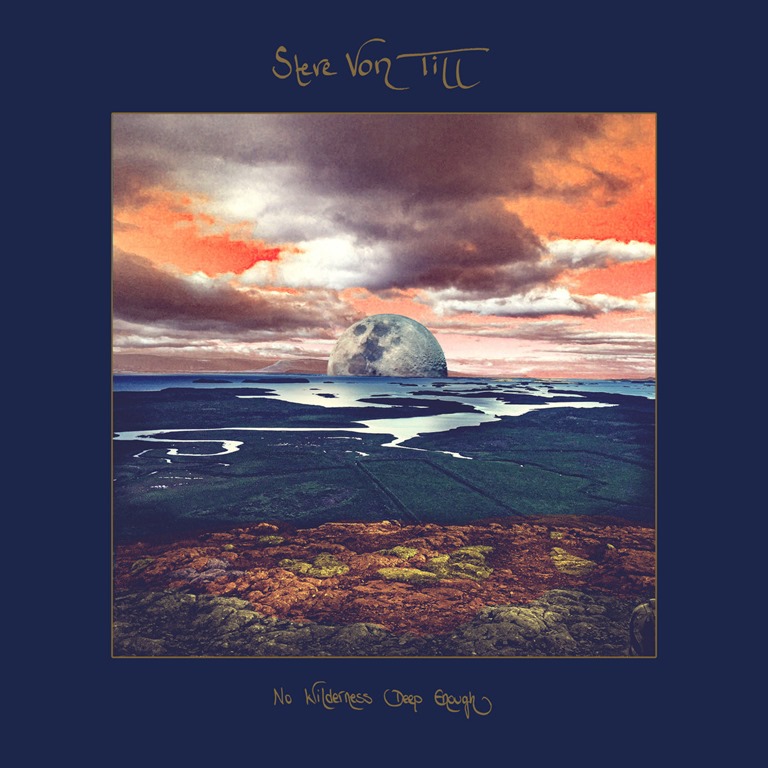
Stepping out from the Neurosis fold once more to deliver a fifth solo album since the turn of the millennium, Steve Von Till brings more grizzles bleakness across six lengthy songs. These are still very much songs in the conventional sense, structured, organised, focused, centred around melody and instrument and voice. And as the title suggests, No Wilderness Deep Enough finds Von Till wandering some dark, barren territories.

As is a defining feature of the Neurosis sound, there’s a richly organic feel to the music here. Brooding strings provide the core for the sparse but dark orchestral arrangements which dominate this bleak, acoustic-led album that places Von Till’s grizzled, growling vocals to the fore.

A sparse piano motif – which is almost a direct replication of Glissando’s ‘Floods’ plays out the outro on ‘Dreams of Trees’, the album’s first song, which is a low-key, percussion-free post-rock effort that tugs at emotional levels that have lain dormant for an eternity – or at least since we’ve all been clenched in the spasm of lockdown. It taps into a different and deeper psychological space.

It’s all remarkably low-key, so does actually require some attention to fully absorb, but some quiet time and contemplation soundtracked by No Wilderness Deep Enough makes for a quite moving experience.

Oddly, much of No Wilderness Deep Enough sounds more like I Like Trains fronted by Mark Lanegan, and the dark introspection of single release ‘Indifferent Eyes’ carries the same brooding, mood, and a sense of a cracked emotional state – ground down, world-weary, harrowed, and bereft, embattled, bloodied, but still standing. Von Till conveys all of this with a heavy-timbred creaking sigh, a ravaged, Leonard Cohen growl delivered with magnificent poise. You feel this: every note, every word.

AA

a3678735570_10

Gizeh Records – GZH99 26th June 2020 (Digital) / 25th September 2020 (LP/CD)

Christopher Nosnibor

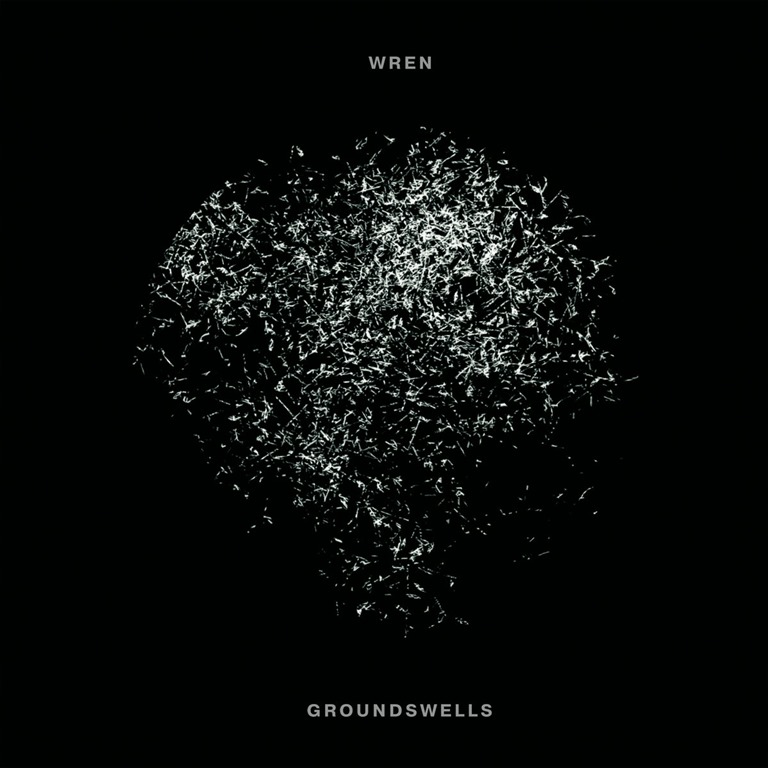
Wren’s third album – or ‘third chapter in Wren’s seasonal lore exploration’ as the press release puts it – is their first on Gizeh, and promises ‘six melancholy-shrouded sonic ruminations [which] swell between intimate performances devoid of adornment, and evolving soundscapes of auditory ruin’. And pitched as being of interest to fans of Godflesh, ISIS, Kowloon Walled City, Neurosis, it does the job of bringing slow-burning slow-trudging metal with an emotionally-articulate aspect and certain musical nuance.

The first megalithic sonic slab to assail the listener is the nine-minute ‘Chromed’, an epic battery of guitar and anguished vocal, and it piledrives in with a repetitive chord sequence, there are heavy hints of Amenra, and it’s the grainy, earthy quality that’s most reminiscent of Neurosis. There’s a lot of space here between the crushingly weighty power chords that drive, hard, low, and slow, less like a battering ram and more like a tank driving against a wall: slow, deliberate, and completely devastating.

There is detail, there is texture, and there is space within the broad parameters of this ambitious work, giving moments of respite and pauses for reflection between the raging infernos of fury that flare upwards toward the skies from the troughs of gloom. And yes, Groundswells is gloomy, dark, lugubrious, the soundtrack to motional trauma and swings from anguished introspection to annihilative rage.

If the album’s entirety could be encapsulated on a single track, it would be the dynamically-flexible ‘Subterranean Messiah’, which stretches out beyond ten minutes as it works it was way though a series of peaks and troughs, venturing into a range or mood-spaces and sonic terrains to forge a compelling sonic journey that’s utterly immersive. Jo Quail adds layers of subtlety and not to mention sonic depth with her cello work on the track also.

The final song, ‘The Throes’ is a grinding dirge, Godflesh played at the pace of Swans’ Cop. But amidst the torture, punishment, and the anguish – those excoriating vocals and that shrieking lead guitar that battles against the dense, slow chug and grind coalesce to form a perfect prism of pain, the psychological expressed through the physical.

If the band’s name suggests something soft, delicate, melodic, then Groundswells tears those expectations to shreds in the most obliterative way. It’s simultaneously harrowing and beautiful, and an all-consuming experience.

AA

a3321068616_10

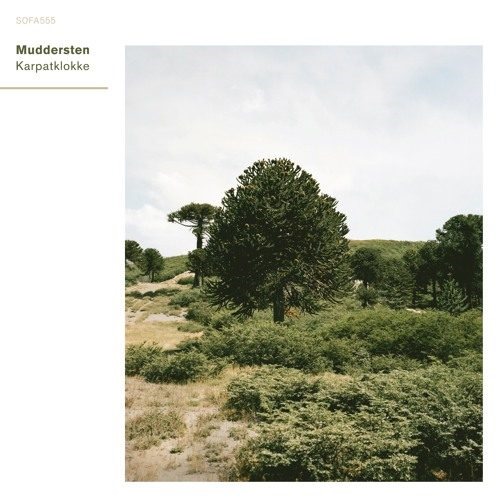
SOFA – SOFA 555 – 13th January 2017

Christopher Nosnibor

It’s no secret that I have a real penchant for what the man on the street – and most of my friends, and certainly the uncultured crets in my dayjob would brand ‘weird shit.’ Indeed, it’s fair to say that Aural Aggro’s primary raison d’être is to give coverage to the obscure, weird shit that exists way, way off the radar. It’s not necessarily that I’m being wilfully perverse: oftentimes, I will simply find that the supposedly weird shit resonates with me on some subconscious level, in the way that only music can. But then there are some releases that I appreciate because they’re plain bizarre. Muddersten’s Karpatlokke is an album that appeals on both levels, in that sonically, it’s intriguing, unusual, dark and intense, and conceptually, and in its construction, it’s utterly perverse.

‘Muddersten is a type of mudrock whose original constituents were clays’, the press release explains. Perhaps it was creative misprision on my part, but I immediately began to envisage the trappings of an obscure subgenre, a bastard offshoot of sludge metal, or a hybrid born out of crust punk. This would ordinarily make more sense, contextually, than the literal meaning which in fact applies here.

The second release to land with me in a week to feature Martin Taxt and his microtonal tuba, the instrumentation listed in the creation of this creeping compost-based composition is nothing if not unusual: Håvard Volden plays (relatively) conventional instruments, the guitar and the tape loop. Taxt, along with his microtonal tuba, contributes electronics. And then there’s Henrik Olsson, master of objects, friction, and piezo. I had to look up piezo. Precisely how one renders music from abstractions is unclear, but this strange union, which finds the trio conjure an album which is ‘all about the hydraulic’ and is preoccupied with the movement of moisture through clay and soil and its absorption by plants, is a successful one. And, for the second time in a week, I’m compelled to contemplate the line in Marvell’s ‘To His Coy Mistress’ which refers to ‘vegetable love’. Karpatlokke could well be a definite soundtrack to the Aristotelean reading of the concept.

The sounds the trio produce are appropriately earthy, although by no means overtly or conventionally musical in their nature. As such, the music does not feel as if its mechanical origins are instruments as man-made as guitars, tape-loops and electronics. Although predominantly organic-sounding, there are some pretty gnarly tones to be found here: droidal, digital squeaks and bleeps ping rapidly around sharp-edged bursts of sound. Drips and groans counterpoint dark, growling rumbles. ‘Kjempeløk’ grinds out a heavy, trudging vibration, thickly abrasive. Slow-motion scrapes turn through glitchy, crackling rhythms on ‘Stjerneskjerm’, as strings bend, bow and slowly slip the sprockets of time. It’s an unsettling work, evoking slow, creeping movement and evolutionary growth, amplified: the sonic equivalent of a nature documentary shot in high-definition, with ultra-close-ups, the frames sped up and slowed down to render in the sharpest relief the brain-bendingly awesome occurrences which take place daily in the natural world, unnoticed and invisible to the naked eye.

Each track’s title refers to a plant: ‘Stjerneskjerm’ translates as ‘Astrantia major’, commonly known as ‘master wort’, and the impressive-sounding ‘Blodstorkenebb’ is in fact a composition inspired by the rather humble Geranium sanguineum, aka bloody crane’s-bill or bloody geranium. Yes, this dark, dank, swirling noise which gnaws as the intestines and churns at the cranium is inspired by a bloody geranium. Which why it’s a great, if extremely unusual, album. Well worth digging out.


Muddersten – Karpatklokke