Posts Tagged ‘Obscure’

Strategic Tape Reserve – 21st March 2025

Christopher Nosnibor

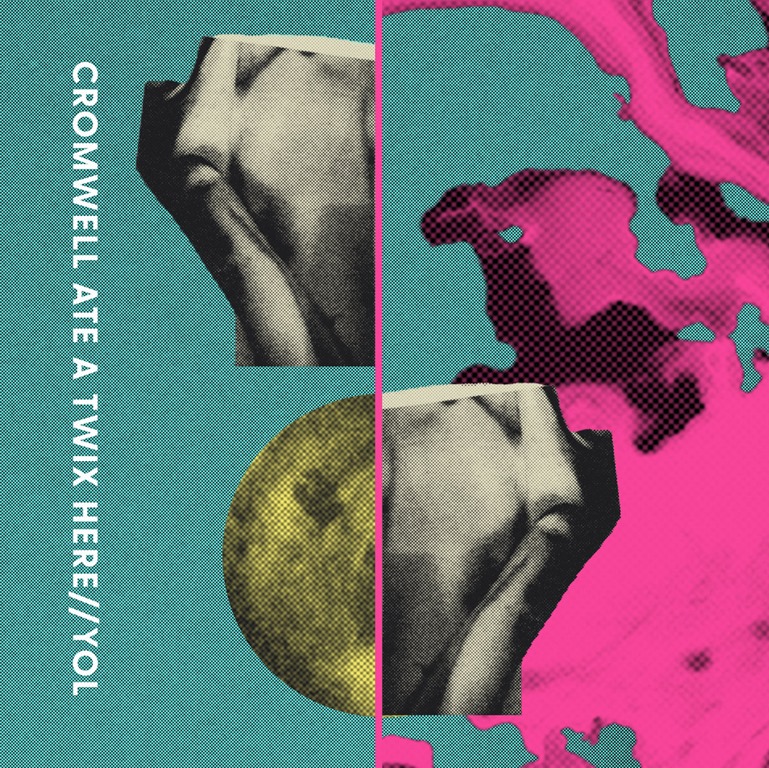
It’s certainly been a while since we last heard from Justin Watson, the epically-bearded being who formerly ran the Front & Follow label, but here he has temporarily resurfaced as one half of the absurdly-monikered Cromwell Ate A Twix Here on a split release with underground noise legend YOL, released by Spanish cassette label Strategic Tape Reserve. As such, even before hearing a sound, one can predict that this is destined to be unpopular – by which I mean an ultra-cult release for a microniche audience – or, put simply, the noise scene.

The bio for Cromwell Ate A Twix Here tells us more about what they aren’t than what they are, hammering home that ‘Justin ran Front & Follow and definitely doesn’t now. It’s over. He’s half of MORE REALISTIC GOALS, a third of The Incidental Crack and a quarter of The Watson Marriage Experiment (2006-)’. So in the wake of its brief revival for the charity fundraising Rental Yields series of complications not so long ago, we can be confident that the lid is now firmly nailed onto the coffin of F&F and even Dracula wouldn’t resurrect the label’s activity. But this is how it tends to be with those of a creative bent. They simply can’t not do anything forever. It’s not even an itch: it’s a compulsion. ‘Fragile’ occupies side one, and is eighteen minutes of expansive, filmic music, constructed around quavering, wavering drones, sparse pseudo-strings and soft, supple abstractions by way of an accompaniment to a somewhat surreal spoken-word narrative about… what is it about, exactly? Death, yes, but also a new relationship, interaction… The music fades into the background during the narrative, rising to the fore between passages. David Yates’ delivery is natural, down to earth, friendly, even, and is fitting for a tale which is largely given to quite mundane details before shit gets weird at the end. The audio begins to grow more unsettling, a shade disturbing around the seven-minute mark, and things only get darker thereafter.

And then there is eighteen minutes of Yol, which is pure derangement. Anyone acquainted with his work will be expecting nothing less. It begins with him stuttering and choking in convulsions over a mess of noise about ‘wheel of life, wheel of cheese’, and he yelps and roars, sounding as if he’s utterly possessed or dying, spasmodic ranting overloading over a horrific mesh of feedback and sonically rough terrain. You can practically hear your speakers wilting as the blasts of distortion scratch and scrape and glitch and burst and grind and buzz like so much sputtering, sparking, damaged circuitry. The whole thing is deranged, although it’s no less deranged than Liz Truss’ famous proclamations about cheese or any statement issued by The Whitehouse in recent weeks. He knows this, of course: however insane his work sounds, there are political undercurrents and a certain knowingness to his brand of frenzied avant-gardism, as evidenced on viral cats and dogs (2021).

The fact that this is just short of twenty minutes of a man yelping and barking and seemingly losing the plot before a microphone, and yet making more sense than five minutes spent perusing the news or social media tells us where we are in the world right now.

The two sides of this split release may be very different, but the contrasts are complimentary, and in combination, offer a welcome excursion beyond the everyday madness we’re living through, offering insights into rather more specialist madness instead. But this is artful madness, or good mad, or something. These guys won’t wreck the economy, invade or annexe your country, or fuck you over. They’ll just be over there making some weird noise. I’ll be over there with them, and you’re more than welcome to join us.

AA
a4054677057_10

Bearsuit Records – 31st May 2024

Christopher Nosnibor

There was a time – not so long ago – when I would come home from work and struggle to nudge the front door open with my shoulder for the mountain of CDs that had been dropped through my letterbox, along with the occasional ‘sorry we missed you’ card telling me I had a parcel at the depot awaiting collection or to arrange redelivery, and more often than not it would be some vinyl, and all of it promo material for review. I had a box – which was initially a shoebox, but later replaced with something larger – which was my ‘to-review’ box, after the pile kept falling over once it reached an unsustainable height. It was a storage nightmare, and I still have boxes containing quite literally thousands of promo CDs with press releases folded up with them, in boxes in the walk-in cupboard and the end of my office, which is, in truth, too stuffed with boxes of CDs to squeeze more than a toe into, rather than actually walk in.

Working in an office as I did then – rather than at home – I would take a bundle of CDs in a jiffy in my bag, and sit and listen to them as I worked. It beat enduring the often moronic drone of the people around me, and I’d tap out notes which I’d email home to myself to flesh out into full reviews in the evening.

My working method has changed rather since then, and while still working the dayjob, I’ve barely set foot in an office other than the one in the back bedroom of my house since lockdown. I haven’t received stacks of CDs in the post for a similar length of time, if not longer. For all of practical issues around the stacks of CDs, I do kinda miss it, and this is one of the reasons I always get a thrill at the arrival of a disc in the mail from Dave Hillary, who runs Bearsuit Records. The other, and not insignificant reason I always get a thrill at the arrival of a disc in the mail from Dave is that I’m eager to discover what mad genius work the label’s releasing next. I enjoy slipping the disc in the external CD drive I have attached to my laptop and soaking in the strangeness that spills from my speakers: I’m never disappointed.

I love the fact that I still get CDs in the mail, with promo cards and handwritten notes and so on, from Bearsuit, not just because of the joy of the physicality and the personal touch, but because it’s emblematic of the label as an entity. It does what it does, regardless of whatever else is happening, and it releases music the likes of which you simply won’t find anywhere else.

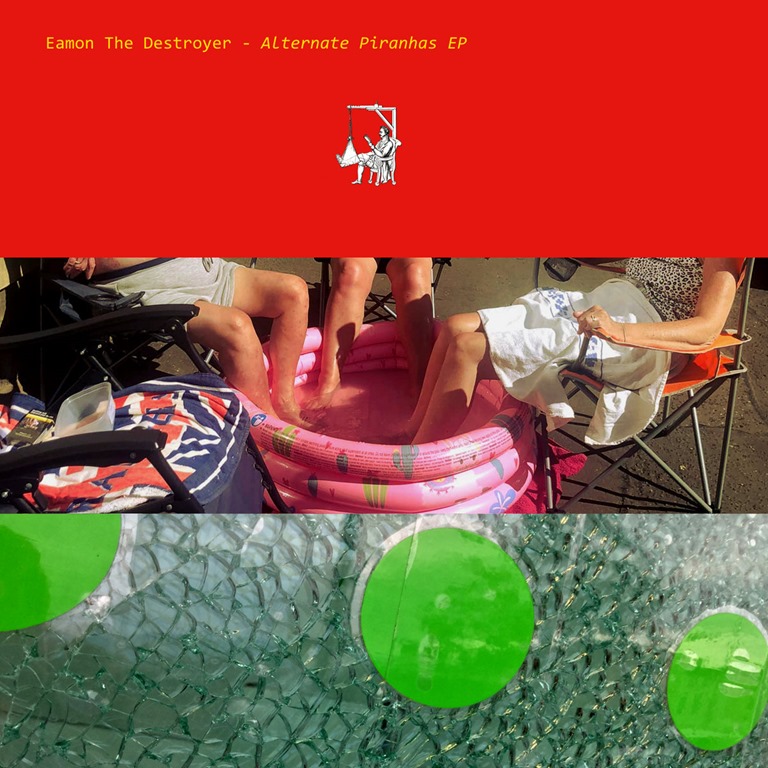
Eamon the Destroyer is a classic case in point. Another typically enigmatic artist in the Bearsuit tradition, Eamon the Destroyer has enjoyed a great run of releases to date. Debut album A Small Blue Car was a work of fuzzy, minimalist , downtempo brilliance. A sad, introspective work, it was unexpectedly touching for something so overtly odd, and follow-up We’ll Be Piranhas pushed further into forging songs that straddled the dreamlike and the nightmarish, a disorientating, discombobulating work that delved deep into the psyche in a way that felt like invisible fingers creeping inside the cranium and directly massaging the brain.

And now we come to the more or less obligatory counterpart release. Instead of the standard and expected remix EP, Alternative Piranhas gives us outtakes alternative takes of tracks from the album. A cynical voice might ask why they didn’t make the album cut, but there are myriad valid reasons: an album need to cohere and sometimes even the best tunes don’t fit with the flow, and similarly, the mood of one take or mix may in fact be better objectively, but not quite sit with the context.

And so it is with the five tracks here. All five appeared on We’ll Be Piranhas. While exactly the same length as its album counterpart, ‘A Pewter Wolf’ presents a quite different mix: the organ is much more boomy, more ‘churchy’ than on the album version, while the guitar sounds, almost buried on the album blurred and hazed out low in the mix, are more up-front and gritty here.

The version of ‘Rope’ on Alternate Piranhas seems to be in a different key, and is much grainer, murkier and messier than the more polished album take, and it’s more abrasive, more aggressive, with the vocals more up-front, and the result is that I found myself hearing thee song anew and soaking in the anger which permeates it, less obviously on the other version, tempered by the more mellow mix.

Overall, the versions on Alternate Piranhas are rougher, less ‘produced’, and it’s not difficult to discern why the versions chosen for the album were the ones they were. The album worked as a cohesive set, with an even, smoothed-out sound – well, in context – but Alternative Piranhas provides an insight into the process, which is never more apparent than on ‘The Choirmaster’. It’s not radically different… but it is different, while the alternative take of ‘My Stars’ is half the length of thee album and feels like a sketched-out demo. But again, it possesses qualities absent from the album version, just as the album version has elements which are absent here, including another five minutes of sound.

Alternate Piranhas feels more overtly rock than its progenitor, and perhaps it is, but above all, it’s a source of enjoyment to revisit these songs from a different perspective.

AA

a4099667252_10

New label Dead Music Club, which specialises in limited-edition cassettes, today announced its first three releases to showcase what they described as their ‘fledgling catalogue’.

The Stoke-based label, which is pushing the parameters not only of music, but of underground by shunning social media and making news of its releases available via mailing list subscription, is kicking off with a compilation of ‘Stoke weirdness’, which features Aural Aggravation faves Omnibadger, as well as the debut EP from ramshackle punks Dog Train on 10” vinyl, and an EP of mangled noise courtesy of one Christopher Nosnibor in his Noisenibor guise:

DMC-001 ‘DeadMusicClub’ cassette – a collection of Stoke weirdness £5
DMC-002 ‘Extractions EP’ cassette – Chris Nosnibor documents extractor fans £5
DMC-003 ‘Dog Train EP’ – Dog Train’s first EP on 10” vinyl £20

To subscribe, and for order details, go here.

There will be a launch event at Captain’s Bar, Stoke, at 8pm on December 30th.

Dret Skivor – 1st October 2021

Christopher Nosnibor

Dret Skivor continue to provide an outlet for the weird and wonderful, not to mention the obscure and droney with the eponymous release from the enigmatic but somewhat amusingly-monikered twAt klaxon. All we know of twAt klAxon is that they’re a Finnish sound artist – but then, so we really need more (beyond the advice to ‘Play through decent speakers/headphones for best results’)? Sometimes, it’s preferable to engage simply with the music than to become side-tracked by biography and theory.

Being a Dret release, twAt klAxon is an album of two halves, created very much with the cassette format in mind (with just four copies of the limited C45 physical edition produced), and each side contains a single longform track. The first of these, the inspirationally-titled ‘twAt’ manifests as a single, thrumming, humming drone. It hovers predominantly in the midrange, and not a lot happens for a long time. Fleetingly, it stammers and stalls, before pulsing back with a stronger, more overtly rhythmic phase. While the variations are minimal, the sonic ripples yield some good vibrations – not just metaphonically, but literally, sending waved through my elbows and forearms as they west on the surface of my desk as I listen. And listen I do. Sometimes, to focus intently on a single sound can be a quite remarkable experience, one that’s both relaxing and liberating. The sound thickens and sticks, and slowly it creeps over you. It’s a frequency that doesn’t drill into your skull, but instead wraps your head tightly and squeezes, a smothering compression of emptiness.

As a child, I had a recurring dream in which pencil-drawn planes crashed and scrumpled in succession. This dream was soundtracked by a deafening silence. This is not that sound, but it reminds me of it, and in doing do, recalls the anguish caused by that dream, and it’s not pleasant. Even without that association, the tension of that single note that hovers from around the fourteen minute mark and on and on and on for all eternity is challenging. The reason I admire this as a work of sonic art because of the level of patience that must have been required to produce it – unless, of course, they left the room and made a cuppa while the sound continued, in which case I would feel somewhat cheated, and making them a twAt of the highest order.

‘klAxon’ is more drone: there are more vibrations, the sound is thicker, denser, buzzier, and there are intimations of beats of at least regular pulsations that thump rhythmically low in the mix. This slides into some heavy phase and throbs endlessly hard. It’s primitive, with undertones of early Whitehouse, mining that analogue seam minus the pink and white noise. twenty-one minutes of that undulating, slow-shifting bubbling almost inevitably has an effect, and it’s deeply disorientating. Perhaps less klAxon and simply more twAt.

Quippage aside, this album is certainly no accident: it is designed to register physically, while torturing psychologically. And no, torture is not too extreme a word: that isn’t to say that twAt klAxon is intended to inflict any kind of trauma, but it does employ the methods of torture within an artistic context to create a work that’s perverse and purposefully challenging – and it succeeds.

AA

a3994329484_10

Crow Versus Crow – 29th October 2021

Christopher Nosnibor

Yol is, unquestionably, a definitive presence of the self-professed ‘no-audience underground’. If you’re unfamiliar with this (and there’s no shame in that, because the clue’s in the name), it’s a term coined by Rob Hayler who blogs at radiofreemidwich, who says ‘there is no ‘audience’ for the scene because the scene is the audience’. If it sounds incestuous and self-involved, then maybe it is, but in a good way: that is to say, it’s more of a community than a scene, and one defined not by sound or style, but an ethos of mutual support, and it’s an incredibly broad church. Global domination isn’t on anyone’s agenda: this is art for art’s sake, free expression, experimentalism because. No-one is judged on technical competence – in fact, no-one is judged at all. Anything goes, and yol absolutely encapsulates that, with ‘music’ that’s utterly off the wall.

The blurb advises that viral dogs and cats offers ‘five tracks that revolve around the essential ‘found objects / mouth noise / mangled language’ core of yol’s practice, brimming with razor-sharp observations, absorbed and regurgitated to form absurd, looping, distending cantillations. Visceral, cathartic and piss-funny in equal measure!’

The first piece, ‘chunks of tongue’ (it’s not a song, by any stretch), is deranged, demented, with what sounds like some kind of contact mic slattering and random tweets providing the backdrop to some utterly dented shouting and yelping and gargling about expensive ice cream being sold as strawberry, but… well, he doesn’t believe it. The strawberry pieces are chucks of tongue! He splutters and spews like he’s choking on the offensive material, and as amusing and Dadaist as it is, it’s also quite disturbing. Context counts, of course: this is an album (albeit a short one that’s more of an EP), so it’s art, but if you found someone doing this in the street, they’d likely be sectioned.

There’s very little musical backing on here, apart from whistles and trills of feedback and random extranea, meaning that it’s almost a spoken word album of sorts. But it’s crazed, cracked spoken word – there’s no narrative, only crazed spluttering and yelping. More than anything, I’m reminded of Mike Patton’s Adult Themes for Voice album. The simplicity and sparseness is a major feature here: yol shows that you don’t really need anything to make an impact, and when we’ve become accustomed and conditioned to polished, produced song-orientated music , to be assailed by something so primitive as almost nothing but a human voice, contorting every way possible is an unusual experience, and one that will likely freak some people out. Good, I say.

‘eat out to help out’ isn’t only representative of the album as a whole, but a standout. He stammers and mumbles around, catching his breath, panting, while struggling to verbalise some deep, frenzied anguish about a plastic fork with a nugget on it. The repetition of a single phrase with varying emphasis is very much an extension of the permutational technique initiated by Brio Gysin in the late 1950s and early 1960s, only here, the sequence of the words remains unchanged, with the delivery and emphasis changing on each repetition instead. The effect of the repletion is quite challenging and ultimately disorientating.

‘Viral cats and dogs get bored… Get back to shitting everywhere!’ he screams on the title track. ‘Yes, but not in my backyard!’ I want to shout back after waking to frequent turds from neighbourhood cats on the sliver of AstroTurf at the end of my yard. Bastards. And immediately, I find myself foaming at the mouth with fury, and realise that this is it. Tapping that vein into raw emotion and unspeakable fury, I’m seconds away a fit of from inchoate screaming abdabs – which is precisely what yol serves up here.

viral dogs and cats isn’t an album to be judged on technical competency – in fact, it’s not an album to be judged on any scale of merit of whatever, beyond ‘does it have an impact?’ Of course it does. It leaves you feeling weird. Because it is weird. And that’s the fun of it.

cover

Cruel Nature Recordings – 16th October 2020

Christopher Nosnibor

While the 90s was awash with obscure bands cranking out gnarly, guitar-driven noise, the last decade or so (alright, I mean two decades, because I’m old and still can’t get my head around the fact that 1990 was 30 years ago and that Nevermind is 30 years old next year) has seen such music emerge only in pockets, with the likes of Leeds’ Blacklisters being prime exponents and one of the few to reach a wider audience – and it’s Blacklisters who probably stand as US noisemongers TRVSS’ closest contemporaries.

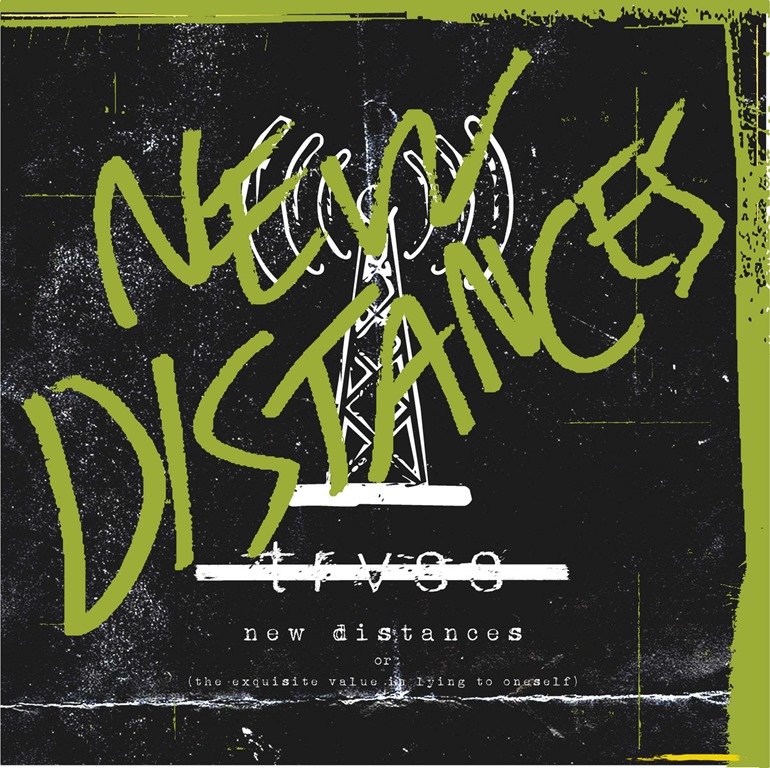
TRVSS are very much in the early 90s vein: I’m not just talking Am Rep and Touch and Go, but way further beneath the radar. Listening to the grainy, gritty grind of New Distances, I’m transported back, way back, and while I’m hearing The Jesus Lizard, I’m equally hearing Zoopsia, Headcleaner, Oil Seed Rape. Not familiar? To be clear here: I’m not promoting obscurest elitism here, but trying to give a flavour of just how choc-full of rabid guitar bands the underground scene was at a certain point in time – a time when bands like Terminal Cheesecake and Tar would receive coverage in the national music press, back when there was a national music press. They were exciting times, and that’s not the rose-tinting of a 45-year old reflecting on his youth: things were changing, and fast, and there was something in the air, and in your local record shop, in pub gig venues, and even on the radio

New Distances is a nasty mess of guitars driven by low-slung lurching basslines and drums that thud away in the background, half-buried in the welter of noise. Things are still changing at pace, of course, but mostly venues are closing, and there are no solid channels by which to access new and emerging talent. Where are the equivalents of The Tube, Snub:TV, The Word now? The Old Grey Whistle Test wasn’t even entirely the domain of proggy old farts, and now, we don’t even have Jools fucking Holland. There’s no M on MTV, and 4Music is a misnomer as well, but I digress.

TRVSS would probably never have made TV even back then, but it’s almost certain that John Peel, Melody Maker, and NME would have found a bit of room for some exposure for their raging, demented brand of no-wave / noise mania, and New Distances has no shortage of meat to give it appeal to a niche but substantial audience.

‘Stigma’ encapsulates the album’s rabid grunged-up noise-rock vibe, coming on like both side of the Nirvana / Jesus Lizard split ‘Oh The Guilt’ / ‘Puss’ simultaneously with it jarring guitar riffage and raw-throated vocal roar. ‘The Ventriloquist Always has the Last Laugh’ pitches skewed guitars galore, crash-landing in the space between The Jesus Lizard, Shellac, and the criminally underrated and proportionally obscure Milk.

It’s likely that TRVSS will remain forever obscure, although not on account of lack of appeal or lack of ability: sure, their stuff is dark, driving and ultimately extremely niche but all of this is ok: against the backdrop of blanket mass-media and sameness, such deliberately obscure an anti-mainstream music is essential and invigorating: lap it up while you can.

AA

a3636013255_10

1st October 2018

Christopher Nosnibor

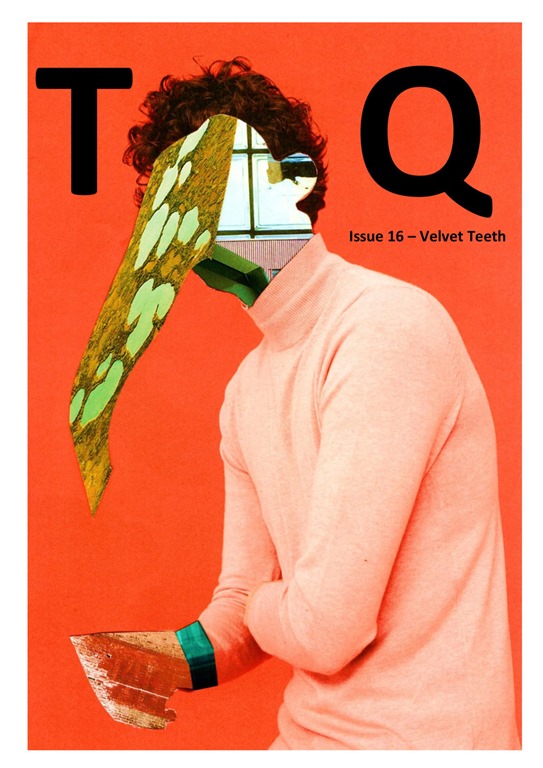
Velvet Teeth was originally released as a 200 only limited-edition CD through the October issue of TQ Magazine, which is the kind of publication that gives coverage to the likes of Ceramic Hobs and Drooping Finger – not so much competition for Aural Aggravation, but a channel with a shared goal of giving coverage to the kind of acts most won’t, assuming they’ve even heard of any of the artists. The funny thing about niche music is that it has a fairly hardcore set of devotees, and there’s a kind of disparate, disconnected community that’s less of a scene and more of a rhizome-like underground network. And while a lot of fairly niche stuff may still only have a potential market of around 200, it’s often amazing just how many oddballs there are hiding in the cracks demanding the work of some bands that on the surface seem so obscure that even their mates haven’t heard of them. Chlorine – the musical vehicle of Graeme Hopper – certainly has that wider appeal, and moreover, most certainly deserves wider exposure and the opportunity of a larger audience.

Velvet Teeth is experimental in the most explicit sense, a sequence of fragmentary sonic collages. The longer pieces roam around murky depths with ominous fear chords obscured by laced shrouds of sonic fog. ‘Manlines’, with its down-tuned, sinister vocals and groaning, droning dissonance, and ‘The Scenic Route’ exploit dimetric tonalities and the prominent separation of frequency ranges, with rumbling, almost subliminal low-end providing a base for niggling treble. The six-minute ‘Low Hauxley Tide’ pushes further on the resonant low-end pulsations, a low, tidal throb providing the main body of the piece. It’s kinda mellow, but kinda shiversome, too. There’s a creeping fog of darkness that pervades both the piece, and the work as a whole, which creates a certain sense of separation. It’s simultaneously immersive and engaging, but there’s a feeling that you’re not quite in the same room and there’s a force-field preventing entry.

‘Who Pays for This’ is a spine-tingling mess of scrapes and jangles, muffled, slowed speech that’s just on the cusp of indecipherability, and elsewhere, ‘Bubbewraps’ is woozy, wibbly, vaguely disorientating. The album as a whole is built on a loose, drifting fluidity, with compositions that aren’t so much compositions as sonic coalescences which occur as much by chance as design.

Uncomfortable, awkward, unsettling… these are the positive qualities of the oddity that is Velvet Teeth.

AA

Chlorine - Velvet