Posts Tagged ‘Neofolk’

skoghall rekordings – 10th January 2025

Christopher Nosnibor

The notes which accompany this release are more of an anti-pitch than a promotion: ‘depression, dourness, gloom, sex, drinking, drugs and male anxiety – some of it true, some made up.’ I had been warned. Should this maybe even come with a trigger warning?

Hell no. Art is life., and life doesn’t come with a rigger warning. If you truly want to avoid anything that’s a potential trigger, you probably just need to die right now, because there is no other way to avoid everything.

But my misery is your reward is pretty fucking bleak. It’s not Dave Procter’s first foray into acoustic-based musical work, and by no means the first release to feature his first spoken word works, although it is perhaps his first to present both these and an array of other styles with the purpose of exploring a core theme, namely of being fucking miserable.

I should make the up-front presentation of the fact that I am absolutely by no means being critical of the album’s miserabilism. For years, the theme of much dialogue has been ‘we need to talk more about mental health! We need to destigmatise mental health! We need to talk about mental health more openly!’ And I agree without reservation… but… It seems that the limit of most conversations – and this is perpetuated, sadly, by sufferers, and by artists, and by bosses (especially bosses) and by social media –remains at ‘I’m having trouble with my mental health’/ ‘Oh dear’. That is not talking about mental health. But people are not comfortable discussing the details, the way those troubles manifest, what it really means. Tell someone what that really means and oftentimes it will likely be a very brief and one-sided conversation. Male anxiety: are we even close to a place where blokes can sit and talk about their disturbed sleep and panic attacks down the pub with their mates? Are we hell.

The spoken-word pieces – succinct and pithy – are impactful partly because they say so much with so little verbiage, but equally because of the monotone delivery recorded close to the mic, with no studio slickness, no compression or reverb, but dry, as if Procter is leaning forward to confess in low tones the unutterable darkness. ‘no sleep no peace’ is exemplary:

I get no sleep at night

No peace in the day

There’s shit in the kitchen

There’s shit on the floor

There’s shit all on my life

Since you walked through the door.

So many of us will have lived with some squalid fucker at some point, and what may on paper appear trivial can in fact become a living hell.

The majority of the songs are sparse acoustic guitar and vocal works which sit between bedroom gloom and neofolk, with similarly direct and downcast lyrics: ‘the choices are stark enough / between dope / and a rope / it doesn’t take much these days’, he sings on ‘not much’. They’re simple and super lo-fi, and wouldn’t work any other way, because the nature of the recordings imbues them with an intimacy which brings a lump to the throat on many occasions. Even the bits that are made up, because it’s all interwoven and ultimately inseparable.

Elsewhere, ‘the visitor’ has the haunting reverb-drenched melancholy of Leonard Cohen, while ‘his face, my place’ is like a demo for a goth take on the kitchen sink non-drama of The Wedding Present, and ‘when you want her back’ sounds like David Gedge in collaboration with Stereolab.

As the label’s Bandcamp page states, Skoghall exists to present ‘a collection of past and present work involving Dave Procter’, and my misery is your reward is very much a work mines from the archives, ‘originally recorded during several periods of the above in Leeds and Stockholm in 2007 and 2008, although the ideas have been around since late 2005…’ Procter adds, ‘I think they call it catharsis. This LP is meant to be listened to in one sitting.’

Almost twenty years since conception and seventeen or so years since its recording, some may consider it curious that an (extremely) active artist would serve up these somewhat primitive and one might even say juvenile recordings now. But there does come a point in life when, perhaps we make peace with our discomfort and awkwardness and with the distance of time, can appreciate the merits of those works which were necessary in the evolutionary journey to the artists we become. To finally release it… yes, there must be an element of catharsis in casting out those thorny thoughts, the kind of twisty, churny recollections that insist on needling away, years after the fact.

my misery is your reward is a world away from Procter’s work as Legion of Swine or Fibonacci Drone Organ, and even the no-nonsense spoken word of Dale Prudent, and there’s a touching humanity, and the lack of sophistication is an asset when it comes to conveying difficult emotional states in a relatable fashion. Yes, we need to talk about mental health, and what we also need is for documents of unflinching honesty and for artists to take the lead. This is what we need.

AA

AA

a2113781565_10

James Wells

You’ll always find black metallers and pagan neofolkers in the woods. I don’t mean that whenever I go for a walk in woods near me that I happen upon people in cloaks and corpse paint lumbering around clutching instruments, but how often do you see a video where they’re exploring scenes of urban squalor or even indoors? Do you think any of them would last a winter out there – or even a night? Could they construct a shelter, do you think? Could they light a fire, or spear some wild creature to feed themselves, in those threads?

bdfc68e1-b355-7114-4aaa-13e3e3bd3a7b

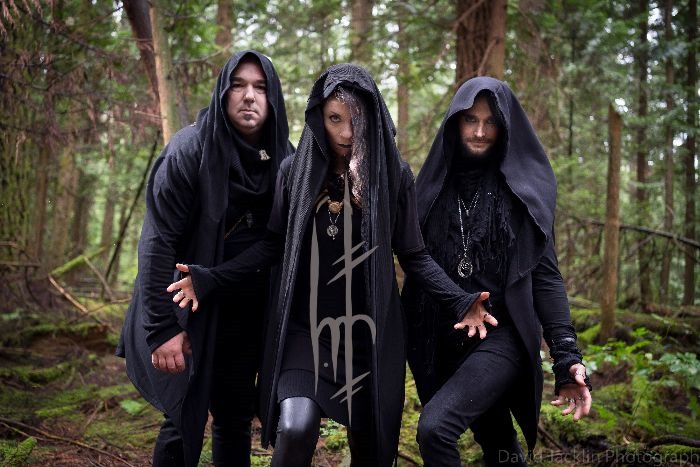
I’d wager not, but Canadian trio Hem Netjer seem more the type to venture into the woods to commune with nature than to live as part of it, and the video captures them meditative contemplative, cross-legged on a large rock.

The last single from their forthcoming debut album, The Song Of Trees, scheduled for release at the end of February 2023, ‘Elemental Cry’ is dark yet somehow celebratory, with dense synths swirling about a thumping tribal beat and overlaid with tense strings and a soaring vocal performance.

The atmosphere is thick and murky, the production favouring the lower and mid-ranged that give the track an earthy feel, and it’s bold and cinematic and it doesn’t really matter if some of it feels a shade cliché with its lyrics about death and trees and moths, because it’s a ‘big’ tune in every way, not just the fact it’s almost six minutes long, and RavenRissy’s vocals are more operatic than folk, and are outstanding and send a shiver down the spine.

A strong song with a strong message, ‘Elemental Cry’ is pretty powerful work that reaches the primal depths of the psyche and speaks to senses long lost in the name of ‘progress’.

25th November 2022

James Wells

Time marches on, and here we are almost midway through December still catching up with November releases, this time with Polish ‘dark rock’ duo Shrine Of Reflection.

There’s a great temptation to split hairs and that argue that surely the dark rock tag is goths pretending not to be goth, but that would be unjust, as this six-and-a-half-minute sonic adventure is more post-rock than anything, but there are also hints of prog and bleak neofolk vibes emanating from the murky tones, where a sparse, spindly lead line drifts over a slow, deliberate thunder-like beat that plods away like a heavy heart, before it blossoms into colour at the midpoint into an expansive, cinematic sweep.

The blurbage summarises that “‘Child Of The World’ is a song inspired by the movie, Interstellar. It’s about the misery of a human being who is trapped on planet Earth and who is unable to discover the truth of the universe’s nature despite the fact of being its child. All this person can do is just simply stare at the sky and dream.”

That sense of entrapment is relatable, but more than this, the vocals become increasingly cracked and desperate as the song progresses, before the slow-building crescendo takes over, finally tapering off into muffled samples that leave you looking into the emptiness, and wondering.

a2629310432_10

Trisol Music Group – 18th January 2019

Christopher Nosnibor

For some, I’m retreading old ground here and will likely sound like the proverbial stuck record, but recent developments render this relevant, timely, and appropriate. Over the last 30 years or so, the neofolk scene has been the haunt of some extremely shady characters, with Death in June’s Douglas Pearce and Tony Wakeford (Sol Invictus, formerly of Death in June) having some particularly dodgy connections including Boyd Rice (and not forgetting that Wakeford was at one time a member of the British National Front and contributed a track to a BNF benefit album alongside Skrewdriver and Brutal Attack). As such, even accepting the protestations of the purveyors of some of the most turgid tunes ever committed to tape that they’re simply flirting with fascist imagery to provoke thought and challenge the audience and so s in the name of ‘art’, recent revelations by harsherreality via Tumbr that Pearce was photographed as recently as 2012 with notorious and now-jailed neo-nazi Claudia Patatas and her former partner, who was the band’s driver, and Tony Wakeford can also be seen to be connected with her via Facebook highlights undesirable elements run through the scene like veins of fat in a cheap cut of meat. In her capacity as a freelance photographer, Patatas provided cover imagery for the Death in June albums Black Angel – Live, Abandon Tracks, and The Rule Of Thirds.

As respected blogger John Eden Tweeted a few weeks back, ‘This raises a number of awkward questions for the dwindling number of Death In June fans who still insist that the group is not political, and is just fascist cosplay for people who want to wank off about the “darker side of humanity”.’

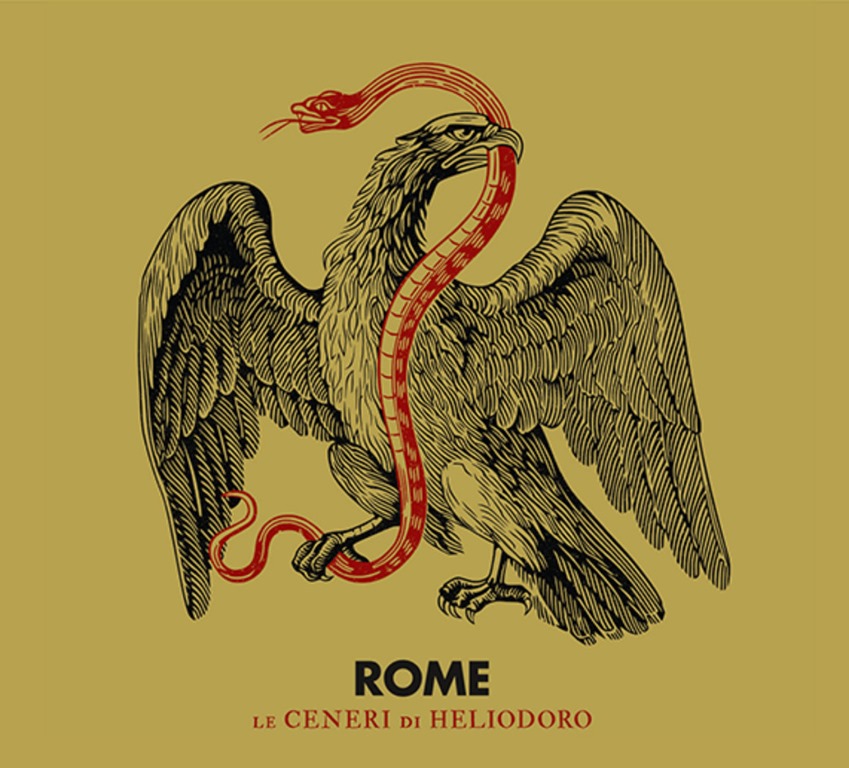
None of this is to remotely suggest that Rome have any sympathises or even connections with anything neo-nazi, but to contextualise why any mention of neofolk rings alarm bells and puts me on edge, and why I’ll inevitably approach an album by a band pitched being ‘one of the most important figures in the neofolk genre’ with extreme trepidation – especially on reading that ‘The music unites American folklore with Chanson and the angst-ridden tristesse of English Post Punk – ‘Chanson Noir’, as leading man and sole permanent member Jerome Reuter once called it.’ Why? Because Tony Wakeford describes his supposed post-punk/fok crossover act Sol Invictus’ work not as neofolk, but ‘folk noir’. There’s also the pitch that on Rome’s thirteenth album Le Ceneri Di Heliodoro (‘The ashes of Heliodoro’), ‘Reuter does not shy away from the provocative and ambiguous and thus tackles new terrain and touchy subject matters such as Europe’s dissolving unity, or its relations to the US and the fragile fraternity of its nations.’ So far, so vague.

‘Provocative and ambiguous’ is the shield worn by the shadiest of neofolk’s exponents. But here, it seems credible that Rome are approaching things from a rather different angle, citing ‘a long tradition of lonesome guitar heroes, outcasts moving about restlessly, pursued by their dreams and demons, dedicated to a life beyond the pale. Reuter takes musical nods from Jacques Brel, Johnny Cash, Townes Van Zandt, Tom Waits, Leonard Cohen, Michael Gira, Nick Cave – architects of melancholy.’ Moreover, Reuter has identified repeatedly as left-wing, and renounced any nazi element of his fanbase, remarking in an interview with Reflections of Darkness (for whom I used to scribe occasionally) that ‘people are stupid’. And he’s right: in many cases, one can only be responsible for one’s own actions, and no artist chooses their fans, least of all the misguided ones who misunderstand and misrepresent them.

So, given the artist’s efforts to distance himself from the bad elements, should I be concerned that this album is being released on a label which has also released albums by Boyd Rice, Death in June, and Above the Ruins, another Tony Wakeford project? Probably not, unless we’re also going to place KMFDM, Godflesh, Nitzer Ebb and Lydia Lunch in the ‘problematic by choice of label’ bracket. I’m questioning the label’s choices here, not the artists.

‘Sacra Entrata’ opens the album with discordant chimes, droning organ, and thumping martial drums providing the backdrop a portentous spoken word piece about revolution and uprising, while building tension, ‘A New Unfolding’ presents an acoustic strum and more march-time drumming while Reuter sings about how a ‘new world is calling’. The Germanic backing vocals being a mystery to me, but I’ll assume they don’t connote the militaristic rally cries they sound like. Assuming they’re ‘safe’, it’s a bold, brooding epic of a song that stirs something deep inside. Perhaps this is what Reuter means by ‘provocative and ambiguous’.

‘Who Only Europe Knows’ fades out with the refrain ‘we’re building ghettos’, and asks ‘will there be rivers of blood?’ – evoking renowned and divisive 1968 ‘Birmingham Speech’ which criticised mass immigration, and a pro-unity, pro-European stance appears to be a central focus of Le Ceneri Di Heliodoro. Elsewhere, the orchestrally-enhanced ‘Fliegen wie Vögel (Fly Like a Bird’) and ‘One Lion’s Roar’ boast epic production behind Reuter’s gravelly vocals.

Le Ceneri Di Heliodoro is a lengthy and bold album, rich in atmosphere and heavy allusions. It boasts some moments of substantial power and almost subliminal resonance. Again, at times it feels incredibly pedestrian and po-faced, and takes sincerity to a point beyond the palatable. There’s grand, and there’s grandiose, and it’s a line not trodden too carefully here. But equally, everything is carefully executed, and Rome demonstrate a sense of scale here, and an appreciation of the gravity of the turbulent times in which we find ourselves.

Rome – Le Ceneri Di Heliodoro

House Of Mythology – 26th August 2016

Christopher Nosnibor

Like Natalie Imbruglia, I’m torn. Fence-sitting is no position for anyone, least of all a music reviewer: ho-hum is no critique. But I’m torn between instinct and critical distance here. Y’see, it’s a fine line between spirituality and pseudomystical bullshit. And the trouble is, one man’s spirituality is another man’s pseudomystical bullshit. The orientation of most organised religions and many other credos includes a certain emphasis on collectivism and unity, but ultimately any belief system or spiritual framework is inherently personal.

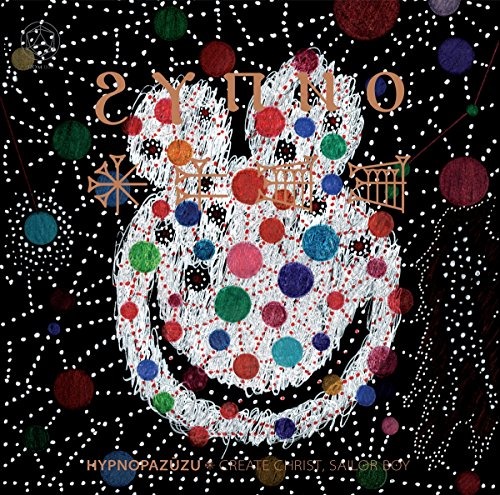
This review starts on difficult ground: Hypnopazūzu is a collaboration between David Tibet and Youth. I’m a huge fan of Killing Joke, and can only salute Youth for his production work, despite the fact I’m not keen on many of the major artists he’s worked with. David Tibet is an entirely different proposition and is someone I’ve never really been a fan of. I don’t have any issue with Current 93 per se, and it would be a grave mistake to overlook their contribution to the development of the experimental strain of industrial music in the early 80s. I’ve simply never got into their work. But some of the company David Tibet has kept over the course of his career does give cause for concern, not least of all prominent neo-Nazis Boyd Rice and Douglas Pearce. It would be a mistake to call Tibet guilty by association, but perhaps he should be more careful about the people he works with: Current 93 re broadly associated with Neofolk, and the Neofolk scene is conspicuous for the number of dodgy people connected with it. And beyond that, there are an awful lot of really turgid albums in circulation, which, when not revelling in far-right thematics, are preoccupied with disappearing up their own sphincters while preaching high occultism.

To give Tibet the benefit of the doubt, he presents as a broad-minded individual, who identifies himself as a Christian, but has devoted a lot of time to exploring occultism, Buddhism and Gnosticism, and as such, appears to be genuinely exploratory (rather than hiding behind the pretence of exploration as a means of justifying the use of dangerous imagery), engaged with spirituality in its broadest sense on a purely intellectual level first and foremost. Which brings us to Create Christ, Sailor Boy. How does one position a work such as this?

The press release describes it as ‘transcendent, tumultuous, and tricky, the sound of two spirits skipping as one to create a sidereal glimpse into uncounted cartoons,’ and quotes Tibet as saying, “I am happy always to work with Youth in any way, forever and for ever and always and in all ways… I wait for my Ouija Board Planchette to receive his Mind’s Eye Text.”

I’ll refrain from making any gags about the mind’s eye, third eye, and the brown eye and keep things as objective as possible. In such a context it’s perhaps a mistake to attempt to determine whether or not this is an album of high spirituality or pseudomystical bullshit, primarily in the interest of keeping a certain critical distance. Is it possible to separate the aesthetic from the art? Perhaps: Tibet has also long shown himself to be a man preoccupied with the apocalypse, and the sense of apocalyptic foreboding hangs heavy over this album. In the current global climate, it feels entirely appropriate. These are scary and challenging times, regardless of one’s faith or faithlessness, and in this context, Create Christ, Sailor Boy is an album of our times. It’s the soundtrack to struggle, the soundtrack of desperation, of humanity reaching out and clutching, desperately for something. Anything.

There can be no question that Create Christ, Sailor Boy is truly immense in scope and depth. Particularly in depth. This goes beyond the human condition. And in many respects transcends vague notions of spiritualism. This is not soul music, or even soulful in the conventional sense, so much as music which probes the very core of the soul, pulling hard at the gut. From the opening notes – shimmering, sweeping synths and crashing cymbals – provide an epic and portentous backdrop to Tibet’s evocations of apocalypse and build to a momentous climax. And all within the album’s first five minutes. Yes, this is colossal work that’s epic on every level. Every level. On first listen, I detested this album, but it needs time to grow. And time to grow. Whichever side of the fence you may sit.

‘Christmas with the Channellers’ brings forth an ethereal subterranean atmosphere which typifies the album as a whole. It’s an immense track which brings together heaven and hell in a battle on this earthly domain and as Tibet tears his guts out through his vocal delivery, the enormity of existence is thrown into sharp relief. ‘The Crow At Play’ is a tense colossus, which finds Tibet rasp into a frenzy as he name-checks Gary Glitter. Yes, this is a work’s that’s socially engaged and as such it would be wrong to accuse it of being a work which focuses on the spiritual at the expense of the real world.

‘It’s tool time!’ Tibet announces in a wide-eyed and excited tone on ‘Sweet Sodom Singings’. Is the invocation of Home Improvement intentional? It surely must be. There is no shortage of lyrical evidence to confirm that Tibet is as in touch with the upper world and its culture as he is with all things internal and far above the flesh.

Sonically, it’s interesting, too, with tracks like ‘The Sex of Stars’ whipping up a dense sonic maelstrom in contrast with the psychedelic / eastern / industrial crossover of ‘Sweet Sodom Singings’ and the trudging ‘Pinoccio’s Handjob’, the ethereal spacetronica of ‘The Auras re Escaping into the Forest and the and brooding folk of ‘Night Shout, Bird Tongue’. In terms of textural range, it’s hard to fault.

In many respects, I’m still on the fence, but musically and compositionally, Create Christ, Sailor Boy is an impressive work. It may be pseudomystical bullshit, but it’s a powerful album that has a lot of listening hours in it.


Hypnozazu - Create Christ Sailor Boy