Posts Tagged ‘Nadja’

Midira Records / Cruel Nature Records – 24th October 2025

Christopher Nosnibor

A new Nadja release is always cause for a pique of interest. Excitement doesn’t feel like quite the right term for an act who create such dense, dark, brooding soundscapes. Centred around the duo of Leah Buckareff and Aidan Baker, each release marks a shift thanks to the contribution of a range of guest performers, and cut is no exception – and this time, following the instrumental epic that was Labyrinthine (2022) – we have vocals, from not just Baker and Buckareff, but also Tristen Bakker, Oskar Bakker-Blair and Lane Shi Otayonii, among others. They certainly bring a lot of guests to a party which features just four tracks. But that is ’just’ four tracks which each occupy an entire side of vinyl on a double LP. As with Labyrinthine, these are compositions which span ten to sixteen minutes, and utilise that timeframe to maximum effect. They don’t hurry things, with slow, tapering drones interweaving, the emphasis on the atmosphere and the detail over the impact. And yet, despite this, or even perhaps because of this, the impact is strong, albeit in more subtle ways.

Their comments on the album are illuminating, explaining that ‘Thematically, cut explores trauma and physio-/psychological stress, as well as possible tools and means of overcoming these stressors, of which the music itself (sonic sublimation) might be one… Musically, while Nadja retains their signature wall-of-noise doomgaze sound, they also explore quieter, more introspective moments as well as new/different instrumentation, with harp, French horn, and saxophone featuring for the first time on one of the band’s recordings’.

‘It’s Cold When You Cut Me’ is stark, bleak, minimal. The air feels dead, it’s suffocating. The sparse percussion rattles along, but the drones are glacial. Five minutes in, rumbling bass and heavy beats roll in, and by the mid-point there are crushing waves of lugubrious noise worthy of Swans, but overlaid with trilling brass and woodwind, jazz in slow-mo, the honk of migrating birds and trilling abstraction.

But this is just a gentle introduction ahead of the thunderous grind of ‘Dark, No Knowledge’, which begins with atmospheric whirlings and even hints of Eastern esotericism, voices rising in the distance, atop wisps and rumbles, echoes and murmurings, before the dense, sludgy, post everything doom drone cascades in like a mudslide. It’s low and it’s slow, crawling like larva. buzzes and rumbles sustain for an eternity. You can actually feel your stomach drop in response to the bass frequencies.

The sound seems to get thicker and murkier as the album progresses, and if ‘She Ate His Dreams From the Inside & Spat Out The Frozen Fucking Bones’ isn’t nearly as abrasive as the title may suggest, its slow repetitious form is truly hypnotic as it trudges its way along.it possesses a rare density which matches its delicacy, and comparisons to latter-day Swans stand in terms of positioning the piece. There are thick, distorted tones grinding like earthworks through the airier overtones, and the contrast brings something magical and soothing. Then ‘Omenformation’ crashes in like a tsunami. The volume leaps, the density leaps, and you find yourself blown away by a sonic force strong enough to knock the air out of your lungs. The dingy, booming bass alone is enough to send you to the ground. The drums are immense. In fact, everything about this is almost inarticulable, as Nadja scale up the sound to beyond that of mere mortal beings. This is music with a physical force and a power beyond words, beyond contrivance. It’s archaic, occult, primal in its power. This is a track which treads through a series of movements, the last of which is crushing in its weight.

It’s true that cut possesses all of the sounds which are recognisable as being concomitant with Nadja’s distinctive dense, doomgaze stylings, and a lot of the vocals are as much additional layers rather than clearly enunciated words, and as such, add further depth – and a certain human aspect to the overall sound. The result is a work which speaks to that level of the psyche beyond words, which conveys trauma and physio-/psychological stress, and which offers a degree of relief through an experience which is wholly immersive and immensely powerful.

AA

a1598661613_10

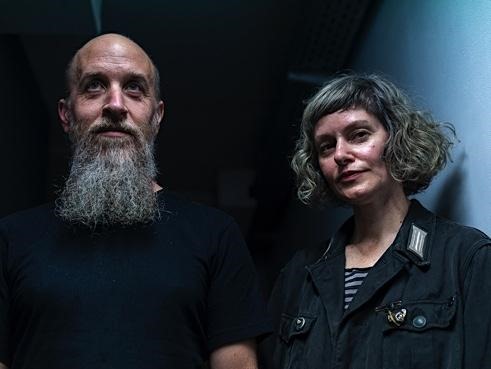
Nadja2025

Photo: Hugues de Castillo

Gizeh Records – 28th March 2025

Christopher Nosnibor

I sometimes wonder if Aidan Baker has secretly mastered cloning, since he has seemingly pursued multiple careers simultaneously. He’s been active for some time, it’s true, but even the compressed version of his bio makes for quite the read:

As a member of Nadja, Hypnodrone Ensemble, Noplace Trio, Tavare and a host of other projects and solo endeavours, Baker’s prolific output remains vital as he continues to explore a vast terrain of sounds and genres across a 30 year musical career.

His latest work, & You Still Fall In, we learn, was recorded at Baker’s home studio in Berlin, and ‘hints at the mood and songcraft of the likes of Midwife, Hood, Stina Nordenstam and Movietone. The album is a compelling listen, stripped down to mostly electric guitar and vocals and moving at a distinctly glacial pace. The intimacy of the hushed tones and muted textures lean into a dark, hypnotic and gentle stillness that lingers in the air…’

That fact that this is a truly solo work, with Baker taking care of guitar, bass, drum machine, and vocals is perhaps key to its low-key, introspective atmosphere. Intimate is the word: on the title track which raises the curtain on this soporific sequence of compositions, the acoustic guitar strum hovers to a drone, wavering in volume, seeming to drift, seeming to warp, to fade, you can hear fingertips swiping on strings between frets, and Baker’s vocal is but a mumble; you hear sound, but the words don’t fall free to clarity.

‘Drowning Not Waving’ blends rumbling bass distortions with glitching drum machine and an air of uneasiness: the experience is every inch the struggle the title suggests. And that title… the phrase may have become a popular adaptation of the line from Stevie Smith’s 1957 poem and a metaphor for depression, but to momentarily reflect on the actuality of this all-too -common experience is to recognise the extent to which we, as a society, still – STILL – fail to identify a person in crisis. ‘Cheer up, it might never happen’, we hear often. But it does happen. Even well-meaning friends will diminish the spasms of crisis with ‘well, my life’s shit or probably worse, actually’ type responses. And each such response is like a hand on the head, pushing down. And yes, I speak from experience, and not so long ago I was out for a walk in an attempt to find some tranquillity, some headspace, some time with my thoughts. A dog, off lead, ran up to me and began barking and hassling. Its owners called it back and then groused at me for my failure to smile and thank them. “Ooh, someone’s lost their smile,” the guy said loudly, purposefully so that I could hear. No fucking shit. But you know nothing about my life. My wife died recently and I am not in the mood for being hassled by dogs, and I owe you twats nothing, least of all a smile. I continued on my way without a word, let alone a smile, and there was no point in waving. I was simply drowning. The moral? People may have stuff going on you know nothing about, so don’t be a twat. And anger is only a few degrees along from depression. Music has a boundless capacity to inspire the most unexpected responses.

Things stray into even more minimal, lo-fi territory with ‘You Say You Can See Inside Me’, which captures the spirit of Silver Jews and the soul of some of Michael Gira’s solo recordings. It’s muffled, droning, barely there, even. And yet, somehow, its sparsity accentuates its emotional intensity. There’s almost a confessional feel to this, but it’s a confession so mumbled, either through shame, embarrassment, or plain unwillingness.

On the surface, & You Still Fall In is a gentle work, defined by mellow, picked acoustic guitar and vocals so chilled as to be barely awake – but everything lies beneath the surface. And the surface isn’t as tranquil as all that: ‘When The Waves They Parted’ may be defined by a rippling surge but there’s discomfort beneath the ebb, and the reverb-soaked crunch of ‘Still Cold from the Rain’ is bleak and lugubrious.

Although presented as two separate pieces, ‘Thin Film Interface’ is a continuous thirteen-minute expanse of murky ambience with lead guitar work which soars and echoes over a shifting sonic mist. It hovers in the background, yet simultaneously alters the texture and colour of the air, relaxing but with an unresolved tension beneath.

& You Still Fall In is a difficult album to place – but why should that be necessity? A lot happens, an at the same time, it doesn’t. & You Still Fall In is sparse, drifting between acoustic and altogether simpler acoustic instrumentation. But instead of dissecting the details or reasoning, I’m going to point to the album, and simply say ‘listen to this’. Because it’s simply incredible.

AA

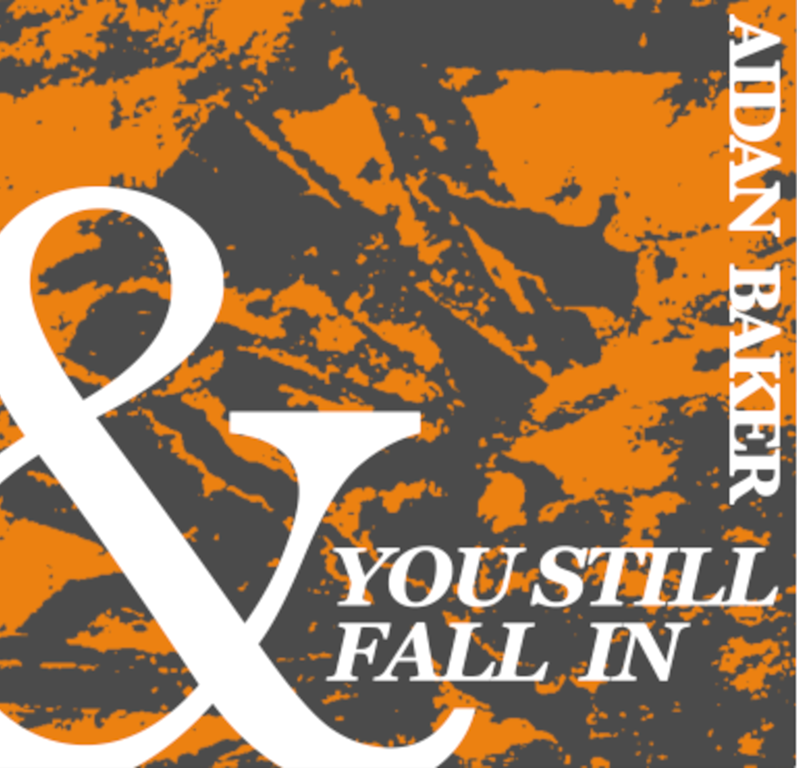
cover

Midira Records – 5th May 2023

Christopher Nosnibor

Aidan Baker is one of those artists whose output is almost impossible to keep pace with – but the more remarkable thing is that for all of this hyperproductivity, the standard of work is of an unstinting quality. Recorded between 2020 and 2022, Engenderine – a double CD – lands almost simultaneously with Trio Not Trio, the first in a series of five albums on Gizeh Records, and just as Baker is gearing up for a tour with Nadja, the ‘ambient doom / dreamsludge, / metalgaze’ duo he is one half of.

To pause for breath for a moment, it’s worth stepping back and running through the context of this, which is worth quoting:

‘The neologism ‘engenderine’ comes from Lydia Yuknavitch’s The Book of Joan, a futuristic/dystopian/cli-fi retelling of the Joan of Arc story, and describes beings partially composed of pure energy capable of manipulating matter who, amongst a largely devolved human population, might be considered post-gender and a new evolutionary step.

‘Other song titles come from phrases and images from Tricia Sullivan’s duology Double Vision and Sound Mind, surrealistic fantasies about the nature of reality and perception and, like The Book of Joan, the possibilities of manipulating those.

‘Musically, the songs on Engenderine began as a series of slowly evolving ambient guitar loops – a bed layer of reality, so to speak – over which were layered bass, drums, and organ parts. These instrumental additions – the trappings of perception, signifiers, metaphorically speaking, our attempts to codify perception – incorporate traditional rock structures and progressions but are stripped down to a sort of somnambulant minimalism that might encourage introspection, a meditative background, uneasy listening, as much as they demand attention.’

It really is extremely uneasy listening. It’s perhaps as well it is, for the larger part, ‘background’, because the two CDs, while only containing eight tracks in all, span almost ninety minutes. We’re not quite in Sunn O))) or latter-day Swans territory, but still…

The first track, ‘Baby Dragon Slaughter’ pitches a long, unchanging organ drone note against a growling doom guitar and stop-start percussion which crashes hard. It’s hypnotic, paralysing, and I can imagine some might toss in a Doors comparison, but that’s only on account of the organ and the slightly trippy vibe, because it’s not only nothing like The Doors, but infinitely better.

If you want comparisons – because pretty much everyone seems to work on the premise that everything sounds like something else and recommendations – mostly algorithmic and based on purchases or streams, depending on the platform, Engenderine sits in the low, slow, doom-drone bracket of Sunn O))) and Earth 2. And this is indeed some ultra-low frequency shit. The first track on Disc 2, ‘Resurrection of the Child Army’ features some melodic, trilling pipe sounds around seven minutes into its nine-and-three-quarter-minutes gloomy, thick humming drone, is something you feel as much as you hear, and it resonates through the intestines and vibrates eternally.

The bass on ‘Calabi Yau Manifestations’ is pure dub, floor-shakingly dense, dark, minimal but quiveringly heavy, and it dominates the erratic drum clatters and rumbling roar of a drone that sounds like a jet engine warming up several miles away. Having experienced jet engines nearby, trust me., this is a good thing, but the rumble is unsettling. And then there’s ‘Dorvay’, which seems to take its cues from The Cure circa Pornography, with its hefty percussion dominating the sound.

Engenderine isn’t an album for a track-by-track, blow-by-blow critique: the tracks melt into one another and it’s an album that needs to be experienced as an album – and in context, that’s a continuous droning hum of murky noise without any clear sense of shape or form.

The second disc feels lower, slower, darker and more difficult: the erratic jazz drum-work on ‘Fear Sculptures’ is difficult to digest and assimilate – but then again, so is Engenderine as a whole. It’s just so much dark and difficult droning to chew on that it leaves you feeling low on energy, sapped, physically and mentally. But this isn’t about entertainment, and artistically, Engenderine is an outstanding exploratory / concept work.

AA

MD136_front

Cruel Nature Records – 6th September 2022

Christopher Nosnibor

These are interesting times for Nadja, the ‘ambient / experimental / doom metal’ duo comprising Leah Buckareff and Aidan Baker. Luminous Rot was recorded during lockdown, and found a home on the legendary Southern Lord label. Released in the spring of 2021, it’s a veritable beast of a work, which combined metal with post-punk, cold-wave, shoegaze, and industrial.

Lockdown feels like something of not so much a distant memory as an unreality, and if by May 2021 it felt like life was returning to normal, the truth is that the wounds were still raw, and any attempt to move on as if life was back as it was before was simply a wilful act of delusion to stave off the effects of the trauma.

And with every trauma, there is some residual hangover, and you might say that Labyrinthine is the product of that. As the accompanying notes detail, the material was recorded during the pandemic and concurrently with Luminous Rot, and ‘explores themes of identity and loss, monstrosity and regret, extreme aesceticism, the differences between labyrinthes and mazes, taking inspiration from Haruki Murakami’s Killing Commendatore, Ursula K. LeGuin’s The Tombs of Atuan, and Victor Pelevin’s reinterpretation of the story of the minotaur and Ariadne, The Helmet of Horror.’

When a band chooses to self-release an album, it’s no longer an indication that it’s substandard or not worthy of a label release, and the case here is that Labyrinthine, which ‘this might be Nadja’s heaviest, doomiest album to date’, it’s clear that rather than consisting of session offcuts, it stands alone as a separate project from Luminous Rot, featuring as it does, a different guest vocalist on each track, and it’s worth listing them here:

Alan Dubin – legendary American vocalist from O.L.D. and Khanate and, currently, Gnaw

Rachel Davies – vocalist and bassist from the British band, Esben & The Witch

Lane Shi Otayanii – is a Chinese multi-media artist and vocalist in Elizabeth Colour Wheel

Dylan Walker – American vocalist from grindcore/noise band Full of Hell

With such a roll-call of contributors, it’s in no way possible to fee short-changed by the fact there are only four tracks, and ‘only’ is somewhat redundant when the shortest of these is almost thirteen minutes in duration. This is an album alright, and it’s an absolute fucking monster at that.

And while the CD release is on the band’s own label, Broken Spine, there are limited cassette versions by several different indie labels from around the world: Katuktu Collective (US), Cruel Nature Recordings (UK), Bad Moon Rising (Taiwan), Adagio830 (Germany), Muzan Editions (Japan), WV Sorcerer (France/China), Pale Ghoul (Australia), and UR Audio Visual (Canada) – and it’s perhaps noting that the running order differs between formats,  and I’m going by the Cruel Nature tape sequence here rather than the CD. It may be more intuitive from a listening perspective, but limitations off format and all…

This co-operative approach to releasing music is highly commendable, and seems to offer solutions to numerous problems, not least of all surrounding distribution in the post-pandemic, post-Brexit era where everything seems on the face of it to be fucked for any band not on a major label with global distribution and access to pressing plants and warehouses worldwide.

The title track is a lugubrious droning crawl: imagine Sunn O))) with drums crashing a beat every twenty seconds in time with each pulverising power chord that vibrates your very lungs. And those beats are muffled, murky, and everything hits with a rib-crushing density, that’s only intensified by the squawking, anguished vocals that shred a blasted treble in contrast to the thick billows of booming bass sludge, and it’s a truly purgatorial experience.

And then, here it comes, and it all comes crashing down hard over the course of the most punishing nineteen minutes in the shape of the brutal behemoth that is ‘Necroausterity’. In a sense, the title speaks for itself in context of a world in lockdown, and it’s sometimes easy to forget just what terrifying times we endured, watching news reports of bodies piling up in New York and elsewhere while governments and news agencies fed a constant stream of statistics around cases and deaths. It felt truly apocalyptic. And ‘Necroausterity’ is the sound of the apocalypse, tuned up to eleven and slowed to a crawl, the writhing torture of a slow, suffocating death soundtracked by guitar and drums do dense and dark as so feel like a bag over the head and a tightening grip on the throat. The recording is overloaded, distorting, and it’s a simply excruciating experience. And it simply goes on, chord after chord, bar after bar, slugging away… and on in a fashion that makes SWANS feel lightweight in comparison. It’s relentless, unforgiving, brutal, and punishing.

‘Rue’ broods hard with dark, thick strings and a heavy atmosphere, but it’s light in comparison. It’s dense, and weighty, but Rachel Davies’ ethereal vocal drifts gloriously within the claustrophobic confines and conjures another level of melody that transforms the thick, sluggish drones into something altogether more enchanting. It builds to a throbbing crescendo that is – perhaps not entirely surprisingly – reminiscent of Esben And the Witch or Big | Brave.

Wolves howl into the groaning drone of ‘Blurred’ and the guitars slowly simmer and burn: no notes, just an endless am-bleeding distortion before the power chords crash in and drive hard, so low and slow and heavy so as to shift tectonic plates and shatter mountains. Amidst the raging tempest, Lane Shi Otayanii brings an otherworldly aspect that transcends mere words, making for a listening experience with a different kind of intensity as it trudges and churns fir what feels like a magical eternity.

The sum total is the sound of hellish desperation, and while Labyrinthine may offer absolutely no solace in the bleakest pits of deathly despair, you’ll be hard-pressed to find an album that better articulates perpetual pain and anguish better than this.

AA

cover

Nadja reveal another track "Starres" from their forthcoming album Luminous Rot, which shall be released on CD and DL formats via Southern Lord on 21st May, with the LP version arriving on 13th August. Luminous Rot pre-orders are live from today, and info can be found on the Southern Lord store, Southern Lord Europe store and via Bandcamp.

About the track and video Nadja comments, "Starres is about both inner- and outerspace, a conflation of the internal neural-network of the human brain with the external cosmos, and how the act of observation might alter those, both from the viewpoint of the observer and the one observed. The video attempts to replicate something of that feeling of cognitive dissonance in the observer, taking a mundane image of houses and warping them, both through reflective filming and digital effects."

Watch the video here:

AA

Nadja 2

(image by by Janina Gallert)

Nadja share special video footage recorded at The Black Lodge in Berlin, which originally premiered exclusively for Roadburn Redux last Friday – now available to view here. About this new material, Nadja comments, "Early in 2021, the Black Lodge and Salon Oblique invited us to participate in their series of filmed performances by Berlin artists. For this session, we chose to perform a new composition, ‘Seemannsgarn’, an extended, meditative piece we wrote about a liminal and tranquil green space/urban waterway in our quiet corner of Berlin, now in flux and with an uncertain future, threatened by gentrification and development.”

This standalone piece does not appear on their forthcoming album Luminous Rot, which shall be released on CD and DL formats via Southern Lord on 21st May, with the LP version arriving on 13th August. Pre-order information incoming soon.

On the new album, Nadja have refined their signature sound which combines the atmospheric textures of shoegaze and ambient/electronic music with the heaviness, density, and volume of metal, noise, and industrial. The duo retain their overblown/ambient sound, and explore shorter and more tightly structured songs reflecting their interests not only in metal, but post-punk, cold-wave, shoegaze, and industrial.

Thematically, the album explores ideas of ‘first contact’ and the difficulties of recognising alien intelligence. This was in part inspired by reading such writers as Stanislaw Lem and Cixin Lui — in particular, theories on astro-physics, multi-dimensionality, and spatial geometry in "The Three Body Problem" — as well as Margaret Wertheim’s "A Field Guide To Hyperbolic Space," about mathematician Daina Taimina’s work with crochet to illustrate hyperbolic space and geometry.

The album was recorded between their home studio, Broken Spine Studios, or Nadja’s live rehearsal studio, both in the district of Lichtenberg, Berlin.

Luminous Rot marks the first album mixed by someone else, who in this case was David Pajo. The band comment, “as big fans of Slint, we thought he might fore-front the more angular, post-punk elements of our music – the mix is quite different from our previous albums. But, as usual, we had James Plotkin (Khanate, OLD, etc) master the album as we trust his ears and aesthetic, as he’s mastered numerous records of ours.”

Watch the video here:

AA

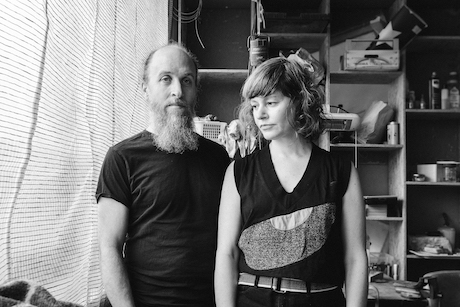
Nadja

image by by Janina Gallert

Gizeh Records – 10th November 2017

Christopher Nosnibor

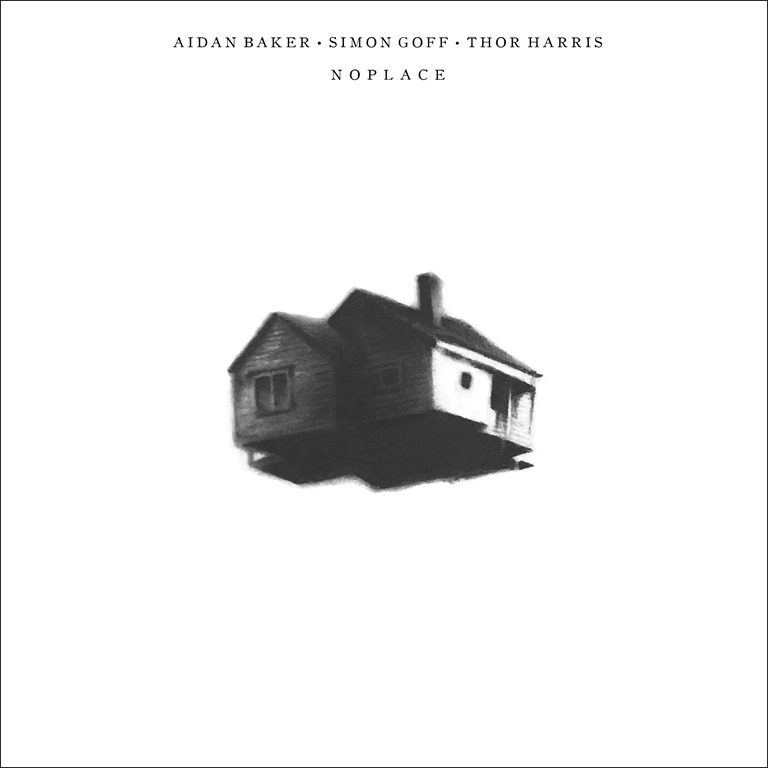
This is certainly quite the collaborative lineup, featuring as it does Aidan Baker (Nadja / Caudal / B/B/S/), Simon Goff (Molecular, Bee & Flower), and Thor Harris (Swans, Shearwater, Thor & Friends). What renders Noplace all the more impressive is that it’s an improvised work, recorded in a single day.

As the press release recounts, ‘having known each other for a number of years and previously contributed to one another’s recordings this trio finally came together as a whole on May 7th 2017 at Redrum Studios in Berlin. In a short, improvised session of just a few hours they set about laying down as much material as possible which was then subsequently edited and re-worked (without overdubs) to form this album.’ And the results are quite something, and I very quickly manage to put aside the thought that the cover art reminds me of the film Up, minus the balloons.

Rippling strings quaver over softly swelling undercurrents while rolling percussion provides a subtle, unobtrusive rhythm as ‘Noplace I’ introduces the album before creeping into the darkness f counterpart piece ‘Noplace II’. And yet it’s very much only the beginning: having been moulded post-recording, the album’s seven individual pieces are structured and sequenced so as to lead the listener on an immersive journey which gradually and subtly moves from one place to entirely another.

‘Red Robin’ builds a pulsating, looping groove overlaid with creeping stealth. Its repetitious motif may owe something to the hypnotic cyclical forms of Swans, but its trance-inducing sonic sprawl also alludes to a hypnogogic reimagining of dance music – and this filters into the spacious ‘Noplace III’, which draws together expansive ambience and, in the distance, shuffling, tranced-out beats, to create something that stands in strange, murky Krautrock / dance territory. Yes, it sounds electronic. Yes, it sounds unique, but at the same time, yes, it sounds familiar in terms of the individual genre tropes. It’s ‘place’ is precisely ‘noplace,’ in that it belongs nowhere specific, yet appeals on many different levels and in many different ways.

Interweaving motifs continue to feature in ‘Tin Chapel,’, but the rhythm here is much more prominent, a weighty four-four bass/snare beat driving a linear road through the sweeping, strings that glide from mournful to tense. The locked-in psyche-hued desert rock bass groove pushes the piece forwards, while at the same time holding it firmly in one place. In turn, it tapers into the bleak, murky expanse that is ‘Northplace’.

The final composition, ‘Nighplace’, brings things down and almost full circle as the percussion retreats into the background amidst a wash of elongated drones which ebb and flow softly.

Noplace certainly doesn’t feel improvised, and while it’s remarkably cohesive, as well as possessing a strong sense of structure, it also reveals a remarkable range, both sonically and compositionally. And irrespective of any context, it’s an engaging and immersive aural experience.

AAA

GZH79-Baker-Goff-Harris-Noplace-Digital-Sleeve

Gizeh Records – GZH70 –4th November 2016

Christopher Nosnibor

Aiden Baker’s name features on a staggering number of releases, and while Nadja – the duo consisting of Baker and bassist Leah Buckareff – may only be one of many side-projects, the discography they’ve amassed since 2003 is substantial, to say the least. On The Stone is Not Hit by the Sun, Nor Carved With a Knife, they offer three immense ambient doom tracks which make for a welcome addition to that discography.

‘The Stone’ opens the album with a deep, slow bass. A delicate guitar is soon obliterated in a deluge of overdrive. Over the course of the track’s imposing twenty-two minutes, they build a pounding groove, the drum machine and bass in combination emphasising the heavy rhythms. Baker’s vocals are low in the mix, and with the textured, picked guitar chords, they straddle the grinding abrasion of Godflesh and the majestic shoegaze of Jesu. The contrast between the mechanical, industrial drum sound and the rich, organic sound of the guitar is integral to the sound, while the space between the notes is a core aspect of the composition: the stop / start mid-section of ‘The Stone’ jars the senses.

‘The Sun’ provides the album’s colossal, megalithic centrepiece. It takes its time to rise, and a steady, soft, meandering clean guitar and gentle, reverb-heavy vocal owes more to psychedelia and shoegaze than ambient or doom. But there’s a simmering tension that builds slowly but surely. The textures and tones gradually transition from clean to distorted, before drifting out into an extended ambient segment. Yawning drones roll and rumble: these are vast expanses of sound, twisting out toward an infinite horizon. And when the guitar and bass return, it’s with an even greater, more crushing force. The drums are distant, partially submerged by the snarling, thunderous bass and immense guitar which carries the listener on am oceanic expanse of sound.

A subtle, amorphous drone hovers atmospherically through the final track,’ Knife’. Arguably the album’s most ‘pure’ ambient passage, it’s hushed, mellow, almost soporific and marks a real contrast with the previous two tracks. There’s a part of me that, on first hearing, found ‘Knife’ a shade disappointing in context of the album as a whole: ‘The Stone’ and ‘The Sun’ set a certain expectation that, at some point, devastatingly heavy, thunderous bass, crashing drums and cinematic drone guitar will hit like a landslide, but it simply doesn’t happen. However, on reflection – and this is an album which requires much reflection – it’s a well-judged change of form. In confounding expectation on the final track, Nadja show that they’re not tied to formula.

In exploring the contrasts of volume, texture and mood, The Stone is Not Hit by the Sun, Nor Carved With a Knife is a more considered and ultimately rewarding work.


Nadja - The Stone is Not Hit