Posts Tagged ‘minimal’

Human Worth – 10th November 2023

Christopher Nosnibor

I know it’s not really cool to make that you’re cool because you’re in the know or whatever. A few years ago, it was the way of the hipster, but after what felt like forever, they seems to have disappeared, probably because everyone grew beards during lockdown, so the hipsters had to shave and resort to telling people they were wearing a beard before the pandemic or something. Nevertheless, I can’t help but take some satisfaction from having observed Beige Palace from their very dawn, at their first show in the now-lost CHUNK rehearsal space-cum-gig venue way back in the spring of 2016. The place was a bugger to get to from the train station, being practically in the middle of nowhere you’d actually want to go, and to describe it as basic would be polite. But what CHUNK provided was a place where anything went. It was BYOB, pay what you can, and it was a hub of creativity which lay at the heart of the DIY scene in Leeds. And so it was that Beige Palace – perhaps not quite a supergroup at the time, but simply people in other bands (Freddy Vinehill-Cliffe (Thank), Kelly Bishop (Gloomy Planets) and Ant Bedford (Cattle)) doing something different together – came to be.

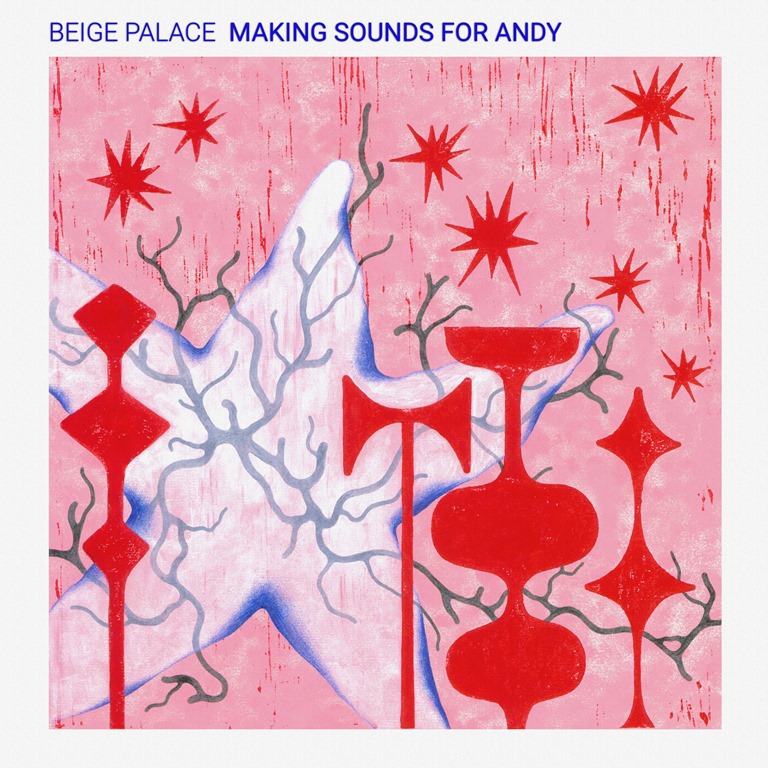
They’ve come a way since then, notably with slots at The Brudenell supporting Mclusky and also Shellac, with a personal thumbs-up from god himself, Steve Albini. There’s likely a number of reasons for this, apart from the simple fact that Beige palace are bloody good, a major one being that they make angular noise without being overly abrasive, preferring instead to push sounds that are slated, skewed, imbalanced, jarring, jolting. This is right up front at the start of this, their second long-player, with ‘Not Waving’, a scuzzy collision of Shellac, The Fall, early Pavement, and Truman’s Water. The bass is right up in the mix, the vocals down low, and everything about it is absolutely wrong in terms of conventional sound. You can imagine sound engineers all around the country shaking their heads and saying “but that bass is just booming… it’s drowning out the vocals… and the guitar, maybe you should take the treble down a bit?” But Beige palace’s sound isn’t conventional, and they’re not going for radio-friendly pop tunes.

The album’s title appears to make a nod to XTC, and calls to mind the band’s hit ‘Making Plans for Nigel’ (surely one of the greatest snappy tunes of the New wave era) and the fact that Andy Partridge was co-frontman of XTC. Coincidence? Am I joining dots and identifying references which simply don’t exist? Possibly, but then again, for all the wrongness, the off-key and the off-kilter, there are some neat hooks to be found leaping out from the rumbling basslines and loping drums. ‘Local Sandwich’ is representative: the rhythm section strolls along kicking a loose groove where the bass and drums are seemingly playing alternate to one another, the discordant sprechgesang vocals of the verses overlap one another, making for a tense combination – and then out of nowhere, pow! Hook! And then a squalling climax.

The genius of the songwriting lies in its unpredictability: for as much as the compositions are largely built around repetitive motifs, hammering away at the same nagging loop for minutes at a time, adding and subtracting elements such as keyboard or guitar, they’re prone to veer off somewhere else or otherwise change tempo or burst into a scratchy blast of noise at precisely the moment you least expect – and just when you expect something unexpected, a song like ‘My Brother Bagagwaa’ doesn’t do it. They’re as keen to explore the space in between the notes as the notes themselves, and there are numerous passages on Making Sounds for Andy where they pull things back to stark minimalism. This makes the crackling bursts of distortion and clattering drums all the more impactful.

Leeds has a habit of birthing weird bands who are nosy but not noise, with the legendary Bilge Pump and the should-have-been-legendary Bearfoot Beware providing a brace of examples – but Beige Palace are very much their own band. Making Sounds for Andy is a bold celebration of ramshackle lo-fi, delivered in such a way as to hit hard. It’s got ‘underground classic’ all over it.

AA

HW025_BeigePalace_MakingSoundsForAndy_CoverArtwork

Erototox Decodings

Christopher Nosnibor

Internationally, Kristof Hahn is best known as a member of Swans since their return in 2010, contributing electric guitar to My Father Will Guide Me up a Rope to the Sky and everything since (he was briefly a Swan in the late 80s and early 90s, becoming a touring member for The Burning World and appearing on White Light from the Mouth of Infinity and subsequently joining Gira’s Angels of Light. A lot has happened since then: My Father Will Guide Me was only forty-four minutes in total, whereas now they’ve evolved to have single tracks of that duration, and Hahn’s contribution on recent albums and tours has been lap steel. Witnessing his action on the last tour, while standing so close to him I could actually see the mud spattered around the ankles of his jeans, the significance of his contribution to the immense walls of noise the band create is clearly apparent. I’ve also been vaguely amuse by just how neat and dapper his presentation is, producing a comb to slick his hair back following particularly strenuous crescendos – although I also witnessed him taking said comb to the strings of his instrument in Leeds to yield some particularly unholy noise from an instrument more commonly associated with laid-back twangin’ country tunes.

What’s perhaps less widely known is that Kristof has enjoyed a lengthy career in music before joining Swans, as both a solo artist and a member of rockabilly garage acts The Legendary Golden Vampires, founded in 1981, and The Nirvana Devils (circa 1984). It’s with the former he’s back flexing his creative muscles despite an intense touring schedule with Swans.

Here, the Berlin-based core duo of filmmaker Olaf Kraemer (vox) and Kristof Hahn (guitars, organ, harmonica), reunited for the first time in many years, are joined by Thomas Wydler (drums), Achim Färber (also drums), and Chandra Shukla (sitar), to cook up a collection of ten songs.

The style is understated, country-leaning, occasionally folksy, with an underlying melancholy hue, with ‘Wohin Du Gehst’ crossing the language barrier to convey a low-level ache of sadness in its tone. Kraemer’s vocals are husky, almost croony, with hints of Mark Lanegan, and suit the low-key compositions well, conveying emotion and world-wearinness and a certain sense of sagacity, which is nowhere more apparent than on ‘White Horse Blues’.

If the reverby guitars of their Husker Dü’s ‘She Floated Away’ channels Chris Isaak, the song’s incongruously jaunty twist is in the vein of fellow German duo St Michael Front, while ‘The Rain’ is sparse and hypnotic and wouldn’t sound out of place on True Detective. The melancholy Leonard Cohen-esque ‘Sad Song’ speaks for itself, quite literally, self-referentially returning to the hook ‘this is such a sad song / and I sing it just for you’.

Discussing the songwriting ‘craft’ on an album feels pretentious and a bit wanky, but making songs this sparse – but also this layered – is a true example of crafting. Having mentioned Leonard Cohen previously, one thing that’s often overlooked is just how many incidental details there are on many of Cohen’s songs: The Songs of Leonard Cohen in particular is , on the face of it, acoustic guitar and voice, but there’s much more happening in the background, coming in and out of the mix, and this is something that comes through in attentive listening to Polaris. It’s subtle, keeping the overall sound quite minimal, but the attention to detail is what really makes it special.

AA

a3829215066_10

Cruel Nature Records – 30th June 2023

Christopher Nosnibor

Less than a year on from Their Invisible Hands, and just nine months after Undergrowth, Clara Engel serves up Sanguinaria. The all-too-common ‘returns with simply isn’t appropriate here, since it implies absence, and Engel’s rate of output hasn’t only been consistent, but if anything has accelerated lately, with this being their eighth release since Hatching Under the Stars in April 2020.

The advent of streaming has unquestionably changed the face of the music industry, and it seems to be broadly accepted that the change is most certainly not in the favour of artists, with Spotify CEO suggesting that if artists want to achieve more streams and therefore more royalties, they need to be producing more content, and more regularly, famously telling Music Ally that it’s “not enough” for artists to release music “every three to four years” and that they ought to maintain “continuous engagement with their fans.”

This speaks volumes about his view of music – that it’s not art, but a commodity. And of course, his interest in artists cranking out product on a conveyor-belt is quite clearly in the profit it generates for his company and him personally, not those who produce it. It also shows a complete lack of understanding of the creative process: try writing and recording material while being continuously engaged. Moreover, many creative types aren’t extroverts by nature, and aren’t disposed to sharing endless videos and vlogs and updates on their time in the studio. And do audiences really want or need that anyway? We don’t necessarily need to feel like we know the artist or have a ‘chummy’ or direct connection with them: we just want the music and prefer a bit of mystery and distance.

In the 60s and 70s, it was commonplace for artists to prelease an album every six months, and there’s a very good reason this practise stopped: it simply wasn’t sustainable, and it was invariably the artists who suffered rather than the labels who effectively owned them.

But where I’m going with this is that every artist is different, and the creative process is a personal and individual thing, and sometimes artists experience huge creative flurries, while at others they may experience creative slumps. Clara Engel is clearly experiencing a flurry of late, and the remarkable thing about it is that they’re producing work not only in quantity, but of a remarkable quality.

If in terms of output, more may be more, the stark arrangements of Sanguinaria abundantly evidence that less is very much more in most cases. There is a beautiful achingness which pervades every moment of the album’s downbeat folk contemplations.

The songs on Sanguinaria are sparely-arranged and it’s Engel’s voice which is to the fore, at least in term of the mix. ‘The sky is huge, and the sea is green’, they sing in the reflective refrain of ‘Sing in Our Chains’, and it’s an evocative pastoral feel that nags at you and makes you feel… sad, haunted, makes you look inside yourself. You may not necessarily feel comfortable in doing so, but this is only one of several reasons why it’s worth spending time with Sanguinaria.

Although a solo album and a minimal one at that, Engel – a multi-instrumentalist who plays a fascinating array of instruments here, notably, according to the liner notes, ‘electric cigar box guitar, acoustic guitar, talharpa, gudok, cajón, wooden trunk with soft mallets, tongue drum, melodica’ – is accompanied by a number of contributing musicians who add subtle detail and essential texture and depth. The picked strings and sad-sounding violin forge a mournful dark folk sound on ‘Poisonous Fruit’ and it calls to mind Dark Captain, a band I still miss and feel were criminally underrated. ‘I Died Again’ is so simple, so melancholy, so human, it’s impossible not to be moved by it: Engel’s vocal is rich, but uncomplicated.

‘Extasis Boogie’ introduces percussion for the first time, with hand drums quietly bopping behind an understated guitar, while the lap steel drones on ‘A Silver Thread’ add a weight to the slow sadness that drips from every note.

These are songs which are carefully crafted, considered, and feel so natural and rich; there’s no hint of their having been rushed or being partially-evolved. As such, Sanguinaria feels like an album that connects the feelings behind its creation and the final output.

Engel’s soul is bare on this finely-poised and thoughtful album, and perhaps because of, rather than ins spite of, its minimalism, it’s a gripping work.

AA

a1950392451_10

10th December 2022

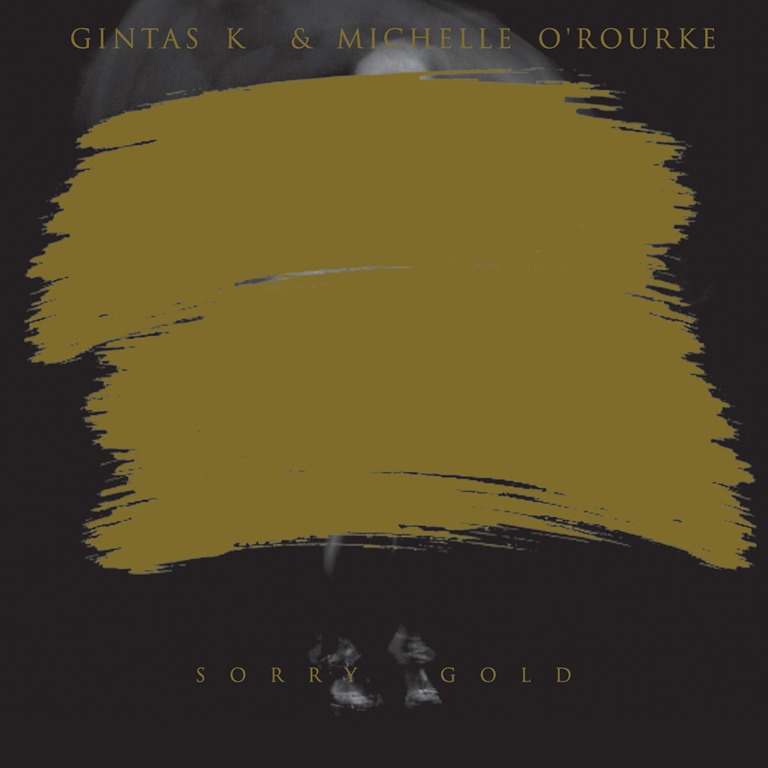
Gintas K wraps up a(nother) truly prodigious year with a collaboration – and an apology. The Lithuanian sound artist hasn’t strayed so far from his experimental electronic roots, at least fundamentally, but at the same time, Sorry Gold does mark something of a substantial and significant departure.

As the accompanying text explains, ‘this recording was made on stage at the Project Arts Center in Dublin, during the making of the film Sorry Gold Emily Aoibheann. The artists improvised to the visual landscape of the rehearsal space, stage design and dancers…’ it was funded by the Arts Council / An Chomhairle Ealaíon and Dublin City Council, supported by Dublin Fringe Festival, add the performances premiered as a part of Dublin Fringe Festival at Project Arts Centre in September 2019.’

With additional production and resigned from the original project, the album is only sort of a soundtrack, and the track numbering is both confusing and frustrating, with #1, #2, #4, #3, being followed by #4 #2, #2 #2, #4 #3 and #3 #2 before the more sequentially logical #5 and #6 conclude this most eclectic listening experience.

Replacing the glitching frenzy of bubbling, frothy digital frenzy that is Gintas K’s trademark is a much sparser, more minimal approach to composition, with single notes that sound like ersatz strings being plucked, atop quivering drones and low-rumbling organ sounds that fliker erratically like gas lights and resonating out into a spacious room. It has an almost orchestral feel, albeit distilled to absolute zero. The notes are a little fuzzy and ring out into emptiness, while the haunting vocals of Michelle O’Rourke are utterly mesmerising and border on transcendental. In combination, the atmosphere is deeply absorbing and heavily imbued with a spiritual, other-worldly element.

The first piece introduces us to a strange, haunting space beyond the familiar, and while it’s not by any means unpleasant, it is disconcerting, and sets the tone, ahead of ‘Sorry Gold #2’, which is melancholic, brooding, spaced-out notes hovering while O’Rourke ventures into almost operatic territories. It’s a not only a different atmosphere, but a different mood when placed alongside K’s other works: it feels a lot more serious, and has a different kind of energy, a different kind of intensity. I’m accustomed to feeling bewildered by the frenetic kineticism and abundant playfulness of his work. Sorry Gold isn’t entirely without joy, but it is much darker and much, much slower-paced, delivering a different kind of intensity.

It’s not until ‘Sorry Gold #4’ that things even hint at K’s more characteristic and overtly electronic noodling, and as the album progresses, we do encounter more of his feverish electronic tendencies, notably on the grinding ripples of ‘Sorry Gold #3’, but they’re much more restrained. ‘#4 #2’ brings a surging swampy wash of noise that’s a buzzing, grinding industrial blast of fizzing distortion. O’Rourke, barely audible in the sonic storm, sounds lost, detached.

Of the ten tracks, only two are under four minutes in length, and the pair use these extended formats to really push outwards: the ten-minute ‘Sorry Gold #4 #3’ brings helicoptering distortion that crashes in waves, at times low and rumbling, at others, crackling and fizzing with treble, and it creates a different kind of disturbance. Dissonance howls desolately on ‘#3 #2’, and so does , wracked with pain and spiritual anguish.

By the time we arrive at the brief and delicate bookend that is ‘Sorry Gold #6’, one feels inexplicably drained. The experience is somewhat akin to wandering ancient tunnels by flickering candlelight, observing ancient wall art while a subliminal mind-control experiment blasts random frequencies directly into your brain. You’re left feeling somehow detached, vaguely bewildered and bereft. And you feel deeply moved. Sorry Gold is special: Sorry Gold is bleak and harrowing, but it’s solid gold.

cover

It is no wonder that the experimental string duo Lueenas often work with film music. In their recent collaboration with animator and video artist Jonas Bentzen, their affinity for the magic that can happen moving image and moving music is highly apparent. From the p.o.v of a solo traveler, the camera takes us hauntingly through underground tunnels and fantastical sci-fy spaces of ancient aesthetics while the violent track ‘Nyx’ is carrying us through it all. For Lueenas darkness and beauty are two beautifully intertwined sensations and this duality is a driving force in their video collaboration with Jonas Bentzen, creating an eerie yet alluring and sensual journey.

For fans of Tarkovsky’s Stalker and Mica Levi’s soundtrack to Under The Skin, this music video from Lueenas and Jonas Bentzen is one to watch. “Nyx” conjures the story of Hemera’s mother, the Goddess of Night, born from Chaos and feared by all, even Zeus. Through distorted and shrieking layers of violin, and the mammoth double bass figures, she carries at once a brutal wrath and conciliatory power. Transforming into

upward blazing howls, we are reminded that there is beauty in darkness. Nyx is part of the self-titled album by Lueenas, released November 4th, 2022.  Cinematic, strings & electronics duo, LUEENAS, announce self-titled debut album, out Nov. 4. Intuition and acceptance are at the core of the debut album from Danish electrified string duo, Lueenas. Exploring the complex spaces between typical emotional dichotomies, their language emerges brimming with imaginative uses of form and texture. Born over a year of improvised sessions, and informed by their involvement in other projects across pop, jazz, electronic, experimental and post-classical music, Maria Jagd and Ida Duelund then set out to puzzle together the luring soundscapes that make up their self-titled debut. Experimenting with the limits imposed by their stringed instruments, and pushing the boundaries between acoustic, amplified and electronic sources allowed them to draw on a much broader and expressive colour palette of sounds.

Taking inspiration from ancient sacred practices, the album encompasses millennia of storytelling from distinctly female perspectives. Lueenas’ fully-cast debut album is at once the evocative score for a lauded expressionist film yet to be made, and a sermon for the fluidity of the emotional experience across time and space. As an ode to the communicative power of strings, it tells us what would otherwise remain untold. Lueenas is an experimental string duo formed in 2019 by Ida Duelund and Maria Jagd, and based in Copenhagen, DK. With violin, double bass, effects and amplifiers, they create violent and beautiful soundscapes full of panoramic grandeur. Their cinematic aesthetic has roots in both classical minimalism and improvisational rock music.

Watch the video here (click image to play):

Nyx 2

11th November 2022

Christopher Nosnibor

Yorkshire based Mayshe-Mayshe’s bio references blending ‘dreamy art-pop and electronica with rich storytelling, skittering percussion and infectious melodies’, and how her ‘deceptively simple songwriting – at once universal and deeply personal – incorporates choral vocals, vintage synths and the occasional hairdryer.’

Said hairdryer was observed in a couple of live reviews I’ve penned in recent years, in catching her live in 2016 and 2021, but what always stands out during her performances is just how deftly she combines an array of elements, both stylistic and instrumental. She’s by no means just ‘another’ loop pedal artist, but a musical who judiciously uses the tools available to conjure textured, layered, detailed works which are, at the same time, simple and radiate aa unique sense of – for wont of a better word – naivete. But equally, her capacity for understatement is a defining characteristic. The fact that while playing a number of regional shows to launch Indigo, her second full-length album, her hometown show in York on the release date is in a record shop/café with a capacity of about 30 speaks for itself.

Performing as Mayshe-Mayshe, Alice Rowan presents as not necessarily shy, but introspective, considered, contemplative and as much as immersing her work in reservedness, there’s a certain sparkle of sass and levity in the mix, as titles like ‘You Throw Lemons, We Throw Parties’ from 2019’s Cocoa Smoke indicates.

Indigo is simultaneously simple and complex. As the lyrics to the title track demonstrate, she’s given to exploring emotional depths by balancing the direct and the oblique to create an obfuscating haze. And, in record, the same is true of her compositions.

‘But I Do’ kicks the album off in a style that’s minimal and poppy and kinda urban but at the same time ethereal and shoegazy, with busy fingerdrums and a crystalline distillation of mood that invites solid and favourable comparisons to The XX.

‘Dark Mountain’, released as a single in September, is really rather buoyant, with a bouncy bass and busy lead synth and twitchy urban vocal delivery that’s quite at odds with the tense lyrics and the ‘I’m drowning, downing’ hook which speaks to anxiety and panic. I suppose you might call it a sugar-coated pill, but it showcases Alice’s capacity to pen bleak yet buoyant pop tunes.

In contrast, ‘Moonflood’ is altogether darker yet dreamy, in a Curesque way, while ‘The Colours of Anxiety’, which originally featured on the 2019 Long Division compilation, is looping, lilting, and easy on the ear in a way that brushes over the tension it channels via a stuttering beat akin to a palpating heart. In this way, Mayshe-Mayshe conveys sensation beyond the words, beyond the explicit, and does so beautifully, in the most subtly resonant fashion.

In many ways, ‘Eczema’ speaks for itself, an itch that just won’t go away, sore and raw, uncomfortable and irritating, but presented in a palatable fashion, and ‘How to be Happy’ feels like a conscious attempt to be uplifting – which is it, but there are strong undercurrent which are less joyous. ‘Zachter’ is another previous release, having featured as the lead track on the two-track Zachter EP last year. With its lyrics in German and its instrumentation sparse and gloopy and with a hypnotic minimal dance groove, it’s something of an oddity which sits apart from the rest of the album.

The title track, released as a single only the other week, rounds the album off in a hazy, intricately detailed style. Accessible, and often breezy-sounding and easy on the ear, Indigo is an album that’s rich in depth and complexity. It’s thoughtful and emotive and dark and tense yet still extremely enjoyable. It’s a wonderful thing.

AA

su49355-Mayshe-Mayshe_2022-1_-_smaller_copy

Shows:

Nov 10

Cobalt Studios

Newcastle Upon Tyne, UK

Nov 11

FortyFive Vinyl Cafe

York, UK

Nov 12

Hatch

Sheffield, UK

Nov 14

Dubrek Studios

Derby, UK

Nov 15

The Holy GrAle

Durham, UK

Nov 17

Oporto Bar

Leeds, UK

Nov 18

The Peer Hat

Manchester, UK

Nov 19

The Studio

Hartlepool, UK

Nov 20

The Grayston Unity

Halifax, UK

Nov 26

Blues Night

Richmond (North Yorkshire), UK

Poole Music

AB – Experimental musician John Also Bennett – may be absolutely nothing to do with COVID vaccines, although there is something of a pandemic element to his new album, which, as the accompanying notes explain, ‘emerged from a bicoastal pandemic road trip through the badlands of South Dakota’ before ‘relocating with his wife (Kranky composer Christina Vantzou) to the cliffside village of Livaniana on the island of Crete, [where] Bennett discovered a method of translating his minimalist lap steel phrases into live MIDI information, which he then used to trigger different waveforms to extend the resonance of the instrument. This multi-layered generative process resulted in a collection as vast and bewildering as the terrain that inspired it: Out there in the middle of nowhere.

It’s quite a backstory for quite an album. The first piece, ‘Nowhere’ is a fifteen-minute epic that’s ultra-sparse and also immensely evocative of… nowhere. It’s the sound of a lost, lonely desert twang: notes bend and hang in the overheated, dusty air. Anyone who’s seen that cover art to The Eagles Greatest Hits – and we’ve all seen that – will know what I mean when I say this sounds like the music that cover really should house. That hot, red sun, the eternal road, straight stretching toward a bewildering horizon, desert on either side… It’s not about tequila sunrises and living life in the fast lane. It’s an image of desolation, of isolation, or being lost and alone. ‘Nowhere’ is the soundtrack to that. A minimal twang that reverberates across the dunes says that in time, without water, without sustenance, you could die out here. You are lost. So lost. And not just geographically. Chords land, in time, but they’re still the sound of desolation, of isolation, and they exist out of time and out of space.

The album contains four tracks (or five if you have the digital-only bonus of the instrumental version of ‘Badlands’), three of which extend beyond the twelve-minute mark, alternated with briefer compositions, with the four-minute ‘Spectral Valley’ and seven-minute ‘Embrosnerós’ are both ambience embodies, and serve as interludes to the big pieces on here.

‘Badlands’ is a beast, but also a work where very little occurs. Notes hover like spectral shadows, ghostly glyphs riding above the solid realm while feet trudge through gravel. There’s something steadily mundane that contrasts with the immensely spatial single-note reverberations. And it’s extremely appropriate. This is not an album of action or movement.

JAB is clearly focused on atmosphere here, and less is very much more. It’s haunting, and leaves you wondering, feeling as though you’re wandering a deserted graveyard, wondering… wondering.

It’s an album that explores both time and space and leaves you wondering if you have either.

PM007_front

AAA

JABB

JAB. Photo: Christina Vantzou

The Helen Scarsdale Agency – 7th October 2022

Christopher Nosnibor

Having effectively rediscovered her appreciation for the guitar during the pandemic, Ekin Fil returns to her musical roots on Dora Agora, although it doesn’t sound like a ‘guitar’ album in any obvious or conventional sense. The guitar is acoustic, and the compositions are – at least in structural terms – limited to a couple of chords, played in a scratchy strum back and forth, providing more rhythm than melody. There’s so little to take a firm grasp of here, and not only structurally. How to appraise something that touches to lightly, offers so little that’s tangible, and yet has such an effect on a deeper, essentially subliminal level?

Subliminal is indeed the word, a word I spent several hours scratching around for as the most appropriate adjective for this most affecting of works. It touches you, and reaches deep, but you simply have no idea why. After all, there isn’t much to it, at least superficially. There’s no real dynamic, there are no hooks or choruses to speak of, and it’s more a listening experience defined by what isn’t rather than what is. But what it is, is utterly compelling.

I often try to consider just how listening to an album makes me feel over what it necessarily does, but on listening to Dora Agora I can honestly say I’m not sure, and can’t be certain if I will ever know.

Across the ten compositions, the majority of which are comparatively brief, with the longest being just over four and a half minutes, and the majority being closer to three, Ekin conjures waves of wispy atmosphere, and the songs flow through your system and psyche without a trace, existing as nothing but vapour which evaporates instantaneously.

The first couple of pieces are instrumental, and on the subsequent songs featuring vocals, as on ‘Ghost Boy’, she spins achingly magnificently misty melancholia, minimal shoegaze where her voice and acoustic guitar drift in a cloud of echo and the sparsest ripples of synth. ‘Buried Again’ is haunting, eerie, and Ekin sounds like a spirit floating through air.

The production leans toward the lo-fi but not to the detriment of the songs: quite the opposite, in fact. The songs are so sparse, so skeletal, as to be barely there, existing almost intangibly, often so nebulous as to lack obvious structure. ‘Agora’ is built loosely around an undulating back-and-forth chord repetition, while ‘Bulutlar Kuslar’ is overlaid with myriad incidentals as she skips breezily through its soft, open space. ‘Yo Feelings’ is so vague that it slips free of any constraints of order as it points the album into the cloud-flecked sky. As the last seconds of echo reverberate into the distance, there emerges a sense that Ekin Fil has transcended the realms of music and the earthbound domain to alchemise something that’s truly beyond.

AA

a0499157403_10

Misanthropic Agenda – 20th June 2022

Christopher Nosnibor

I’ll admit, I was struck by the name when this landed in my inbox. Success! With an insane number of submission emails day, I don’t even open most, let alone play the albums attached. But then I learned that PWIS is Nathalie Dreier – who’s interesting for her visual work as well as her audio – and Dave Phillips, who’s To Death I covered last year – which deepened my intrigue. And it’s one hell of a cover, too.

Meaning What Exactly? is quite a different proposition – from pretty much anything, in truth. Presenting four lengthy compositions, it’s fundamentally an electronic album, but it’s far more than that, or anything. The title is a challenge, a query, a – what I keep hearing as a phrase in my corporate dayjob – a ‘provocation’. It comes down to ‘exactly’. The word is weighted; even without explicit emphasis, it feels emphasised, vaguely stroppy even. The addition is the lexical equivalent of a hand on hip, a raised eyebrow, a scowl, a sneer of condescension to a worker from another department who has no facts. ‘Yeah, do your research, bitch’, is what it says.

And who really knows what it means, or what anything means? Exactly. And what this album means – exactly – I can’t quite fathom. The titles conflict with the contents, at least, based on my lived experience, on my reception. They say it’s a ‘dialogue mixing treated field recordings with organic acoustics and digital sources, brought together in long trance-inducing sessions of meticulous audio de/construction and philosophical debate’. But how much of that is apparent in the end product? Well, that’ debatable.

‘Pangolin’ is otherworldly eerie: a booming drum echoes out through a shifting reverberation of spine-shaking synths. It doesn’t readily evoke aardvark-like creatures, apart from perhaps in the final minute or so when Drier’s monotone vocals are replaced by snuffling barking sounds. It’s weird, but then, what did you expect? I don’t know what I expected, if I’m honest, but probably not this. This is dark, disorientating, disturbed and disturbing, and even more challenging for the absence of context. Meaning is the end product of intent, of purpose, and there’s no clear indication of where this is coming from, meaning we’re left to face the strange with no guidance.

A grinding bass and muffled, muttering voices, whispering about fish all build to a hellish tumult of murmurs and doom-sodden low range hums and thrums, and nothing feels right. It’s awkward, and unsettling. You – certainly I – don’t really tune into the words delivered by Drier in her suffocating spoken word passages, not out of disregard or disrespect, but because all of it comes together to create a claustrophobic listening experience. Meaning What Exactly? is not an album you sit and dissect, or sit and comfortably disassemble or analyse. I find myself, instead, contemplating the meaning of meaning.

‘Us vs Us’ plunges into deeper, darker territories, with a grinding, driving bass worthy of Earth, propelled by thunderous sensurround drumming, with purgatorial howls echoing all around. It’s heavy, harrowing, and it’s that simple, tribal drum style that defines and dominates the eerie eleven-minute closer, ‘The House is Black’. The house is black and the atmosphere is bleak: the vocals are mangled and distorted and play out against a murky, fragmented, fractured backing, to unsettling effect. The beats are sparse, subdued, distant, yet taut, crashing blasts and ricochets. You make it want to stop. The clock is ticking. Your chest tightens. The nerve rise, jangling, fearful. It’s like walking through a graveyard at night, knowing there’s someone lese shuffling around nearby. Make it stop, make it stop!

A crackle, a crunch. What is this, exactly? Perverts in White Shirts don’t only excavate darker domains, but scour and gouge their way into the darker, deeper territories where tension pulls tight and tighter still. It’s the sound of trauma, of suffocation. Meaning it feels like a direct passage to the depths, meaning it’s dark, uncomfortable, like it’s almost unbearable at times. Meaning it’s good.

AA

a2108573613_10

17th April 2022

Christopher Nosnibor

There’s something quite surreal about the imagery of ‘eye gymnastics’: it’s highly visual, yet at the same time, beyond physicality, and as such, it possesses a cartoon-like quality. This surrealism extends to the cover art, too: what exactly are we looking at here? It’s the debut album from a Lithuanian duo consisting of Viktorija Damerell and Gailė Griciūtė, who first came together in 2018.

And so it is that these clues are also representative of the music: the words are strange, fragmented, abstract – but also not, with improbable and incongruous images, and the album’s first piece, ‘Eye Gymnastics’ could be something of a signature tune for the pair. It’s sparse, the beats subtle, distant, subdued, yet insistent as they pulse through eddying swirls of semi-ambient synth drifts, through which a spaced-out, vocal dreamily intonates lyrical abstractions. If surrealism has a certain preoccupation with dreams and the subconscious, then on Nothing Supernatural, Eye Gymnastics plunder that inner realm for inspiration and render it in such a way as to remain to the vagueness, the indistinct focus of the fugue state, the disconnects and strangeness of dreams, and recreates the way those sensations and images echo, hauntingly, in the waking hours which follow those most vivid of nocturnal experiences.

The title feels vaguely ironic in the context of the disconcerting, dislocated vocal treatments of the ominous and eerie ‘Tree Tops’, where a glitchy, industrial beat clatters in thick and leaden. Then again, it’s dark pulsations feel as much the product of a troubled mind as of anything supernatural.

While there are some significant leanings towards ambience and hypnotic drifts imbued with an ‘otherly’ feel, elsewhere, snarling, growling electronics dominate a number of the tracks, with ‘Sadness and Joy’ being really quite heavy, with a gloopy bass that whips and whirs and fizzes. ‘You Destoy Me’ epitomises this industrial darkness: the murky drumming pumps away with the palpating tension of Nine Inch Nails’ ‘March of the Pigs’, while the multi-layered vocals whisper and echo dark thoughts, and the relentless pulse of ‘Let it In’ is harder and harsher still, the bass drum a booming throb, the snare – such as it is – a smash of distortion. You don’t want to let it in: no, you want to shut it out, make it go away. It’s not pleasant, it’s uncomfortable, claustrophobic, suffocating. Sparse and spooky, ‘Bitter Night’ bridges the territory between Young Marble Giants and Throbbing Gristle.

It’s unsettling, a creeping burrowing into the brain, as if overhearing someone’s internal monologue. This is not what you’d really call a ‘relatable’ experience, at least for the majority. It’s not full-on horror, but it is chilling, challenging, eerie, unsettling. But it’s also compelling, hypnotic, and a quite remarkable debut.

AA

Nothing Supernatural art