Posts Tagged ‘Microtonal’

Futura Resistenza – 27th January 2025

Christopher Nosnibor

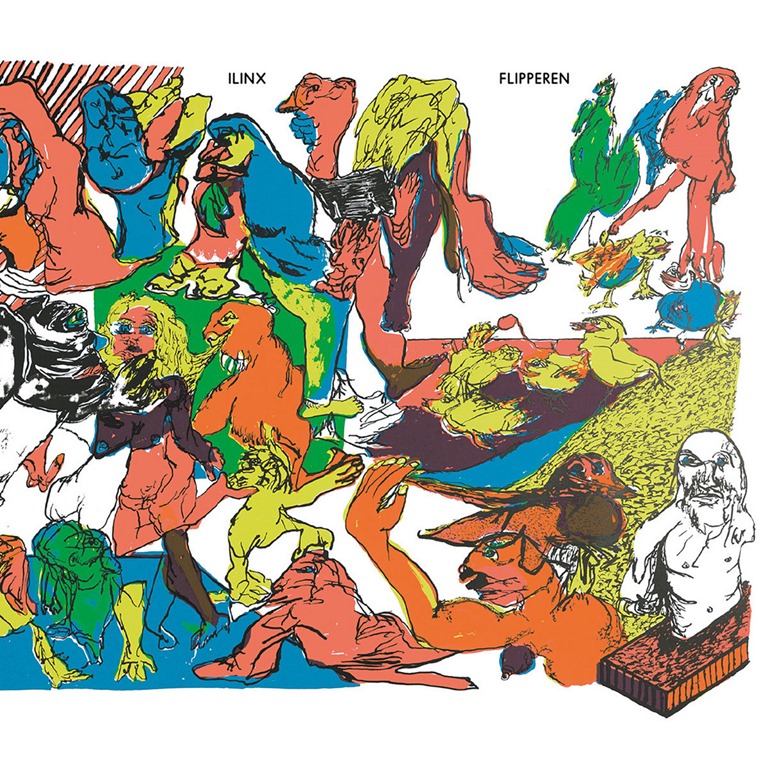
Some years ago (like about seventeen years ago), when I embarked on my reviewing journey proper, I was introduced to whacky experimental work and the world of microtonality. It was an absolute revelation. Just as, growing up in the 80s and raised on the Top 40 singles and Now That’s What I Call Music, discovering goth, alternative, John Peel, and Melody Maker completely changed my head, so did entering this new world. Onje thing that completely spun me was the way in which some artists extrapolated and academicized some pretty stupid or mundane stuff. This is a reasonable example. To quote: ‘Flipperen takes the randomness of pinball and turns it into music. Using recordings from old pinball machines, the music mixes chaos and structure, reflecting the Fluxus spirit of play and chance. It’s a wild ride through sound, where things don’t always make sense–but that’s the fun of it.’

Flipperen began as a lockdown / COVID project, of course. As they detail, ‘During the quiet and strange Covid days, Suzana Lașcu, Robert Kroos, and Reinier van Houdt began a recording project based on the soundbites of pinball machines. They visited the empty Dutch Pinball Museum in Rotterdam and captured field recordings of machines from the 1960s to the 1990s. From these, they selected 28 samples to serve as thematic starting points for what they called ‘game pieces,’ recorded in two sessions at Sonology Studios in The Hague. The recordings were then shaped into sound collages using cut-up techniques and probabilistic processes.’

These processes mean that the end product is a very long way removed from the actual sounds of metal balls pinging and rolling about inside a glass-covered case. Instead, landing between Brion Gysin and John Cage, we get a collection of weird and woozy fragmentary pieces – compositions would be something of a stretch – ranging from awkward ambience to crashing and banging that sounds like a prepared piano fitted with lump hammers. There’s playful, whimsical sighing and trilling, psychedelic trippery and some fairly straight jazz-flavoured piano in the mix. There’s Clangers-like whistling and clattering and clanking, pops and thuds, explosive industrial noise and frenzied country. There are moments which sound like someone grunting through a comb with greaseproof paper, others which sound like the strumming of an egg-slicer, others still which create the impression of a piano being dropped down a flight of stairs.

The final cut features twenty-six tracks, the majority of which are around a couple of minutes long, or even significantly shorter. But there are a couple which run to around six and a half minutes of uncoordinated chaos, and it’s a lot to take in.

The appeal from a sonic and experimental perspective is that ‘Pinball is a game that combines control and randomness—each action leads to an unpredictable result, and the outcome is always uncertain’, and as such, the patterns which provide the material for these pieces are erratic, unpredictable, and ultimately, not really patterns at all. And so it is that Flipperen shunts forwards and backwards, crackles and pops with zany snippets of this, that, and everything, conjuring a wild collage of disparate elements and all kinds of discord.

As much as pinball machines lie at the heart of Flipperen, it’s really a wide-ranging collage work with randomness at its heart. It’s fun, it’s fascinating, it’s brain-bending – and one might say it’s a work of Flipperen genius – but you definitely have to be in the mood for something quite this far out.

AA
a2489366009_10

Editions Mego – 24th March 2023

Christopher Nosnibor

Editions Mego have since forever released ultra-niche but eternally-fascinating exploratory works. Since their inception in 1994 as MEGO, before transforming into Editions Mego, bearing eMEGO catalogue numbers, the label has given home to pretty much every significant and emerging artist working in the field of electronica given to abstraction, minimalism, glitch, and the more experimental side of things. As such, this release is a very comfortable fit in the catalogue.

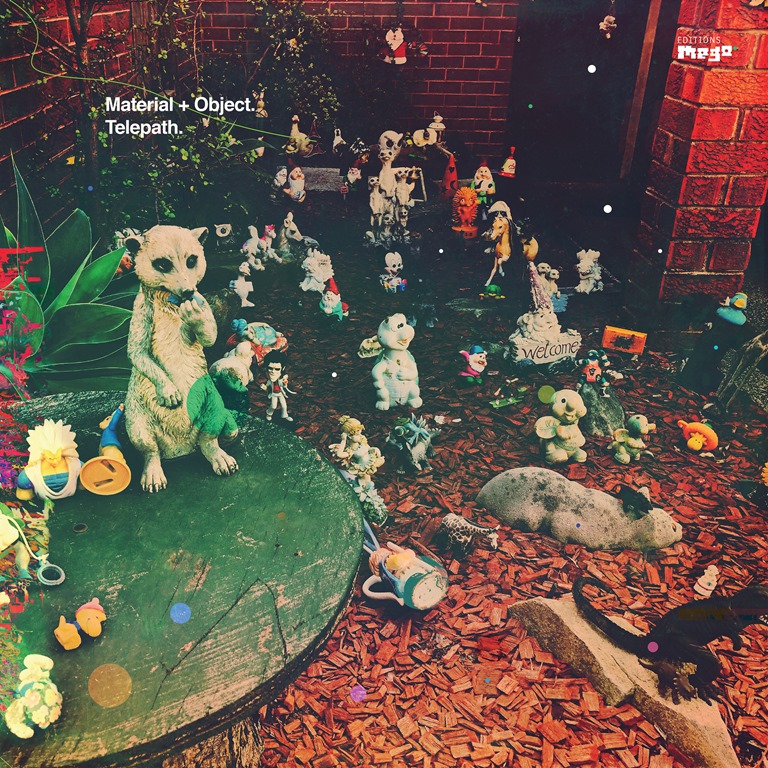
As the bio details, ‘Dismantling the acoustic to feed the electronic, Editions Mego presents Telepath, the new album by Material Object. Born out of a single improvised recording session with a lone Violinist, Telepath is a startling album of future electronic music, resulting in an LP of unique and timeless tracks that reimagine a classic sound for an endless future.’

Nothing about Telepath sounds remotely like a violin in any recognisable sense. Even the long, soaring tones and strong-scrapes which sound like a violin sound, in context, processed, abstract.

It’s all about the process, of course, and it’s the literal processing and manipulation of sound which renders the output so far from the initial input. The results are interesting, to say the least.

To return to the bio for context, Telepath is presented as ‘Boldly departing from his previous canon of largely ‘ambient’ work, Material Object’s Telepath renders itself out as something much stranger, something more spacious, more subtle and gradual. Moments of bouncing minimalism meet moirés of delayed pure tones phasing in and out of resolution, giving way to a series of strobing foreground gestures arranged and offset in disorienting landscapes which scatter themselves asymmetrically amongst crystal pools of reverb.

There are moments of deep, rumbling ambience to be found here, but it’s certainly not the album’s dominant feature.

‘Enter’ isn’t quite microtonal in its focus, but does very much narrow down to an extremely small sonic spectrum in order to interrogate minor changes and the relationship between notes as they resonate and bounce off one another – and that focus is intensely concentrated, remaining fixed for some nine and a half minutes. It sets the stall for Telepath overall: the fifteen-minute ‘Hyphae’ flickers and clicks as sounds bat back and forth at a rate of rapidity that’s tension-inducing, particularly as the click-clack becomes overwhelmed by a bubbling cloud of dense sound yet remains persistently audible.

Structurally, the album alternates between longer works and shorter interludes of a couple of minutes or so: these serve, I suppose, as the sonic equivalent of palate-cleansers, and they’re necessary in breaking up the vast sonic swaths of hyper-focussed detail as interrogated over five minutes or more.

It may seem a contradiction, but while focusing microscopically on the most minute details, Telepath also covers a lot of ground. It’s all about contrast and contradictions, and arguably these are the foundations of this intriguing and often quirky work.

Following the twitchy, processed pings of ‘Thermo’, the eleven-and-a-half-minute ‘Exit’ is the perfect bookend to stand opposite ‘Enter’. And as the album leaves us reflecting the whisps of mist left in its trails, there is a hanging sense that there is something yet to come. From among the shadows, Telepath presents us with an unexpected sense of insight, both outside and in.

AA

eMego299V_front

Thanatosis – 7th May 2022

Christopher Nosnibor

Within Reach of Eventuality is the debut album by Swedish duo David Bennet & Vilhelm Bromander. Their notes on the album state that ‘Following a semi-open score, the duo is treating elements such as complex textures, non-pitched sounds, microtonality, beatings and intense pauses in an improvisatory and careful manner’.

I’m not entirely sure what that means, and I’m not certain of the meaning of the album’s title, either. It feels like it almost carries a sense of significant import, but then is equally so vague as to be almost abstract. And in a way, it’s representative of the four pieces on the album. There’s a grainy scratching flicker of extraneous noise running along in the background during ‘Part I’, like a waterfall in the distance, while in the foreground, elongated drones – atonal strings or wavering feedback – hover around the pitch of nails down a blackboard. Occasionally, more conventionally ‘orchestral’ sounds – emerge fleetingly – gentle, soberly-paced percussion, string strikes and soft woodwind, and it comes together to create a somewhat ominous atmosphere.

It’s a hushed, minimal ambience that fades out towards more sonorous drones that ebb and flow across ‘Part II’, and as the album progresses, the interplay between the tones – and indeed, atones – becomes more pronounced, and also more dissonant and consequently more challenging, as long, quivering, quavering drones rub against one another.

The structures – such as they are – become increasingly fragmented, stopping and starting, weaving and pausing. There is a sense of a certain musical intuition between the players, the rests coming at distances that have a sense of co-ordination, if only as much to confound expectation as to sit comfortably within it. In other words, Within Reach of Eventuality feels like a semi-organised chaos, and as it slowly slides towards the conclusion of the sixteen-minute fourth part, the sound thickens, the volume increases, and the atmosphere intensifies, become more uncomfortable in the process. And in this time, the meaning becomes clearer when it comes to understanding their approaching the sonic elements in a ‘careful manner’. There’s nothing remotely rushed about Within Reach of Eventuality. The notes are given space and separation, room to breathe. It all feels very considered, very restrained: it’s no improv free-for-all, there are no frenzied climaxes or blasting crescendos. Instead, they demonstrate a sharp focus on a fairly limited range of sounds and spaces, and the result is an album that has a strong cohesion.

AA

a4211091835_10

Powdered Hearts – 15th October 2020

Christopher Nosnibor

Gintas K releases albums more often than I change my clothes. That’s of course intended as a comment on the prolific nature of his output, rather than a confession about my personal hygiene post-lockdown, although not going into the office or being around people – or ever within two metres of them – has meant I’ve maybe made slightly less effort of late.

The same clearly can’t be said of Gintas K, at least in terms of his work, since I don’t know if he’s been tweaking away at his circuitry in his pyjamas or the same jeans for a week and a half or if he’s been bothering to shave or deodorise daily. I don’t need to, either, of course.

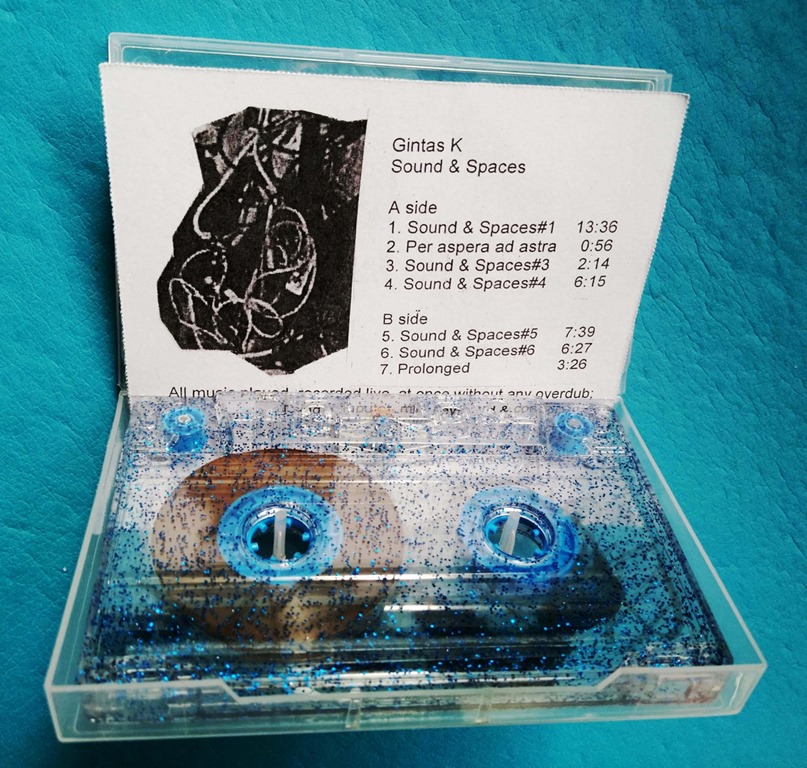
Anyway: Sound & Spaces explores what’s become established as familiar territory for Gintas K, with gloops and bibbles, froth and foam, squelchy bubbles of sound rising up randomly against the crackling burrs of electronic distortion. Sound & Spaces is less attacking and less abrasive than some previous outings, and is les intense and intensive in its interrogation of microcosmic space than some of his previous microscopic, microtonal explorations.

The first track – the thirteen-minute ‘Sounds & Spaces #1’ is a challenging mess of stammers and jolts, fizzing and crackling in a swampy slosh of analogue synth soup. It very much sets the tone, but in context, it’s a comparatively gentle start to what ultimately unravels to be quite a brain-shredder of a set.

‘Per aspera ad astra’ is a brief interlude of tingling, jangling dissonance before ‘Sounds & Spaces #3’ brings a bit of low-end grumbling, whining, and distortion, yawning undulations whizzing and popping all over.

By ‘Sounds & Spaces #4’, it’s almost impossible to differentiate distortion from percussion, and what originates where, although there are distinctly snare-like cracks in the feverish melting-pot of contrasting textures and tones, which become increasingly fragmented, fractured, and overloading as the album progresses. As an album it’s a frothy foment, and while some may find it simply uninteresting or a wash of so much noise they can ignore, I’m unlikely to be alone in finding the experience quite tense and uncomfortable – and nothing more so than the twenty seconds of silence at the end of the overwhelming chaos of ‘Sounds & Spaces #5’

If disorder offends your sensibilities, avoid this recording: once again, Gintas K has captured metal turbulence in aural form. It’s hard to process, but well worth enduring the turmoil for.

AA

a0638906201_10

29th August 2020

Christopher Nosnibor

True to form, details of the theory or process behind Gintas K’s third release of 2020 are sparse: ‘Played & recorded live by Gintas K 2019. Recorded live at once, without any overdub; using computer, midi keyboard & controller assigned to vst plugins’.

What he presents here are three longform compositions, between fifteen and twenty-one minutes apiece, each accompanied by an ‘extension’ piece, of around five minutes or so, which tacks on to the end. The pieces are untitled, beyond ‘Track One’ and the date and what I assume to be the end time of recording.

K works from a palette of synapse-popping digital froth, tiny bleeping tones that fly around in all directions like amoeba in a cellular explosion, which builds to some neurone-blasting crescendos of whirring electronics and fizzing bursts of static and sparks. Amidst a swampy swirl of squelchiness rises a hum of interference, like an FM radio when a mobile phone’ been left next to it. ‘track one’ dissolves into a mass of amorphous midrange; its counterpart ‘extension’ reprises the glitching wow and flutter, ping and springs of the majority of the preceding twenty minutes, and follows a similar structural trajectory, only over a quarter of the time-frame.

‘track two’, recorded the following day in November of 2019 is, ostensibly, more of the same, with birdlike tweets and twitters fluttering around random clunks and thuds. Here, initially, there is more restraint, fewer fireworks, and more space between the sonic somersaults, until, briefly but intensely, about five minutes in, when a fierce blast of static cuts the babbling bleeps, washing away the sound to silence. Granular notes trickle in a minuscule but rapid flow which hurries keenly toward the conclusion, only to return for the extension piece, sounding rather like the tape being rewound.

Bloops, glops, tweets and twangs abound once more on ‘track three’, and if the pieces on Extensions are given to a certain sameness, it’s testament to Kraptavičius’ focus and dedication that he explores such a small sonic area in such intensely obsessive detail. Gintas K creates intensely insular music, which picks through the details of its own creation in a microscopic level, and if his spheres of reference seem suffocatingly introverted and inwardly-focused, then that’s precisely because they are, and it’s welcome. Instead of eternally reflecting on his emotions, like so many musicians, his work emerges from an infinite loop of self-reflectivity concerning its own content, and as such exists in a space that is free of such emotional self-indulgence. If this is indulgent – and perhaps it is – it’s equally scientific and detached, which very much paces it in a different bracket. And as Gintas K continues to pursue a most singular journey, it’s most educational to be able to tag along.

AA

a1507230848_10

DL only – Self Released – 15th July 2020

Christopher Nosnibor

Four months on from the original Kressel Studies release, Mick Sussman delivers a second volume of ‘algorithmic studies’ which explore ‘new rhythmic and timbral techniques’ The accompanying text explains that ‘as with the previous volume of Kressel Studies, these pieces are brief and generated from compact nuggets of computer code. But they form a varied procession of musical thoughts, some severe and some almost merry.’

I wrote of the first back in March that Sussman took the listener ‘deep into skittery microtonal bleeping territory’, and this twenty-one track collection of snippety fragments of drones, hums, bleeps and yawning extraneous and quivering noises follows the same experimental trajectory. And as one may reasonably expect, Vol 2 is more of the same, only different – but not very.

‘kr40P1p5’ is a jittery, skittery melange of synths, and ‘kr40P1p5’ is similarly brain-bending, but even more fractured and dizzying, as stunted notes bounce and ricochet every which way in a kind of Brownian motion. ‘Kr42p2p5’ is a swampy soup of straining analogue, while ‘kr42p2p7’ is a fizzing morass of whupping phase and stunning static hiss that’s churned to a spacey foam.

R2D2 bleeps and whistles and retro-futurism clash with short blasts of power-electronics noise, and this is very much a work which is preoccupied with sound rather than sense, conjuring a wibbly-bibbly world of weirdness.

It’s very much a mixed bag of oddities, and if, like its predecessor, it sounds like so much dicking about in the studio, then that’s because it really is, although that’s no criticism. The blurb explains that across the album, ‘some [tracks] veer toward pure noise, like Kr. 42.2.3, while others have a lighter melodic flavor, like Kr. 42.3.1. And some split the difference, with rough-textured grooves, like 44.2.1.’ And perhaps, rather than view this as an album in the conventional sense, it should be held up against the sound effects alums of the 70s and 80s, the likes of which were recorded by the BBC Radiophonic workshop.

With each piece – compositions is a stretch, at least as a musical descriptor: any composition involved is digital coding as Sussman plays with the parameters of programming – so brief, the listener doesn’t get the opportunity to settle, and is instead slapped by a quickfire succession of sonic assaults presented as sketches that flit across the full range of textures and tones, and at a pace that’s sometimes bewildering.

It does work – again, not as an album, but a collection of random sounds and sonic experiments.

AA

a1746053039_10

Carrier Records – CARRIER049

Christopher Nosnibor

We’re deep into skittery microtonal bleeping territory with this 24-track extravaganza. Sussman’s work is algorithm-based, meaning there’s a certain formality to the proceedings, however chaotic the notations become. And they do indeed become chaotic, explosive,

The first of these tiny sonic snippets, ‘Kr 22.2.6’ is a hyperspeeded barrage of blips that sounds not dissimilar to the old dial-up sound. Wonky chimes and clanging digital bongs abound, along with stammering, clattering metallic beats and popping electronic arrythmia jitter through EQ filters.

Variety comes in the form of splurging squelches, parping electronic squiggles that wobble digital farts: ‘Kr 28.1.6’ almost forges a semblance of a funk groove from the bubbling sonic swap. In contrast, ‘Kr 29.4.13’ ebbs and flows ins surging pulsations that set the teeth and nerves on edge with a squall of digital fizz’, while ‘Kr 30.3.14’ is fun but warped, a detuned piano bouncing every which way in a tidal wash of delay. ‘Kr 31.3.18’sounds like a call from a mobile phone in a washing machine, while ‘Kr 33.5.8’ is a sparking digital blastbeat that showers treble explosions are several hundred shards per minute.

The album as a whole is a morass of digital experimentation, and each piece is but a fragment, with running times ranging from 2:28 to 2:49. It’s bewildering, disorientating, difficult. It isn’t for everyone. But it is interesting.

AA

CARRIER049_art