Posts Tagged ‘Merciful Release’

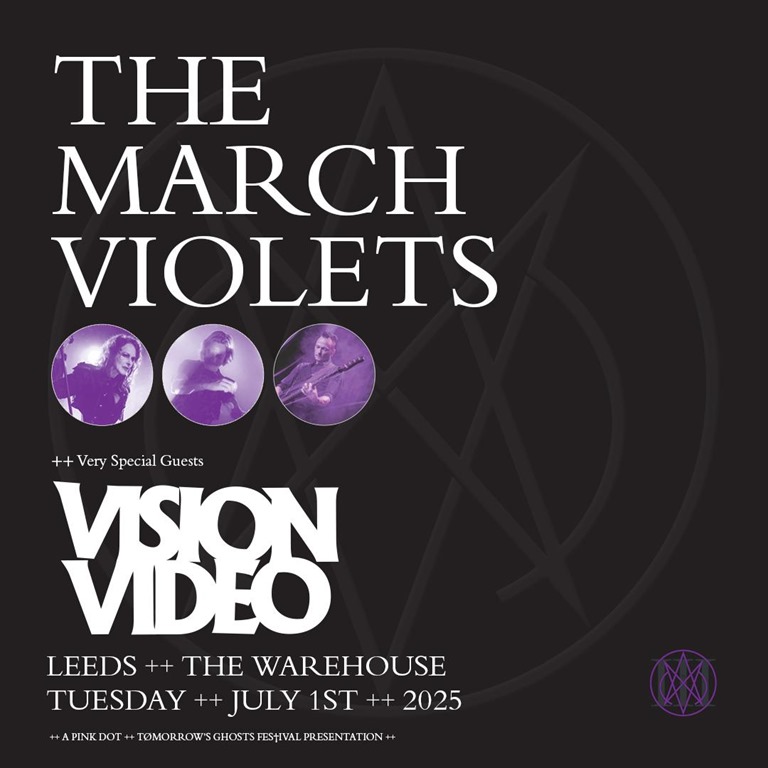
Performing at Warehouse on Tuesday 1st July 2025, the boundary-shredding Yorkshire post/punks continue their epic live comeback with this unmissable gig on home turf.

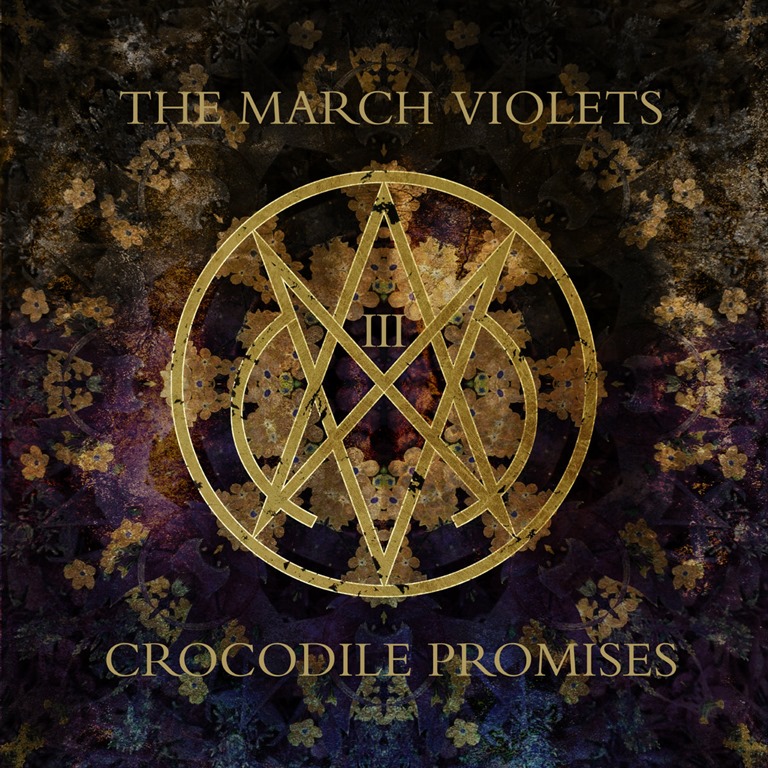
Following a rapturous reception to what were their first live shows in nearly a decade in 2023, plus high praise for their new studio output including 2024 album Crocodile Promises, which received a double thumbs-up from us at Aural Aggravation, and a reappraisal of their classic works in a series of reissues on the Jungle Records label; the cult band are clearly revelling in their recent revival.

Comprising founding members Rosie Garland (performer, poet and author) and Tom Ashton (Guitarist, producer and studio owner), plus Mat Thorpe on bass, the band are intending the shows to be a celebration of The March Violets’ legacy, while also honouring the irreplaceable contribution of friend and founding member Simon Denbigh.
Speaking about their recent reunion shows, The March Violets explain:

“Since the March Violets tour in 2015 we’ve been shocked at how many musical friends have passed over and out. And after Simon Denbigh’s life-changing stroke, it’s no surprise we all thought that was it for the Violets. When, in 2021, Jungle Records released Big Soul Kiss (The BBC Sessions double album) for Record Store Day 2021 it sold out its entire pressing in 24 hours. We were amazed at the response, absolutely amazed. We faced a choice – to fade away quietly or go out with a celebration.

We feel for Simon, and honour his massive artistic contribution & intense vision as one of The March Violets founding members. He’s irreplaceable, so we’re not going to try. We believe the legacy of The March Violets deserves a far better conclusion than sinking into silence, and now is the right time to do it.”

With their first incarnation described by Sounds magazine as “slinky, savage yet warmly delicate [with a] thirst for mystery, magic and brutal darkness”, The March Violets were a post/punk band cut from a different cloth. Founded in Leeds in 1981, from there the band would initiate an impressive career that would see them navigating all corners of the alternative scene and accrue a longstanding cult following. With their debut EP Religious As Hell released by Andrew Eldritch (frontman of fellow Leeds scene band The Sisters of Mercy), TMV would tally a total of seven successful Indie Chart singles including “Grooving in Green”, “Snake Dance”, “Deep”, and “Walk Into The Sun”, plus their ‘Radiant Boys’ EP, at the height of their powers. With an impeccable John Peel Session also under their belts, the band released two compilation albums Natural History (which peaked at No.3 in the Indie Charts) and Electric Shades in the US, before signing a major deal in 1985 with London Records. Releasing the poppier charms of the hit single “Turn to the Sky”, the track would notably feature in the John Hughes movie Some Kind of Wonderful in 1987, before the band eventually split later that year.

Reforming for a one-off hometown gig two decades later, their 2007 reunion would lead to a flurry of activity in the 21st Century including festival headline slots across Europe & the USA, the brand new studio albums Made Glorious (2013) and Mortality (2015), plus a storming Record Store Day release in 2021’s sell-out double album: Big Soul Kiss.

In 2023, The March Violets confirmed the release of their full back catalogue via Jungle Records for the first time, while releasing two new compilations Play Loud Play Purple and The Palace of Infinite Darkness in the run up. Taking their creative spurt into the studio, the band have also been working on new material and released a new record Crocodile Promises in 2024, via the Metropolis Records imprint.

Most recently, the TMV have been taking their gothic majesties stateside and have completed a triumphant tour of the USA, while also impressing UK audiences last summer with major festival appearances at the likes of Rebellion Festival and Bearded Theory.

Returning to the fore in 2025, The March Violets will be back with a vengeance for what promises to be a very special hometown show strewn with classics and new cuts, surprises and so much more.

On the night, the band will also be supported by one post/punk’s brightest new hopes – Vision Video. Following the release of their new album ‘Haunted Hours’, VV will be making the trip from Athens, GA, for a set of their refreshingly honest and dark gothic pop. Following on from their 2021 debut ‘Inked in Red’ (which told the story of lead singer Dusty Gannon (aka TikTok’s “Goth Dad”) and the darkness he saw as a soldier in Afghanistan), their recent work ‘Haunted Hours’ explores Dusty’s experience as a firefighter and paramedic working on the frontlines of the pandemic that followed his return. Vision Video will soon record their next LP Modern Horror at Maze Studios in Atlanta headed by Grammy award winning producer Ben Allen.
492416558_690408593501263_6222504979864277211_n

TICKETS / DETAILS

Tickets On General Sale Wednesday 16 April

Doors 7.30pm / Curfew 11.00pm

Age Restriction – All ages, under 14 to accompanied by an adult over the age of 18

Available here:
https://pinkdot.seetickets.com/event/the-march-violets/the-warehouse/3385250
Metropolis Records – 19th July 2024

Christopher Nosnibor

Metropolis Records – 19th July 2024

Cut back to not so long ago – in real terms – and the prospect of a new album from The March Violets was simply not something you’d imagine. 1987/88: The Sisters of Mercy had broken through in a major (label) way with ‘This Corrosion’ and Floodland; The Mission’s ‘Tower of Strength’ almost reached the UK Top 10 before Children scaled the heights of number two in the album charts, and this was the commercial heyday of goth… and one-time peers, The March Violets were a footnote in the genre’s history, having gone pop and signed to a major, only to go nowhere far and call it a day. They were fondly remembered by those who did, and compilation The Botanic Verses documented their body of work in the early 90s, but… Rosie was busy doing poetry and the like and Si was hiding behind smog as Nurse to Dr Avalanche as part of The Sisters of Mercy’s touring crew.

Then, in 2007, twenty years after they vanished, the band reconvened for a show in Leeds at what was then still the Met. It was a glorious celebration, not only of The Violets and their career, but also the heritage of the Leeds scene, with The Chris Reed Unit representing one of the city’s most singular and longstanding acts, and Merciful Release stalwart James Ray presenting thee magnificently eccentric ambient dance grooves of 25 Men.

Health issues stalled things for a while, but miraculously, 2013 saw the eventual release of Made Glorious – which was in fact their debut album, since the three previous long-players had all been compilations (I’m including the US-only Electric Shades among these). And now, after further setbacks – notably Denbeigh’s departure from the band following a stroke, but also some not insignificant touring under their belts – they deliver album number two, Crocodile Promises a mere eleven years later.

No-one could, or should, expect a band who’ve been going for so long and undergone so many changes – both personnel and personal – to sound exactly the same as they did when they started out. And nor should anyone want a band to exist in a state of suspension or arrested development. Here’s where The March Violets are a rare thing: a band which has evolved, expanded, grown, but equally has never lost sight of their roots. As their Bandcamp bio summarises it neatly, ‘Original Post Punk Drum Machine Band From Leeds. Started at the Beginning, Imploded, Reborn for the 21st Century. Play Loud Play Purple.’ Yes, they’ve even retained their original slogan. And it still works, too.

Whereas Made Glorious was a sprawling beast of a release, comprising sixteen tracks – a double album, effectively, Crocodile Promises is a taut, succinct nine-song document.

Single release ‘Hammer the Last Nail’ kicks the album off in classic style with a snaking drum-machine groove and twangy gothy guitar interweaving behind Rosie’s sultry, vampy vocals.

Where Made Glorious felt a tad slick, Crocodile Promises returns to the pumping, gritty sound that made the band one of the greatest first-generation post-punk acts. ‘Bite the Hand’ is a tangle of metallic, trebly, chorus-hazed guitar against a thrumming bassline and pumping mechanised drum machine, and it’s got the hunger and edge they displayed back in ’83. It’s likely a coincidence that the title is a phrase which featured in a quote from Andrew Eldritch when commenting on the Violets’ departure from Merciful Release… right?

‘Virgin Sheep’ maintains the angular energy, and once again recaptures blistering force of their first iteration, calling to mind the frenzy of ‘Radiant Boys’. ‘Mortality’, the title track from the album-in-progress which was shelved on account of Denbeigh’s stroke is another classic Violets cut, and what becomes apparent while listening to Crocodile Promises is that feels natural, comfortable, not a struggling, forced effort to recreate the past. Of course, the timing is beneficial: the next generation of new music-makers are discovering grunge, post-punk, shoegaze, and goth, and suddenly, the bands who were the progenitors of these styles are finding new audiences, and instead of sounding dates, the styles feel fresh once more.

Of course, great songs are timeless, and great songs are a feature of Crocodile Promises. ‘Crocodile Teeth’ is perhaps more fractal dream pop than goth or post-punk, but it’s got that late-80s Siouxsie vibe that gives the dreaminess a serrated edge. Its inclusion brings balance and space to the album, too.

It would be wrong to say that The March Violets are quite the same band they were without Denbeigh’s snarling interjections, but it would equally be a mistake to criticise the current iteration on account of this. The March Violets are survivors – and a great band. Ever-present co-founder Tom Ashton continues to prove pivotal in defining their sound, and, equally, their attitude. As much as they were a part of that early 80s Leeds milieu, The Violets stood apart, and that slightly wonky, sharp-edged, skewed guitar was, and remains, integral. And moreover, Crocodile Promises is a great album. Its strength lies not only in its consistency, but also its energy and its atmosphere, both of which it brings in abundance. But best of all, this is a true return to form. There isn’t a dud cut here, and every song is up there with the singles up to ’86. It’s incredible that a band at this stage in their career could drop a definitive album – but that’s exactly what The March Violets have done.

a2052340793_10

Christopher Nosnibor

While the majority of their output belongs to the post-85, second wave of post-punk / indie-goth, both (timewise) and sonically, Salvation’s roots actually go back to the murkier days of when The Sisters of Mercy were a true Leeds band, living in a dingy terrace in LS6 and recording at Kenny Giles’ 8-track studio in Bridlington and running a label not so much on a shoestring, but on zero budget and Letraset.

Salvation’s first ingle, ‘Girlsoul’ was released on Merciful Release in ’83, and was produced by Eldritch, before a parting of the ways not dissimilar from that which befell The March Violets took place, and while their second single, ‘Jessica’s Crime’ was produced by Wayne Hussey in 1984, the mini-album Clash of Dreams which was scheduled for A Merciful Release in 1985 was shelved and only got to see the light of day in 2014.

By then, they had evolved into the more accessible indie-goth sound, which emerged circa 1985-6, and which perhaps not coincidentally corresponded with The Sisters of Mercy’s evolution towards a more commercial sound with the arrival of Wayne Hussey and their signing to WEA and the release of ‘Body and Soul’ and First and Last and Always, before the split that led to the emergence of The Mission.

But their coming together with Hussey early on marked the beginning of a longstanding partnership: in fact, it was in 1990, supporting The Mission at Sheffield City Hall I first encountered Salvation, which would have coincided with the release of their major label debut Sass, which marked something of a more commercially-orientated direction, and would also represent the band’s last new material as the band crashed under the pressures of relentless touring.

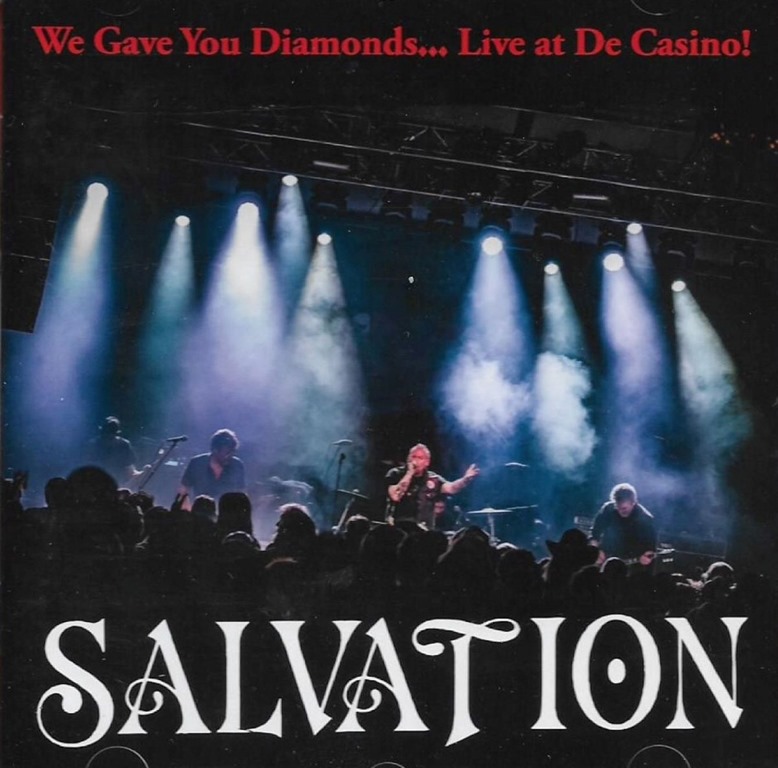
Fast-forward to 2020, and the band have emerged from their retirement to tour Europe with The Mission. We Gave You Diamonds… Live at De Casino was recorded Live at De Casino, Sint-Niklaas, Belgium on March 7th 2020 on the final night of a four-date tour supporting The Mission, and it’s a career-spanning showcase of a set that captures salvation on fine form, and Daniel Mass sounds relaxed with his chat between songs.

Only two of the eleven songs ‘(Clearing Out the) Debris’ and ‘Paint it Rose’ are from Sass, and the set is otherwise culled from their independent years, kicking off with ‘The Answer’ from 1986’s ‘Seek’ EP. It’s clearly of that mid-80s vintage, but still sounds fresh and is delivered with an energy that translated through the medium of the live recording, with its thumping bass and flowery guitar flourishes both crisp and clear. ‘Ladyfaithe’ from the same EP, which would subsequently their 1987 debut album Diamonds are Forever is also dropped early.

Mass probably doesn’t need to announce that they’re from Leeds at the start of the set: they sounds like a Leeds band, to the core. They also sound like a band who are having a blast, and the songs are played with precision and power, and they’ve held up well despite the passage of all the years: ‘All and More’ still kicks ass with twisty guitars and a solid bass groove, and reminds us just how strong they were at penning sharp hooks and nagging guitar lines.

They delve right back as far as ‘The Shining’ (a standout and a personal favourite that always gets lodged as an earworm whenever I play it) from their second single as well as the unreleased ‘The October Hour’ from the debut that never was. ‘Payola’ and ‘Pearl Necklace’, the B-sides from their single release of Donovan’s ‘Sunshine Superman’ from 1988. Yes, it’s a blast from the past, but this doesn’t have the vibe of a nostalgia trip: Salvation sound like a band reinvigorated and energised and feeling the songs.

And now, as we finally crawl out of the seemingly-eternal suspension of life that was the Covid pandemic, Salvation are once again set to play as support to The Mission – although the handful of dates isn’t quite the crippling schedule of thirty years ago. On the strength of We Gave You Diamonds, it’ll be worth making it down early doors, and with any luck they’ll be booking a few headline shows of their own before long.

AA

a0378534001_10

Unbound – 11th November 2021

Christopher Nosnibor

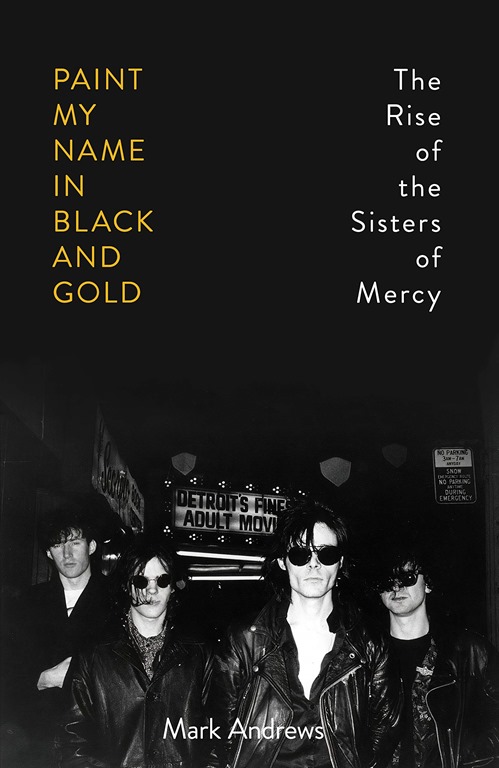
I may not have discovered The Sisters of Mercy until 1987 (being born in ‘75, I was simply too young to have been around in their first phase), like many, I have long been fascinated by those early years and their ascent from vaguely ramshackle indie act to the band who released the album which would essentially define the sound of ‘goth’ for decades to come. By ‘fascinated’, I really mean ‘obsessed’, particularly in my teens, but my love of The Sisters has endured. While the story of those first five years has been told, retold, fetishized and transformed into lore with elements of legend and myth blended in along the way (much of which having been perpetuated by Andrew Eldritch himself), it’s never been given truly detailed coverage, and for this reason, I joined many in pitching in for the crowdfunding of Mark Andrews’ biography. The wait felt like forever, and in the meantime, Trevor Ristow dropped Waiting for Another War (which I’m yet to pick up) on the same period. And so it is that Sisters bios are like proverbial busses, although that’s certainly no complaint: it simply indicates the impact and significance of a band who, despite having been in existence for over forty years and who haven’t released a record in the last thirty.

The book looks and feels like quality (although some have griped about the lack of capitalisation on the definite article both on the cover and throughout the text), but it’s on the contents that Andrews’ work should be judged. There is no two ways about it that Paint My Name in Black and Gold was worth the wait.

Two things immediately stand out: the quality and depth of the research, and the quality of the prose. The latter is particularly appreciated, and important: all the research in the world counts for little if not conveyed in a way that’s appealing. Put simply, Andrews writes nicely, and he writes well, accessibly but not pitched at those with a reading level of The Sun. Nor does he become so involved in trainspotting details of catalogue numbers or numbers of copies pressed or sold or takes in the studio. This is a very human biography, and the input from pretty much everyone involved with the band during the time (with the notable exception of Eldritch) not only brings it to life, but also gives it a real weight of credibility. Mark Pearman (Gary Marx) comes across particularly well, his reflections honest and considered, his position remarkably philosophical and even-handed.

The way in which Andrews places the development of the band in context makes for very interesting reading, with extensive coverage of the Leeds scene of the late 70s and early 80s, as well as the band’s strong links with York at the beginning (the Priestley’s signage remains at the top of Bootham, although it’s now a rather bourgeois homeware retailer). This alone makes for essential reading for anyone with an interest in the emerging post-punk scene, where writing about Leeds has been largely overshadowed by that on Manchester, and of course, London.

He moves things on at a steady but swift pace, but at the same time doesn’t skimp on detail, and pack the book with anecdotes and information about standout nights on particular tours and recording sessions, as well as various wild antics that seem so at odds with the seriousness of the music. Above all, Andrews captures the essence of the experience of existing in and around The Sisters during this time – the camaraderie and sense of community and even family, the buzz, the connection between the band, collectively and individually, with their fans. He also traces how the dynamic would shift and some of that proximity would diminish over time as the band got bigger. It’s also apparent that even in the early stages, the band dynamic and friendships thrived on the differences as much as the similarities of the members, and how much Eldritch was the driving force.

Andrews also presents an impressively balanced and objective perspective: while clearly a fan, there’s no idolisation of the band or any individual here, and his admiration for Eldritch – something that most of the interview subjects also express – is tempered by a realistic appraisal of his shortcomings and at times wilful stubbornness and perversity. That Eldritch is a stickler and prone to obsessive behaviour is widely known among fans, but Andrew really brings things to life when he writes of how Eldritch would literally spend long nights fiddling with EQ levels just to hear how they sound, and it requires no imagination whatsoever to comprehend the frustrations of band members and producers alike working alongside him. But more than even this, in Paint My Name, Andrews goes a long way to excavate the contradictions and complexities of the man who became Andrew Eldritch, how the nerdy, glam-obsessed Andrew Taylor would transmogrify into the beast that is Eldritch, and details the damage done to both himself – mentally and physically – and those around him along the way. The poverty and degradation are at times harrowing, and the long tours of ‘84 and ‘85 may have been among the band’s most memorable and seen them play to the largest numbers of fans of their career, but the way in which Andrews relays just how strung-out, fucked-up and fractured the band were behind the scenes renders their achievements all the more remarkable.

The epilogue provides a condensed overview of the years which would follow, but it’s clear that none of The Sisters’ subsequent history could come close to being quite as gripping as the first five years, whereby the rise of The Sisters would reverberate indefinitely.

The hardback is sold out, but the e-book edition is still available via Unbound.

81MD-vGPuqL