Posts Tagged ‘Mellow’

12th January 2024

Christopher Nosnibor

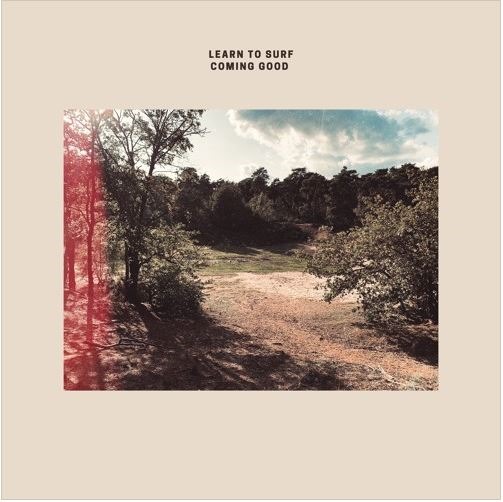
Sometimes, a song has the capacity to make you feel different. I find this happens most often when it’s least expected. ‘Coming Good’, the debut release by Learn to Surf came particularly unexpected. It’s certainly not my usual kind of thing – but there’s just something about that melancholic, reverby picked guitar and the washes of rippling chords cascading down over the top, and there’s a nuanced complexity in the relationship between this, and the layered harmonies, which are imbued with a carefree dappled-haze chilledness with a twist of wistful pining that’s hard to really put a finger on.

Because all music is now a vast nexus of intertext and influence, unravelling or otherwise attempting to frame songs – and bands – in a clear and specific context is nigh on impossible, not least of all because so much context comes from within, from one’s own spheres of reference, and as culture has become increasingly fragmented, so our experiences and references lose the sense of universality they once would have had. Time was, when there were only four, or five, TV channels, the entire nation was glued to the same show at the same time, and the following day, everyone would be talking about that episode, even if it was only EastEnders. This was a time when the main way to access music was via the radio, and if you wanted to hear anything beyond the charts or the classics, you needed to tune into John Peel, or Annie Nightingale after the Top 40 on a Sunday night. How times have changed!

I digress, but for a purpose, insomuch as the more disparate our experiences and reference points become, the less relatable and relevant they become to anyone who doesn’t live inside your head. I spent an age wondering what it was about ‘Coming Good’ that sounded familiar, before eventually concluding that it was ‘Gentle is Her Touch’ by Post war Glamour Girls, and the Alt-country / Americana act Sons of Bill on their Cure-influenced last album Oh God, Ma’am. It would likely be more useful for a broader audience to draw comparisons to Ride, and note the jangly indie psychedelic aspects of what is an absolutely marvellous, goosebump-inducing song with ‘classic’ vibes radiating from it in every direction.

Mille Plateaux – 1st December 2023

Christopher Nosnibor

It’s always exciting to hear what electronic experimentalism Neuro… No Neuro have cooked up, and Positive* is the second album this year, following on from the collection of glitchy snippets which comprised Compartments back in January. Just as Compartments was a very different project from its predecessor, Faces & Fragments, so Positive* explores very different territory from the ‘Kawaii-Glitch’ of Compartments.

As the accompanying notes explain, ‘Positive* by Neuro… No Neuro is based upon thin slices of memory, and the disintegration of their existence. The day-to-day, with its ‘ups and downs’, all while operating/existing above and to the right of the body. When the day ends, and the separated is reunited; how does one collect what is no longer there? …Separating consciousness from the corporeal… Memory and thought are being swept out to sea in granules that are imperceptible to those around you. Short term is riddled with inconsistencies…Say “so long” to the granules.’

It’s all about focus, and the focus of Positive* is very different from any previous projects. And when it comes to projects like this, details are important. In context, it’s ok to focus on those details, and to do so isn’t obsessive or excessively picky, but to engage with a creative work on the basis of its design, its intent. I preface my assessment this way because the first thing I’m drawn to, before hearing a single note, is the asterisk in the title. Such a mark denotes a footnote, an aside, a necessary commentary on the subject.

But there is not one appended to the accompanying notes. What can it mean? Is this an accidental omission? It seems unlikely, and as such, one can only conclude that it’s for the reader to decipher the nature of the discourse. In my own experience of academic writing, it’s often the case that the real commentary and the grain of the research lies in the notes, and so it is the case here.

‘This Time for Sure’ brings some stuttering ambient drum ‘n’ bass which arrives in a drift of Japanese-inspired scales, bit there are some subtle details and textures to be found low down in the mix. It certainly sets the tone for this comparatively delicate collection of pieces, most of which are fairly fleeting, sitting around the two-and-a-half-minute mark on average.

Each of the titles pins a positive slant on neutral or even potentially negative scenarios – ‘Even I can See this Now’, ‘When You Actually Want to Wake Up’, ‘Drier days Ahead’ – all feel like phrases uttered the kind of pep talks you might give yourself in times of struggle. C’mon, you can do this! Sometimes, try as you might, it still feels empty and futile, and as oft as you repeat it, you struggle to believe it.

‘When You Actually Want to Wake Up’ perhaps represents this struggle most keenly, a loping glitch like the back and forth internal monologue you struggle to overcome: yes… no… yes… no… just get up… but…’

‘Of Course You Know it All’ has an implied snarky, snideness to its title, but it’s still positive, right? Its glitchy, picky, chiming mellowness float beneath some pinging arcs, while the sweeping ambience of ‘Almost Through’ arrives with a sense of sagging fatigue, the kind of positivity many feel in the last half hour of the working week – fagged out and clinging to that point of release.

The world is dark and life is a grind, and it’s often difficult to see the light, the positive aspects among it all – and they are few and far between. Platitudes like ‘at least I have a job’ or ‘at least I have my health’ don’t really carry much conviction. Sure, there’s always someone worse off, but it’s hardly saying much. It’s ok to be negative, to be discontent.

And perhaps it’s here we finally come to understand and appreciate the asterisk. Positive* is, overall, melodic, and feels quite uplifting, being gentle, the urgent beats tempered by ambience and melodicism. It’s actually – dare I say it – quite nice. But finding those uptempo, upbeat aspects, maintaining balance, is hard as you juggle and struggle to keep things together, a day at a time. And perhaps this is how we can best appreciate Positive*. Just as memory drifts and floats, so does our capacity to continue onwards and to stay afloat. All you can do is hang in there.

AA

a3005718583_10

‘All the Bees’ are Kirsty McGee and Gitika Partington, two highly experienced writer-musicians who have created an exciting new album of gentle yet deep, pastoral alt-folk that brings together their distinctive styles into a crisp, fresh new collaboration that weaves its stunning, reflective songs like gossamer threads around the ear.

McGee is an award-winning wandering maverick and spellbinding live performer who has been releasing music and performing all over the world for over twenty years. Her fans include Emma Watson and Danny Boyle, for whose 2014 thriller ‘Trance’ the song ‘Sandman’ provided a cornerstone, both in its original version and covered by lead actress Rosario Dawson.

Partington, has had a similarly vibrant and varied career in music to date, releasing seven albums which have achieved critical acclaim and national airplay from likes of BBC 6 Music. She has created 4 books of multi-genre choral acapella arrangements published by OUP and Hal Leonard and multi layered vocal tracks for Warner Chappell and Peermusic. During the lockdown of Spring 2020, she directed nearly 100 community singers and produced 9 award winning, original, quirky virtual choir videos of her choral arrangements.

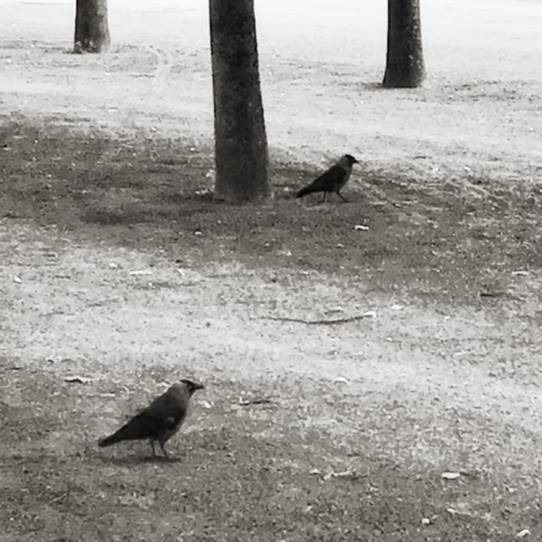
Introspective, heartfelt and unashamed of straying into poetry, the pair’s lyrics focus on nature themes and cycles including loss, death and rebirth. Following the ethereal ‘Wildflowers’, the second single from the album, ‘King Crow’ is a nostalgic banjo-flecked vocal epic which shows off Partington’s finely honed expertise in choral arranging and McGee’s meandering flute to create a striking evocative ode to the king of the birds, ‘King Crow’.

On the development of ‘King Crow’, Partington explains; "King Crow was one of the early songs on the album, I was still finding a way of highlighting parts of the lyric with vocal washes and bringing into being the ‘All the Bees’ sound. I had a lot of fun creating the end section of the song, so it felt like there was a whole Royal Hall of earthly singers with good solid work boots on who are singing their praises to the King Crow. I wish I had filmed me stomping and wailing whilst recording the track in different areas of my flat. I definitely woke the baby next-door, but they didn’t make it onto the album.”

McGee and Partington crossed paths by chance on a lockdown film and TV sync music zoom course and started working together remotely. Over the next 3 years, through major grief from close family deaths, illness, the crashing lack of usual musical ventures and the whole trauma of the pandemic, McGee and Partington immersed themselves in their new-found collaboration and created the debut, self-titled All the Bees album, which is due for release this winter.

The duo have only met three times in real life – most of that time was spent cooking and eating seriously healthy and beautiful plant-based food. ‘King Crow’ is the next exciting taster of the pair’s journey together as they limber up to launch their debut album.

AA

thumbnail_image0022

thumbnail_image0033

Photos by Emma Drabble

Keplar Keplar – 3rd March 2023

Christopher Nosnibor

However much you think you know about music, there is always more to learn. And so it transpired that Holo was first released in 1998 and is ‘one of those rare records that managed to carve out a niche of its own while also building bridges to variety of genres like Chicago-style post-rock, the ambient mysticism of projects like Rapoon or the music made at the intersection of shoegaze, and electronic music in the late 1990s.’

Where have I been? Living in a cultural vacuum? Hardly. And yet this is my first encounter with KILN. And I’ve not heard of Rapoon and have no knowledge of Chicago-style post-rock either. Chicago house, I’m aware of, but… well, I daresay I’m not alone, and so this reissue off Holo may well prove to provide an introduction, and an entry point to the trio’s supposedly niche-carving brand of ambience.

It’s an album that’s rich in detail and texture, from clanking, clattering tin can percussion and big sweeps of amorphous sonic clouds that wash and crash in waves.

It’s hard to decipher precisely what’s what – is that a didgeridoo or just a digital drone? It’s impossible to unravel the layers and determine the individual sources as glugs and gurgles slide in between soft dulcimer-like notes and easy beats that bubble between all kinds of textures and tones which drift and slide and groan and drone in and out of the ever-shifting fabric of this fascinating album. Guitars and extraneous sounds flit and flicker in and out while instant drums nag and boom. At times it’s new age, at times it’s more tribal, and Holo pushes ambience in numerous directions.

There are segments – interludes, breaks, fragments – where this is a catalogue of challenging source materials melted together. At others, it’s altogether less challenging and simply washes of you in a soft breeze.

For an album that’s so chilled, there is much happening on Holo¸ and as much as it is an album to chill to, first and foremost it’s an album to explore.

AA

KeplarRev13LP_front

14th February 2023

Christopher Nosnibor

Having first encountered Deborah performing as one half of dark ambient noise duo Spore, I’ve discovered she’s nothing if not prolific, and having hit the classical charts with one recent album and released not one, but two new albums in the last few weeks, it’s hard to keep up, not only with her vast output but the stylistic range. Daughters Of The Industrialists is one of those new albums, and one which again presents a very different musical face.

Daughters Of The Industrialists couldn’t be further from the sound of Spore. The track tiles radiate a glowing warmth which translate in their sound, too. The first of the album’s ten compositions, ‘Sparkle’ does exactly that, a soft a mellow sonic hue rippling in slow waves and gradual washes, and ‘Angel’ is every bit as delicate and skyward-facing as you might expect. The same goes for ‘Dazzle’, a composition which exudes tranquil, calm, and soothing vibes but becomes increasingly busy, hinting at both 80s electronica and the vintage sounds of Kraftwerk and Tangerine Dream.

With no accompanying verbiage, Daughters Of The Industrialists is an album which very must stand to speak for itself. And it’s an album with sonic range and one which stretches out in many directions. A number of the compositions have been released previously as standalone singles via Bandcamp, including the ponderous, reflective ‘Mothtail’ a slow and wistful work built around drones and a swelling digital breeze – but collected here into an album context, everything fits into place with a sense of unity and coherence, with the majority of the pieces being concisely contained between three to four minutes in duration, meaning nothing feels overdone or stretched out to outstay its welcome.

‘Pixel Eye’ possesses space-age qualities despite its having been forged while rooted the spot, and there is much activity here.

‘Orange’ is sparse and contemplative, and while the flickering, misty ambience of ‘Callisto’ and Orb-like bleepery of ‘Waning Moon’ set their sights on the vast expanses of space, what really stands out is their organic feel, a sense of connecting with nature as well as the cosmos. It’s this sense of being attuned to the natural world and its cycles, and of being at one with the earth and in turn the space beyond that feeds through the six-and-a-half-minute closer, ‘Crystal Rain’. Here, slow, turning drones intertwine in a slice of truly classic ambience, and it’s so very soothing, and conveys a sense of vastness, of space. And in doing so, the album concludes by transporting the listener somewhere beyond the confines of four walls and reminds us that there is something outside, and beyond. Go, explore.

AA

a2647674050_10

Like much of the album, this song was initially composed by Bethan on the piano. It features Ynyr and Bethan on trumpets but also features Ioan Hefin, the man responsible for performing Welsh music’s greatest and most iconic trumpet solo in Eryr Wen’s Gloria Tyrd Adre. It’s a song about love and the feeling of trying to comprehend the magnitude of the love that you can feel for someone. It can relate to any form of love but in this instance it was written when their daughter turned 3 years old, with Bethan trying to articulate and comprehend the outpouring of love felt for a child and the hugeness of childbirth; the challenge, escalation, triumph, glory and the raw vulnerability of it all.

Watch the video here:

AA

PRESS_MAIN_RogueJones-38-12

Cruel Nature Records – 2nd December 2022

Christopher Nosnibor

Many of us were waiting for the snow. And then, it arrived. And then everything ground to a halt. Welcome to the world now. What happened? It wasn’t always this way.

It’s all in a single word: ‘remember’ immediately imbues the album’s title with a sense of nostalgia. It isn’t explicit, of course, but it’s so, so evocative. Because, so caught up in life and the way everything blurs as time races past, we forget so much. The things we remember, then, hold a special place in our crowded minds. Reminiscences between friends, where moments, events, occurrences, people and places are conjured in those moments of reflection whereby we ‘remember when…’

Winters now are simply not the same as they were. I remember, in the early 80s, a full foot of snow on my parents’ back lawn, from which I would build a six-foot snowman and an igloo. We’d even build igloos on the school field during breaks. Snow didn’t stop school busses from running then. Perhaps it’s because of climate change, perhaps it’s because of the sheer volume of films, art, and literature, that depict idyllic, snowy winters, that show is so evocative. Most of can only dream of a white Christmas, but then, even Irving Berlin’s 1942 song was in itself a slice off nostalgia: ‘just like the ones we used to know’ is perhaps more accurately summarised as ‘just like the ones we see in fiction dating back to Dickens’ but obviously, it doesn’t have the same chime. Ultimately, the world is changing, and

The text which accompanies the album’s release serves almost as an affirmation of my line of contemplation, with the explanation that Remember We Were Waiting For The Snow is about what is called ‘solastalgia’: our anxiety, our concern, our sadness to see some natural phenomenon disappear. Written 5 years ago, after Žils [Deless-Vēliņš – aka (Lunt)] relocated to Latvia, it is a collection of exquisite reflective moving guitar-driven ambience drawing from same the sonic well as soundscapers like Jim O’Rouke’.

The nine tracks of Remember We Were Waiting For The Snow range from the expansive – the eight-minute opener, ‘Flakes and Feathers’ and the nine-minute closer, ‘Auseklis’ – to the fragmentary – the sub-two-minute ‘Dead Man in the Sand’ and ‘Dead Man in the Snow’.

Between the bodies, there is atmosphere. There is tension, but it’s contained by the soft curtains of sound. ‘Plasma (Under the Ice)’ is stark, scraping, brooding, dark, and difficult, uncomfortable, uneasy on the ear.

The instrumentation is varied, from screeding synths to picked guitar and mellow woodwind that falls between jazz and post-rock. But genres matter not and dissolve in the face of such magnificence. Remember We Were Waiting For The Snow drags hard on melancholic reflections. It’s also melodic and intimate, and ultimately, quite magical.

AA

cover

Allen Epley (Shiner, The Life and Times) has released ‘Evangeline’ the next single off his upcoming debut solo album ‘Everything,’ out 6th January 2023  on Spartan Records.

Listen here:

Epley says, “’Evangeline’ is a reference to someone close to me who tends to bottle up emotions until another person says something quite innocently, and it triggers an often hateful and explosive response. So the smallest innuendo or slight from a passerby could set off cannons and flamethrowers from this person. The offense doesn’t merit the response many times, inflicting even more damage.

I wanted it to be a short song and get to the point pretty quick. Don’t bore us, get to the chorus. Agreed. Vocally, I feel like the chorus part in particular reflects a kind of Elliott Smith vibe. Mike Burns adds the beautiful lap steel line that perfectly echoes the hurt in the lyric. Drummer Chris Prescott (from Pinback) sets the song in a restrained way then lets it open up on the solo section.”

AA

Allen_1_edit

23rd September 2022

Christopher Nosnibor

It’s a uniquely human failing that for all of our self-awareness, and our attenuation to the passage of time – in many respects, a human construct – we simply have no grasp on its passage, or its finiteness. The other day, it was February. It was cold and wet for an eternity. Spring was late. Suddenly, there was a heatwave and I was incapable of thinking or moving for a week or two. And now it’s October. How? Back in February, I had planned to pen some reflections on Michael C Coldwell’s immense Music for Documentary Film album, which collected pieces of music recorded – as the title suggests – for various film projects between 2011 and 2021, which was designed as something of a primer for the release of the soundtrack to his film, Views from Sunk Island (2021). The fact the album covered a ten-year span was significant in itself: we mark our lives out in decade segments, and reflect on those landmarks, celebrating their arrival as if this alone is an achievement – but to take a retrospective view… what have you actually done?

For every gain there are losses, and Coldwell’s ten-year compilation plays against the film it precedes, and in doing so highlights this fact. Over the ten years he’s been busy with various projects, the world has changed, and so has the coastline on the east of England.

The film – from the segments I’ve seen – is a quite remarkable work based on an exploration of the shifting – and vanishing – east coast of England with a narrative that focuses on both geography and social history, against a shifting sequence of black-and-white still images of the region. Coldwell’s images, often posted on FaceBook – are often both mundane and striking, presenting scenes where nature and human occupation sit awkwardly with one another – abandoned buildings in various states of disrepair, abandoned RAF bases and factories, crumbling concrete on sand dunes and the like.

Based in Leeds, Michael ‘Conflux’ Coldwell’s explorations are largely centred around the Yorkshire coast, and takes in numerous locations that are familiar to me, some of which hold a deep fascination. But familiarity creates its own twists when a scene is viewed from another perspective. Plus, the subject itself is one which gives rise to a nervous tension. As Coldwell writes, ‘The East Coast of the country is a land living on borrowed time. Time we borrowed from the sea, reclaimed from marshland a thousand years ago. But now it seems the sea has come to claim it all back.’

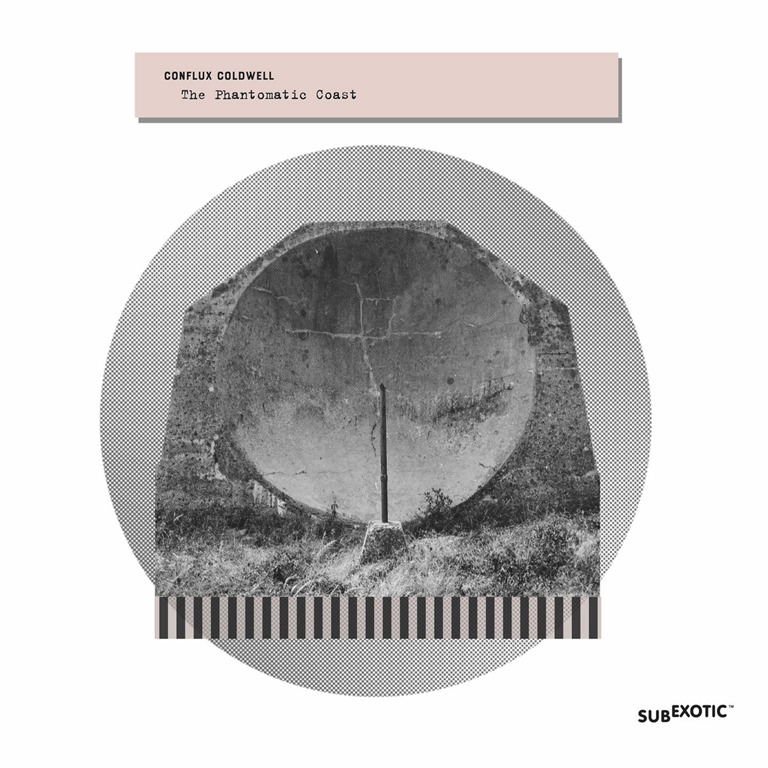
While now living in York – which has experienced flooding with greater frequency and severity over the last decade – I spent the first nineteen years of my life in Lincolnshire, a county where the local economy is dependent on fenland agriculture (and crop pickers from eastern Europe, but that’s more of a metaphorical sinking than the literal one which threatens swathes of the county). Reclamation was seemingly initiated by The Romans, and extended in the middle ages, before becoming a major project in the 17th century. But now, most of the fens lie below sea level, meaning that projections for rising sea levels as a result of climate place large parts of Lincolnshire under water by 2050, with Boston and Spalding submerged, along with Kings Lynn, Ely and Peterborough. Looking at these maps, it’s hard not to feel an unsettling sense of apocalypse. And yet, despite the accelerated pace of climate change and its impact, this is not a new story: numerous medieval towns, like Ravenser Odd, billed as the ’Yorkshire Atlantis’ , have been lost to the waves, and as Coldwell writers, ‘More than just a film score, The Phantomatic Coast stretches beyond the original aims of the documentary, to evoke something deeper about our troubled relationship with the sea – the many towns and ships lost beneath the waves, and ancient forgotten lands lying out beyond the windfarms like some Yorkshire Atlantis’.

Coldwell’s soundtrack, released as The Phantomatic Coast echoes his hauntological perspective on things, and his assimilation of found sounds and slow, quavering drones forges a layered soundtrack to an evocative journey through time and various geographical locations. Each composition is connected to a specific location, but the sounds stand alone – dissonant, difficult, haunting, constructed with layers of snippets of sound, like a newspaper collage in audio form.

As a soundwork, The Phantomatic Coast very much lives up to its title, as seagulls and crashing waves wash around. Muffled voices echo distantly on ‘On (Reclaimed) Land’ and the wind roars through ‘Scapa Flow Picnic’ like a freight train. ‘Northwest Reef Light’ is a mess of crackling distortion, fizzy returning and snippets off voices over radio against a slow, wav erring organ drone.

There is simply so much to take in, not just sonically and visually. It looks, and sounds, like the soundtrack to another life. But distance and the passage of time create a strange sense of separation from the events and a life lived. Were you even there?

Sonically, The Phantomatic Coast is an easy, soporific album, despite the five-minute ‘Diana in the Ice’ closing with a new road.

AA

a1524908314_10

Christopher Nosnibor

Steve Kendra has probably received as many words praising his work as anyone to have been covered here at Aural Aggravation, but the chances are, it’s gone unnoticed, since he’s rarely, if ever mentioned directly or by name. As the rhythm guitarist in York’s premier purveyors of psychedelic drone, Soma Crew, his contribution is something I’ve long admired. Like drummer Nick Clambake, Kendra’s brilliance lies in his humbleness, and his appreciation that the sum is always greater than the parts. A great rhythm section sticks to rhythm and keeps it together. Sounds simple, but it’s much harder in reality. It requires great concentration for a start. And it takes humility too not want to step into the spotlight in one way or another. But this is precisely why he’s the perfect player for Soma Crew, content to keep his head down, face obscured by the peak of his cap, and bludgeon away at two or three chords for six or seven minutes.

Just as he’s the quiet one of the band – not that they’re really big talkers most of the time – he’s quietly been working on his own material as Kendroid. It’s essentially a solo vehicle, but with input from as handful of people well known in York music circles, not least of all instrumental and production assistance from Dave Keegan, and to date he’s recorded and released two full-length albums, The Last Love Song on Earth (2019) and Poetry Love & Romance (2021) – so while these aren’t- hot-off-the-press new releases, it’s never too late to catch up. In fact, the whole promo build-up of a clutch of singles and videos in the run-up to an album’s release and then the explosion of reviews in the weeks and months around it, I get, but it does create a false sense of there being a certain window for new releases. The reality is that albums have a slow diffusion, and more often than not, people discover albums and artists months, years, even decades, after their emergence.

Kendra’s route to being a musician has been far from conventional: the man didn’t even pick up a guitar till he turned 40, and is by no means a muso. I have a lot of respect for that, and have found that oftentimes, technical education is a limiter to creativity. Steve can’t read tab and doesn’t know music theory – and consequently, isn’t hampered by conventions.

The chronology of the material is chewy: most of the songs on the second album were written before those on the first, and the second album is more of a lockdown exercise to document/ purge the journey that preceded The Last Love Song.

The Last Love Song on Earth presents a pretty eclectic set, spanning low-key blues and reminiscent of Mark Wynn before he went punky/shouty and went off to support Sleaford Mods (Married to the Rain’), to Soma Crew-esque space rock workouts that toss in dashes of Stereolab and Pulp (‘Mexican Heart’), and songs that incorporate elements of both, along with an experimental twist, with the swampy ‘Incel’ and brooding grind of ‘Deam Lover’ that has hints of Suicide in the mix contributing to the diversity that draws in The Doors to Mark Lanegan.

Poetry Love & Romance is quite a different animal, and while recorded in lockdown, it’s not – unusually – a lockdown album, packed with the anxieties of forced captivity or separation. But it is, in another way, a definitive lockdown album, in that its recording is one whereby the sound and production is determined by limitations, being largely acoustic – although Dave Keegan again features in a musical capacity, as well as engineering, mixing, and mastering.

We’re straight in with an easy country swing, with acoustic guitar and simple drum machine for the title track, and it sets the style for the album as a whole, which is mellow, sparse laid back, and pretty country. These are songs that paint pictures, sketches of scenes, some faded and tinged with the distance of time and reflection, and it’s quite touching at times.

Poetry Love & Romance does feel like something of a stopgap, but who wasn’t waiting for life to restart in some way the last couple odd years?

It’ll be interesting to see what Steve does next, but what he’s done thus far is interesting, and a clear step away from his guitaring day-job, and a such, it’s a bold move that’s yielded some great results.