Posts Tagged ‘Mellow’

Dimple Discs – 22nd August 2025

Christopher Nosnibor

Weird shit is welcome here at Aural Aggravation. It was a part of the ethos of my starting this site back in 2015. Yes, it’s been that long since I decided that I wanted to strike out alone with a view to creating a platform devoted essentially to stuff that appealed to me and exploring them with more long-form, discursive essay-type writing. This of course completely went against the grain of where most media, in particular music media, is at now, and this has only become more pronounced over the last decade, in which time attention spans have largely been reduced to circa 120 characters or simply .GIFs and memes. But – presumably because my focus is on rather niche music which doesn’t always receive a wealth of coverage, rather than because of my propensity for divergence into the personal or the political – Aural Aggravation now attracts a respectable readership. I don’t feel any desire to celebrate 10 years of doing this: to do so would really be to celebrate a decade in a lifetime of stubbornness, a compulsion to write, and a musical obsession which I choose to inflict upon the world, but I do suppose, on reflection, that the rarity of the format, occasionally touching on theory, but – hopefully –without too much hypotactic wankery.

And so we arrive at XiX by Kev Hopper, who despite fourteen solo albums, and despite co-founding electronic act Ticklish in the late ‘90s, and was composer/bassist with Prescott in the 2010s, and working as a visual artist by the medium of painting for a good number of years, is still probably best known for being the bassist in Stump between 1983 and 1988. Despite only releasing one album proper, their output of singles and EPs was solid, they were all over the music press at the time, and they were championed by John Peel. This potted history throws into sharp relief just how times – and the face of the music industry, particularly outside the mainstream – have changed.

Hopper’s second album on Dimple Discs is a collection of quirky, whimsical electronic experiments. Skittery, light, and lively, there’s a playfulness which defines the pieces, even when sliding into low-end notes and minor chords. ‘Vector Prodder’ plunks and plonks, twangs and reverberates, and slides into spooky but fun territory, and in some respects it’s got 1960s Addams Family vibes. ‘Gruntian Forbes’ twists and spins strangeness into a sunny calypso groove, and this, in many ways, encapsulates Hoppers’ approach to composition on the twelve tracks on offer here – namely taking a comfortable form, and rendering it uncomfortable by warping, twisting, and distorting it in some way or another, tossing in some ethereal haze and a bucketload of l’aissez-faire oddball elements. And why not?

XiX fully embraces the spirit of experimentalism – the idea of simply trying things out and seeing what happens, and not even being hugely concerned if it’s only half-successful. That isn’t to say there are any semi-successes or borderline failures on XiX: what I’m driving at is the spirit of creative freedom which pervades. When cut free of the constraints of commercial concerns, when liberated from self-censorship, and simply creating for the sake of creating, for the joy that experimentation and making sound can bring, a work takes on a level of buoyancy. XiX is the sound of creative freedom. ‘Devils’ may be dolorous, with hints of Tom Waits, but ‘Lance The Prawn’ is an exercise in gurling synth and ridiculously OTT vocal processing (half-burying absurd couplets like ‘lance the prawn / on the lawn’) amidst bleeps and wiffles and space-age throbs and pulsations.

It’s sci-fi in its influences, but it’s Douglas Adams on the serious scale. While I’m no fan of Adams myself – I find the humour simply too cheesy, but worse than that, I find the fans of his works, who insist on referencing him relentlessly beyond irritating, I would like to think that this scaling works in context. The album’s material is not irritating or nerdy, but it is, at times, overtly strange, and nowhere more so than on ‘Brand Street Psychodrama’. It may be but a brief interlude, but it’s all the disorientation. ‘Window Seat’ brings all the chimes and gentle brass, evoking that mythological bygone age crossed with intimations of ‘made in China’, in the brittle 80s plastic sense.

Having just written about Eamon the Destroyer’s new release, it seems that this belongs in the same field, but represents an altogether different face of the experimental dice.

And this is a good thing, in that we are able to wander through very different corridors while stroking our chins and pondering the work emerging from the field of ‘experimental music’. Towards the end, there’s an urgency that builds to XiX. Or perhaps it’s just my anxiety rising as midnight draws closer.

Either way, this is a supple work, which ventures across a range of styles and forms, with the chiming, tinkling nine-minute closer, ‘The Cucurella Problem’, with its whimsical , warping lead lines and tentative, wandering bass being truly exemplary. It bends the brain, but slowly, gently, softly, and it’s kinda nice.

AA

a0361012740_10

Leeds collective HONESTY have shared a brand new track titled ‘PUSHING UP DAISIES’. George Mitchell takes lead vocal duties, delivering a gentle, intimate performance that contrasts the song’s morbid subject matter. The result is a subtly exhilarating take on club music that’s become HONESTY’s signature and the reason they’re one of the most essential dance acts coming out of the UK. The track was released today in tandem with ‘MEASURE ME (ALT MIX),’ which injects even more rave-fueled vitality into the lead single from their debut album which came out this Feb, this time led by an ethereal performance from vocalist Imi Marston. Listen here:

AA

HONESTY20241119_004-2

HONESTY (Credit Dan Commons)

30th May 2025

Christopher Nosnibor

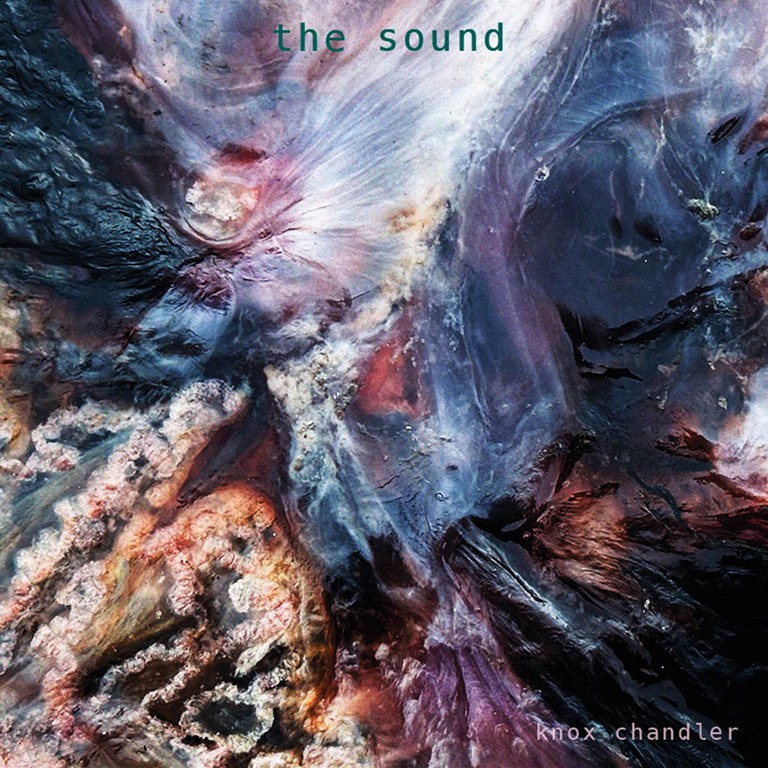
Knox Chandler may not be universally known, but many of the acts he’s credited as playing with over the last forty years are, with long stints as a member of  and the Cyndi Lauper band. Then there’s his work in various capacities with REM, Depeche Mode, Grace Jones, Marianne Faithful, Natalie Merchant, Tricky, The Creatures, Dave Gahan, Paper Monsters and The Golden Palominos… it makes for quite the CV.

This solo outing marks a fairly significant departure from all of that, though. The context behind it is that ‘Knox spent a decade residing in Berlin, Germany, while he explored sound-scaping. He developed a technique he calls “Soundribbons”, which he recorded and performed in its own right as well as applying it to different genres and mediums . He composed, recorded, toured, produced, and wrote string arrangements for Herbert Grönemeyer, Jesper Munk, Pure Reason Revolution, The Still, TAU, Miss Kenichi and the Sun, Mars William’s Albert Ayler Xmas, Rita Redshoes, Them There, The Night…”

And so what we have here is a collection of ten instrumental works, whereby the guitar doesn’t sound like a guitar. In fact, it doesn’t sound specifically like anything. Chandler conjures wispy, ephemeral sound sculptures, atmospheric, brooding, a shade filmic, soundtracky, with hints of sci-fi and BBC radiophonic workshop about their strange, twisting, abstract and keenly non-linear forms.

There’s more than simply droning guitar on offer here, though: flickering, surround-sound precision provides a shifting backdrop to the ever-morphing ‘Tea Stained Edge’, where tremulous, reverby guitar bounces here and there off sonorous string-like sounds and even something resembling a jazzy double bass, but in contrast, ‘Lost Dusk Feather’ takes the form of a magnificently disjointed collage work, flipping between ambience and discordant confusion. The playfully-titled ‘Hidden Hammock Pond’ is one of the album’s most overtly experimental works, a mish-mash of sounds overlaying one another, smooshed together and as strange and unpredictable as it gets, venturing via exploratory ambience and quivering drones and allusions of abstract jazz into Krautrock . It’s wilfully perverse, and swings between the dark and serious, and the light and entertaining within the space of a heartbeat. ‘Mars on a Half Moon Rising’ goes a shade New age strange, insectroid flutters, field sounds and mystical hoodoo, bells and chimes, Morris dancers and scraping bass which occasionally strays into some kind of Duran Duran bending bass moments.

It’s all going on here. It’s impossible to predict direction over the duration of this release: The Sound meanders here, there, and everywhere. At times expansive (as on ‘Burn’), at times claustrophobic, it’s never less than compelling or varied listening.

If you’re seeking anything in the vein of the headline acts with which Knox Chandler is associated with, you may well be disappointed. But if your ears are open to abstract, instrumental strangeness, you’re in the right place. The Sound is weird, unapologetically and strange – and it’s the sound of an artist cutting loose and exploring sound. It’s weird, and wonderful, in equal measure.

AA

a0385212710_10

6th September 2024

Christopher Nosnibor

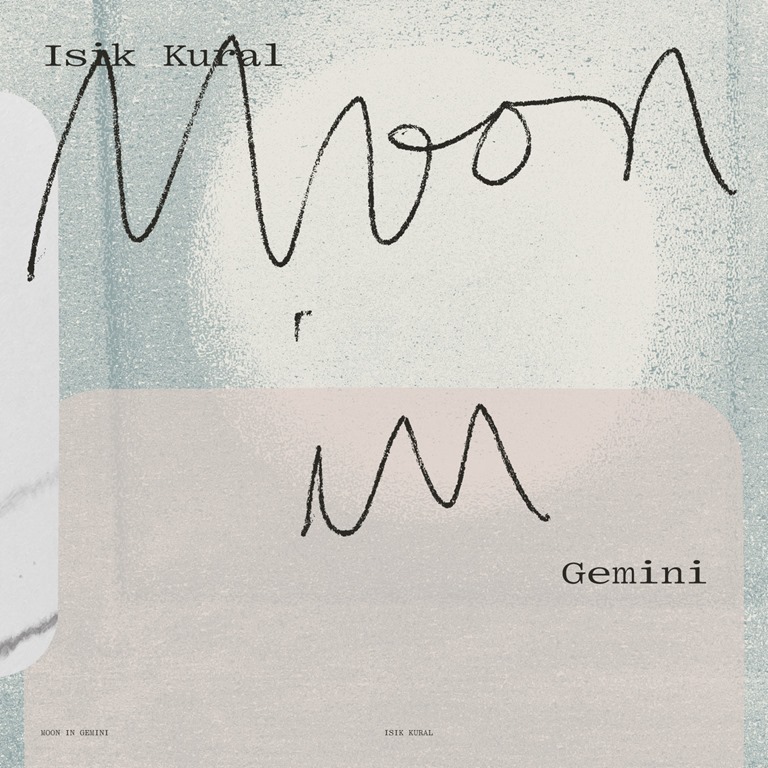
Isik Kural’s Moon in Gemini is described as ‘a luminous scrapbook of slow-flowing narratives couched in intuitive and symbolic storytelling. Awash in woodwinds and strings, lullaby-inflected lyrics and tender imagery, Isik’s voice moves closer to the listener’s ear on his third album, intoning states of being in which the wonder filled sound of everyday life can be heard and felt. Moon in Gemini is a space for wide daydreaming, where the invisible steps forward and dauntless ghosts play under a hazy lunar light.’

This is a charming proposition, and the actuality proves to be even more so. Moon in Gemini contains fourteen compositions, the majority of which are fleeting, ephemeral pieces of but perhaps a couple of minutes in length: a handful extend beyond three minutes, but none beyond four.

The overall effect, then, is soothing, but the fragmentary nature of the assemblage means the flow is broken, and often the smooth, calming flow is disrupted as compositions end – I won’t say prematurely, because who am I to say when a composition should end, how long it should be? These things are purely artistic choices, and my feeling that pieces here sometimes feel incomplete or abridged is simply a that, a feeling, as much from my desire for more than any clear or objective assessment.

The first piece, ‘Body of Water’ is typical in its soothing, tranquil ways. Delicately picked guitar and mellow woodwind drift and trill with a delicate drip-drop sound, and it’s beautifully relaxing, the sonic recreation of the experience of sitting by a still lake in warm – but not hot – sun while a gentle breeze ripples the surface. I close my eyes and find myself on the edge of a tarn in the Lake District: a happy place, a place of tranquillity, of escape. It’s a place I could spend long hours, and in my heart I believe those hours could extend for days. But it fades out, far too soon – after a mere minute and fifty seconds, the moment’s passed. But this is in many ways just how it is to be sitting by a lake, and sensing a moment of true perfection: just as you begin to bask in it, the wind picks up and a cloud drifts over the sun, the temperature drops and you realise that that perfect moment was simply that – a moment. Moments pass before you can grasp a hold on them. They exist in a momentary flicker, the blink of an eye, and so often, they’ve passed before you even realise they’ve arrived.

AA

AA

‘Prelude’ is a dainty, sugary, music box tune which exists out of time but is, at the same time, steeped in an ambiguous nostalgia. Precisely what it’s a prelude to, I’m not sure, but I’m also not sure it matters, while ‘Almost a Ghost’ is haunting, gentle, introspective and flitting with fluttering sounds of nature alongside its rippling pianos and low-key, almost spoken-word vocals. Each piece is shimmery beguiling, the supple and subtle layers rippling over one another while on the pieces where there are vocals – and much of Moon in Gemini is instrumental – it’s true that Isik’s voice is quite special, and an instrument in its own right, and also more about the enunciation and, often breathy, bedroomy, about its contribution to the overall atmosphere. ‘Mistaken for a Snow Silent’ is beautiful, and as much on account off its sparse simplicity than anything else.

We hear ambience and chatter around and even through the songs, and these incidentals work well, in context.

‘Gül Sokağı’ is low and slow and possesses a quality that difficult to define The soft woodwind on ‘Birds of the Evening’ is light and airy and mellifluous. The experience is uplifting, and as a whole, Moon in Gemini is sedate and arresting.

To bemoan that an album doesn’t provide everything that I would like is not a legitimate criticism: it’s not a failing on the artist’s part, and I cannot seriously claim a loss of expectation: with Moon in Gemini, provides everything promised, and more. This is a truly beautiful album, and one which has a rare warmth and softness.

AA

AA

a1909099100_10

19th April 2024

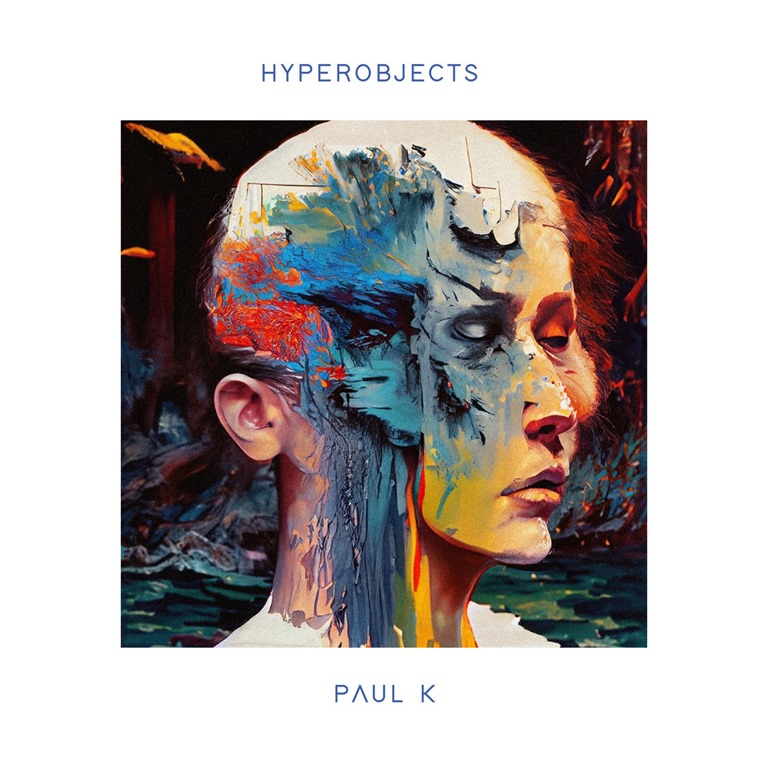
It’s been out a little while now, but some releases have a slow diffusion. Hyperobjects is one of them, and it seems fitting, given that Paul K’s latest work is an immersive work which is ‘a study in musical simplicity with a stripped-down sound creating a space where the listener can both listen to the album and imagine the worlds created by each track’s individual atmosphere’. Paul’s long-shown a fixation with space, as his last album The Space Between, evidenced. But Hyperobjects does something different, and heads in a different direction.

Space. And it’s immediate relative, time. We never seem to have enough of either in the present, or overall. We live in a state of perpetual future-placement, eternal postponement, dragging ourselves through endless days of drudge while promising ourselves a brighter future, be it a holiday, breaking free from a bad relationship, leaving the awful job, or retirement. Gratification is always over there, the aspiration is forever just over the horizon, on the other side of the next hurdle, an inch beyond reach. And we find ourselves entrapped within the special confines of our limitations, the four walls of our homes, the constraints of being unable to go places because of needing to be up and at work the following day, confined by affordability, and so on and so forth. Horizons shrink, and time passes in a blink and suddenly, time and space have both evaporated. What have you done, and what have you got to show for it?

‘Hyperobjects’ is a gentle work, and while much of it is electronically-created, many of the sounds replicate conventional instruments. As such, it’s a moving and mournful piano which leads the first track, a four-part neoclassical composition, ‘Diaspora (Movements I-IV)’.

It’s the sound of a soft, rolling piano which dominates this album, which is in equal parts classical and post-rock, with ambient elements interwoven throughout. ‘Döstädning’ sounds a little like an instrumental outtake by Talk Talk. Ethereal whisps and traces of voice swish around the piano and occasional strings which trace the supple structures of ‘Hyperobjects’, but in the main, it’s showcase of the most minimal compositions.

On ‘Hyperobjects’, the tracks drift into one another to create a continuous, mellifluous whole. Its power lies in its simplicity, its purity, and in doing so, Paul K has achieved something new, artistically, as well as attaining a new peak.

AA

a2391105810_10

“’These Things’ was the last song written for Delights Of My Life. Often the last song is written with the aid of what has come before it, the other songs on the record.
We have one song to write, or so we think, now then, what shall it be and why? I think that I asked this question. We will never know. And I also think that I thought that it might be novel to have a song with a very clear form (four times through a melodic verse, with a tag at the end that wraps it nicely). That, and that the record may very well appreciate a song with little to no improvisation. A straight curveball!

Eric Cazdyn, who made the ‘These Things’ video (and around 18 other videos for my music) may have heard the song similarly. He has certainly given me that impression. What I see in the video is a very simple movement or gesture, but with an immense amount of minimal detail. Well, that is how I often describe the dance of Angela Schubot, although she is just on the verge of dancing here in this video. She dances like vegetation. Or, she shows me again and again that vegetation is a dancing world.”

— Eric Chenaux

Check ’These Things’ here:

AA

c3f8bb22-38b3-c83d-5f15-f7d3d75630f5

Today, we share the mysterious and poignant track ‘Moonshiner’ from the eponymous solo album by guitarist, producer and composer Alessandro ‘Asso’ Stefana. The album is due for release on 17th May 2024 via Ipecac Recordings, with PJ Harvey as Executive Producer. ‘Moonshiner’ is one of the track from the albums featuring the voice of Roscoe Holcomb taken from the Smithsonian Folkways archives.

Asso describes his use of the archives as “a powerful and moving testimony to a bygone era… I have always been fascinated by the idea of mixing folk, a music so intimately linked to the land, with something that goes beyond the boundaries of the genre.” One of Asso’s aims for this album was for it to feel “suspended between earth and sky” – the interplay between decades old recordings with new improvisations evokes feelings of being grounded and untethered at the same time. 

See the visualiser here:

AA

Moonshiner

Photo credit: Roberto Cavalli

5th April 2024

Christopher Nosnibor

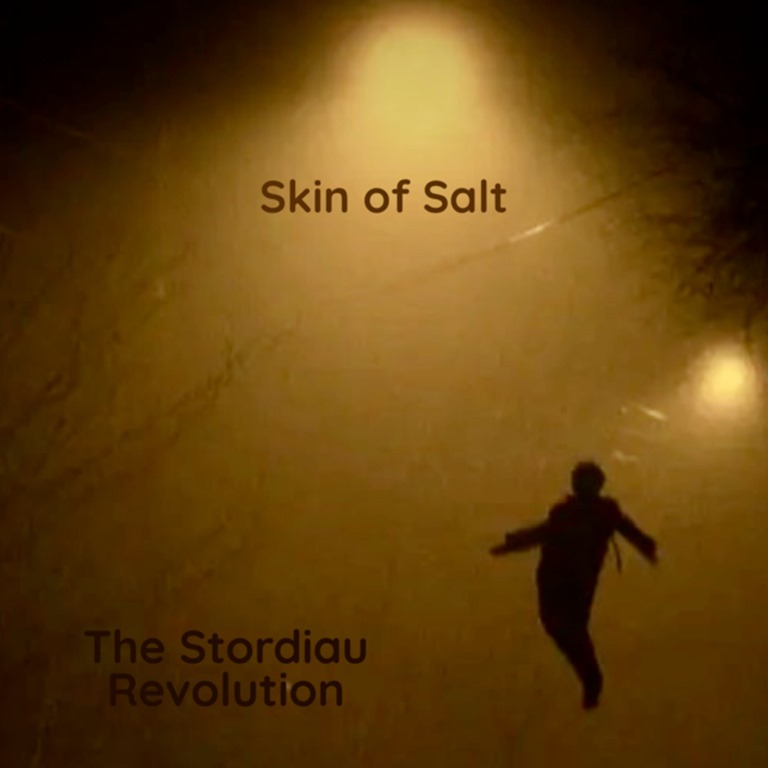
It’s been almost four years since I encountered Alaxander Stordiau, when I covered the single release by The Original Magnetic Light Parade, a collaboration between Stordiau and Edinburgh man, Harold Nono, on perennially oddball label Bearsuit Records.

With minimal info about that release – and not much more about this one, I’m mostly left to grapple with the music as it presents itself, with minimal content. This is good: and so is this EP.

A brief Internet delve uncovers that the material on this this EP was initially released a year ago, as part of an album-length work bearing the same title, slipped out on Soundcloud. Now, there are plenty of albums I think would have made decent EPs – or 7” singles – but there’s no reason to believe Stordiau has whittled this set down due to any issues with quality, and it does seem that it’s often easier to pitch an EP than an LP in our attention-deprived times. If I were to go all-out on a personal obsession, I’d make a greater deal of the fact that this four-track cut has aa running time of twenty-three minutes. There’s nothing to suggest Stordiau is a fan of William S. Burroughs or otherwise beholden to the ‘23 Mythos’, but the fact it does have a playing time of twenty-three minutes was of note to me, simply because. The twenty-threes just keep on coming.

And so to the music itself. ‘Fear Merges Easily’ is something of a teaser, an introduction, an atmosphere-builder, with wavering synth undulations creating a nice, even flow over a shuffling beat that sits off in the background. It’s got groove, but it’s subtle, and overall, it’s pretty mellow. It doesn’t ‘do’ much: one gets the impression it’s not supposed to, and nor is it necessary for it to do more. It’s vaguely background, it has some classic eighties electro and krautrock elements to it, and enough texture to keep it engaging.

‘Hearing the House Breathing’, stretching out to almost eleven minutes is the centrepiece and defining track here, and what’s interesting is how it’s centred around a core motif and built upon a solid spine of subdued beats, pulsating bass, and nagging synth shapes, but shifts and moves through a succession of segments. It’s dancey, but at the same time, it isn’t. and there are gasping, whispering vocals wheezing beneath the waves of undulating analogue ripples. Around the mid-point, it breaks into a more energetic mood, the bubbling synths bouncing over a lively robotic electro beat dominated by the whip-cracking snap of a vintage drum machine snare sound. Everything gets quite busy, and a shade hazy around this point, there’s a lot going on, and not all of it synchronous. I can’t be alone in finding this kind of busyness induces not a trance-like state, but one of feeling dizzy and vaguely overwhelmed, an experience not dissimilar to sitting in a busy pub or coffee shop and being unable to focus on reading or the conversation in front of my face for the distraction of all the babbling noise filling the air all around.

Things take a turn for the eerie, the proggy, the spacey, on the trilling title track, where a creeping dark chord sequence sits beneath altogether more vibrant tones, before giving way to a sloshing ebb and flow overlayed with some barbed organ, and there are moments here that remind me of Gift by The Sisterhood, Andrew Eldritch’s project between phases of The Sisters of Mercy: specifically, the notation the chilly closer ‘Rain From Heaven’. Closing off, ‘The Sting of the Lie’ is a relentless, cyclical composition over which blasts of wavering, quavering keyboards wander and spin.

Skin Of Salt brings together a range of elements, and not always comfortably. But why should music be comfortable, why should it always be easy, accessible? What’s wrong with discord and dissonance, lumpiness, discomfort? Why, nothing, is the answer. Life is brimming with discord and dissonance, lumpiness, discomfort. And without these elements, this would just be a bland hybrid of dance and ambient. Thankfully, it is so much more. Skin Of Salt isn’t mere mental chewing gum, but something which requires some proper chewing and a slow digestion.

AA

artwork-album_Skin-Of-Salt

Christopher Nosnibor

They’ve been going since 2013. Emerging from various permutations of solo and band-related projects by front man and songwriter Si Micklethwaite – evolving from his solo wall-of-pedals shoegaze work as Muttley, through the Muttley Crew collective to eventually coalesce as Soma Crew with guitarist Steve Kendra and drummer Nick Barker, with a rotating cast of contributors along the way. I’ve probably seen – and written about – most of these incarnations of both the band and their forebears, and they’ve never failed to provide music of interest. While the core trio means they’ve always retained their distinctive identity in ways which extend beyond Micklethwaite’s distinctive approach to songwriting – minimal, repetitive, cyclical, hypnotic – the shifting lineups have meant they’ve spent their career continuously evolving. It’s true that the evolution has been slow – a tectonic crawl, in fact, and if you ever meet the band, especially Si, it’s obvious why. These guys are as laid back in their approach as the music they make – and the music they make is psychedelic, hypnotic, slows-burning, hazy.

This latest offering – and it’s been a while since the last one – feel different. Strangely, it feels more overtly rocky. Bit it’s also different in other ways, while at the same time delivering everything you’d expect from these guys.

Confused OK is a long, droning, shimmery blissed-out exploration of all of the territories that Soma Crew love to ramble around: krautrock, drone, and here they bring a country twist to this weirdy retro grooveout. The country twist is very much a new addition to their relentless grooves and tendency to hammer away at a couple of chords for an eternity. And once again, on Confused OK Soma Crew Are seemingly content to batter away at a single chord for an eternity. More bands need to get on board with this.

With the slide guitar splattered all over the nagging bluesy honkytonk rhythm of the first song, ‘These Careless Lips’, they come on like The Doors circa LA Woman, at least musically. But whereas Morrison sounded like a roaring drunk spoiling for a brawl on that messy album, Micklethwaite sounds like he’s more likely to nod off than kick off, his vocals a low, mumbling drawl weaving loosely around the key of the guitars. The second song, ‘Tranquillizer’ is appropriately titled and is quintessential Soma Crew: seven and a half minutes of reverb-drenched tripped-out motorik drift. The intro hints at some kind of build, but once all the elements are on board, it’s a magically spaced-out kaleidoscopic spin where relentless repetition becomes inescapably hypnotic.

Flamboyant solos, guitar breaks… they’re so unnecessary, so much wanking. There’s none of that crap here: the extended instrumental breaks plumb away forever and a day, the guitars peeling off shards of feedback and tremulous layers of effects while the drums and bass stick tightly to the same locked groove.

The production on Confused OK is murky, hazy, the separation between instruments is, well, it’s all in the mix, which coalesces to create a fuzzy fog which recreates the sound of the late ‘60s, and it works so, so well.

Expanding their style further, ‘Let it Fall’ is a three-and-a-half minute slice of indie pop with a vintage sixties psychedelic feel, and it’s followed by the downtempo mellowness of ‘This Illusion’, before ‘Another Life’ goes all out for the blues rock swagger with a glammy stomp behind it. With the lyrics so difficult to decipher, it’s impossible to unravel the link between ‘The Sheltering Sky’ and Paul Bowles’ novel, although no doubt there is one, and here, they really cut loose with some wild guitar as Si sings up for a change over this hypnotic throbbing boogie.

Sprawling over seven minutes in a mess of reverb and distortion, ‘Propaganda Now’ closes the album off with a pulsating groove and an effervescent energy, fitting with its call to wake up and small the bullshit. Because it’s time. Sure, the Johnson / Trump ‘post-truth’ era may have given rise to the wildest frenzy of right-wing conspiracy theory, but now we know – we KNOW – that we’ve been lied to and fed a conveyor belt of bullshit… the pandemic was real, the fear was real, but our government partied hard while we were all trapped in lockdown, and their cronies made MILLIONS, nay, BILLIONS from backhanders and dodgy contracts for dodgy kit that never reached a soul. And now, the cost of living crisis, attributed to the war in Ukraine, has seen energy companies and supermarkets record record profits – because among it all, profits have been protected at all costs – namely at cost to customers while CEOs and shareholders rake it in.

Confused OK may sound like a mellow droner of an album on the surface, probably because it is. But is has detail, it has texture, and it has depth. It’s also their strongest work to date.

Soma new

24th February 2024

Christopher Nosnibor

A change is as good as a rest, so the saying goes. I don’t know if I’m entirely convinced, but as I seem incapable of resting – there’s always something to do, and if there’s nothing that needs doing in any given moment, there’s all the stuff I want to do but don’t have enough time for the majority of the time. The trouble is, oftentimes, when I do get a window, I find I’m unable to focus, and simply jump and jitter and remember that I need to put another load of laundry on or tidy something or other or add something to the shopping list, and before I know it, I’ve not even stopped for a second. It makes reading books and watching TV incredibly difficult. I’m by no means alone: the vast majority of people I speak to – admittedly, mostly by text as we all seem to be too busy to take time out to meet in person – all make the same complaint, that there simply isn’t enough time in the day, and when you’re stuck in a perpetual cyclone of life activity, it’s nigh on impossible to stop and to unwind. And then, of course, there’s not only physical rest, but mental rest, and it can often feel as if your brain is your enemy, or certainly not your friend.

They say of the song that it ‘reaches for a fleeting February feeling before it thaws and fades’, and the lyrics are brimming with briefly sketched but evocative visual lyrics

I open the window

Breathe in the morning air

But ideas are like sunlight

They’re everywhere

And yet, despite the theme of restlessness which runs through the song, the images themselves are soothing, as is the mellow musical accompaniment, which they describe as ‘Seven spiritual minutes of ethereal melody and synthesised drone for deep and peaceful nothingness.’ It’s certainly quite a change from their trademark fizzy punky poppy tunes or the guitar-orientated lo-fi post punk stylings, with the final three minutes simply being a long, slow-turning drone solo, which is calming indeed.

AA

a2121234740_10