Posts Tagged ‘Leonard Cohen’

Bearsuit Records – 31st January 2025

Christopher Nosnibor

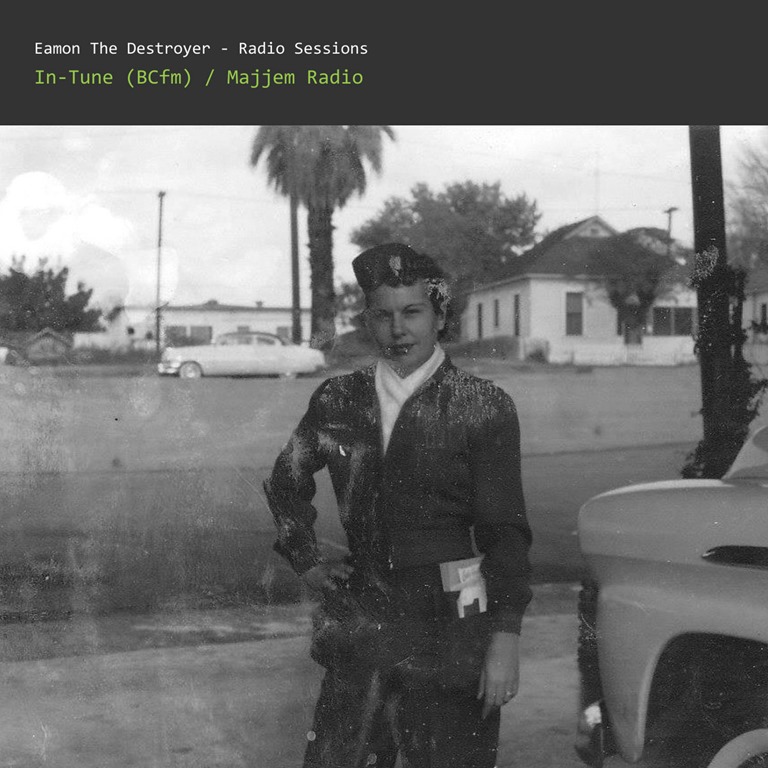
It’s been a while since we’ve heard form Bearsuit Records, and from Eamon The Destroyer, too, with Harold Nono’s The Death of Barra slipping out quietly in October, and the last ETD release being the Alternate Piranhas EP last April. Ok, so it’s not so long in the scheme of things, but in recent months, while the world has spun into new realms of insanity, the wonderful wibbly weirdness this label specialises in has been sorely missed.

As the factual, functional title suggests, this release features tracks recorded for radio sessions, recorded for In-Tune (BCfm 93.2 FM), broadcast in September of 2024, and Majjem Radio, broadcast at the tail end of the year. And if another release with no new material seems like overkill, since the last ETD was a set of remixes from second album We’ll Be Piranhas, which came out in October 2023, then it’s pleasing to be able to report that, no, while this may well be something of a stop-gap release, it’s a worthy addition to the catalogue. It not only provides some insight into what one may call the ‘promo cycle’ of an album, particularly for a DIY act, but also casts a different light on the songs, being stripped-back acoustic guitar-based renditions of the songs – which are a 50/50 split of choice cuts from We’ll Be Piranhas and its predecessor, A Small Blue Car.

The original versions may be sparse and lo-fi in their production, but that production, and the prominence of droning, wheezing synths is what really defines them. That’s not to detract from the songwriting or performance at all, but the downtempo, downcast mood is heightened significantly by the execution, and that thick, hazy sound is integral to that.

However, hearing these songs played straight, as it were, is something of a revelation. The parts are essentially unchanged, but apart from a bit of reverb, and some vocal layering, these takes are more live-sounding, as could be performed by one man with a guitar and a pedalboard or synth with a few loops.

A far shorter rendition of ‘Underscoring the Blues’ still packs in the magnificent oddness that encapsulates everything that’s special about both Eamon and the whole Bearsuit aesthetic, suddenly spinning off from a sparse picked folksy guitar into a fantastical fairground of whirling, waltzing organ.

I’ve written previously that Eamon The Destroyer’s songs have a certain quality which casts a long, bleak shadow of lugubriousness over the soul, and how the effect is, for me, at least, similar to listening to Leonard Cohen’s Songs of Love and Hate. It’s an outstanding album, but it’s dark in a way which goes beyond the crushing lyrics of ‘Avalanche’, ‘Dress Rehearsal Rag’, and ‘Famous Blue Raincoat’. What I’m trying to articulate here is that there’s a special place for sad songs, songs which have a mood-altering effect, and this is Eamon The Destroyer’s strength. The lyrics are largely abstract and often difficult to decipher, but the feel is inescapable.

The ‘Avalanche’ on here, which first appeared on A Small Blue Car isn’t a cover of the Leonard Cohen song, but the stark atmosphere hits just as hard. It’s all about the minor chords, and the monotone croon. ETD adds layers of extraneous noise way down in the mix which adds tension to an already tense soundtrack.

Not because it sounds in any way similar, but ‘The Choirmaster’ calls to mind Chris Rea’s ‘On the Beach’ with its wistful tones and twisted hints of flamenco, and wraps the release with a vibe that’s almost uptempo, despite the heavy undercurrents of melancholy.

It’s the end of one of the longest, darkest, bleakest Januaries in living memory: we’ve been battered by storms, by global politics, by relentlessly traumatic news of war, of.. of… you name it. If you’re looking for a lift, steer clear of Eamon the Destroyer. But The Radio Sessions is nevertheless essential listening, showcasing the quality of the songwriting which lies beneath that fuzzing haze and reverb, and remember: it’s ok not to be ok.

AA
a4026067221_10

Erototox Decodings

Christopher Nosnibor

Internationally, Kristof Hahn is best known as a member of Swans since their return in 2010, contributing electric guitar to My Father Will Guide Me up a Rope to the Sky and everything since (he was briefly a Swan in the late 80s and early 90s, becoming a touring member for The Burning World and appearing on White Light from the Mouth of Infinity and subsequently joining Gira’s Angels of Light. A lot has happened since then: My Father Will Guide Me was only forty-four minutes in total, whereas now they’ve evolved to have single tracks of that duration, and Hahn’s contribution on recent albums and tours has been lap steel. Witnessing his action on the last tour, while standing so close to him I could actually see the mud spattered around the ankles of his jeans, the significance of his contribution to the immense walls of noise the band create is clearly apparent. I’ve also been vaguely amuse by just how neat and dapper his presentation is, producing a comb to slick his hair back following particularly strenuous crescendos – although I also witnessed him taking said comb to the strings of his instrument in Leeds to yield some particularly unholy noise from an instrument more commonly associated with laid-back twangin’ country tunes.

What’s perhaps less widely known is that Kristof has enjoyed a lengthy career in music before joining Swans, as both a solo artist and a member of rockabilly garage acts The Legendary Golden Vampires, founded in 1981, and The Nirvana Devils (circa 1984). It’s with the former he’s back flexing his creative muscles despite an intense touring schedule with Swans.

Here, the Berlin-based core duo of filmmaker Olaf Kraemer (vox) and Kristof Hahn (guitars, organ, harmonica), reunited for the first time in many years, are joined by Thomas Wydler (drums), Achim Färber (also drums), and Chandra Shukla (sitar), to cook up a collection of ten songs.

The style is understated, country-leaning, occasionally folksy, with an underlying melancholy hue, with ‘Wohin Du Gehst’ crossing the language barrier to convey a low-level ache of sadness in its tone. Kraemer’s vocals are husky, almost croony, with hints of Mark Lanegan, and suit the low-key compositions well, conveying emotion and world-wearinness and a certain sense of sagacity, which is nowhere more apparent than on ‘White Horse Blues’.

If the reverby guitars of their Husker Dü’s ‘She Floated Away’ channels Chris Isaak, the song’s incongruously jaunty twist is in the vein of fellow German duo St Michael Front, while ‘The Rain’ is sparse and hypnotic and wouldn’t sound out of place on True Detective. The melancholy Leonard Cohen-esque ‘Sad Song’ speaks for itself, quite literally, self-referentially returning to the hook ‘this is such a sad song / and I sing it just for you’.

Discussing the songwriting ‘craft’ on an album feels pretentious and a bit wanky, but making songs this sparse – but also this layered – is a true example of crafting. Having mentioned Leonard Cohen previously, one thing that’s often overlooked is just how many incidental details there are on many of Cohen’s songs: The Songs of Leonard Cohen in particular is , on the face of it, acoustic guitar and voice, but there’s much more happening in the background, coming in and out of the mix, and this is something that comes through in attentive listening to Polaris. It’s subtle, keeping the overall sound quite minimal, but the attention to detail is what really makes it special.

AA

a3829215066_10

27th April 2020

Christopher Nosnibor

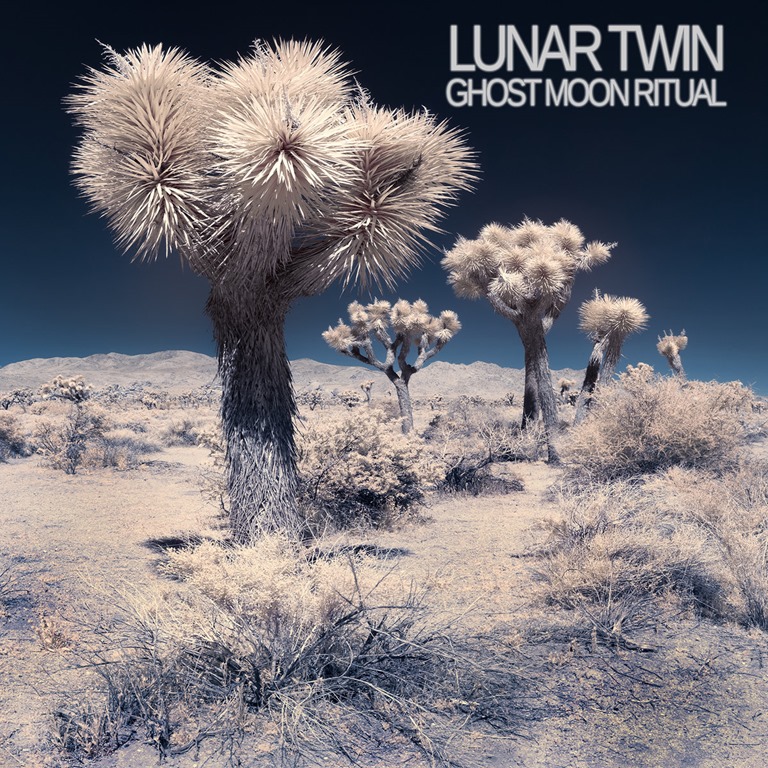
Ghost Moon Ritual follows its predecessor, Night Tides, after three years in the making. It’s easy to forget that most musicians have actual day-jobs, and things like families and normal lives to operate, too. It’s not easy to pack in creative activity alongside normal life.

Since lockdown, everyone seems to have delivered a new release, and, bizarrely, and most unexpectedly, a world without live shows is suddenly a world brimming with new music not so much ins spite of, but because of circumstance.

All of our circumstances are different, of course. Balancing dayjob, parenting, and an all-consuming state of anxiety, I’ve found less time and energy than ever available to review more material than I’ve ever received in over a decade of doing this.

Ghost Moon Ritual is pitched as ‘a song-cycle influenced by redemption, hope, failure and endurance’, and while the creative contexts isn’t immediately apparent, the attention to detail, not least of all atmosphere, is.

As the band write, ‘During the three years of writing and recording the album, several people close to the band passed away bringing a heavy mood to the proceedings. During this time, two beautiful children were born as well, bringing with them a reminder of the joy that still exists and is always enduring. Realizing that all there is now and that the outside world at large seemed to be teetering more and more on the edge of a cliff Work moved slowly, tuning this out and retreating into the studio with heavy hearts, the duo worked to channel the grief and hope and joy into what has become Ghost Moon Ritual.’

While Night Tides contained six songs, Ghost Moon Ritual contains thirteen, and as such is an altogether more substantial document. It’s also a document which renders with crystal clarity the way in which Lunar Twin’s work is built on contrasts: specifically, Bryce Boudreau’s baritone vocals that call to mind Leonard Cohen, and as such belong to a rock / folk world, while Christopher Murphy conjures sonic drifts that meld dreamwave and sparse folk with a laid-back, rippling dance vibe.

The album’s first song, ‘Drunken Sky’ is a slow, swaying semi-comatose crawl of drum machine and synth bass, and calls to mind some of the doomy, reverby-but-claustrophobic material on The Jesus And Mary Chain’s Barbed Wire Kisses. The drums burst into D’n’B near the end, which is unexpected, but then there’s a lot that’s unexpected about this set.

All of the Mark Lanegan comparisons are entirely justified: ‘Leaves’, and, indeed, several other cuts, could easily pass as outtakes from recent Lanegan albums, with Bryce Boudreau’s world-weary gravel-heavy croon laying breathy over sparse backing, picked guitar and spectral synths drifting over minimal percussion. ‘Neon Room’ is subtle, combining chilled dance grooves with a deep-carved rock growl: the result is quite unexpectedly affecting.

As a collection it’s sparse, dolorous, dark. It’s also gentle in its bleakness, but bleak it is, as well as understated and graceful, and as such, it reaches all the parts.

AA

a3899811576_10

15th July 2018

Recently named ‘artist of the month’ at The Great Frog, former Arrows of Love drummer, film and game soundtracker and artist in his own right, Mike Frank is on a bit of a roll.

He’s written and recorded two albums post-Arrows: ‘This is going to get weird… I’m going to make this weird’, which he describes as ‘a collection of orchestral and experimental film music songs’, and an album featuring Rufus Miller, Lyndsey Lupe and Artur Dyjecinski which is ‘full of dark sounds and Middle Eastern instruments’. Only the former has yet seen the light of day.

A taster of a forthcoming album, ‘All My Possessions’ has no connection with either project, and is infinitely more accessible – I’ll refrain from going so far as to say commercial – than anything we’ve heard from him so far. What’s more, this downtempo yet somehow simultaneously jaunty, jangly indie rock tune, which boasts a really rather catchy chorus, hints further at his songwriting range. With delicate, understated, picked guitar and a bleak croon, the opening resembles Leonard Cohen, and there’s a darkness which shadows the song as a whole.

Bukowski’s influence is rendered explicit in the lifted footage which accompanies the song, which is essentially about the vagabond life of a writer, but also, as he puts it ‘about feeling down and out, lonely or even desperate’ – and you wonder which voice or perspective lines like ‘she’s so good to me / I’m such an asshole’ and ‘I like to drink because I can / It makes me feel like I’m still with the band’ are really coming from.

It’s got a nice slow build that swells subtly to a full finish, and is, as a song, rounded and satisfying. And really very nice, if kinda sad.

AA

Mike Frank

Neurot Recordings – 25th March 2016

Christopher Nosnibor

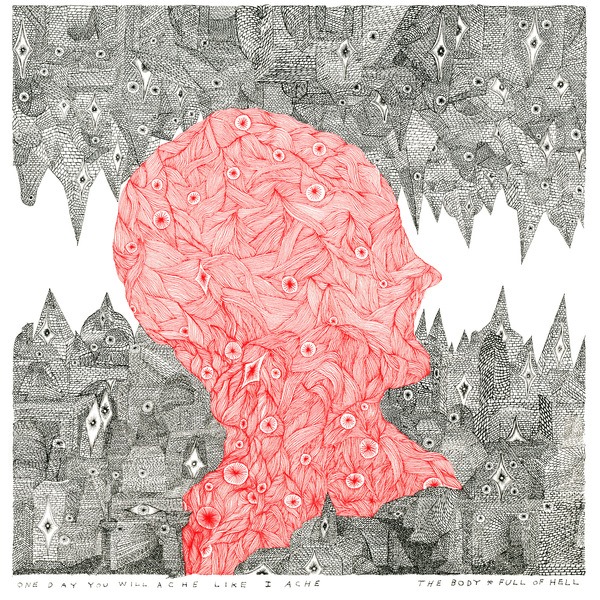
Full of Hell seem to be an act who thrive on collaboration, with their previous release, Full of Hell and Merzbow proving to be a magnificent if suitably challenging meeting of strains of noise which nothing if not effective.

Small wonder that the press release states that Neurot Recordings is very pleased to announce a full-length collaborative debut between apocalyptic doom duo, The Body, and grindcore/harsh noise sculptors, Full Of Hell.

I’ll admit that the title is something of an obstacle for me, reminding me as it does of Hole – specifically, ‘Doll Parts’ but the squalling barrage of percussion-led noise that explodes in the first minute of the title track obliterates all reminders of anything other than the need to continue breathing. From the fury emerge grand, mangled powerchords that sweep against a sombre march.

The cover version of the Leonard Cohen track ‘The Butcher’ is a real standout track, despite being barely recognisable in this dank, droning mutant form. But yes, beneath the gut-churning 10bpm sludge and barely audible, Cohen’s barren lyrics are howled and snarled.

The drums are back to the fore on ‘Gerhorwilt’, a thunderous, speaker-smashing tumult combine with tortured, and torturous, vocalisations that barely sound human, while ‘Himmer and Holle’ is a wall of noise that’s the very definition of infernal. Incredibly, the punishment ratchets up another notch or three on the desolate grind of ‘Bottled Um’, and there’s a sense of relief on arriving at the end of the album’s final track, the blackest of black ‘The Little Death’.

That this album is beyond noisy – a pretty relentless assault from beginning to end – is only half the story. The individual tracks display a polarity of pace, with crawling dirges buttressing hundred-mile-an-hour thrashout frenzies. As such, the extremities of the dynamics of tempo are accentuated, hurling the listener back and forth while continually battering the senses with violent sound.

Is it a coincidence it’s being released on Good Friday? Probably not. It does, after all, feel like the sonic equivalent of crucifixion. Hellish, heavy and even more hellish, the day you hear this album is the day you will ache in ways you never imagined possible.

Body   Full of Hell


The Body & Full of Hell at Neurot Recordings