Posts Tagged ‘Kranky’

Kranky – 2nd May 2025

Christopher Nosnibor

Landscapes, in all their forms, have always been significant in the inspiration for loscil works. Scott Morgan is an artist who seems sensitive to his surroundings, and also responsive to them when it comes to the creative process.

This is true of many artists, of course, and any artist who isn’t in some way influenced by their surroundings and the things which happen around them are… largely incomprehensible to me on a personal level. It simply seems unnatural to create art in a void, detached from experience. I’m not advocating that all art should be grounded in the here and now, or even in reality, but even the most imaginative of scenarios require an element of grounding in order to be credible. The most wildly-imagined sci-fi and fantasy only work when there’s a demonstration of an understanding of human character, or how dialogue works, and so on.

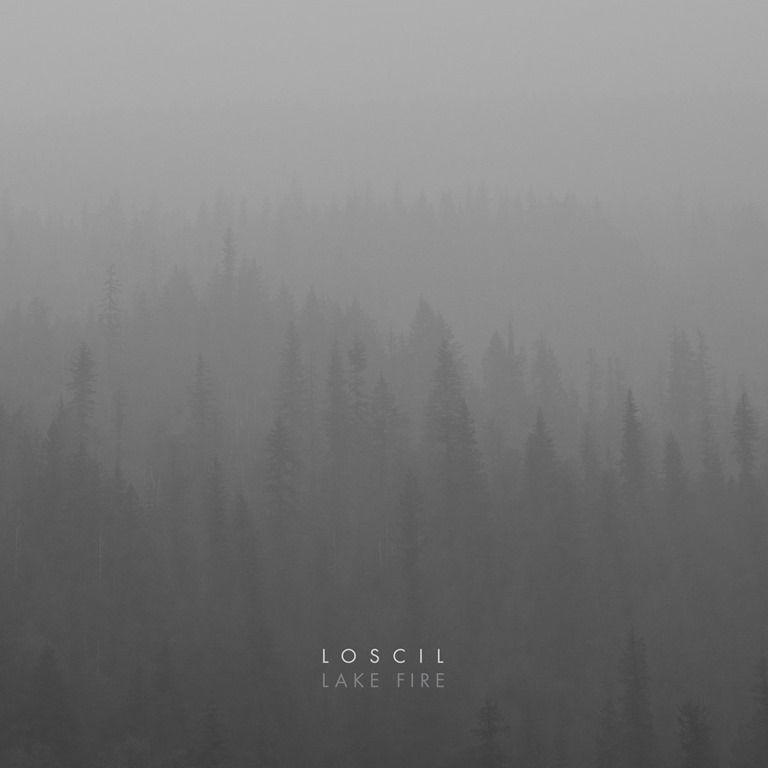
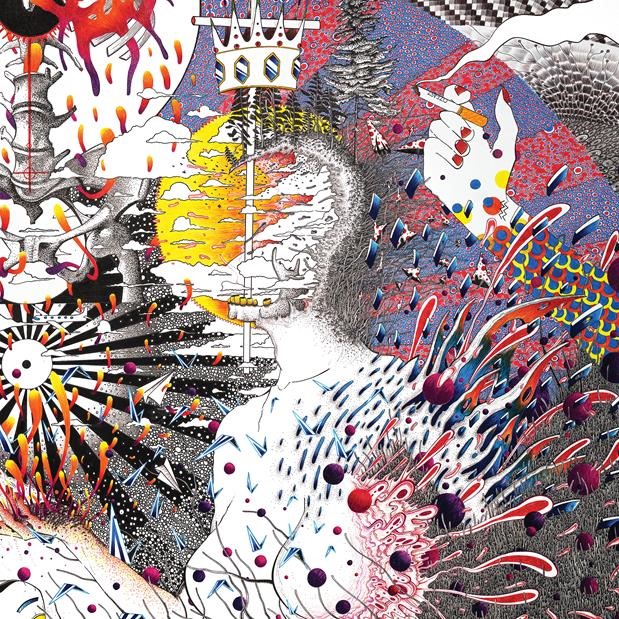
The misty, murky shadings of the cover are replicated in sonic form on ‘Arrhythmia’, the first of the album’s nine compositions. Where are indecipherable whispers eddying behind the piano notes, which gradually blur into a watercolour wash, and a slow pulsing tide slowly rises, only to fall and resurface and fall again.

Interweaving layers create an aural latticework on ‘Bell Flame’, the different tempos of the rippling waves merge together effortlessly to create a shimmering, ever-shifting fabric that’s soft, almost translucent. These supple, subtle ambient works are far from abstract, although their forms are vague to distinguish, and single release ‘Candling’, it so proves, is exemplary of the album’s finely-balanced layerings and contrasts.

With ‘Sparks’ preceding ‘Ash Clouds’, one might be tempted to perceive some form of narrative, or at least a linearity in their pairing: the two six-minute pieces drift invisibly from one to the next, although ‘Ash Clouds’ is heavier, darker, an elongated drone providing one of the album’s moodiest, most oppressive pieces. ‘Flutter’ is appropriately titles, and warps and bends in a somewhat disorientating, disconcerting fashion, creating an effect not dissimilar from the room-spin of inebriation, while the title track concludes the album with a lot of very little, as long, low droning notes hang heavy. It’s pure desolation, and yet… there is something which rises upwards other than smoke and flame – a gasping breath and the sound of a thousand souls transported in vapour.

There are beats on this album, but they’re almost subliminal, a heartbeat underneath the mix, and provide a sense of orientation like fence posts visible through fog or low cloud on a barren moor. More often than not, though, the rhythms come from the interactions between the different elements as they meet and then separate once again. The abstract nature of the work somehow compels the listener to not only fill the blank spaces with their own sensory and emotional input, but also to visualise in the mind’s eye what they may look like. As such, Lake Fire, while largely tranquil, sedate, and even soothing in parts, is stimulating, and to more than just the ears.

AA

a2277207601_10

Today, celebrated electronic composer Loscil shares the video for ‘Candling’, taken from his forthcoming album release, Lake Fire (kranky, 2nd May).

‘Candling’ is one of Lake Fire‘s nine tracks offering ash-laden sonics that mine the tension within the cycle of destruction and rejuvenation.

AA

Loscil will perform the following live dates:

May 1, 2025, SFU – Vancouver, CA  SOLD OUT
Sep 4, 2025, Extreme Chill – Reykjavik, IS
Sep 8, 2025, Silent Green, Berlin, DE  tickets
Sep 10, 2025, Botanique, Brussels, BE 
Sep 12, 2025, Casa Montjuic, Barcelona, ES  tickets
Sep 16, 2025, Rich Mix, London, UK  tickets
Sep 18, 2025, Ostre, Bergen, NO  tickets
Sep 20, 2025, OSA Festival, Gdansk, PL

Lake Fire is the result of a disjointed creative process. Originally conceived as a suite for electronics and ensemble, most of the original compositions were deserted, save for Ash Clouds, featuring James Meager on double bass. The remaining tracks were reshaped and remixed, built anew out of the remnants of the abandoned work. The result is a phoenix, an album burnt to the ground only to be reassembled out of its cinders. Fragments of the original lurk beneath a densely overpainted canvas of sound.

Infused into the resulting rearrangements are impressions from a road trip into the mountains marking a personal half-century milestone, surrounded by the ominous proximity of wildfires and dense smoke; celebrating life while the world burns. The album’s title comes from the striking irony that forest fires are often named after regional lakes – perhaps subconsciously referencing ancient lore. The cover photos were taken from this same trip, while sitting in a rowboat staring into the grey abyss of an opposing mountainside outside of Revelstoke, BC, obfuscated by smoke from a nearby lake fire.

AA

3_loscil_ferry25_nocredit-99045103cf04513c

Today, the hazy and hypnotic duo Belong share the closing track from their upcoming album, Realistic IX.

‘AM/PM’ is a driving track full of static which rounds off the album on an uptempo and propulsive note.

Realistic IX, the third full-length by the duo of Michael Jones and Turk Dietrich, aka Belong, is both an expansion and excavation of their signature acid-washed songcraft. Bleached guitars, metronomic drums, and buried voices rev, swirl, and seethe across shifting gradients of haze and hypnosis, alternately driving and diffuse. Melodies surge closer to the surface, flexing their form before resubmerging into quickening currents of feedback. Elsewhere the elements dissipate into a dusk of murk and microtonalities, electricity liberated back into infinite night.

Although it’s been 13 years since Belong’s prior Kranky offering, Common Era, none of the duo’s rare synergy has decayed in the interim. Jones and Dietrich’s commitment to oblique states of motorik drone and liminal emotion continues to evolve and unfold, increasingly tactile and unreal, an alluring glow glimpsed through fogged windows at witching hours.

Listen to ‘AM/PM’ here:

Realistic IX will be released via kranky on 9th August.

belong_promo_2024-990514014505143c

Kranky – 5 April 2024

Christopher Nosnibor

Stars of the Lid are one of those acts who seem to have spent a – now lengthy – career on the fringe, an ultimate cult act who’ve built a substantial following without ever being well-known. Here in the UK, at least, they’re strictly a 6 Music act. With Brian McBride’s passing last year, their future remains unclear, but in the meantime, Adam Wiltzie, who had already been active for some time as a solo artist, offers up a new set of drifting, dreamy, discombobulating amorphous ambient works in the form of Eleven Fugues for Sodium Pentothal.

Sodium Pentothal is (to quote, unfortunately, Wikipedia), ‘an ultra-short-acting barbiturate and has been used commonly in the induction phase of general anesthesia’ and is also perhaps better known as a ‘truth serum’.

We recently aired the opening track, ‘Buried At Westwood Memorial Park, In An Unmarked Grave, To The Left Of Walter Matthau’ here at Aural Aggravation, and it’s inevitably tempting to infer connotations from this title in context of events – something the album’s title wouldn’t seem to necessarily counter. But Eleven Fugues for Sodium Pentothal seems to be preoccupied with memory and place in a broader sense.

We’re infirmed that the album ‘took shape following a move north from Brussels into the Flemish countryside, although it was initially inspired by a recurring dream wherein “if someone listened to the music I created, then they would die.” The album uniquely evokes and evades the allure of oblivion, keening between beauty and ruin, forever unresolved.”

Dreams have a way of staying with you, and of twisting your psyche in some unsettling way, the more vivid ones lingering and replaying for hours, even days on end, the vaguer ones leaving you feeling somehow disjointed and in a slip from being in step with the world, partially detached, partially disconnected, as if looking at your own life through a window. Recurring dreams can prove particularly unsettling, and have a way of encroaching on your waking hours, assuming a reality of sorts.

The track titles, in the main, tell us very little, presenting mere abstractions, although one suspect they carry significantly greater weight of meaning for the composer. Bereavement and loss has a way of bringing layers of meaning to the slightest things, often unsuspectingly – a sight, a sound, something not even remotely directly related, has the capacity to trigger a memory, which in turn has the capacity to elicit an emotion or some not-quite-definable internal response. It’s often fleeting, or otherwise vague and indefinable, something impalpable and beyond reach, leaving a certain pang of bereftness – in much the same way as if waking from a dream.

Eleven Fugues for Sodium Pentothal is not a dark or heavy album, but one which is dense in its atmosphere and carries a certain air of melancholic reflection in its drifting waves. This melancholy may well be as much a reflection of the way places – even unfamiliar locations – have the capacity to stir memories but indirect association – again, a sound, a smell, a certain shade of lighting, the angle of a tree, a riverbank – prods a deep corner of the memory most unexpectedly, causing memories we didn’t even know we had, or still had, to trickle forth, vaguely, out of focus, out of context, and sometimes you wonder if is really is a memory or a fragment of a dream.

There are some deep, rich, grainy textures to be found here, and ‘(Don’t Go Back To) Boogerville’ brings some dark, heavy strings and sonorous scrapes to close the album – which, incidentally, contains only nine tracks. Loop’s Robert Hampson was an inspired choice for the album’s mixing, bringing the layers of organic-sounding drones to the fore.

Returning to the press notes, ‘Wiltzie cites the barbiturate of the title as both muse and sacred escape: “When you are sitting face forward on the daily emotional meat grinder of life, I always wished I could have some, so I could just fall asleep automatically and the feeling would not be there anymore.”’ With Eleven Fugues for Sodium Pentothal, he has created that perfect escape. This is an album that lends itself well to listening – or half-listening – by candlelight with a slow-sipping drink, and to simply drift and nod to.

AA
547558

Well, this is succinct, and a release most definitely well-suited to the format. I was reminded following a recent post that vinyl is not a friend of the environment. It’s a hard fact to take. I grew up with vinyl, I love vinyl. But then, petrolheads make the same defence of fast cars, and people who love overseas travel and cruises likewise. Well, maybe. Although I doubt many grew up with cruises, the most environmentally-damaging of all tourism, being primarily the domain of affluent retirees, and they don’t give a fuck about the environment because they’re not going to be here to see it burn.

Only today, I read a news item about how younger people suffer more mental health issues, suffer from greater anxiety over the future, while boomers sleep pretty well at night. The findings included that ‘Nearly 60% of young people approached said they felt very worried or extremely worried… More than 45% of those questioned said feelings about the climate affected their daily lives… Three-quarters of them said they thought the future was frightening. Over half (56%) say they think humanity is doomed.’

So I have every reason to feel conflicted here, and I can’t pretend that everything’s ok. But then the same people who are worried are also getting into buying showcase vinyl. I have no conclusion to this diversion: it’s simply something that’s rubbing as I approach this release, and we learn that ‘Ulrich Troyer’s MOMENTS transforms classical & acoustic guitar recordings through tape machine treatment, guitar effect pedals, analog & digital effects into a shimmering soundscape. The combination of textures and effects generates excitement and invites to listen repeatedly, surprising each time with new details’, and offers ‘Fractured tones, beautifully rooted and held together by the tune underneath.’

Troyer’s own words resonate on a personal level I had not expected. He explains that “The inspiration for the composition MOMENTS is based on personal experiences of the last years. I strived to achieve a beautiful and pleasant life for myself and my family through diligent and consistent work. In the hope that at some point “everything would be beautiful”, I lost sight of the moment – the here & now. Two serious cases of illness in my family made me realize that it will never be “nice and pleasant at some point”, but that there are just always beautiful moments in between, that cannot be captured and that need to be consciously enjoyed and experienced.”

His words articulate – albeit in vague terms -the difficulty of coming to terms with the fact that life is not what you expect, that it’s not viable to pin hope on a perfect future moment. The moments of enjoyment, or joy, of pleasure, emerge through the cracks in the face of bleak news.

On learning that my wife had – optimistically – years to live (it proved to be only months), we packed in as much as was physically possible. Making memories, as they say. They weren’t all good. Sometimes she was too ill to enjoy anything; some trips got cut short because she simply wasn’t up to it. She would rather we didn’t remember trips being marred by her being red-hot angry or through-the-floor down, and so we move on, and focus on what we did achieve and the better times.

In times of darkness, music so often provides comfort, and more, and this is clearly true for Ulrich Troyer. He writes, ‘I feel the most intense moments of happiness when I have the opportunity to completely immerse myself in a piece of music for a certain amount of time while composing, playing or listening… Music as such has always accompanied me since childhood and has been there for me in both beautiful and difficult moments. I started learning classical guitar when I was ten. I discovered electronic music in Vienna in the 90s and have been addicted to it ever since. With MOMENTS I wanted to interweave my musical beginnings with my current musical language and expression.’

The two compositions are both under five minutes long, and as such perfectly suited to a 7” release, and across the two pieces, Troyer presents jolting ruptures and blasts of glitch, occasional churns and crackles, and, flickering and out of the mix, amidst bulbous bass and busy ambience and a conglomeration of noise, some tuneage. Some of it’s quite pleasant: some of it is more discordant, difficult noise.

Troyer certainly packs a lot into these moments, and this is an interesting release, which places patience at the fore.

Adam Wiltzie shares the blossoming opening suite, ‘Buried At Westwood Memorial Park, In An Unmarked Grave, To The Left Of Walter Matthau’, taken from his latest musical endeavour, Eleven Fugues For Sodium Pentothal, to be released by kranky on 5th April.

The longest track on the album introduces us to a hazy world of sound washes, and eases the listener into the journey of this magnificent album.

Listen to ‘Buried At Westwood Memorial Park…’ here:

The latest suite by composer (and Stars Of The Lid co-founder) Adam Wiltzie took shape  following a move north from Brussels into the Flemish countryside, although it was initially inspired by a recurring dream wherein “if someone listened to the music I created, then they would die.” The album uniquely evokes and evades the allure of oblivion, keening between beauty and ruin, forever unresolved.  Wiltzie cites the barbiturate of the title as both muse and sacred escape: “When you are sitting face forward on the daily emotional meat grinder of life, I always wished I could have some, so I could just fall asleep automatically and the feeling would not be there anymore.”

Recorded at Wiltzie’s home studio, with strings added in Budapest at the old Hungarian National  radio facility (Magyar Radio), the tracks feel simultaneously intimate and infinite, unfolding vistas glimpsed in an inner space. Robert Hampson of English drone rock icons Loop mixed the album, further lending the music a sense of cinematic expanse and oblique hypnosis. These are fugue states as much as fugues in a literal classical music sense – smeared epiphanies of uncertain memory and spatial dislocation, coaxed from the unconscious and set aloft.

Eleven Fugues

Kranky – 13th October 2023

Christopher Nosnibor

One thing I’ve learned as I’ve grown older (apart from the fact you never grow younger, despite the fact that I was amused to recently stumble upon the ‘people also ask’ Google question prompt ‘Is Benjamin Button a true story?’), is that a diversified appreciation of music is particularly useful as you come to recognise the diversified nuances of mood. Adherents to a single genre: how do they deal? How do they find the right soundtrack?

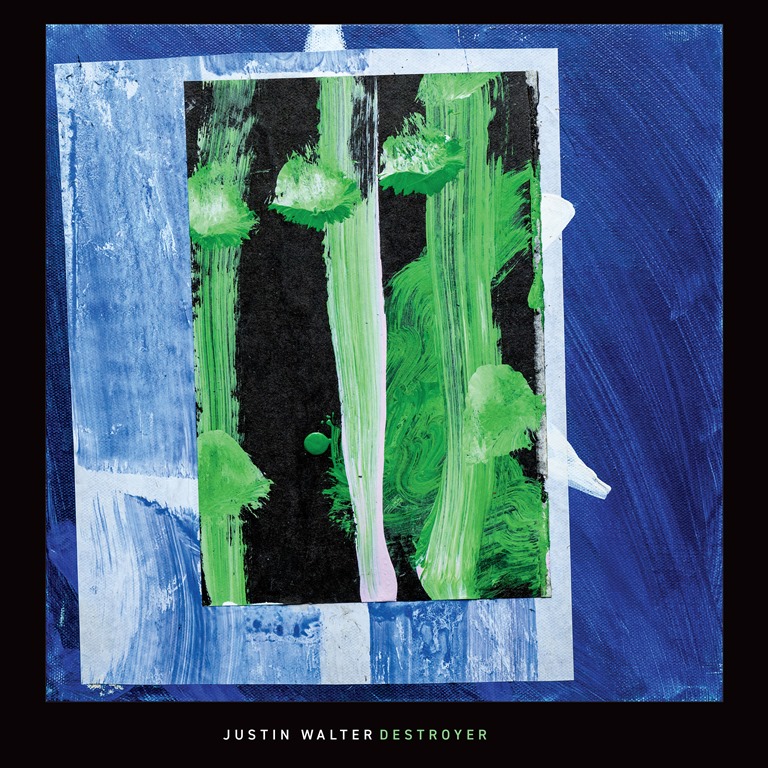
I’m not previously familiar with the music of Justin Walter, but the accompanying notes inform me that it ‘veers between nebulous and numinous, coaxed from the translucent tonalities of his signature instrument, the EVI (Electronic Valve Instrument)’ and that ‘Destroyer, his latest, and third for Kranky, marks his most multifaceted work yet. Inspired by minimalistic urges (evading grandiosity, condensing scope, embracing spatial restraint) tempered with the drama of triptychs (becoming, destruction, aftermath), the album’s 11 tracks thread.’

If the album’s title implies aggression and obliteration, it’s overtly organic analogue synth vibes are quite the opposite. That isn’t to say it’s all shades of mellowness, because Walter weaves in extraneous noise and all sorts and messes with the dials to render soft tones bent and broken, twisted and warped to create a less than silky-smooth air of tranquillity at times. But at others, there are some simply magnificent passages where you feel calm and at ease. The title track is exemplary: it’s an ambient work at heart, soft, supple, gentle, but with serrated edges and spiny burrs that occasionally break through the surface.

Walter obviously has a clear sense of flow. The eleven pieces on Destroyer flow seamlessly from one to the next, and as a consequence, Destroyer feels like an album, despite the contrasts which present themselves across the work. The flow begins with an instant attention-grab in the wibbly shape of ‘For Us’, which blasts in with a blaring drone over which phasey noodles tangle over in ever-increasing layers with adrenalizing effect. While the majority of the album is rather softer, a defining feature of the composition is the exploration of interplay between tones and timbres and the notes their timings gradually shift to create the subtlest of tensions. This is particularly noticeable duribg the second half of the album, which feels slower, softer, and more soporific than the first half. Close your eyes, exhale slowly, and you really start to absorb Destroyer. And you have every reason to do that.

‘Cliff the Cloudcatcher’ is a gentle, bubbling synth piece, while the eight-minute ‘Inner Voices’ is a mellifluous movement in many directions simultaneously, which pulls together to take form, becoming graceful, and in places the sounds mimic woodwind, but sculpted into something otherly… backwards, perhaps, and the sounds bend and push and pull – gently, but they do – before a darker turn around two minutes in brings shade, clouds thickening and becoming denser.

Destroyer distinguishes itself from so many other ambient-orientated works by virtue of its dynamics. There are some thick, tones and dense blankets of noise which present themselves, often emerging from cloud-like drifts of near-nothing. But these moments of rising tension resolve to easy washes and ripples of sound, to cloud-like softness.

And this is the album’s real accomplishment, in that is balances many shades, many tones, many textures. Those darker passages serve to remind that life isn’t all easy or plain sailing, and that plans can go wrong. You can set the controls for plain sailing, but there will always be disturbance, disruption. Whatever you plan or expect, there will always be deviation.

AA

114931

The union of composers Lawrence English and loscil aka Scott Morgan is seamless, sublime, and long overdue.

Born of a conversation centered on the notion of “rich sources” as a forge for electronic music, Colours Of Air is a collection of recordings of a century old pipe organ housed at the historic Old Museum in Brisbane, Australia, which were then processed, transformed, and elevated into eight majestic electro-acoustic threshold devotionals. The timbre of the instrument and spatial fluctuations of room tone infuse the music with a subdued, sacred feel, like vaulted light in a nave of stained glass.

They describe the album as “an iterative project, a reduction and eventual expansion,” sifting the swells and drones of the organ for every shivering shade of radiance.
The tracks are named for the hue each piece suggests – from the gauzy levitational miasma of ‘Yellow’ to the pulsing melancholic mirage of ‘Violet’ to the seething twilit sandstorm of ‘Magenta.’

Watch the video for ‘Violet’ here:

AA

j1ZB29TQ

Poole Music

AB – Experimental musician John Also Bennett – may be absolutely nothing to do with COVID vaccines, although there is something of a pandemic element to his new album, which, as the accompanying notes explain, ‘emerged from a bicoastal pandemic road trip through the badlands of South Dakota’ before ‘relocating with his wife (Kranky composer Christina Vantzou) to the cliffside village of Livaniana on the island of Crete, [where] Bennett discovered a method of translating his minimalist lap steel phrases into live MIDI information, which he then used to trigger different waveforms to extend the resonance of the instrument. This multi-layered generative process resulted in a collection as vast and bewildering as the terrain that inspired it: Out there in the middle of nowhere.

It’s quite a backstory for quite an album. The first piece, ‘Nowhere’ is a fifteen-minute epic that’s ultra-sparse and also immensely evocative of… nowhere. It’s the sound of a lost, lonely desert twang: notes bend and hang in the overheated, dusty air. Anyone who’s seen that cover art to The Eagles Greatest Hits – and we’ve all seen that – will know what I mean when I say this sounds like the music that cover really should house. That hot, red sun, the eternal road, straight stretching toward a bewildering horizon, desert on either side… It’s not about tequila sunrises and living life in the fast lane. It’s an image of desolation, of isolation, or being lost and alone. ‘Nowhere’ is the soundtrack to that. A minimal twang that reverberates across the dunes says that in time, without water, without sustenance, you could die out here. You are lost. So lost. And not just geographically. Chords land, in time, but they’re still the sound of desolation, of isolation, and they exist out of time and out of space.

The album contains four tracks (or five if you have the digital-only bonus of the instrumental version of ‘Badlands’), three of which extend beyond the twelve-minute mark, alternated with briefer compositions, with the four-minute ‘Spectral Valley’ and seven-minute ‘Embrosnerós’ are both ambience embodies, and serve as interludes to the big pieces on here.

‘Badlands’ is a beast, but also a work where very little occurs. Notes hover like spectral shadows, ghostly glyphs riding above the solid realm while feet trudge through gravel. There’s something steadily mundane that contrasts with the immensely spatial single-note reverberations. And it’s extremely appropriate. This is not an album of action or movement.

JAB is clearly focused on atmosphere here, and less is very much more. It’s haunting, and leaves you wondering, feeling as though you’re wandering a deserted graveyard, wondering… wondering.

It’s an album that explores both time and space and leaves you wondering if you have either.

PM007_front

AAA

JABB

JAB. Photo: Christina Vantzou

Kranky – 15th April 2022

Christopher Nosnibor

Well, this is nice. No, it’s not sarcasm or some kind of snide semi-criticism wrapped in a vague compliment. Jacob Long’s third Earthen Sea outing for Kranky, Ghost Poems, was composed and created in New York during the first wave of lockdowns, and conjures a sense of calm , of tranquillity, and captures a sense of the hush that descended over life during this time. For many, there as an underlying rush of panic, of anxiety, as we struggled to comprehend what the hell was going on. The rolling news was little short of terrifying, and from my own vantage over the pond, New York looked like a dystopian movie. People weren’t only dying, but there were queues around the block just to get people into hospitals.

And yes, while all of this madness was going on, all other aspects of life were on hold. This was true of every town and city around the globe, but New York, the city that doesn’t sleep, was held still by a giant pause button. The very idea of New York without bumper-to-bumper traffic, packed sidewalks and parks rammed with joggers and dog walkers seems inconceivable. And yet, it happened.

Ghost Poems soundtracks empty streets, slow air currents and a general absence of everything – people, activity, life. As the title suggests, this is a collection of works which are haunted by the echoes of life, of activity, or movement, and listening it reminds me of my ventures outside in those early days and weeks of lockdown here in (old) York, England, a city usually populous withy workers and tourists, reduced to a ghost town. Social distancing was no issue on leaving the house: you could walk for half an hour is see maybe three other people. It was eerie. It was weird. It felt apocalyptic, like I was one of the last people on earth.

Slow, vaporous synths ebb and flow like a slow tide, dragging back and forth against a sparse, heartbeat pule of a beat on ‘Shiny Nowhere’, and it sets the sparse tone perfectly, and ‘Felt Absence’, with its slow backward-swelling remind into deletion encapsulates the mood perfectly. It’s not about what there is, but what there isn’t: that absence, that lack. It doesn’t feel right; even the air quality is different, and listening through an open window, there is birdsong, there is stillness… and so little else.

Elemental themes run through Ghost Poems: ‘Snowy Water’; ‘Rough Air’, and similarly, the sky is at the heart of the vistas which present themselves: ‘Ochre Sky’; ‘Deep Sky’; ‘Slate Horizon’. Looking out, and looking up, there was a strange stillness, an emptiness, above as below. Where did the time go? Two years have evaporated into this expanse of sky, and life has returned. Talk of ‘the great pause’ and ‘new normal’ have drifted away on the breeze. For all the fear of the pandemic, there was a certain optimism that something fresh and new may rise from the silence, from the space; perhaps a new green dawn, perhaps a kinder capitalism, a world without endless traffic, where the work/life balance may lean more towards life. All of these contemplations are spun into the soft, gentle airiness of Ghost Poems, an album suffused with calm, with a quiet optimism. This may have already been lost, buried in the clamour of the return, but Earthen Sea has captured that moment when there was a reserved sense of hope.

Listening to Ghost Poems compels one to sat back, and breathe in, slowly, deeply, to fully expand the lungs, and then exhale, again, slowly. Perhaps there is still hope after all.

AA

888016