Posts Tagged ‘Klonosphere Records’

Klonosphere Records – 7th March 2025

Christopher Nosnibor

What is it about prog bands and Greek mythology and space? Sure, both are inspiring for their expansive and epic qualities, but it does seem to be almost a requirement for prog acts to be quite obsessed about mythology or space – or, in the case of March of Scylla, both. Indeed, Scylla is a man-eating monster which features in Homer’s Odyssey, while the French progressive metal quartet’s debut album’s title may refer to the galaxy, or daughter of Cassiopeia in Greek myth, after which said galaxy was named. I suppose there’s some intertwining there, which works. On the one hand, it’s mystical, it’s deep, and its seriousness manifest.

These guys do bring some ultra-chunky riffs which straddle nu-metal and technical metal, and they alternate these with huge, arena-friendly choruses which are impressive in the anthemic heights they scale, and no, that’s no sarcasm, believe it or not. But it does flop headlong into the template trap which is the curse of so much metal of the twenty-first century – and again, it’s something that emerged and came to prominence with the advent of mu-metal and then seemingly seeped into other strains of metal, alternating full-throated roaring verses with melodic choruses. At first, to my ears, at least, it sounded less dynamic or thrilling, and more like bands trying to please everyone by being everything all at once. And I suppose the formula must work, because a quarter of a century later, they’re still doing it, even though it’s tired and ultra-predictable now. Sure, it’s fundamentally the same form as the quiet / loud structure that defined the grunge sound in the 90s, but the difference is that with the quiet / loud thing, it felt like build-up and release, whereas this is more like splicing two different songs together. It’s Jekyll and Hyde. And a sudden turn works when it’s out of the blue, but when every song is structured around a ball-busting riff and raw-throated guttural vocals which abruptly give way to some big emotive burst of white light you can sing along to, it’s not only predictable, but feels as if one segment undermines the other. Like, c’mon, make up your minds! None of this is to say that I think ‘heavy’ bands should only do ‘heavy’: contrast is a vital element in giving a composition impact, and besides, I would simply never prescribe that music should be one thing or another. My point is that when things become overly formulaic, they risk losing that impact.

So ‘Ulysses’ Lies’ does the raging riff thing alternating with the anthemic chorus thing. I’m not sure if the lyrics are being delivered from the perspective of a protagonist from the canon of Greek mythology, or it it’s simply a framing for some introspective moan about relationships or whatever, and no doubt if I was willing to spend hours straining my ears to decipher it all, I’d find the answer, but I can’t say I’m that invested. It sounds like some introspective moan about relationships or whatever, though. Way to diminish the potency of epic tales of gods battling and whatnot.

‘Death Experience’ stretches out for a fill seven minutes, and if it’s not necessarily a full epic, it’s most certainly an epyllion, and with some tight and detailed guitar-work and a well-executed atmospheric mid-section, it delivers everything it promises, including a sense that the ‘death experience’ is one of a dazzling ascension beyond this plane. And if it seems as if I’m being unreasonably critical of March of Scylla, there’s no questioning their musicianship or capacity for solid compositions. They pack in some megalithic, churning riffs and know exactly how to hit the hammer on intensity, just as they absolutely nail the huge, hooky choruses. But it just feels so studied, and you know how it will go as each song plays out.

‘To Cassiopeia’ is an interlude which combines space and mythology in one processed, predictable but atmospheric piece, before ‘Dark Matter’ goes Metallica’ before it goes You Me At Six… and it’s a sonic identity crisis to my ears, although it’s precisely what they were going for. What to say? It’s wrong to criticise a band for what they’re not, but this is difficult for what it is – namely conflicting and predictable, but perfectly executed. The heavy segments hit hard, and the light, melodics parts are well done but ultimately a bit lame. It’s yin and yang.

AA

a2477402970_10

Klonosphere Records – 3rd May 2024

Christopher Nosnibor

If there’s one thing you need to learn about Djiin, it’s that they don’t bend or bow to conformity, and they come from a quite different angle in comparison to the majority of bands pedalling riffs and noise.

Their bio describes them as ‘a psychedelic stoner-rock band whose name is inspired by a psychedelic stoner-rock band whose name is inspired by spirits and other beasts of the Semitic beliefs and traditions. Influenced by 70’s progressive rock and krautrock bands, doom scene and heavy rock from the glory days of the early Sabbath era, as well as other modern references based on the diversity between western and traditional eastern sounds, Djiin develops a personal, atypical and captivating universe. Spirits and other beasts of the Semitic beliefs and traditions. Influenced by 70’s progressive rock and krautrock bands, doom scene and heavy rock from the glory days of the early Sabbath era, as well as other modern references based on the diversity between western and traditional eastern sounds, Djiin develops a personal, atypical and captivating universe.’

You may need a moment to step back and digest the depth of this. Djiin are not your average metal act.

‘Blind’ blew us away as a single cut ahead off the album’s release, and while it’s in some ways representative, it’s also the soft end of the band’s sharp wedge.

The title track twiddles and widdles in a way that Bill and Ted would probably flail over, and it’s a textured, detailed post-rock epic reminiscent of the hectic fretwork that dominated the sound of 2004-2006, but doesn’t sound in any way dated – not least of all because this is a pummelling blast of noodlesome guitar noise which transcends the confines of time or genre, lunging and lurching against a host off walls which confine genres within narrow, predetermined confined.

‘In the Aura of My Own Sadness’ is a glorious sprawl of post-rock exploration which ventures into a host of territories which are hard to unpack, not least of all because of some of the way if delves into detailed noodly territory, breaking into hefty tribal tones of the pulverising slow doom of the closer, ‘Iron Monsters’.

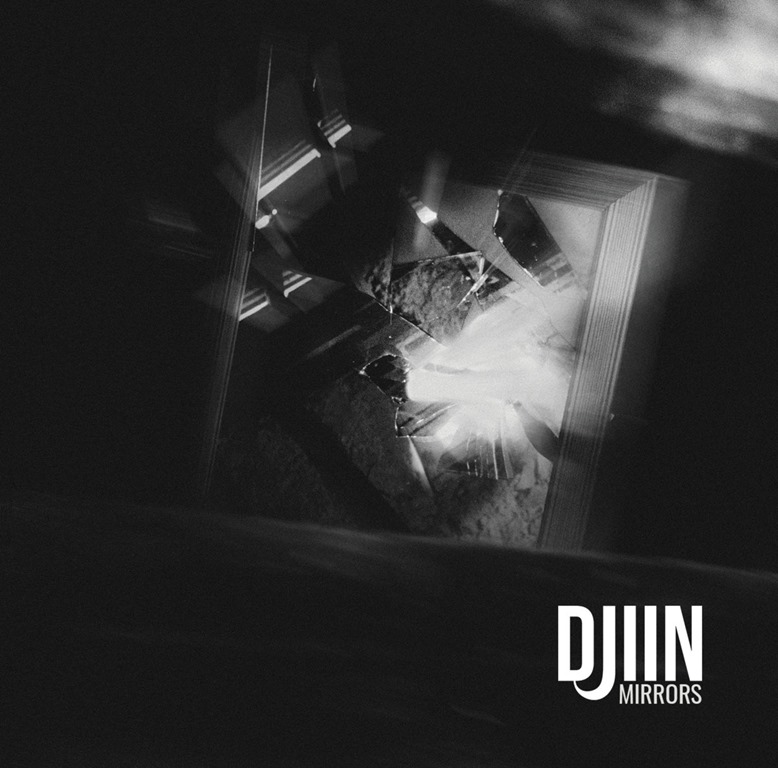
Mirrors may only contain five tracks, but in terms of depth and quality of content it offers a considerable amount more via its layered, if brutal, soundscape, which carves deep. It’s heavy album, and that’s for sure, and one which doesn’t conform to the distinctions of genre. But genre distinctions count for nothing: what counts is a that his is a raging apocalyptic blast – and it’s good.

AA

a1658479541_10

French psychedelic/prog-rock collective Djiin will have recently revealed a music video for a brand song of their forthcoming fourth full-length album Mirrors due out on May 3 via Klonosphere Records/Season of Mist.

The follow-up to 2021’s third album Meandering Soul was recorded, mixed and mastered by Peter Deimel at Black Box Studio and sees Djiin further honing their exciting and powerful blend of psychedelic stoner rock and 70’s progressive rock. Written during the last four years by Chloé Panhaleyx (Vocals/Electric Harp), Allan Guyomard (Drums/Backing Vocals), Tom Penaguin (Guitar/Backing Vocals) and Charlélie Pailhes (Bass/Backing Vocals), "Mirrors" is full of powerful and fuzzy riffs, twisted beats, psychedelic melodies and vocal incantations that invites listeners to embark on transcendental and magical journey. The use of the electric harp in this “classic” rock line-up adds a unique and surprising sonority that accentuate the band’s mystic and ritualistic universe.

Watch the intense ‘Blind’ here:

AA

b64e87f9-3f40-4cf0-ef47-ca2c64fef1a3

French Progressive metal collective Tranzat have just revealed a music video for a new song from their third album Ouh La La, which was released last month Klonosphere Records.

Formed in 2015 in Brest, France, for reasons beyond comprehension, Tranzat self-produced their first two records, 2016’s Hellish Psychedelia and 2018’s The Great Disaster, this one with the support of Black Desert Records.

The group—Manuel Liegard (guitar/vocals), Nicolas Galakhoff (bass), Benjamin Arbellot (guitar), and Thomas Coïc (drums) have opened for international bands such as Kadavar, Shining (NO), Mos Generator and Mass Hysteria, and have toured with Angelus Apatrida on the French Motocultor Night Fever Tour.

The band’s new album Ouh La La was recorded at The Apiary studio (Birds in Row, Plebeian Grandstand), and boldly explores genres, subgenres, and subgenres of subgenres to offer up honest, eclectic, unpredictable and playful music that will appeal to fans of Faith No More, Devin Townsend, Mastodon, and Dillinger Escape Plan.

Watch the video here:

AA