In the first of what we anticipate will be a new regular – or at least recurrent – feature on Aural Aggravation, we explore five albums that inspire a band or musician, plus one ‘wildcard’ entry. Here, for this first instalment, we hear from Jonathan Dickin of The Big Them.
Given the nature of The Big Them, focussing on improvisation, noise and repetition, I wanted to put the spotlight on some records that I personally think define repetition in music as something very special.
1: Tony Conrad & Faust – Outside the Dream Syndicate
If we’re talking about transcendence through repetition, there is no recorded audio on earth that achieves that greater than this one. It’s like listening to a bonafide miracle personified as audio. Two of the greatest engines of music, collaborating on a record that exists outside the confines of time and place. Faust on a locked groove rhythm for the entirety of both sides, whilst the masterful Conrad drones his way into your brainstem. This is an essential record as a far as I’m concerned.
AA
2: Water Damage – In E
And so if that last record was the groundwork for repetition, Water Damage are the evolution. They take that magical formula and dial in layers and volume to create thee thickest slabs of droning noise rock. I was lucky enough to see them in Salford last year and they played a single piece of music for 50 minutes and I’ve never felt more inspired – inspired to stick to one riff for an extended period of time, that is. This particular record is my favourite of theirs, a nod to Terry Riley’s "In C", which closes out with a spectacular cover of Shit & Shine’s ‘Ladybird’. Speaking of which…
AA
3: Shit & Shine – Jealous of Shit & Shine
Shit & Shine is a very interesting project, and an uncompromising one at that. Intensely prolific and artistically unbounded, Craig Clouse (and collaborators) has pulverised rhythms into the ground, with pneumatic bass tones and guitars that are almost unrecognisably thick with fuzz and distortion. The music sounds like it’s tearing itself apart and yet it’s so groove driven, I find myself completely enraptured – maybe I’m just a glutton for punishment. If you listen to nothing else from this list, please listen to the mammoth ‘Practicing to be a Doctor’ as I can safely say it is one of my all-time favourite pieces of music.
AA
4: Laddio Bolocko – ’97 – ’99
Rediscovered and released by John Dwyer through his magnificent Castle Face label in 2022, this compilation puts the spotlight on an underappreciated and potentially forgotten gem of noise rock, Laddio Bolocko. Lo-fi, gravely recordings of kraut-laced noise, again driving into the maximum repetition grooves. The track ‘Nurser’ is surely one of the finest examples of noise rock I’ve ever come across and for that track alone, this compilation deserves your time and full attention.
AA
5: Miles Davis – In a Silent Way
I am a huge jazz fan, though I do find it to be a very difficult genre to navigate, especially when you enter the realms of more Avant Garde and experimental jazz. However, I never once found it difficult to explore Davis’s discography and always return to him, particularly his electric period from ‘68 – ‘75. Whilst I could say that the jam- driven, cacophonous drive of Bitches Brew is more of a direct influence on TBT, In a Silent Way is the record I come back to most. Like all my other picks, it’s repetitious, but more in a way that is likely to lull you into the most dream-laden sleep of your life, floating there on Miles’s gentle melodies, and Joe Zawinul’s soulful electric piano/organ. It’s a truly wonderful record and is remembered for all the right reasons.
AA
Wild card – Guns N’ Roses – Use Your Illusion II
Just listen to Locomotive. It’s undeniable.
AA
Big thanks to Jonny for letting us take a glimpse inside his head! The Big Them have a new album, Four Colours, available for preorder on limited vinyl via Buzzhowl Records here:
Luc van Acker has a substantial and noteworthy resumé. He may not be particularly widely known as an individual, but the bands he’s played with or been a core member of most certainly are – perhaps most notably as a founder member of Ministry offshoot Revolting Cocks, appearing on their first three (and almost undisputedly best) studio albums, Big Sexy Land, Beers, Steers, and Queers, and Linger Ficken’ Good, as well as contributing guitar to Jam Science, the album by Shriekback, the supergroup formed by members of XTC and Gang of Four – and not forgetting his being a member of Mussolini Headkick, who featured on the Wax Trax! roster in the late 80s and early 90s. As such, he’s been a face on the industrial scene for a while, but his background – starting out as a pop singer in his native Belgium way back in 1982 – and subsequent work – shows a true musical versatility.
John Wisniewski managed to get some time in to ask about all of this, and to ask what he’s got brewing.
JW for AA: What inspires you to create your music?
LvA: The challenge to create something valuable that people will listen to in 30 years. At this very moment I am inspired to make music with AI as it is a CO composer who has the complete music history at his fingertips… Very challenging!
Any favorite bands, Luc?
MKgee, Dijon, Isella, Spirit box rock my world today.
How did you come to be a member of Revolting Cocks, and collaborate with them?
Front 242 played a US tour with Ministry. Richard 23 and Al became friends and wanted to do a dance 12” for the clubs. It was going to be a one off (just a couple of days work in the studio). R23 and me hung out the same bar in Brussels. He asked me if I would go with him for company. So we called Al on the phone who knew about Shriekback and other band I hung around with and a week later I sat on a plane to Chicago. Richard stayed 2 weeks and I stayed 3 months… We hooked up again in London and Brussels to finish BIG SEXY LAND.
AA
AA
How did you meet Al Jourgensen of Ministry?
We met at the airport in Chicago with Jim and Danny of Wax Trax! We had the same Indy music taste so too crazy soulmates.
Tell us about working with Anno Domino.
I was asked to produce her debut album but was not able to do it as agendas did not match. But later we spent some days in the studio recording 4 tracks and found out we were a perfect match for songwriting. Very talented, if I may say so.
AA
AA
What were your early days like? When did you become interested in music?
I was 6 years old and heard POPCORN… first electro music. Than Donna Summer I feel love… I always stayed on the programmed side of music and Bill Rieflin was not human his timing on drums was out of this world… Miss him big time.
You were originally a pop singer and songwriter. What attracted you to industrial music?
Originally I was totally underground and grew up on the subcultural side of the spectrum. Then I signed to EMI and wanted to be some mixture of Talking Heads meets Bowie. But I missed the ambition to be a frontman… So I became a band member.
What were Revolting Cocks and Ministry live shows like?
Total insane mental ecstasy. I loved every one of them and I did not hide it! Hahaha
(This is abundantly on the early RevCo live video, You Goddamned Son of a Bitch, a messy riot of barely controlled chaos – Ed)
AA
AA
How was Wax Trax! Records started? What was the idea for what the label wanted to release?
It started with the release of some 45 singles by Divine and Eno illegally. Than Al joined and brought Front 242 and Ministry to the table. I think it was foremost the roster of odd bands and projects that once put together was something people would identify with…
What are you working on now, Luc?
I just finished tons of artwork for an exhibition, and I released 2 tracks of a new album. (It’s been a while and empty room) I am also working on a stories book.
Kev Hopper recently released his fourteenth solo album, titled XiX. Having started out playing bass with Stump – a band who in just five years released two albums and a bunch of EPs, attaining a cult status and critical acclaim over commercial success – his career has been defined by quirkiness and eclecticism. This is nowhere more apparent than on XiX, which got a thumbs up from us here at Aural Aggravation. Since Stump called it a day in 1988, Hopper has been keeping busy, dividing his time between music-making, both solo and with a few notable collaborations, and painting. And because a new release inevitably brings the cycle of promo, John Wiesniewski hopped on board to chat with Kev about the new album, inspiration, and his various collaborations.
JW for AA: What was the experience like recording your new album, Kev?
KH: Pretty much like all the others in that I always have a lot of track doodles and sketches on my hard disk and it usually takes a month or two to arrange them properly and get them into shape with proper intros, verses and chorus etc. I have to stop painting while I do that and put in long days.
When did you begin playing music? Did you play music from an early age?
I started playing bass in bands around ’78 at the age of 18 or 19. I didn’t take it seriously till I was in my twenties. I didn’t grow up in a musical family and didn’t like music lessons at school but loved Pop from a young age and knew I wanted to get involved eventually.
What was it like being in Stump? What kind of music did you want to create in Stump?
It was crazy. Stump was a smart band of loud hotheads and big personalities. You couldn’t relax. There were a miss-mash of different influences in the band but the main prerogative were good lyrics, interesting rhythms and wobbly, funky lines. Bread and butter drumming and bass lines were out. Writing was a four-way collaboration and followed a typical pattern of starting with the bass, then the guitar, then the drums and finally the singing.
What inspires you to paint and compose music?
I don’t believe in ‘inspiration’ – that’s a flawed concept IMO. It just comes naturally – and I advise anyone who doesn’t feel ‘inspired’ to just put random notes or (paint marks) down… and the missing content will usually prompt structure.
I feel an urge to create something most days even if it turns into an unruly mess. If I don’t create I feel useless. I’ve had this feeling all my life. If I’m honest, I am slightly less motivated than I used to be – a natural and inevitable consequence of advancing years and other concerns filling my time, I guess. I also have to remind myself that not everyone will appreciate what I do, (or indeed value it). As an artist one has to learn to live with indifference and get used to it… especially with my kind of music.
How did you come to collaborate with Ticklish and Prescott?
Ticklish was a merger of friends I knew from the experimental and free-improv scene in London and was a very electronic, improvisational, abstract collaboration which involved minimal preparation beforehand. We would identify ‘sound areas’ and have a rough idea of how we would transition through them in a live set. Prescott was totally different in that I wrote all the music then rehearsed it with the band. It was very influenced by the ‘Canterbury’ Prog sound and minimalism. There wasn’t much room for improvisation in that format.
6. Any favourite albums among the many that you played on?
I don’t have favourites as they’re all stages in musical development, however I can unfortunately identify the weaker recordings or the albums that didn’t hang together well. Fortunately there are not too many of them (IMO!)
How would you describe your music? Any favourite bands? Any artists who inspire you?
I’m often asked how I would describe my music and I wish I could say something like ‘blues’ or ‘Funk’ or ‘Indie Rock’ and have done with it. The truth is it’s a very personal, hybrid musical style where odd sounds meet melodic content. It has a strong electronic element and uses influences from the avant garde as well as Pop and Jazz. That’s where I see myself: somewhere in the exciting middle of those two things.
There are so many bands I like. Too many to list. Here are some things I’ve enjoyed lately:
Daniel Landois – Goodbye to Language Ichiko Aoba – Windswept Adan Cathal Coughlan -Rancho Tetrahedron
Oval – Romantiq
Arch Garrison – the bitter lay Christobal Tapia De Veer – Utopia Soundtrack Pino Palladino – That wasn’t a Dream
Any future plans and projects, Kev?
I am writing songs for my old friend, singer, Kelsey Michael for an album next year and there’s a plan to re-issue my Kevlington bass album on vinyl also on Dimple Discs. My motto is ‘keep buggerin’ on’.
It’s fair to say that Mars was a band ahead of its time. Formed in 1975, they were early to land on the No Wave noise-rock scene, and they’d called it a day before the scene really broke, and with only a handful of performances under their belts.
The history goes that Mars played live about two dozen times, and never ventured beyond Manhattan. Their first show was at CBGB’s in January 1977; their last one was at Max’s Kansas City on December 10, 1978. Their sole release during their brief existence was a seven inch single, plus a track on the influential No Wave New York compilation, produced by Brian Eno, although a live EP would emerge shortly after they called it a day, and their entire recorded output – which totalled half an hour’s music – would be released a couple of times in the mid ‘80s and in the ‘00s.
As is often the case, the legacy and influence far exceeds their brief history and scant catalogue, no doubt enhanced by the fact they never reformed. However, while most of the band’s members have disappeared from view, and both co-founder Nancy Arlen (drums) and vocalist Sumner Crane died in the early 2000s, since the end of Mars, bassist Mark Cunningham has remained active, and very much forward-facing in his musical output, most recently with solo albums Odd Songs (2020) and Blue Mystery (2023)
John Wisniewski caught up with Mark Cunningham to ask about Mars and their legacy, his recent releases, and plans for the future.
JW for AA: How did you get involved with music, Mark?
I’ve been playing since I was a kid. my uncle was a jazz drummer and he hooked me up with my first horn, and I played in the school band growing up. and as a teen I picked up guitar and bass to play in cover bands, but when I learned to really play and improvise was at college, surrounded by likeminded rock, free jazz and acid freaks studying avant-garde movements and playing all the time.
Any favorite music artists?
Lots, I grew up in the 60s, out in Jersey, and started going to shows at the Fillmore East in 68. saw a lot of the greats there, as well as little known strange psychedelic bands. I ate it all up, not discriminating too much, but of course Hendrix, The Doors, Jefferson Airplane, Zeppelin and a few others were extra special, and Electric Miles, who I first saw in 69 and showed me the future. Later at college I discovered the Velvets, Eno, Bowie and all the free jazz greats. I still followed Miles though.
When did you join MARS, and what was the idea for how MARS should sound? Did you improvise?
Mars came together in late 75, a chance meeting that led to a year of working out our own way of expression before playing shows. At first we took the Velvets as a model, even jammed on some of their songs, and from there started making our own, somewhat similar frameworks and improvising on them. But we weren’t free improv. The character of the song and lyrics always came first. This has stayed with me through all my bands, although i do play 100% free in some duos and trios dedicated to that.
Why did you want to form your own record labels?
The first and most serious venture was Hyrax Records, which I managed to make happen in 1980 to release the John Gavanti LP and a Don King cassette. In those days it was possible to get distribution in the States and we sold quite well. But it still became a hassle and an expense to keep it going. DIY labels started getting popular in the 80s, when cassette recording and reproduction got cheap and easy. And in the 90s with CDRs. So I did some of that, especially with our duo Convolution, with my partner Silvia Mestres. We put out all our albums on CDR. Of course streaming killed that off completely. Nowadays all you have to do is put it out on Bandcamp and / or use the streaming platforms, which suck but do get it out there. So I do that with the more experimental stuff which we record on the cheap.
What were audience reactions to the music of Mars?
We had a pretty loyal and very vocal fan base in the city, which you can hear on some of the live stuff I’ve curated through feeding tube records and bandcamp. We always managed to draw enough of a crowd to keep things moving, even playing once or twice a month in the same clubs, which we did in Manhattan for two years, in *77 and *78. Unfortunately we never made it out of the city. Sometimes we got on bills with some more conventional bands and a mixed crowd, which provoked some interesting reactions. When we opened for Patti Smith at CBGB Theater, we had screamers both for and against, it was great!! We certainly were extreme, but never for its own sake, for us it was always about the music.
What did you think of the No Wave New York scene?
That’s quite a question. At the time it was mainly a lot of work and fun. all of those bands worked hard to make their own music and sound. Mars rehearsed at least 5 days a week and sometime more. Something that could never happen later, when life became too expensive and distracted. So we were really a product of a time and place very special, with a lot of music and art movements sharing the same neighborhoods. It was a 70s phenomenon, which continued into the 80s but wasn’t the same as everything else was changing too quickly. It was over for us by the mid 80s, when I was working with my band Don King and started going to Europe, and in 91 I moved to Barcelona. Another thing altogether is the echo it’s had over the years, which keeps expanding, especially for Mars.
What was it like working with Brian Eno?
We got on really well. in fact we’d become quite good friends in those months he was in the city, I was living with Arto Lindsay at the time and he used to come over and listen to our records, as we had a lot of African and Asian stuff. So actually working with him was great though it was only a couple days, one for recording and the other for mixing. Recording he just let us get on with it, but then he was really hands on with the mixing, and had great ideas.
Tell us about your latest Blue Mystery album, and Odd Songs, your 2020 release? What was it like recording these albums?
Odd Songs, which came first, was half collaborations which I’d recorded over the previous few years and the other half playing everything myself, and on Blue Mystery I got deeper into that, plus it was during the Covid lockdowns, so it was really easy to spend all day working at home. Now I’m working on the third volume, Asombra7, which I’m recording at a rehearsal space I have in an arts factory in Barcelona, and some of the other residents are helping me out. Promising stuff, which I hope to finish by end of summer or so. I like taking my time and going as deep as I can, songwise and soundwise.
AA
Any future plans and projects?
I have lots of other projects already, some full time like my band Blood Quartet. which is marking 10 years now, others occasional, duos and trios with improvisers mostly. I have two recent LPs out, one, Infini with Marc Hurtado, formerly of the French industrial band Etant Donnes, the other Next, also a duo, with Jørgen Teller, a Danish experimental guitarist.
Well, well… new noise from Benefits as a further taster for the upcoming album – and it’s different again… but it’s also a clear part of the Benefits continuum. Hard-hitting lyrics and noise that you can groove to as well, with some valuable insights intercut for good measure.
From Paris to Palestine we witness the maddest crimes,
It’s been over forty-five years since Melbourne-born James George Thirlwell washed up on English shores, and having played some keyboards on the album No Cowboys by post-punk act PragVec in 1980, he embarked on what would become a truly remarkable and lifelong musical journey of his own.
Along the way, he’s released no fewer than eleven studio albums under an array of variants of the Foetus moniker, not to mention quite literally dozens of other musical vehicles from big band (Steroid Maximus) to more experimental instrumental work (Manorexia) and almost everything in between, not to mention powerful collaborations with Marc Almond (Flesh Volcano), Jim Coleman (Baby Zizane), Lydia Lunch (Stinkfist), and the late Roli Mosimann (Wiseblood), to name but three of many. And then there are the numerous scores… and yet whatever he turns his hand to, his work has a certain distinctive style, a sense of drama.
Foetus may have been on hiatus since 2013, but at the age of sixty-four, Thirlwell is showing no signs of slowing down. John Wisniewski managed to catch a window in the man’s relentless schedule to ask about his myriad projects past, present, and future…
JW: Did you formally study music, JG?
JGT: I briefly learned cello and percussion when I was a kid. But I was very slow with sight reading.
Later I just taught myself everything from instruments to recording, programming, scoring etc.
Tell us about your first music project, Foetus. What did you want to present?
The initial catalyst for Foetus was to create something totally by myself, where I played wrote and produced everything, as a reaction to the democracy of playing with other people. I wanted to make the music in my head and the music I wanted to hear. I also wanted to create artifacts, a work of art as a multiple where everyone owned an original. It took me a long time to be able to fully realize what was in my head. I’m still not always successful with that transfer process.
How did the Lydia Lunch collaboration come about?
I knew Lydia’s work and was introduced to her when she moved to London in about 1982 through the Birthday Party. At first she asked me to write her a press bio as I had been writing fanciful bios for the Birthday Party! First I played sax with one of her projects which we toured with in Sweden. Then we started writing songs for something called The Hard Diamond Drill, which was never realized. Then we created Stinkfist and went on to make Immaculate Consumptive. We became involved romantically and moved to NYC together. I was with her until about 1989 / 1990.
Any favorite music artists?
Many favorite artists, it changes daily. I become obsessed with someone for an afternoon. I like to hear new things all the time. I am a cultural sponge. I publish a monthly playlist on my Tumblr blog. https://jgthirlwell.tumblr.com/
What inspires you to create?
Everything. I have so many ideas, it is an infinite renewable resource. I also have a hungry legacy and I have to make sacrifices to its insatiable maw.
Another legendary early collaboration was with Nick Cave. How did that one come about?
The Birthday Party broke up. Nick was looking to work with other people and we were friends. We wrote the music for one song together, which was Wings Off Flies on the first Bad Seeds album. When he came to record that album I went to some sessions, but drifted away as I was in the midst of a big bout of recording of Foetus material, the sessions that became the Hole album. A bit later we had the Immaculate Consumptive project – Oct 1983.
Do you like collaborating with other artists?
I have gotten better at it.
Photo by Marylene May
What was the experience like working with Marc Almond and Trent Reznor’s material?
Marc is very open minded and works very fast and is excited by music that challenges him and stretches the boundaries of what he has done. So that is stimulating. For Trent I remixed two of his songs, “Wish" and "Mr Self Destruct". I did my work on it, mutating the original material. he wasn’t involved. He liked what I did.
Do you like to work within different genres of music?
You may have noticed one of the hallmarks in my music, is that I combine multiple styles often within one song.
What are you working on now?
New Xordox album Terraform, Venture Bros Volume 3 and Foetus HALT should all be out in 2025.
Also under way are two albums of symphonies for chamber orchestra, and album of soundtracks I have written for Ken Jacobs. An EP with Laura Wolf, a triple box of music I created for sound and art installations. Hopefully another Archer soundtrack album. And much more.
Why do you have so many projects on the go (and how do you manage it)? I like to work in a lot of styles and on a lot of projects in different forms – solo pieces, ensemble pieces, multi channel, electronic, acoustic, vocal, instrumental. Concert works, classic songs, scoring. I have a lot of ideas to get out of my system. There’s no one project that can harvest everything. There are things that I get out of my system with Foetus which are totally different to the place I am in when I create a sound installation, or a soundtrack,
My projects are usually staggered, which is to say a lot of projects in different states of completion. So I shunt them all along and they get completed in different paces. Then new ones sprout up. I couldn’t just work on one thing.
AA
Do you ever take time out and what do you do to unwind? Yes I stop to watch movies, see art and travel. But my work is perpetual motion, I don’t need to unwind from it. I believe in being creative every day. That’s also manifested on ideas I have for visual art, photography etc > I’ve read elsewhere that the upcoming Foetus album, as the title alludes, is slated to be your last. What can we expect from it? Tying up forty five years of Foetus is no mean feat and I have been working on it for seven years. There are parts that make it seem like a continuum and other parts that have never been done in the Foetus context. It’s going to be epic.
AA
Catch up on JG Thirlwell’s output on his Bandcamp page.
Neil Mackay is perhaps best known for contributing to Loop: having joined after the recording – but before the release – of their 1987 debut, Heaven’s End, he provided the big, solid bass grooves to Fade Out and A Gilded Eternity before they split in 1991. Loop all too often get lumped in alongside Spacemen 3, or otherwise as progenitors of shoegaze, both of which do them an injustice and ‘underrated’ would perhaps be the most appropriate descriptor for their legacy.
Mackay went on to form The Hair and Skin Trading Company, which, too, incorporates elements of drone and psychedelic rock. As Trouser Press outline it, following Loop’s demise, ‘Neil Mackay and drummer John Wills (augmented by ex-Savage Opera guitarist Nigel Webb) cribbed this unsavory moniker from an old warehouse in London and persisted in their efforts to rephrase Metal Machine Music as power-rock.
Having released four albums since their formation in 1991, the most recent being I Don’t Know Where You Get Those Funny Ideas From (2019), as well as a bunch of singles, EPs, and compilations, The Hair and Skin Trading Company continue as a going concern.
John Wisniewski caught up with Neil to find out about what he’s been up to lately, and reflect on a few moments from his lengthy career.
Editor’s note: some interviews, it’s appropriate to proof and tweak interviews conducted by email for spelling and punctuation, as much for readability as what one might sell as ‘professional standards’. But for this one, any substantive ‘tidying’ would feel invasive, and to strip out so much of the essence of the replies. It’s important that artists are presented ‘in their own words’, without being subject to any mangled paraphrases. When an interview reads like jazz, you let it play like jazz. And so this interview is presented more or less unedited, immediate, warts ‘n’ all, as they say.
JW: What are you doing now, Neil?
NM: Silent Invisible Radiation (SIR)
The Hair and Skin Trading Company (HASTCO)
Solo project
I have new album projects on the boil with all of them….
I am jamming regularly with Damon from SIR
And hopefully receiving and swapping more files from John and Nigel from HASTCO
HASTCO last album: I don’t know where you get those funny ideas from: released Sept 2019
SIR last album: Ventifacts : released July 2023 ….check that one out …2.5 hours long !!!
Occasionally I jam at the Vitaim S night at the Wine Cellar in Auckland central Monday nights ….( haven’t been for a while though ) ….Check that night out for some awesome improv / jazz / avant noodlings …. I want to and are planning to do much more live work …gigs etc ……
When and how did you join Loop?
I joined Loop in 1987 just before the release of their 1st album:Heavens End …For some reason the Bass player who played on that 1st album couldn’t be in the band anymore so I was one of only to people to apply for the job from an advertisement in Melody Maker …. The other guy apparently got really drunk when they met at the pub and threw up everywhere …..so I got the job lol….
Do you have any favourite bands?
too long a list
Can Stooges MC5, Moondog Sun Ra Peter Brotzmann , Faust , Einsturzende Neubaten, THe Pretty Things (UK ) , Steve Reich , Alice Coltrane , Arvo Part , Manuel Gottsching , Xenakis , Lee Perry , Dub Syndicate ,The Scientst ,Mad Proffesor, Wire , Sex Pistols, Joy Division , New Order, Aphex twin , Velvet UNderground , THe Doors , THe stranglers , the pop group, The Raincoats , Daniel Johnston , Butthole Surfers , The Clash , Dead Kennedys , Black Flag , Hunters and Collectors , Dplit Enz , Ths Stones (NZ) , The Rolling Stones ( US ) , THe Clean , The Chills , Talking Heads , Favid Bowie , Bjork , Captain Beefheart, The Residents , Sonic Youth, Brian Eno , Roxy Music , John Coltrane , Neil Young , Laurie Anderson , The Pixies , Public Image Limited , Devo , Pere ubu , Luigi Russolo , Boredoms , THe Beatles , Psychic TV , Throbbing Gristle , My Bloody Valentine , Nick Drake ,William Basinski, Beach boys , Elvis , Kraftwek , Swans , Neu ! Massive Attack , King Tubby , Mikey Dread ,Suicide , Alpha and Omega , John Zorn ,,,,,
I like any music really as long as its good !
It’s up to you what defines good
What was the concept for how Loop should sound?
Robert’s baby you should ask him …
Personally – live anyways I was trying to blast people through the back door …
Ridiculous we were too loud (sometimes )
I have really bad tinnitus now ha whatever ….
Why did Loop break up?
Burnt out I reckon …. I have read other band members give their reasons ….all good
i was gutted when we split ….but relieved in a way as well because it wasnt fun on tour at all any more ….
I remember when Loop came back from touring for 9 or so months …. I just wanted to chill out and reax at home …. But 9 o’clock came along and I got a huge energy rush of adrenalin and HAD to go out to a gig ……
When and how did you join up with The Hair and Skin Trading Company?
John the drummer from Loop and I wanted to keep doing music together I immediately contacted my old mate Nigel Webb ,,,, I had been in a band with him called Savage Opera …. We could never get a drummer to stay in the band ….. anyways Nigel is an awesome guitar player …. so walking down turnpike land one Saturday afternoon we saw a decrepid old factory that had a sign that said : The Hair and Skin Trading Company : so we thought that would be a great name for a band … that was it
Do you like jazz and avant-garde music?
Yes big fan ….. I worked at The Rough Trade shops in London for 17 years and used to hang out and buy records from Rays Jazz shop …..European and US jazz/ experimental music … I also love :world : music and have a large collection of Gamelan and African vinyl from labels such as Occora …Also like Dada (1920;s) environmental ,,,I was collecting Peter Brotzmanns label FMP …. Jazz wise IM more into the avant garde type weirdo jazz …..
Any future plans and projects, Neil?
I answered that in Question 1 ….
yes …..maybe thinking about coming to the UK for one more music blast ….
Getting older now at 60 ….
The tour with the loop re union was kinda fun great to see old fans / friends….
….
Could you tell us Neil, about your collaboration with Godflesh called Loopflesh?
And the double header tour in 2014 with Godflesh?
super cool tour ,,, we went into house in the woods and did the cover for the excellent label clawfist ……We were all freinds it was a great time ,,,,, that was a great tour apart from that ….thats it ……
The Shoegaze and psychedelia movement was much maligned, but seems to be experiencing a Renaissance. How do you feel about this?
At the time shoegaze wasn’t a expression we used ….. it was used by the press to get >something? going ….Psychedelia is a better expression ….but yeah all good ….. Im not up on new bands but Im up for new bands / music …always ….who are good in this field now ,,,( answering a question with a question )
Ordinarily, interviews on Aural Aggravation are run with titles which serve to encapsulate the contents in half a dozen words. This is an interview where that simply isn’t possible.
Since Nocturnal Emissions came into being in the late 70s, emerging from the experimental / industrial scene which evolved after Throbbing Gristle broke ground first tested by William Burroughs and Brion Gysin, they’ve existed in various forms, often as much known by reputation as by their actual work, which is nigh on impossible to pin down or pigeonhole. For most of their career, Nocturnal Emissions has been the solo vehicle of founder Nigel Ayers, who has come be a pivotal figure in the field of underground and experimental music – and beyond, working in a host of media including film and text, with a number of books since the turn of the millennium: The Bodmin Moor Zodiac (2007) is a characteristically quirky example of his wide-ranging interests which include psychogeography and occultism. Then again, any summary would be to omit so much as to misrepresent his divergent eclecticism. And then there are the countless collaborations… John Wisniewski was fortunate to pitch some questions to Nigel about his lengthy career, his influences, and current and future projects…
When did you start experimenting with sounds, Nigel?
I must have been aged 13 or so. Actually, I was experimenting with sounds in the form of soundtracks because had happened is my dad had this very old-fashioned format camera, it was called a Standard 8 camera, which was a kind of silent home movie film that preceded Super 8.
So, it was this kind of film that you could run twice through the camera, and it had large sprocket holes like 16mm, that was the difference between Standard 8 and Super 8 film. So, he’d bought this camera and he’d been using it to film his work in schools and as a youth club leader, but this camera was lying around. And when I was 13 or so, I was watching these experimental films on TV, and I’d been watching them in black and white, but there was things like the Magical Mystery Tour by The Beatles and then there’d be segments like “I am the Walrus”. These very early rock videos, were extremely surreal. And then there was a TV programme for kids called Vision On, there was sort of experimental animation on there. And then also there was Monty Python, where there was Terry Gilliam’s cut-out animation going on. There wasn’t the easy access to visual culture you get these days, but I had been exposed to and absorbed this kind of aesthetic and I was just looking at these ways of manipulating film. And I realised this camera, you could do stop-frame animation, you could also run multi-layers of film together.
Now, these techniques of layering and stop-framing and getting into individual segments of imagery are really what I used later when working with sound, because I was aware of how the context and meanings of images and sounds change through overlay, almost randomised factors, which could lead to an exploration of something which was intrinsic to the medium. Or intrinsic to memory, a memory of imagery and how imagery is imagined and restructured within our minds and within our culture. So these ideas, I was exploring film at a very early age, I mean, I’m talking like age 13 to 16. Meanwhile I was having a very conventional school education, really. This was not the sort of thing I could do at school.
I also acquired this reel-to-reel tape recorder, which was like another sort of cast-off that had been bought for some purpose, and it was an old-fashioned technology by then. Of course, it was this very solid mechanical thing with a manual sort of gear, that you could change to make the tape go backwards or forwards or rewind.
I think it had different speeds on it, I used this later on the raw material that went into the first Nocturnal Emissions records.
So yeah, I was exploring these sort of overlays of memory, I suppose. And I wasn’t really able to articulate that in words. Now as an adult, as an elderly adult, I can articulate this in a way I couldn’t do as a teenager.
But then I got onto a foundation course in art school after being thrown out of school, really. Excluded from school, really, it wasn’t an environment I fit in with very well.
So I went to do a foundation course in art and design, and the thing that I really warmed to was, they had this studio set up to do “light and sound”.
And in there they’d got, oh, I don’t know if modern people will understand this technology, but they had slide projectors, which could be synchronised to a reel-to-reel tape. And this reel-to-reel tape was a four-track TEAC tape recorder, routed to four speakers in this darkened room for a quadraphonic surround sound experience.
And they had a Revox in there, which is a two-track tape recorder. That’s something which you can, when you know the technique, do tape echo on. Wonderful machines.
And also I think I had the loan of a cassette recorder, I was recording incidental sound from the TV. I was recording children playing. I was recording dogs barking, and constructing this into sound collage.
We were making handmade slides, it was a sort of technique that was probably used by the Victorians in magic lantern shows. These are very high contrast slides, that I made anyway, and hand-coloured them with overhead projector markers and with coloured acetate. And I sort of made this scenario of, a sort of an alien civilisation, but it was really close-ups of the insides of a vintage and broken radio, with these parts of toys inside it. It was Bela Lugosi as Dracula and Boris Karloff as Frankenstein. These heads from Revel plastic kits that my brother had made years ago and then lost interest in, these parts of plastic toys. And I was constructing this sort of miniature city and then sort of overlaid in that city.
I had made these sort of, these non-functioning machines, but like science fiction devices,
A projection from the wartime era, rather than steampunk. Yes, that’s what it was. From the era of electronics, not the era of steam.
And I made this elaborate sort of titillation machine, which a friend of mine, she posed on it and as if she was pleasuring herself on this very strange sort of dynamo construction with loops of wires and coils and high voltage fuse boxes and transformers. And this was superimposed against these miniature sets.
I suppose it was like probably a DIY version of Fritz Lang’s Metropolis, but with this sort of different surreal sexual-mechanical angle that I gave it. So that was actually a quadraphonic sound installation that I did when I was 16, 17. So I sort of continued experimentally making films.
And so the sound that I worked on were to do with film installations and to do with, I suppose, visual art more than anything else. But all the time, I was DJing as well though, as at school, you know, I ran the school record club and I was at art school, I was DJing at events for the student union. I had very strong likes and dislikes in the way of music.
And also I knew some songs, which are dance songs, which would work. And I think very early on, I developed a very deep affection for reggae music. And that was going back to late sixties, early seventies anyway.
So yeah, so I was experimenting with sound ages 17 in art school anyway. So, but I didn’t have any equipment of my own, so to speak.
And so when I graduated and was out of that context, I started acquiring instruments. d I think the first thing I got was a cast off electric guitar and, a Watkins copycat echo, which I messed around with.
I found I used to cover up the erase head so you could get these endless loops building up on it and just gradually kept acquiring sort of sound manipulating equipment. And I bought a synthesizer in 1978. I bought the Korg MS-10 in Sheffield, you know, from the same shop that the Human League probably shopped in and ABC and Cabaret Voltaire shopped in.
And quite soon after buying this synthesizer, I was talking to Mal out of Cabaret Voltaire. I think it was at a Pop Group gig in Sheffield. And he invited me to use his studio, which was very good because I didn’t have access to that sort of thing, but I had some ideas that I was working on and not quite sure where to take them.
But then I got invited to London to stay with Caroline K. She was finishing a degree course and I’d met up with her and she’d seen that I got this synthesiser. And she wanted to install this sine wave, this sort of constant hum to be playing in this exhibition she’d done with some very austere black and white photographs of this house she was living in.
And the photographs all had different captions on which made you think different things about this location, was making it into the site of murders and various other fictional things for this exhibition. And with the sound, I think she was trying to give it a disturbing edge to it.
The place that she had photographed was actually quite a disturbing place and quite disturbing events happened there, but this was unrelated. This was probably what was at the back of her mind when she was thinking about this installation.
What did you hope to accomplish through your work with Nocturnal Emissions?
Well, what I wanted to accomplish was to get my inner visions out into the world somehow.
And at the time, it seemed the easiest way to do this was through the format of an experimental music group. Because I couldn’t see the experimental films I was doing being screened at any cinema, because they were too abstract, to fit in that context. And what was trying to do was like a live improvisation between multiple layers of projection, and multiple layers of sound.
That’s what Caroline and myself were aiming for, really. Caroline was always focused on soundtracks, and that’s reflected in her solo album, Now Wait for Last Year”, the track titles are named after Tarkovsky films, and it’s got a very strong John Carpenter influence going on there, as well as an Ennio Morricone influence, and as well as the radiophonic workshop influences that were going on.
What I want to accomplish through my work, though, was to get these inner visions, these inner sounds and visions out in the world, and to share them with the world, really. I just want to sort of bring things out, because I thought what was happening in the world of music in the early 80s didn’t exactly reflect my preoccupations.
I did want to get a political idea over, and a sort of an altered reality over, as well, because I think by deconstructing and restructuring reality, we get a better perspective of what’s going on, and we can see that other worlds are possible, and it’s possible to make the world into a kinder place, and a more compassionate place, and a friendlier place, and a more beautiful place than it is at the moment> That’s really what I wanted to get over in the music. I know the very early music was quite harsh. It continues to be quite harsh and abrasive occasionally, but I think that’s a way forming focus and dramatic tension within the work.
Tell us about forming the label “Sterile Records”. Who are some of the artists that you collaborated with?
I get the impression that when [people] form record labels, they have some sort of financial backing and they might also have some kind of business sense. That certainly wasn’t the case with me.
When we put our first Nocturnal Emissions records out, I was living rent-free because we were squatting. I had to do a lot of house maintenance to keep the place a bit habitable, but the housing and space costs were near zero, and I was in the middle of London, and so it was quite good for venues and things like that. I didn’t have transport.
I was working as a cleaner. Caroline was working as a library assistant, and we scraped together… What was it? Maybe it cost £1,000 to put out 500 records back then.
Whatever it was, we scraped it together, and I think we went into an overdraft to put together this first record. We didn’t have the equipment to do it on, really… We went to evening classes and used their equipment and borrowed instruments from friends and neighbours.
Vicki Aspinall out of the Raincoats was a neighbour, and I borrowed her electric violin. I don’t play it. I created sounds with it, on Tissue of Lies.
We hired a four-track and a two-track reel-to-reel to mix down onto for one weekend, we initially intended to make a single, but it worked out we could do an LP and give better value, and probably get more money back from doing an LP than we would do from doing a single. So that’s why our first record was an LP, Tissue of Lies.
Within months from doing Tissue of Lies, we’d actually made some money on it, and so we thought we’d do another record. The plan was just to carry on with what we were doing… after we’d done Tissue of Lies, our technical skills had improved, and we were able to do more, and we were getting. it to sound more like we wanted things to sound Our craft skills improved, so we wanted to do another record.
And then Maurizio Bianchi (M.B.) got in touch with me from Italy, and he wanted to pay me to put out a record on my label, but I didn’t have a label. I had just done one record, and I’d done a compilation cassette, which Maurizio had been on, about a year previously. I’d been in contact with Maurizio when we put out cassettes before Nocturnal Emissions, before we did any vinyl.
Maurizio wanted to put out 100 records, I was going to the pressing plant anyway, and it looked like I got enough money to add to make an edition of 250.
We could call this the start of a record label, I suppose, that with Fruiting Body, the second Nocturnal Emissions record. That’s how Sterile Records actually happened, really, what sort of started me made me open to the idea of it being a label.
But I mean, as a label, you know, people assume you’ve got money behind your venture, and you’ve got an office. But we didn’t even have any transport. A few hundred records would arrive at our house from a van.
But then getting them to the numerous record shops that we sold through in London, … I had this sort of shopping cart like old ladies have, you know, with wheels on it. And I’d go on the tube or on a bus and deliver boxes of records that way…. it was the most basic, crudest, cheapest DIY-est way you could operate a record label.
It was operating an absolute shoestring budget. but, you know, we sold a few thousand records this way, and it created quite a lot of interest and influence, I suppose, within that sort of very small, tight, obsessive community, which was the early industrial music world.
So we were gigging around London, and I think our first gig we actually played with anybody who was doing anything in a similar vein was with SPK. SPK asked us to play with them, and Brian Williams came along to it. He was a big fan of SPK’s and later joined SPK.
He was making his own experimental noises up in Wales, quite different to what he’s doing nowadays (nowadays he’s a Hollywood sound designer). His very early music sounded like train sound effects records, really, with this sort of ring-modulated vocal shouting over the top of them. But he sent me this demo cassette, so I said, ‘oh, let’s put this out’.
Let’s do a Lustmord cassette. And that did okay, I suppose. So then we did a Lustmord vinyl album, and I actually hired a studio for him to come down and record that.
And he invited… his friend from Wales who was called Nigel Dunster, and he also invited this other guy who was like a mutual friend correspondent, who was Geoff Rushton, who later changed his name to John Balance of Coil. He was involved in this first Lustmord album that we made, around the time he was involved in the preparations for Psychic TV.
And, yeah, I suppose…
Yeah, who’d we collaborate with? Well, quite a lot of people… you have to go and look at Discogs, and you’ll see who we put out on Sterile Records.
Yeah, we’re trying to develop something. I was going to do one of the first Portion Control records I was going to put out, but then they got a better deal with somebody else, and they got to do a tour with Depeche Mode.
So I didn’t do that one. And a band of Holy Joy was going to do a record with. I had that on a compilation.
Who else? Lustmord. Control Bleeding. And Nurse With Wound, but I rejected what they gave me. We were friendly with Bourbonese Qualk and collaborated with them on a few things. And helped one another out…… these were our friends who we hung out with, these old-school industrial people.
Who are the composers and recording artists who have influenced your work?
The big one would be, way, way back, the big one would be Captain Beefheart, and especially Trout Mask Replica.
That sort of field recording like a reconstruction of music. By this possibly crazy outsider artist, an incredible piece of post-blues music/ come field recording and it just conjured up a different, expressionistic, freeform natural world.
That was a big influence. Another big influence was the work of the BBC Radiophonic Workshop. I’m talking Delia Derbyshire and Daphne Oram.
There were quite a lot of women involved in this early electronic scene, and it seems they weren’t really credited at the time. They were quite important. The way they talked about putting sound together.
From loops and from music concrete. That’s the way it went in radio plays. Which they were doing soundtracks for.
And for TV work with things like Doctor Who. Some very strange children’s TV that was being made in the early 70s.
Ennio Morricone.
Just the beauty of those westerns. Those really operatic works. The good, the bad and the ugly. Beautiful, beautiful, beautiful.
I’ve got to say that almost all the music I’ve been exposed to has influenced the work. But I have to say very early on I was very black and white in my likes and dislikes. It was intense love or hatred, not by genre, but by individual pieces, I think that might have got in the way of some enjoyment sometimes.
Tell me about your work with digital sound assemblage.
I was talking about the way I constructed the films. In terms of overlay which changes the context of what lies beneath. The altering of speed and pitch and timbre. And time and space manipulation. Looping. And getting into the basic building blocks of sound. And. messing with it, Improvising with it. And editing it in such a way that it becomes something new that feels beneficial and healing.
And interesting and stimulating. That’s what I’ve done over the years. And nowadays I’m working digitally – largely. I’m out doing field recordings all the time. I use real instruments some of the time… I think with Digital sound you can do so much. And so.
I just like the way it’s gone actually. Because the way it’s been.
The access to. I’m not precious about technology, I’ve grown up. In an analogue world.
Of analogue tape. And analogue film. And analogue loops.
And I continue. To use some of that technology. Certainly the things you can do with analogue film which are impossible to do digitally.
Do you listen to genres such as rock or jazz music?
I don’t really listen to radio or streaming services, I tend to go to live music events as much as I can, and play CDs I’ve bought, rather than other people’s selections.
So these are some titles in a rack on my wall…
Bo Diddley. Donovan. Captain Beefheart.
Gavin Bryars. James Brown. David Bowie.
The Blind Boys of Alabama. Black Grape. Count Basie.
Asian Dub Foundation.
Johnny Cash.
The Bollywood Brass Band.
Sinead O’Connor.
Brian Eno Michael Nyman. Moondog. Thelonious Monk.
Andrew Lyles. Lead Belly. La Düsseldorf. The Unthanks
The Kinks. Daniel Johnston. The Human League.
Gil Scott Heron. Richie Havens. The Beatles.
The Fall. The Velvet Underground. Penguin Café Orchestra.
Nico. Lou Reed. Lou Reed’s solo work.
Lou Reed’s ambient work. Miles Davis. Bob Dylan.
Everything by Dylan. Wreckless Eric.
High Voltage. Flashpoint. 20th Century Experimental Electronic Sound.
The Bundu Boys. Gregorian Chants.
George Formby. The British Sixties. These kind of things.
Any future plans and projects, Nigel?
I’m preparing to do more live performances because involving more of a physical presence and more spoken word. I don’t want it to be an anonymous figure hiding behind a table while a film goes on in the background. It’s to do with spoken word and it’s to do with interaction and it’s quite pleasurable, dance orientated and dare we say quite funny what I do, I suppose.
And also, I’m trying to bring a bit of joy into this world. A joyful foundational industrial practice. And I’m also producing paintings.
I’m painting a lot on canvas and I’m writing and I’m keeping very creatively busy in these elder years. I hope to be performing all over the place, really. I’m putting out the vibe that I’m available for gigs anyway.
I’m available for live performances and I’m saying yes to a lot of things I probably wouldn’t do before. I’ve been performing in the UK which is very different to me because I very rarely played in the UK. So, yeah, I’m just making myself available and I’m saying yes to things, I’m writing, I’m doing spoken word performances and things like that if anybody’s interested in booking me for spoken word performances.
Stewart Home’s career to date has been enviably long by any standards, and extremely varied: emerging out of the London punk scene in the 80s, his modus operandi was – and remains – subversion, playing with form and literary theory in equal measure. The idea that a writer who cranked out lowbrow pulpy trash which was littered with references to highbrow theory, smashing the two together in a fashion that was the epitome of postmodernism confused and annoyed a lot of people, but earned him a substantial cult reputation at the same time.
His style and subject matter have evolved significantly over the years, although – some notable exceptions notwithstanding, in particular Tainted Love and The 9 Lives of Ray the Cat he has continued to utilise certain tropes, elements of cliché, and display a truly audacious streak is evident throughout his work. His work is serious / not serious, and he’s serious / not serious about it.
One defining feature of Home’s career is that it has always been forward-facing, often promoting the next book over the one most recently released (and he’s exceptionally dedicated when it comes to promoting his work). Even when reflecting back – as much of his earlier work did, on youthsploitation novels of the 90s did on the culture of the 70s – Home was anything but nostalgic in his angle, presenting as much of a critique as a celebration. Revisionist, parodic, comedic, yes, but not nostalgic.
Even Tainted Love wasn’t really nostalgic, and nor was She’s My Witch, which was fun and frustrating in equal measures, apart from near the end, when it became so, so sad. Home has the infinite capacity to confound expectations: for all of the overt revelling in ‘trash’ writing that most academics would dismiss as not even being within a mile of the field of literature, and for all of his one-dimensional characters who exist simply as vehicles to carry – often quite thin – plots and stand as ciphers for more theoretical ends, Home is clearly a writer capable of emotional depth.
The circumstances of the publication of his most recent novel, Art School Orgy (which is very much not concerned with emotional depth), are worth considering in terms of what they tell us about the relationship between art and society. It would be too easy to pursue the ‘cancel culture’ route of discussion, but this feels like obfuscation of real issues. Times have changed significantly since the time of Home’s early novels, the violent, pulpy, parodic Pure Mania, Slow Death, and Come Before Christ and Murder Love. The perception is that society has opened up and anything goes now, but the fact he struggled to find a publisher willing to take on Art School Orgy suggests the opposite is true. Publishers are fearful. Fearful of recrimination, and fearful of not clearing their margins. It’s the perfect illustration of why art and capitalism are incompatible, and it was this situation which resulted in the book being published by a record label. Despite the music industry being dominated by a handful of huge major labels, independence and DIY in music are lauded, and aren’t subject to the same snobbery which pervaded publishing, which is still moored to old conventions.
What’s interesting and surprising in some respects about Home’s two forthcoming publications is that they’re both reissues from way back in the past: debut novel Pure Mania, and an obscure and long-deleted CD of punk tunes, Stewart Home Comes in Your Face.
Had Home been touting Pure Mania round agents and publishers now, it’s almost certain none would bite, simply because it doesn’t conform to the extremely narrow prescriptions of what they’re looking for. If it’s not the next Harry Potter or Games of Thrones, or something that will sit beside Karin Slaughter or Lee Child, then most publishers simply aren’t interested. It’s all about the bottom line, and what can sell millions stacked on the three-for-two table at Waterstones.
It had been a while since I’d been in contact with Stewart, other than a few exchanges around the time of my review of Art School Orgy, and even longer since my last interview, so this seemed like the perfect opportunity. What follows is a simple Q&A conducted over email, but on a purely personal level, I feel like we achieved some good riffing on some pertinent topics.
ER: Since the material on the album was written in the 70s and early 80s, and then recorded much later, in the 90s, it must feel quite strange to be promoting Stewart Home Comes in Your Faceand making promo videos now. How do you feel about the songs now with the benefit of so much distance?
SH: At first I found it hard to listen to the songs again. They almost seemed like something someone else had done but they grew on me once I got over the fact that my voice is what it is, and much as I’d love to be able to sing like Aretha Franklin that’s never going to happen. Likewise my guitar playing has always been rudimentary. So once I’d learned to accept my musical limitations once again, I found the songs very funny. It also struck me as hilarious that I should keep returning over decades to tunes that had been knocked up very quickly with little thought about arrangement. A decade and a half and sometimes more between writing and recording, then nearly 4 decades before I thought about making music videos for them.
With the music videos it was interesting to see how much I can get into the pretty juvenile state of mind in which many of the songs were written… I actually had no problem with that. I did a video for ‘Destroy The Family’ first because I saw I could fit that with the coronation by using masks of the royals on myself and a couple of sex dolls. The video I’ve shot for the song ‘Kill’ was even easier. I bought a teddy bear in a charity shop, took it into a wood and had a friend film me stabbing it with a large kitchen knife! I still need to edit explosions and other stuff into that, so it isn’t finished but will be soon. And I don’t want to put the music videos out too close together anyway.
I think the distance I have from the songs really helps. I can take them even less seriously now than I did at the time and that enables me to do things visually with them that I might have thought were too crass back then. I also like the way music sneakily builds online and elsewhere. It’s got much harder for my anti-art videos to gain much traction on YouTube, so music videos seem like they might be a way around that. The old content of the songs becomes something that gets people looking at the new content of the visuals, which is what I’m more taken up with now.
Of course I’m also making non-music videos. In terms of books promo, which the music videos link to as the songs also appear in my reissued novel Pure Mania, here is a series of video book sculptures made by me and artist friends where there is a video on small screen and a shelf with a pile of my books. The sculptures have 15 of my books to start but these are for sale retail and with each book sale, the price of the video sculpture goes up because less is more and you’re getting less. For Defiant Pose, I recite an eight-minute passage from that novel while standing on a Swiss ball and being tickled with a feather, so I’m trying to keep my balance and finish the recitation. So that’s a far more conceptual/live art approach to videos simultaneously connected to my novels.
The promo video for ‘Destroy the Family’ has given an old song a new contemporary relevance. Your position on the monarchy doesn’t really require any kind of interrogation, but do you think that Charles’ accession has raised the levels of anti-monarchy sentiment, particularly when the division between rich and poor (and especially those whose wealth is funded by ‘the taxpayer’) has never been felt more acutely or been more closely scrutinised?
I think we’re a lot closer to seeing the abolition of the monarchy than we were 25 years ago. You could say the image has cracked. When the cops busted up the Sex Pistols boat party promoting their anti-monarchist single in 1977, there was no mainstream sympathetic press coverage. Although the same kind of heavy-handed repression went on with the arrests of those expressing anti-monarchist views at the coronation, the mainstream press clearly can’t get away with the type of coverage it did in 1977. The fact that Charles Windsor is clearly an entitled windbag with dodgy friends and family means that many don’t like him. With the cost-of-living crisis, the ostentatious way the royals flaunt their wealth can only add to the fast-rising tide of anti-monarchist sentiment. It is time to strip the royals of their titles and wealth!
In terms of my performance on film, you can see I have been practicing with the martial arts weapons I use to attack the sex dolls with royal family face masks. That said my staff and sword fighting skill is still a little rough and it isn’t as graceful as it night be although still potentially deadly. So I think that mirrors my guitar playing at the point I wrote the earlier songs and also when I recorded them. I had a seven or eight year break from playing guitar before picking it up again for a few weeks to make those recordings.
AA
You described ‘Destroy the Family’ as ‘super-dumb 2-chord sleaze-bag thud’ (a phrase which appeared in the introduction to the second edition of Cranked Up Really High), and have variously been somewhat critical of the limitations of punk. As you yourself came out of the punk scene, to what extent is your own musical work parodic in its use of tropes and cliché? And to follow on, while songs like ‘Kill’ clearly aren’t ‘serious’, is there an element of catharsis and / or a serious element to simplistic sloganeering?
I think there’s a sympathy for the nihilism late-capitalism breeds in many people but also an attempt to make it clear a ‘blow it up’ or ‘hang them all’ response to exploitation should be moved on from. We all need to rediscover our humanity and reclaim it from the ways in which capitalist alienation have deformed us. But to answer your point, yes there is a certain catharsis in there but it’s undercut. In Kill for example it’s subverted where the words in the chorus are changed from “kill, kill, kill, fucking kill everything” to “kill, kill, kill, practically everything”. Hopefully people get the point that there is no one size fits all one time solution to the world’s problems. We have to keep working at them!
Punk should be fun regardless of musical limitations, What I’m critical of is the art punks who make too much of a fetish of not being able to play. You may as well play as well as you can but that doesn’t mean you have to make it complex. I’m a real fan of super-dumb sleaze-bag 2 chord thud when it rocks, what I don’t like is when it’s leaden.
There are few, if any, genres where authenticity is as highly valued as in punk. You’ve essentially built a career since the early 80s with your zine, Smile to ‘stage an ongoing assault on notions of authenticity’ and have espoused the concept of ‘radical inauthenticity’. Yet ironically, with perhaps one or two notable exceptions, such as Tainted Love, you’ve avoided the mainstream by producing work that’s antagonistic to not only the mainstream, but to academia, and the middle-class, middle-brow readership, while at the same time being too subversive and challenging for – sadly – the vast majority, which suggests you’re perversely authentic. How do you reconcile this?
To use a pat formula, I don’t think I can reconcile it while living under capitalist social relations…. But it could also be seen as a dialectical ploy and one that’s not uncommon in more art school orientated punk rock – although that’s not really the racket I make. Even back in the seventies I thought groups like Wire were operating in that way. Or to take a US example Devo. That said, I think I’m more parodying everything from the Clash to the anarcho-punk scene. One of the reasons other than the music I liked bands like Wire and the punk incarnation of Adam and the Ants, was that they just didn’t seem to take themselves too seriously. In relationship to all the phrase “artificial authenticity as authentic artifice” provides perhaps a more than superficial answer to your question. The Sex Pistols manager Malcolm McLaren used the term glorious failure to describe what he wanted to achieve – but I aim higher, since I intended to reinvent world culture in its entirety, even if that takes a life-time.
In terms of books, aside from Tainted Love I think The 9 Lives Of Ray The Cat Jones and She’s My Witch might have reached a mainstream audience if I didn’t already have the reputation I have. Audiences have a certain expectation of what a Stewart Home or Michael Moorcock book is going to be like and will impose that on everything you do. Because reading a book takes more time than listening to a music track, it is harder in the fiction world than the music world to turn around perceptions of who you are and what you do. If people think they’re not into what you do they’re not going to give a book they might like a chance, whereas they could easily be exposed to some music that didn’t sound as they expect it to be more or less by chance.
Nostalgia ain’t what it used to be, but many of the original first-wave of punk bands are still plugging away on the gig circuit, and while many are doing so to smaller and smaller crowds, some are doing pretty nicely out of it: The Damned, for example, are currently touring the UK’s 2,000 capacity O2 venues before heading Stateside. Would you consider playing your songs live again?
I guess for people who missed those bands first time around there’s an appeal to seeing them now. For me, I don’t want to go and see Slaughter and The Dogs or Menace because I saw them in the 70s. Also the line-ups are mightily changed from back then and the crowds and atmosphere are very different. I’d rather preserve my memories of how it was by not going to see those bands now. As for The Damned, I saw them in 1977 and compared to that I was even a little disappointed by how they were when they reformed after first splitting up in 1978. I saw them as The Doomed and a few times after that back as the Damned, two or three years on from first seeing them and for me they were never as good. Of course, they weren’t bad at all but for me they weren’t as super-phat and groovy as the earlier incarnation of the group.
I actually learned a lot from playing in bands in the 70s and 80s. I can see how a lot of what I’ve done subsequently with spoken word, live art and stand up etc. emerged from how I learned to present myself with punk and reggae bands. But at the same time I’ve no desire to play live again – I’ll probably regret saying that very soon if I find myself just doing it for some reason. But the songs weren’t written for me to sing, I just wanted to play in the band and have someone else sing them. When they got recorded, the musicians around me were saying you have to sing coz you’ve got a profile and they’re your lyrics…. I feel much happier just making music videos for those songs now coz it means I can develop something new with them. I can dig repetition but going back to playing those old songs live just doesn’t appeal to me and hasn’t for a long time, I have been asked to do it!
Pure Mania was your first published novel in 1989, and now commands a pretty hefty price tag on the second-hand market. I suppose as much as it draws on pulp novels, you could call it a punk novel, stylistically as well as in setting. How do you feel your writing has evolved since then?
It’s punk in that it took a reimagining of London 1976/77 punk as its subject and that I had a bricolage approach to writing which is very punk. But at the same time, it’s also a very postmodern novel. Back then I was still learning how that type of novel is constructed, I moved on to anti-narrative after I felt I’d perfected that postmodern simulation of pulp narrative with the follow up books Defiant Pose, Red London, Blow Job and Slow Death. You can also see my prose being honed very quickly, the journalistic approach to sentence construction is clearly smoother in my second novel Defiant Pose. Likewise the narrative/anti-narrative construction becomes slicker but never too slick. I can say that technically my writing improved through practice. But some like rawness best anyway.
I think there was a fairly systematic working through an evolution of material, despite changes in style, up to Mandy, Charlie & Mary-Jane in 2013 – if you discount Tainted Love which was me wanting to fictionalise my mother’s life since no one believed it in non-fictional form. Then with The 9 Lives Of Ray The Cat Jones I went back to Tainted Love and took that fictionalisation of family history in a different direction with a different relative. She’s My Witch riffed on the type of woman my mother was but took someone from my generation down rather than my mother’s – but with plenty of morphic resonance. So I think there are two trajectories in my novels and they fall into two groups. Art School Orgy goes back to the first set of novels and hews closer to the earlier trajectory – it is the book I might have written after Whips & Furs if I hadn’t wanted to write 2002’s 69 Things To Do With A Dead Princess (which was a development of what I’d done in 1997’s Come Before Christ & Murder Love).
Art School Orgy feels very much like a lot of your earlier works in stylistic terms, so I’m assuming the issue for prospective publishers was that the subject was a living artist, and their feared litigation. What were the rejection letters / emails like?
I was only trying independent presses so the rejections weren’t as rude as those I got for my earlier books. Mostly it was a “we’d like to publish you so why do you have to make it so difficult” kind of response. One publisher who doesn’t know me as well as the others said he’d like to do the book but to change the names. Obviously that didn’t work for me. But they feared litigation if the book came out using the names I’d chosen. But so far that hasn’t happened.
AA
A fair few of your earlier books have been translated into Finnish and German. How has the reception been in those nations compared to domestically?
They early books created a much bigger stir in Germany, Finland and Russia than here. In Finland and Russia I had a lot of young female readers, so the audience was also very different. When I had a post box I might go and find a pair of unsolicited used knickers from a Russian fan. In Finland I was the biggest selling writer there for a while in the late-1990s, so I’d had TV crews trailing me around and when I told an old drunk Finnish writer at a literary festival that he should shut up as he was talking through my reading, it became front pages news that I’d beaten him up, although that was an exaggeration. I just gave him a fright by leaning into him and screaming in his ear! I also got asked to appear in a nude celebrity feature in the biggest selling newspaper in Finland, which of course I accepted and I got an all expenses covered trip to Helsinki out of it.
In London I can walk around and no one pays any attention to me but it wasn’t like that in Finland in the 1990s. I went in a record shop to buy some Finnish released records you couldn’t get in London including JMKE, the first Soviet punk band, and they said “You’re Stewart Home you don’t need to buy records!” They gave me everything I wanted to buy and a load of other stuff too as they said I ought to have it. I enjoyed going over to Finland for a week or two and experiencing that sort of thing but I think it would be a drag to experience it full time in London. Anyway, it wouldn’t happen to me in Finland now…. Everything has its moment.
You were recently involved in the publication of Chus Martinez’ novella, The Bastardizer Polishes a Turd, which is a crazy and exciting read. Can you explain Chus Martinez, and also how Simon Strong comes into all of this?
Chus Martinez is a multiple identity project – a lot of different people anonymously producing work credited to the same name – following on in the tradition of projects like Karen Eliot and Luther Blissett. It’s been going in a low key way for over a decade. Chus as a diminutive in Spanish can be either gender and the gendered nature of previous multiple name projects was something those involved with this one wanted to overcome. The Luther Blissett project broke through a lot of earlier blockages but it seemed like gendering was something that still needed to be addressed. Chus Martinez started with a lot of retro-graphics and celebration of the sixties Spanish guitar player Chus Martinez. The first two Chus Martinez novels Copy and Issue came out in 2014 and were published by Simon Strong on his Ledatape Organisation imprint. The novels were written by different people and issued at the same time. Since then Simon has closed down Ledatape, so as there was a new Chus Martinez novel that needed putting out and which Simon had already done the typesetting and graphic design for, so I issued it on my Cripplegate Books. The project involves a lot of different people and although I’m involved, I haven’t yet done a book for it.
The fact that you struggled to find a publisher for Art School Orgy clearly slowed your output in terms of what’s been put out in the public domain, but despite that, you’ve maintained a steady output the last ten years, albeit at a lesser pace that in the mid-late 90s. What’s your method for keeping the flow?
I only write when I have something to say and as there’s plenty that needs addressing in this rotten world we live in, the books keep coming. But I’m constantly writing stuff – not just books and not just fiction. I’d like to write less fiction so I can spend more time on non-fiction. I have another novel written in first draft called Femdom Ninja Lockdown, which was hacked out during lockdown to try and record the experience while also utilising a cut-&-paste composition method closer to IFD and Filmark than Burroughs-style literary cut-ups. I like it but I’m in no rush to get it out. I’ll revise it when it seems like the time is right to publish it. I wasn’t planning on writing a novel, it just seemed unavoidable given the madness of the situation we were all in.
I’ve known a few writers sign up to big contracts with lots of money advanced and it chains them to producing books that they end up hating working on. They’re legally bound to produce these great big books with a literary content when they’d probably rather be writing almost anything else. I’m fortunate never to have been in that position, so I can stay alert to the world and do things that groove me. There is also an issue with those who want an identity as a writer, something that is a terrible drag on actually producing anything interesting. Rather than writing a book because they have something to say, there are way too many people writing novels because they want to appear profound and wise but inevitably they end up coming across as the opposite of that.
I assume you’re still keeping the flow now, so what’s in the pipeline?
Some non-fiction, probably starting with a book on yoga that explores how the term is undefined and defuse, what’s practiced in yoga studios bears no relationship to older Indian meditation traditions that are called the same things. The stretch routines that millions practice as yoga draw heavily on primitive Scandinavian gymnastics but they didn’t receive their confusing name until they were mixed with positive thinking and secularised Christianity dressed up as Hinduism in California at the start of the 20th century. I’ll also look at how the spread of this western yoga is intimately connected to the growth of fascism in the first half of the 20th century. So I’ll provide a corrective to the misplaced idea that some people in the overdeveloped world have that what they practice as “yoga” is a non-political tradition that is thousands of years old and originated in India.
Pure Mania will be published on 17th August 2023 with a brand new cover design in both limited edition hardback, which comes signed by the author and accompanied by an original Necrocard, and paperback, as well as eBook for the first time, via Leamington Books. Stewart Home Comes in Your Face will be released by New Reality Records in September.
On leaving the seminal is supremely underground Third Door From The Left in 1981, which emerged from the early Industrial scene as represented by Cabaret Voltaire and Throbbing Gristle, Canadian Kevin Thorne began recording as We Be Echo, before halting abruptly in the mid-80s. After some time out, and some time spent working as LivingWithanAngel, Thorne resurrected We Be Echo, since when there’s been no looking back.
The pandemic proved to be a fertile time for Thorne, knocking out three albums and an EP in 2021. 2022 got off to a strong start with E-volution. With another album in the pipeline, John Wisniewski was fortunate to get some time to pitch some questions to Kevin Thorne about his remarkable recent output and reflect on his extensive catalogue and 40+ year career.
JW: What is it like recording your latest We Be Echo 2022 release, No Truth, No Lie? You have been recording for about 40 years now. What has kept you going?
KT: I sold off all my gear in England (in the early 90’s I believe, as my last release was ‘I Dance In Circles’ on LiveEvil’s A Conclusion Of Unrestrained Philosophy compilation CD in 1989), and stopped doing anything musically. It was a dark time for me. In 1998 I moved to Canada, and once settled I started experimenting with music again, this time digitally. It wasn’t until the pandemic started and I bought a bass guitar that I did so in earnest. Music flowed out of me almost faster than I could get it recorded. I released Darkness Is Home, The Misanthrope and Isolation in 2021, followed by E-volution in 2022. I’m over halfway through my second album this year, No Truth, No Lie, which has a somewhat different feel to it than the previous releases, and I’m immensely proud of the tracks on it so far. I have several other tracks recorded and finished that I feel are good but just don’t make the cut for this album.
I record because I enjoy it. Especially this past two years, when it’s been my therapy. Since Gen dropped her body, it’s also been my way to keep communication open. When a track comes together particularly well I feel Gen’s presence. I still get a thrill producing a song that I love, and I will continue recording until that stops.
After I release a new album I tend to go through a mini depression. Because I love the album so much, and out so much into it, when I release it into the world and it gets virtually no response, it is upsetting. But after a couple of weeks, I get the urge to record again.
Any trends that you have seen come and go?
I’m not a trend watcher.
Where do you find inspiration to compose?
I think that the way I create music is quite unusual in that I don’t know where the song will take me, I have almost no control in the matter. It evolves from a bass and drum beginning (occasionally guitar and drum), then goes where it wants to, it feels like it has almost nothing to do with me. If I try to create something in a particular way, it generally moves itself the way it wants to. I still work full time, so I mostly record on weekends. I get up around 8am, go grab breakfast then relax for a bit and if I feel like it I go into the studio and record. Often nothing happens, occasionally a track comes together really fast. Sometimes it takes a few listens before I can appreciate what it could become. I usually record drums/bass (often several tracks of bass), then listen to that and wait for the lyrics to arrive… sometimes that’s easy and sometimes not. Then I flesh it out with more guitar or bass. I record the vocals in the basement when I’m alone (I’m still stupidly shy about singing), Listening to the track on an old iPhone with headphones while using my iPhone to record. On two of the songs on the upcoming album I started with lyric thoughts and recorded using them – the lyrics and vocals were recorded in one take with no editing, giving it a more “live” feel.
Any favorite electronic and industrial music artists?
Major Influences are TG, PTV, Cabs, but I listen to a lot of different kinds of music. Not much electronic or industrial these days though.
Image provided by artist
You worked with Raye Coluori in your early days. What was that like?
Raye was great to create with, and we still chat and record on occasion. I was sick with Covid when he was in Toronto recently so missed out on a physical catch-up which was upsetting.
Recording with TDFTL was fun, our music was created in a similar way to we be echo, we started with drum and bass (me), and Raye (guitar or keyboard) and often some pre-recorded speech, then built it up from there. We recorded everything in case something worked. I think Raye still has the rehearsal tapes. I have one somewhere. His confidence really helped me boost mine. We played two binaurally recorded gigs, that we released on tape. For one track on our “Face The Firing Squad” cassette, we used a drum track sent to me by Mal (Cabs), and made good use of the Roland Chorus Space Echo I bought from TG’s Chris Carter. I still feel this album stands up, even after 40 years!
We have recorded and released one track together since I moved to Canada, and hope to do more, always seems I’m busy when he’s not and vice versa.
Later you recorded Ceva Evi. What was that experience like?
Recording on my own meant I could record what I wanted when I wanted which was very freeing. I loved the idea of using Gen’s Tibetan Thighbone trumpet on a track but couldn’t get it organized for the regular edition release, however Dave Farmer (iham) sorted it out for the special edition and he and Gen both play on the track ‘Inside Life’s Wire’.
Any future plans and projects?
I recorded a track with Iham that he will be releasing as a 12” single, and we are working on a new track now. The music we record leans more toward industrial than mine does.
I just finished a collab as Dream Duchess with Marcy Angeles that’s available on her bandcamp. I also sent out bass and drum stems of a track to a few people to see what they would do with it and have had some pretty amazing responses, but not enough to make it a release yet.
I’m also working, when time permits, on another album of old music (“Forgotten Beats”) that hasn’t seen a release yet, or was released in a very obscure manner originally.
Is there anyone that you would really like to collaborate with?
I’m open to collabs. There are many people it would be an honour to work with.
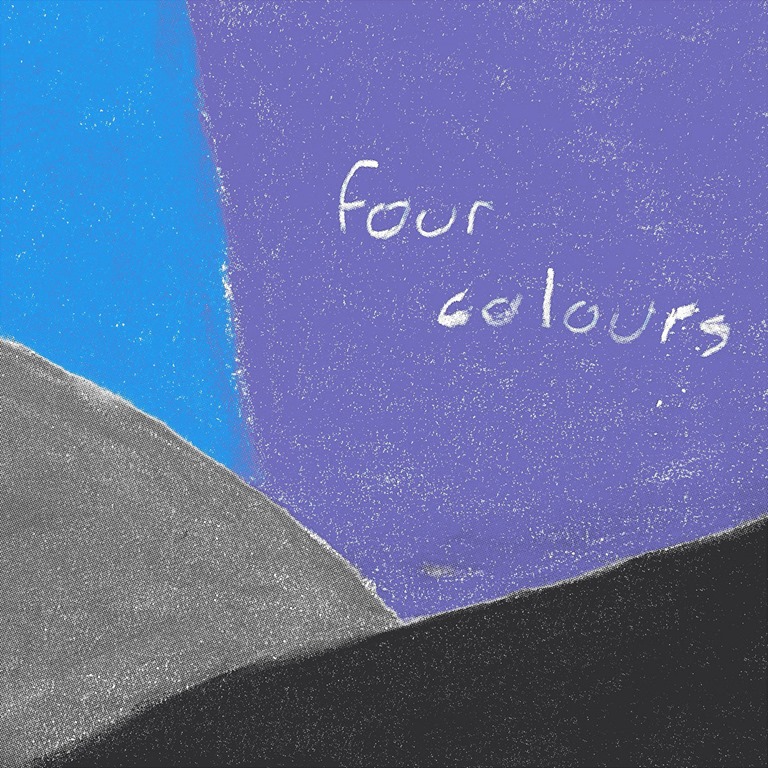
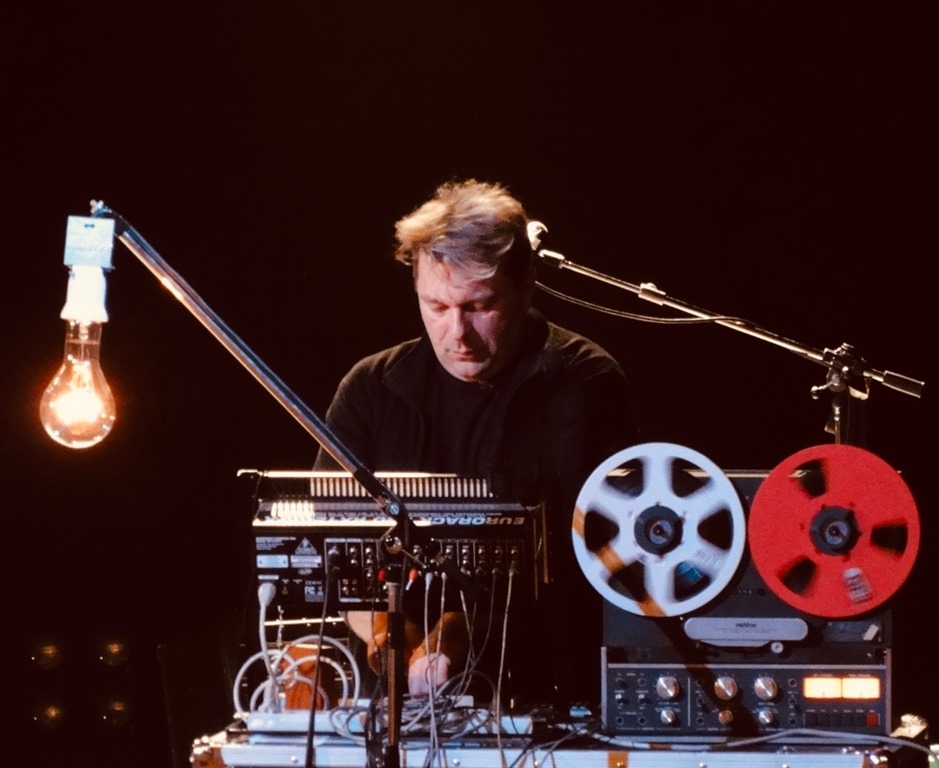
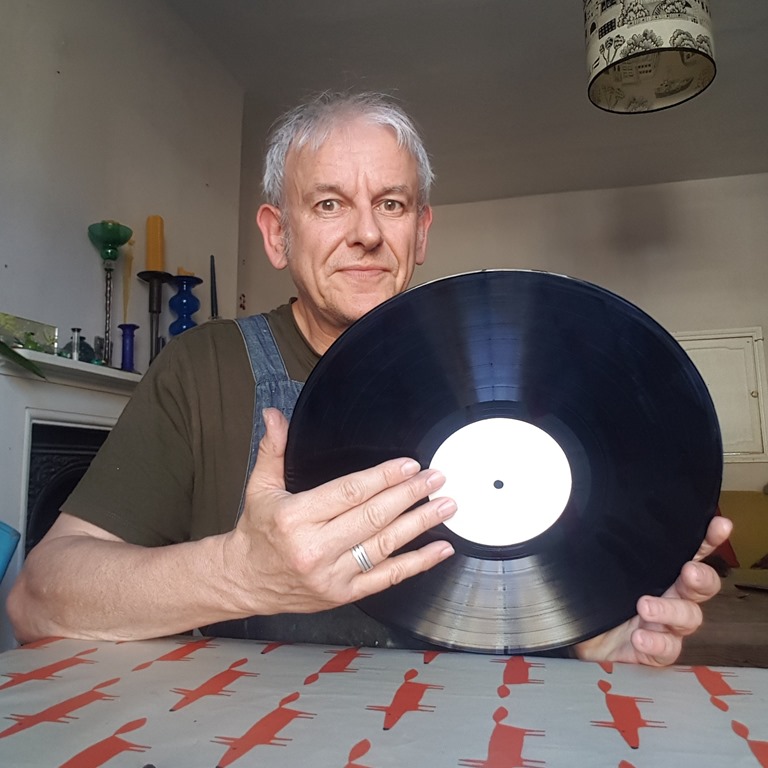

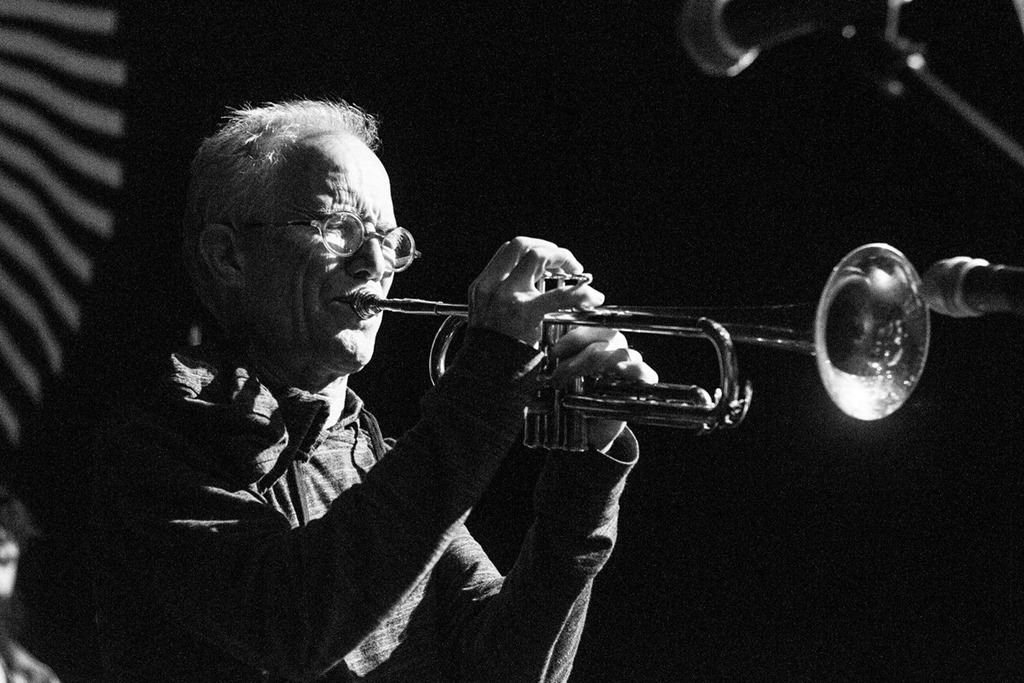

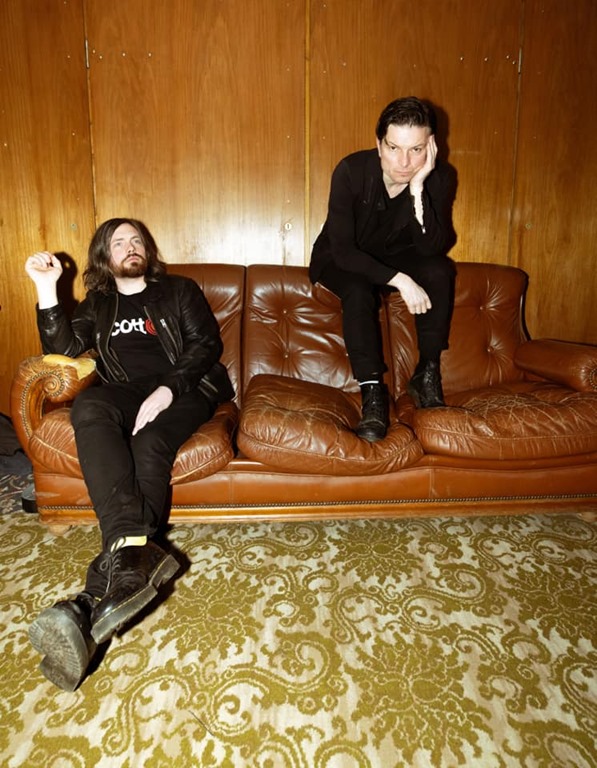
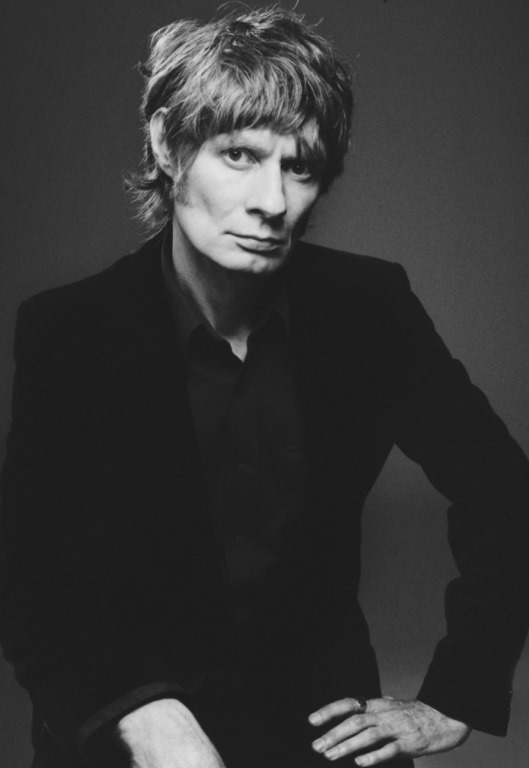
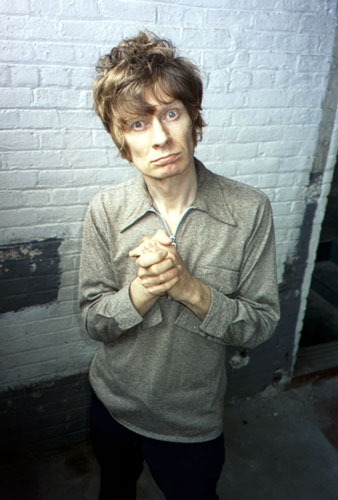
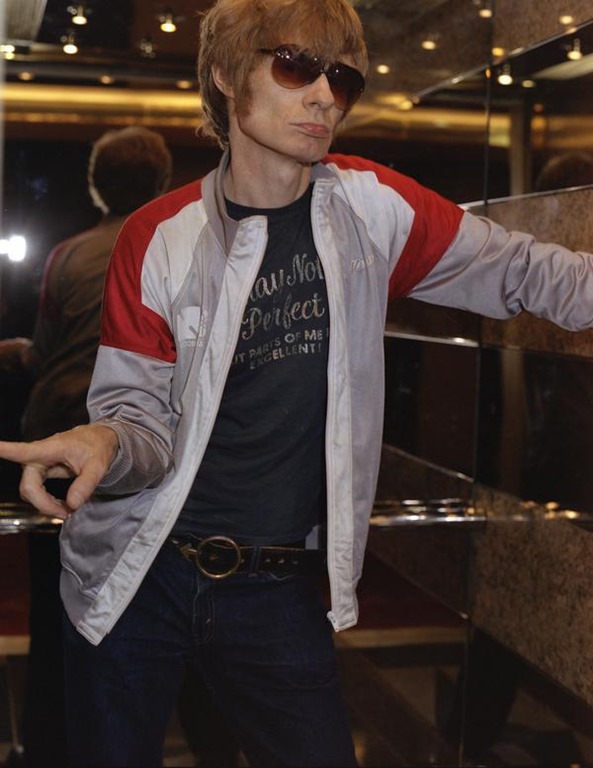
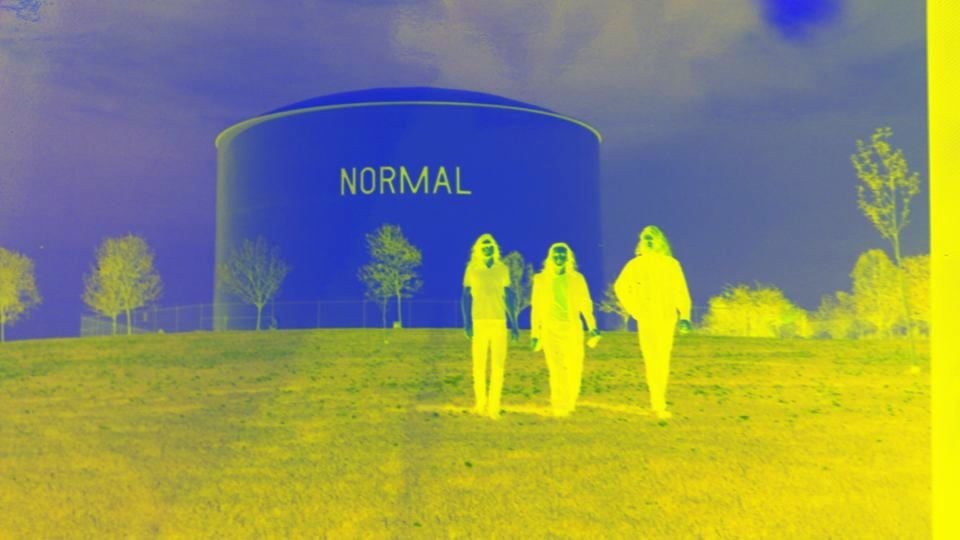
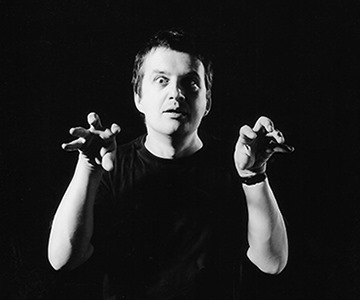
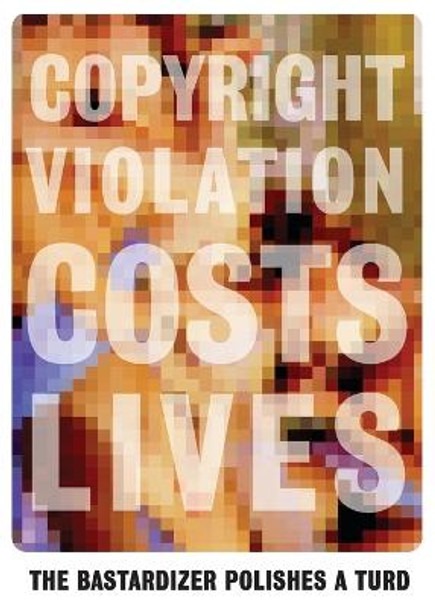

 Aural Aggravation