Posts Tagged ‘Helmet’

25th January 2024

With Band of Susans, active between 1986 and 1996, Robert Poss curved an arc from the New York noise scene towards more of a shoegaze sound. With releases on Blast First and Mute, and featuring a pre-Helmet Page Hamilton on second album, Love Agenda, not to mention a reputation for eardrum-shatteringly loud live performances, the band unquestionably achieved more in terms of influence and cult cred than commercial success (something their final album, Here Comes Success (1995) seemed to acknowledge in its title). But what qualifies as success? Capitalist culture and media tell us that success is a career, promotion, cash, holidays, cruises, bug house big car. But that’s because these are the status symbols capitalism tells us we should aspire to. How about having enough to be ok, a home you like and feel comfortable in, having friends, knowing yourself and being comfortable in your own skin, and having the freedom to do things which give you pleasure? It’s a question of values: what do you value more, time, or money? Status, or the satisfaction of being true to yourself?

There seems to have been a fair bit made of fellow BoS alumni Karen Hagloff’s return to music making in recent years, but not so much about Robert Poss’ sustained output since the band called it a day. But then again, Poss has spent a career being somewhat overlooked and vastly underrated. Both his songwriting and style of playing is quite distinctive and unusual – quirky seems a reasonable adjective, and is certainly not a criticism. The notes on bandcamp note that ‘The release is dedicated to composer/filmmaker/photographer Phill Niblock, a long-time mentor, colleague and friend.’ The timing of this certainly renders this dedication particularly poignant, and also highlights the way in which exponents of avant-gardism feed off one another and evolve one another’s ideas in different directions.

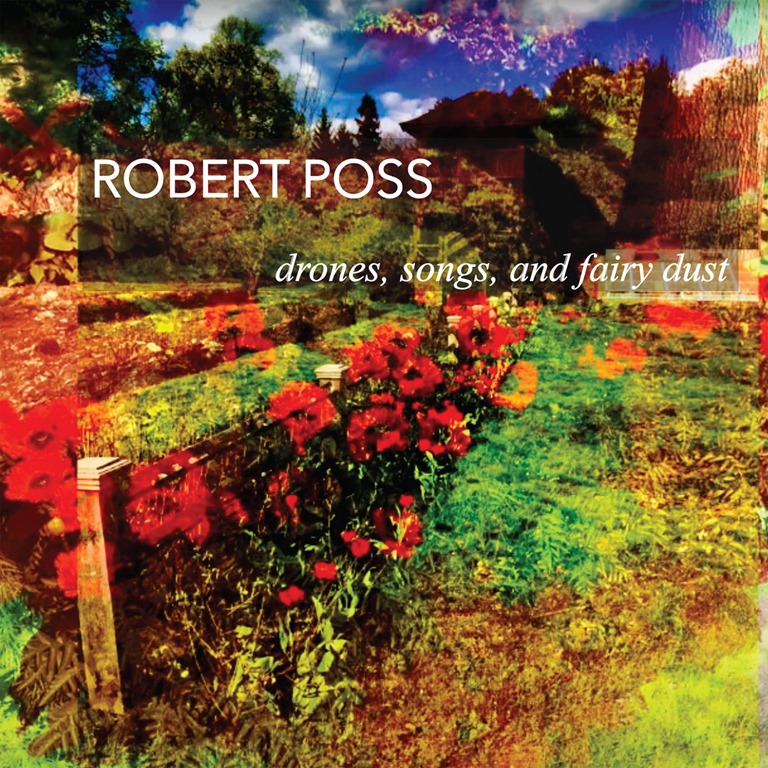
The Niblock connection certainly sheds additional light on Poss’ approach to composition and sound, favouring drones and repetition over rigid verse/chorus structures and progression, and Drones, Songs and Fairy Dust does very much contain, as the title suggests, a miscellany of bits and pieces, ranging from exploratory wanderings to fully-formed songs using conventional ‘rock’ format of guitars, bass, and drums – and on some, there are even vocals, notably the punchy post-punk cut ‘Your Adversary’, which marks a change of style with its murky production and blustery drum machine backing.

The first of these, ‘Secrets, Chapter and Verse’ is a title which could easily be on a Band of Susans release and the song carries that Band of Susans vibe – jangly indie but played loud – and I mean LOUD, with strolling bass running back and forth and up and down beneath the layers of guitar, the vocals low in the mix and serving primarily functional capacity – sonic placeholders.

‘Out of the Fairy Dust’ combines jangling indie and ambient drone and in many respects does carry echoes of ‘Here Comes Success’ – but also Love of Life era Swans – at least until about halfway through where it takes a sudden turn into deeper folk territory. It’s quite a contrast with the deep, ultra-droney sonorous ambience of ‘Foghorn Lullaby’.

Like the epic solo workout that is ‘Hagstrom Fragment’, which comes on like some legs akimbo 90s rock, ‘Skibbereen Drive’ lunges into rock mode, and follows the chord sequence of ‘Flood II’ from The Sister’s of Mercy’s Floodland – and sounds very like it, with its cold synths and crisp drum machine, but without the acoustic guitar detail and lead guitar line. It’s a real contrast to the epic dronescape of ‘Into the Fairy Dust’, on which the drums are a million miles behind the drone as they clatter and roll away, onwards, ever onwards, but also almost entirely submerged in the mix. Elsewhere, with its snarling synth grind, ‘S Romp’ sounds like Suicide doing dirty disco, and ‘Trem 23’ – well, it takes us back to the 23 enigma.

Drones, Songs and Fairy Dust showcases a remarkable diversity of styles, and it’s neither as dry nor as dark as all that, with ‘Imaginary Music On Hold’ presenting a most whimsical feel. As a collection, it never fails to be interesting, or enjoyable, and showcases Poss’ eclecticism and range, and there’s pleasure to be had from listening to a collection of work by an artist who never feels constrained or compelled to confirm to a given genre or mode. It’s something that seems to trouble many people, not least of all labels and critics, that an artist’s creations are based on the pursuit of creative endeavour and interest rather than assigning themselves a category by which they must live. The flipside of this is that it may not feel particularly like an album it its own right, but more like a collection of demos and ideas – and just as the title summarises the contents as three separate elements – Drones, Songs and Fairy Dust – so it feels like it contains the seeds of three separate and distinct projects – a droney one, an indie one, and a dark rock-orientated one. It would be exciting to witness those three projects realised, but what we have here, regardless of future intent, is a document of forward-facing music-making and an artist whose sole priority is doing his own thing. This is, ultimately, the ambition for any artist: to create without concern for commercial matters. And Drones, Songs and Fairy Dust is an exemplary product of creative freedom.

AA
a2882047316_10

SILVERBURN, the new solo project by James ‘Jimbob’ Isaac (Hark & Taint) will release its debut album Self Induced Transcendental Annihilation via MSH Group Music on August 11.

Welsh metal visionary Jimbob Isaac, known from his previous bands Taint and Hark, recorded the new album during lockdown in 2020. He handled all vocals, guitar, bass and drums himself. With this album, Jimbob has meticulously crafted a wholly uncompromising solo offering in the truest sense. It has been said that extreme conditions demand extreme responses, and Self Induced Transcendental Annihilation (‘SITA’) began as an elemental response to the almighty global gut-punch that surrounded it’s creation.

James ‘Jimbob’ Isaac about ‘Formless’: “This one’s for the metaphysics nerds! ‘ormless..’’ is an ode to solitude, meditation and cosmic implosions! The video is an extension of my real-life solo mission, in making this album and the art and video work ongoing. I mean, of course I made myself into cyborgs to play all the instruments.”

From the world-ending double-kick maelstrom of opening track ‘Annihilation’ to the cinematic, discordant chug and release of ‘Etheric Crush’ this album draws from Isaac’s beloved eras of 90’s metal and 00’s metallic hardcore, noisecore, space and sludge metal and bands like Botch, Mastodon, Knut, Converge, Keelhaul, Crowbar, Sepultura, Neurosis and Helmet.

Today Silverburn share second track ‘Formless Atomization Of Omniscient Particulate’. Check it here:

AA

HUGslBdR

Pic: Chris Treseder

Silverburn live are a three piece now, first confirmed dates:

Aug 12 – The Bunkhouse Swansea

Aug 18th – Arctangent Festival

Sept 8th – Oslo London w/ Mutoid Man

Sept 13th – The Exchange Bristol w/ Mutoid Man

Ipecac Recordings – 26th March 2021

Christopher Nosnibor

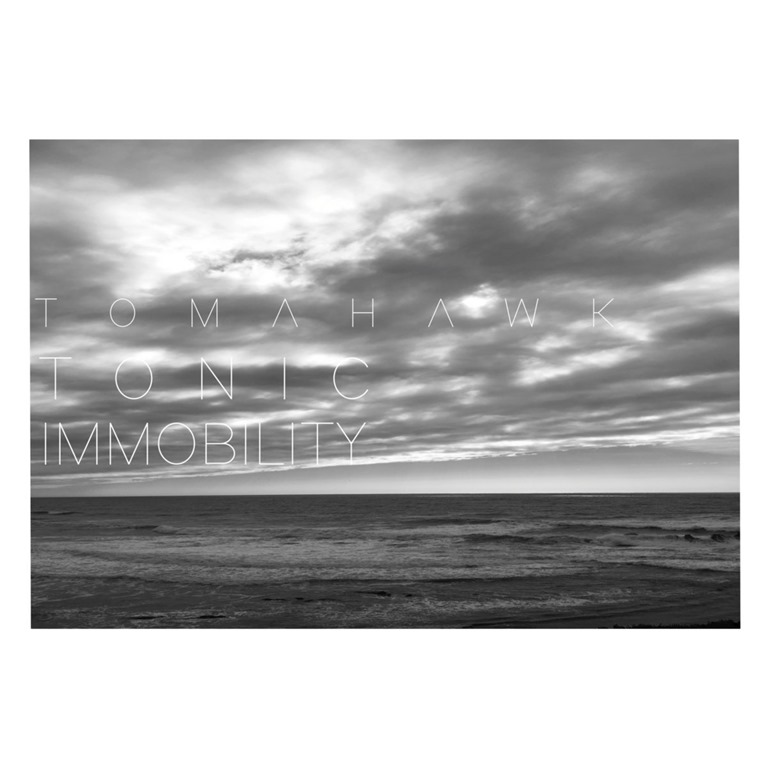
It’s been seven years since the last Tomahawk album, but the noise-rock supergroup are marking their twentieth anniversary in style with the crash-landing of album number five in the form of Tonic Immobility.

For those who needs reminding, the lineup – guitarist Duane Denison [the Jesus Lizard, Unsemble, etc.], vocalist Mike Patton [Faith No More, Mr. Bungle, Fantômas, etc.], drummer John Stanier [Helmet, Battles, etc.], and bassist Trevor “field mouse” Dunn [Mr. Bungle, Fantômas, etc.] really is a who’s who of that US 90s / 00s melting pot of alternative that was truly alternative.

Of course, Mike Patton is the biggest name, because, well, Faith No More reached a level of being truly massive. But even at their peak, Patton was always dabbling in weird shit, with the far-out oddball whacky rock of Mr Bungle, and myriad other projects that were as non-commercial as you could get.

That commitment to music of interest rather than mass appeal has driven Ipecac since its foundation, and Patton is, for many, a true hero as not only a champion of all things weird and wonderful – and often harsh and noisy – but also as one of the most eclectic and wide-ranging artists in contemporary rock, and alongside JG Thirlwell, perhaps one of the few living artists worthy of the term ‘genius’.

And so, being Tomahawk, it’s a weird and varied album that’s visceral and noisy, but also so heavily dynamic as to leave you dazed. Opener ‘SHHH’ is exemplary: it begins quietly, gently, before erupting into a blast of mayhem… and going quiet again. It’s like if Björk had done ‘It’s Oh So Quiet’ while… I dunno, working with Tomahawk. Because while The Jesus Lizard and helmet were integral to defining the underground sound of the 90s, there really is no other act that sounds quite like this, and it’s all about the collaboration and cross-contamination, of course.

There’s an intense, gritty heft to the album as a whole, but there’s variety: ‘Valentine Shine’ is a full-on grunge-riff rager, while ‘Predators and Scavengers’ pursues a more math-rock line of attack. ‘Doomsday Fatigue’ meanwhile, is a slow, slinky, twisted blues drawl that’s more Jesus Lizard until it goes all smooth soulful pop, and the FNM influence is perhaps more apparent. The thing is, you never know what you’re going to get next:

If ‘Business Casual’ feels a shade dated, it still hits the mark both sonically and in terms of lyrical relevance, showing that there’s always something to be had here. ‘I’ve never looked as cool as you’, Patton croons on the low-slung ‘Tattoo Zero’, another song that’s divided dynamically between verse and chorus.

Tonic Immobility has everything going on, and even the brief rap-rock passages work because they’re all part of a huge hybrid cocktail of whatever: ‘Howlie’ goes post/math rock melodic and marks yet another departure before it goes all-out heavy, and ‘Eureka’ is a droney ambient interlude, and ‘Recoil’ actually goes a shade dub reggae for a while and at times it does feel a shade bewildering, and even a bit ‘wtf’, but you can’t criticise Tomahawk for a lack of focus or identity – because that’s their identity right there. ‘Sidewinder’ is a genuinely touching piano-led tune – until the noodling math-rock and distorted vocal howl kick in, and there are also some absolutely brutal riffs on offer here, and make no mistake, Tonic Immobility packs a punch.

It’s a crazy album for crazy times, and a complex, mathy, loud album for a time where the best escape is down a rabbit hole of musical weirdness. Tonic Immobility is that rabbit hole. Dig it deep.

AA

a1175396463_10

Christopher Nosnibor

Riff after riff after riff.

Riff after riff after riff.

Riff after riff after riff.

Celebrating their thirtieth anniversary, Helmet are playing thirty-song sets in thirty cities. It feels like an immense privilege that Leeds is one of them, and the fact it’s the 150-capacity Key Club even more so. With only ten tickets remaining for sale on the door, for a cult band who’ve only released two albums in the last decade, they’ve retained a hardcore following, not all of who, are old buggers.

With no support act, they take the stage at eight sharp, and immediately start with the riffs. Not a word at the start, nor between songs for the first half dozen at least. Instead, it’s all about the riffs.

Riff after riff after riff.

Riff after riff after riff.

The extended freeform solos drift into the background while the rhythm section thunder on relentlessly: the floor-shaking, gut-churning bass, the rhythm guitar that blasts out concrete slabs of noise.

Riff after riff after riff.

Riff after riff after riff.

The blunt, bludgeoning weight of thick, stop/start chunks of noise that became the defining feature of Nu-Metal are Helmet’s staple, but they did it first and did it best. Helmet were also one of the first off-the-street jeans ‘n’ T-shirt bands, and Beavis and Butthead were on the money when they observed that “That drummer looks like a regular guy,” and “If you, like, saw these guys on the street, you wouldn’t even know they were cool.” And yes, they are cool. Seriously cool. Their influence clearly extends far, far beyond their fanbase and commercial reach, which peaked in the early ‘90s. But being cool is also about pushing on, and Helmet’s achieving radio play and MTV exposure around this time was a matter of coincidental timing rather than strategized mass appeal.

DSC_2557[1]

There’s no messing, no posturing: Page regales us with an amusing anecdote about being rehearsing in a space next to Buck Cherry, who commented on the fact the band load their own gear, and who they heard rehearsing their between-song banter. But I never mentioned that. It’s one of only a few moments of chat we get but what’s keenly apparent is that these are nice guys, with no pretence or rock-star delusions, and with their major-label years long behind them, no industry bullshit surrounding them.

They play songs in small venues.

They play hard.

Riff after riff after riff.

Riff after riff after riff.

Song number thirty is ‘In The Meantime’. It’s blistering. But then, so were the preceding twenty-nine songs.

And long may they continue to knock out the riffs.