Posts Tagged ‘Heavy’

Ritual Productions – 11th November 2016

Christopher Nosnibor

You might expect that the tracks on an album containing just six songs would consist of long, dawn-out affairs. But not Thralldom’s latest offering: there are a couple that extend beyond the six-minute mark, but in the main, these are short pieces, under four minutes in duration. But in terms of dark intensity, they’re immense.

The introductory instrumental, ‘Cosmic Chains’ is a disturbing vocal cacophony from the bowels of hell which paves the way for the blackened trudge of ‘Chronovisions’, which truly sets the tone for the album as a whole. It’s seriously fucking dark, tangled gothic guitar lines weaving tapestries which depict unspeakable events of demonic torture and pain.

It may be that Thralldom have been silent for over a decade, but is seems that the intervening years since their last release have been spent crawling through subterranean passages by candlelight, stooped, starved and rabid, and battling with marauding demons every step of the way. And so as what’s billed as ‘Thralldom 3.0’ emerge, screaming and agonised into the light, it’s hard to tell if they’ve slain those demons or become partly consumed by them: Time Will Bend Into Horror forges a netherworld of tempestuous torment. The title is fitting in that it reflects the ancient evils which claw their way through the spaces between the crooked notes and mangled power chords which form the fabric of an album which soundtracks a walk through purgatory. In the hands of Thraldom, a four-minute composition feels like ten or more as they grind out the darkest, most oppressive noise.

The angry grey surges of noise which crash and thrash over a violent percussive assault on ‘The Corpse of the Radar Towers Over All’ collides against the churning discord of ‘Dark Grey Mist’, a track which brings elements of Swans’ Cop into a metal maelstrom that’s as black as the canal of Satan’s sphincter. It’s gnarly, alright – and then some – and brings horror in spades.

Thralldom - Time Will Bend

Ritual Productions – 28th October 2016

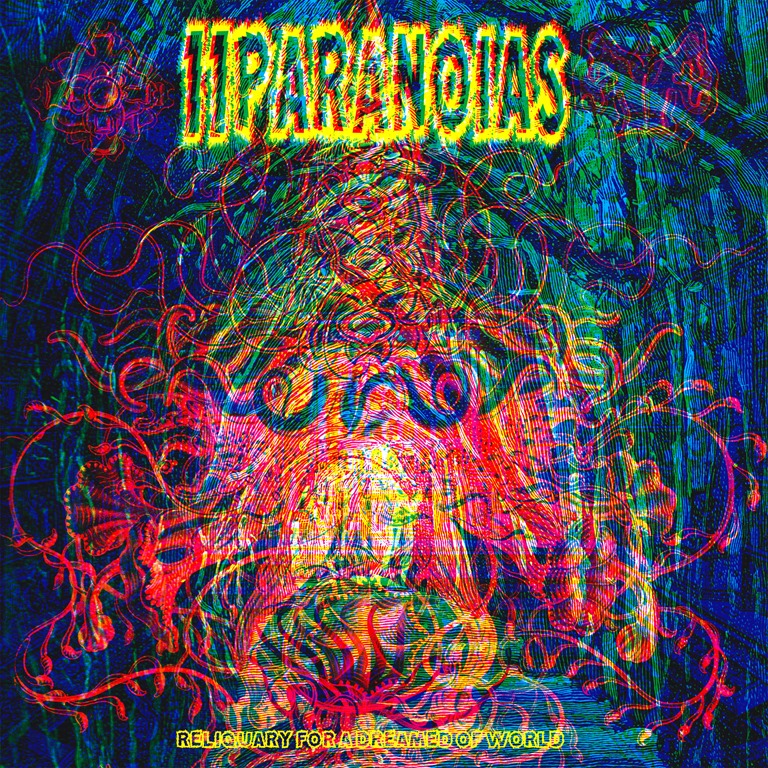
11Paranoias do heavy psychedelic with the emphasis very much on the heavy. Their fourth album, Reliquary For A Dreamed Of World is a downtuned, ultra-low frequency, mega low-tempo doom sludge trudge through the darkest places of psychedelia. The crushing riff that lands halfway through ‘Peripheral Metamorphosis,’ the album’s first track, registers around the same sonic zone as Swans’ ‘Cop’. There’s an eternity between each pulverizing drum smash, which lands with the force of a planetary collision, and the power-chords are heavier than is conceivable for mere instruments to make: this is music that’s nothing short of galactic in its enormity and weight. It’s the sound of dark matter combusting.

Five minutes into the 15-minute mammoth that is ‘Destroying Eyes’, a whip-crack treble-topped snare snaps through the dense murk of noise to propel a vocal track, layered in delay and reverb to plough a New-Wave inspired furrow before it all explodes, unexpectedly, in a blistering wig-out centres around a driving goth-tinged groove.

After the hypnotic ‘Avallaunius’ chills the intensity – at least for the first three minutes or so, at which point it brings the noise – ‘Mutus Liber’ brings it low and slow and goes for the crushingly heavy in a big way, the mangled vocals all but lost in the tsunami of immense power chords. ‘Meditation on the Void’ is the darkly hypnotic workout the title suggests, whipping up a cyclone of psychedelia which threatens to collapse in on itself. After the slowly spiralling ‘Phantom Pyramid’, the brevity of the final track, ‘Milk of Amnesia’ is unexpected. In fact, a squalling barrage of feedback a snarling, ripping bass from which emerges something that for all the world resembles a distorted segment of Fields of the Nephilim’s cover of Roxy Music’s ‘In Every Dream Home a Heartache’, it’s unexpected in pretty much every way imaginable.

Conjuring mental spaces and a hallucinogenic, mirage-filled alternative reality, Reliquary For A Dreamed Of World conjures a world that’s s much a nightmare as a dream. It’s a powerful album which, while heavy – and oftentimes, monumentally so – displays a remarkable knack for a deep groove. It’s an album that will bend your brain, while crushing it by sheer force at the same time.


11PARANOIAS-cover-2000PX-dark

Rock is Hell – RIP67

Christopher Nosnibor

This one’s been out a little while now but has only recently landed with me. I can’t feel too much guilt: Regolith aren’t exactly the fastest of movers, however you look at it. They’ve been going for a full decade, and despite having racked up a substantial catalogue of EPs and split releases, it’s taken until now to get around to a proper album (although, arguably, 2009’s Music for Hot Air Balloon, with its three tracks spanning a full hour, would constitute an album by most people’s reckoning). Musically, they’re not exactly about pace, either, trading in crawling ambient drone of almost incomprehensible proportions.

Their debut album proper isn’t exactly about the immediate hit, the hooks or the general accessibility, either, and necessarily requires time to engage, cogitate and digest.

I is a monster work: a double album comprising just four tracks. And the sound is as immense as the album’s duration, inching toward the 80-minute mark, with each of the tracks clocking in around 20 minutes in duration. But it’s not just about the length: feel the weight. The sounds may be produced electronically using analogue synths and a vast array of effects, and Regolith may describe themselves as ‘tech freaks’, but the material is heavily steeped in the tropes of doom. Having spent my childhood living on the flight path of the takeoff / landing of the RAF Vulcans, I feel qualified to make the analogy of the drones sounding like jet engines rumble and roar, a spectrum of lower-end frequencies that focus on the ribcage, the particle-splitting noise is also more than enough to terrorize the most dulled eardrums. ‘Platinum’ sounds like my young recollections of the Falklands War. The molecule-destroying, air-shredding sound engulfs the listener; the experience is immersive and annihilative.

‘Comet Tails’ is a far sparser affair, echoed beats decaying into the void, the space between the sounds comparable to the distance between planets. Gradually, as slowly as a planet on the outer reaches of a solar system orbits its sun, a low drone begins to rise and swell, a dark, large sonorous body of sound, a black hole cruising closer with inexorable determination. The hum continues to grow until its edges begin to distort and disintegrate and bleeds into ‘Star Trails’. One benefit of hearing this in a digital format is the two tracks do run together. Of course, the downside is simply that however enormous the sound, the full enormity can only really be conveyed via the medium of vinyl, and ideally on a decent set-up with a solid amp and some fuck-off powerful speakers. It’s an album that has the capacity to make the earth move.

The sound is more than fitting for a band named after ‘a layer of loose, heterogeneous superficial material covering solid rock, which includes dust, soil, broken rock, and other related materials and is present on Earth, the Moon, Mars, some asteroids, and other terrestrial planets and moons,’ and whose objective is to create ‘music on a geological scale; music of mountains, shifting like glaciers, slow and relentless processes on grand timescales’. The tracks on I are at once heavy on the ground, and beyond gravity, simultaneously tectonic in their movement and of galactic proportions.

Regolith

Regolith Online

Sub Rosa – SR406 – 5th May 2016

Christopher Nosnibor

There’s no escaping the band’s name. It’s striking, to say the least. Simply calling a band ‘phallus’ would be something, the connotations numerous and not all positive. Putting it out there is a strong challenge to the (potential) audience’s sensibilities, and is as likely to deter many listeners in itself. There may be puerile implications, and an element of silly shock, but what does this say about culture and society? Human history, even prehistory, is in many respects, the history of the phallus: the Romans were obsessed by the power of the phallus, rendering it a totem. Freud was famously fixated, and 60s and 70s feminism marked the opening of a discourse concerning phallocentric society, as they strove to rebalance things. While the phallus in this context is more metaphorical than literal, what matter is the fact that discourse is far from over.

While ‘cunt’ may represent the last bastion of hardcore swearing, and carries the most weight in terms of the offense it can impart, ‘it’s the hard dick that offends most’, as Philip Best spits on the Whitehouse track ‘Language Recovery’. Why is that? What is our society so hung up on the erection? Despite the enduring power of the phallus in society through the ages, art and popular culture is more given to celebrating the female form. And from classical antiquity (I’m thinking Michelangelo’s ‘David’, for example) to modern art (take Lucien Freud’s nude male portraits by way of an example here), male genitalia is understated if it’s to be accepted. It’s simply unimaginable that David, an image of the ‘perfect’ male form, could brandish a raging horn. Soft is art: hard is porn. The phallus may be all-powerful but it’s not acceptable on display, it’s ugly, repulsive, threatening, frightening, says society.

So what does this say about Ultraphallus? To take a blunt and literal view, individually and collectively, the band is cock. But not just any old cock. It’s more cock than that. It’s not only a throbbing erection, a pulsating meat truncheon, but amplified to the power of ten. Ultra… it has such a powerfully maximalist suggestion. This band isn’t just the simple encapsulation of the phallus, but thrusts into the public domain the phallus on a scale comparable to the Cerne Abas giant. Is it more confrontational and in your face than Throbbing Gristle? It’s a close call.

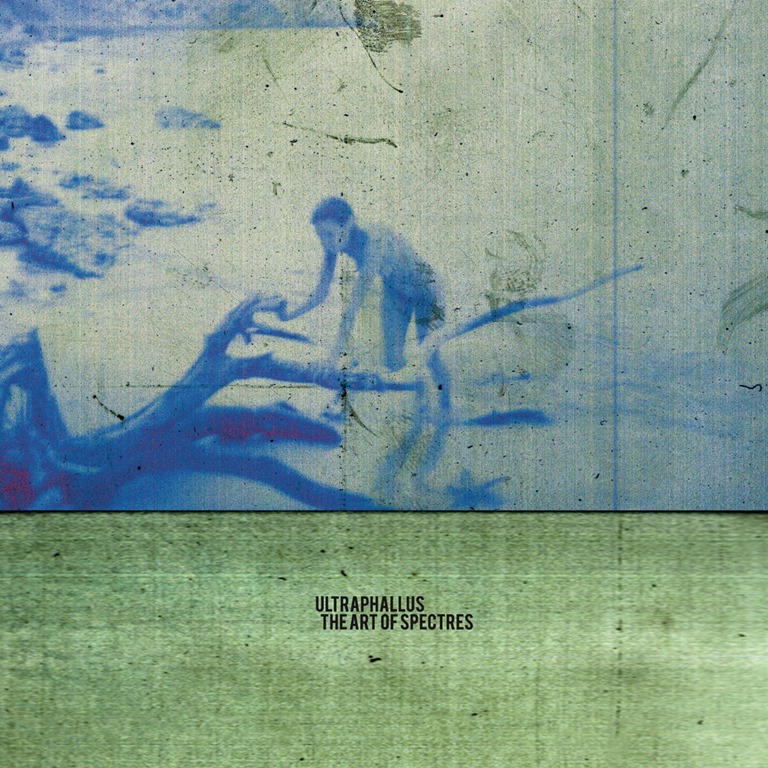
Appropriately, the music on The Art Of Spectres is overtly masculine: hard, heavy, rhythmic. It’s hard, uncompromising.

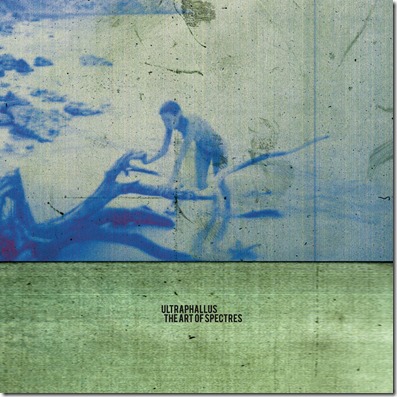
Ultraphallus are Phil Maggi (vocals, samples, electronics, trumpet, percussion); Xavier Dubois (guitars); Ivan Del Castillo (bass); Julien Bockiau (drums). A bunch of giant cocks. And they make challenging music, which pulls an eclectic range of styles together to forge something immense, dark and compelling. The press release notes that Ultraphallus defines their sound with some accents from styles including Western Music, Death metal, Doom-Rock, Avantgarde Psychedelia and Electronic Soundtracks, as a tribute to Rock Culture. But there’s a whole lot more besides lurking in the murky sonic depths of the seven tracks here.

Seven tracks were recorded in four days at Drop Out Studios, South London, with Tim Cedar (Part Chimp leader, Hey Colossus, ex-Penthouse…). The band say that the tracks are inspired by The Residents, Marc Bolan, Mark Frechette and Zabriskie Point, Swans, Autechre, David Bowie, Eva Ionesco, Polanski’s movie The Tenant and Death-Metal. In this respect, the title is germane, as the album finds the band exploring the spectres of their precursors and their peers. They loom large.

Opening track, ‘The Blood Sequence’ combines the grit of black metal with the squalling white noise of power electronics, delivered with the panache of Bauhaus and the theatrical gothic detail of Roz Williams era Christian Death. They really hit their stride with the second track, the seven-minute ‘’Madrigal Lane’ at the heart of which lies a throbbing bass and relentless beat.it builds hypnotically, reaching a frenzied climax of crashing cymbals while Maggi Hollers maniacally in a tsunami of reverb.

‘Let Him be Alistair’ finds Maggi hollering like a drunk impersonating Tom Waits over the skittering sonic backdrop, a slow grinding rhythm section churning out a grainy, Neurosis-like dirge. ‘Whitewasher’ is even slower and heavier: again, the percussion dominates, the lyrics are coarsely shouted, thick, and burning with anguish, evoking the spirit of Godflesh and ‘Greed’ era Swans to punishing and painful effect as the song batters the listener into submission over the course of seven-plus crushing, doom-laden minutes. If the tone mellows and the oppression lifts during the last two tracks, the hypnotic percussion and repetitive nature of the riffs prove every bit as powerful as the final track, ‘Sinister Exaggerator’ builds to a spiralling psychedelic shoegaze swirl.

Despite all of the myriad comparisons and parallels, The Art Of Spectres goes a long way from being any simple homage to the annals of rock and metal, because for all of the references, Ultraphallus don’t really sound like anything or anyone else.
 

SR406_front

Ultraphallus Online

Ritual Productions – 6th May 2016

Christopher Nosnibor

PYR is the third album by sludgelords Ghold, and the press release promises an album ‘towering with a sonic thickness, frantic dizzying energy and shattering immediacy, penetrated by despondent howls and an uncompromising slice of remorselessness’. Christ. So it’s heavy, then?

You could say that. It begins with a slow throb, a low, deep bass tone that borders on ambience and lurks on the peripheries of awareness. Off course, you know it’s going to come in heavy at some point, but the suspense… The release is glorious. A throbbing beast of a riff ploughs in, the bass dominant, the occasional vocals barely audible in the landslide of sludge. After the 11-minute monolithic beast that is the first track, ‘Collusion with Traitors’, ‘Blud’ piledrives in with a squalling frenzy that’s more Fudge Tunnel than Sunn O))) and clocks in at an uncharacteristically concise five minutes.

‘CCXX’ brings more weight and overloading riffs with crushing bass to the fore, but it’s the 21-minute ‘Despert Thrang’ which dominates the album in every way. It’s practically an album in its own right. Again, it’d all about the build, about the pacing. Gradually, a tempest rises from not a whisper but a downturned, growl. Blasts of percussion and powerchords blast in, haltingly, threatening to break but holding back until finally, the levee breaks and the riff powers forth. What else is there to do buy clench your fists, mouth ‘fuck yes’ and get down? It’s got some serious heft, and evolves over the course of its epic span, finally culminating in a blitzkrieg of noise.

While this is very much an album made for vinyl – of the kind that you want to play rather than stick on your wall as some kind of hip-kid statement, the CD does offer a bonus cut in the shape of ;’Something of Her Old Fire’, a gnarly bass-driven grind that trudges its way mercilessly to a final climax.

For all the big distortion and emphasis on the bottom end, not to mention the relentless churn that defines the album, there is texture, and in terms of tempo changes and dynamic, PYR has considerable range. And yes, it’s devastatingly heavy.


pyr_front_final1000x1000

Ghold Online

Neurot Records – 22nd April 2016

Christopher Nosnibor

The blurbage: Scott Kelly (Neurosis) and producer/engineer/sonic warlord Sanford Parker (Buried At Sea) are restless. This inquietude has culminated in another collaboration. The two work together in Corrections House, a project that also features the talents of Mike IX Williams of Eyehategod, and Bruce Lamont of Yakuza. While Corrections House seem hell-bent on impersonal bludgeon and unfettered terror, the pair’s latest project, Mirrors For Psychic Warfare by comparison – is far more restrained.

The critique: Restraint is relative, and there’s definitely some noise to be found here, and no shortage of passion. Sonically, however, the maelstrom definitely simmers, with cold-as-ice production tempering the mood. Everything is channelled, focused and chiselled down, distilled into a dense and seemingly impervious sonic slab.

The album’s first track, ‘Oracles Hex’, previously released as a 7” single is representsaative of the sparse yet heavy feel of the work as a complete piece. Against a sparse and disjointed, broken-down folk backdrop drenched in reverb, Kelly’s vocal delivery is reminiscent of Michael Gira. After a slow build, guitars and all kinds of hell break out to forge a murky sonic curtain. It’s a work of slow-building density that requires a degree of patience, but is big on reward.

The 14-minute ‘A Thorn to See’ follows, and marks the album’s pivotal point, a slowly-ascending sonic apex. Built on brooding drones and stark percussion over which monotone vocals intone visions of desolate landscapes, it exists within the same realm of deconstructed rock music as the last two albums by Disappears, before being ultimately devoured in a rising tide of buzzing guitars which all but bury the thunderous percussion.

‘CNN WTZ’ is pure doom, a nine-minute percussion free dirge delivered at a crawl. With crushing powerchords bursting over a rolling piano motif, the final track, the nine-and-a-half-minute ‘43’ is the soundtrack to the apocalypse.

Mirrors for Psychic Warfare is a difficult album, and makes no apologies for the fact. It’s stark, bleak and atmospheric, and offers not a second of solace to the listener. It’s cold music for a cold world. The future offers nothing but a barren wasteland. Mirrors For Psychic Warfare is a musical representation of the soul-crushing emptiness of the now, and of the times to come.

Mirrors of Psychic Warfare


https://bandcamp.com/EmbeddedPlayer/album=2857859844/size=large/bgcol=ffffff/linkcol=0687f5/tracklist=false/artwork=small/track=362898111/transparent=true/


https://mirrorsforpsychicwarfare.bandcamp.com/

Exile on Mainstream – 18th March 2016

Christopher Nosnibor

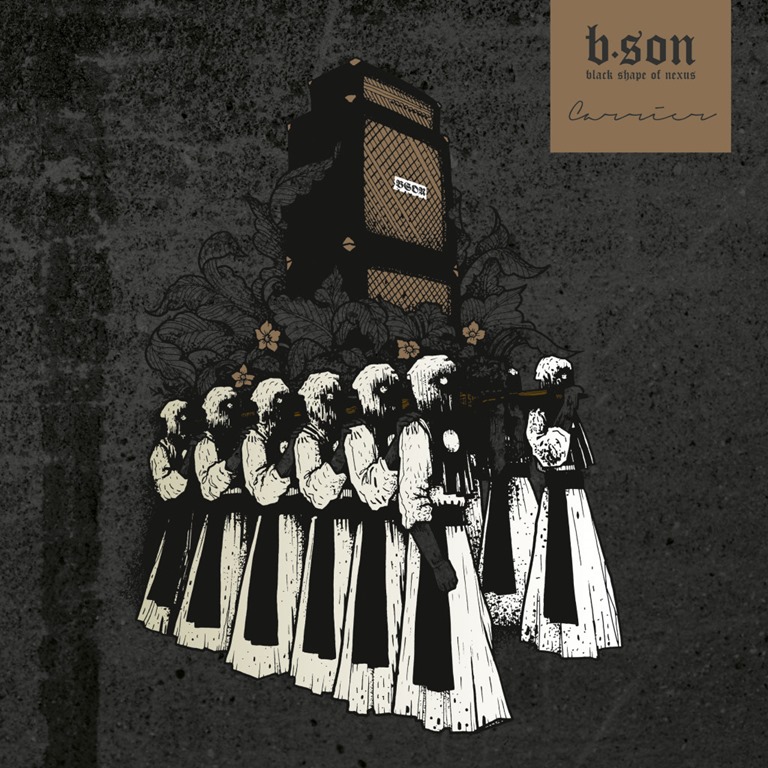
‘The only constant is the blackness of the shape. Everything else, including the shape itself, is in a constant state of flux for Black Shape Of Nexus.’ So begins the press release. If it sounds like preposterous hyperbole with a hefty hint of pretention, then think again: it doesn’t even begin to convey the enormity of this dark, dense work which on the surface confirms to all of the conventions of droney doomy stoner sludge metal, but in fact breaks every last one. The imagination of Carrier is astounding.

To get down to brass tacks, there’s heavy, and then there’s HEAVY. And then there’s this, which is all shades of heavy, and more. As the press blurb implies, Black Shape of Nexus are not a band to align themselves or define themselves as any one fixed thing. Never mind the full sprawl of their output, which occupies four previous releases, Carrier could provoke lengthy and heated debates over which section it should be located in at the local record store (if such a thing still existed. But imagine High Fidelity set in a shop devoted to all things alternative, rock and metal. The conversations would run for pages). And that’s cool.

It’s also cool that Black Shape step up and slap a political disclaimer on the front page of their website. They shouldn’t have to, but kudos to them for making it clear that they’re principled about the people they want as their fan-base. The message reads, ‘Note: There are some doom/drone bands out there sympathizing with fascist/racist “views” – we want to make it as clear as possible, that we strongly disagree with such opinions.
B·SON is anti fascist and anti sexist. Thank you for paying attention! Got that? WE’RE ANTIFASCIST YOU NAZI FUCKS!!! EAT SHIT!!!’

It’s depressing that we do live in a world where extreme right views are rife, not only in countercultural circles, but have become almost accepted in corners of mainstream politics. But at least we can be sure that Black Shape are among the good guys, and not just musically. Although, you could argue that musically, they’re the band guys, ‘cause Carrier is creaking under the interminable weight of the devil’s tunes.

(Shape)shifting between styles, ‘Carrier’ explores various manifestations of heaviosity If the idea of a light, vaguely jazzy break for a few bars in the middle of a seven-minute trudge through the most devastatingly cataclysmic doom seems not so much incongruous as eye-bulging crazy, then you’ll be in even more of a spin to learn that it actually works. Yes, opener ‘I Can’t Lift It’ is a belter, and sets the bar high.

The guitars are backed off – and barely present – on the dark ambient pulsations which occupy the first half of ‘Lift Yourself’, before ripping into a dingy crust-punk thrashabout. If you’re struggling to keep up already, quit now: the Melvins to Sabbath sludge of ‘Sand Mountain’ threatens to collapse under the weight of its own riffage before ‘Facepunch Transport Layer’ lunges in to bring a psychedelic twist to the pulverising chug.

It all comes to a colossal, gut-churning head on the mangled doom of ‘Triumph of Death’: 12 minutes of relentless metal. Transitioning from slow-paced doom and cranking up the tempo and the brute force to build to a driving riff, it drives the album home

It’s punishing, but in the best possible way.

bson_carrier_vinyl-album_satz_12inch-5mm.indd


Black Shape of Nexus Online