Posts Tagged ‘Head of David’

30th May 2025

Christopher Nosnibor

With mainstream music, all you have to do is stay tuned to prominent radio channels, watch TV, let Spotify recommend the next tune, and it lands in your lap. The further away from the mainstream you get, the more it becomes about keeping your ear to the ground, word of mouth, groups and forums – and occasionally, press releases and inboxing. Despite being a fan of a number of the acts involved, I discovered this one quite by fluke via a share in a Facebook group, which announced that ‘OMO DOOM , the Glasgow group who comprise members of Mogwai , The Twilight Sad , Desalvo , Areogramme and Stretchheads put out a new track this week, an intensely claustrophobic cover of a Head of David track – the brilliant late 80s UK Blast First act who everyone seems to have forgotten now’.

I’m perhaps one of the few who not only didn’t forget Head of David, but has a near-complete collection of their releases – and I can tell you it’s taken some years to assemble. While their first album – LP, released on Blast First in 1986, and later reissued as CD in 1990 isn’t too hard to find, and has a buzz around it on account of the fact that Justin Broadrick drummed with the band between leaving Napalm Death and forming Godflesh (although he didn’t actually play on any of their releases apart from their 1987 Peel Session, which features on the nigh-on impossible to find White Elephant compilation), their other releases are like rocking horse shit (as they used to say at record fairs in the 90s.

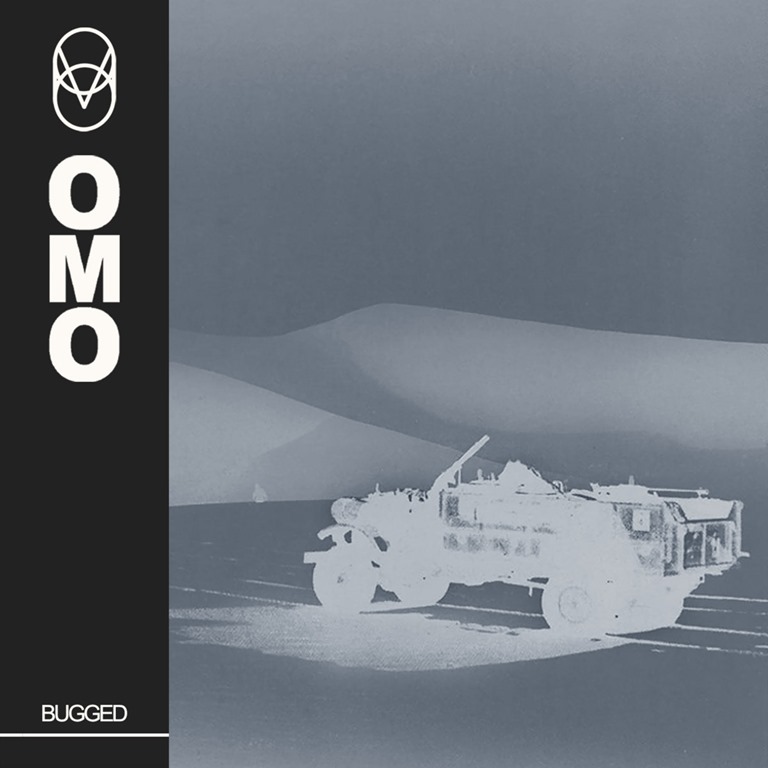
Their second LP, Dustbowl, which featured ‘Bugged’, was produced by Steve Albini and released in 1988. It’s a belter. While I snagged a vinyl copy in the 90s, I have never yet seen a CD copy in the wild, and it’s never been reissued, either. ‘Bugged’ also appeared on one of the 7” singles in ‘The Devil’s Jukebox’ Blast First 10-disc box set, and that’s hardly common or cheap either.

H.O.D.I.C.A. was a semi-official live album which captured Head of David playing at the ICA in London, delivering a purposefully unlistenable set with the explicit purpose of repelling EMI music execs who were sniffing around, and their final album, Seed State, released in 1991 lacked the same brutal force as its predecessors.

The reason for the history lesson is that they’re largely forgotten because their music is so hard to come by, and because Stephen R. Burroughs has pursued a very different musical trajectory subsequent to their demise, with both Tunnels of Ah and FRAG sounding nothing remotely like HoD.

But if you can hear Dustbowl, it’s aged well, a snarling mess of noise driven by pulverising drums and snarling, grinding bass that tears you in half. And this is where we resume the story, I suppose.

OMO DOOM’s version of ‘Bugged’ is slower, starker, more malevolent and menacing than the original which was ferocious in its unbridled brutality. Here, we get thick synths and punishing drum machines dominating the sound. The bassline is twisted around a way, and sounds for all the world like ‘Shirts’ by Blacklisters, and at around the two-minute mark is slumps into a low-frequency range that’s unsettling to the bowels as well as the ears. This sure as hell brings the dirt. The vocals are rabid. It’s gnarly, alright. Fans of Mogwai and The Twilight Sad and the late, lamented Aerogramme may be drawn to this, but probably won’t like it: it’s the work of a bunch of musicians trying something that’s nothing like their regular work, and it’s unfriendly and inaccessible and noisy and horrible… and of course, I absolutely love it. And maybe it could spearhead a Head of David Renaissance… We can hope.

AA
a2460593698_10

Cruel Nature Records – 16th June 2023

Christopher Nosnibor

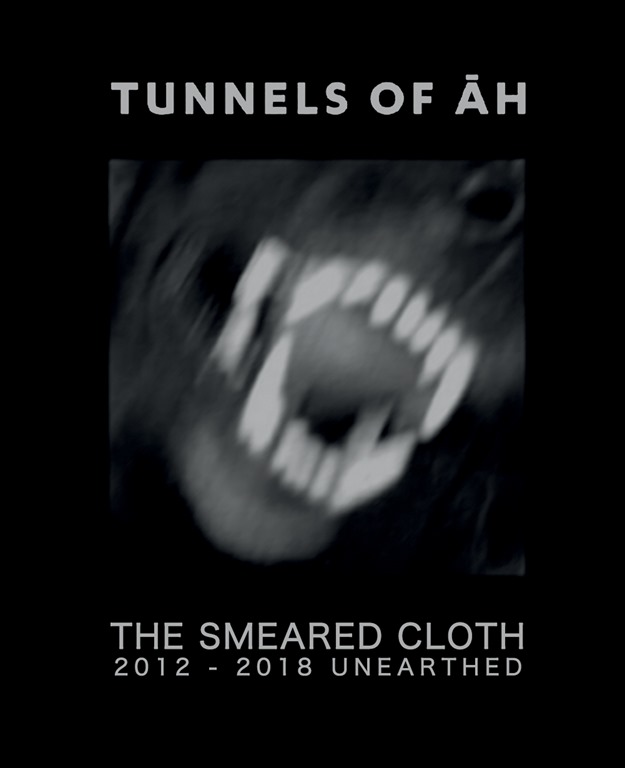
After calling time on Head of David in 1991, Stephen R. Burroughs re-emerged in 2013 as Stephen Ah Burroughs with recording as TUNNELS OF ĀH, and offering a dark ambient focus. Since the first TUNNELS OF ĀH album, Lost Corridors, Burroughs has maintained a steady output through the years, also working under the FRAG moniker (although this project was conceived in the ‘90s, it wasn’t until much later that recordings would begin to be released).

THE SMEARED CLOTH (2012 – 2018 UNEARTHED), as the title suggests, collects unreleased recordings made between 2012 and 2018 and more recently excavated. You couldn’t exactly call this a cash-in: this is ultra-niche and it is, however, a valuable dredging of the archives.

The cassette release is a double, with volume 1 spanning 2012-2015, and volume 2 spanning 2016-2018, and while an album conceived as an end-to-end listening experience would suffer from the enforced breaks, the (cruel) nature of this release means this isn’t an issue.

Oftentimes, with dark ambient works it feels as if the sounds are drifting out of the air rather than being forged by any kind of instruments, but the warping drones of the first composition, ‘Aceldama’, twist and grind and there’s quite analogue synth feel to it, with distant vocals adding an intriguing depth. In contrast, ‘Garlic Blades’ feels as if it something that has come not from instruments, but from a pair of bellows wheezing in a dank underworld. The two sonic facets come together on the third track, the heavy, stark ‘Brute World’ where drifting drones and creeping atmospherics filter over tense, brooding strings, and this all provides the backdrop to barely-audible incantations in a mystical tongue.

These contrasting elements highlight the range of the recordings featured on THE SMEARED CLOTH – and with twenty-one tracks, the majority of which are over six minutes in length, it’s a substantial document. But despite the contrasts – and the span of time over which the recordings were made – there is a certain cohesion to this collection, and the tracks run from one to the next without there being any jarring leaps.

Repetition is a common feature of the compositions; ‘Keys King at the Womb Again’ is centred around a short loop of a heavy industrial scraping, which equally sounds like a pained bark – or a pained barf, for that matter. Because Burroughs does venture into harsher territories at times, there’s some uncomfortable listening to be had among the drones and hums, scrapes and chants, and there are extended passages of quiet, ominous ambience, sounds without definition or any indication of origin ebb, flow, and eddy, to unsettling effect. The mid-section in particular is given to these more abstract forms, the sounds muted and creeping slowly, stealthily. ‘The Cloth is Smeared’ is exemplary: the words, spoken in an even, ritualistic tone, echo amidst creaking, creeping hums and clattering , and while stylistically worlds away, it harks back to themes that go back to early Head of David: the viscerality of ‘Smears’ (it’s a word which carries so much power and evokes a real revulsion, and religion, as represented by cuts like ‘Newly Shaven Saint’. Somewhat annoyingly and inappropriately because my brain is not my friend, the phrase ‘touching cloth’ insists on thrusting itself into my mind – and my mind wanders as it finds itself led through the dark, metal-edged passages of ‘Great Darkness’ with churning noise and what sounds like the clank of metal against railings, as if in protest or otherwise or trapped inside a prison cell. ‘Metallic Shoes and a Sword’ is particularly sharp-edged in the abrasive edges that saw through the swampiness of the damp gloaming, before ‘Gnosis of Self Loathing’ and ‘Amorphophallus’ drive us deep into some gruesomely dark spaces, suffocating, strangling, asphyxiating in their density: these are the sounds of slow punishment.

While the pieces themselves are (essentially) instrumental, the titles convey a great deal and ‘Circumcision (Hunter Christ)’ and ‘The Castrate Became An Angel’ largely speak for themselves. The latter is minimal, jittery, tense, like listening to the sounds in the walls at night and wondering if you have some kind in infestation. And perhaps. perhaps you do, but it’s in your body, inside your skull. There’s nothing here to calm that anxiety, only crackling distortion and drones and groans, grumbling, gut-shaking rumbles.

THE SMEARED CLOTH hangs dark, damp, and heavy, and rather than sounding like a bunch of straggly offcuts, it showcases the depth and breadth of Burroughs’ work, that the works in progress and outtakes and otherwise cast off and forgotten recordings are enough to make two full-length albums of consistent quality.

AA

cover

Human Worth – 25th August 2020

Christopher Nosnibor

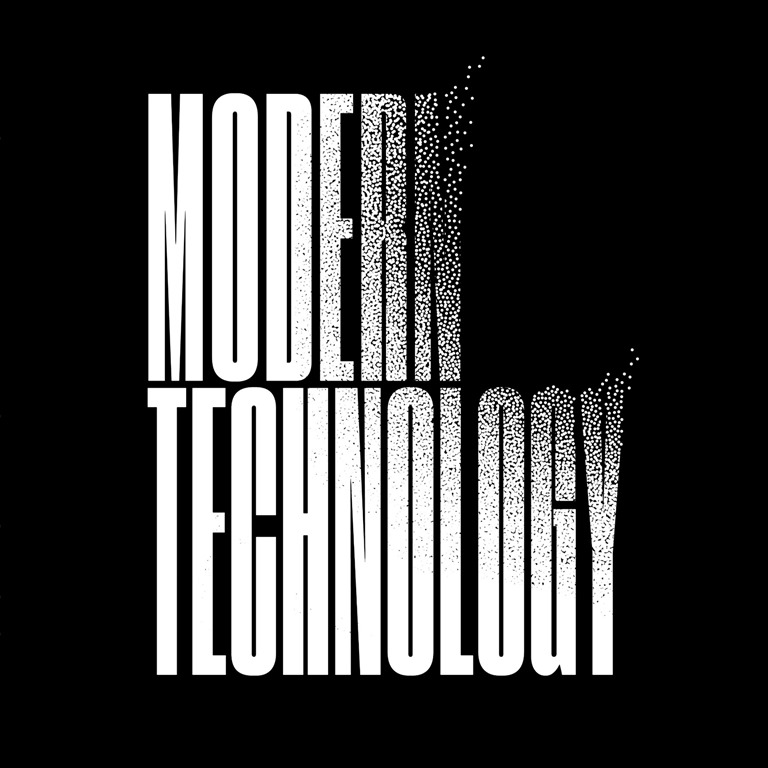
Modern Technology crashed the scene hard with their eponymous debut EP in January of 2019. A devastating detonation of thunderous post-punk nihilism that dismantled consumer culture with half a dozen hard-hitting sonic blasts, it was focused and perfectly formed. It also very much captured the zeitgeist, while plunging sonic depths appropriate to the bleakness of mass consumerism and a culture that favours conformity and the erosion of individuality.

The duo – bassist / vocalist Chris Clarke and drummer Owen Gildersleeve gigged hard for a full year off the back of the EP, proving themselves to be a truly formidable live act: with a clear grasp of dynamics, intensity, and the importance of volume, they not only won a proper grass-roots fanbase, but also used their art for social good, donating proceeds from their Human Worth events and the profits from said EP to a selection of charities, notably Mind, Shelter, and The Trussell Trust.

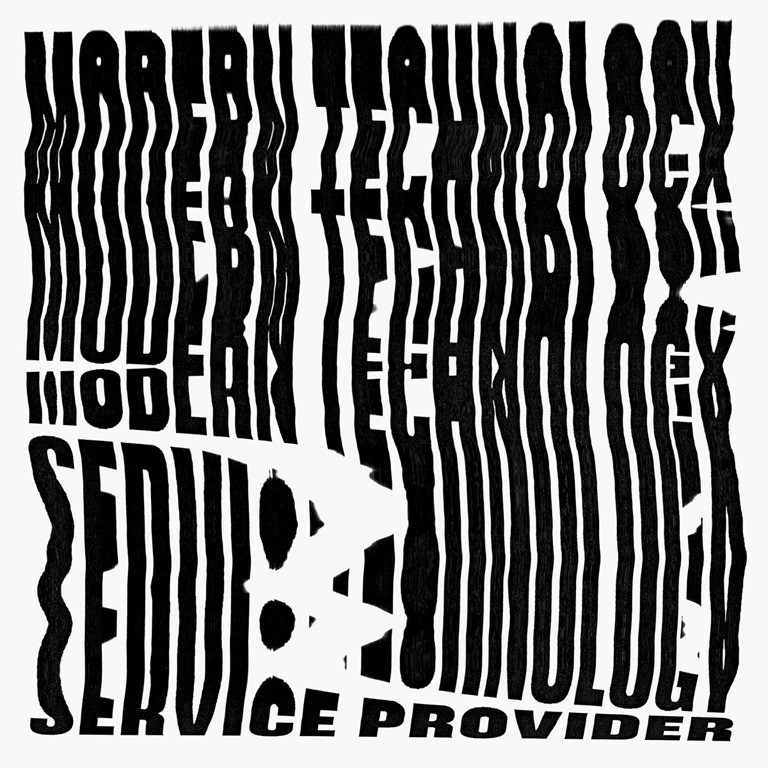
Service Provider finds the duo even more aflame with fury and frustration at contemporary society, and although they seemed pretty well-honed on their first outing, they’ve taken things up another level or three here. The formula – such as it is – is unchanged, with the compositions centred around repetitive, cyclical grooves, pulverizing percussion and anguished vocals swamped in reverb to forge dense capsules of nihilism. The artwork, similarly, consolidates their identity, and the stark monochrome design with its dissolving text is a perfect summary of the stark images of social decay the band depict in their songs. But now, they’ve triple-distilled their ire, and the mammoth production only enhances the effect.

The first of the eight songs, ‘Therapy’ starts sparse, just Clarke’s brooding baritone voice and a primitive thudding drum beat. Those opening bars contain pure anguish, his voice cracked and distorted. Then, in a sharp squeal of feedback, the bass tears in like a whole troop of tanks crashing in, their caterpillar treads tearing at the earth, before locking into a single grinding note that booms out, each simultaneous strike of drum and bass like an explosion. Part Unsane, part Swans, it’s a heavy-hitter, and sets the tone and weight from the outset.

The bass buzzes and rumbles, the drums are understated, thumping away an insistent slow build, and it’s mostly just a scream of feedback like a jet engine that accompanies Chris’ vocal, an edge of distortion on the epic reverb, while he hollers, half-buried in the mix on ‘Blackwall Approach’. According to Wikipedia, ‘The northbound Blackwall Tunnel is a traffic bottleneck with tailbacks. A TfL study in 2009 revealed that the 1.1-mile (1.7 km) approach to the northbound tunnel took around 19 minutes in rush hour traffic, or a delay of approximately 11 minutes per kilometre.’ As such, it makes sense, the band casting a bleak eye over miles of excess traffic and literally tonnes of CO2 emissions. Because this is how we will die, choking the planet and ourselves in our question for exponential growth. And if you think ‘The Great Pause’ will change anything, then while I applaud your optimism, you are completely deluded: lockdown isn’t even over and there are mile-long queues of traffic to access beaches and beauty spots.

‘All is Forgiven’ is an epic grunger, coming on like an outtake demo for Nirvana’s Bleach played at half speed, with Owen’s powerhouse drumming driving thunderously. It’s raw and dingy and hits with serious velocity. The riff on ‘Gate Crasher’ is cyclical, repetitive, gut-churning, ribcage rattling, an intensely physical experience, which captures the force of the band’s live performances perfectly.

Describing a riff as ‘crushing’ may be a cliché, but fuck it: ‘Twitcher’ is a monolithic doom-weight crusher of a beast. A low-slow stealth verse yields to a thick distortion-ripping chorus that is absolutely punishing.

‘Terra Firma’, the album’s shortest song at a mere two-and-a-half-minutes, finds the band explore their more experimental side in a bleepy intro that gives way to a devastating bass blast paired with a squall of treble that calls to mind early Head of David, and serves as an into to the closer, ‘Life Like’, into which it segues. It begins with a spoken-word narrative, a rolling drum and bass almost serene as Clarke hovers around a calm monotone. Early crescendo threats subside and contribute to a simmering tension. But around the four-minute mark the build really begins in earnest, the bass thickening, swelling, and emerging in a tempestuous burst for an elongated outro that takes it to near the eight-minute point.

As a social commentary, Service Provider gets right to the rotten core of capitalist exploitation, and the way it pitches everyone as competition. The upper echelons are competing for supremacy: the majority are competing for scraps and for survival as the divide grows wider. And yet the irony is that the supremacy at the top is predicated on the rest purchasing whatever they’re selling, and all too often it’s shit they don’t need and can’t afford but that’s somehow become essential to contemporary living.

If anyone believes a world emerging from lockdown after the first wave of Covid-19 will be kinder, more accommodating, more humane, the early signs are that they’re sadly mistaken, as businesses slash employees and push even harder to return profits in the wake of a global financial slump.

We’re all fucked, and Service Provider sells it out loud – very loud – and clear, in stark, brutal terms. It’s a pretty punishing set, and what’s impressive is that they sustain the bludgeoning impact throughout, making for an absolute monster of an album. It’s hard to fault service like this.

AA

a1432357693_10

7th January 2019

Christopher Nosnibor

I like Modern Technology before I’ve even heard a note. Drummer Owen approached me through Facebook having clocked Aural Aggravation with a link to the East London duo’s debut EP. Most bands starting out want to get on the radar, and get some cash back for the hard graft they’ve put in trying to get to the point of putting music out into the public domain, especially as a physical release – and this comes in limited-to-200 clear vinyl in addition to the digital version – but they’re donating all profits between Mind and Shelter, perhaps two of the most vital charities in the age of austerity.

I may not have written much about the plight of the homeless, although the fact we have a massive problem here in Britain right now requires no qualification, but I have touched on mental health on more than one occasion here in the past. The oft-shared statistics are just statistics, but in my day-job (yes, I work for a multinational who deal in insurance and investments, because, incredibly reviewing bands no-one’s heard of and writing books no-one reads doesn’t pay the bills) I’m often required to step out of my role to help people and to listen to people. They all have trouble. They’re all stressed. They’re all anxietised. Some are depressed. I know how they feel, and they know it. It really is good to talk. No, not just good: vital. This is my daily reality. So the fact that the bulk of CD I get sent for review which I don’t choose to keep end up at my local Mind charity shop is just something I do. Because it’s important to do what you can, right?

According to their bio, Modern Technology formed through ‘a shared frustration of the post-truth society and political unrest that is currently suffocating our global conscious’. The one positive of political turbulence is the spur to creativity: it’s no coincidence that that post-punk emerged during the Thatcher era, and it’s fair to say that the parallels between then and now are strong. One major difference now, however, is that it’s practically impossible to sign on and form a band: zero-hours contracts and the benefits system mean that even looking for work is a full-time job, and the economics of making music simply don’t stack favourably. But regardless of economics, all that shit has to go somewhere. You need to process. You need to vent. Modern Technology sound like a band who are doing this not for fun, but because they need to.

The EP’s opener provides a theme tune of sorts: entitled ‘Modern Technology’, it launches with an ear-shredding blast of splintering noise, before pulverizing drums, grating bass and squalling feedback hammer out a sonic landslide of a backdrop to a hollering vocal, half-lost in an avalanche of reverb. Christ! They’ve got the savagery of early Head of David coupled with the goth-noise mania of The Birthday Party.

It certainly sets the tone and tempo: ‘Project Fear’ is two minutes of overloading, distorted fury that makes optimal use of lo-fi production values for maximum impact. It hits like a punch in the guts. Deciphering the lyrics isn’t easy and at times is pretty much impossible, but the sentiment is more than adequately conveyed by the medium. Besides, the titles speak for themselves in many respects, as they take the most mundane aspects of contemporary capitalist living and attack them with shuddering sonic barrages. Shades of psych filter through the scuzzed-up tumult of no-wave noise. And deep from within that sonic cyclone screams the painful truth: everything is fucked.

When they do slow it down, as on the grinding ‘Select Retail’, they bring out the brooding theatricality and highlight the depthlessness and superficiality of consumerism with the blank slogan / refrain ‘Select retail / reject detail’. But then they also do choppy, bass-led Shellac-tinged angularity on ‘Queue Jumper’. Closer ‘Modern Detritus’ distils every last ounce of frustration and compresses it into a dense roar of thunder.

Modern Technology are the real deal: this isn’t music being made with one eye on a commercial ticket, but music that’s born out of compulsion, the urge to purge. It’s art. It’s raw, it’s visceral, it’s painful. And in expressing the agony of frustration, it’s perfect.

AA

cover