Posts Tagged ‘Haunting’

Glasgow-based duo HANGING FREUD join hands with the Belgian label Spleen+ (division of Alfa Matrix) for the release of Worship, their most personal and emotive full length ever.

On this 7th studio album, Paula Borges and Jonathan Skinner continue refining their unique sound identity that nobody managed so far to narrow down to one specific music style, often evoking influences and elements of post punk, ethereal, synthgaze, cold wave, ambient pop or yet experimental electronica.

With the heartbeat of a drum machine as metronome, Paula’s vocals are dark, haunting, almost glacial, her enunciation is both plaintive and full of echoing fragile grace. While the cinematic music warps them all in a melancholic ethereal cocoon made of mechanical funeral melodies, icy minimal sequences and suffocating synth atmospheres. The overall ambience is dense, lingering, almost claustrophobic, but so poignant and uplifting that it takes you by the throat and touches you at the deepest end of your soul.

The 10 songs featured on this album literally come from a place of contradiction hanging somewhere between courageous vulnerability and fearful resilience, and deal with themes such as collective distress and loss, finding beauty in tragedy or yet questioning about what makes us human in the symbolic contrasts of life and death.
It’s no surprise to hear that this “less is more” introspective ode to melancholia was written in particular claustrophobic circumstances during the pandemic lockdown. “Because of what was going on, we were essentially stuck in temporary accommodation in Scotland, away from our studio and forced into a period unexperienced before. The songs that came out therefore come from a different place. Everything was done within a laptop and is proudly 100% digital. It was recorded and mixed while literally sitting on the side of a bed in a mouse infested apartment…” explains Paula Borges.

Strong from their somewhat nomadic past with multicultural backgrounds of coming from Sao Paulo (Brazil) and London (UK), HANGING FREUD sign here a timeless chef d’oeuvre full of beautifully dark simplicity, an emotional body of work that is uncompromising and genre defying at the same time. If you missed HANGING FREUD so far, the moment has come to fall under their freezing spell and addictively hit the play-button again and again.

As a taster of the album, out in December, they’ve unveiled a video for ‘A Hand to Hold the Gun’, which you can see here:

AA

HF pic

Cruel Nature Records – 30th June 2023

Christopher Nosnibor

Less than a year on from Their Invisible Hands, and just nine months after Undergrowth, Clara Engel serves up Sanguinaria. The all-too-common ‘returns with simply isn’t appropriate here, since it implies absence, and Engel’s rate of output hasn’t only been consistent, but if anything has accelerated lately, with this being their eighth release since Hatching Under the Stars in April 2020.

The advent of streaming has unquestionably changed the face of the music industry, and it seems to be broadly accepted that the change is most certainly not in the favour of artists, with Spotify CEO suggesting that if artists want to achieve more streams and therefore more royalties, they need to be producing more content, and more regularly, famously telling Music Ally that it’s “not enough” for artists to release music “every three to four years” and that they ought to maintain “continuous engagement with their fans.”

This speaks volumes about his view of music – that it’s not art, but a commodity. And of course, his interest in artists cranking out product on a conveyor-belt is quite clearly in the profit it generates for his company and him personally, not those who produce it. It also shows a complete lack of understanding of the creative process: try writing and recording material while being continuously engaged. Moreover, many creative types aren’t extroverts by nature, and aren’t disposed to sharing endless videos and vlogs and updates on their time in the studio. And do audiences really want or need that anyway? We don’t necessarily need to feel like we know the artist or have a ‘chummy’ or direct connection with them: we just want the music and prefer a bit of mystery and distance.

In the 60s and 70s, it was commonplace for artists to prelease an album every six months, and there’s a very good reason this practise stopped: it simply wasn’t sustainable, and it was invariably the artists who suffered rather than the labels who effectively owned them.

But where I’m going with this is that every artist is different, and the creative process is a personal and individual thing, and sometimes artists experience huge creative flurries, while at others they may experience creative slumps. Clara Engel is clearly experiencing a flurry of late, and the remarkable thing about it is that they’re producing work not only in quantity, but of a remarkable quality.

If in terms of output, more may be more, the stark arrangements of Sanguinaria abundantly evidence that less is very much more in most cases. There is a beautiful achingness which pervades every moment of the album’s downbeat folk contemplations.

The songs on Sanguinaria are sparely-arranged and it’s Engel’s voice which is to the fore, at least in term of the mix. ‘The sky is huge, and the sea is green’, they sing in the reflective refrain of ‘Sing in Our Chains’, and it’s an evocative pastoral feel that nags at you and makes you feel… sad, haunted, makes you look inside yourself. You may not necessarily feel comfortable in doing so, but this is only one of several reasons why it’s worth spending time with Sanguinaria.

Although a solo album and a minimal one at that, Engel – a multi-instrumentalist who plays a fascinating array of instruments here, notably, according to the liner notes, ‘electric cigar box guitar, acoustic guitar, talharpa, gudok, cajón, wooden trunk with soft mallets, tongue drum, melodica’ – is accompanied by a number of contributing musicians who add subtle detail and essential texture and depth. The picked strings and sad-sounding violin forge a mournful dark folk sound on ‘Poisonous Fruit’ and it calls to mind Dark Captain, a band I still miss and feel were criminally underrated. ‘I Died Again’ is so simple, so melancholy, so human, it’s impossible not to be moved by it: Engel’s vocal is rich, but uncomplicated.

‘Extasis Boogie’ introduces percussion for the first time, with hand drums quietly bopping behind an understated guitar, while the lap steel drones on ‘A Silver Thread’ add a weight to the slow sadness that drips from every note.

These are songs which are carefully crafted, considered, and feel so natural and rich; there’s no hint of their having been rushed or being partially-evolved. As such, Sanguinaria feels like an album that connects the feelings behind its creation and the final output.

Engel’s soul is bare on this finely-poised and thoughtful album, and perhaps because of, rather than ins spite of, its minimalism, it’s a gripping work.

AA

a1950392451_10

German synthpop artist, Meersein has introduced their new single, ‘Haunting’;  a hauntingly beautiful song with a ghostly melody that lingers in the atmosphere.
Meersein sings about the memories of a love that is impossible to forget. The chorus is an earworm that will stick with you long after the song is over, capturing the feeling of being trapped in a love that taunts and lures you in, with nowhere to hide.

‘Haunting’ is a must-listen for anyone who has ever been haunted by a love that just won’t let go.

Watch the video here:

AA

The nostalgic sound of the 80s returns with a modern twist. The solo artist Meersein presents a Depeche Mode aesthetic with unique, contemporary elements. His debut single "Speechless" was released in June 2022, but he has been establishing himself on the darkwave scene since October 2021.

With his own radio show and new music reviews, he has established his channel as the ultimate darkwave resource.

This multidimensional artist is not only an experienced musician and dynamic live performer, but also a passionate new wave enthusiast. His infectious passion for multiple aspects of music is evident in his releases. 

321409

James Wells

We’re a little late to the party with this one, but we’re glad to be here now. Well, I say ‘glad’… This is like arriving late to the party and everyone is already half cut and you wonder if you should have actually come at all. Something feels dark, it feels as if something’s brewing, something menacing. If you ever feel on edge and like you’re often casting a glance over your shoulder for reasons unknown, this is not going to help.

Unfamiliar as I am with Tigercide – which probably something I need to address, and as swiftly as possible, this immediately feels familiar, and also uncanny – that is to say, familiar but not quite. Tigercide trade in dark electro, with subtle trip-hop infusions interwoven through their atmospheric tunes.

Having released their ‘Remedy’ EP in 2019, the remix EP is set for release this autumn. Following a couple of standalone singles, they’ve started sliding out tasters for the new EP, and John Bechdel’s take on ‘Remedy’ is magnificent.

It’s not overtly witchy or creepy, but has a real skin-crawling ominousness that sets you on edge, and if Shexist’s vocals on the original were haunting atop the low-end throb and reverb-soaked snare clatter, Bechdel has spun everything onto a dark, misty industrial-tinged anxiety dream. It sets you on edge, it’s tense, and it’s special.

AA

Tigercide_RemedyRemix_CoverDigital

Celestial North released her new single ‘Otherworld’ on Friday. this life affirming and glorious dreamscape is the lead single and title track from her forthcoming debut album ‘Otherworld’- released on the 7th of July 2023.

It was premiered on Chris Hawkins, BBC 6 Music show this week he described it as ‘Stunning. An uplifting, beautiful dreamscape to Utopia and might be the best music you’ll hear this week”.

Hear it here:

AA

a1328765549_16

Room40 – 2nd June 2023

Christopher Nosnibor

I’ve been engrossed by Lawrence English’s works for some years now, and my appreciation of him and his methods were only enhanced when I conducted an interview with him about ten years ago for a now-defunct site (so many are now: the idea that once online it’s there forever has been proven false, and we’re all sitting, bewildered by as rapidly-vanishing archive of the recent past), where we touched on cut-ups and William Burroughs and I was struck by the depth of his knowledge and references.

But I have grave concerns around future history, or the future of history. While the move to digital was hailed as a move toward permanence, incorruptibility, the opposite has proved true. No-one writes anything down anymore, no-one produces additional. tape copies. If your hard-drive gets fucked, so does your entire library. The Cloud? Do you even know where it is? Does it even exist?

While we reflect on this, let us also consider this album and its slow gestation. David Toop is another artist I’ve spent some time listening to, and writing about, including his Breathing Spirit Forms three-way collaboration with Akio Suzuki and Lawrence English, but this is the first time just the pair of them have worked together, and Lawrence explains its evolution as follows: ‘Over the years, David and I have shared an interest in both the material and immaterial implications of sound (amongst other things). Moreover we’ve connected many times on matters which lies at the fringes of how we might choose to think about audition, our interests seeking in the affective realm that haunts, rather than describes, experience. The Shell That Speaks The Sea very much resonates from this shared fascination… I’m not exactly sure when we first mooted this duet, but I sense its initial trace is now more than a decade ago. I tend to live by the motto of ‘right place, right time’ and I believe David likely also subscribes to this methodology. A couple of years ago, David and I reignited the duet conversation and began exchanging materials. As a jumping off point, I explored a series of field recordings that, for me at least, captured something of this affective haunting that I mentioned previously’.

And haunting it is: ghosts of memories and fragments of half-recollections lurk and loom amidst the thick, dark shadows forged by the unsettling sounds. The title suggests an album of soft ambient washes, a gentle tidal swash, a soothing, tranquil work. It is not.

‘Abyssal Tracker’ is remarkably atmospheric in a sparse, gloomy, sense, and provides a fitting introduction to the duo’s idiosyncratic work, compiling sighs and vocal rasps over elongated strains of feedback and a suffocating atmosphere. Shrill shrieks echo out over eerie notes and a scratching insectoid clamour in the trebly range. Thuds ripple beneath the surface: there is so much texture and detail here, you find yourself looking about nervously, seeking the various sources and to see what’s over your shoulder, or hovering above your head.

Clanks and clatters and clanks and thuds are the dominant features of this album, and is lasers fire into the abyss of emptiness on the dense and disturbing ‘Reading Bones’, which scratches and scrapes, while there are earth-churning low-range disturbances – and words, but they’re indecipherable, spoken in low, whispering grunts, and it’s impossible to decipher even the language, sounding as it does like an ancient incantation.

It’s not all quite so skin-pricklingly tense, but much of it is: ‘Mouth Cave’ is dark, dank, low and rumbling, but has textures and what sounds like the trickle of running water spattering in the background amidst the cavernous gloom, and if ‘Whistling in the Dark’ sounds like a simplistic description, it’s accurate – but also suspenseful, scary and bordering on horror tropes; the whistling is deranged and floats through a heavy, crackling doomy drone. There are more ominous mutterings amidst the creeping darkness of ‘The Chair’s Story’, which feels like casting a look back through the ages through a thick fog at scenes of torture and pain and great sorrow and forward, to a laser-bleeping future.

As I seem to be prone to lately, I found myself nodding through fatigue but also, simultaneously, tense and alert during The Shell That Speaks The Sea, an album which possesses vast sonic expanses and a bleak, oppressive atmosphere. Each track offers something different, and this only accentuates the ‘otherness’ of the music this album contains; it’s like walking through a series of disturbing dreams, whereby each scene presents a new unfamiliar setting, and there are hints of BBC Radiophonic Workshop and vintage sci-fi about this incredibly imaginative work.

It may have taken a long time to piece together, but the results make the labour more than worthwhile.

AA

RM4205_front

10th March 2023

Christopher Nosnibor

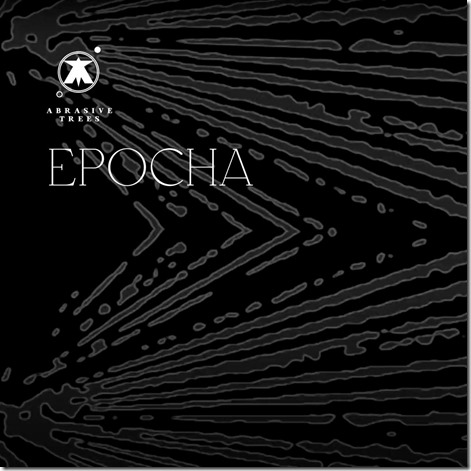
Epocha gathers together Abrasive Trees’ output from 2019-2021 – a brief but pivotal period for the band released four singles and EPs which found them evolving and solidifying their sound. They’ve been variously described as Post-Punk/Post-Rock/Post-Folk and permutations thereof, and all of these elements are in the mix in a style that has gothic – but not explicitly ‘goth’ overtones across the course of the nine tracks gathered here.

Although ostensibly a five-piece centred around Matthew Rochford in their current incarnation, these recordings feature a host of contributors, notably Mark Beazley of Rothko and Band of Holy Joy, who was also involved in elements of production, mixing, and mastering the tracks, and among others. It’s perhaps because of what these individuals bring, both in terms of playing style and instrumentation – with cello, e-bow, organ, and dulcimer among the array of instruments which augment the standard setup off bass, drums, and guitar.

The fact that the songs aren’t simply presented chronologically – and remixes have been omitted – does give this disc a more the feel of an album set than a compilation, and this makes for a journey-like listening experience.

The album opens with ‘Bound for an Infinite Sea’, the lead track of the EP bearing the same title from September 2020, and the chiming guitarline is reminiscent of The Nephilim era Fields of the Nephilim, and sets the expansive atmospheric tone that defines the sound of Abrasive Trees.

While there are vocals, they feature sparingly, rippling up between the lengthy instrumental sections. On ‘Replenishing Water’, this manifests as a percussion led swirling psych groove, whereas elsewhere, as on the slow, hypnotic ‘Before’, the vibe is rather more spaced-out and trippy, and there’s certainly an experimental, almost-jam-based aspect to the music in places.

Predominantly, though, there’s a contemplative, brooding nature that seeps through the rich yet subtle arrangements, and at times, in the folkier parts, I’m reminded of Last Harbour (granted, not a comparison that will likely leap out to many, but so often the best bands are underrated and under the radar). The dark, moody ‘Alone in the World’ is eerie, haunting, and other-worldly.

In pulling together these recordings, released variously on cassette, vinyl, and hand—packaged CD, one would hope that Abrasive Trees will find new converts, even if there are only 100 copies of this CD-only release – if its existence steers people to the digital versions of the original, then it’s all to the good, although it has to be said, as a fan of physical media, Epocha is a lovely item, as well as a well-realised document of the band’s first phase.

a4124501000_10

(Image links to Bandcamp)

10th December 2022

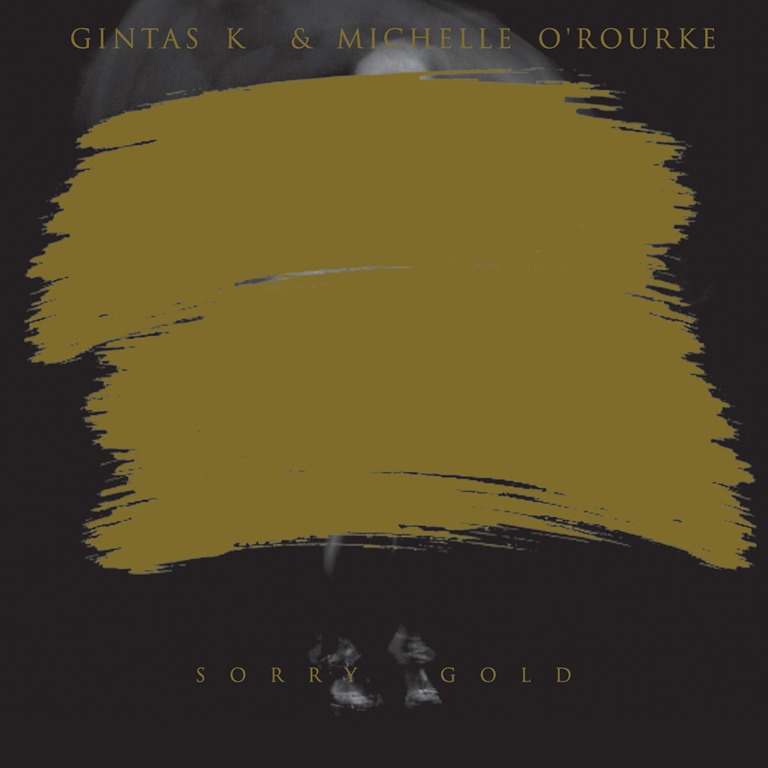
Gintas K wraps up a(nother) truly prodigious year with a collaboration – and an apology. The Lithuanian sound artist hasn’t strayed so far from his experimental electronic roots, at least fundamentally, but at the same time, Sorry Gold does mark something of a substantial and significant departure.

As the accompanying text explains, ‘this recording was made on stage at the Project Arts Center in Dublin, during the making of the film Sorry Gold Emily Aoibheann. The artists improvised to the visual landscape of the rehearsal space, stage design and dancers…’ it was funded by the Arts Council / An Chomhairle Ealaíon and Dublin City Council, supported by Dublin Fringe Festival, add the performances premiered as a part of Dublin Fringe Festival at Project Arts Centre in September 2019.’

With additional production and resigned from the original project, the album is only sort of a soundtrack, and the track numbering is both confusing and frustrating, with #1, #2, #4, #3, being followed by #4 #2, #2 #2, #4 #3 and #3 #2 before the more sequentially logical #5 and #6 conclude this most eclectic listening experience.

Replacing the glitching frenzy of bubbling, frothy digital frenzy that is Gintas K’s trademark is a much sparser, more minimal approach to composition, with single notes that sound like ersatz strings being plucked, atop quivering drones and low-rumbling organ sounds that fliker erratically like gas lights and resonating out into a spacious room. It has an almost orchestral feel, albeit distilled to absolute zero. The notes are a little fuzzy and ring out into emptiness, while the haunting vocals of Michelle O’Rourke are utterly mesmerising and border on transcendental. In combination, the atmosphere is deeply absorbing and heavily imbued with a spiritual, other-worldly element.

The first piece introduces us to a strange, haunting space beyond the familiar, and while it’s not by any means unpleasant, it is disconcerting, and sets the tone, ahead of ‘Sorry Gold #2’, which is melancholic, brooding, spaced-out notes hovering while O’Rourke ventures into almost operatic territories. It’s a not only a different atmosphere, but a different mood when placed alongside K’s other works: it feels a lot more serious, and has a different kind of energy, a different kind of intensity. I’m accustomed to feeling bewildered by the frenetic kineticism and abundant playfulness of his work. Sorry Gold isn’t entirely without joy, but it is much darker and much, much slower-paced, delivering a different kind of intensity.

It’s not until ‘Sorry Gold #4’ that things even hint at K’s more characteristic and overtly electronic noodling, and as the album progresses, we do encounter more of his feverish electronic tendencies, notably on the grinding ripples of ‘Sorry Gold #3’, but they’re much more restrained. ‘#4 #2’ brings a surging swampy wash of noise that’s a buzzing, grinding industrial blast of fizzing distortion. O’Rourke, barely audible in the sonic storm, sounds lost, detached.

Of the ten tracks, only two are under four minutes in length, and the pair use these extended formats to really push outwards: the ten-minute ‘Sorry Gold #4 #3’ brings helicoptering distortion that crashes in waves, at times low and rumbling, at others, crackling and fizzing with treble, and it creates a different kind of disturbance. Dissonance howls desolately on ‘#3 #2’, and so does , wracked with pain and spiritual anguish.

By the time we arrive at the brief and delicate bookend that is ‘Sorry Gold #6’, one feels inexplicably drained. The experience is somewhat akin to wandering ancient tunnels by flickering candlelight, observing ancient wall art while a subliminal mind-control experiment blasts random frequencies directly into your brain. You’re left feeling somehow detached, vaguely bewildered and bereft. And you feel deeply moved. Sorry Gold is special: Sorry Gold is bleak and harrowing, but it’s solid gold.

cover

Cruel Nature Records – 2nd December 2022

Christopher Nosnibor

Seems I’ve blinked and missed a while slew of releases from Ontario experimentalist Clara Engel since writing about Hatching Under the Stars in the spring of 2020. Then again, the spring of 2020 doesn’t so much feel like a lifetime ago, as much as it does another life. Released on 5th April 2020, we were only just over a week into the first lockdown here in England, and we had no sense of what was to come.

As the blurb outlines, the album was ‘recorded entirely at home / solo’ and ‘Their Invisible Hands presents 13 tracks of subtle dream-like beauty… A mystical work, mixing classical and dark folk wanderings with misty soundscapes, which creates an abstract, new world atmosphere.’ Self-released in April digitally and on CD, Cruel Nature are giving it a cassette release.

In a way, returning to Clara’s work now is a powerful, and grounding experience. What has happened in the space between? Everything…and nothing. As they explain in the accompanying text, replicated on their Bandcamp, “I’m not writing the same song over and over so much as writing one long continuous song that will end when I die.”

If the last couple of years or so have reminded us of anything, it’s our mortality. And the sound of Their Invisible Hands is both spiritual and earthy. To unpack that, the sparse instrumentation, which consists predominantly of creening woodwind, chiming, picked strings, and hand percussion, has a simple, primitive aspect to it, and the slow, rhythmic undulations are attuned to elements of nature, as grounded as the act of breathing. ‘Dead Tree March’ is exemplary, a long, expansive drone that pulses in and out, repetitively, hypnotically, a sparse guide to a meditation.

Engel’s vocals, meanwhile, are ethereal and other-worldly, with a primal folk leaning that moves effortlessly between narrative and incantation, both of which tap into that subconscious part of the mind that it seems only music and nature can reach.

These themes of nature and of the ancient, of thoughts and tales lost in time, are constants in Engel’s work, giving credence to their comment about writing one long continuous song. In this context, it’s easy to see their entire catalogue as an interrogation and exploration of a quite specific field. Engel’s world is one full of magic and mystery, cryptids and magic beans and magnificent birds which sing. These songs are steeped in atmosphere and wonderment.

‘Ginko’s Blues’ is perhaps the most overtly classical piece on the album, a sparse composition led by picked acoustic guitar that calls to mind a stretched, dispersed rendition of Beethoven’s ‘Ode to Joy’, as it’s slowly dragged into a sea of scratched strings and gauze-like reverb.

Dissecting Their Invisible Hands too hard is to misunderstand its nature. It’s not an album to pick apart for the various elements, or even to comprehend its structures, origins, or meanings: any attempt to do so is to demystify its resonance. ‘It’s all fun and games ‘till somebody shows you their heart.. on a platter on a stake on a riverbed rusted…’ they sing on ‘High Alien Priest’. The metaphorical and the literal blur unsettlingly.

You shiver and find yourself mute as Engel leads you through an array of evocative soundscapes. All you can do is let go, and to explore them.

AA

a0799919546_10

Commemorating the spookiest day of the year with a haunting official video ripe for the occasion, it sees the experimental pop duo team-up with esteemed video directors Philip Reinking & Tom Linton (who directed 2020 twisted fantasy ‘The Hat’).  Speaking about the video the directors say:

"A werewolf serial killer is stalking the streets of London. Inspired by Classic Hammer horrors and Jack the Ripper, ‘Hurt Like No Hurt’ was filmed at the Royal Naval College in Greenwich and comes with an added pinch of camp that will have you howling for more."

Eerie and atmospheric with pulsing electronics that pave the way for more urgent rock flourishes, the emotive new track is a runaway rollercoaster ride that embarks on a tumultuous journey through both genre and feeling. Described by the duo as “departing from a place where Giorgio Morodor meets John Barry, to a destination where The Stooges meet The Supremes”, the track was arranged by Rob Ellis (PJ Harvey, Anna Calvi).

A clamouring track where visceral and cathartic lyrics lead to a triumphant and transcendental climax, vocalist Jova Radevska explains of the track:

“’Hurt Like No Hurt’ is a song about relationship ghosting, the merry-go-round of breaking up and making up, and the inevitable finality of it all. An ultimate realisation that there comes a point where no matter what, there’s just no going back; when the only choice is the inevitable grief and acceptance of loss in order to emerge as a stronger person. Sometimes no further words need to be spoken, the sound of silence is enough.”

Filled with Yova’s trademark experimental magnetism, ‘Hurt Like No Hurt’ sees quietly oscillating electronica, bursts of cinematic mandolin and the clarion calls of distant trumpets slowly surrender to the raw power of thunderous Motown-style drums, growling bass and an ascending tsunami of massed guitars.

Arriving as the first glimpse of new music from Yova since the release of their debut album Nine Lives earlier this year, the track is taken from their new ‘Hurt Like No Hurt’ digital bundle. The full track-list will land on 18 November, and includes a live session rendition of the duo’s track ‘Rain’ previously remixed by Erasure’s Vince Clarke, alongside an instrumental version of ’Hurt Like No Hurt’.

Watch the video here:

YOVA are Jova Radevska and Mark Vernon. With Vernon a seasoned veteran of the alternative music scene — having managed and recorded with John Cale, and co-produced tracks on PJ Harvey’s debut album ‘Dry’ — a chance encounter with Macedonian vocalist and songwriter Jova would pave the way for their bewitching collaborative project.

Their debut album ‘Nine Lives’ was released earlier this year to praise from the likes of Louder Than War, Electronic Sound and MOJO, with the latter hailing the album as “a beguiling debut from a duo of sonic adventurers” in their 4/5 star review.

With their video for previous single “An Innocent Man” scooping the Best Animation Music Video at the New York Animation Awards, the band also played their debut live performance in London earlier this year. Yova are currently putting the finishing touches to their second album due for release Spring 2023.

Yova