Posts Tagged ‘Guitar’

5th March 2021

Christopher Nosnibor

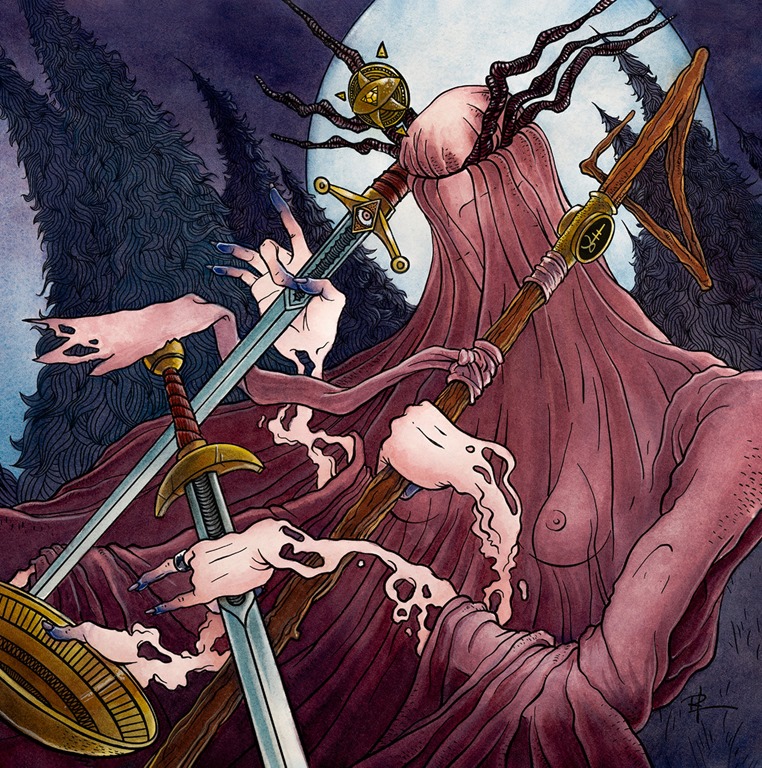
Inspired by a passage in the novel White Teeth by Zadie Smith, NYC’s Charlie Nieland describes the lead single, ‘Land of Accidents’ from his new album as ‘a dark anthem to not-belonging’. Divisions certainly presents an eclectic mix that doesn’t really belong anywhere, and perhaps encapsulates that sentiment of unbelonging most perfectly within its very fabric. Traversing between a host of styles spanning post-rock, neo-prog, folk, indie, and further afield, if any one genre has an overarching influence, it’s 70s prog.

A stuttering, jittering rapidfire drum machine snare jolts like an electric current through the easy strumming clean guitar that leads the instrumentation on ‘Always on Fire’, the first song on the album. He’s gone all out for the grand curtain opener with this expansive, emotive, cinematic effort that lures the listener into a spiralling, psychedelic experience, and it’s effective – there’s a lot going on and a lot to explore. The same is true of the album as a whole, as it reveals more with every track.

A swell of sweeping strings add layers to the rolling drums and mid-pace melancholy of ‘The Falling Man,’ which contrasts with the uptempo punk-tinged indie drive of ‘I Refuse’ which comes on a like a blend of The Wedding Present, The Fall, and Mission of Burmah.

Aforementioned single cut ‘Land of Accidents’ packs it all in, and has the twists and turns and explosive dynamics of Oceansize at their best and builds into a muscular wall of sound, with dense waves of guitar dominating. ‘Tightrope’ is pure REM, only it’s probably a better take on REM than many of the band’s own later years work, and spins into a soaring shoegaze climax that is nothing short of absolute gold. It’s one of those songs you could easily play on repeat for hours – but then that would be to underexpose the broody magnificence of ‘Skin’ which immediately follows. ‘Some Things You Keep to Yourself’ has hints of Mansun but also later Depeche Mode about it with its dark brooding and also its soulful feel, not least of all the backing vocals. Things continue to get darker and starker on the synth-led closer ‘Pawns’ that goes all weirdy as it stretches and twists out of shape.

Neiland sustains the interest and the variety throughout, and there’s no let-up in quality either: there’s not a throwaway or duff song on Divisions, and with thirteen tracks, that’s no small achievement. That Divisions is almost impossible to pigeonhole is no issue: after all there are only two kinds of music – good and bad. And this is most definitely good.

AA

Charlie Nieland - Divisions (LP cover)

Since forming in 2013 UK label Blackbow Records has continued to release music created and appreciated by those who worship tone and riffs. Now in 2021 they are set to continue this trend with a new split LP of pure heaviness from Belfast based, sludge-juggernauts Slomatics alongside the blistering and crushing sounds of Ungraven. With 3 new tracks from each band the split is set for release on 5th March.

Formed in 2019 by Conan frontman Jon Davis and featuring Fudge Tunnel bassist David Ryley and drummer Tyler Hodges (Tuskar), Ungraven pay homage to the 90s heavy and industrial sounds of the likes of Ministry, Godflesh, Sepultura and Nailbomb. On the split with Slomatics Jon states,

‘As the world groans and creaks and crawls forward in slow motion we chose to release three tracks with our brothers in Slomatics, our first on vinyl. Ungraven was an idea that started in my head as I drove into Richmond Virginia in 2017, on tour with Conan. It was originally intended as a solo act. Blackened Gates and Onwards She Rides were initially written to be performed with a drum machine, while Defeat The Object came along during rehearsal with Tyler before we toured early March 2020, before the earth stood still. Enjoy.’

Listen to the new Ungraven track ‘Onwards She Rides To A Certain Death’ here:

AA

a3001263949_10

Cruel Nature Recordings – 16th October 2020

Christopher Nosnibor

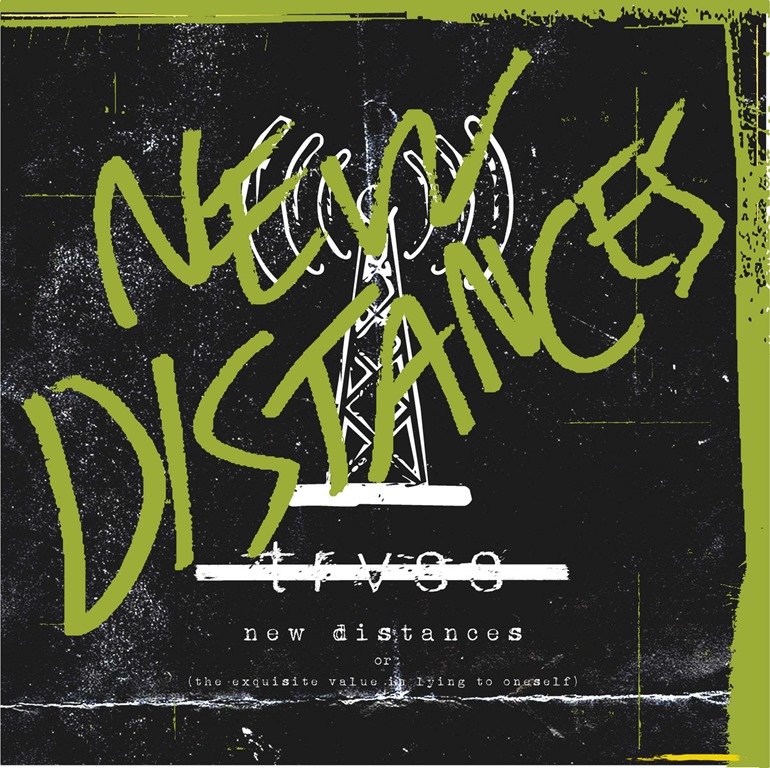
While the 90s was awash with obscure bands cranking out gnarly, guitar-driven noise, the last decade or so (alright, I mean two decades, because I’m old and still can’t get my head around the fact that 1990 was 30 years ago and that Nevermind is 30 years old next year) has seen such music emerge only in pockets, with the likes of Leeds’ Blacklisters being prime exponents and one of the few to reach a wider audience – and it’s Blacklisters who probably stand as US noisemongers TRVSS’ closest contemporaries.

TRVSS are very much in the early 90s vein: I’m not just talking Am Rep and Touch and Go, but way further beneath the radar. Listening to the grainy, gritty grind of New Distances, I’m transported back, way back, and while I’m hearing The Jesus Lizard, I’m equally hearing Zoopsia, Headcleaner, Oil Seed Rape. Not familiar? To be clear here: I’m not promoting obscurest elitism here, but trying to give a flavour of just how choc-full of rabid guitar bands the underground scene was at a certain point in time – a time when bands like Terminal Cheesecake and Tar would receive coverage in the national music press, back when there was a national music press. They were exciting times, and that’s not the rose-tinting of a 45-year old reflecting on his youth: things were changing, and fast, and there was something in the air, and in your local record shop, in pub gig venues, and even on the radio

New Distances is a nasty mess of guitars driven by low-slung lurching basslines and drums that thud away in the background, half-buried in the welter of noise. Things are still changing at pace, of course, but mostly venues are closing, and there are no solid channels by which to access new and emerging talent. Where are the equivalents of The Tube, Snub:TV, The Word now? The Old Grey Whistle Test wasn’t even entirely the domain of proggy old farts, and now, we don’t even have Jools fucking Holland. There’s no M on MTV, and 4Music is a misnomer as well, but I digress.

TRVSS would probably never have made TV even back then, but it’s almost certain that John Peel, Melody Maker, and NME would have found a bit of room for some exposure for their raging, demented brand of no-wave / noise mania, and New Distances has no shortage of meat to give it appeal to a niche but substantial audience.

‘Stigma’ encapsulates the album’s rabid grunged-up noise-rock vibe, coming on like both side of the Nirvana / Jesus Lizard split ‘Oh The Guilt’ / ‘Puss’ simultaneously with it jarring guitar riffage and raw-throated vocal roar. ‘The Ventriloquist Always has the Last Laugh’ pitches skewed guitars galore, crash-landing in the space between The Jesus Lizard, Shellac, and the criminally underrated and proportionally obscure Milk.

It’s likely that TRVSS will remain forever obscure, although not on account of lack of appeal or lack of ability: sure, their stuff is dark, driving and ultimately extremely niche but all of this is ok: against the backdrop of blanket mass-media and sameness, such deliberately obscure an anti-mainstream music is essential and invigorating: lap it up while you can.

AA

a3636013255_10

19th June 2020

Christopher Nosnibor

I’m always pleased to hear from Nathan Argonaut, because it invariably means he’s made some new music. He and Lorna have certainly been keeping busy writing and recording under their Videostore moniker while under lockdown, and sire enough, his most recent missive came with a link to the ‘brand spanking new single from the Videostore, written and recorded in the doldrums this week!’

It does very much seem to have been one of those low weeks for many, myself included, so a new sliver of their choppy lo-fi indie makes for a welcome arrival. Better still, it’s a corker: the drum machine is half-buried in the verses beneath a thumping fat bass and sustained synth note. ‘Over thinking, over drinking solution friendly messy ending’ the intonate in monotone, encapsulating the ennui with wonderful simplicity and precision.

Prefacing the lyrics, the BandCamp release, features the line ‘We must be out of our brilliant minds…’ On noticing, I then spent the next half hour – and more – watching first the video for Furniture’s 1986 single ‘Brilliant Mind’ followed by a slew of contemporaneous content. Such is my mind-blank distractibility. I forgot to finish the review and instead went on an epic mental diversion.

And then the guitar detonates all over everything, an overloading blast of distortion, and I’m reminded of the obliterative wall-of-noise bursts on The Jesus and Mary Chain song ‘Taste The Floor’.

‘Your Mind’ is an explosive release of tension that fizzes and flames all over, landing somewhere between The JAMC and more recent peers Scumbag Philosopher. It’s also quite possibly their best work to date.

AA

a3240173980_10

30th May 2020

Christopher Nosnibor

Having begun May with a new release in the form of Beyond Life, an exploratory ambient work in the form of a single twenty-six minute track, Ashley Sagar ends the month with a follow-up, and counterpart of similar scope and scale.

If the title suggests something a bit new-age, a bit hippy, trippy cosmic, and a bit pretentious, the music is contains isn’t anything of the sort, although there is a certain haze of mysticism and perhaps a sniff of incense about the album’s slow-drifting atmospherics.

There’s a faint scratching pulsation, like a metal object scraping against scratched glass, that grabs my attention early on: the arrival of slow, sedate, rolling percussion– possibly conga or similar hand drums – provides a new focus for the attention, and changes the tone considerably. With a rhythmic structure providing a framework and solidity, the piece becomes less overtly ambient and abstract. Shifting further over time towards cyclical, non-percussive rhythms transports the listener into a softer pace, before an unexpectedly weighty segment around the eleven-minute mark where the beats crash in and dominate, however briefly.

Thereafter the looming shadows are longer and darker, with rumbling low notes and heavy drones underlying Ian Mitchell’s delicate picked guitar notes and the returning percussion, along with one of Sagar’s distinctively strolling basslines. It may be subtle and muted, but its presence builds depth beneath the numerous shimmering layers which ebb and flow.

The segments are short and the transitions relatively swift, which gives The Temple… a strong sense of movement, movements that’s effortless and natural, since the parts flow seamlessly into one another like a stream flowing through a varied landscape, cascading from a spring-line, down a hillside and through a woodland. This may not be the most fitting metaphor, but you get the idea, and it’s perhaps telling that my mind is drawn to the natural rather than the spiritual, and I’m drawn to the distant horizon as the final notes throb and ripple to the fade.

AA

a0892150820_10

God Unknown – 22nd February 2019

Cristopher Nosnibor

The first sound is a murky, rumbling boom. Then silence, before another eventually follows. The stage is set, and it’s in darkness. The atmosphere is oppressive and laden with an air of uncertainty. What lies ahead?

When the first song proper, ‘In Amber’ arrives, it feels like a weight being lifted: the delicate, supple guitar notes cascade and hang in the air with room to breathe. The mellifluous tones unfurl softly. Sonically, there are certain parallels with recent Earth recordings and Dylan Carlson’s solo works, in that the compositions on Heaven In The Dark Earth are simple, sparse, and focus strongly on the tonality of the clean guitar sound.

This shouldn’t come as a complete surprise: Jodie Cox, who makes up one half of Markers, featured on Earth’s 2014 LP Primitive and Deadly. Along with Jason Carty another member of the London math rock scene in the late 90s / early 00s, the duo made a conscious decision to abandon all of the trappings of rock to produce something raw, honest, and with a are sense of focus.

The text which accompanies the release explains at length how the project is ‘an expression of their deeply seated need to challenge themselves in their natural inclinations through a radical departure from genre music and an attempt to exploit more nuanced musical realms, along with less obvious aspects of their artistic personalities. Having stripped their sound to the bare minimum by eliminating vocals and rhythm section, they are compelled to focus on every single note produced by their instruments. That, in turn, enables them to discover a whole new range of structural possibilities and, ultimately, achieve a higher degree of emotional expression’.

It’s in the exploration of structural possibilities that Markers place the greatest distance between themselves and Carlson / Earth: whereas the seminal Seattleite emphasises the power of cyclical motifs and repetition, Cox and Carty create compositions which slowly evolve, spreading forth like verdant tendrils in the freshness of spring.

The contemplative, considered, even hesitant string picks often reverberate for an age, and evoke simpler times way back in the mists of time, an arboreal world before the advent of cities and industrialisation. It’s evocative, not of anything specific, but conjures a vague sense of nostalgia for something just out of cognisance.

The sweetness, the light, is interspersed with brief interlude pieces which are darker, more ambient. These contrasts render the expansive explorations of string against fret all the more uplifting in their purity, and make Heaven In The Dark Earth an album which brings everything its title suggests: an album to explore, but also to bask in as light overcomes darkness not by force, but through purity.

AA

Markers

Gizeh Records – 31st August 2018

The Great Lake Swallows is a collaboration between Canadian cellist Julia Kent and Belgian guitarist/tape machine manipulator Jean D.L. The former came to my attention some time ago, and her nuanced style of playing had yielded some compelling works. Jean DL, however is an unknown quantity to me, and I came to approach the release without any real preconceptions. I leave it with none either. It’s ambient and droney, but offers infinite layers. The Great Lake Swallows doesn’t really fit anywhere in terms of genre, and this is very much a positive. Sometimes, music simply is.

The Great Lake Swallows is a graceful and co-ordinated suite in four parts, and finds the duo creating sonic interplay that displays a certain musical connection, even telepathy. Collaborations of this type, which find musicians with such different approaches (and modes of instrumentation) requires a certain intuition to achieve coherence.

Its brevity contrasts with its scale and scope. The four tracks have a total running time of a shade over 25 minutes, but the aching cello bends and melts over hushed, brooding atmospherics to create compositions of great atmospheric depth and imbued with great significance. At times manifesting as dark portent, others seeping sadness without words to describe it, the layers build and pull at the senses almost subliminally.

The press release informs us the album was recorded in Charleroi, Belgium in 2015 during a video installation with Sandrine Verstraete, and that the music was created using field recordings, processed guitar and cello and serves as a soundtrack to the video of the same name. And the soundtrack qualities of the compositions are very much evident: the parts bleed together to forge a single, continuous piece, which slowly and subtly transition between place and mood.

On ‘Part 3’, a low throb slowly oscillates beneath the ebb and flow of strings that weft and warp, before ‘Part Four’ forges an expansive vista of surge and swell, as ghostly voices echo in the shadowy background. The effect is haunting, but also beautiful and as a whole, the work is deeply evocative. The Great Lake Swallows doesn’t just occupy space, but creates it.

AA

GZH84DP-Sleeve

Humpty Dumpty Records – 11th May 2018

Christopher Nosnibor

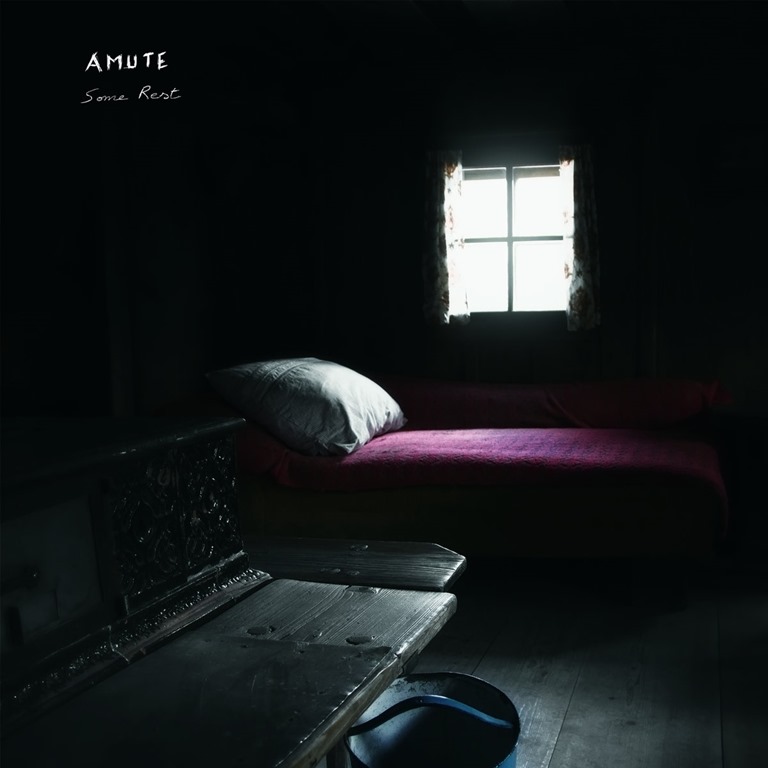
It’s quite the introduction: ‘Jérôme Deuson is an unstable musician’ is the opening sentence of the press release that accompanies his seventh album as aMute. But how many musicians are stable? And what even is stability? Is anyone entirely stable? Is it even a desirable state? So often, creativity emerges from a state of inner turmoil, or tempestuous emotional flux. There are, of course, infinite shades: this is just to peel back some of the layers of the initial and likely awkward response to the statement.

Some Rest is not the millpond calm the title may imply: it’s only some rest, not total rest, and in truth, the rest here is minimal, on an album that’s clearly the work of a restless soul.

The album’s structure and sequence is unusual, opening with the longest composition by far: the title track is almost eighteen minutes long, and transitions from a delicate swirl of strings through a vast, shoegazey post-rock vista to an expansive, driving rock workout. While there are strains of feedback amidst the humming melodic drifts and samples which echo, almost buried in the mix, and the whole thing builds to a sustained crescendo, it’s still a more sedate experience than its predecessor, the tempestuous 2016 album Bending Time in Waves.

Side two begins with the gloopy, bubbling ambience of ‘I’ve Seen it All’ before sliding into eerie dissonance on ‘Dead Cold’, which exploits ringing chimes which give way to softer, picked guitar and a more tranquil, melodic space, disturbed only be the vocal, processed and burred with distortion. It’s sort of melancholic, sort of trippy, sort of dislocated, sort of abstract, sort of shoegazey in a trilling organ swamped in echo sort of way. It’s all amplified into a fizzing digital funnel on ‘The Obsedian’, which features Christian Bailleau, emerging as a grand, slow-moving and mournful piece reminiscent in some respects of Dylan Carlson’s more recent work, exploring as it does the pitch, tone, and timbre of the guitar in near-granular detail. Closer ‘Maria’, with hints of early Pink Floyd, is similarly drifty, dreamy, trippy, echoey-warped, and it tapers away into vaporous clouds.

Because of its ever-shifting nature, and its sonic range, Some Rest provides only the briefest of respites for the listener to relax, creating as it does an atmosphere of flux and continual movement.

AA

aMute

Room40 – RM481 – 13th July 2018

Christopher Nosnibor

Norman Westberg’s first full-length album since the termination of SWANS in its most recent configuration marks something of a departure, both in terms of sound and approach. Having previously recorded his solo works by what he calls his ‘one take; it is what it is’ method, After Vacation is a project of evolution, and also of collaboration, with Lawrence English acting as producer, weaving together the parts to create rich layers. The press release refers to Westberg’s ‘web of outboard processes, with delays, reverbs, and other treatments all transforming the sound of the instrument’s output. And yet After Vacation feels like so much more than this, as the guitar itself fades into the distance beneath the effects. The results are evocative, with careful details overlaid onto the broad washes of sound which define the compositional forms.

The album begins in expansive and haunting style, with what sounds like brooding, atmospheric orchestral strings and tense piano, but the shadowy shade of ‘Soothe the String’, like all of the album’s six pieces, features nothing but guitar. And with it Westberg creates lustrous layers of sound, drifting sonic mists and hazy hues. ‘Sliding Sledding’ forms an immensely deep, slow-turning swirl that moves like vapour, through which single notes ripple as they echo and fade.

The individual compositions are formed through subtle shifts and delicate transitions, and offer distinct and separate moods. However, they melt into one another, to create a vast vista of soft-edged ambience.

The title track which draws the curtain on the set marks a departure from the rest of the album, as Westberg picks at his guitar in an almost folksy fashion, and it sounds like a conventional guitar, although it’s accompanied by an organ-like drone that hovers in a long, unchanging note, which gradually rises to the fore as the plucked notes fade into the distance.

There’s a certain comfort in this conclusion, bringing the listener as it does to more familiar ‘guitar’ territory while still emblematising the experimental, treatment-orientated approach to reconfiguring the sound of the instrument.

#

AA

Norman Westberg - After Vacation

Hubro – HUBROCD2578 – 7th October 2016

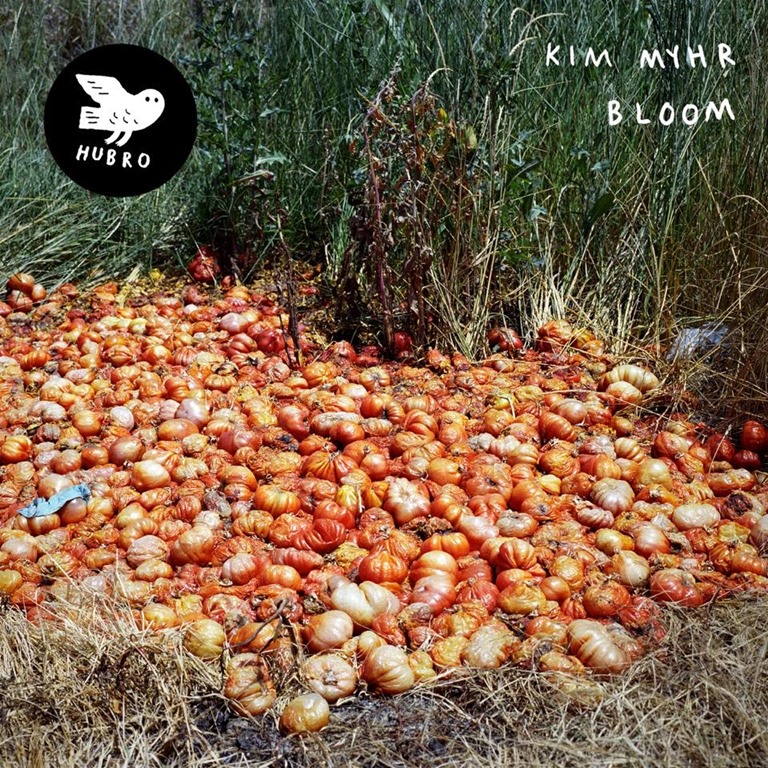
Those who have heard Kim Myhr’s 2014 album All Your Limbs Singing (or his collaboration with Jenny Hval and the Trondheim Jazz Orchestra) will find Bloom a rather different proposition. In place of 12-string explorations which sit between American folk and 60s avant-garde, electric guitar and electronics fuse to create something quite intriguing. There are lengthy passages which sound like formless noodling, a single chord strummed and subject to tonal variations, running through permutations of effects on a pedal board to achieve different equalisation, gain, overdrive. But while the five tracks on Bloom are clearly of an experimental and seemingly improvisational bent, there are definite structures and a sense of composition, with washes of electronic sound and layers building over one another.

‘O Horizon’ turns the focus toward rhythm, while also building ambience through long, hovering guitar sustain. The one thing Myhr does not do frequently is play the guitar conventionally: he does, however, demonstrate just how massively versatile the guitar is as an instrument. Where he does strum, as he does with a clean tone on ‘Swales Fell’, uses a zither to achieves a sound somewhere between a harp and a sitar, the notes tumbling and fluttering in gentle cascades. The scratchy tonalities and rich textures which emerge through the shimmering summery shades of ‘Milk Run Sky’ create a balance and contrast. It’s on this final track that Myhr plays most conventionally, but still filtered through a psychedelic, kaleidoscopic prism.

Bloom is a rare beast, in that it’s an album which is very much about technique, and about the effects and sounds that exploratory techniques can create. But at no point does Myhr become excessively self-focused or lose the listener.


kim-myhr-bloom