Posts Tagged ‘Gintas K’

12th November 2025

Christopher Nosnibor

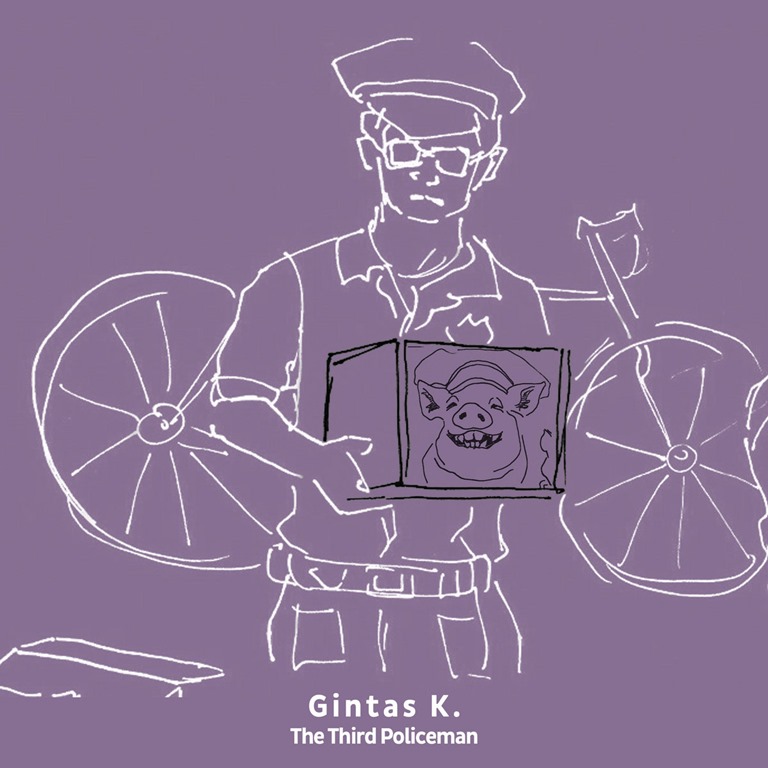
While the approach to recording his latest album is pretty much standard for Lithuanian sound artist Gintas K – that is to say, ‘recorded live, without any overdubs, using computer, MIDI keyboard, and controller’, the inspiration and overall concept is a little different this time around, with Gintas explaining that ‘The album is a subtle allusion to Flann O’Brien’s absurdist novel The Third Policeman, reflecting its surreal and enigmatic atmosphere through sound. In itself, this is quite ambitious – not quite the musical equivalent of interpretive dance, but nevertheless.

And, in contrast with many of his other albums, which tend to be relatively concise and often contain some shorter, almost fragmentary pieces, this one is a whopper, with thirty-one tracks and a running time of over two hours.

Initially, it’s display of K at his most manic, with ‘black box#1’leading the first four-track suite more frenzied and kinetic than ever, the sound of an angry hornet the size of a cat trapped in a giant Tupperware container. There aren’t always discernible spaces between the individual pieces, and after just the first eight minutes of wild bleeps and buzzes, I’m already feeling giddy. ‘black box#1 – 4’ is a quintessential Gintas K blizzard of noise which starts out like trickling digital water tinkling over the rim of a virtual glass bottle and rapidly evolves into an effervescent froth of immolating circuitry.

The second suite of pieces, ‘black box inside#2 Dog Hoots’ is made up of eight chapters – compositions feels like a bit of a stretch – and while there are a couple of sub-two-minute blasts, the fifth is a colossal nine minutes and forty in duration. This marks distinct segment of the album, in that it sounds a little more structured, like the sounds of a toy keyboard or a mellotron, rewired and then tortured mercilessly. It grinds and drones, hums and yawns, it bubbles and glitches and whirrs and it fucking screams. Before long, your brain will be, too.

The third segment, a set of six pieces labelled ‘black box inside… Calmness’ is anything but calm: in fact, it’s more likely to induce a seizure, being more of the same, only with more mid-range and muffled, grainy-sounding murk. There are more saw-like buzzes and crackles and pops and lasers misfiring in all directions. It’s not quite the soundtrack which played in my head as I read the book, but the joy of any art is that it affords room for the audience to engage and interpret on a personal, individual level.

The nine-part ‘rolling’ (or, to give it’s full title ‘black box iside#4 Rolling’ is more fragmented, more distorted, more fucked-up and broken. The pace is slower, the tones are lower, and it’s the sound of a protracted digital collapse. It’s unexpected to feel any kind of emotional reaction to messy noise, but this conveys a sense of sadness. By ‘Rolling – 4’ it feels like the machine is dying, a breathless wheeze of a thick, low-end drone, an attempts to refire the energy after this are reminiscent to trying to start a car with a flat battery. It’d messy and increasingly uncomfortable and wrong-sounding as it descends into gnarly distorted mess. ‘Rolling 7’ is creaking bleats, woodpecker-like rattles. and warping distortion, with additional hum and twang. The last of these is no more than roiling, lurching distortion, without shape or form.

Arriving at the four pieces tagged as ‘omnium – The Fourth Policeman’, its feels like you’re surrounded by collapsing buildings and the exhaustion is not just physical. Gintas K has really pushed the limits with this one. The is an arc, a trajectory here, which can be summarised as ‘gets messier and more horrible as it progresses’. Artistically, this is a huge work, a work of patience, and a work of commitment and focus. As a listening experience, it’s intense, and will likely leave even the most adventurous listener feeling like their head’s been used as a cocktail shaker and that their brain has been churned to a pulp. Outstanding.

AA
a3200436950_10

28th July 2025

Christopher Nosnibor

Beauty, as they say, is in the eye of the beholder. Certainly, it requires a fairly specific subjective standpoint to hear the beauty in a bleeping rush of effervescent electronic froth, but there is something in it – and yes, it is intense – to the extend that it’s like a fizzing chemical reaction, like vinegar and bicarbonate of soda, exploding in your brain. And it’s quite a high.

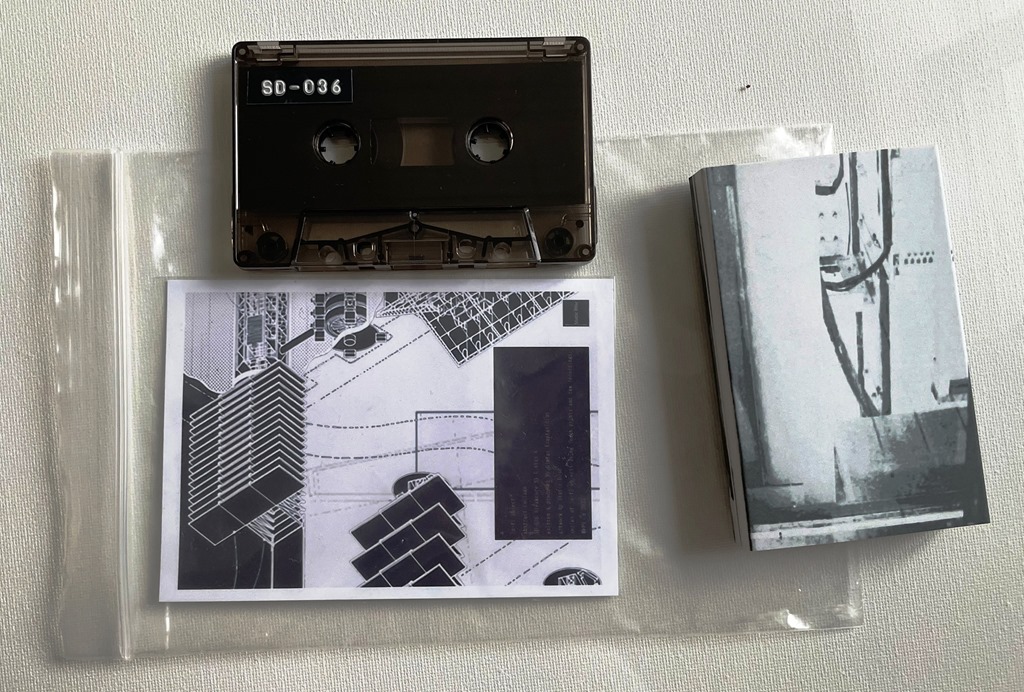
Intense Beauty finds Gintas Kraptavičius (Gintas K) in his most common setting, with the album being fully improvised, ‘recorded live, using computer, midi keyboard & controller’. Recorded in June 2025 of this year, by the power of the Internet and micro-labels, it was released as a limited cassette on Tokyo-based label Static Disc just weeks later on 10th July, before also becoming available on Gintas’ own Bandcamp page.

As is common to many of Gintas K’s works recorded in this manner and with this – seemingly unique setup, there’s something playful, even joyful and uplifting about the sound. It is chaotic, but it’s also carefree, and it’s not remotely dark or heavy: there’s nothing harsh or abrasive to be heard here. ‘intense’ is skittery and skittish, off-key electric piano thumps and stomps erratically, glitching in and out throughout, while cellular sounds fly around all over like plankton in a storm before gradually slowing, tinkling and flitting at a more sedate pace until grinding to a halt.

‘harmony’ isn’t particularly harmonious, instead merging static and drone with groaning whirrs before yielding to discordant bent notes playing across one another. One thing that is a constant throughout Intense Beauty is a sense of movement. There isn’t a moment is stillness, as sounds and ideas flit from one place to another with no discernible flow, and th9is is nowhere more apparent than on the shifting sonic collage of ‘gal bet’. It’s hyperactive, and should be exhausting, but the sheer energy is contagious and uplifting.

Watching the accompanying video of Gintas recording for the album is illuminating, particularly the vigour with which he plays, simultaneously striking keys on the keyboard with hands, wrists, forearm, seemingly at random, but with remarkable speed and dexterity, while cranking knobs hard and fast: the camera and table shake under his frenetic kinetic activity. K isn’t one of those who creates sound simply by pushing buttons here and there: this is a full-body physical performance. This, too, is an example of intensity, and the artist pours it into the act of artistic creation.

There are a lot of experimental electronic artists around, but no-one else sounds quite like Gintas K.

AA

AA

a3925363230_10

16th June 2025

Christopher Nosnibor

Gintas K’s latest offering was recorded live, using computer, midi keyboard and controller in January 2025, and first released by Japanese label Static Disc in May.

It’s worth perhaps mentioning that ‘Breakcore’ is – and I shall shamefully quote from Wikipedia here – ‘is a style of electronic dance music that emerged from jungle, hardcore, and drum and bass in the mid-to-late 1990s. It is characterized by very complex and intricate breakbeats and a wide palette of sampling sources played at high tempos.’ In the main, not really my personal field of expertise, or particularly within the remit of Aural Aggravation.

But this is a Gintas K album, and the nine pieces are typical of his style, combining experimentalism and the application of software and midi / laptop setup, producing a range of glitchy, frothy, gurgly sounds which stop and start intermittently, unpredictably. His live and improvised works always come with a sense of unpredictability, of spontaneity, while bearing his distinctive sounds. One of the key focuses within K’s work is on detail, zooming in on microtonality, granularity. When I say it sounds ‘bubbly’ or ‘frothy’, I mean it’s the sound one might consider the equivalent of the visual experience of slowly swirling a latte or a pint of ale, or hyperfixating on the bubbles in a bath. This is not, however, the gentle swill and flow of currents, but a frenzied effervescence, like the reaction between bicarbonate of soda and vinegar. And look long enough and hard enough, and patterns begin to emerge.

Listening to the bubbling blitzkrieg of digital clicks, beeps, and fizzing of any work by Gintas K can be stimulating to the point of eye-popping discombobulation. It’s almost too much – and this is nevermore true than the experience that is Breakcore. There are beats present – but they’re composed not of beats in the conventional sense, being neither rhythmic nor percussive, either from an analogue source or a digital sampled source or emulation. These are flickers, pulses, rapidfire stutters, hard sounds which replicate the essence of a beat without being a beat, per se. For example, those of a certain age may recall the successive ‘pink-pink-pink’ chattering digital babble of dial-up. Few would necessarily consider those sounds beats in context, but… yes, they have a certain beat-like quality. And this is how the beats often emerge from the clicks and pops, moans and drones or another quintessential Gintas K demonstration of circuit meltdown as an artform.

I had never considered his work in a ‘dance’ context before, and still wouldn’t: one feels as if the title is perhaps a shade ironic. But the tempo is certainly high and the beats are complex and intimate, emerging as they do from the thrum of what sounds like a revving engine, the whirr of an old hard-drive, the click of a CD driver whirring into action. Every second of this release sounds like some kind of digital or mechanical malfunction, as tempos whirl and blur, drawl and slow. Scrunching, crunching, twanging, springing, stammering and stuck, it’s a relentless attack of wrong sounds. But emerging from all of it, there are erratic beats, like a succession of deliberately jarring jazz fills and simply wild judders.

It is relentless, and it’s complete overload. The nine tracks run for a total of twenty-nine minutes: its intensity is such that you feel as if your brain is starting to melt after the first ten. In short, Breakcore is truly wild, and it’s not remotely easy or accessible – but it absolutely encapsulates everything that defines what Gintas K’s does.

AA

AA

cover

9th April 2025

Christopher Nosnibor

With his latest offering, Gintas K promises a work of ‘ambience, electroacoustical micromelodies and noise played and record live without overdub.’ That he is so relentlessly active is perhaps one of the reasons its possible for him to create such wild improvised works on a first-take basis – which in turns means it’s possible to crank out new releases at such a staggering rate.

The first of the seven sequentially-numbered pieces is eleven and a half minutes in duration, and begins as a barely audible drip, a tiny trickling sound at the fringe of perception. Instantly I find myself on edge: it’s a sound I’ve become increasingly and acutely aware of in recent days, as the shower in my bathroom – only an internal stud wall away from my office where I listen and write – has progressed from a slow and infrequent drip to a full, continuous dribble, a nagging, torturous sound which has led me to place the shower head in the bath in order to mute it. There’s something of a liquid, and sometimes foamy, frothy sound to many of Gintas’ works, and Atmosphera begins with all the promise of being another one of these. And, indeed, as the drip and trickle increases in rate to become a gurgling stream, there is a sense of growing volume – in terms of liquid, rather than sonically. But a sparse piano rings out over the babbling stream, and as the piece progresses, creaks and bleeps and bumps and strange warps in the very fabric of time and space disrupt the flow. And yet, as the abstract interruptions and distractions become increasingly frequent and ever-more alien, sometimes extending to washes of fizzing distortion, and even fill-on frenzies of chaotic noise, echoing drips and splashes, like water falling from above into the lake at the bottom of a heigh-vaulted cavern, and reverberating piano notes remain at the core of this bewildering sonic collage.

There is a certain sense of evolution as the pieces run into one another: by Atmosphera #3, there is a sense of ambience blended with dissonance, and slow pulsations merge with the brooding and often melancholic piano lines, and these elements certainly contrast with the organic yet equally turbulent, almost artificial grunts and gurgles. Atmosphera #5 is the sound of lasers set to stun, with robotic squawks and a relentless whistle of feedback that hits right at the tinnitus pitch and congeal into concoction of wrongness, like a stew with a bunch of ingredients that should never be combined.

The album winds down gradually, sparse piano notes and a soft trickling liquid flow slowly descending, falling, and fading away…

Something about listening to Atmosfera is like watching a large fish tank. Just as the fish flit blithely and without any attention to the world beyond their own, darting here and there without any predictable linear path, so Atmosfera doesn’t follow a linear flow – and is all the better for it.

AA

a2258515655_10

May 2024 / July 2024

Christopher Nosnibor

Gintas K is possibly one of the most-featured artists here at Aural Aggravation, and I’ve written about his work elsewhere, prior to establishing this site. I’ve often commented – sometimes flippantly, sometimes in sheer awe – at his rate of output, but it seems appropriate to make the observation once again, since a little while ago I found myself simply swamped and a shade overwhelmed by the volume of submissions I was receiving. Electroacoustic Space Drumming landed in my inbox and I failed to so much as open it, let alone download it. Then, Outsider’s appeared, reminding me I was behind on things, only to discover that a split tape release with Jacob Audrey Taves had come out in between the two.

The first of the releases, Electroacoustic Space Drumming, comes courtesy of London label Anticipating Nowhere Records, as a download and limited cassette (in an edition of 20, more than half of which have gone already).

The titles are incomprehensible to me, but I very much doubt this will make any difference to my appreciation of this jangling, bleeping glitchfest. The six tracks do very much sound like a circuit meltdown, the digital xylophonic cadences interrupted by sudden jolts or sound and stuttering microbeats like an Action Man marching band trapped inside a jam jar half-full of water. Creaks, groans, and splashes abound and contrive to create a complex and layered work.

It’s difficult – if not impossible – to unpick everything that’s going on, and consequently, you simply sit back and let it wash over you. But that doesn’t mean it’s comfortable, or easy to do so.

And then there is Outsider’s, with its questionably-placed apostrophe in the title. Outsider’s what, precisely? And with twenty-three tracks, released digitally and as a colossal five disc CD work, it’s an absolute beast.

The five CDs make sense in a way which is less apparent on the digital release, as there are essentially five segments or suites, with the tracks belonging to each names with a suitable prefix: jazz, crunchy, noise, drones, and piano stuff. Each contains between three and six pieces, effectively an EP’s worth apiece.

In truth, the track titling isn’t especially helpful: the six tracks of the first set, ‘jazz’, and entitled ‘jazz good’, ‘jazz also good, jazz prolongation’, ‘jazz’, ‘jazz’, and ‘jazz.’ Spoiler alert: there’s nothing especially jazzy about the ‘jazz’ cuts, but there’s electronic percussion that cuts through foamy bubbling washes and a disarray of oddness that sounds like machine gun fire, and glitches aside, it almost feels co-ordinated. And no-one needs a jazz prolongation, although this decidedly unjazz cut, we can forgive.

The four ‘crunchy’ cuts are riots of bleeps and squips, a riot of sound that’s no more vigorous than on the first, ‘crunchy.geras greit.’ The two pieces simply entitled ‘crunchy’ combine haunting, hovering tones, and collapsing circuits and lurching synaptic stutters, like exposed wires sparking as they swing, and things become increasingly scratchy, scrapy, a frenzied buzz of fractured, fizzing, fucked electronics.

The three ‘noise’ pieces build in their noisiness, but at heart aren’t all that dissimilar from the ‘crunchy’ pieces, although perhaps quieter and less overwhelming, and overwhelming it is. Then again, the ‘drone’ pieces aren’t especially droney, and more represent explosions of frothing discord, and the final suite, ‘piano stuff’ is a cacophonous conglomeration of bubbling noise down a drain.

These recordings remind me of my early days of reviewing, back in 2018 or so as my introduction to truly avant-garde, experimental electronic works, and Gintas K – perhaps one of the first acts I discovered as an exponent of dripping, bleeping, weppling, weirdness. All this time later. he’s still proving to be a rare master of electronica. Come 2024, and Gintas K is still right there at the forefront.

a1621189998_10a2101315344_10

Antenna Non Grata – 8th September 2023

Christopher Nosnibor

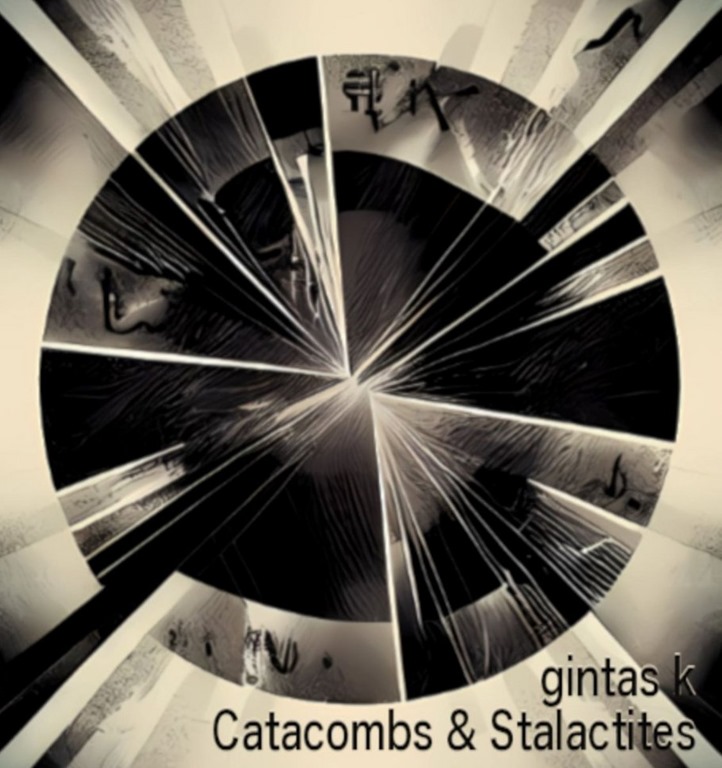
Bloody hell, he’s at it again: Lithuanan soundmachine Gintas K has yet another album out – and this one is different again. While Catacombs & Stalactites does, almost inevitably, feature rapid, bubbling, bibbling, watery electronic skitters, which sound like flurrying insects, bubbling water racing around a drain., and R2-D2 fizzing in malfunction, the dominant sonic feature here is not the microtonal bleeps which have been the focus of many of his albums, but heavy, grating synth sounds which buzz, scrape, and distort.

Things begin comparatively gently, but by the third track, ‘Into deepness’, we’re into pretty heavy territory. There are hints of tune to be found in places – dark, gothic synth motifs briefly emerge from the thick haze. It feels loud, and the listening experience is oppressive, like pressure being applied to either side of your skull, and the track really tests your mettle over its six minute duration, because there’s simply no let up, and the thick buzz presses at your brain relentlessly. It’s the same thick, hazy sounds which blare forth on the next piece, ‘Somewhere’ – only rent with tearing laser blasts and distortion which scratches and scrapes at the speaker cones, threatening damage, before it culminates in a crackling blast.

‘Wandering Joy’ wanders through dissonance and discord, warping and scraping through tearing walls of noise and aberrant glitches, spiralling around and spinning through territory shared with power electronics and the more experimental end of industrial (in the Throbbing Gristle sense, not the latter-day Industrial metal of Ministry et al). For all of its wandering, whether or not it brings joy is a matter for discussion, I suppose.

The bold, buzzing, abrasive synths sounds are broad and bassy, and the grinding lower-end oscillations are evocative of Suicide, only amped up to eleven. ‘Atmosphere / Voices’ crashes in on a wall of feedback and overloading distortion. At this point, things reach a new intensity, and the crackling, fizzing buzz at the edges of this enveloping blanket of noise simply adds to the tension which rips from the speakers.

There are lighter moments, which are more quintessential K: then flickering flutters, clicks and pops of ‘Mystery’ are almost playful, sounding somewhat like the pouring of carbonated mortar with twangs and deadened thwaps creating a muggy texture, and ‘Local Beings’ brimming with zaps and squelches which fly every which way before trickling down to a dribble resembling a fast leak.

This is very much Gintas K’s way: his approach to ‘composition’ is very loose and geared toward improvisation.

The album’s title derives from the ninth and tenth tracks, ‘Catacombs’ and ‘Stalactites’ which both in their way evoke the subterranean, darkness, tunnels, claustrophobia. ‘Stalactites’ shutters and reverberates, grates and gyrates, the frequencies registering around the navel amidst another squall of fragmented, glass-like shattering, and ‘Stalactites’ hangs heavy amidst blasts of noise. ‘Catacombs’ fractures and disintegrates as it leads the listener down, down, down. In my mind’s eye, I’m drawn towards recollections of the Paris catacombs – endless miles of tunnels lined with bones, neatly stacked, row upon row of old skulls, fibulas and tibias piled high and all around to forge cavities of death. Few things hold a mirror to mortality more powerfully than infinite piles of dank bones, and K leads – or moreover drags – us through these gloomy tunnels, while still electronic sparks skip and flash like damaged lighting or split cables before explosions of sparking white noise collapse into nothingness.

We’re grateful for a few light splashes and bubbles near the end, but the chances are the trauma has already taken hold.

Catacombs & Stalactites is a harsh and heavy album, and one that isn’t easy to lay to rest, to move on from.

a3613065534_10

Christopher Nosnibor

‘I’m sorry, I’ve been busy’. We’ve probably all heard it: and most of us have probably spoken the phrase. I’m guilty, too, and hate myself for it. Everyone is fucking busy. Too busy to text, to open a message even, too busy to reply to emails, catch up with friends, too busy to fucking live. What is everyone so busy doing, and why is it that in a time when technology was supposed to make our lives easier, and in supposedly affluent western cultures, people are both fiscally porr and time-poor?

Naturally, I blame the current strain of capitalism: keep everyone too busy to live, to breathe, and too skint, and they’re not going to be protesting, they’re going to be too busy wondering where the next meal is coming from to fuck shit up. After everything, they’ve only got the juice to be ‘busy’ bingeing Netflix or the new season of The Mandalorian.

Admittedly, I have been genuinely busy parenting, publishing stuff, and writing a review a day while battling through an evermore overwhelming volume of submissions, but is that really a reason, or just an excuse? Right now, I’m not sorry either way. I keep myself to myself and I write when I can when I’m not doing laundry or cleaning or paying bills or feeding the cat

Gintas K is always busy, and he’s been having albums released at a ratee beyond that at which I can even download them, let alone listen and digest. And so it is that March and April have seen the release of three – yes, three – albums by the prodigious Lithuanian.

I must have been absolutely nuts to have set myself the task of reviewing all three together. The idea was to soak it all in with an evening of electronica, and report on what I expected to be an immersive experience. But knowing Gintas K’s work over the years, this was, in hindsight, an unlikely outcome. The headline here is that there is no overarching theme, there’ s no evolutionary trajectory, and nothing to really take hold of. But that in itself is K’s selling point: his work is exploratory, varied, sometimes playful, and often difficult.

Resonances, the first of these, ‘was recorded live, using computer, midi keyboard & controller on Autumn 2021’ and has been released by Sloow Tapes in an edition of 70 copies. It spins slow-swirling vortices around hovering hums and low-humming drones over the course of its ten, comparatively short (only a couple extend beyond four minutes), ponderous tracks. It’s perhaps one of his more varied works, both sonically and atmospherically – and Resonances really does explore atmospheres and cavernous swampy echoes.

Resonances

a1449704449_10

Fluxus +/- is a split collaborative release, which finds him working with Kommissar Hjuler Und Frau on a longform track, while a piece by Wolfgang Kindermann & PAAK occupies the other, and what we get here is just shy of eighteen minutes of really weird shit, bubbling swampy noise and loose collage layering of all sorts of snippets and a mish-mash of all kinds of everything that’s not easy to digest.

And then April saw the arrival of Sound & Spaces #2, which is perhaps more Gintas K’s standard fare of bubbling, foamy froth and stuttering, stammering glitch-heavy sonic mayhem. It stutters and scuffs, bleeps and wibbles, and at times sounds like the speakers are shredding, the cones torn and flapping in the blasts of random noise bursts, while at others… well, at times it’s a foaming froth and as others, it’s really not very much at all. The pieces run into one another to create a continuous stream of crackling distortion and bibbling trickles of tweeting and twittering, and while the effect is the most incomprehensible and difficult to digest, it’s by far the most quintessentially K. If it’s what I’d expected, then what this trio of releases demonstrates is that Gintas K continues to defy expectations and to produce work that’s different and diverse.

Sound & Spaces #2

a1377760751_10

Birdfriend – 2nd September 2022

Christopher Nosnibor

Gintas K is at it again! Last year I was compelled to break my vow not to listen to, or write a word about any Christmas-themed releases on account of his album, Christmas Till the End, released on December 25th, and now, just when I’m getting into full foaming at the mouth mode over how there’s Christmas stuff everywhere since the week before Halloween, I discover he dropped an album bearing a title with overly festive connotations, which was, in fact, released at the start of September – and which was recorded in July!

Jingles With Bells was, like a number of other works, recorded live, using computer, midi keyboard, and controller.

Despite the album title being in English, and offering something of a play on words with jingles suggesting advertisements as well as festive chimes, the track titles are in K’s native Lithianian, and I’m not entirely sure I trust Google translate when it tells me that ‘irgi dugnai auksti ir aopacia garsai gerai visai’ is ‘the bottoms are also high and the background sounds are quite good’ – although it is a fair description of the six-and-a-half-minute opener. It begins with sparse drips and drops echoing as if in a giant cave, before Kraptavičius introduces his trademark flickering electrostatic glitches and whirs. The layers build as crunches and crackles clamour into a frenzy of fucked-up robotics.

Stammering, fractured beats collide and disperse in all directions, a wheezing, groaning, creaking array of electronic simulations and rapidfire thumps like hammers and nail guns, jazz percussion and despite the complete absence of any actual percussion, Jingles With Bells is marked by a complete absence of any actual beats, instead being driven by clattering short sounds that resemble beats and even trick the ear and mind with their (ar)rhythmic explosions. The last thirty seconds of the seven-minute ‘is to pacio tesinys geras’ (which may or may not translate as therefore the continuation is good’ is marked by silence, and it’s a welcome reprieve from the blindingly busy blitzkrieg blast.

‘istisinis is to pacio’ is a snarling drilling grind of bass, but also introduces the first jangling treble that might pass at a distance as a jingle, but it more resembles a dentist’s drill than sleigh, and the whole experience is less jingle and more nerve-jangling and uncomfortable.

Echoic droplets and sounds reminiscent of jangling jamjars trickle through the album, and the ten-minute monster that is ‘varpeliai noiz bugn bosas neblogai’ (‘bells noiz bugn boss not bad’ – yeah… nah) begins with what sounds like a bath being run down the plug and a crackling blast of blocks of distortion against – finally – chimes. But against a creaking croaking, cracking low end like the bow of a wooden ship breaking against rocks in a storm, those melodic tinkles soon build to forge an oppressive, head-compressing sonic torture; it’s simply all too much. But too much is never enough, and as such, it all adds up to another album that bears all of Gintas K’s quite unique hallmarks forged from some mangled laptop machinations, manipulated in real time.

AA

cover

gk. rec. – 13th August 2022

Christopher Nosnibor

Since taking control of his own release schedule – in addition to various releases via various labels – Gintas K’s output has shifted from rivulets to cascades, with this nature-themed album being just one among countless releases, live performances, exhibitions. soundtrack and compilation appearances so far this year, and, not least of all, Lėti in May, released on venerable experimental label Crónica.

There’s little explanation behind Mountains, runlets, caves & cascades, beyond a selection of quotes from HP Lovecraft and the detail that the album’s six pieces were ‘played, recorded live, at once without any overdub; using computer, midi keyboard & controller’ in 2020, and one suspects Gintas has a hard drive bursting with such recordings just waiting to be edited and mastered to form unified documents of his tireless output.

The first five pieces form the larger work that sits under the album’s overarching title, numbered one to five. They’re sparse, minimal, echo-heavy, like wandering around in a vast cavern while droplets fall into the subterranean lake that occupies the bottom, and who knows how deep it may be, how many tunnels are filled with millions of gallons of water that have run down through the ground and into this naturally-carved warren of rock-lined corridors beneath the ground.

In places, barely perceptible glimmers of sound, like bat sonar, jangle in the upper reaches of the audio spectrum. I’m reminded of the cat repellent device in my back yard, and I wonder if to some, these passages would actually appear as silence – or if for others, like my ten-year-old daughter, they would find the pitch unbearable and have to run from the room covering their ears. Quiet gurgles and trickles are the primary sounds on ‘Mountains, runlets, caves & cascades #3’ and I find myself feeling altogether calmer, picturing myself in a pine woodland with steep banks. I picture in my mind’s eye local scenery like Aysgarth Falls and Ingleton Falls and find myself at ease – but this being Gintas K, there’s disruption afoot, and blips and squelches zap in seemingly at random to remind us that this is digital art, and the fourteen-minute ‘#4’ marks the full transition into digital froth and sluices of laptop-generated foam.

And so it trickles into ‘#5’ which brings more bleeps and blips and jangling and some high-pitched rattling that for some reason makes me think of seeing footage of milk bottling plants in the 80s – back when milk came in glass bottles, and I trip on this trajectory of nostalgic reverie until the arrival oof the unsettling final track, the eight-minute ‘eastern bells’ that’s a slowed-down yawn of sound, metallic reverberations ringing out into the silence, echoing in the dark emptiness in ebbs and flows, like a conglomeration of sounds, drifting in a breeze.

Mountains, runlets, caves & cascades is a supremely abstract work, and while it’s not a huge departure for Gintas K, it does represent one of his softer, gentler, sparser and less frenetic works. It’s by no means an album to mediate to. But it is overall fairly sedate, and it not only allows, but encourages a certain quiet reflection.

AA

a3599404171_10

Crónica – 26th April 20222

Christopher Nosnibor

Having seen various videos of Gintas K’s improvisations, involving a keyboard and a dusty old Lenovo ThinkPad running some custom software, it’s apparent that his approach to composition is nothing if not unusual, and it’s matched by the results.

His Crónica debut, Lengvai / 60 x one minute audio colours of 2kHz sound was sixteen years ago, and his return to the label is a very different offering, although as has been a common factor throughout his career, Lėti – Lithuanian for slow – consists of comparatively short pieces – and here, the majority are four minutes long or less. Less is more, and what’s more, Gintas K invariably manages to pack more into a couple of minutes than many artists do in half an hour. Here, we have a set of eleven short pieces ‘created from recording and improvising in studio followed by extensive mixing and editing using software.’ There’s no more detail than that: some artists accompany their releases with essays explaining the creative process and the algorithms of the software and so on, but Gintas K simply leaves the music for the listener to engage with and to ponder.

Where Lėti is something of a departure is in the emphasis on the editing and mixing of the material and the fact that, as the title suggests, the arrangements are a little more sedate. The signature crackles and pops, chines and static are all present and correct, but there’s a sense of deliberation as we’re led through ethereal planes of delicate chimes and tinkling tones that resonate and hang in the air, drifting in open expanses, with time and space to reverberate and slowly decay. With this more measured feel, melodies become more apparent, with simple motifs, repeated, giving ‘Hallucination’ a sense of structure and, I suppose you might actually say ‘tune’.

It isn’t that Gintas’ works lack tunefulness as such, but that any tune is surrounded by froth and extranea, and so much is going on it’s often hard to miss. Listening to Lėti is a fairly calm, even soothing experience, at least for the most part, conjuring a mood of reflection, of contemplation. The album’s longest piece, the seven-minute ‘Various’ brings a dense wave of sound that surges and swells slowly like a turning tide. There’s almost a stately grandeur to it, but then, there’s a rattling kind of a buzz that’s something of a distraction, and a glitch that nags away and seems to accelerate. These little headfucks are quintessential Gintas K, and Lėti isn’t all soft and sweet: ‘Savage’ brings thick, fuzzing distortion and discomfort.

The flurries of sound, the babble of bubbling bleeps and bloops that are his standard fare are slowed to sparse, irregular drips in a cave on ‘Variation’, and the application of reverb is impressively nuanced, to the point that the reverbs almost become music in their own right. ‘Atmosphere’ and ‘Ambient’ are appropriately titled, while ‘Nice Pomp’ would comfortably serve as a soundtrack to a slow-motion film of a moon landing or somesuch, and again none of the pieces are without depth or detail, as the layers and slivers of sound that intersect create so much more than mere surface.

Lėti is a genuinely pleasant and pleasurable listening experience, but is most certainly isn’t straightforward or simple in what it delivers. There are many sonic nuggets to unearth, and so many tones and textures along the way, that what is, superficially ‘less’ is, in actual fact, a whole lot more.

AA

Crónica185_front