Posts Tagged ‘Front & Follow’

Strategic Tape Reserve – 21st March 2025

Christopher Nosnibor

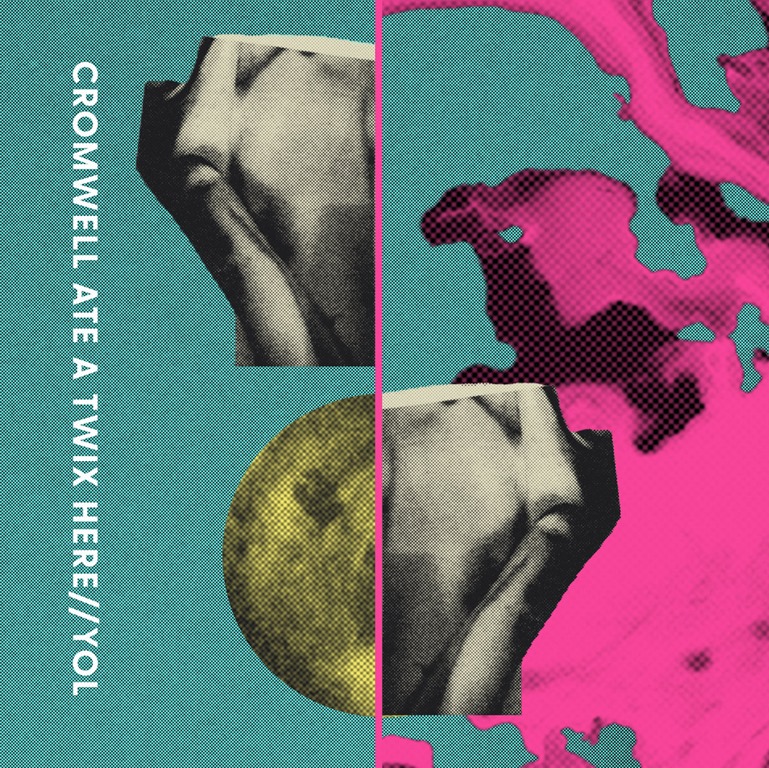
It’s certainly been a while since we last heard from Justin Watson, the epically-bearded being who formerly ran the Front & Follow label, but here he has temporarily resurfaced as one half of the absurdly-monikered Cromwell Ate A Twix Here on a split release with underground noise legend YOL, released by Spanish cassette label Strategic Tape Reserve. As such, even before hearing a sound, one can predict that this is destined to be unpopular – by which I mean an ultra-cult release for a microniche audience – or, put simply, the noise scene.

The bio for Cromwell Ate A Twix Here tells us more about what they aren’t than what they are, hammering home that ‘Justin ran Front & Follow and definitely doesn’t now. It’s over. He’s half of MORE REALISTIC GOALS, a third of The Incidental Crack and a quarter of The Watson Marriage Experiment (2006-)’. So in the wake of its brief revival for the charity fundraising Rental Yields series of complications not so long ago, we can be confident that the lid is now firmly nailed onto the coffin of F&F and even Dracula wouldn’t resurrect the label’s activity. But this is how it tends to be with those of a creative bent. They simply can’t not do anything forever. It’s not even an itch: it’s a compulsion. ‘Fragile’ occupies side one, and is eighteen minutes of expansive, filmic music, constructed around quavering, wavering drones, sparse pseudo-strings and soft, supple abstractions by way of an accompaniment to a somewhat surreal spoken-word narrative about… what is it about, exactly? Death, yes, but also a new relationship, interaction… The music fades into the background during the narrative, rising to the fore between passages. David Yates’ delivery is natural, down to earth, friendly, even, and is fitting for a tale which is largely given to quite mundane details before shit gets weird at the end. The audio begins to grow more unsettling, a shade disturbing around the seven-minute mark, and things only get darker thereafter.

And then there is eighteen minutes of Yol, which is pure derangement. Anyone acquainted with his work will be expecting nothing less. It begins with him stuttering and choking in convulsions over a mess of noise about ‘wheel of life, wheel of cheese’, and he yelps and roars, sounding as if he’s utterly possessed or dying, spasmodic ranting overloading over a horrific mesh of feedback and sonically rough terrain. You can practically hear your speakers wilting as the blasts of distortion scratch and scrape and glitch and burst and grind and buzz like so much sputtering, sparking, damaged circuitry. The whole thing is deranged, although it’s no less deranged than Liz Truss’ famous proclamations about cheese or any statement issued by The Whitehouse in recent weeks. He knows this, of course: however insane his work sounds, there are political undercurrents and a certain knowingness to his brand of frenzied avant-gardism, as evidenced on viral cats and dogs (2021).

The fact that this is just short of twenty minutes of a man yelping and barking and seemingly losing the plot before a microphone, and yet making more sense than five minutes spent perusing the news or social media tells us where we are in the world right now.

The two sides of this split release may be very different, but the contrasts are complimentary, and in combination, offer a welcome excursion beyond the everyday madness we’re living through, offering insights into rather more specialist madness instead. But this is artful madness, or good mad, or something. These guys won’t wreck the economy, invade or annexe your country, or fuck you over. They’ll just be over there making some weird noise. I’ll be over there with them, and you’re more than welcome to join us.

AA
a4054677057_10

Front & Follow / gated canal Community – 6th October 2023

Christopher Nosnibor

When Front & Follow called it a day as a label, it was a sad day, and their subsequent emergence from the mothballs for the Rental Yields series was extremely welcome. This was a project that came from the heart and really showed what F&F was all about – yes, music first and foremost, but also community. By working with a certain network of artists, the label built a community of its own, but there was always a sense of locale which was integral to this, and this is what compelled label-leader Justin Watson to resurrect the label to release a series of fundraisers to help raise money to tackle homelessness in Manchester.

This is a project which has clearly taken on a life of its own, and it seems unlikely that when first touting the idea, Justin could have ever seen the deluge of contributions which would pour in over the coming months. He writes, ‘Over 100 artists are involved (the spreadsheet is fun), each one tasked with creating a new track from the sounds created by someone else –we are then collating the tracks and releasing them over 2022 and 2023… This is VOLUME FIVE –THE FINAL VOLUME. 19 tracks, 38 wonderful artists. All money raised will go to SPIN (Supporting People in Need), whose purpose is to feed, shelter, clothe and generally support the homeless and people in need of Greater Manchester.’

This release simply shouldn’t exist. Homelessness shouldn’t exist, either. Levelling up my fucking arse. This government can’t even manage the basics, and while the imminent cancellation of the stretch of HS2 between Birmingham and Manchester is making all of the headlines and the government are refusing to comment on the ‘speculation’ about the inevitable, insisting that there are many other projects which are equally essential to the plan to provide the north with the same quality of life available to those in the capital, the fact that homelessness remains such a huge issue in Manchester is evidence that they’re not receiving the finding they need either. It’s not just Manchester, but charity begins at home and people can only do so much, so it stands to reason that F&F should donate to a local charity.

The one positive outcome of a truly depressing situation is that all five of the Rental Yields compilations is absolutely superb, and this fifth and final one is a glorious showcase of predominantly regional talent from a city with a long history of producing outstanding music, alongside Leeds. While it’s fair to say that much of this musical output has been born from frustration, it only serves to demonstrate just how much the north has contributed, and continues to contribute, to the nation’s creative output. And a nation without art… is simply dead. Over the last nineteen years, which I’ve spent living in York, I’ve often said that the best thing about living here is its proximity to Leeds. The city’s music scene is phenomenal, and where in London could you watch local / national / international touring bands while supping local ales for four quid a pint?

So, while the fact of the matter is that there should be no need for this album in terms of its social motivation, Rental Yields Volume Five is ultimately yet another essential release in terms of the fantastic music it showcases. More than any of the preceding editions, it’s a murky, atmospheric collection.

I’d been bobbing along nicely to the mellow drift before the penetrating feedback blast that heralds the arrival of ‘Rental Yields Weekend in Manchester Mix’ by Dan Gusset vs Omnibadger. Had to be these buggers, of course. Regular contributors / usual culprits, they bring another layer of discomfort to the party. It’s like Test Dept’s ‘Unacceptable Face of Freedom’ for 2023, a punishing, sample-filled industrial racket that tells it like it is, and without compromise. We live in harsh times, dominated by harsh language from government, and if ‘and then it was gone’ by gormless vs Distant Animals is superficially buoyant, the underlying stains of noise are dark and turbulent and this is the noise that fills our heads day in, day out, as we walk down the street. There is no escape, only the delusion. There is plenty oof harsh reality to be found on here, with thick bass blasts dominating Repeated Viewing vs Four Italian Pep Pils’

Most of the contributors on here are new to me, but as has been the case with all of the previous instalments, the quality of consistency is remarkable, and it’s incredible to think that this is a compilation assembled from open submissions. Rental Yields Volume 5 feels more like a film score than anything else, the tracks showcasing a cohesion and unity our government could only dream of. But then, this what happens when artists come together for a cause. And coming together is the crux here. The entire Rental Yields series is essentially about unity, and also about compassion. The government, and the capitalist world at large needs to learn from this. In the meantime, this glorious compilation provides a much-needed salve to the muscle-twitching rage the societal situation elicits. It’s yet another great album from Front & Follow, who deserve to hang up their virtual boots after this.

AA

dQGDqHAA

Front & Follow – 25th November 2022

Christopher Nosnibor

Longtime Aural Aggro faves Front & Follow have delivered the third in their series of truly immense Rental Yields compilations, with another twenty-five tracks of remixed works which showcase the community spirit they espouse as a label and among those in its orbit.

They describe it as ‘a multi-release collaboration project raising money to tackle homelessness in Manchester… Inspired (if that’s the right word – perhaps ‘motivated’…) by our current housing system, the project encourages artists to steal (or borrow, nicely) from another artist to create their own new track – in the process producing HIGH RENTAL YIELDS. Over 100 artists are now involved (the spreadsheet is fun), each one tasked with creating a new track from the sounds created by someone else – we are then collating the tracks and releasing them over the course of the next year.’

Some would describe the project as ambitious, others as simply crackers, and it’s likely both in equal measure, but this is why we love F&F. That, and the fact that they seem of have a knack for attracting and releasing interesting artists who exist far beyond the peripheries of any kid of commercial radar (or even most alternative radars).

This compilation really does make the most of the medium: unrestrained by the limits of vinyl, cassette or CD, and has a playing time of about a week. Yes, I exaggerate, but the point is, each contribution is the length it needs to be, or the artist feels it ought to be, rather than cut or constrained, meaning that while a fair few pieces sit around the five minute mark, the Decommissioned Forests vs Pulselovers rendition of ‘Rental Yields’ runs for nine minutes and forty-four seconds, ahead of the ten-minute workout that is IVY NOSTRUM vs The Snaps Jar’s ‘AND MONEY LESS’ and a few other six- and seven-minute monsters.

But what is time, anyway, and what’s it for? As much as it’s a measure of time, it’s a tool by which lives are ordered, limited, constrained, controlled. The vast majority are paid work by the hour, not by output, and time on the clock is not your time, but your employer’s. You don’t own your time, and you don’t own your space, and you give your time to some company who profit from your time and output in order to pay for a roof over your head, a space to eat and sleep, for the profit of a landlord or a bank you owe tens, even hundreds of thousands.

How often do you hear people shrug about their shit jobs saying ‘well, it pays the rent’. Imagine lying on your deathbed, reflecting on a lifetime of drudgery to say ‘I paid the rent’, while your landlord’s spent their life living it up in restaurants and on overseas holidays and celebrating their success because you’ve paid their rent too.

Audio Obscura VS Secret Nuclear’s ‘Vacant Period’ opens the album with an apposite sample from a TV show discussing gross and net yield before embarking on a glitchy, flickering journey of droning industrial Krautrock, and paves the way for an extensive and magnificent-curated collection of variant forms of ambience. Pettaluck Vs Giant Head’s ‘Dot to Dot’ is disorientation yet soothing and hypnotic – and fucking strange. But we like strange, and Front & Follow provide plenty.

If it’s a long, long listening journey of crackling stating, looming darkness, bleeps, bloops, and extraneous noise intercut with snippets of radio, film, and TV, and ultimately forges an immense intertext of sources.

Sometimes it’s swampy, eerie, tense, others it’s quite mellow and finds a subtle groove, but Rental Yields is unyieldingly brilliant, both in terms of range and quality. And you really can’t go wrong for a fiver – the worthy cause is simply a bonus.

a2023857748_10

Preston Capes – PCT001 – 1st July 2022

Christopher Nosnibor

The Front & Follow label may have reverted to mothballed status (at least for the time being), but that doesn’t mean that Justin Watson is doing nothing these days, despite the title of the latest release from three-way collective The Incidental Crack, who we’ve been following – and covering – for some time here at Aural Aggravation. For this outing, they’ve found a new home on newly-established cassette label – and these seem to be springing up all over now – Preston Capes (and I’m guessing no relation to Geoff).

As the notes explain, ‘The Incidental Crack began with Rob [Spencer] recording himself wandering around in the woods and finding a ‘cave’ – Justin put some weird noises to it, and then Simon joined in. The rest is history. The Incidental Crack are joined again by Dolly Dolly / David Yates on this album.’ Indeed, however much The Incidental Crack may evolve, they remain fundamentally unchanged, their albums assemblages of random field recordings and strangeness melted and melded into awkwardly-shaped sonic sculptures that unsettle the mind and by turns ease and tense the body.

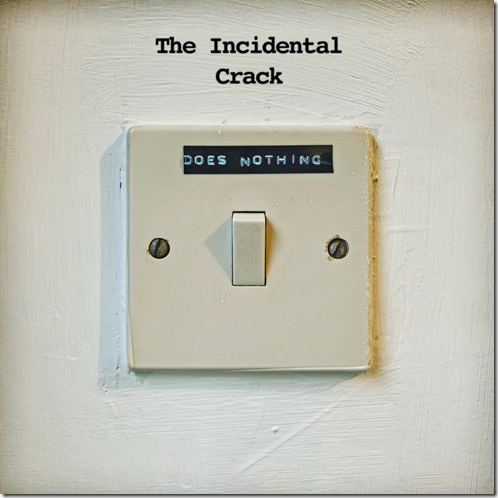
The Incidental Crack Does Nothing follows the two albums they released in 2021, the second of which, Detail, was a challenging and expansive work, and this very much continues in the same vein.

With The Incidental Crack, it very much feels as if anything goes, and reflecting on the name of the collective, this seems entirely appropriate. What their works represent is a crack, a fissure, in time, in continuity. Their methodology may not be specifically influenced by William Burroughs and Brion Gysin’s cut-ups, but are, very much, open to, of not specifically channelling and incorporating, the assimilation of random elements, and have a collage aspect to their construction.

‘Shitload of Rocks’ is comparatively airy, and serves as a brief introductory passage before the dank, gloomy ambience of ‘The Worst Party’. It’s a dark, ominous piece that hovers and hums, echoes, clanks, and rumbles on for a quarter of an hour; it’s cold, clammy, and unsettling. But is it the worst party ever? While it does sound like hiding in a cave while an armed search party charged with the task of your erasure stomp around in adjacent tunnels off in the distance, I don’t actually hear any people, laughing drunkenly or loving the sound of their own voices while holding court with tedious anecdotes, so I don’t think so.

‘Hair falling from our bodies clogs up the sewers,’ we learn as a clattering beat clacks in and rattles away on the industrial chop-up churn of ‘Hair’, featuring Dolly Dolly, who’s clearly no sheep. It’s the album’s most percussive cut, the monotone spoken-word narrative somewhat surreal, and looping eighties synths bubble in around the midpoint, although it’s probably too weird for the Stranger Things retro adopters.

‘Couch Advantage’ is the album’s second longer piece, a sinuous, clattering workout almost nine minutes in duration. It’s minimal, yet somehow, there’s enough stuff going on as to render it all a blur: is that jazz drumming, a groove of sorts off in the distance? Or is it simply some clattering chaos, the sound of bacon sizzling? What is going on? And following the brief interlude that is ‘Belting’, the final piece, the ten-minute ‘Photography’ with more lyrical abstraction from Dolly Dolly depicting random fragmentary images against a backdrop of clicking sparks and evolving, supple sweeps of drifting clouds of sound. It’s all incidental, every second of it: fleeting, ephemeral – and in the cracks, is where it happens. As they open wider, you peer in, and observe. There is movement. There is life. Because life is what happens between the events, among the random incidents and accidents.

The Incidental Crack Does Nothing may be confusing, bewildering, difficult to grasp – but it is, without doubt, a slice of life. You can do with that what you will.

AA

cover

Anticipating Nowhere Records – 24th September 2021

Christopher Nosnibor

With the colossal five-volume ‘Isolation and Rejection’ lockdown compilation series and the one-off final final FINAL Front&Follow project, the compilation You Can Never Leave released in June, the eternally restless Justin Watson can put his label to bed and resume work with his current musical vehicle, the collective who operate as The Incidental Crack to deliver album number two. After all, it has been more than three months since second album Municipal Music.

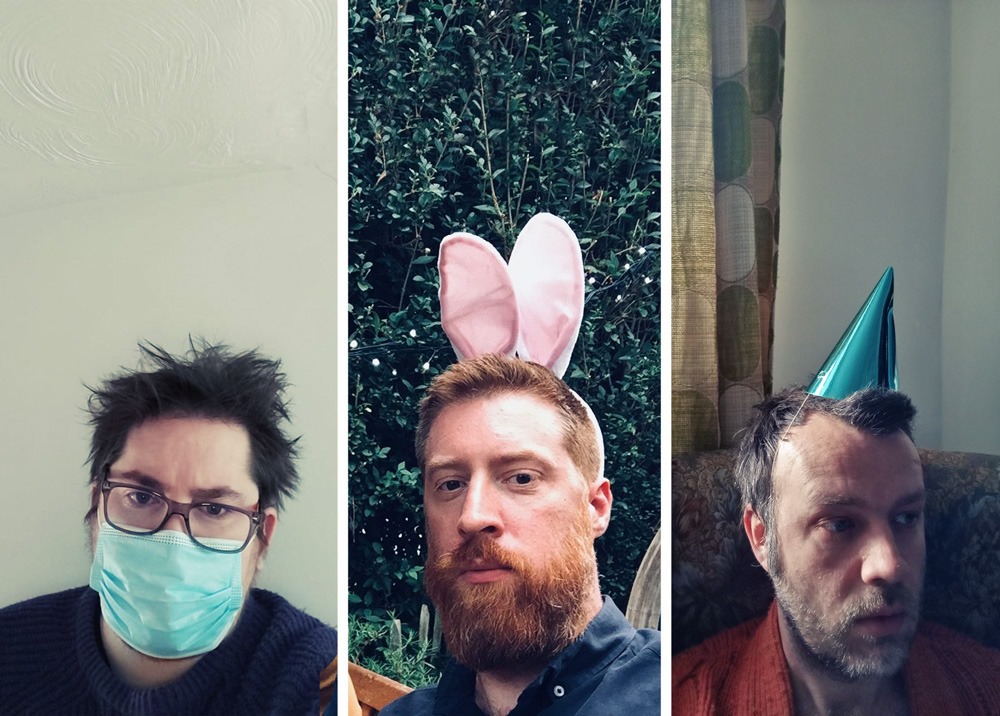
The three – Justin Watson, Rob Spencer and Simon Proffitt – are still yet to meet, and their third album, like its predecessors, took form with ‘them exchanging field recordings, samples and random noise between Manchester, Wigan and North Wales’.

As the liner notes recount, ‘Detail contains within three new long-form pieces and a couple of shorter ones filling in the gaps. The adage goes that the devil is in the detail, and Detail brings exactly what the title promises, with the first composition, ‘We Might Bump Into each Other’ beginning with some muffled dialogue and an ominous hum, then hums, bubbles and slurps against a backdrop of echoic reverberations, before ‘Fish Dance Tank Track’ marks a shift in style, with more defined beats – an insistent bass bump occupies a different space from the glitchy fluttering woodpecker-type stammers and stuttering hi-hats which all make for something quite complex beneath the drifting drones and quavering hums. It’s an interesting and complex composition that brings together elements of ambient and minimal techno, and as birdsong flutters in toward the end, the piece takes on new aspects that juxtapose nature and artifice.

That the grating looping throb of the six-and-a-half minute ‘Waterfalls Per Capita’ should be considered a gap-filler is a matter of context, and it comes after the harrowing dark ambient collage of ‘I Lost It’, that is by no means a comfortable or easy listen.

The seventeen-minute ‘Morning Tram’ combines field recordings where the original source remains clear, but with subtle but insistent beats, and it’s perhaps there – the finale – that everything comes together. Fragmented samples and snippets of dialogue collide with tumbling trees and slow-turning washes of ambience to create remarkable depth. Passengers pass on and off, engines rumble past, there is endless chatter and a wall of extraneous sound. Assimilating it all may be difficult, but it’s rewarding. The beat is almost subliminal, but it’s relentlessly insistent and registers almost subliminally as the sound swells and voiced clamour and congeal among a rising tide of horns and other momentous sounds. And then it stops, abruptly.

It may be short in terms of tracks, but Detail has substantial depth – and much detail, all of which is very much worth exploring.

The Incidental Crack - Detail (cover)

Front & Follow and the Gated Canal Community – 25th June 2021

Christopher Nosnibor

Independent cassette label Front & Follow disbanded a bit back, some time before the pandemic hit. Said pandemic changed a lot of things for a lot of people, and certainly not just those immediately affected by the virus itself, through either contracting it themselves or friends or family. This is, after all the first time in history where governments have quarantined the healthy, and even during the world wars, while artistic activity was curtailed, society did not completely grind to a halt for any sustained period of time.

Having un-mothballed the label in order to release a series of compilations under the title Isolation & Rejection, which gathered tracks submitted and rejected for compilations on other labels, showcasing not only a wealth of amazing material over the course of five releases, but also creating a sense of community a month the rejected during the isolation of lockdown (a simple but effective premise that was a different kind of novel from the one everyone was talking about on the news).

Then, the label fell dormant again – for a few months, before this, pitched as ‘One final final FINAL project from F&F’. It may be a statement akin to Kiss announcing another farewell tour, but I know I’m by no means the only one who’s happy about the arrival of another release on the label, whose exceptional knack for curation has been a distinguishing feature of a thoroughly outstanding catalogue, and this, their sixty-firth release is no exception.

As label founder writes, ‘Another not planned but a nice thing happened so we went for it’. You Can Never Leave offers ‘alternative soundtracks to a luxury apartments advert’ taking its cue from an ad for Deansgate Square, Manchester, ‘comprising elegant spacious apartments across four carefully designed towers’ which ‘delivers a new level of city centre living’. With its slick visuals and sterile technoambient soundtrack, it’s a contemporary image of hell, JG Ballard’s High Rise for the 2020s. I’ve suggested previously that postmodernism is dead, and theorised that the post-postmodern age is marked by the end of irony. The fact this video exists, unironically, is surely proof of my hypothesis.

For their sign-off, F&F have assembled an immense thirty-one artists, many of who have featured on previous releases, including Field Lines Cartographer, Kieper Widow, and Polypores.

So, all of the tracks are around the 2:15-2:20 mark, and are intended to be played simultaneously with the video, and it’s perhaps unsurprising that each presents a different perspective on dystopian horror, from the sterile dark ambience of Bone Music’s ‘Reality Will No Longer Burden You’ with it’s clipped, android voiceover, via the tense trance-inducing electronica of Field Lines Cartographer’s ‘Consume and Prosper’, which is an outstanding piece of marketing sloganeering that we can imagine being a part of the UK government’s post-lockdown reinvigoration promo push (it’s snappier than ‘Eat out to help out’, and is a succinct summary of the late capitalist agenda they’ve espoused over the last decade), and the eerie waves of aural otherness that drift through courtesy of Von Heuser who give us ‘Pass Through The Tear’.

F-Lithium’s take is a cold Kraftwekian analogue rumble that ripples and churns around the solar plexus, while Guerrilla Biscuits’ ‘Manchester, So Much to Answer For’ dismantles the city’s musical and architectural heritage in one fell swoop with its space-age bleepery. WELTALTER bring some pulverising black metal to the party, and its bleak, dingy gloom that pounds insistently paves the way for more gnarly darkness in the form of the industrial ambience of ‘The Assimilation’ by The Metamorphe. Acid Wilhelm’s ‘The Changing’ is particularly unsettling, as rolling piano gradually evolves into a dense rumble of thunder, with ghostly voices muttering, while the cut-up / found-sound collage of Her Majesty’s Coroner for Wirral’ also pursues a haunting vibe, with ‘Contemporary City Living’ sounding like ‘Carmina Burana’ performed by a spectral clamour wailing to break through from the other side. With ‘Find Your Epic’, Friends, Business Colleagues or Family present the most torturous two and a bit minutes going, a howling shriek of purgatorial pain during which every demon rises from the flames to wreak havoc for all eternity on the living.

As is typical for a F&F compilation, You Can Never Leave is eclectic and yet for all its stylistic divergencies, fits together very nicely indeed, and collectively create a document which presents a multifaceted aural interpretation of the next level of gentrified hell, spanning epic prog and industrial. Oftentimes, it’s spooky, unsettling, and the album presents a powerful and ultimately terrifying vision. But is it any more terrifying than the original promo clip? Probably not, no.

Here’s the video that inspired all of this….

Deansgate

As an aside, for the record, the project is not affiliated with Deansgate Square in any way – the video was our inspiration for this project, and for each artist’s soundtrack.

All sales from this release will go to Coffee4Craig, which provides vital support for Manchester’s homeless and people in crisis. Find out more here – coffee4craig.com.

AA

F&F065 - YOU CAN NEVER LEAVE - cover

Herhalen – H#023 – 21st May 2021

Christopher Nosnibor

The press release for this second album by The Incidental Crack – a collaboration between Justin Watson, Rob Spencer and Simon Proffitt – which follows last year’s Before The Magic describes the trio ‘exchanging field recordings, samples and random noise between Manchester, Wigan and North Wales, culminating in studio sessions focused on detailed processing and sound manipulation. They have yet to meet. Maybe one day when this is all over, in a pub in North Wales, free from this madness’.

As such, it’s a classic lockdown project, a virtual collaboration that proves that when it comes to the making of music, distance doesn’t have to be an object. In fact, it’s probably easier to collaborate without the logistics of brining people together in the same place at the same time. Writing on the project, Justin (one half of The Gated Canal Community and formerly of Front & Follow, a label which will be familiar to regular readers of AA), notes that Municipal Music ‘includes tracks recorded during the same period, using our now foolproof approach of sharing stuff, fiddling with it, sharing some more etc.’, adding, ‘It kept me sane at least during the last year!’

That is something that’s certainly relatable: keeping occupied has, for me, been the only way to keep myself together. I’m not saying it’s healthy, it’s just how it is. And increasingly, I’ve found abstract music easier to manage. Structured music, anything overtly ‘song’ orientated and rhythm driven is, all too often, just so much noise and instead of providing a welcome point of focus, feels just like being smacked from all sides at once. So while there may still be a lot going on in this, it’s not psychologically disruptive, and is suitably absorbing and immersive.

There are three extended-length tracks in all, which exploit the full dynamic range, with a strong focus on texture. The first, ‘The Second Cup of Tea of the Day’ is strong – certainly more English Breakfast or Nambarrie than Earl Grey or anything herbal – and probably inspired by the sound of a boiling kettle that’s been manipulated and fucked around with. However, it sounds at first more like a freight train, an extended continuous roar occupying the first three minutes before it gradually abates in volume and intensity, and gentler, softly-woven ambient drones fade in. there are still rumblings and incidental clatterings, forging a soundscape that never fully reconciles the tensions between the elements of soft and harsh, the light and dark. Bubbling Krautrock with bulbous beats collides with metallic shards of grating noise.

‘Just Passing Through’ is appropriately positioned in the middle, and is altogether gentler, softer, warmer, and pursues a more conventional ambient line. But there are peaks and troughs and ebbs and flows as the sound swells and at times shifts toward more unsettling territory, with some woozy oscillations that tug uncomfortably at the pit of the stomach before receding and allowing calmer vibes to return once more.

The third and final cut, the fourteen-minute ‘Ice Cream at the Pavilion’ starts with what sounds like the crashing of waves against a rocky beach in a storm, which strangely reminds me of a number of occasions we’ve had ice cream at the coast on family outings, because it’s always ice-cream weather for children. Voices chatter and babble and whoop excitedly, while a dolorous church organ begins to while away majestically in the background. Eventually, it’s superseded by a barrelling drone and a throbbing, slow-pulsing sound that swells and surges.

There’s a certain wistfulness and nostalgia to be found in the spaces in and around Municipal Music, although perhaps some of that’s my own reception aesthetic, a response as much to the circumstances of its creation and the allusions of the title, both of which remind me I’ve not left my own municipality in months, haven’t met any of my collaborators or friends in so very long, and yearn for both proximity to (some) people and also the countryside and country pubs. All of these thoughts wash around in my mind as the sounds surround me, and it occurs to me, finally, that Municipal Music is good music to think to.

AA

023 The Incidental Crack - cover

AA

The Incidental Crack - artist photo

Front and Follow – 31st July 2020

Christopher Nosnibor

Rejection hurts. Always. Some of us can ride it out, brazen it off, better than others, but always, it stings. Artists in any media tend to be sensitive types, and so the sting is all the harder.

The basis for this series is lovely: it’s relevant, relatable, but also worthy because of its wider context: ‘not an isolation project – it’s a rejection project’. Rejection is isolating in itself, but more specifically, this is a collection of rejections released from isolations.

As the accompanying blurb recounts, ‘Isolation and Rejection was born out of thinking about what happened to all the tracks that didn’t make it onto those fancy compilations, and is now turning into an ongoing project to collect, collate and promote rejected sounds.

With over 100 artists signed up, we are going to release five volumes over the next few months. Each volume will showcase those lost gems, discarded and abandoned but now lovingly embraced and put front and centre for your enjoyment. We’ll also be sharing the stories behind the rejection – funny, weird and sometimes a little heart breaking.’

The beauty of this collection lies not only in the music itself, but its eclecticism. The tracks range from fragmentary snippets to eleven-minute explorations, from bubbling electronica to billowing abstraction. With twenty-four tracks, it is a monumental and truly epic set, and not necessarily one to take in in a single sitting.

Lose a Leg provide the first piece, with a delicate piano snippet of a composition called ‘Thinking About It’. It’s barely a minute and a half, so there isn’t much time to think.

There’s a strong leaning towards mellifluent ambient works, abstract, cloud-like sonic drifts of intangibility, but this being a Front and Follow-curated release, it’s got well-considered range: Time Attendant’s ‘Binocular Visions’ introduces Kraftwerkian robotic electronica into the mix, with a motoric sequenced rhythm underpinning its throbbing electronic structures. Then again, there’s a lot of bleepy electronica centred around cyclical grooves and heavily repetitive beats, as exemplified by Caper One & Vandal Deca’s contribution.

Some pieces straddle both: Audio Obscura’s ‘Castles on Earth’ is big, bold dubby, beaty and ambient all at once, an echoic bath that swells around a dense, booming bass, and elsewhere, Crisp Packet Jacket bring woozy pulsations with ‘Dreadful Own Brand’. No Later’s‘The Revenant Sea’ is spectral and haunting, and in many ways encapsulates the spirit of the release in its hybridity, while ‘Music forBroken Piano’s recalls early Pram in its dissonance and discord.

Sairie’s lilting folk cover of ‘House of the Rising Sun’ stands out by virtue not only of its difference, but its beautiful vocal melodies, which later over a sparse et lush acoustic guitar. Why was it rejected? Did they submit to a death metal or power electronics compilations? But we know that rejection is often more about curatorial taste than quality of submission, and it’s quite apparent with this collection because there simply isn’t a weak track to be found.

It is a colossal collection, and likely not one to play in a single sitting, especially with so much going on. This makes it, along with the first edition, a collection of outstanding quality.

Front & Follow

Christopher Nosnibor

The demise of the label Front & Follow was a sad one, for many reasons. I mean, it was understandable: a one-man enterprise, the degree of effort required to curate, release, and promote music – especially obscure, niche music – is astounding. It’s always going to be a labour of love, but all the love in the world doesn’t pay the bills.

This does mean that the return of F&F, however brief, with a view to issuing a series of lockdown / isolation compilations is extremely welcome, simply in principle. Not only because it’s a reminder of a time before what’s rapidly looking like a collapse of civilisation, not only because it’s a reminder of what a great label it was, but also because despite the tidal wave of lockdown releases that are flooding the virtual world right now, we still need more music like this: music from the fringes, music that coveys the intense cognitive dissonance of the current situation in non-lyrical terms.

To unpack this: the title summarises the situation as it stands for many in the most succinct form. Whether or not you’re officially ‘isolating’, we’re all still isolated for the most part, either alone or with the rest of out household. But it seems that however ‘together’ we are, however connected, however well we communicate, everyone’s individual experience is different, and in many was incommunicable: we’re all islands, isolating inside our own heads. Words get in the way, and impose the experience of others on our own private thoughts, so the fact that this collection is largely instrumental is welcome, and where there are vocals, they tend to be absorbed into the fabric of the sonic experience.

With twenty contributions from a host of artists. Many of whom I’m unfamiliar with, there’s a theoretical pot-luck element to this compilation, but F&F have always been strong on curatorial skills, and while the contribution from Kemper Norton (arguably one of the bigger ‘names’ on the release) is surprisingly brief, it’s positioned in a prominent position opening proceedings, and sets the tone with its tonally-balanced ambience.

Grey Frequency’s ‘Dissolve’ which follows is more what you might expect: almost seven minutes of mellifluous mellowness, but with crackling snippets of static and shadowy undercurrents that run dark and deep.

Picking standout tracks is difficult and also rather to undermine the project, although

‘Basic Design’s ‘Dream Archipelago’ does stand out by virtue of having vocals first and foremost, but also for it’s woozy, fugue-like qualities, something echoed by the ethereal ‘Dining with Phineus’ by Carya Amara.

AZAK BROMIDE bring a more power electronics / industrial slant to the dark ambient party, but it’s the seventeen-minute behemoth that is Boobs of Doom’s ‘Scumbellina’ that really is the ineffable centrepiece here: a towering monolith of a track it’s all the experimental electronica distilled into a single movement of analogue oddness.

Elsewhere, Ekoplex capture the essence of early cabaret Voltaire on the dubby ‘Rejected Replekz’, Thomas Ragsdale delivers some signature ambience with beats with ‘The Light Between’, and Elizabeth Joan Kelly’s ‘Waking Up With a Cat on My Face’ perfectly encapsulates that moment or panic, that abject spasm through a minute and three quarters of swampy discord and sonic confusion. Hibernation’s nine-minute ‘Fragile Times’ is a perfect summary of everything: so fragile and soft as to be barely-present, it’s a mist-like ambient piece that’s impossible to place your hands on it, much less pin it down, and that wisp-like intangibility, that vague ephemerality is the essence of the collective mind right now. However you may think about think about it, whatever your beliefs, pinning down the mood of the moment is nigh on impossible on the tumultuous psychological rollercoaster we find ourselves on.

Thankfully, soothing, spacious sonic wanderings like the album’s final contribution, TVO’s ‘A Wave as the Coast Disappears from View’ offer id to calm, even if the title reminds us we’re only barely afloat and only so far from drowning in an instant.

Isolation & Rejection Vol 1 is a magnificent collection at any time, but also serves as a contemplative soundtrack to strange and troubling times. It’s also classic F&F.

AA

a1782742595_10

Front & Follow – 15th November 2019

Christopher Nosnibor

Front and Follow is a label that’s carved a special niche in the cassette release corner of the industry, and has, for those in the know, become a trademark of quality. But sustaining such consistency – or even anything – as a one-man operation is hard work, and often with little reward. As such, while I was sad to learn they’re taking a break, they’re signing off with an incredibly strong release, courtesy of Ekoplekz, who is also embarking on an indefinite break.

The album’s pitched as ‘drawing parallels between present day Britain and that of the turn of the 80s, Ekoplekz looks back to that era’s industrial and post-punk soundtrack for inspiration,’ and the press release continues: ‘In a land increasingly brutalized by austerity and divided by nationalism, the tensions that informed some of the post-punk era’s most important works (Red Mecca, Unknown Pleasures, Metal Box) haunt this collection of bleak postcards from the present’. The present is indeed bleak, unless, of course, you perhaps run a hedge fund with billions backing a no-deal Brexit or you’re a major corporation invested in climate change denial or pharmaceuticals. But then, if you’re in that bracket, you’re probably on your private jet grabbing bitches by the pussy and going gammon about these smelly hippy protestors or somesuch. For the rest of us these ae dark times that require a dark soundtrack, and as I’ve said elsewhere, it’s no surprise that we’re experiencing a different kind of 80s revival at the moment. Brutal and divided pretty much sum up both UK and US politics and cultures , as well as further afield. Who actually feels safe on the street? Who actually feels safe as a career artist? Who isn’t remotely concerned, doesn’t feel concerned, panicked, anxietised? We don’t need Duran Duran replicas like The Bravery, and even Editors and Interpol’s take on post-punk feels lightweight in the face of the crises that define the current – and so Ekoplekz plunge deep back to the late 70s source to dredge real darkness and despondency here, and in doing so, In Search of the Third Mantra soundtracks the present – bleak as it is.

With In Search of the Third Mantra, Ekoplekz sets his spheres of reference out early, with ‘High Rise Dub’ carrying Ballardian connotations and ‘K-Punk’ taking its title from the seminal blog of the early noughties by the late Mark Fisher, to whom the album is dedicated. This, then, without wanting to sound elitist, is no mindless replication of an array of retro tropes, but a considered assimilation of myriad sources, distilled into something wilfully challenging. We would expect nothing less of K Craig, filmmaker and front man of currently-resting Last Harbour. This is quite a departure, but works in context: while we don’t get brooding vocals and arch-gothic sonic structures, there’s a brooding nihilism that rumbles at the core of In Search of the Third Mantra in the same way it lurks so many albums of the period, and a lot has to be credited to the production.

It’s got grooves and danceable beats, but it’s also possessed of a dehumanised detachment, a sense of distancing and dislocation: you’re in the zone and in the space where you’re feeling the distance, the disfunction. The fact that this doesn’t fit, the fact that you don’t fit.

The spartan electronica of the former, with its dubby bass and rhythm that shuffles and clatters conjures a sense of alienation and otherness, while the latter brings things down a notch darker, laser bleeps and eerie vaporous notes hover ominously. ‘Do the Meinhof’ goes full motoric, channelling the insistent industrial grooves of DAF and Cabaret Voltaire into a tense death disco pounder laced with icy synths.

The sonic touchstones are all very much in evidence as the listener is led through a haunting desert of sound, dark, murky, menacing. ‘Accept Nothing’ has hints of The Cure’s Carnage Visors soundtrack, and the atmosphere which permeates all ten compositions is unforgiving and inhospitable.

There’s a degree of linearity to the album’s sequencing, and each track feels sparser, less defined, and with this progression there comes an increasing sense of collapse, of emptiness, and while sonically, the pieces are spacious, the atmosphere is evermore paranoid. One feels as though familiar structures are falling away, disintegrating. By the time we arrive at ‘Heart Addict (In Make Up)’, there’s little left beyond an almost subliminal, stunted dub bass that twitches anxiously alongside a barely perceptible beat, and we’re left, alone, disorientated, and teetering on the precipice just inches from the void.

AA

Ekoplekz_cover